Mary Magdalen: Spiritual Sfumato

July 22, 2026

Of the many techniques an artist might use in painting, among the most alluring is Sfumato.

Sfumato refers to a painting technique that blends one tone into another rather than using a clear outline. The word derives from the Italian sfumare, meaning “to evaporate,” and is related to the Italian word for smoke (fumo). Like smoke, a form rendered in sfumato tends to evaporate or disappear into the air surrounding it. Leonardo da Vinci used the term to describe how the edges of the Mona Lisa seem to blend into the surrounding shadows.
(from merriam-webster.com)

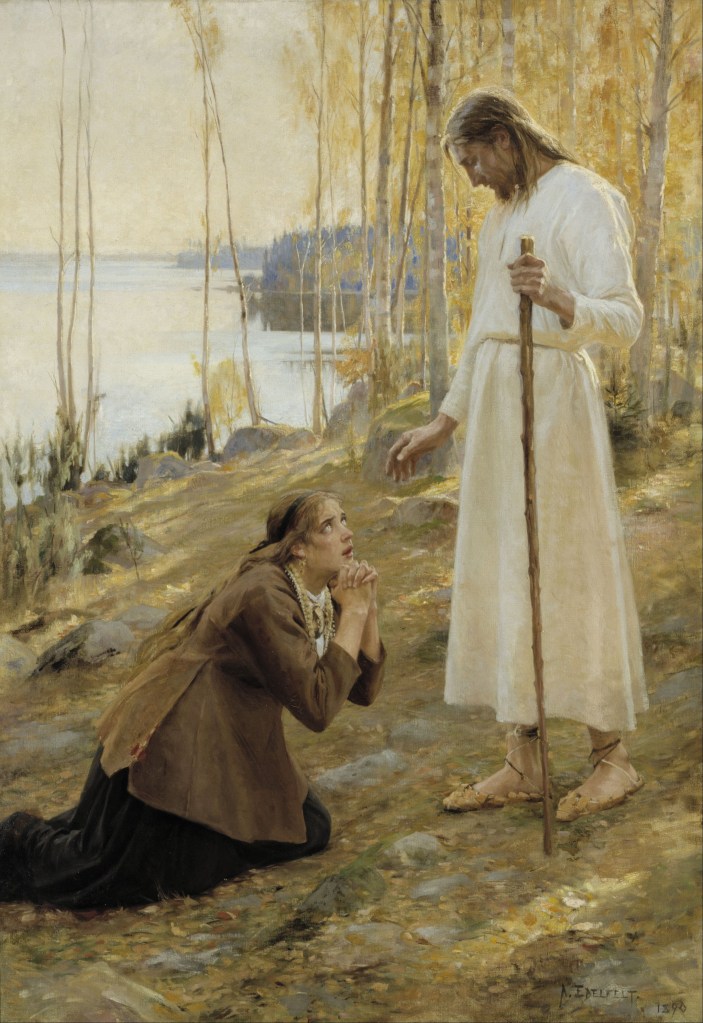
Today is the Feast of St. Mary Magdalen, a woman painted in sfumato across salvation history’s canvas. 

She is mentioned by name fourteen times in the New Testament across all four Gospels. She is explicitly identified as a key follower of Jesus who supported his ministry, witnessed his crucifixion, visited the empty tomb, was the first to see the risen Christ, and to proclaim the Resurrection. 

Nevertheless, other than her hometown of Magdala, the outlines of Mary’s life remain mysterious. Who were her parents, her siblings? Was she married? Who were her friends?

We know about Peter. He was married, had a mother-in-law, and was a fisherman from a family of fishermen.

We know about the feisty brothers, John and James. Their father was Zebedee, their mother Salome. They were “the Sons of Thunder”.

We know that Andrew, Philip, and Nathaniel were neighborhood friends.

But we have no such scriptural colors to paint our picture of Mary Magdalen.

What we know about Mary is her passion for God, a passion that allowed her to be released from seven devils and to radically bond her heart to the heart of Jesus.

Yes, the “seven devils”, those undefined spiritual hindrances that caused Pope Gregory to mistakenly connect Mary to the sinful woman of Luke, chapter 7.

The number seven is interesting, and might lead one to consider the seven deadly sins against which we all struggle in our lives: pride, envy, wrath, gluttony, lust, sloth, and greed. Might it be that Mary, so captured by the sacred magnetism of Jesus, was freed of these inclinations and sanctified in a unique way for the Gospel mission? Might it be that this “ultra-Baptism” prepared her to be the Apostle to the Apostles, first witness and proclaimer of the Resurrection?

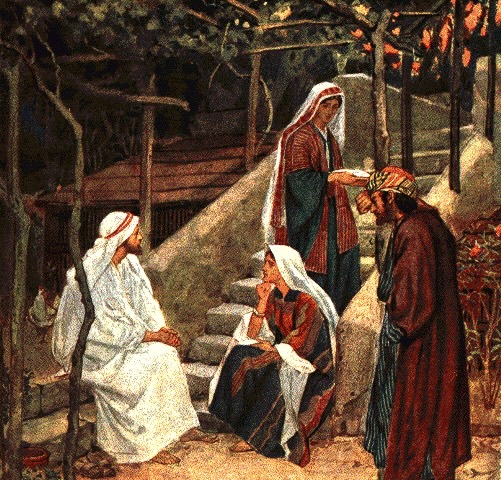
Albert Edelfelt

As I pray with Mary Magdalen today, I remember a quote once shared with me. It is the response of an octogenarian nun when asked about her spiritual life:

I am in Love now. 
I have entered the Fire. 
I am one with the Flame.

She seems to have perfectly described the “spiritual Sfumato” for which Mary Magdalen is an inspiring icon.


Poem: The Magdalen, a Garden and This by Kathleen O’Toole

She who is known by myth and association 

as sinful, penitent, voluptuous perhaps…

but faithful to the last and then beyond.

A disciple for sure, confused often with Mary,

sister of Lazarus, or the woman caught

in adultery, or she who angered the men

by anointing Jesus with expensive oils.

She was the one from whom he cast out seven

demons—she’s named in that account.

Strip all else away and we know only

that she was grateful, that she found her way

to the cross, and that she returned

to the tomb, to the garden nearby, and there,

weeping at her loss, was recognized,

became known in the tender invocation

of her name. Mary: breathed by one

whom she mistook for the gardener, he

who in an instant brought her back to herself—

gave her in two syllables a life beloved,

gave me the only sure thing I’ll believe

of heaven, that if it be, it will consist

in this: the one unmistakable

rendering of your name.

Music: You Know My Name by The Holy Studio (lyrics below)

I sit in rooms
Where no one asks
How long I’ve stayed
Behind the glass
My hands grow tired
My voice grows thin
I wonder if
You’ve noticed me

I don’t have to be loud
To be known
I don’t have to prove
I’m here

You know my name
You know my name
Before I speak
Before I break
You know my name
I don’t have to earn
Your gaze
You see me whole
You know my name

The world moves fast
It doesn’t wait
For tired bones
Or quiet faith
I scroll through faces
None are mine
I set the table
Just for one

I am not invisible
To You
I am not strange
For feeling small

You know my name
You know my name
Not for the things
That I have done
But for the way
You chose to stay
You see my face
You know my name

And every night
I wasn’t seen
You were the one
Still watching me
Every word
I didn’t say
You heard them all
You know my name
You know my name
You know my name

You know my name
You know my name
I don’t have to be
Interesting to be kept
I don’t have to shine
To be held
You called me Yours
Before I knew
You know my name
That is enough


Suggested Scripture: John 20:11-16


For Your Reflection:

  • What feelings or reactions do I have after reading this reflection?
  • Do my feelings or reactions remind me of any passage or event in scripture, especially in the life of Christ? 
  • What actions might I take today because of my response to these readings?

Rules That Free Us

Memorial of St. Benedict
July 11, 2026

Today we celebrate the feast of Saint Benedict of Nursia — a man who lived nearly fifteen centuries ago, yet whose wisdom still challenges the confusion of modern life. 

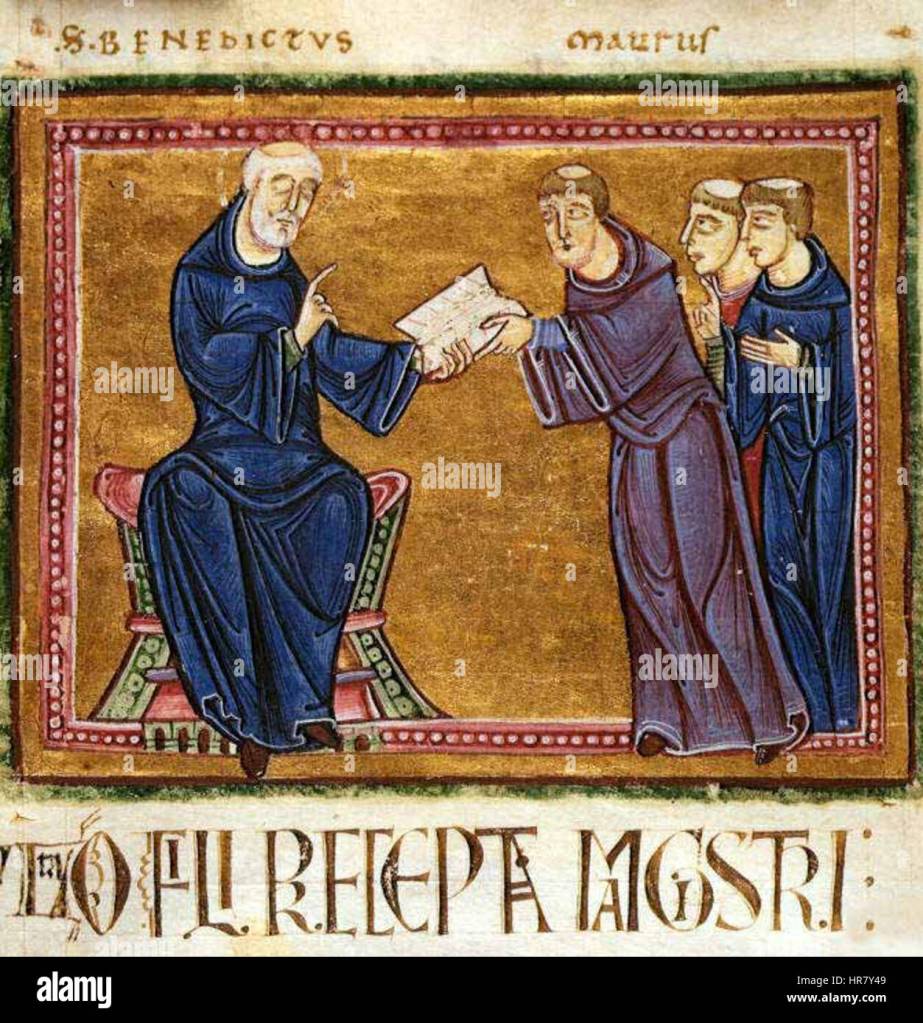
Benedict’s enduring gift to the world is a slender text known as The Rule of St. Benedict, written around 530 A.D. for monks living together in community. Though simple in structure, the Rule offers a balanced vision of human fulfillment: a life grounded in prayer, meaningful work, lifelong learning, and mutual responsibility.

St. Benedict delivering rule to monks

What Benedict created for monasteries ultimately became much more than a guide for monks. Across centuries, his wisdom has influenced education, leadership, hospitality, peacemaking, and the very idea that a good life requires both inner discipline and communal care.


Recently, while reading online, I encountered two unfamiliar terms: “looksmaxxing” and “incels.” Curious, I searched for their meaning.

Looksmaxxing (or looksmaxing) refers to the practice of maximizing one’s physical attractiveness. Originating in online forums and popularized on platforms like TikTok, it ranges from benign self-care like skincare routines to extreme, potentially dangerous cosmetic procedures.

The phrase “incel”, meaning “involuntary celibate”, was originally coined in the late 1990s by a Canadian student known as “Alana” as an inclusive, supportive space for anyone of any gender who was lonely or struggling to find a relationship. However, over the 2000s and 2010s, the term was heavily co-opted by online communities and transformed into a specific, male-dominated subculture characterized by misogyny and entitlement.


What I discovered was troubling — because so many young people are searching for identity and belonging in places that deepen anxiety rather than heal it.

Social media has amplified movements built upon appearance, resentment, isolation, and comparison. In many ways, these trends seem to reject the very foundations Benedict considered essential for a meaningful life: prayer that grounds us, work that dignifies us, learning that enlarges us, and community that humanizes us.

The sadness beneath these movements points to something deeper: a profound spiritual hunger.


Benedict matters even today, and perhaps more than ever.

His Rule invites us away from obsession with self and toward a deeper freedom rooted in humility, balance, and love. Benedict outlined what he called the “Twelve Degrees of Humility,” a spiritual path intended to loosen the grip of self-absorption and open the heart to God and others.

Because some of Benedict’s original language reflects the harshness of his historical era, I have taken the liberty of expressing these tenets in more contemporary and life-giving terms while preserving their essential wisdom.

Benedict’s Original EmphasisA Contemporary Spiritual Reading
Fear of GodAwe before God: delighting in the beauty of Creation
Restraint of Self-willFlexibility: meeting life with generosity and openness
ObedienceWisdom-seeking: learning from the insight of others
Patient enduranceCourageous Trust: Knowing that God abides with us always
Confession of faultsRepentance: Honest and positive change
Contentment with littleLiving from abundance rather than endless desire or greed
Self-abasementHumility: recognizing the equal dignity of every person
Observance of the RuleDiscipline: commitment to healthy spiritual routine
SilenceSerenity: allowing peace to shape our interactions
Avoiding frivolityMaturity: growing in depth, honesty, and joy
Gentle speechReverence: Using words to bless rather than diminish
Physical humilitySimplicity: recognizing that authenticity surpasses display

In the end, Benedict’s wisdom is not about becoming less human, but more fully human. His Rule reminds us that meaning is rarely found in self-obsession, status, or performance. Rather, it emerges slowly through prayer, purposeful work, humility, simplicity, and life shared with others.

In an age marked by loneliness, noise, and relentless comparison, Benedict still offers a quiet but compelling invitation: live deliberately, live gently, and live together in love


Poem: The Neophyte by Alice Meynell

(I love this poem for what it expresses about the early commitment to a disciplined spiritual life, intended to bless us by making us blessedly human.)

Who knows what days I answer for to-day:
Giving the bud I give the flower. I bow
This yet unfaded and a faded brow;
Bending these knees and feeble knees, I pray.
Thoughts yet unripe in me I bend one way,
Give one repose to pain I know not now,
One leaven to joy that comes, I guess not how.
I dedicate my fields when Spring is grey.
Oh, rash! (I smile) to pledge my hidden wheat.
I fold to-day at altars far apart
Hands trembling with what toils? In their retreat
I seal my love to-be, my folded art.
I light the tapers at my head and feet,
And lay the crucifix on this silent heart.

Music: Ora Et Labora:

Suggested Scripture: Proverbs 2:1-9

For Your Reflection:

  • What feelings or reactions do I have after reading this reflection?
  • Do my feelings or reactions remind me of any passage or event in scripture, especially in the life of Christ? 
  • What actions might I take today because of my response to these readings?

A Sabbatical of Hope

Independence Day
July 4, 2026

On this glorious Independence Day, the United States marks its 250th birthday. Such an anniversary invites celebration, certainly — fireworks, parades, songs, patriotic speeches, and a good old-fashioned baseball game. 

But the celebration also invites a question: What birthday gift could we possibly offer our country to foster its future blessings and to ensure its deserved endurance?


Most of us are familiar with the word “sabbatical” which comes from the Hebrew shabbāth: to cease, or to pause. A sabbatical is a time to rest after long contribution, to replenish oneself for the continuing journey. It is a time to herald all that has succeeded, and to find the courage for all that must change. Our 250th anniversary prompts us to consider such a powerful and reflective pause and to act on its fruits.

For a country, as well as for each citizen, complexity and demand can accumulate over time, draining both our physical and spiritual resources. Sabbatical is a time of rediscovery, remembering, and renovation. In many ways, it is also a time of repentance. Might a 250th sabbatical move us to acknowledge the damaging self-interests, to quiet the divisive rhetoric, and to reclaim mutual trust based on respectful honesty and compassionate justice?

We, the people, are capable of such courage. We inherited it from the patriots who pledged “their lives, their fortunes, and their sacred honor” in 1776. We have seen it in generations of immigrants who arrived with hope stronger than fear; in pioneers and laborers who built difficult lives from nothing but their dreams. We have been inspired to it by self-sacrificing parents, caring communities, and altruistic peace-seekers.

And we have been held to its account by Native Peoples and formerly enslaved persons who would not excuse America’s failures nor allow it to rest comfortably inside its contradictions.

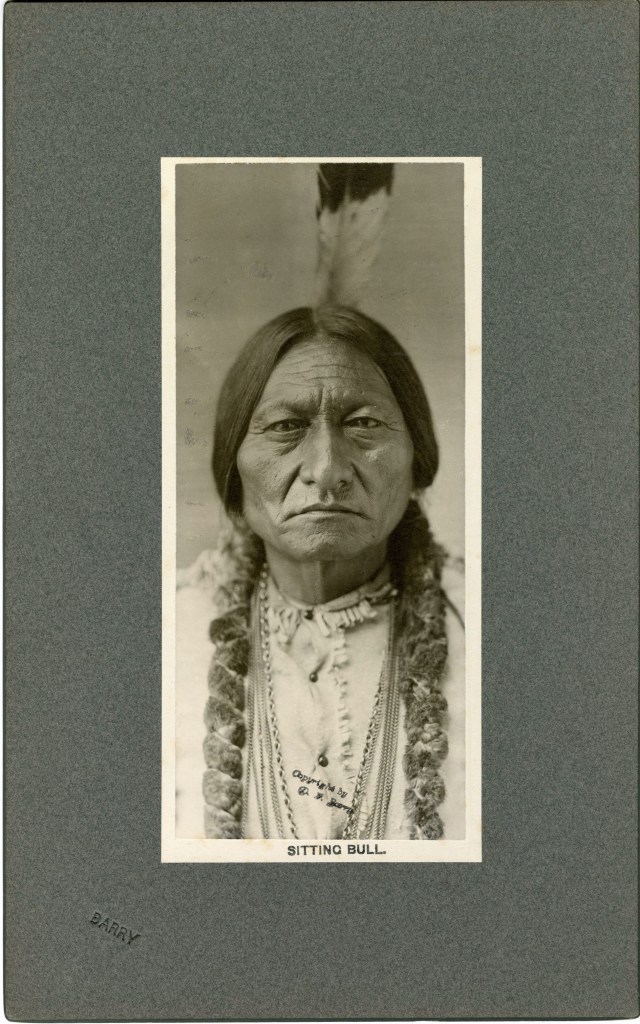
Sitting Bull was known for embodying the Lakota virtues of bravery, fortitude, generosity, and wisdom. He remains an enduring figure of pride, honored for his defense of Indigenous rights and his efforts to maintain a traditional way of life. (Wiki)

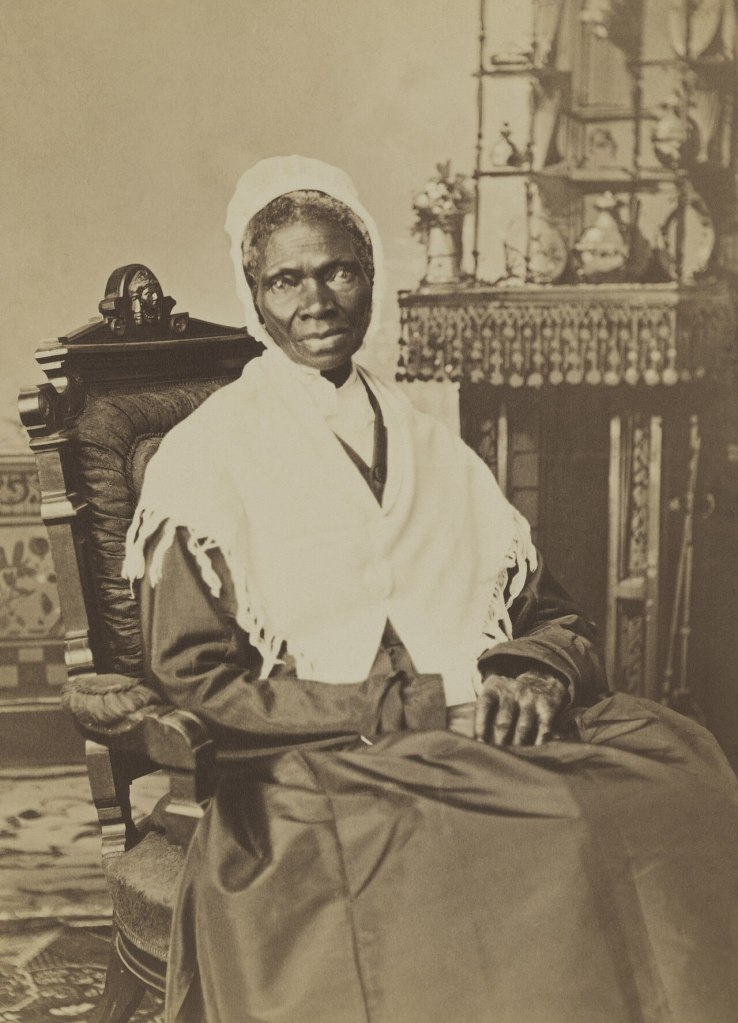
Sojourner Truth was an American abolitionist and activist for African-American civil rights, women’s rights. MissTruth was born into slavery but escaped with her infant daughter to freedom in 1826. After going to court to recover her son in 1828, she became the first black woman to win such a case against a white man. (Wiki)


Perhaps the gift we can give America and ourselves is a time to step back from who we have become – to examine and measure ourselves against who we first wanted to be – to bless all that has been good – to reclaim all that has wandered from our first hope.

Where shall we find the inspiration for such renewal?


Recently, Pope Leo XIV referred to the Blessed Virgin Mary as “an icon of hope.” Under the title of the Immaculate Conception, Mary has long been patroness of the United States, a designation formally entrusted by the American bishops in 1846. Mary is indeed the icon who shows us the compelling power of a heart centered on truth, humility, trust, courage, and mercy.

As people of faith and hope, we are being called again to place this nation consciously within her care.


America’s first centuries have been marked by striving, expansion, and increasing geopolitical influence. This Semiquincentennial calls us to a deeper, humbler appreciation of our responsibility to actualize these words for all our sisters and brothers:

We hold these Truths to be self-evident, 
that all Men are created equal, 
that they are endowed by their Creator 
with certain unalienable Rights,
 that among these are 
Life, Liberty, and the pursuit of Happiness…


On this auspicious Independence Day, let us commit to prayer for our beloved country and for the rededication of its strength, integrity, and moral witness within the world community.

(For my dear readers from countries other than the United States, please keep us in your prayers.)


Music: The Sound of a Nation

Suggested Scripture: Proverbs 14:25-35

For Your Reflection:

  • What feelings or reactions do I have after reading this reflection?
  • Do my feelings or reactions remind me of any passage or event in scripture, especially in the life of Christ? 
  • What actions might I take today because of my response to these readings?