
Thirtieth Sunday in Ordinary Time
October 29, 2023
Today’s Readings:
https://bible.usccb.org/bible/readings/102923.cfm
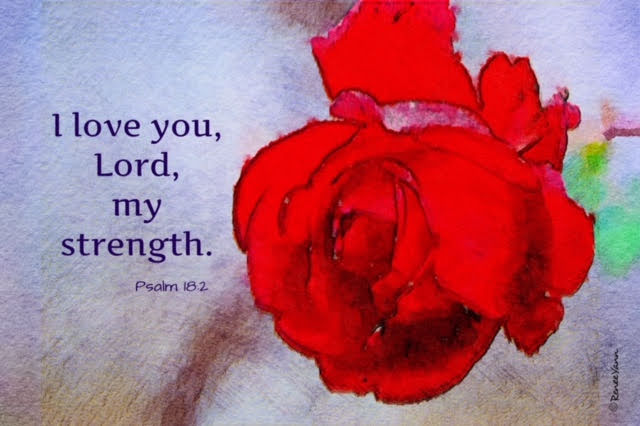
Today, in God’s Lavish Mercy, our readings instruct us on how to love God. Now maybe you think you don’t need any help on that topic, and maybe you’re right. But — just maybeeeeee – you and I are a little bit like the folks in our passage from Exodus who sometimes forgot that the way to love God is to love neighbor.
“You shall not molest or oppress an alien,
Exodus 22;21-22
for you were once aliens yourselves in the land of Egypt.
You shall not wrong any widow or orphan.
If ever you wrong them and they cry out to me,
I will surely hear their cry.

It seems that these Exodus folks suffer from spiritual obtusity. They are a little forgetful of who they really are. They forget their roots – that they were once aliens themselves. They forget that widows and orphans matter as much as they do. They forget that their neighbor needs a cloak (or a home) to be able to sleep at night.
So God tells them, “Hey, I love these people you have conveniently “forgotten”. So don’t pretend you love me if you don’t love them.” It’s that simple.
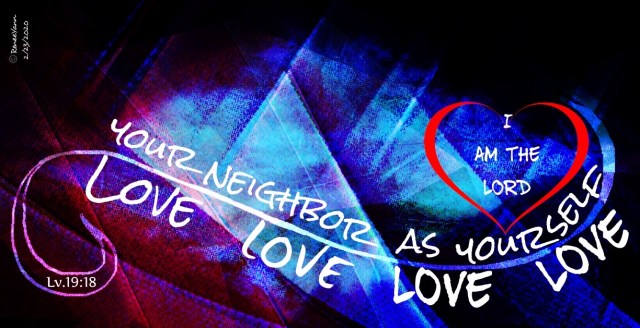
In our Gospel, Jesus basically says the same thing. When the brilliant Pharisee tries to trap Jesus in an obtuse intellectual argument, Jesus disarms him with a clear and simple response:
Jesus said to him,
Matthew 22:37-40
“You shall love the Lord, your God,
with all your heart,
with all your soul,
and with all your mind.
This is the greatest and the first commandment.
The second is like it:
You shall love your neighbor as yourself.
The whole law and the prophets depend on these two commandments.”
The whole enterprise of the spiritual life is to actualize Jesus’s response in one’s life. In the process of doing that by our response to God’s grace, we might sometimes get caught in spiritual forgetfulness, intellectual excuses, or the blare of a dissonant culture.
In our second reading, Paul commends the Thessalonians for having done well in this spiritual endeavor. They did it by replacing what was idolatrous in their lives with the living and true God:
You turned to God from idols
1 Thessalonians 1:9-10
to serve the living and true God
and to await his Son from heaven,
whom he raised from the dead,
Jesus, who delivers us from the coming wrath.
I don’t like to think of myself as particularly idolatrous, but I do have little false gods pop up in my life at times. They tend to wear the deceptive costumes of the seven deadly sins convincing me that I have a right, or at least an excuse, to ignore my neighbor for the sake of my egotism, possessiveness, or spiritual laziness.
May today’s readings wake us up to anything we need to hear within them so that we may freely sing with today’s psalmist:
I love you, my true God, my strength,
Psalm 18: my prayerful adaptation
my neighbor God, present in my life,
my balance, safety, comforter.
My God, my dear steady God,
my protection, well of my salvation,
my trustworthy Friend!
I praise You because, with You,
I am safe from any false god
and anointed by your grace
for the journey.
Poetry: You, Neighbor God – Rainer Maria Rilkë
You, neighbor god, if sometimes in the night
I rouse you with loud knocking, I do so
only because I seldom hear you breathe
and know: you are alone.
And should you need a drink, no one is there
to reach it to you, groping in the dark.
Always I hearken. Give but a small sign.
I am quite near.
Between us there is but a narrow wall,
and by sheer chance; for it would take
merely a call from your lips or from mine
to break it down,
and that without a sound.
The wall is builded of your images.
They stand before you hiding you like names.
And when the light within me blazes high
that in my inmost soul I know you by,
the radiance is squandered on their frames.
And then my senses, which too soon grow lame,
exiled from you, must go their homeless ways.
Music: Overcome – Psalm 18 – James Block
This song renders the Psalm in a beautiful melody. The Psalm, however, retains the militant images so prevalent in the culture of ancient Israel (and sadly in our own). Our task, as we listen and pray these Psalms, is to hear those images as metaphors for our own spiritual challenges and blessings, rather than as an approbation of war and domination.
 Lavish Mercy
Love the music!
LikeLiked by 1 person
Thanks for the wake up call. I love Psalm 18! Blessings to you, Renee!❤️🙏
LikeLiked by 1 person
Blessings and love to you too, Lucille.❤️🙏
LikeLike