Times and Seasons

Tuesday of the Twenty-second Week in Ordinary Time September 5, 2023

Today’s Readings:

https://bible.usccb.org/bible/readings/090523.cfm


Today, in God’s Lavish Mercy, our first reading seems so in synch with the cycle of the seasons.

Concerning times and seasons, brothers and sisters,
you have no need for anything to be written to you.

1 Thessalonians 5:1

Paul goes on to describe the rhythms of days and nights, lights and darknesses that flow through every life. Like the passing of the seasons, our life changes can inspire in us awe, wonder, and praise. But, at times, they can also leave us a little speechless, fearful, and confused.

Each season, though full of beauty, has its taxes and turns, for example:

the spring of:

an unrequested assignment

an unexpected pregnancy

a demanding opportunity


the summer of:

a long wait

an exhausting pilgrimage

a listless dailyness


the autumn of:

unchosen changes

physical diminishments

waning energies


the winter of:

cooling enthusiasm

shadowy futures

darkened understanding


Paul assures us that the light of faith guides and sustains us through our life’s changes and challenges:

But you, brothers and sisters, are not in darkness,
for that day to overtake you like a thief.
For all of you are children of the light
and children of the day.
We are not of the night or of darkness.

1 Thessalonians 5:9

At our Baptism, an unquenchable pilot light was ignited deep in our hearts. We are fueled by the fire of God. As the earth’s phases transpire, they teach us to honor our own seasons by stilling ourselves in that Luminous Flame.


Poetry: Twilight by Louise Glück

All day he works at his cousin’s mill,
so when he gets home at night, he always sits at this one window,
sees one time of day, twilight.
There should be more time like this, to sit and dream.
It’s as his cousin says:
Living—living takes you away from sitting.

In the window, not the world but a squared-off landscape
representing the world. The seasons change,
each visible only a few hours a day.
Green things followed by golden things followed by whiteness—
abstractions from which come intense pleasures,
like the figs on the table.

At dusk, the sun goes down in a haze of red fire between two poplars.
It goes down late in summer—sometimes it’s hard to stay awake.

Then everything falls away.
The world for a little longer
is something to see, then only something to hear,
crickets, cicadas.
Or to smell sometimes, aroma of lemon trees, of orange trees.
Then sleep takes this away also.

But it’s easy to give things up like this, experimentally,
for a matter of hours.

I open my fingers—
I let everything go.

Visual world, language,
rustling of leaves in the night,
smell of high grass, of woodsmoke.

I let it go, then I light the candle.

Music: Wind in the Tall Autumn Grass – Kathryn Kaye

Gracious Word

Monday of the Twenty-second Week in Ordinary Time September 4, 2023

Today’s Readings:

https://bible.usccb.org/bible/readings/090423.cfm


Today, in God’s Lavish Mercy, our readings each describe times of fulfillment.

The Last Judgement by Jean Cousin c.1560

In prose rich with imagery, Paul paints a picture of the final coming of Christ. Many early Christians had expected this Second Coming to occur very quickly after the Resurrection. When it did not, they became confused and wondered what it meant for those who died in the meantime.

To answer their concerns, Paul draws on the images Jesus himself used:

At that time people will see the Son of Man coming in clouds with great power and glory. And he will send his angels and gather his elect from the four winds, from the ends of the earth to the ends of the heavens.

Mark 13:26-27

In today’s Gospel, Jesus announces that the First Coming has occurred. His listeners, too, had expected the Messiah for ages. And now he was here – no clouds, no trumpets, no attending angels. Just the quiet unrolling of a scroll and the simple proclamation, “Today this Scripture passage is fulfilled in your hearing.”


I like to pray with this passage by imagining myself somewhere in that synagogue, hearing those astounding words. Would I be the person who had longed to hear them and who responded wholeheartedly? Or would I hardly be paying attention, so distracted by my many concerns? Maybe I would be the skeptic who took any religious comment with a grain of salt and a drop of vinegar. Or maybe I would feel my heart fully embraced by that “Gracious Word” who is Jesus Christ.

And all spoke highly of him
and were amazed at the gracious words that came from his mouth.


“Gracious” is such a beautiful word. The early Greek transcripts denote it as a word akin to “charity” or selfless love

χάριτος – charitos

As we try to imagine Jesus at this opening moment of his ministry, we might think of the most gracious person we know and multiply that by infinity.


Poetry: Thou Gracious Power – Oliver Wendell Holmes

Thou gracious Power,
whose mercy lends
The light of home, the smile of friends,
Our families in Thine arms enfold
As in the peaceful days of old.


Wilt Thou not hear us while we raise,
In sweet accord of solemn praise,
The voices that have mingled long
In joyous flow of mirth and song?


For all the blessings life has brought,
For all its sorrowing hours have taught,
For all we mourn, for all we keep,
The hands we clasp,
the loved that sleep.


The noontide sunshine of the past,
These brief, bright
moments fading fast,
The stars that gild our darkening years,
The twilight ray from holier spheres.


We thank Thee, Father; let Thy grace
Our narrowing circle still embrace,
Thy mercy shed its heavenly store,
Thy peace be with us evermore.


Music: How Deep, How Simple – Kathryn Kaye

Patterned on Christ

Twenty-second Sunday in Ordinary Time

September 3, 2023

Today’s Readings:

https://bible.usccb.org/bible/readings/090323.cfm


Today, in God’s Lavish Mercy, on this first Sunday in September, there is change in the air. Vacations are over. Schools are open. Autumn sale announcements are stuffed into the newspaper. Some of us are even thinking of a pumpkin latte after Sunday Mass.

We feel a change of mood in our Sunday readings too, and the mood is solemn.


Just last Sunday, Jesus gave the “keys” over to Peter, alerting him that he would soon be driving the boat. But in today’s Gospel, Jesus gets intense about how that transition will occur. And it’s not going to be pretty.


The angst within today’s scripture readings shouts loudly to us in the passage from Jeremiah foreshadowing the Passion of Christ. Jeremiah wrote during the downfall of Jerusalem to its Babylonian captors. When his and his community’s faith was tested beyond endurance, Jeremiah called his people to fidelity and hope. He gave expression to the deep pain of loss and failure yet holding up an unquenchable trust. The people derided him from their desolation and he let God know how he suffered:

Whenever I speak, I must cry out,
violence and outrage is my message;
the word of the LORD has brought me
derision and reproach all the day.

I say to myself, I will not mention him,
I will speak in his name no more.
But then it becomes like fire burning in my heart,
imprisoned in my bones;
I grow weary holding it in, I cannot endure it.

Jeremiah 20: 8-9

Jesus is more subtle with his words but they too reveal a heart that is breaking because, in worldly terms, the dream appears to be untenable:

Jesus began to show his disciples
that he must go to Jerusalem and suffer greatly
from the elders, the chief priests, and the scribes,
and be killed and on the third day be raised.

Matthew 16:21

One might read today’s scriptures and ask why it had to be so hard for Jesus, so hard for the Jeremiah community. Why is it so hard for us to live a peaceful, faithful life in the world? Why doesn’t God just make it all work?

Praying with those questions, I come up with one answer: free will. God created us to choose freely to love and live in God. Programming that love into us would make the love meaningless. We have to choose it. And not everyone does. Those choices contradictory to God’s love create the kind of suffering Jesus and Jeremiah describe.


From today’s Second Reading

Certainly we experience other kinds of anguish in life not controlled by our choices. These are associated with the natural life cycle of birth, growth, diminishment and death. As Christians, we believe that it is within the mystery of these joys and sorrows, lived in the pattern of Christ, that we come fully to a life resurrected in God.


Poetry from Scripture: Psalm 63:

Seeking the gift of trust, we pray:

O God, you are my God whom I seek;
for you my flesh pines and my soul thirsts
like the earth, parched, lifeless and without water.
You are my help,
and in the shadow of your wings I shout for joy.
My soul clings fast to you;
your right hand upholds me.

Music: The Circle of Life – from The Lion King

From the day we arrive on the planet

And blinkin’, step into the sun

There’s more to see than can ever be seen

More to do than can ever be done

Some say, “Eat or be eaten”

Some say, “Live and let live”

But all are agreed as they join the stampede

You should never take more than you give

In the circle of life

It’s the wheel of fortune

It’s the leap of faith

It’s the band of hope

‘Til we find our place

On the path unwinding

In the circle, the circle of life

Some of us fall by the wayside

And some of us soar to the stars

And some of us sail through our troubles

And some have to live with the scars

There’s far too much to take in here

More to find than can ever be found

But the sun rollin’ high

Through the sapphire sky

Keeps great and small on the endless round

A Tranquil Life

Saturday of the Twenty-first Week in Ordinary Time Saturday, September 2, 2023

Today’s Readings:

https://bible.usccb.org/bible/readings/090223.cfm


Today, in God’s Lavish Mercy, both our readings offer many lessons, but I think a key one is this:

If you want to be a better person,
mind your own business!


In Thessalonians, Paul is abundantly clear about it when he describes what fosters fraternal charity:

We urge you, brothers and sisters, to progress even more,
and to aspire to live a tranquil life,
to mind your own affairs,
and to work with your own hands,
as we instructed you.


Jesus allegorizes what happens when we ignore our own responsibilities and worry about someone else’s choices:

‘Master, I knew you were a demanding person,
harvesting where you did not plant
and gathering where you did not scatter;
so out of fear I went off and buried your talent in the ground.
Here it is back.’
His master said to him in reply, ‘You wicked, lazy servant!


What’s on the Other Side????

We all know people who are experts at evaluating everyone’s life but their own. Apparently, Paul and Jesus knew some too. To guide them into a more integrated life, Jesus and Paul offered these two standards: fraternal charity and practiced faithfulness to one’s own call.

I think the advice can help all of us.


Prose: from Plato

Justice means 
minding one's own business
and not meddling with
other men’s concerns.

Music: Mind Your Own Business – Hank Williams

If the wife and I are fussin’, brother that’s our right
‘Cause me and that sweet woman’s got a license to fight
Why don’t you mind your own business?
(Mind your own business)
‘Cause if you mind your business, then you won’t be mindin’ mine

Oh, the woman on our party line’s the nosiest thing
She picks up her receiver when she knows it’s my ring
Why don’t you mind your own business?
(Mind your own business)
Well, if you mind your business, then you won’t be mindin’ mine

I got a little gal that wears her hair up high
The boys all whistle when she walks by
Why don’t you mind your own business?
(Mind your own business)
Well, if you mind your own business, you sure won’t be minding mine

If I want to honky tonk around ’til two or three
Now, brother that’s my headache, don’t you worry ’bout me
Just mind your own business
(Mind your own business)
If you mind your business, then you won’t be mindin’ mine

Mindin’ other people’s business seems to be high-toned
I got all that I can do just to mind my own
Why don’t you mind your own business?
(Mind your own business)
If you mind your own business, you’ll stay busy all the time

For Fresh September

As we wake up today, perhaps surprised that it is already September, this descriptive poem by Helen Hunt Jackson may stir our prayerful appreciation for this glorious month.

In particular, I love the poet’s evocative final verse:

'Tis a thing which I remember;
To name it thrills me yet:
One day of one September
I never can forget.

Many of you, my dear readers, have such a memorable September day tucked in the tabernacle of time. It is, after all, a season of endings and beginnings – many of which can be life-changing, heart-changing.

As we remember , let’s lift up this first day in thanksgiving for all the blessings our Septembers have given us.

No Little Holes

Friday of the Twenty-first Week in Ordinary Time

September 1, 2023

Today’s Readings:

https://bible.usccb.org/bible/readings/090123.cfm

——————————

Today, in God’s Lavish Mercy, Paul instructs the Thessalonians on how to live a good Christian life. His teaching is strung on the tones of his time, and may fall a bit askew on our ears.

Reading Paul’s words today, I was immediately reminded of a report I read yesterday about Pope Francis’s visit with his Jesuit brothers in Portugal.

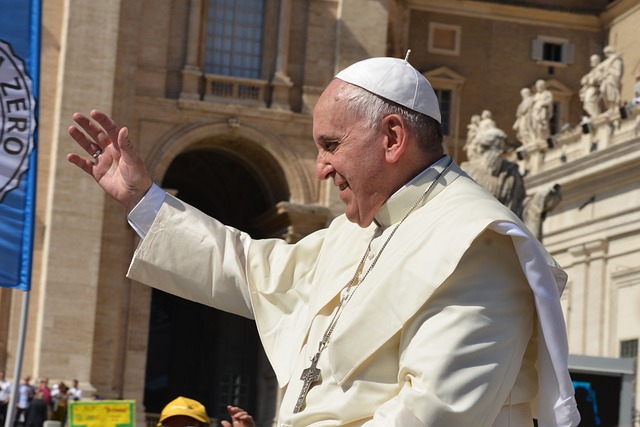
The Pope expressed his concern about what he terms “backwardism”, the intent to oppose any change in Church teaching. He said that “backwardism is useless, and it is necessary to understand that there is a correct evolution in the understanding of questions of faith and morals.”

Today’s reading offers us a good example of how we adapt our understanding of scripture according to advances in learning and the sciences.

The image of a man “acquiring” a wife for himself carries an objectification of women intolerable to a developed 21st century mind. Does that mean the teaching is invalid for us?

No. It simply alerts us that we must read all scripture with the understanding of enlightened Church teaching. The essence of this passage from Paul is not the instruction on how one finds a life companion. The essence is the call to holiness which never changes.

This is the will of God, your holiness.

The role of the Pope is to lead the Church in understanding the Word of God for or time. When asked for modern examples of these developing teachings, Francis cited these:

“Today it is a sin to possess atomic bombs; the death penalty is a sin, it cannot can be practiced, and it was not so before,” he said. “As for slavery, some pontiffs before me have tolerated it, but things are different today.”

——————————-

I found inspiration in the Pope’s continued explanation:

Francis went on to point to the writings of the fifth century monk, Vincent of Lérins, who taught that doctrine “may be consolidated by years, expanded by time, exalted by age.”

Change develops from the root upward, growing with these three criteria,” the pope told the Jesuits, noting that Lérins knew that the understanding of the human person is deepened with the passage of time.

The other sciences and their evolution also help the church in this growth in understanding,” Francis said. “The view of church doctrine as a monolith is wrong.”

from NCR: Christopher White, 8/28/2023

———————————-

Unfortunately, not all those charged with leadership and teaching exercise their role with this holy freedom. Fear, ignorance, greediness, and a lust for power can lurk behind even the most exalted title.

As today’s Gospel indicates, it takes great vigilance to remain ready for God. Over centuries for the Church, and over a lifetime for each of us, we must continue to fill our lamps with refreshed and deeper perceptions of God’s ever-unfolding, infinite Wisdom.

————————————

Prose: about St. Augustine

You may have heard this legend, written in the Middle Ages, by Jacobus de Voragine. I remember a book similar to the one below which you too might have seen as a child recounting legends of the saints.

St. Augustine spent 30 years writing his brilliant treatise “De Trinitate”. He never completed it.

Early in the process, as the story goes, Augustine was pondering along the seashore. He saw a young boy industriously running from the ocean back to a small hole dug in the sand. Each time the boy carried a shell full of water to the hole.

When asked, he told Augustine that he was trying to transfer the entire ocean to the hole. When Augustine assured him that that was an impossible task, the child responded, “It would be easier and quicker to draw all the water out of the sea and fit it into this hole than for you to fit the mystery of the Trinity and His Divinity into your little intellect; for the Mystery of the Trinity is greater and larger in comparison with your intelligence than is this vast ocean in comparison with this little hole.”

So saying, the little boy vanished.

—————————

Music: Fill Us with Your Love

Witness and Gratitude

Thursday of the Twenty-first Week in Ordinary Time

August 31, 2023

Today’s Readings:

https://bible.usccb.org/bible/readings/thursday-twenty-first-week-ordinary-time

Today, in God’s Lavish Mercy, our readings speak to us about the power of witness.

We need the witness of one another’s faith to strengthen our own on life’s long journey. Even the strongest spiritual leader is encouraged by the faith and vitality of their traveling companions.

Paul was confirmed by the faithful witness of the Thessalonians to the point that his grateful prayer pours out in today’s letter.

We have been reassured about you, brothers and sisters,

in our every distress and affliction, through your faith.

For we now live, if you stand firm in the Lord.

What thanksgiving, then, can we render to God for you,

for all the joy we feel on your account before our God?

1 Thessalonians 3:7-9

In our Gospel, Jesus tells us that it takes constant vigilance to assure this kind of fidelity in our hearts. There are days when the long journey exhausts us. Sometimes one valley comes so quickly upon another that we stumble a bit in our trust or resolve.

It is at such times that the witness of those beside us is so important. When we are in the valley, we need to lifted by their light. When we are on the hilltop, we need to give that light unselfishly.

That mutuality seems to be working for Paul and the Thessalonians. We can join in Paul’s prayer, remembering when it has gifted us.

———————————————

Poetry: Thank God for Little Things – Helen Steiner Rice

Thank You, God, for little things
that often come our way—

The things we take for granted
but don’t mention when we pray—

The unexpected courtesy,
the thoughtful, kindly deed—

A hand reached out to help us
in the time of sudden need—

Oh make us more aware, dear God,
of little daily graces

That come to us with “Sweet Surprise”
from never-dreamed-of places.

———————————————-

Music: I Thank My God – Frank Anderson

Chorus

I thank my God each time I think of you.

And when I pray for you I pray with joy.

1

Now there is one thing I am sure of

He who begins this work in you

Will see that it is truly finished

When the day of Jesus comes.

2

That I should feel like this towards you

Seems only natural to me.

For you have shared with me my labours;

The Gospel privilege with me.

3

Since you have borne with me my burdens,

I now bear you within my heart.

And God alone knows how I miss you.

I love you just as Christ loves me.

3

Since you have borne with me my burdens,

I now bear you in my heart.

And God alone knows how I miss you.

I love you just as Christ loves me.

4

I pray your knowledge will be deepened.

Your love be mutual and strong.

Then you will reach the perfect goodness.

Then to the Lord you will belong.

Owning Our Faith

Wednesday of the Twenty-first Week in Ordinary Time
August 30, 2023

Today’s Readings:

https://bible.usccb.org/bible/readings/083023.cfm


Today, in God’s Lavish Mercy, our readings present us with a stark contrast.

Paul describes a community that has not only “heard” the Word but has allowed it to transform them:

And for this reason we too give thanks to God unceasingly,
that, in receiving the word of God from hearing us,
you received it not as the word of men, but as it truly is, the word of God,
which is now at work in you who believe.

In contrast, Jesus delivers another blast of “woes” to the scribes and Pharisees whose “faith” is a pretense which hides a dead heart:

Woe to you, scribes and Pharisees, you hypocrites.
You are like whitewashed tombs, which appear beautiful on the outside,
but inside are full of dead men’s bones and every kind of filth.
Even so, on the outside you appear righteous,
but inside you are filled with hypocrisy and evildoing.


The readings inspire me to ask myself this question:

If I put my faith under a stethoscope,
would it have a heartbeat?

I think back over my life and consider how the faith came to me. How did I begin to “hear” in the way that Paul describes?

Many of us began that “hearing” in faithful families, parishes, and schools where we learned stories that we loved and wanted to imitate. We saw faith lived out in the lives of those teachers and we were inspired to become like them.

Others of us came to the faith by a more circuitous route – perhaps, by some blessed experiential conversion that brought us face-to-face with the Holy.


In whatever ways the Word has spoken to us, and continues to speak, the question for us is always this:

Do we hear the Holy with our own hearts?


When a doctor or nurse holds a stethoscope to our chests, both we and they are quiet so that the heartbeat can be heard. So too when we listen for our “faith-beat”. We must settle down and let ourselves rest in God’s Silence. The Spirit will lead us to hear the graces pulsing at the core of our lives.

Sometimes the sound is strong, and we can rest in it with joyful satisfaction. But there are times when the beat is hard to discern because it is buried under life’s pressures and twists. We might find ourselves pressed down and entangled rather than Light-hearted with God.


Finding deep freedom in our spiritual life requires our attention. If we don’t nurture our souls, they will end up like that lonely plant on the windowsill about which we say, “Oh, I’ll water you later”, but later never comes!


Prose: John of the Cross offers two pieces of advice that may help us to free ourselves from those pressures and entanglements that inhibit our spiritual deepening:

Love consists not in feeling great things but in having great detachment and in living life sufferings for the Beloved. The soul that is attached to anything, however much good there may be in it, will not arrive at the liberty of Divine union. For whether it be a strong wire rope or a slender and delicate thread that holds the bird, it matters not, if it really holds it fast; for until the cord be broken, the bird cannot fly.

However softly we speak, God is so close to us that he can hear us; nor do we need wings to go in search of him, but merely to seek solitude and contemplate him within ourselves, without being surprised to find such a good Guest there.


Music: Tender Hearted – Jeanne Cotter

Uncompromising Faith

Memorial of the Passion of Saint John the Baptist
August 29, 2023

Today’s Readings:

https://bible.usccb.org/bible/readings/082923.cfm


John the Baptist – Titian (1540)

Today, in God’s Lavish Mercy, we honor John the Baptist under the title of his “Passion”. The memorial used to be called “the Beheading of John the Baptist”, a title that more referenced the act of the criminal rather than the perseverance of the martyr.

The Gospel narrative is gripping, as is much of the history of John the Baptist. He was no smoldering wick. Rather, John was on fire with the Truth of the Messiah and he never compromised.

Herod was the one who had John the Baptist arrested and bound in prison
on account of Herodias,
the wife of his brother Philip, whom he had married.
John had said to Herod,
“It is not lawful for you to have your brother’s wife.”
Herodias harbored a grudge against him
and wanted to kill him but was unable to do so.

Mark 6: 17-19

In a commentary on this Gospel, Pope Francis described the central players like this: There are four characters:

  • King Herod “corrupt and indecisive”
  • Herodias, the wife of the king’s brother who “knew only how to hate”
  • Salome, “the vain ballerina”,
  • the “prophet, decapitated and alone in his cell”.

Pope Francis continued:

John had pointed Jesus out to His first disciples, indicating that He was the Light of the world. He, instead, gave his life little by little, to the point of being extinguished in the darkness of a prison cell.
Life has value only when we give it; when it is given in love, in truth; when we give it to others, in daily life, in our families. It should always be given. If someone grasps his or her life in order to keep it, like the king by his corruption, or the woman with her hatred, or the child, the young girl with her vanity that was that of an adolescent, naive, life dies, life ends up withered, it is useless”

Homily of Pope Francis, Santa Marta, 8 February 2019

Pope Benedict XVI also offered some compelling thoughts on the Passion of John the Baptist:
 “Celebrating the martyrdom of St. John the Baptist also reminds us – Christians in our own times – that we cannot give into compromise when it comes to our love for Christ, for his Word, for his Truth. The Truth is the Truth; there is no compromise. The Christian life requires, as it were, the ‘martyrdom’ of daily fidelity to the Gospel; the courage, that is, to allow Christ to increase in us and to direct our thoughts and actions.”


Francis and Benedict give us plenty to think about as we celebrate this solemn feast. Let us pray for the courage to live our faith wholeheartedly, inspired by the unswerving fidelity of St. John the Baptist.


Poetry: from “Saint John the Baptist” by Thomas Merton

St. John, strong Baptist,
Angel before the face of the Messiah
Desert-dweller, knowing the solitudes that lie
Beyond anxiety and doubt,
Eagle whose flight is higher than our atmosphere
Of hesitation and surmise,
You are the first Cistercian and the greatest Trappist:
Never abandon us, your few but faithful children,
For we remember your amazing life,
Where you laid down for us the form and pattern of
Our love for Christ,
Being so close to Him you were His twin.
Oh buy us, by your intercession, in your mighty heaven,
Not your great name, St. John, or ministry,
But oh, your solitude and death:
And most of all, gain us your great command of graces,
Making our poor hands also fountains full of life and wonder
Spending, in endless rivers, to the universe,
Christ, in secret, and His Father, and His sanctifying Spirit.

Music: Jesu, Joy of Man’s Desiring – J.S. Bach – This beautiful hymn befits John’s great love and devotion to Jesus.

Don’t Be a Hypocrite

Memorial of Saint Augustine, Bishop and Doctor of the Church
August 28, 2023

Today’s Readings:

https://bible.usccb.org/bible/readings/082823.cfm


Today, in God’s Lavish Mercy, we make a shift in our first readings. We leave the Hebrew Scriptures for a while to pick up Paul’s letters – from now until almost the end of September.

We begin with the first letter to the Thessalonians. Written about twenty years after the Resurrection, 1 Thessalonians is widely agreed to be the first book of the New Testament to be written, and the earliest extant Christian text.


The lyrical opening greeting in itself is magnificent. With it, Paul confirms these very early Christians as a recognized and deeply appreciated community giving them the encouragement they need to sustain and grow their shared life in Christ.

Paul, Silvanus, and Timothy to the Church of the Thessalonians
in God the Father and the Lord Jesus Christ:
grace to you and peace.

1 Thessalonians: 1

And then, they are given this beautiful, grateful prayer from Paul naming and blessing their call and subsequent efforts for God:

We give thanks to God always for all of you,
remembering you in our prayers,
unceasingly calling to mind your work of faith and labor of love
and endurance in hope of our Lord Jesus Christ,
before our God and Father,
knowing, brothers and sisters loved by God, how you were chosen.

1 Thessalonians: 2-4

photo by Martin Sanchez from Unsplash

Praying with this passage, I am moved to recall the “encouragers of faith” in my own life. At those few times in my life when the floor seemed to fall out and I felt like I was hanging on by a fingernail, there have always been those dear voices who called to me the way Paul calls to the Thessalonians today:

  • I am praying for you
  • You are part of a community who needs you and will sustain you
  • Know that who you are and what you do is appreciated
  • By faith, you have endured difficulty before. You can do it again.
  • You are loved and chosen by God. Be confident in that Power.

This kind of loving support is a key element of Christian community.

In today’s Gospel, Jesus condemns those who completely miss that point. He calls them hypocrites because they bury the heart of community in compliance to their controlling and self-promoting laws.

Jesus said to the crowds and to his disciples:
“Woe to you, scribes and Pharisees, you hypocrites.
You lock the Kingdom of heaven before others.
You do not enter yourselves,
nor do you allow entrance to those trying to enter.

Woe to you, scribes and Pharisees, you hypocrites.
You traverse sea and land to make one convert,
and when that happens you make him a child of Gehenna
twice as much as yourselves.

Matthew 23: 13-15

The fundamental charge laid against (the scribes and Pharisees) is hypocrisy—a gap between appearance and reality, between saying and doing, caused by a misplaced hierarchy of values and excessive emphasis on external matters to neglect of the interior.

Daniel J. Harrington – Sacra Pagina: The Gospel of Matthew

Jesus and Paul make it quite clear how we are to love and support one another in the Christian community. As we give thanks for those who have been such a support in our lives, let’s look into our own hearts for the same kind of behaviors. When we love one another in this way, we carry the otherwise invisible love of God to our sisters and brothers when they most need to see it.


Poetry: If I Can Stop One Heart from Breaking – Emily Dickinson

If I can stop one heart from breaking, I shall not live in vain;
If I can ease one life the aching,
Or cool one pain,
Or help one fainting robin
Unto his nest again, I
shall not live in vain.


Music: You Raise Me Up – written by Rolf Levland and sung by Josh Groban