Today, in God’s Lavish Mercy, we stand beside Jesus in a tangled world of insults, violence, plots, and dirty money. How sickening and painful such an atmosphere must have been to him who is Love and Divine Innocence. The psalmist describes the pain like this:
Insult has broken my heart, and I am weak, I looked for sympathy, but there was none; for consolers, not one could I find. Rather they put gall in my food, and in my thirst they gave me vinegar to drink.
Psalm 69: 21-22
Despite such trauma, we see Christ’s trust and holy determination to embrace the Father’s Will however it is revealed to him.
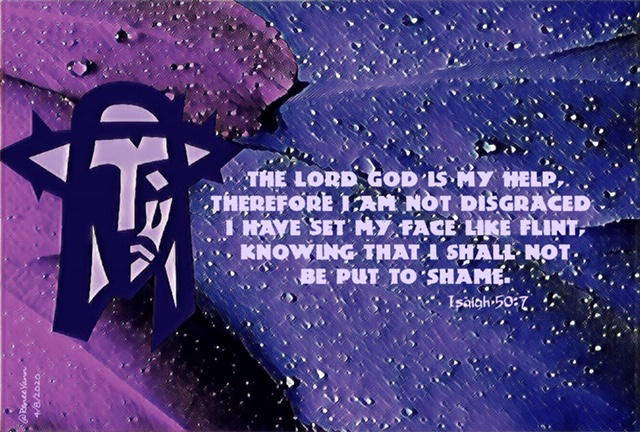
The Lord GOD is my help, therefore I am not disgraced; I have set my face like flint, knowing that I shall not be put to shame.
Isaiah 50:7
As we look to Jesus’s fidelity to find courage in our own challenges, we must also be starkly aware of what opposing infidelity looks like. We see it in the face of Judas – the Pretender who reclines at the Lord’s table, still eats the sacred food, dissembles his innocence while the blood-coins jingle in his pocket.
Once again, as the Passion story unfolds before us, we can find ourselves somewhere – perhaps many places – in its lines. Wherever that is, let us pray there with Jesus to be open in trust and fidelity to its transformative grace.
Poetry: Slow through the Dark – Paul Lawrence Dunbar
Slow moves the pageant of a climbing race; Their footsteps drag far, far below the height, And, unprevailing by their utmost might, Seem faltering downward from each hard won place. No strange, swift-sprung exception we; we trace A devious way thro’ dim, uncertain light,— Our hope, through the long vistaed years, a sight Of that our Captain’s soul sees face to face.
Who, faithless, faltering that the road is steep, Now raiseth up his drear insistent cry? Who stoppeth here to spend a while in sleep Or curseth that the storm obscures the sky? Heed not the darkness round you, dull and deep; The clouds grow thickest when the summit’s nigh.
Today, in God’s Lavish Mercy, the betrayal of Jesus continues, as does his mounting courage to endure its consequences.
In our first reading, the experience of the prophet Isaiah foreshadows that of Jesus. We can hear Jesus praying in Isaiah’s words:
The Lord GOD is my help, therefore I am not disgraced; I have set my face like flint, knowing that I shall not be put to shame. He is near who upholds my right; if anyone wishes to oppose me, let us appear together. Who disputes my right? Let him confront me. See, the Lord GOD is my help; who will prove me wrong?
Isaiah 50:7-8
We hear Christ’s transcendent openness to the Father’s accompaniment:
Morning after morning God opens my ear that I may hear; And I have not rebelled, have not turned back.
We hear Christ’s courage to face what life unfolds before him:
I gave my back to those who beat me, my cheeks to those who plucked my beard; My face I did not shield from buffets and spitting.
We hear Christ’s utter commitment, despite suffering, to the Father’s Presence:
The Lord GOD is my help, therefore I am not disgraced; I have set my face like flint, knowing that I shall not be put to shame.
As we pray with Jesus today, may we:
hear God’s purpose in our lives.
see grace unfold in all our circumstances
set our hearts, like flint, upon faith and trust in God
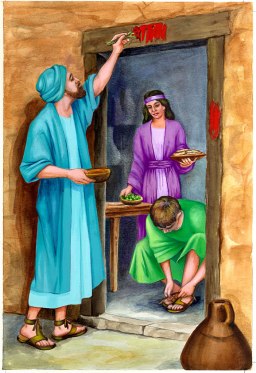
As our Jewish sisters and brothers will begin the Passover celebration this Friday, their rich faith heritage inspires us always to find God in the journey, no matter where it leads us.
In the Gospel’s Passover moment, Jesus walks toward the painful experience of Gethsemane. He invites us to come and receive the reassuring blessing of his Father even as the night shadows fall.
Poetry: The Garden of Gethsemane – by Boris Pasternak who won the Nobel Prize for Literature after writing Dr. Zhivago
Indifferently, the glimmer of stars Lit up the turning in the road. The road went round the Mount of Olives, Below it the Kedron flowed.
The meadow suddenly stopped half-way. The Milky Way went on from there. The grey and silver olive trees Were trying to march into thin air.
There was a garden at the meadow’s end. And leaving the disciples by the wall, He said: ‘My soul is sorrowful unto death, Tarry ye here, and watch with Me awhile.’
Without a struggle He renounced Omnipotence and miracles As if they had been borrowed things, And now He was a mortal among mortals.
The night’s far reaches seemed a region Of nothing and annihilation. All The universe was uninhabited. There was no life outside the garden wall.
And looking at those dark abysses, Empty and endless, bottomless deeps, He prayed the Father, in a bloody sweat, To let this cup pass from His lips.
Assuaging mortal agony with prayer, He left the garden. By the road he found Disciples, overcome by drowsiness, Asleep spreadeagled on the ground.
He wakened them: ‘The Lord has deemed you worthy To live in My time. Is it worthiness To sleep in the hour when the Son of Man Must give Himself into the hands of sinners?’
And hardly had He spoken, when a mob Of slaves, a ragged multitude, appeared With torches, sowards, and Judas at their head Shaping a traitor’s kiss behind his beard.
Peter with his sword resisted them And severed one man’s ear. But then he heard These words: ‘The sword is no solution. Put up your blade, man, in its scabbard.
Could not My Father instantly send down Legions of angels in one thunderous gust? Before a hair of my head was touched, My enemies would scatter like the dust.
But now the book of life has reached a page Most precious and most holy. What the pen Foretold in Scripture here must be fulfilled. Let prophecy come to pass. Amen.
The course of centuries is like a parable And, passing, can catch fire. Now, in the name Of its dread majesty, I am content To suffer and descend into the tomb.
I shall descend and on the third day rise, And as the river rafts float into sight, Towards My Judgement like a string of barges The centuries will float out of the night.’
Music: I Come to the Garden Alone – Sean Clive
I come to the garden alone while the dew is still on the roses, And the voice I hear falling on my ear, The Son of God discloses
And He walks with me and He talks with me, And He tells me I am his own; And the joy we share as we tarry there, None other has ever known
He speaks, and the sound of his voice is so sweet The birds hush their singing, And the melody that He give to me Within my heart is to ringing.
And He walks with me and He talks with me, And He tells me I am his own; And the joy we share as we tarry there, None other has ever known
I stay in the garden with Him, Though the night around me is falling. But He bids me go; through the voice of woe His voice to me is calling.
And He walk with me and He talks with me, And He tells me I am His own; And the joy we share as we tarry there, None other has ever known.
Today, in Mercy, the shadows of “Spy Wednesday” threaten. In our Gospel, Judas asks the chief priests,
“What are you willing to give me if I hand him over to you?”
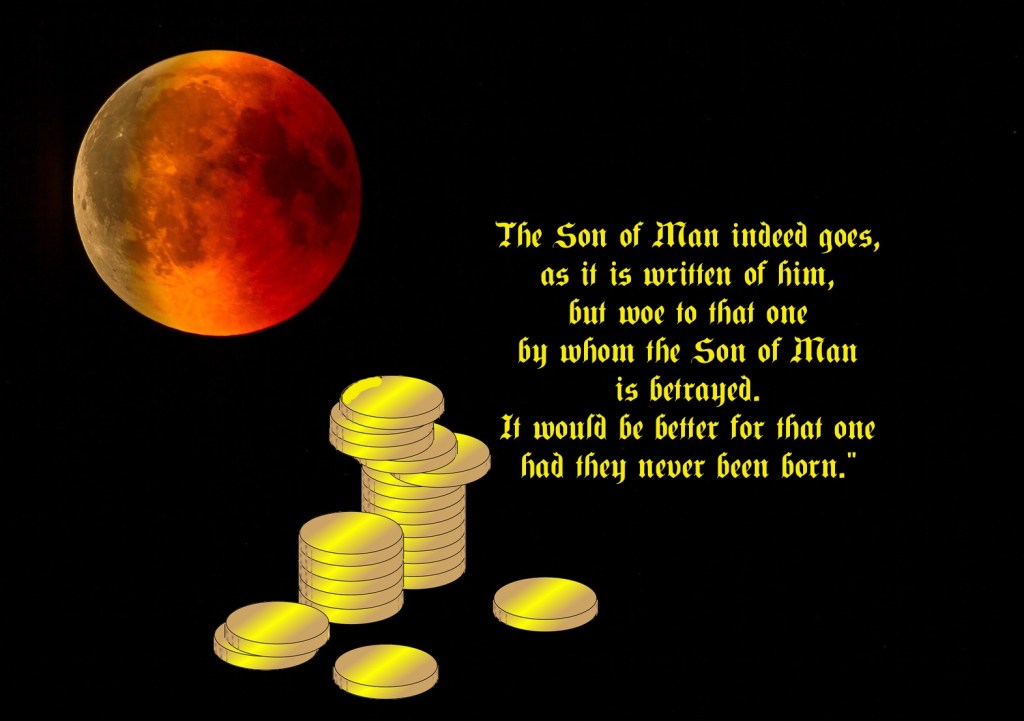
How terribly sad! This man whom Judas loved and admired! This man who loved and trusted Judas in return! Judas sells Divine Friendship for thirty pieces of silver … about a season’s wages. Hence, for all time, the name “Judas” has been tied to betrayed trust.
We give a great gift when we trust someone. We hope they will be honest and respectful of that gift. We hope they will be truthful in relationship with us. We hope that, if the relationship frays, they will try with us to re-knit it, or at least to lay it aside in reverence and gratitude. Judas proved unworthy of the trust Jesus had given him.
Trust is a precious and scant commodity in our modern culture. Our entertainment media presents us constantly with examples of cheating, treachery, greed, and a host of other deadly sins. It shows us relationships built on whim and appearances rather than long and tested fidelity and honor. Our culture has become confused, like Judas, about what is really important for our lives.
Perhaps some of our errant culture has seeped into our spiritual lives? Today is a good day to test the quality of our relationship with God. Do we trust him, speak with him, choose for him, stand by him? Will God find us faithful? Or are there some little pieces of silver in our lives for which we sometimes trade him?
Music: May the Lord Find Us Faithful – Mac and Beth Lynch



 Lavish Mercy