Trusting the Promise

Monday of the Twenty-ninth Week in Ordinary Time
October 23, 2023

Today’s Readings:

https://bible.usccb.org/bible/readings/102323.cfm


Today, in God’s Lavish Mercy, Paul counsels us to be steadfast in our faith. Jesus counsels us to avoid greed. How might the two be connected?

Perhaps like this. Only by faith do we have the courage to repudiate the allurements of greed.

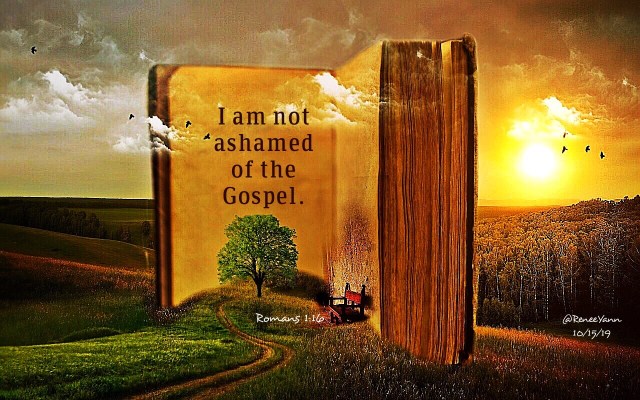
Paul lauds Abraham whose faith convinced him that God’s promise to him would be fulfilled. Jesus promises us eternal life in a realm apart from any earthly treasure. If we believe in Jesus’s promise, we realize the futility of possessiveness, greed and consumerism.
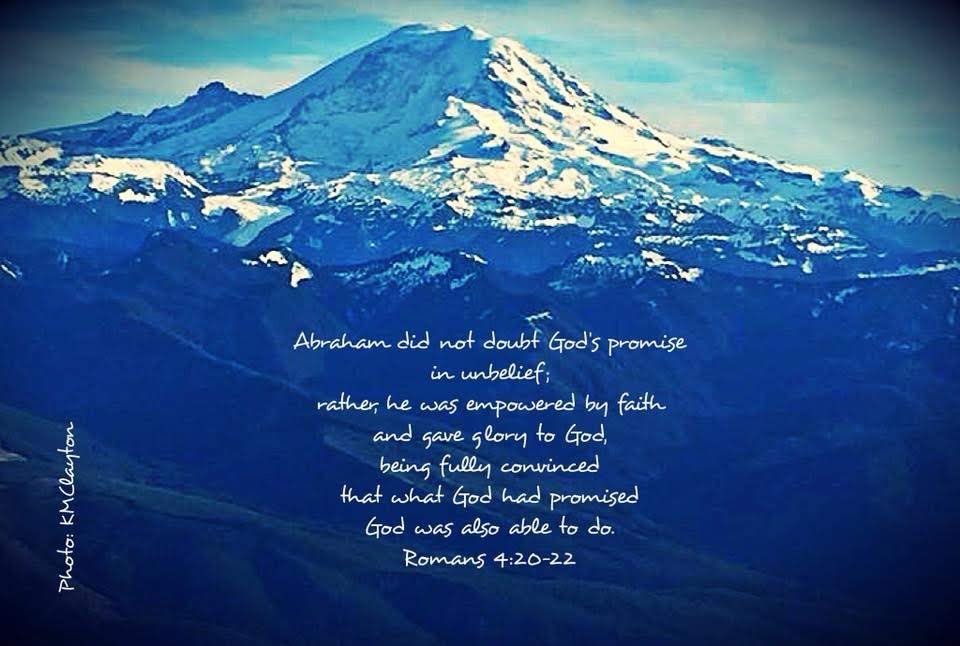
Abraham did not doubt God’s promise in unbelief;
rather, he was empowered by faith and gave glory to God
and was fully convinced that what God had promised
he was also able to do.
That is why it was credited to him as righteousness.

Romans 4:20-22

That’s a really hard call in our society which makes it hard to believe in anything including God and ourselves! Every type of media conspires to convince us that we are not enough as we are. We need a better car, house, clothes, haircut, and on and on to make us “acceptable”. Populism and racism ingrained in our politics convince us that we need to be a certain color, nationality, religion, speak a certain language to be worth anything.
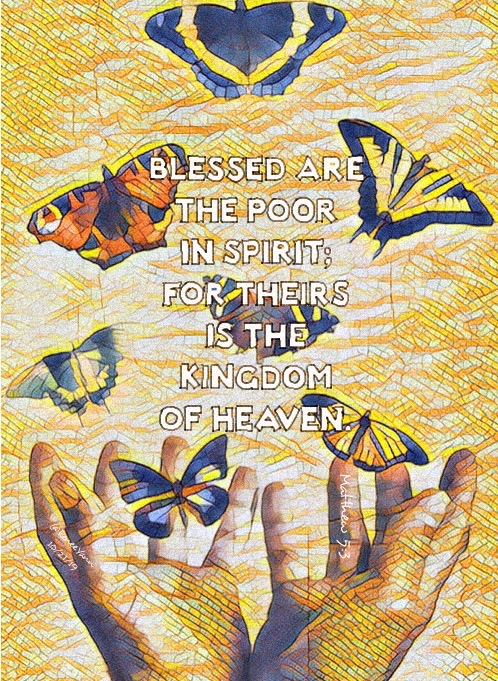
Mt5_3 poor

Jesus says NO. You are beautiful just as I created you. And you already have everything you need to merit my promise of eternal life. You have only one need in this world — to love yourself and one another so that my promise can be released in you and in all Creation.

Then Jesus said to the crowd,
“Take care to guard against all greed,
for though one may be rich,
one’s life does not consist of possessions.”

Luke 12:15

Poetry: from Rumi

When I am with you, everything is prayer.
I prayed for change,
so, I changed my mind.

I prayed for guidance
and learned to trust myself.

I prayed for happiness
and realized I am not my ego.

I prayed for peace
and learned to accept others unconditionally.

I prayed for abundance
and realized my doubt kept it out.

I prayed for wealth
and realized it is my health.

I prayed for a miracle
and realized I am the miracle.

I prayed for a soul mate
and realized I am with the One.

I prayed for love
and realized it is always knocking,
but I have to allow it in.

Music: How Could Anyone Ever Tell You – Shaina Noll

A New Song

Twenty-ninth Sunday in Ordinary Time
October 22, 2023

Today’s Readings


Today, in God’s Lavish Mercy, we pray with Psalm 96, one of the “royal psalms” praising God as King.

Bow down to the LORD, splendid in holiness.
Tremble before God, all the earth;
declare among the nations: The LORD is King.
The world will surely stand fast, 
never to be shaken.
The Lord rules the peoples with fairness.

Psalm 96: 9-10

Our psalm today forms a link between two readings about two different kinds of human leaders.

In our first reading, we hear about King Cyrus, an “anointed” one:

Thus says the LORD to his anointed, Cyrus,
whose right hand I grasp,
subduing nations before him …

Isaiah 45:1

In fact, Cyrus the Great respected the customs and religions of the lands he conquered. This became a very successful model for centralized administration and establishing a government working to the advantage and profit of its subjects. Israel thrived under Cyrus and found no barriers to their own religious practices


In our Gospel, however, the Pharisees try to trap Jesus by testing him about their current political leadership, which is not so kindly inclined to the people:

Tell us, then, what is your opinion:
Is it lawful to pay the census tax to Caesar or not?

Matthew 22:17

Jesus’s answer simply tells the Pharisees to obey the legitimate law. But that answer is secondary to his real challenge to them:

Why are you testing me, you hypocrites?


Our psalm is the praise song of a people who do not “test” God; who receive both the blessings and trials of life with faith and hope, and seek the path to God within those circumstances.

A “Cyrus-type” leader builds up that holy courage in the people. A “Caesar-type” type leader only builds up only himself.


In his letter to the Thessalonians, Paul shows himself to be such an anointed leader, praying for and encouraging the Church in the journey of faith:

We give thanks to God always for all of you,
remembering you in our prayers,
unceasingly calling to mind your work of faith and labor of love
and endurance in hope of our Lord Jesus Christ,
before our God and Father …

1 Thessalonians 1;2-4

Today, there’s a lot of political dust swirling in the wind – a lot of discerning about leadership and our own modern brand of “kings”. The current sufferings of our time cause our hearts to long for “a new song”.

The readings today remind us that the only way our spirits can …

Sing to the LORD a new song;
sing to the LORD, all you lands.
Tell God’s glory among the nations;
among all peoples, God’s wondrous deeds

… is by living Paul’s formula – “to live our lives as a work of faith and labor of love and endurance in hope of our Lord Jesus Christ.


Poetry: New Day’s Lyric – Amanda Gorman

May this be the day
We come together.
Mourning, we come to mend,
Withered, we come to weather,
Torn, we come to tend,
Battered, we come to better.
Tethered by this year of yearning,
We are learning
That though we weren't ready for this,
We have been readied by it.
We steadily vow that no matter
How we are weighed down,
We must always pave a way forward.
*
This hope is our door, our portal.
Even if we never get back to normal,
Someday we can venture beyond it,
To leave the known and take the first steps.
So let us not return to what was normal,
But reach toward what is next.
*
What was cursed, we will cure.
What was plagued, we will prove pure.
Where we tend to argue, we will try to agree,
Those fortunes we forswore, now the future we foresee,
Where we weren't aware, we're now awake;
Those moments we missed
Are now these moments we make,
The moments we meet,
And our hearts, once altogether beaten,
Now all together beat.
*
Come, look up with kindness yet,
For even solace can be sourced from sorrow.
We remember, not just for the sake of yesterday,
But to take on tomorrow.
*
We heed this old spirit,
In a new day's lyric,
In our hearts, we hear it:
For auld lang syne, my dear,
For auld lang syne.
Be bold, sang Time this year,
Be bold, sang Time,
For when you honor yesterday,
Tomorrow ye will find.
Know what we've fought
Need not be forgot nor for none.
It defines us, binds us as one,
Come over, join this day just begun.
For wherever we come together,
We will forever overcome.

Sing a New Song – Brooklyn Tabernacle Choir

One Bad Apple …?

Saturday of the Twenty-eighth Week in Ordinary Time
October 21, 2023

Today’s Readings:

https://bible.usccb.org/bible/readings/102123.cfm


Today, in God’s Lavish Mercy, our scripture readings are a little heavy. I had to dig to get my inspiration. But there are gems in these dense words!

It was not through the law
that the promise was made to Abraham and his descendants
that he would inherit the world,
but through the righteousness that comes from faith.

This is a spiritually freeing passage. It assures us that God is with us through our faith, not through the perfection with which we keep laws and rules.


Our Gospel reinforces the message:

Everyone who speaks a word against the Son of Man will be forgiven,
but the one who blasphemes against the Holy Spirit
will not be forgiven.

Luke 12:10
lk12_10HolySpirit

The passage is a little scary when first read, because we all hope we haven’t done anything to offend the Holy Spirit. But what Jesus is telling his listeners is this:

If a person criticizes or rejects Christ’s life and teaching, forgiveness is still possible when they come to their senses and repent. It’s like cutting the bad spot out of an otherwise good apple.

But if a person chooses to live a life which blasphemes (mocks, dismisses) the Spirit of life, love, mercy and peace, that person can never be forgiven — because they can never repent. They will be hardened and rotten to the core.


So the advice of Paul and Jesus boils down to this, I think. Befriend the Holy Spirit by your life of faithful choices. Listen to Her inspiration. Help others to do the same. And do not worry when you make a few mistakes. God stands by the promise to be with us always.


Prose: Christmas Address of Pope Francis – 12/22/2022

Much has happened in the course of this year and, before anything else, we want to thank the Lord for all his blessings. Yet we hope that among those blessings is that of our conversion. Conversion is a never-ending story. The worst thing that could happen to us is to think that we are no longer in need of conversion, either as individuals or as a community.
To be converted is to learn ever anew how to take the Gospel message seriously and to put it into practice in our lives. It is not simply about avoiding evil but doing all the good that we can. That is what it means to be converted. Where the Gospel is concerned, we are always like children needing to learn. The illusion that we have learned everything makes us fall into spiritual pride.

Music: Spirit of the Living God- Divine Hymns

Leaven!

Friday of the Twenty-eighth Week in Ordinary Time
October 20, 2023

Today’s Readings:

https://bible.usccb.org/bible/readings/102023.cfm


Today, in God’s Lavish Mercy, we have a Gospel passage which is both scary and beautiful!

I tell you, my friends,
do not be afraid of those who kill the body
but after that can do no more.
I shall show you whom to fear.
Be afraid of the one who after killing
has the power to cast into Gehenna;
yes, I tell you, be afraid of that one.
Are not five sparrows sold for two small coins?
Yet not one of them has escaped the notice of God.
Even the hairs of your head have all been counted.
Do not be afraid.
You are worth more than many sparrows.

Luke 12:4-7

Jesus, with radical clarity, tells us that God is both a relentless judge and a tender parent. Who God is toward us depends on our choices in life, because our choices either open or close us to know God.

Jesus says that we will be condemned if we choose to live a hypocritical life like the Pharisees.


There are many images of “Gehenna”, both within and outside of the Gospel. For some of us, that condemnation is represented in hellfire, brimstone, devils, and pitchforks.

But today’s Gospel might incline us to consider that the condemnation is more a personal choice for spiritual alienation from God – in other words, sin. By that choice, we isolate ourselves from God’s tenderness choosing instead selfishness, prevarication, and hard-heartedness. We become less than we were created to be, and that in itself is a tragic self-condemnation.


Jesus says that when that kind of choosing becomes a habitual part of our lives, it is like leaven that permeates our very personhood. It changes us from God’s child to our own biggest fan. Like the Pharisees, we live a lie of who we pretend to be. And, especially from a position of power, we can infect others with our deception. They become “leavenized”: they “drink the kool-aid”.


Ironically, at the end of this tirade, Jesus gives us two of the tenderest images of God: God the Hairdresser and God the Bird Lover. Praying with these images, I remember my mother tenderly fingering my hair as I sat beside her in the evening. I picture my father spreading birdseed on the frozen patio when the winter juncos struggled to find food.

In our prayer today, Jesus invites us to encounter God with this kind of tender familiarity.


Poetry: The Creation of the Birds – Renee Yann, RSM

O, the wonderful mood that seized You
God, as you created birds;
you dancing there, twirling in light,
flinging your crystal arms to infinite music,
flicking your hands like magic fountains,
feathers and colors splashing out from your fingertips,
chattering, rainbowed profusions
of your Boundless Life.
Your depthless, joy-filled soul laughing out
the soaring beings into the still universe,
peals of you infusing them each
to their measure with notes of your inner song.
O, I see your Holy Eyes flash color to them
as they fly, strobing their feathers
with shards of your prismed white light.
This morning, seeing only one,
free and jubilant in a thin sycamore,
I consume it as
part of your Delightful Essence,
this day’s communion with you, grey
and orange wafer filling me with mysteries
of the primal dance from which
we both began.

Music: His Eye Is On the Sparrow

The Key of Knowledge

Memorial of Saints John de Brébeuf and Isaac Jogues
Thursday of the Twenty-eighth Week in Ordinary Time
October 19, 2023

Today’s Readings:

https://bible.usccb.org/bible/readings/101923.cfm


Today, in God’s Lavish Mercy, “the Law” plays a central role in our readings.

At their best, laws are those commonly agreed-upon markers that guide the human community on its shared journey. Ideally conceived in the context of justice, every law will lead to a balance of well-being for all concerned.


It is in the human administration of law that we meet challenges. Such administration rests in the hands of “superiors” who are, like all of us, subject to prejudice, ignorance, domination, and arrogance. These individuals can regress to an interpretation of law that benefits only themselves and those they favor.

In our Gospel, Jesus vociferously condemns this corruption of the Law by the very people who have been entrusted with its integrity:

Woe to you, scholars of the law!
You have taken away the key of knowledge.
You yourselves did not enter and you stopped those trying to enter.

Luke 11:52

What is that “key of knowledge” Jesus refers to? I think it is this: that the Law is only peripheral. While it must be respected, it must also be transcended so that we live beyond it and into the Spirit Who generates it.


In our first reading, Paul makes an astounding statement that surely knocked the pharisaical legalists on their pins! Paul says that God’s righteousness is not found in the Law but solely in faith in Jesus Christ.

Now the righteousness of God has been manifested apart from the law,
though testified to by the law and the prophets,
the righteousness of God through faith in Jesus Christ
for all who believe.

Romans 3:21-22

This passage in Romans is critical to the Christian understanding of “righteousness”. No one can achieve righteousness apart from the grace of God which is given to us solely as gift and not reward for our actions. But it is also essential that a person create an inner receptivity to grace, a receptivity achieved through the personal exercise of faith, hope, and love – that is, by the works of mercy.


Since the early 16th century, various Christian denominations have been trying to split the hair of this argument which is dubbed “Sola Fide (faith alone)”. The argument asks, “Are we made right with God by faith alone, or by faith demonstrated in good works?”.

Paul and Jesus addressed the question fifteen hundred years before anybody even thought up the Sola Fide conundrum. They did so in direct and simple language so that their listeners could learn and feel confident in their faith life.


The debate around “sola fide” can devolve into theological hair-splitting, an exercise that seems almost like an intellectual game. Contrary to hair-splitting, our faith life is fostered by a theology deeply rooted in spirituality and evidenced in reverent, grateful, and charitable living. Laws can help us with that pursuit but they can’t accomplish it. Only an active, loving faith, responsive to God’s grace, can unlock that door.


Prose: Excerpt from Lumen Fidei (The Light of Faith), the first encyclical of Pope Francis (June 29, 2013)

(This passage and the encyclical as a whole are so beautiful that I hope you will take time to savor the words, even in small doses. I broke it up into small sections because that’s the way I best prayed with it.)

Since faith is a light, it draws us into itself, 
inviting us to explore ever more fully 
the horizon which it illumines, 
all the better to know the object of our love. 

Christian theology is born of this desire. 
Clearly, theology is impossible without faith; 
it is part of the very process of faith, 
which seeks an ever deeper understanding 
of God’s self-disclosure culminating in Christ. 

It follows that theology is more 
than simply an effort of human reason 
to analyze and understand, 
along the lines of the experimental sciences. 
God cannot be reduced to an object. 
He is a subject who makes himself known 
and perceived in an interpersonal relationship. 

Right faith orients reason to open itself 
to the light which comes from God, 
so that reason, guided by love of the truth, 
can come to a deeper knowledge of God. 

The great medieval theologians and teachers 
rightly held that theology, as a science of faith, 
is a participation in God’s own knowledge of himself. 
It is not just our discourse about God, 
but first and foremost the acceptance and the pursuit 
of a deeper understanding 
of the word which God speaks to us, 
the word which God speaks about himself, 
for he is an eternal dialogue of communion, 
and he allows us to enter into this dialogue. 

Theology thus demands the humility 
to be "touched" by God, 
admitting its own limitations before the mystery, 
while striving to investigate, 
with the discipline proper to reason, 
the inexhaustible riches of this mystery.

Music: Spirit Seeking Light and Beauty – Janet Erskine Stuart, RSCJ

Be Like Luke!

Feast of Saint Luke, evangelist
October 18, 2023

Today’s Readings:

https://bible.usccb.org/bible/readings/101823.cfm


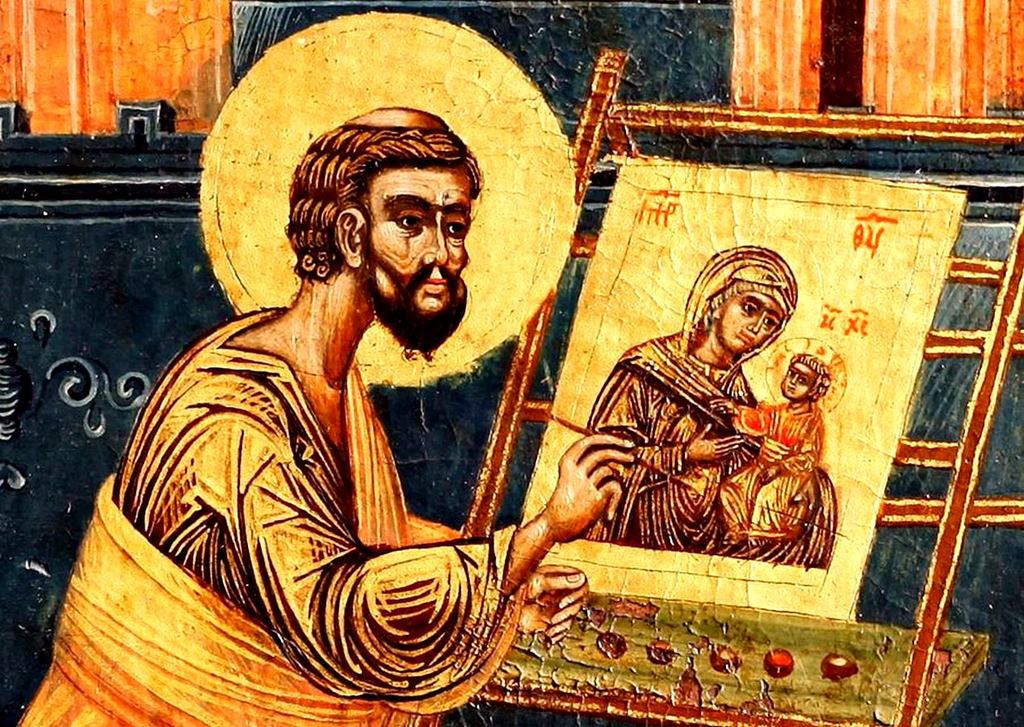
The Tradition of the Orthodox Church says that
Luke was a painter who created icons of Mary.
Historian Theodorus Lector mentions St Luke drawing the Virgin;
Saint Andrew of Crete wrote about St Luke depicting both Mary and Christ;
Saint Simeon the Metaphrast, historian and the author of many biographies of saints,
mentioned one icon of the Virgin Mary holding Christ.
He said that it was painted by St Luke and is “honored even to this day.”
(from the Convent of St. Elizabeth website: https://obitel-minsk.org/history)


Today, in God’s Lavish Mercy, we pray with St. Luke, the elegant author who has painted a tender picture of God on human hearts. That picture has the beautiful face of Jesus Christ, Incarnate Mercy for all people.

God is portrayed throughout the Old and New Testaments as a warrior or a stern judge, but Luke, through his parables, presents God as a loving, anxious father who forgives his erring son before the boy can ask to be forgiven and lavishes love on him.

Joseph Blenkinsopp: Luke’s Jesus

Today’s first reading gives us some insight into Luke’s character and personal committment to the spread of the Gospel:

Beloved:
Demas, enamored of the present world,
deserted me and went to Thessalonica,
Crescens to Galatia, and Titus to Dalmatia.
Luke is the only one with me.

2 Timothy 4:10

Apparently Luke, unlike Demas, was not “enamored of the present world”. Wow! What a packed description that is! Paul is obviously disappointed. It would appear that Demas, Crescens, and Titus decided to opt out of their contracts. Only Luke hung on with a rather gloomy-sounding Paul who is pining for his cloak and papyrus rolls.

I would imagine Paul was not an easy boss to work for. He was a firebrand – both when he fought against the Gospel and when he fought for it. No doubt he demanded the same intensity from those who directly assisted him. And the work itself was daunting. Luke recounts in the Acts of the Apostles the many trials that had to be met before any small success.

Some of the apostolic candidates just didn’t vibe with all of that. But Luke could work with Paul’s fire. And he could uncover the glorious story within the many challenging folds they navigated. What a blessing he must have been to the wildly dynamic and sometimes mercurial Paul!


Luke had incorporated into his own life Jesus’s ministerial call so clearly described in today’s Gospel:

Go on your way;
behold, I am sending you like lambs among wolves.
Carry no money bag, no sack, no sandals;
and greet no one along the way.
Into whatever house you enter,
first say, ‘Peace to this household.’
If a peaceful person lives there,
your peace will rest on him;
but if not, it will return to you.

Luke 10:3-6

Like Paul, Luke never met Jesus in person. Both were born shortly after Jesus’s time on earth. But the two of them knew Christ intimately and carried that inspirited knowledge to their own world and to the ages.

Our picture of Jesus would be a lot blurrier without Luke. Nearly half of Luke’s content is not found in the other three Gospels.

Many stories, sayings, and images found only in Luke have become an indispensable part of Christian consciousness. The Prodigal Son, the Good Samaritan, the Rich Man and Lazarus, the Pharisee and the Publican, the encounter with the Risen One on the Road to Emmaus, the Magnificat, the angel’s song Peace on Earth are only in Luke, but it is difficult to imagine the Christian tradition without them.

Eugene Boring: Introduction to the New Testament: History, Literature, Theology

Perhaps you have a favorite among the exclusive stories cited above. This feast of St. Luke may be a good day to remember why that story is important to you and to thank Luke for its gift.


Poetry: Luke – Malcolm Guite

His gospel is itself a living creature
A ground and glory round the throne of God,
Where earth and heaven breathe through human nature
And One upon the throne sees it is good.
Luke is the living pillar of our healing,
A lowly ox, the servant of the four,
We turn his page to find his face revealing
The wonder, and the welcome of the poor.
He breathes good news to all who bear a burden
Good news to all who turn and try again,
The meek rejoice and prodigals find pardon,
A lost thief reaches paradise through pain
The voiceless find their voice in every word
And, with Our Lady, magnify Our Lord.

Music: Luke’s Gospel contains four special canticles connected to the Birth of Jesus:

  • The Magnificat (Luke 1:46-56)
  • The Benedictus (Luke 1: 67-79)
  • The Gloria in Excelsis (Luke 2:13-14)
  • The Nunc Dimittis ( Luke 2:29-32)

The Lie and The Truth

Memorial of Saint Ignatius of Antioch, Bishop and Martyr
Tuesday of the Twenty-eighth Week in Ordinary Time
October 17, 2023

Today’s Readings:

https://bible.usccb.org/bible/readings/101723.cfm


Today, in God’s Lavish Mercy, both Paul and Jesus speak forcefully against an endemic human fault: dishonesty.


Paul castigates “those who suppress the truth by their wickedness”:

The wrath of God is indeed being revealed from heaven
against every impiety and wickedness
of those who suppress the truth by their wickedness.
For what can be known about God is evident to them,
because God made it evident to them.
Ever since the creation of the world,
his invisible attributes of eternal power and divinity
have been able to be understood and perceived in what he has made.

Romans 1:18-20

These “truth suppressors” are guilty for one reason – they know better! God’s Truth is evident to them in Creation yet they deny and pervert it for the sake of their own selfish ends.

As a result, they have no excuse;
for although they knew God
they did not accord him glory as God or give him thanks.
Instead, they became vain in their reasoning,
and their senseless minds were darkened.
While claiming to be wise, they became fools
and exchanged the glory of the immortal God
for the likeness of an image of mortal man
or of birds or of four-legged animals or of snakes.

Romans 1:20-23

Jesus defines this untruth more clearly. He says that it presents itself in pretense – the external dissimulation which masquerades narcissistic motivations:

The Pharisee (who had invited Jesus to dinner) was amazed to see
that Jesus did not observe the prescribed washing before the meal.
The Lord said to him, “Oh you Pharisees!
Although you cleanse the outside of the cup and the dish,
inside you are filled with plunder and evil.
You fools!
Did not the maker of the outside also make the inside?
But as to what is within, give alms,
and behold, everything will be clean for you.”

Luke 11:38-41

Jesus indicates that charity is the perfect “cleanser” for dirty cup interiors (and dingy moral codes). Sounds easy enough, doesn’t it? Well, maybe not so easy but certainly clear and simple.

Charity is rooted in the interior recognition that we are all children of our Creator and that we have a responsibility for one another’s welfare. Acting on that recognition is “almsgiving” which comes from the same Greek root, “eleemosyne“, as the word mercy.


Our world, like Paul’s, is challenged by the suppression of truth. Much of our visible culture is based on lies and pretense. Political hoodwinking, media non-objectivity, economic duplicity, and exploitive advertising conspire to convince us that:

  • we ourselves never are or have enough
  • anyone not “like us” is a threat to our insufficiency
  • foreigners are dangerous
  • power grants sovereignty
  • the poor are solely responsible for their poverty.

Jesus and Paul tell us that we must resist such lies, purify our hearts of their influence, and live a Gospel life of truth, charity, and mercy.


Prose: from the Catholic Encyclopedia:

I found this definition of almsgiving very thought-provoking because it indicates that “almsgiving or “mercy” is more than an act or actions. It is an attitude and lifestyle, a lens through which we consider all things in the light of the Gospel for the sake of the poor:

Any material favor done to assist the needy, and prompted by charity, is almsgiving. It is evident, then, that almsgiving implies much more than the transmission of some temporal commodity to the indigent. According to the creed of political economy, every material deed wrought by humans to benefit the needy is almsgiving. According to the creed of Christianity, almsgiving implies a material service rendered to the poor for Christ’s sake. Materially, there is scarcely any difference between these two views; formally, they are essentially different. This is why the inspired writer says: “Blessed is the one that considers the needy and the poor” (Psalm 40:2) — not the one that gives to the needy and the poor.


Music: The Prisoners’ Chorus – from Beethoven’s only opera Fidelio

Fidelio is inspired by a true story from the French Revolution. It centers on a woman, Leonore, whose husband Florestan has been unjustly imprisoned by his political rival – the villainous Don Pizarro. In the magnificent “Prisoners’ Chorus”, the prisoners sing powerfully about the gift and need for freedom.

Oh what joy, in the open air
Freely to breathe again!
Up here alone is life!
The dungeon is a grave.

FIRST PRISONER
We shall with all our faith
Trust in the help of God!
Hope whispers softly in my ears!
We shall be free, we shall find peace.

ALL THE OTHERS
Oh Heaven! Salvation! Happiness!
Oh Freedom! Will you be given us?

The Obedience of Faith

Monday of the Twenty-eighth Week in Ordinary Time
October 16, 2023

Today’s Readings:

https://bible.usccb.org/bible/readings/101623.cfm


Today, in God’s Lavish Mercy, we begin about a month of readings from Paul’s letter to the Romans. We will also continue with Luke’s Gospel all the way up to Advent.

In my 2019 reflections on these passages, to help me understand Romans, I used a book by Scott W. Hahn, Father Michael Scanlan Chair of Biblical Theology at Steubenville University. I decided to return to that opening reflection as we meet Romans again today.

In his introduction, Hahn says this:

Hahn_Romans

Today’s reading offered me these elements to ponder and pray with:

  • Paul calls himself a “slave” of Jesus Christ
  • He invokes his call as an Apostle
  • He sets himself in the company of the prophets
  • He appeals to Jews who revere David
  • but proclaims Christ, through his Resurrection, as Messiah beyond human lineage
  • He proclaims his mission to the Gentiles
  • to bring about “the obedience of faith”

I’ll be honest with you. I’ve read or heard this passage maybe fifty times in my lifetime, and it has meant little or nothing to me. At best, it has sounded like a formal introduction such as those we hear from government “whereas” type decrees.

But I took Dr. Hahn’s advice, studying the passage, and reading it slowly and prayerfully. Here’s what I received:

  • Paul’s Apostolic call, to which he willingly enslaved his heart, was to preach the Good News of our redemption in Jesus Christ – to preach it to Jews, Romans, Gentiles, and all people.
  • It is an awesome and incredible message that can be received only through the gift of faith.
  • It is a message rooted in the scripture stories we love, and where we look to find a reflection of our own stories.
  • Learning from these realities will help us come to a faith which expresses itself in action and gives glory to God in our own time.

Luke gives us one such story today. Jesus reminds the crowd of two familiar passages – that of Jonah and the “Queen of the South” (the Queen of Sheba, 1 Kings 10). He indicates that the people in these stories believed without a sign.

Jesus tells the people gathered around him  to learn from this. The crowd demands a sign, but Jesus says the sign is right in front of you – it is only your open heart that is lacking.


In his introduction, Paul prays for such open hearts in the Romans:

Rm1_grace_peace

Grace to you and peace from God our Father
and the Lord Jesus Christ.

By that same grace, may we receive faith’s blessing as well.


Poetry: Love Constraining to Obedience – William Cowper (1731-1800)
Cowper’s poem captures the interior transformation that occurs when our obedience is motivated by love rather than simply by duty.

No strength of nature can suffice 
To serve the Lord aright:
And what she has she misapplies,
For want of clearer light.

How long beneath the Law I lay
In bondage and distress;
I toiled the precept to obey,
But toiled without success.

Then, to abstain from outward sin
Was more than I could do;
Now, if I feel its power within,
I feel I hate it too.

Then all my servile works were done
A righteousness to raise;
Now, freely chosen in the Son,
I freely choose His ways.

‘What shall I do,’ was then the word,
‘That I may worthier grow?’
‘What shall I render to the Lord?’
Is my inquiry now.

To see the law by Christ fulfilled
And hear His pardoning voice,
Changes a slave into a child,
And duty into choice.

Music: Grace and Peace – Fernando Ortega

Practice Resurrection

Twenty-eighth Sunday in Ordinary Time
October 15, 2023

Today’s Readings:

https://bible.usccb.org/bible/readings/101523.cfm


Today, in God’s Lavish Mercy, we pray with radically liberating readings including Psalm 23, a familiar, comforting and beloved prayer.

The LORD is my shepherd; I shall not want.
In verdant pastures he gives me repose;
beside restful waters he leads me;
he refreshes my soul.

Psalm 23: 1-3

The psalm comes between readings that assure us of a waiting and sumptuous banquet to which we gain entrance by both mercy and grace.  


Isaiah describes the feast in the future tense:

On that day it will be said:
“Behold our God, to whom we looked to save us!
This is the LORD for whom we looked;
let us rejoice and be glad that he has saved us!”

Isaiah 25:9

But Paul reminds us of the truth we often forget. The banquet is NOW!

My God will fully supply whatever you need,
in accord with his glorious riches in Christ Jesus.

Philippians 4:20

In our Gospel, Jesus invites his guests to that feast with both an immediacy and a demand. The celebration of abundance is open to all. But we must at least make the effort to don a wedding garment – that reverent, grateful attitude which gives glory to the Source of our abundance. 


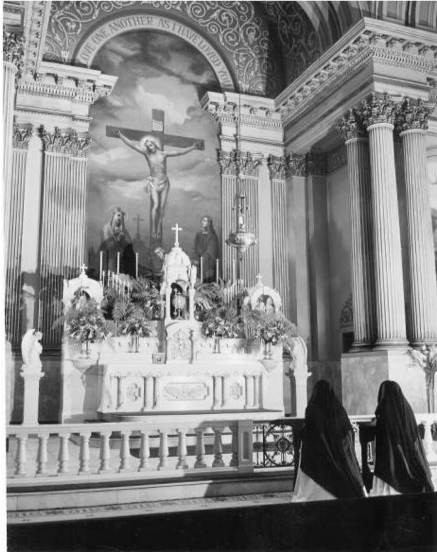
The edge of the white choir mantle is visible below the veils.

In ancient times – when I first came to religious life 🙂 – we would add a special garment to our habit to celebrate a great feast. The white choir mantle was a symbol of our awareness of a particularly sacred moment.


Miraculously, it is that reverent awareness that opens our eyes to the plentitude in our midst. It releases us to the freedom of a hope already realized, but hidden from those whose hearts refuse to be dressed in grace.

You spread the table before me
in the sight of my foes;
you anoint my head with oil;
my cup overflows.

Psalm 23:5

Our readings invite us to live as not only invited but saved people, completely convinced of God’s eternal welcome and protection.

Only goodness and kindness follow me
all the days of my life;
and I shall dwell in the house of the LORD forever.

Psalm 23:6

What would the world be like if we lived out this conviction – that we already possess God’s gracious abundance? 

How might the reproaches of fear, competition,
domination, selfishness, and hoarding
be removed from our midst?

How might the rush of generosity, forgiveness, and mercy 
flow out of our confident hearts
to wash the earth in God’s restful waters?


Poem: Manifesto: The Mad Farmer Liberation Front by Wendell Berry

Love the quick profit, the annual raise,
vacation with pay. Want more
of everything ready-made. Be afraid
to know your neighbors and to die.
And you will have a window in your head.
Not even your future will be a mystery
any more. Your mind will be punched in a card
and shut away in a little drawer.
When they want you to buy something
they will call you. When they want you
to die for profit they will let you know.
So, friends, every day do something
that won’t compute. Love the Lord.
Love the world. Work for nothing.
Take all that you have and be poor.
Love someone who does not deserve it.
Denounce the government and embrace
the flag. Hope to live in that free
republic for which it stands.
Give your approval to all you cannot
understand. Praise ignorance, for what man
has not encountered he has not destroyed.
Ask the questions that have no answers.
Invest in the millennium. Plant sequoias.
Say that your main crop is the forest
that you did not plant,
that you will not live to harvest.
Say that the leaves are harvested
when they have rotted into the mold.
Call that profit. Prophesy such returns.
Put your faith in the two inches of humus
that will build under the trees
every thousand years.
Listen to carrion – put your ear
close, and hear the faint chattering
of the songs that are to come.
Expect the end of the world. Laugh.
Laughter is immeasurable. Be joyful
though you have considered all the facts.
So long as women do not go cheap
for power, please women more than men.
Ask yourself: Will this satisfy
a woman satisfied to bear a child?
Will this disturb the sleep
of a woman near to giving birth?
Go with your love to the fields.
Lie down in the shade. Rest your head
in her lap. Swear allegiance
to what is nighest your thoughts.
As soon as the generals and the politicos
can predict the motions of your mind,
lose it. Leave it as a sign
to mark the false trail, the way
you didn’t go. Be like the fox
who makes more tracks than necessary,
some in the wrong direction.
Practice resurrection.

Music: Abundant Life – written by Ruth Duck, sung by Marty Haugen

We cannot own the sunlit sky, 
the moon, the wild-flowers growing, 
For we are part of all that is 
within life’s river flowing.

With open hands receive and share 
the gifts of God’s creation, 
That all may have abundant life 
in every earthly nation.

When bodies shiver in the night 
and weary wait for morning,
When children have no bread but tears, 
and war horns sound their warning. 

God calls humanity to awake, 
to join in common labor,
That all may have abundant life, 
oneness with their neighbor.

God calls humanity to join as partners
in creating a future free 
from want or fear.
Life’s goodness celebrating, 

that new world beckons from afar,
Invites our shared endeavor 
that all might have abundant life 
and peace endure forever.

Valley of Decision

Saturday of the Twenty-seventh Week in Ordinary Time
October 14, 2023

Today’s Readings:

https://bible.usccb.org/bible/readings/101423.cfm


Today, in God’s Lavish Mercy, Joel launches into a cautionary poem replete with metaphors. His images are so effective that, even 3000 years later, many will be very familiar to us from the liturgy and even from modern culture.


Some of my readers may be of an age to remember the wonderful film “The Valley of Decision” starring two of the all-time greats, Greer Garson and Gregory Peck. The film’s title is plucked right out of Joel.


Apply the sickle,
for the harvest is ripe;
Come and tread,
for the wine press is full;
The vats overflow,
for great is their malice.
Crowd upon crowd
in the valley of decision;
For near is the day of the LORD
in the valley of decision.
Sun and moon are darkened,
and the stars withhold their brightness.
The LORD roars from Zion,
and from Jerusalem raises his voice;
The heavens and the earth quake,
but the LORD is a refuge to his people,
a stronghold to the children of Israel.


By using metaphors, the poet-prophet accomplishes an extensive lesson that, delivered in prose, would have exhausted his beleaguered audience.

Metaphors have a way
of holding the most truth
in the least space.

Orson Scott Card

Like all prophets, Joel employs current events to point to a deeper understanding. Many of the metaphors he uses throughout his prophecy have been employed in the liturgy, particularly during Lent. Joel’s message is a universal call to repentance germane to every generation, but particularly to that liturgical season.

Yet even now,’ declares the Lord,
‘return to me with all your heart,
with fasting, with weeping, and with mourning;
and rend your hearts and not your garments.

Joel 2: 12-13

In our Gospel. the core of Joel’s message is given direct and fuller voice in Jesus’ statement:

Blessed are those
who hear the Word of God
and observe it.

Luke 11:28

In our own lives – our own “valleys of decision”, this is the foolproof way we prepare for the Day of the Lord – hearing and observing the Word of God.


Music: Valley of Decision – Christafari

(When I read about Christafari, I am reminded that we can never underestimate or judge the many ways that people come to Christ.)

Christafari was founded in 1989 by Pastor Mark Mohr. Raised in a Christian family, during his teens Mohr strayed from his spiritual upbringing and turned to drugs and alcohol, going as far as growing and even dealing marijuana. After running away from home, living on the streets, and hitting rock-bottom, he had an undeniable encounter with God that drastically transformed his world. At 17, Mark re-committed his life to Christ and took what he now calls his “Freedom Step” out of addiction.

Christafari is comprised of men and women from various continents, countries, and cultures who are true missionaries at heart and share a love for reggae music and passion for following Jesus to the ends of the earth.

Run come and fall
People take heed to His call
Valley of decision
(Valley of decision)
This is no game
People have to die in His name
Valley of decision
(Valley of decision)
Darkness, it looms all around us
I find it hard to see
But I don’t know, I don’t know, I don’t know, I don’t know, I don’t know
Whether I should stay or whether I should flee
People all around me seem, they seem to be so sad
I hear them cry, I hear them ball
I see them back against the wall
I wish I could wipe away their tears
There’s a Holy
A Holy hill
Holy mount Zion
Holy, Holy mount Zion
Just know that He’s the Lord, Your God, yeah
In this valley of decision
Valley of decision
Even though I run through enough hills and valleys
I fear no evil, ’cause God is with me
Even though I run through enough hills and valleys
Thy rod and staff, they will comfort me
Even though I run through enough hills and valleys
I fear no evil, ’cause God is with me
Even though I run through enough hills and valleys
Thy rod and staff, they will comfort me
Run come and fall
People take heed to His call
Valley of decision
(Valley of decision)
This is no game
People have to die in His name
Valley of decision
(Valley of decision)
There’s a Holy
A Holy hill
Holy mount Zion
Holy, Holy mount Zion
Just know that He’s the Lord, Your God, yeah
In this valley of decision
Valley of decision
Even though I run through enough hills and valleys
I fear no evil, ’cause God is with me
Even though I run through enough hills and valleys
Thy rod and staff, they will comfort me
Even though I run through enough hills and valleys
I fear no evil, ’cause God is with me
Even though I run through enough hills and valleys
Thy rod and staff, they will comfort me
Jah great and dreadful day will soon come
Jah will pour out His mighty, mighty, mighty Spirit to all mankind
Through Him all creation, all creation was made
Those who call upon His name
(Call on His name and You will be saved)
There’s a Holy
A Holy hill
Holy mount Zion
Holy, Holy mount Zion
Just know that He’s the Lord, Your God, yeah
In this valley of decision
Valley of decision
Run come and fall
People take heed to His call
Valley of decision
(Valley of decision)
This is no game
People have to die in His name
Valley of decision
(Valley of decision)
Even though I run through enough hills and valleys
I fear no evil, ’cause God is with me
Even though I run through enough hills and valleys
Thy rod and staff, they will comfort me
Even though I run through enough hills and valleys
I fear no evil, ’cause God is with me
Even though I run through enough hills and valleys
Thy rod and staff, they will comfort me
Even though I run through enough hills and valleys
I fear no evil, ’cause God is with me
Even though I run through enough hills and valleys
Thy rod and staff, they will comfort me