Click the white arrowhead to the left above for some relaxing music while you read. You may repeat click if you wish.
We stand now on the far western shore of the Year of Our Lord, 2024. It is well near evening. Our memories are silhouetted against the deep magenta sky as they sail beyond the shimmering horizon. We have lived, laughed, lost and loved in ways never to be repeated, yet never to be forgotten. The great turning of time goes relentlessly on, but we have written our story in its indelible trail.
The stroke of midnight on December 31st – magic, mysterious, holy. 
With fireworks and reveling, popular culture will invite us to the brash celebration of our presence within this point in history. But, at the altar of our hearts, we recognize this long evening of reminiscence as a time of quiet thanksgiving and petition. It is a time of awe and trust in the power of our Almighty God.
Like flint struck against the steadfast soul of God, we have been given the spark of life. We are God’s fire at this moment in time’s long unwinding. Tonight, we turn our spirits to those beside us, behind us, before us, and we pray in thanksgiving and hope for them.
Together, we sink into the dark infinity of our Creator who sustains all life beyond our worries, fears and limitations. With innumerable universes, God balances us in the palm of Mercy. As the midnight shadows fall, God closes Divine fingertips over us in grace and protection.
In the split moment between two years, we too become infinite – fire in God’s darkness, spark redeemed beyond time. In 2025, we will forget this transcendent moment. The bright light of daily living will blind us to that piece of divinity shining in our souls. But tonight, let us remember. As midnight passes by, may our spirits kneel within us to the Awesome Mystery who holds us, as one, eternally within Itself.
Music: Auld Lang Syne
For Your Reflection
What feelings or reactions do I have after reading this reflection?
Do my feelings or reactions remind me of any passage or event in scripture, especially in the life of Christ?
What actions might I take today because of my response to these readings
Dance of the Sugar Plum Fairy – Pyotr Ilyich Tchaikovsky
Click the white arrowhead to the left above for some relaxing music while you read. You may repeat click if you wish.
One of the treasured rituals of my childhood home was the filling of the Christmas stockings. They were simple times, and my family lived simply – so the items we anticipated might be surprising today. Each year, there might be a new pencil, a silver dollar, an emory board, and maybe a comic book and bubble gum.
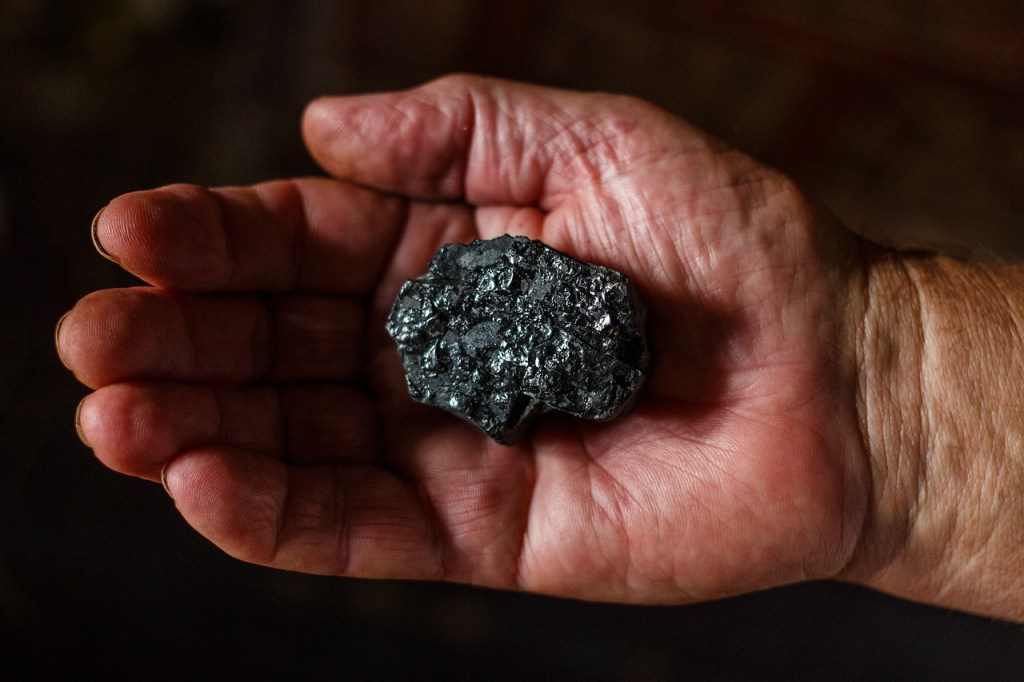
But two staples that appeared yearly were a piece of coal and a tangerine. These two constants were oddly comforting to my young heart. They came to represent important truths: we are not perfect (coal from Santa), and there is the hope of spring freshness even in the winter. (tangerine)
As you and your family gather in this holy season, may you be warmed by the goodness in your own hearts. In your “stockings”, there will “coal” and “tangerines”. May each of them, in their own way, bring you an awareness of gratitude and peace, anchoring your heart in recognition of the love that blesses your life.
This beautiful holy season is the time to wrap ourselves in the circles of faith, family, and friendship that sustain our lives. It is a time to remember, to be grateful, and to hope. May these holidays and holy days renew and bless you and your loved ones. May Christians be deepened and confirmed in the grace and love of Jesus Christ. And for all of us of every faith, may this be a time of peace, good health, and joy.
Music: Tangerine – one of my Dad’s favorite songs
For Your Reflection
What feelings or reactions do I have after reading this reflection?
Do my feelings or reactions remind me of any passage or event in scripture, especially in the life of Christ?
What actions might I take today because of my response to these readings?

Today, in God’s Lavish Mercy, Jesus makes a remarkable debut!
Picture the scene. It is a beautiful morning in the Judean Valley where the Jordan River runs fresh and sparkling. Most scholars place the Baptism of Jesus sometime in January, which means the weather would have been relatively cool. But perhaps, like our own weather, an unusually warm day may have snuck in.
Rustic, fiery preacher John is baptizing in the Jordan River. Crowds have come to hear what he has to say. Some are convinced and dive into the cool water under his hand. Others rim the hillside, not so sure John isn’t one of the many who have glorious visions but few facts.
Then, out from the pines on the far side of the river, comes Jesus, flanked by some of the Twelve. While his companions chat away to Jesus, his eyes are focused on John. In an instant, Jesus realizes that this is the moment for his revelation. In that same instant, all Creation realizes the same thing.
As Jesus walks slowly toward John, the birds and little animals speak to him, “My Lord and my God…”. Wind whistling through the trees becomes an Oratorio praising him. All the surrounding colors deepen, breaking forth in unimaginable light.
John is stunned by the cosmic change he senses but cannot describe. Heart trembling, he looks into Jesus’s eyes and catches a glimpse of heaven. “I need to be baptized by you”, John says,”and yet you are coming to me?”
Jesus smiles at his cousin, replying,
“Let it be so now; it is proper for us to do this to fulfill all righteousness.”
Then John consented.
Perhaps those in the crowd, schooled in the ancient scriptures, heard Isaiah’s voice in the charged atmosphere:
Here is my servant whom I uphold, my chosen one with whom I am pleased, upon whom I have put my spirit; he shall bring forth justice to the nations, not crying out, not shouting, not making his voice heard in the street. a bruised reed he shall not break, and a smoldering wick he shall not quench, until he establishes justice on the earth; the coastlands will wait for his teaching.
Matthew tells us:
As soon as Jesus was baptized, he went up out of the water.
Can you see him light-heartedly splashing John as he shakes his dark curls free of the chilly water? Can you see his transfigured face as he hears his Father speak Love over him?
At that moment heaven was opened, and he saw the Spirit of God descending like a dove and alighting on him. And a voice from heaven said, “This is my Son, whom I love; with him I am well pleased.”
What a beautiful moment in time! Don’t we wish we might have been there in the blessed and awe-struck crowd? We can. Let your prayer of imagination take you there.
Today, in God’s Lavish Mercy, and on this glorious feast, we pray with Psalm 72.
The kings of Tarshish and the Isles shall offer gifts; the kings of Arabia and Seba shall bring tribute. All kings shall pay him homage, all nations shall serve him.
For he shall rescue the poor when he cries out, and the afflicted when he has no one to help him. He shall have pity for the lowly and the poor; the lives of the poor he shall save.
Psalm 72: 10-13
It is a gorgeous psalm that fills our senses with lights, and scents, and the tactile experience of an ancient and sacred world:
we inhale the flower of justice
wrap ourselves in its profound peace
gaze on a distant, moonless universe
stretch our prayer from sea to sea,
and our praise to the ends of the earth
We see the ancient nations gather in homage, carrying the gems, spices and bounty of their homelands.
We, too, kneel in astounded wonder that this vulnerable child, hidden in the far reaches of both geography and imagination, carries to us the Promise of the Ages.
We, too, trust the star, rising in our own hearts.
Psalm 72 echoes our beautiful first reading from Isaiah, another masterpiece that, in itself, is enough simply to read and savor:
Rise up in splendor, Jerusalem! Your light has come, the glory of the Lord shines upon you. See, darkness covers the earth, and thick clouds cover the peoples; but upon you the LORD shines, and over you appears his glory.
Isaiah 60: 1-2
In Isaiah, these magnificent verses follow two chapters of gloom and darkness. They break forth in true epiphany to say, “Your Light has come!” – now your life must begin to shine as well.
Epiphany is not simply about kings and camels. It is not simply about a crèche and a star.
It is about Divine Revelation hovering over our dailyness. It is about us, opening our eyes in faith and responsiveness to our ever-present God.
The feast of Epiphany reminds us:
Look at your life today. The star did not pass you by. Open your eyes and find it. Once you have seen it, live in its Light.
Poetry: The Journey of the Magi – T.S. Eliot
Eliot wrote the poem after his conversion to Anglicanism ( He had been a Unitarian.) The poem conveys his struggle to grow in the light of his new faith. The “journey” is life-long and demanding in a world that often contradicts that faith.
“A cold coming we had of it, Just the worst time of the year For a journey, and such a long journey: The ways deep and the weather sharp, The very dead of winter.” And the camels galled, sore-footed, refractory, Lying down in the melting snow. There were times we regretted The summer palaces on slopes, the terraces, And the silken girls bringing sherbet. Then the camel men cursing and grumbling And running away, and wanting their liquor and women, And the night-fires going out, and the lack of shelters, And the cities hostile and the towns unfriendly And the villages dirty and charging high prices: A hard time we had of it. At the end we preferred to travel all night, Sleeping in snatches, With the voices singing in our ears, saying That this was all folly.
Then at dawn we came down to a temperate valley, Wet, below the snow line, smelling of vegetation; With a running stream and a water-mill beating the darkness, And three trees on the low sky, And an old white horse galloped away in the meadow. Then we came to a tavern with vine-leaves over the lintel, Six hands at an open door dicing for pieces of silver, And feet kicking the empty wine-skins. But there was no information, and so we continued And arrived at evening, not a moment too soon Finding the place; it was (you may say) satisfactory.
All this was a long time ago, I remember, And I would do it again, but set down This set down This: were we led all that way for Birth or Death? There was a Birth, certainly, We had evidence and no doubt. I had seen birth and death, But had thought they were different; this Birth was Hard and bitter agony for us, like Death, our death. We returned to our places, these Kingdoms, But no longer at ease here, in the old dispensation, With an alien people clutching their gods. I should be glad of another death.
Music: The People that Walk in Darkness – Bob Dufford, SJ
The people that walk in darkness
have seen, have seen a great light.
And on those who dwell in endless gloom,
a light has shone.
Refrain:
For a Child is born this day:
Rejoice, rejoice.
Daughter of Zion, awake.
The glory of God is born.
And they shall name Him counselor,
shall call Him mighty God.
And He shall rule from age to age:
Prince of Peace.
Refrain
Darkness covers the earth;
thick clouds govern its pe0ple.
But the Lord will bring them light;
the Lord will bring them light.
Refrain
The people that walk in darkness
have seen, have seen a great light.
And on those who dwell in endless gloom,
a light has shone.
Refrain
Today, in God’s Lavish Mercy, our readings are laced together with a genealogy theme.
In our first reading, John describes our most fundamental and powerful lineage: we are children of God with the gift of eternal life.
And this is the testimony: God gave us eternal life, and this life is in his Son. Whoever possesses the Son has life; whoever does not possess the Son of God does not have life. I write these things to you so that you may know that you have eternal life, you who believe in the name of the Son of God.
1 John 5: 11-13
The Church offers alternative Gospels for reading today. One describes the Baptism of Jesus and one delineates his patriarchal lifeline.
Mark’s Gospel, which will most likely be read at Mass today, presents Jesus as the Son of God:
It happened in those days that Jesus came from Nazareth of Galilee and was baptized in the Jordan by John. On coming up out of the water he saw the heavens being torn open and the Spirit, like a dove, descending upon him. And a voice came from the heavens, “You are my beloved Son; with you I am well pleased.”
Mark 1: 9-11
Today’s alternative Gospel of Luke presents Jesus as the descendant of a long patriarchal line including Adam, David, and “as was thought” Joseph. It emphasizes Jesus’s place in the human family (In contrast to Matthew’s genealogy which emphasizes Jesus’s place in the Hebrew history.)
When Jesus began his ministry he was about thirty years of age. He was the son, as was thought, of Joseph, the son of Heli, the son of Matthat, the son of Levi, the son of Melchi, the son of Jannai, the son of Joseph, the son of Mattathias,……
Luke 3:23-38
What are we supposed to learn today from this impressive array of scriptures? This is where my prayer took me:
Jesus Christ, human and divine, took flesh to share eternal life with me through Baptism. Through him, I gain the sacred pedigree that reaches through time to God’s eternal womb.
Poetry: Jesus’s Baptism – Malcolm Guite
Beginning here we glimpse the Three-in-one; The river runs, the clouds are torn apart, The Father speaks, the Sprit and the Son Reveal to us the single loving heart That beats behind the being of all things And calls and keeps and kindles us to light. The dove descends, the spirit soars and sings ‘You are belovèd, you are my delight!’
In that quick light and life, as water spills And streams around the Man like quickening rain, The voice that made the universe reveals The God in Man who makes it new again. He calls us too, to step into that river To die and rise and live and love forever.
Music: Epiphany on the Jordan – Steve Bell and Malcolm Guite
Steve Bell worked with Malcolm Guite converting the poem above into this inspiring song. As we approach the Season of Light, revealed in Epiphany and Baptism, this meditative song is a great companion to our prayer.
The heavens split and the water spilled And streamed around the man like a quickening rain A quickening rain The Word behind all worlds revealed That God in man makes everything new again New again
This word of God to his beloved Has settled on me like a dove…
He calls us too, to step into that river To die and rise to life and love forever And so graciously extends to me, a sinner To tread the sacred waters of The mystery of love
What can be said about a mystery Except to say that the last word can never be said Never said Best leave that to poetry Kindling words for quickening the dead The living dead
Pure, single heart behind all things Each to the other, by the spirit sing
There was a prophetess, Anna, the daughter of Phanuel, of the tribe of Asher. She was advanced in years, having lived seven years with her husband after her marriage, and then as a widow until she was eighty-four. She never left the temple, but worshiped night and day with fasting and prayer. And coming forward at that very time, she gave thanks to God and spoke about the child to all who were awaiting the redemption of Jerusalem.
Luke 2:36-38
Today, in God’s Lavish Mercy, we meet the venerable prophetess Anna. Oh, what she has to teach us!
Perseverance: she had waited eight decades for the revelation
Unconditional Faith: throughout those decades, she prayed always believing
Pure Spirit: she believed that, like the pure in spirit, she would see God
Unquestioning Receptivity to the Holy: when the Savior appeared, not in glory nor a fiery chariot, she received his vulnerability without hesitation
Adoration: “She never left the temple,but worshiped night and day with fasting and prayer.”
Sacred Satisfaction: “And coming forward at that very time, she gave thanks to God” because her faith and hope had been affirmed.
There is so much in this reading for each one of us. Find yourself somewhere within it today as you pray. Perhaps:
Am I expecting God in every moment of my life?
If I have received the gift of “old age”, how has the long wait blessed and/or challenged me to keep hold of God’s hand?
If I am still “young”, how do I invite God into my unfolding journey?
Am I asking God to continually reveal Divinity in my daily life?
Am I purifying my heart of self-interest so that I can better perceive God’s Presence?
Can I welcome God no matter how the Divine Presence clothes itself?
Do I stay with my prayer, creating a deep temple in my spirit?
Can I find contentment and peace with how God chooses to be with me – even in suffering?
(In a second post, I will share a powerful reflective poem by Leddy Hammock & Sue Kelly – Prayer of Imagination for Anna, the Prophetess. I hope you love this piece as much as do.)
Today, in God’s Lavish Mercy, our first reading offers us John’s perfect honesty and simplicity:
Whoever says, “I know him,” but does not keep his commandments is a liar, and the truth is not in him. But whoever keeps his word, the love of God is truly perfected in him. This is the way we may know that we are in union with him: whoever claims to abide in him ought to walk just as he walked.
1 John 1:3-6
Yes, it’s that simple and that hard!
Then, in our Gospel, we meet Simeon who speaks with the holy confidence of a long and well-lived life. His lifelong dream was that he might not die before seeing the Messiah. That dream now fulfilled, Simeon intones one of the most beautiful prayers in Scripture, the Nunc Dimittis:
Lord, now let your servant go in peace; your word has been fulfilled: my own eyes have seen the salvation which you prepared in the sight of every people, a light to reveal you to the nations and the glory of your people Israel.
Luke 2:29-32
If we live in the Light, we too will see the Messiah within our life’s experiences. We too will come to our final days confident and blessed by that enduring recognition.
For as John also assures us:
Whoever says he is in the light, yet hates his brother or sister is still in the darkness. But whoever loves his brother and sister remains in the light …
1 John 1:9-10
Let’s pray today for those who are dying, that they may know this kind of peace.
Let us pray for ourselves, that when our time comes, we too may experience this confidence.
Poetry: Song Silence By Madeleva Wolff, CSC
Yes, I shall take this quiet house and keep it With kindled hearth and candle-lighted board, In singing silence garnish it and sweep it For Christ, my Lord.
My heart is filled with little songs to sing Him— I dream them into words with careful art— But this I think a better gift to bring Him, Nearer his heart.
The foxes have their holes, the wise, the clever; The birds have each a safe and secret nest; But He, my lover, walks the world with never A place to rest.
I found Him once upon a straw bed lying; (Once on His mother’s heart He laid His head) He had a bramble pillow for His dying, A stone when dead.
I think to leave off singing for this reason, Taking instead my Lord God’s house to keep, Where He may find a home in every season To wake, to sleep.
Do you not think that in this holy sweetness Of silence shared with God a whole lifelong Both he and I shall find divine completeness Of perfect song?
Music: Nyne Otpushchayeshi ~Sergei Rachmaninoff (translated Nunc Dimittis, Now Let Your Servant Go). This was sung at Rachmaninoff’s funeral, at his prior request. (For musicians among you, point of interest: Nunc dimittis (Nyne otpushchayeshi), has gained notoriety for its ending in which the low basses must negotiate a descending scale that ends with a low B-flat (the third B-flat below middle C).
Church Slavonic text Ныне отпущаеши раба Твоего, Владыко, по глаголу Твоему, с миром; яко видеста очи мои спасение Твое, еже еси уготовал, пред лицем всех людей, свет во откровение языков и славу людей Твоих Израиля
English translation Now let Your servant depart in peace, Lord, by Your word; My eyes have seen Your salvation, Which You have prepared, In view of all the people, A light revealed to all tongues and to the glory of Your people, Israel
Representation of St. Stephen from The Demidoff Altarpiece by Carlo Crivelli, an Italian Renaissance painter of the late fifteenth century.
Today, in God’s Lavish Mercy, we celebrate the Feast of St. Stephen, first martyr for the Christian faith.
Stephen said, “Behold, I see the heavens opened and the Son of Man standing at the right hand of God.” But they cried out in a loud voice, covered their ears, and rushed upon him together. They threw him out of the city, and began to stone him. The witnesses laid down their cloaks at the feet of a young man named Saul. As they were stoning Stephen, he called out “Lord Jesus, receive my spirit.”
The commemoration and readings are a drastic turn from singing angels and worshiping shepherds. The Liturgy moves quickly from welcoming a cooing baby to weeping at the death of innocence. Why?
One thought might be to keep us practical and focused on what life in Christ truly means.
Stephen, like Jesus, “was filled with grace and power, … working great wonders and signs among the people.” He, as Jesus would, met vicious resistance to his message of love and reconciliation. He, as Jesus would, died a martyr’s death while forgiving his enemies.
The Church turns us to the stark truth for anyone who lets Christ truly be born in their hearts. We will suffer as Jesus did – as Stephen did. The grace and power of Christ in our life will be met with resistance, or at least indifference.
Brother will hand over brother to death, and the father his child; children will rise up against parents and have them put to death. You will be hated by all because of my name, but whoever endures to the end will be saved.
We may not shed blood but, in Christ, we will die to self. When we act for justice for the poor and mercy for the suffering, we will be politically frustrated and persecuted. When we forgive rather than hate, we will be mocked. Powerful people, like the yet unconverted Saul in today’s second reading, may catalyze our suffering by their determined hard-heartedness.
Our Gospel confirms the painful truth:
“You will be hated by all because of my name, but whoever endures to the end will be saved.”
Tomorrow, the liturgy picks up the poetic readings from John’s letters. These are delights to the soul.
But for today, it is a hard look, with Stephen, at what Christmas ultimately invites us to.
Poetry: St. Stephen by Malcolm Guite
Witness for Jesus, man of fruitful blood, Your martyrdom begins and stands for all. They saw the stones, you saw the face of God, And sowed a seed that blossomed in St. Paul. When Saul departed breathing threats and slaughter He had to pass through that Damascus gate Where he had held the coats and heard the laughter As Christ, alive in you, forgave his hate, And showed him the same light you saw from heaven And taught him, through his blindness, how to see; Christ did not ask ‘Why were you stoning Stephen?’ But ‘Saul, why are you persecuting me?’ Each martyr after you adds to his story, As clouds of witness shine through clouds of glory.
Music: Gabriel’s Oboe from the movie “The Mission”, played by Henrik Chaim Goldschmidt, principal oboist of The Royal Danish Orchestra in Copenhagen, Denmark.