… the seed would sprout…

Memorial of Saints Timothy and Titus, bishops
January 26, 2024

Today”s Readings:

https://bible.usccb.org/bible/readings/012624.cfm


Today, in God’s Lavish Mercy, we have two beautiful readings to enrich our prayer.

In our first reading, Paul blesses and encourages his young disciple Timothy. Reminding Timothy of his faith heritage, received from his mother and grandmother, Paul inspires Timothy to live a spiritually courageous life:

I remind you to stir into flame
the gift of God that you have through the imposition of my hands.
For God did not give us a spirit of cowardice
but rather of power and love and self-control.
So do not be ashamed of your testimony to our Lord,
nor of me, a prisoner for his sake;
but bear your share of hardship for the Gospel
with the strength that comes from God.

2 Timothy 1: 6-8

Praying with this passage, we can look both back and forward – to those who have encouraged our faith, and to those who depend on us for edification.


Image by Rosy / Bad Homburg / Germany from Pixabay

In our Gospel, Jesus paints a picture for his disciples of what the Kingdom of Heaven is like. This is a realm in which we already live – the eternal universe of the Creator’s love and grace. But our time-bound eyes can’t see that world clearly. It is more real than our physical world, but perceptible only to the awakened spirit.

Jesus tries to explain this “kingdom” to his followers. He says that like the growth of a seed, this world is a sacred mystery whose energy is generated by God, not by us:

This is how it is with the Kingdom of God;
it is as if someone were to scatter seed on the land
and would sleep and rise night and day
and the seed would sprout and grow,
they know not how.
Of its own accord the land yields fruit,
first the blade, then the ear, then the full grain in the ear.
And when the grain is ripe, they wield the sickle at once,
for the harvest has come.

Mark 4: 26-29

Paul and Jesus encouraged their followers to live in joyous alignment with this Divine Order – the “Kingdom of God”, as scripture calls it. In our prayer today, let’s listen to their counsel, for it is meant for us as well.


Poetry: Let This Darkness Be a Bell Tower – Rainer Maria Rilke, Sonnets to Orpheus II, 29

“Quiet friend who has come so far,
feel how your breathing makes more space around you.
Let this darkness be a bell tower
and you the bell. As you ring,
what batters you becomes your strength.
Move back and forth into the change.
What is it like, such intensity of pain?
If the drink is bitter, turn yourself to wine.
In this uncontainable night,
be the mystery at the crossroads of your senses,
the meaning discovered there.
And if the world has ceased to hear you,
say to the silent earth: I flow.
To the rushing water, speak: I am.”

Music: Lamb of God – from the Mass of St. Timothy – Matt Maher
Noble Soul

Friday of the Second Week in Ordinary Time
January 19, 2024

Today’s Readings:

https://bible.usccb.org/bible/readings/011924.cfm


Today, in God’s Lavish Mercy, David spares Saul’s life even though Saul is in murderous pursuit of him. (Here is a video for kids featuring the moment. But I thought it was pretty cool. Maybe you will too.)

Is David noble or naïve? Is he magnanimous or stupid? As I pray this morning, I ask myself what it is that God might be saying to me through this passage.

Two things rise up:

  1. Above all else, David is motivated by a deep respect for God’s Will and Presence in his life.

David said to his men,
“The LORD forbid that I should do such a thing to my master,
the LORD’s anointed, as to lay a hand on him,
for he is the LORD’s anointed.”

1 Samuel 24:7

    2.  David engages Saul directly and respectfully in the hope of reaching a resolution of    their issues.

When David finished saying these things to Saul, Saul answered,
“Is that your voice, my son David?”
And Saul wept aloud.

1 Samuel 24:17

Reverence and honesty rooted in sincere love and respect for one another! What a world we would live in if each of us practiced these things unfailingly!


In our Gospel, Jesus calls his disciples to live in the world in just such a way – to bring healing and wholeness in the Name of Christ, for the sake of Love.

Our Alleluia Verse today captures the essence of Christ’s call to them —- and to us:

God was reconciling the world to himself in Christ,
and entrusting to us the message of that reconciliation.

2 Corinthians 5:19

Poetry: Noble Deeds – Henry Wadsworth Longfellow

Whene'er a noble deed is wrought,
Whene'er is spoken a noble thought,
Our hearts in glad surprise,
To higher levels rise.

The tidal wave of deeper souls
Into our inmost being rolls,
And lifts us unawares
Out of all meaner cares.

Honor to those whose words or deeds
Thus help us in our daily needs,
And by their overflow
Raise us from what is low!

Music: To Fill the World with Love sung by Richard Harris
(Lyrics below, but you will no doubt recall them from the fabulous film “Goodbye Mr. Chips”.)

In the morning of my life I shall look to the sunrise.
At a moment in my life when the world is new.
And the blessing I shall ask is that God will grant me,
To be brave and strong and true,
And to fill the world with love my whole life through.

And to fill the world with love
And to fill the world with love my whole life through

In the noontime of my life I shall look to the sunshine,
At a moment in my life when the sky is blue.
And the blessing I shall ask shall remain unchanging.
To be brave and strong and true,
And to fill the world with love my whole life through

In the evening of my life I shall look to the sunset,
At a moment in my life when the night is due.
And the question I shall ask only You can answer.
Was I brave and strong and true?
Did I fill the world with love my whole life through?

Can God Do It?

Memorial of Saint Anthony, Abbot
Wednesday of the Second week in Ordinary Time
January 17, 2024

Today’s Readings:

https://bible.usccb.org/bible/readings/011724.cfm


Today, in God’s Lavish Mercy, both our readings are electric with emotion.

In our first reading, Israel is mortally threatened by the Philistines. We see Saul, their King, fearful and drained of courage. And we see David, their hope, filled with confidence in God’s presence and power.

David spoke to Saul:
“Let your majesty not lose courage.
I am at your service to go and fight this Philistine.”
But Saul answered David,
“You cannot go up against this Philistine and fight with him,
for you are only a youth, while he has been a warrior from his youth.”

David continued:
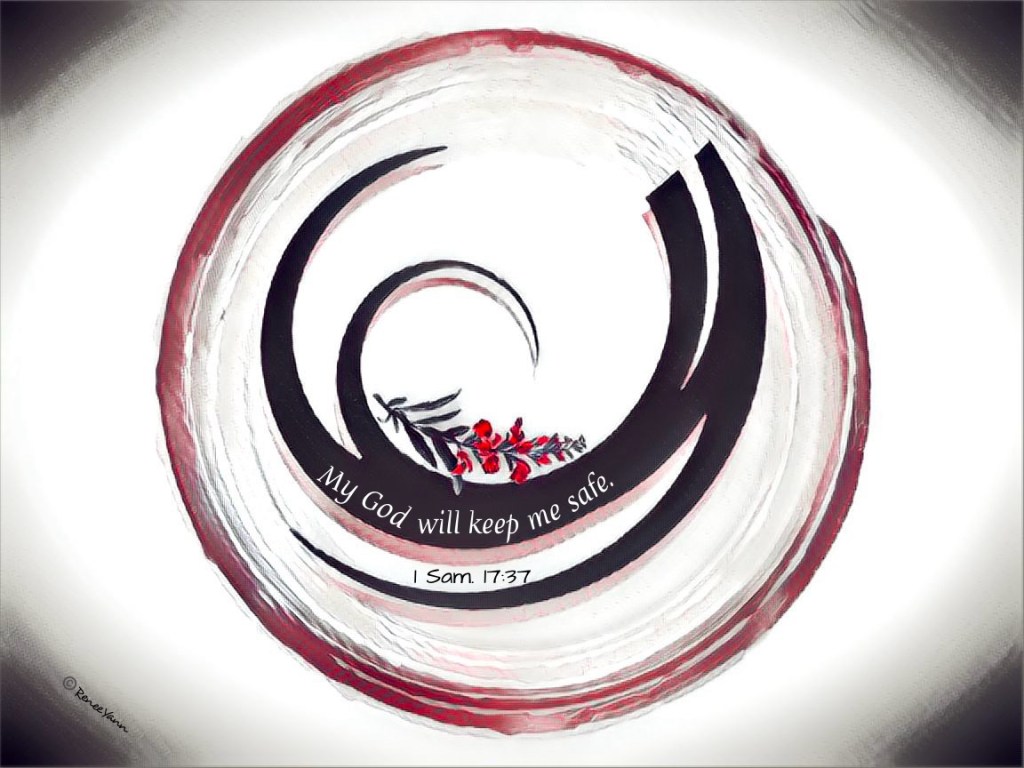
“The LORD, who delivered me from the claws of the lion and the bear,
will also keep me safe from the clutches of this Philistine.”
Saul answered David, “Go! the LORD will be with you.”

1 Samuel 17: 32-33;37

Young David engages God’s power with the confidence generated by innocence and goodness. This is the same confidence that Jesus has as he lives out his call. He knows what the Divine desire for us – our healing and wholeness. He is one with that desire.


In today’s Gospel, Jesus sees a man suffering from a withered hand. He knows he has the power to heal this man and that the Father desires such healing. But the Pharisees, who are afraid of Jesus’s power, invoke the Law in an attempt to control him.

The Pharisees watched Jesus closely
to see if Jesus would cure the man on the sabbath
so that they might accuse him.
He said to the man with the withered hand,
“Come up here before us.”
Then he said to the Pharisees,
“Is it lawful to do good on the sabbath rather than to do evil,
to save life rather than to destroy it?”

Mark 3:2-4

But the Pharisees didn’t even have the guts to answer Jesus. This angered him. He was disgusted with their small-hearted selfishness. Rather than be filled with wonder at this man restored to wholeness, “… they went out and plotted against Jesus.”


We often encounter this kind of fearful smallness in our lives … sometimes even in ourselves. What can we learn from David and Jesus about confidently living a larger life, held within the power of God?


Prose Poem: West Wind 2 – Mary Oliver

You are young. So you know everything. You leap
into the boat and begin rowing. But, listen to me.
Without fanfare, without embarrassment, without
any doubt, I talk directly to your soul. Listen to me.

Lift the oars from the water, let your arms rest, and
your heart, and your heart’s little intelligence, and listen to 
me.

There is life without love. It is not worth a bent
penny, or a scuffed shoe. It is not worth the body of a 
dead dog nine days unburied.

When you hear, a mile
away and still out of sight, the churn of the water
as it begins to swirl and roil, fretting around the
sharp rocks — when you feel the mist on your mouth
and sense ahead the embattlement, the long falls
plunging and steaming—then row, row for your life
toward it.


Music: Confidence – by Sanctus Real

Praying with Anna

The Sixth Day in the Octave of Christmas
December 30, 2023

Today’s Readings:

https://bible.usccb.org/bible/readings/123023.cfm


rembrant anna
Presentation in the Temple – Rembrandt van Rijn

There was a prophetess, Anna,
the daughter of Phanuel, of the tribe of Asher.
She was advanced in years,
having lived seven years with her husband after her marriage,
and then as a widow until she was eighty-four.
She never left the temple,
but worshiped night and day with fasting and prayer.
And coming forward at that very time,
she gave thanks to God and spoke about the child
to all who were awaiting the redemption of Jerusalem.

Luke 2:36-38

Today, in God’s Lavish Mercy, we meet the venerable prophetess Anna. Oh, what she has to teach us!

  • Perseverance: she had waited eight decades for the revelation
  • Unconditional Faith: throughout those decades, she prayed always believing
  • Pure Spirit: she believed that, like the pure in spirit, she would see God
  • Unquestioning Receptivity to the Holy: when the Savior appeared, not in glory nor a fiery chariot, she received his vulnerability without hesitation
  • Adoration: “She never left the temple,but worshiped night and day with fasting and prayer.”
  • Sacred Satisfaction: “And coming forward at that very time, she gave thanks to God” because her faith and hope had been affirmed.
psalm_light

There is so much in this reading for each one of us. Find yourself somewhere within it today as you pray. Perhaps:

  • Am I expecting God in every moment of my life?
  • If I have received the gift of “old age”, how has the long wait blessed and/or challenged me to keep hold of God’s hand?
  • If I am still “young”, how do I invite God into my unfolding journey?
  • Am I asking God to continually reveal Divinity in my daily life?
  • Am I purifying my heart of self-interest so that I can better perceive God’s Presence?
  • Can I welcome God no matter how the Divine Presence clothes itself?
  • Do I stay with my prayer, creating a deep temple in my spirit?
  • Can I find contentment and peace with how God chooses to be with me – even in suffering?

(In a second post, I will share a powerful reflective poem by Leddy Hammock & Sue Kelly – Prayer of Imagination for Anna, the Prophetess. I hope you love this piece as much as do.)


Music: While I Wait – Lincoln Brewster

Graceful Pivot

Fourth Sunday of Advent
Christmas Eve
December 24, 2023

Today’s Readings:

https://bible.usccb.org/bible/readings/122423.cfm


Today, in God’s Lavish Mercy, on this Christmas Eve and Fourth Sunday of Advent, we are blessed with the iconic reading from Luke:

The moment of Annunciation ….
where history pivots on a woman’s willingness for God

The angel Gabriel was sent from God
to a town of Galilee called Nazareth,
to a virgin betrothed to a man named Joseph,
of the house of David,
and the virgin’s name was Mary.
And coming to her, he said,
“Hail, full of grace! The Lord is with you.”
But she was greatly troubled at what was said
and pondered what sort of greeting this might be.
Then the angel said to her,
“Do not be afraid, Mary,
for you have found favor with God.

“Behold, you will conceive in your womb and bear a son,
and you shall name him Jesus.
He will be great and will be called Son of the Most High,
and the Lord God will give him the throne of David his father,
and he will rule over the house of Jacob forever,
and of his kingdom there will be no end.”
But Mary said to the angel,
“How can this be,
since I have no relations with a man?”
And the angel said to her in reply,
“The Holy Spirit will come upon you,
and the power of the Most High will overshadow you.
Therefore the child to be born
will be called holy, the Son of God.
And behold, Elizabeth, your relative,
has also conceived a son in her old age,
and this is the sixth month for her who was called barren;
for nothing will be impossible for God.”
Mary said, “Behold, I am the handmaid of the Lord.
May it be done to me according to your word.”
Then the angel departed from her.

Luke 1:26-38

Poetry: The Blessed Virgin Compared to the Air We Breathe – Gerard Manley Hopkins  

Wild air, world-mothering air,
Nestling me everywhere,…
Minds me in many ways
Of her who not only
Gave God’s infinity
Dwindled to infancy
Welcome in womb and breast,
Birth, milk, and all the rest
But mothers each new grace
That does now reach our race…
And makes, O marvellous!
New Nazareth in us,
Where she shall yet conceive
Him, morning, noon, and eve;
New Bethlems, and he born
There, evening, noon, and morn…
Be thou then, O thou dear
Mother, my atmosphere;
My happier world, wherein
To wend and meet no sin…
Stir in my ears, speak there
Of God’s love, O live air,
Of patience, penance, prayer:
World-mothering air, air wild,
Wound with thee, in thee isled,
Fold home, fast fold thy child.

Music: Ave Maria (in German) – Franz Schubert

The Key Hidden in Plain Sight

Wednesday of the Third Week of Advent
December 20, 2023

Today’s Readings:

https://bible.usccb.org/bible/readings/122023.cfm


Today, in God’s Lavish Mercy, Isaiah foretells the conception and birth of the Messiah.

Therefore the Lord himself will give you this sign:
the virgin shall conceive and bear a son,
and shall name him Emmanuel.

Isaiah 7:14

Isaiah offered the prophecy to one of the bad guys of the Hebrew Scriptures – King Ahaz (who was, nevertheless, the 16th great-grandfather of Jesus in the long David line). But Ahaz refused to believe, subsequently pursuing his own agenda rather than God’s. Ahaz’s choice ended up in disaster for both the religious and social framework of Israel.

Isaiah had handed Ahaz the Key to believe
and to act in union with God’s Will,
but Ahaz remained closed to the grace.

About 700 years later, when an angel offers her the Key, a young girl opens her heart to the miracle Isaiah once prophesied.

In the sixth month,
the angel Gabriel was sent from God
to a town of Galilee called Nazareth,
to a virgin betrothed to a man named Joseph,
of the house of David,
and the virgin’s name was Mary.
And coming to her, he said,
“Hail, full of grace! The Lord is with you.”
But she was greatly troubled at what was said
and pondered what sort of greeting this might be.
Then the angel said to her,
“Do not be afraid, Mary,
for you have found favor with God.
Behold, you will conceive in your womb and bear a son,
and you shall name him Jesus.
He will be great and will be called Son of the Most High,
and the Lord God will give him the throne of David his father,
and he will rule over the house of Jacob forever,
and of his Kingdom there will be no end.”

Luke 1:26-33

The stark contrast between Ahaz’s and Mary’s responses encourages us to consider our own openness to God’s interventions in our lives. We live a series of experiences, learnings, mistakes, reminiscences, hopes, disappointments, and a thousand other turnings of circumstance and relationship. Each holds the potential to draw us closer to God if, by prayer and reverence, we can find the key hidden under human appearances.


We can hear Mary searching for that key in her question to the angel:

But Mary said to the angel,
“How can this be,
since I have no relations with a man?”

Luke 1: 34

The angel assures Mary that there is a world transcending our perceptions where God’s power holds sway beyond all human calculation.

And the angel said to her in reply,
“The Holy Spirit will come upon you,
and the power of the Most High will overshadow you.

Luke 1: 35

Expressing her profound faith and trust in God, Mary was able to suspend the limits of expectation and definition. Ahaz didn’t even try.

Mary said, “Behold, I am the handmaid of the Lord.
May it be done to me according to your word.”

Luke 1: 38

Poetry: Annunciation – Marie Howe

Even if I don't see it again—nor ever feel it
I know it is—and that if once it hailed me
it ever does—
And so it is myself I want to turn in that direction
not as towards a place, but it was a tilting
within myself,
as one turns a mirror to flash the light to where
it isn't—I was blinded like that—and swam
in what shone at me
only able to endure it by being no one and so
specifically myself I thought I'd die
from being loved like that.

Music: The Annunciation from Rosary Sonata – Heinrich Biber

Look Up!

Memorial of Saint Lucy, Virgin and Martyr
Wednesday of the Second Week of Advent
December 13, 2023

Today’s Readings:

https://bible.usccb.org/bible/readings/121323.cfm


St. Lucy – Giovanni Ricca (1603-56)

Today, in God’s Lavish Mercy, we venerate St. Lucy, beloved and popular martyr of the 3rd century. Here is an encapsulation of her story from Wikipedia:

The oldest record of her story comes from the fifth-century Acts of the Martyrs. The single fact upon which various accounts agree is that a disappointed suitor accused Lucy of being a Christian, and she was executed in Syracuse, Sicily, in the year 304 during the Diocletianic Persecution. Her veneration spread to Rome, and by the sixth century to the whole Church. (Wiki)

The suitor was disappointed because Lucy chose to give her dowry to the poor - apparently the only reason he was marrying her. Tradition maintains that, at her martyrdom, Lucy's eyes were gouged out, an added violence of Diocletian who was angered at her prophecy of his impending downfall.

Isn’t it a bit amazing that an ordinary human story, as dramatic as it might have been, can endure for 2000 years?

We human beings treasure the witness of those whose courage and goodness we wish to imitate. They give us hope and wisdom. They light life’s way that is sometimes overshadowed by our worries. And we pass our confidences down to the generations we love hoping to strengthen them in faith.

The name “Lucy” comes from the Latin word “lux” which means “light”. St. Lucy’s life has inspired and illuminated the path for countless generations of believers, particularly those whose physical or spiritual sight or insight has been darkened or violated.


The same God who fired Lucy’s heart summons us today in the words of Isaiah. How fitting that we are called to lift up our eyes – to see, as Lucy did, beyond mere physical appearances, that our eternal Creator sustains us.

To whom can you liken me as an equal?
says the Holy One.
Lift up your eyes on high
and see who has created these things:…

… Do you not know
or have you not heard?
The LORD is the eternal God,
creator of the ends of the earth.
He does not faint nor grow weary,
and his knowledge is beyond scrutiny.
He gives strength to the fainting;
for the weak he makes vigor abound.
Though young men faint and grow weary,
and youths stagger and fall,
They that hope in the LORD will renew their strength,
they will soar as with eagles’ wings;
They will run and not grow weary,
walk and not grow faint.

Isaiah 40:24-41, excerpts

Poetry: Saint Lucie’s Day by Thomas Merton

Lucy, whose day is in our darkest season,
(Although your name is full of light,)
We walkers in the murk and rain and flesh and sense,
Lost in the midnight of our dead world's winter solstice
Look for the fogs to open on your friendly star.
We have long since cut down the summer of our history;
Our cheerful towns have all gone out like fireflies in October.
The fields are flooded and the vines are bare:
How have our long days dwindled, and now the world is frozen!
Locked in the cold jails of our stubborn will,
Oh, hear the shovels growling in the gravel.
This is the way they'll make our beds forever,
Ours, whose Decembers have put out the sun:
Doors of whose souls are shut against the summertime!
Martyr, whose short day sees our winter and our Calvary,
Show us some light, who seem forsaken by the sky;
We have so dwelt in darkness that our eyes are screened
and dim,
And all but blinded by the weakest ray.
Hallow the vespers and December of our life,
O martyred Lucy:
Console our solstice with your friendly day.

Music: Candlelight Carol – John Rutter

St. Lucy’s inextinguishable faith was fired by the Light Whom we await this Advent. As we kindle our Advent candles, our hearts sing in renewed hope.

An Obstinate Faith

Thursday of the First Week of Advent
Memorial of Saint Ambrose, Bishop and Doctor of the Church
December 7, 2023

Today’s Readings:

https://bible.usccb.org/bible/readings/120723.cfm


Today, in God’s Lavish Mercy, Isaiah describes the upside-down nature of God’s Reign:

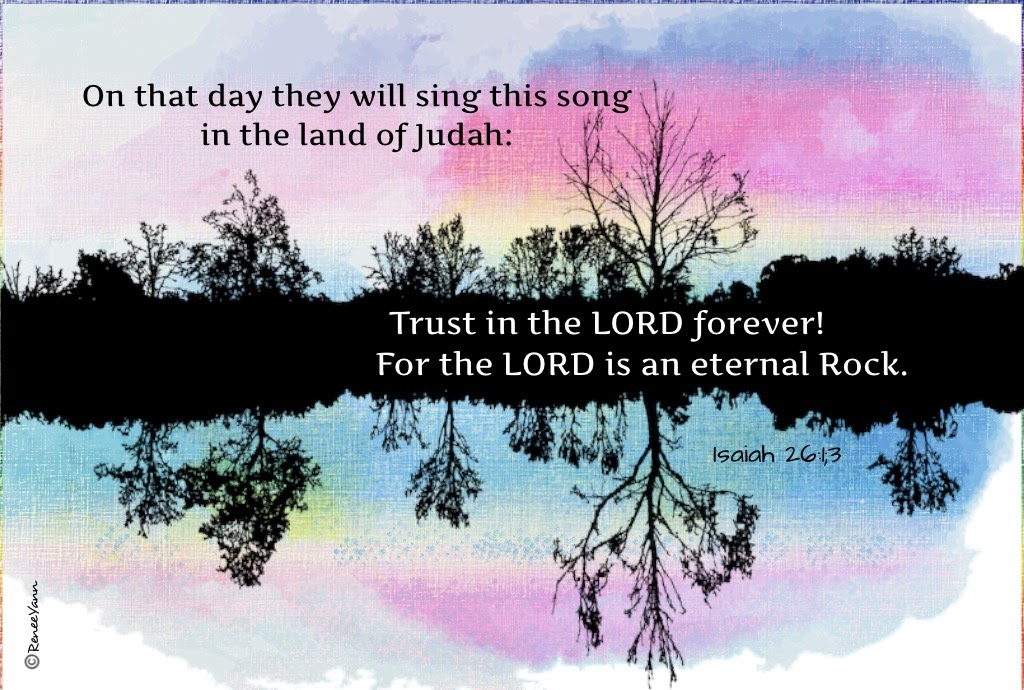
Trust in the LORD forever!
For the LORD is an eternal Rock,
who humbles those in high places,
and the lofty city he brings down;
He tumbles it to the ground,
levels it with the dust.
It is trampled underfoot by the needy,
by the footsteps of the poor.

Isaiah 26:4-6

God humbles the haughty, dwindles the lofty, tramples the elite with the “footsteps of the poor”. Wow! God turns our messy world on its head to right it!

This eloquent prophecy was intended to bolster the hopes of Isaiah’s careworn exiled community. It imagines the embodiment of the hope for which they have no evidence. Isaiah tells a geographically imprisoned people that they will be the ultimate conquerors. He assures a shackled community that their trust will earn them jubilant liberation. He enjoins them to believe!


It is really hard to have that kind of faith and trust when we have no evidence of delivery from whatever imprisons or assails us. Sometimes we wait a lifetime for a prayer to be answered but it seems that it never is. Are we fools to keep believing under such circumstances? Or are we wise enough to trust that the answers have come in ways we could not yet discern?


Our Gospel summons us to the same type of wildly hopeful trust. Jesus says that we cannot foresee nor control what kind of weather will assail us in life. Therefore, we must have a firm and sure foundation in faith so that we may survive any storm.

Jesus tells us to hear the sacred word with integrity and to measure ourselves according to it, because simply murmuring “Lord, Lord” doesn’t merit a pass to eternal life.

Everyone who listens to these words of mine and acts on them
will be like a wise one who built the house on rock. 
The rain fell, the floods came,
and the winds blew and buffeted the house. 
But it did not collapse; it had been set solidly on rock. 
And everyone who listens to these words of mine
but does not act on them
will be like a fool who built the house on sand. 
The rain fell, the floods came,
and the winds blew and buffeted the house. 
And it collapsed and was completely ruined.

Matthew 7:24-27

In this Advent time, let’s pray for a simple, wise and strong faith for ourselves and for those we love.


Prose: from On Obstinacy in Belief by C.S. Lewis

… a little bit long from Lewis but so worth it! If you like the excerpt, here’s a link to the entire essay:

https://thesewaneereview.com/articles/on-obstinacy-and-belief


Christians seem to praise an adherence to the original belief which holds out against any evidence whatever. I must now try to show why such praise is in fact a logical conclusion from the original belief itself.

This can be done best by thinking for a moment of situations in which the thing is reversed. In Christianity such faith is demanded of us; but there are situations in which we demand it of others. There are times when we can do all that a fellow creature needs if only he will trust us.

In getting a dog out of a trap, in extracting a thorn from a child’s finger, in teaching a boy to swim or rescuing one who can’t, in getting a frightened beginner over a nasty place on a mountain, the one fatal obstacle may be their distrust.

We are asking them to trust us in the teeth of their senses, their imagination, and their intelligence. We ask them to believe that what is painful will relieve their pain and that what looks dangerous is their only safety. We ask them to accept apparent impossibilities: that moving the paw further back into the trap is the way to get it out; that hurting the finger very much more will stop the finger hurting; that water which is obviously permeable will resist and support the body; that holding onto the only support within reach is not the way to avoid sinking; that to go higher and onto a more exposed ledge is the way not to fall.

To support all these incredibilia we can rely only on the other party’s confidence in us—a confidence certainly not based on demonstration, admittedly shot through with emotion, and perhaps, if we are strangers, resting on nothing but such assurance as the look of our face and the tone of our voice can supply, or even, for the dog, on our smell. Sometimes, because of their unbelief, we can do no mighty works.

But if we succeed, we do so because they have maintained their faith in us against apparently contrary evidence. No one blames us for demanding such faith. No one blames them for giving it. No one says afterward what an unintelligent dog or child or boy that must have been to trust us. If the young mountaineer were a scientist it would not be held against him, when he came up for a fellowship, that he had once departed from Clifford’s rule of evidence by entertaining a belief with strength greater than the evidence logically obliged him to.

Now to accept the Christian propositions is ipso facto to believe that we are to God, always, as that dog or child or bather or mountain climber was to us, only very much more so.

Music: Sheep May Safely Graze – J. S. Bach from from Cantata No. 208, “Was mir behagt” (Hunt Cantata), BWV 208, arr. by Egon Petri, (Oliver Schnyder – Piano)

A Message in Crisis

Friday of the Thirty-fourth Week in Ordinary Time
December 1, 2023

Today’s Readings:

https://bible.usccb.org/bible/readings/120123.cfm


Today, in God’s Lavish Mercy, our Responsorial Psalm from Daniel gives us a beautiful prayer. But, in the first reading, we pray with some pretty dramatic passages from the Book of Daniel. I mean, it’s the stuff of a rather scary special effects movie!

Even Daniel indicates how disturbing his visions are:

Because of this, my spirit was anguished and I, Daniel,
was terrified by my visions.

Daniel 7:15

So does the Church, or maybe even God, want us to be disturbed in our prayer today and tomorrow with our last two readings before Advent?

Listen! If you’re not disturbed already by the strain of unholiness in the world, then Daniel isn’t going to rock your boat! But if you, like most good people, have trouble even watching the evening news without anguish, then Daniel is speaking to you.


The writer of Daniel was delivering a message to the people of their time. The visions of chapters 7–12 reflect the crisis which took place in Judea in 167–164 BCE when Antiochus IV Epiphanes, the Greek king of the Seleucid Empire, threatened to destroy traditional Jewish worship in Jerusalem.

The message was:

  • pay attention to the changing world
  • focus on God in the disturbing change
  • choose to be faithful, hopeful, and brave
  • God will always remain faithful to us and most important of all:
  • God is coming to deliver us!

As with all Scripture, texts that spoke to an ancient people continue to speak to us. Our world suffers and hopes in the same way Daniel’s did. For us, the elements of today’s passage can serve as pre-Advent encouragements. Trusting them, we are moved to pray with all Creation which is ever steadfast in praising God:

Give glory and eternal praise to him!
“Mountains and hills, bless the Lord;
    praise and exalt him above all forever.”
“Everything growing from the earth
“You springs, bless the Lord;
“Seas and rivers, bless the Lord;
“You dolphins and all water creatures, bless the Lord;
“All you birds of the air, bless the Lord;
“All you beasts, wild and tame, bless the Lord;
    praise and exalt him above all forever.”
R.    Give glory and eternal praise to him!

Poetry: The Second Coming – William Butler Yeats

Turning and turning in the widening gyre
The falcon cannot hear the falconer;
Things fall apart; the centre cannot hold;
Mere anarchy is loosed upon the world,
The blood-dimmed tide is loosed, and everywhere
The ceremony of innocence is drowned;
The best lack all conviction, while the worst
Are full of passionate intensity.
Surely some revelation is at hand;
Surely the Second Coming is at hand.
The Second Coming! Hardly are those words out
When a vast image out of Spritus Mundi
Troubles my sight: somewhere in the sands of the desert.

A shape with lion body and the head of a man,
A gaze blank and pitiless as the sun,
Is moving its slow thighs, while all about it
Reel shadows of the indignant desert birds.
The darkness drops again; but now I know
That twenty centuries of stony sleep
were vexed to nightmare by a rocking cradle,
And what rough beast, its hour come round at last,
Slouches towards Bethlehem to be born?


Music: Michael Hoppé – Shadows Fall

Breaking into Newness

Tuesday of the Thirty-fourth Week in Ordinary Time
November 28, 2023

Today’s Readings:

https://bible.usccb.org/bible/readings/112823.cfm


Today, in God’s Lavish Mercy, Daniel interprets a dream in which a statue spontaneously breaks apart, and Jesus warns that the beloved Temple will someday do the same thing. Our scriptures beg the question: how does one find strength to rebuild again?


We don’t like things to break apart that we hadn’t expected to break apart – even stupid things. I had a favorite old plastic mug that I loved to pack with ice and B.O.C. (beverage of choice) as I headed to the beach on a hot summer day. It was about a thousand years old but part of its famed origin was still visible on the faded side:

For some inexplicable reason, one morning I decided to pour my hot tea into that irreplaceable mug. It basically melted into itself like the wicked witch in the Wizard of Oz. It wasn’t a tragedy tantamount to Daniel’s dream or the Temple collapsing, but I’ll tell you, I have NEVER since had a matching drink on the beach!


My treasured mug disintegrated because I used it for the wrong purpose. And that is also the point of both our readings. Daniel describes how the ensuing generations, who misuse their power, will disappear one after the other until God establishes the permanent reign of justice:

… the kingdom shall be partly strong and partly fragile.
The iron mixed with clay tile
means that they shall seal their alliances by intermarriage,
but they shall not stay united, any more than iron mixes with clay.
In the lifetime of those kings
the God of heaven will set up a kingdom
that shall never be destroyed or delivered up to another people;
rather, it shall break in pieces all these kingdoms
and put an end to them, and it shall stand forever.

Daniel 2:42-44

Jesus describes the same dynamic in relationship to the Temple because its use has been diverted into material show and adornment rather than worship and the works of justice:

While some people were speaking about
how the temple was adorned with costly stones and votive offerings,
Jesus said, “All that you see here–
the days will come when there will not be left
a stone upon another stone that will not be thrown down.”

Luke 21:5

But, here’s the thing about God’s action to break up in our lives that which is no longer life-giving — the breakup will always yield new life if we can open our hearts to its grace.

As we look back over 2023, we may see a lot of disassembled pieces scattered across the landscape. Maybe some of the plans we had never flew, or maybe the string broke on some of the kites we’d been flying for years! There may have been small losses that seemed monumental at the time, or truly monumental losses whose significance has only deepened.

Wherever we stand amid our dreams and our temples, we can be sure of this as 2024 approaches: grace is always with us, renewing us in the ever clearer image of God.


This final week before Advent is a great time to take inventory of our spiritual lives. What needs to go and what needs to be strengthened? Most likely, we already know the answers. Now let’s gather the courage and focus to do what grace suggests.


Poem: Beginners – Denise Levertov

Levertov writes about hope, courage, justice, and mercy. The poem begins with a stanza from The Garden of Proserpine by Algernon Charles Swinburne, introduced by a dedication to activists Karen Silkwood and Eliot Gralia.

𝘋𝘦𝘥𝘪𝘤𝘢𝘵𝘦𝘥 𝘵𝘰 𝘵𝘩𝘦 𝘮𝘦𝘮𝘰𝘳𝘺 𝘰𝘧 𝘒𝘢𝘳𝘦𝘯 𝘚𝘪𝘭𝘬𝘸𝘰𝘰𝘥 𝘢𝘯𝘥 𝘌𝘭𝘪𝘰𝘵 𝘎𝘳𝘢𝘭𝘭𝘢

“From too much love of living,
Hope and desire set free,
Even the weariest river
Winds somewhere to the sea—“
– – – – – – –

But we have only begun
To love the earth.

We have only begun
To imagine the fullness of life.

How could we tire of hope?
— so much is in bud.

How can desire fail?
— we have only begun

to imagine justice and mercy,
only begun to envision

how it might be
to live as siblings with beast and flower,
not as oppressors.

Surely our river
cannot already be hastening
into the sea of nonbeing?

Surely it cannot
drag, in the silt,
all that is innocent?

Not yet, not yet—
there is too much broken
that must be mended,

too much hurt we have done to each other
that cannot yet be forgiven.

We have only begun to know
the power that is in us if we would join
our solitudes in the communion of struggle.

So much is unfolding that must
complete its gesture,

so much is in bud.

Music: Sacred River – Gandalf
As you experience this beautiful video, allow your spirit to remember the challenges and blessings of this past year that have brought you to this place with God, ready for a new beginning and a deeper love.