Feast of the Assumption

August 15, 2025

Understanding the Assumption: A Maturing in Faith

Many of us grew up in households where we were surrounded by a strong devotional faith. I am happy to be one of those people. These simple, sacramental practices awakened and engaged my young faith and offered me a visible means to respond to its stirrings. These practices also gave my parents and grandparents the tools to teach me to love and trust God, Mary, the Saints, and my Guardian Angel.

I remember with gratitude the many parameters of that deep devotion which accompanied our fundamental practice of a sacramental and liturgical life.
• Our home had a crucifix in every room to remind us of God’s Presence
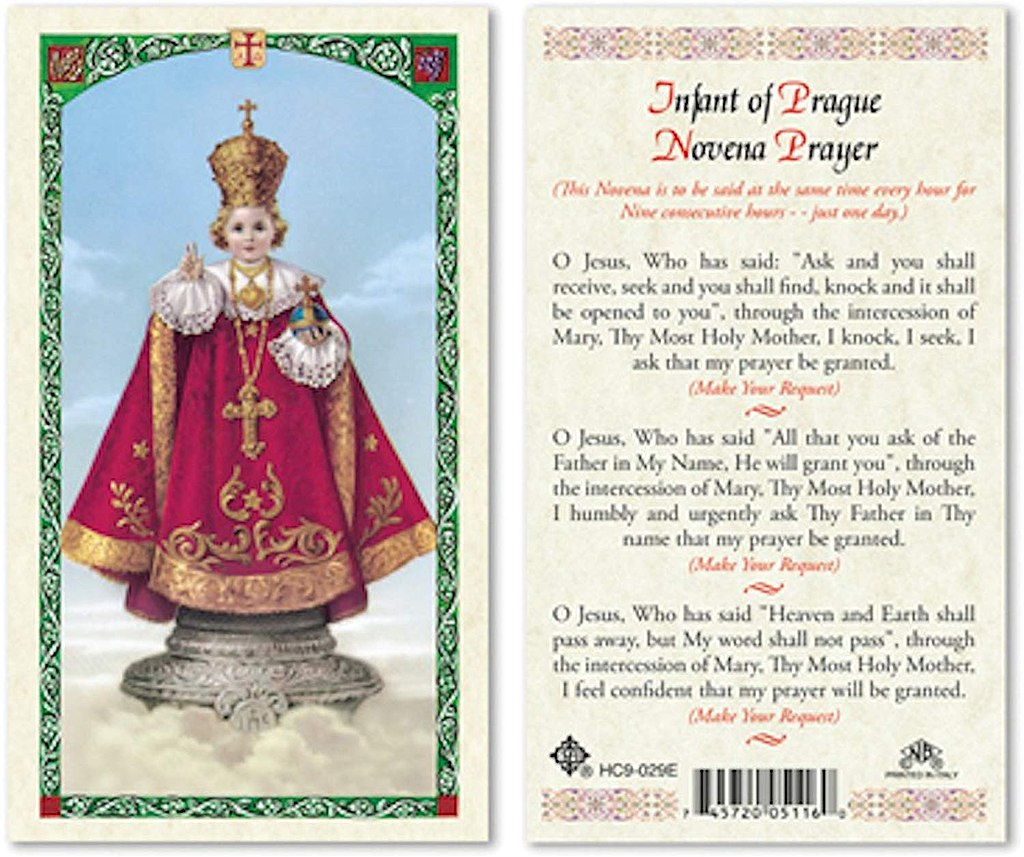
• Over the main door was the statue of the Infant of Prague and the first Christmas card we had received depicting the Three Kings to bless us on our journeys.
• All year, Dad’s fedora sported a tiny piece of straw tucked into its plaid band. He had plucked it from the parish Christmas crèche, near to St. Joseph who was his trusted friend. At Easter, he added a little piece of palm.
• During a really violent thunderstorm, we might get a sprinkling from Mom’s holy water flask kept for especially taxing situations.


And, maybe because we live not too far from the East Coast, we had one special summer practice. We went into the ocean on the Feast of the Assumption, believing that, through the water, Mary offered us special healing and graces on that day.

I can still picture young boys helping their elderly grandparents into the shallow surf. I remember mothers and fathers marking their children’s brows with a briny Sign of the Cross. There was a humble, human reverence and trust in these actions that blesses me still.


While that August 15th ritual, like similar devotions, might seem superstitious and even hokey to some today, the memory of it remains with me as a testament to the simple faith and deep love of God’s people for our Blessed Mother.

It was just such devotion and faith, expressed over centuries by the faithful, that moved Pius XII to declare the dogma of the Assumption:
“We pronounce, declare, and define it to be a divinely revealed dogma: that the Immaculate Mother of God, the ever Virgin Mary, having completed the course of her earthly life, was assumed body and soul into heavenly glory.”
(MUNIFICENTISSIMUS DEUS 44)


On November 1, 1950, Pope Pius XII defined the dogma of the Assumption in the Apostolic Constitution Munificentissimus Deus (The Most Bountiful God). The world at that time was still healing from the horrors of World War II. The Pope himself, no doubt, was wounded beyond description by what he had witnessed. One can hear his deep pain as he begins his letter by saying:

“Now, just like the present age, our pontificate is weighed down by ever so many cares, anxieties, and troubles, by reason of very severe calamities that have taken place and by reason of the fact that many have strayed away from truth and virtue. Nevertheless, we are greatly consoled to see that, while the Catholic faith is being professed publicly and vigorously, piety toward the Virgin Mother of God is flourishing and daily growing more fervent, and that almost everywhere on earth it is showing indications of a better and holier life.”


This belief is complementary to the dogma of the Immaculate Conception defined by Pope Pius IX in 1854. These two articles of faith embrace the totality of Mary’s life which was uniquely blessed among all humans. Mary gives us, in our humanity, both a model of and a supportive invitation to holiness.


Marie T. Farrell, RSM has written a scholarly and insightful essay on the Assumption. Her work offers a rich understanding of the theological layers within this teaching.
Sister Marie closes her essay with these words:

Mary assumed into heaven and spiritualized in her whole personhood is a prophetic symbol of hope for us all. In his Resurrection-Ascension, Jesus has shown the way to eternal life. In the mystery of Assumption, the Church sees Mary as the first disciple of many to be graced with a future already opened by Christ, one that defies comprehension for ‘…no eye has seen, nor ear heard, nor the human heart conceived, what God has prepared for those who love him…
(1 Cor 2: 9)


Music: Assumpta Est Maria – Pierluigi de Palestrina


For Your Reflection:

  • What feelings or reactions do I have after reading this reflection?
  • Do my feelings or reactions remind me of any passage or event in scripture, especially in the life of Christ? 
  • What actions might I take today because of my response to these readings?

Suggested Scripture: Luke 2:13-20

There is no reference to the Assumption in the Bible. But I think this passage captures the deep beauty and wisdom of Mary’s spirituality.

Firstfruits

Solemnity of the Assumption of the Blessed Virgin Mary
August 15, 2024

Today’s Readings:

https://bible.usccb.org/bible/readings/081524-Day.cfm


Christ has been raised from the dead,
the firstfruits of those who have fallen asleep.

Corinthians 15:20

We celebrate Mary because of who she is in Christ, the firstfruits of a new and redeemed Creation. Mary is the one who bore these sacred firstfruits. Mothering Christ, she mothers too the gift of our Redemption.

Today, in God’s Lavish Mercy:

We honor Mary whose simple life was translucent with faith. From that light, God took flesh and so redeemed us.


Poetry: The Assumption – Joachim Smet O.Carm

No painter ever caught the magic other going--
This was a matter of an inward growing,
Simple and imperceptible as thought.
It was no pageant wrought
Of sounding splendor, welter of gold bars
Of molten day, mad stars,
Flurry of quick angels' winging,
Bursts of their laughter ringing
In wild bliss.
The simple fact is this:
Love conquered at long last.
Her eager soul fled fast
With a great gladness like a song
Unto to her Spouse above,
And her pure flesh would not be parted long
For sheer love.

Music: Assumpta Est Maria

Latin Text

Assumpta est Maria in caelum,
gaudent angeli, laudantes benedicunt Dominum.
Gaudete et exsultate omnes recti corde.
Quia hodie Maria virgo cum Christo regnat in aeternum.

Quae est ista, quae progreditur
quasi aurora consurgens,
pulchra ut luna, electa ut sol,
terribilis ut castrorum acies ordinata?
Gaudete et exsultate omnes recti corde.
Quia hodie Maria virgo cum Christo regnat in aeternum.

ENGLSIH TEXT
Mary has been received into Heaven:
the angels rejoice with praises and bless the Lord.
Let all rejoice and be glad with righteous heart,
for today the Virgin Mary reigns with Christ for evermore.

Who is she that cometh forth
as the morning rising,
fair as the moon, bright as the sun,
terrible as an army set in array ?
Let all rejoice and be glad with righteous heart,
for today the Virgin Mary reigns with Christ for evermore.

Alleluia: Magnificat

Solemnity of the Assumption of the Blessed Virgin Mary
August 15, 2022

Today’s Readings:

https://bible.usccb.org/bible/readings/081522.cfm

Alleluia, alleluia.
Mary is taken up to heaven;
a chorus of angels exults.

Today, in God’s Lavish Mercy, we honor Mary on the Feast which celebrates her assumption, “that the Immaculate Mother of God, the ever Virgin Mary, having completed the course of her earthly life, was assumed body and soul into heavenly glory.”

The Catholic Church’s teaching on the Assumption of Mary was promulgated in 1950 by Pope Pius XII in an Apostolic Constitution entitled “MUNIFICENTISSIMUS DEUS (the Most Bountiful God). Having experienced the horrors of a world war, and aware of the ensuing evils of the Cold War, Pope Pius XII looked to Mary for healing for himself and the whole world:

We, who have placed our pontificate under the special patronage of the most holy Virgin, to whom we have had recourse so often in times of grave trouble, we who have consecrated the entire human race to her Immaculate Heart in public ceremonies, and who have time and time again experienced her powerful protection, are confident that this solemn proclamation and definition of the Assumption will contribute in no small way to the advantage of human society, since it redounds to the glory of the Most Blessed Trinity, to which the Blessed Mother of God is bound by such singular bonds. It is to be hoped that all the faithful will be stirred up to a stronger piety toward their heavenly Mother, and that the souls of all those who glory in the Christian name may be moved by the desire of sharing in the unity of Jesus Christ’s Mystical Body and of increasing their love for her who shows her motherly heart to all the members of this august body. And so we may hope that those who meditate upon the glorious example Mary offers us may be more and more convinced of the value of a human life entirely devoted to carrying out the heavenly Father’s will and to bringing good to others. Thus, while the illusory teachings of materialism and the corruption of morals that follows from these teachings threaten to extinguish the light of virtue and to ruin the lives of men by exciting discord among them, in this magnificent way all may see clearly to what a lofty goal our bodies and souls are destined. Finally it is our hope that belief in Mary’s bodily Assumption into heaven will make our belief in our own resurrection stronger and render it more effective.

MUNIFICENTISSIMUS DEUS (42)

Maybe, like me, the fact of the Assumption doesn’t matter a whole lot to you. I love Mary whether she was “assumed” or not. But in its time, the declaration of this dogma was important in order to turn the world’s focus toward Mary, a figure of goodness, courage, love, mercy and justice – virtues desperately necessary for healing in the aftermath of war.

Our own world could surely benefit from a prayerful, loving contemplation of Mary.

Mary was a woman so open to God that she enfleshed God’s Spirit in the person of Jesus. She was a vessel of love – for God and for all Creation. By living her ordinary life with extraordinary love and holy courage, she became blessed.

Mary, the Blessed Mother of all of us, can teach us to love, reverence, strengthen and support one another when we pray with her as we meet her in the Gospel.

Elizabeth said:

“Blessed are you who believed
that what was spoken to you by the Lord
would be fulfilled.”

And Mary said:
“My soul proclaims the greatness of the Lord;
my spirit rejoices in God my Savior
for God has looked on my simplicity with favor .
From this day all generations will call me blessed:
the Almighty has done great things for me
and holy is God’s Name.
In every generation, God has mercy
on those with holy reverence and awe.

Poetry: The Blessed Virgin compared to the air we breathe…
by Gerard Manley Hopkins, SJ

( I know this is a really long poem, and Hopkins can seem a little convoluted. But the images in this poem are spectacular … even if you just read a bit at a time. It’s so worth it.)

Wild air, world-mothering air,
Nestling me everywhere,
That each eyelash or hair
Girdles; goes home betwixt
The fleeciest, frailest-flixed
Snowflake; that’s fairly mixed
With, riddles, and is rife
In every least thing’s life;
This needful, never spent,
And nursing element;
My more than meat and drink,
My meal at every wink;
This air, which, by life’s law,
My lung must draw and draw
Now but to breathe its praise,
Minds me in many ways
Of her who not only
Gave God’s infinity
Dwindled to infancy
Welcome in womb and breast,
Birth, milk, and all the rest
But mothers each new grace
That does now reach our race—
Mary Immaculate,
Merely a woman, yet
Whose presence, power is
Great as no goddess’s
Was deemèd, dreamèd; who
This one work has to do—
Let all God’s glory through,
God’s glory which would go
Through her and from her flow
Off, and no way but so.

I say that we are wound
With mercy round and round
As if with air: the same
Is Mary, more by name.
She, wild web, wondrous robe,
Mantles the guilty globe,
Since God has let dispense
Her prayers his providence:
Nay, more than almoner,
The sweet alms’ self is her
And men are meant to share
Her life as life does air.
If I have understood,
She holds high motherhood
Towards all our ghostly good
And plays in grace her part
About man’s beating heart,
Laying, like air’s fine flood,
The deathdance in his blood;
Yet no part but what will
Be Christ our Saviour still.
Of her flesh he took flesh:
He does take fresh and fresh,
Though much the mystery how,
Not flesh but spirit now
And makes, O marvellous!
New Nazareths in us,
Where she shall yet conceive
Him, morning, noon, and eve;
New Bethlems, and he born
There, evening, noon, and morn
Bethlem or Nazareth,
Men here may draw like breath
More Christ and baffle death;
Who, born so, comes to be
New self and nobler me
In each one and each one
More makes, when all is done,
Both God’s and Mary’s Son.
Again, look overhead
How air is azurèd;
O how! nay do but stand
Where you can lift your hand
Skywards: rich, rich it laps
Round the four fingergaps.
Yet such a sapphire-shot,
Charged, steepèd sky will not
Stain light.   Yea, mark you this:
It does no prejudice.
The glass-blue days are those
When every colour glows,
Each shape and shadow shows.
Blue be it: this blue heaven
The seven or seven times seven
Hued sunbeam will transmit
Perfect, not alter it.
Or if there does some soft,
On things aloof, aloft,
Bloom breathe, that one breath more
Earth is the fairer for.
Whereas did air not make
This bath of blue and slake
His fire, the sun would shake,
A blear and blinding ball
With blackness bound, and all
The thick stars round him roll
Flashing like flecks of coal,
Quartz-fret, or sparks of salt,
In grimy vasty vault.
So God was god of old:
A mother came to mould
Those limbs like ours which are
What must make our daystar
Much dearer to mankind;
Whose glory bare would blind
Or less would win man’s mind.
Through her we may see him
Made sweeter, not made dim,
And her hand leaves his light
Sifted to suit our sight.
Be thou then, thou dear
Mother, my atmosphere;
To wend and meet no sin;
Above me, round me lie
Fronting my froward eye
With sweet and scarless sky;
Stir in my ears, speak there
Of God’s love, O live air,
Of patience, penance, prayer:
World-mothering air, air wild,
Wound with thee, in thee isled,
Fold home, fast fold thy child.

Music: Magnificat – Mina

Magnificat anima mea Magnificat
Dominum et exsultavit spiritus meus
In Deo salutari meo
Magnificat, Magnificat
Quia respexit humilitatem ancillae suae
Ecce enim ex hoc beatam me dicent omnes generationes
Magnificat anima mea Magnificat
Dominum et exsultavit spiritus meus
In Deo salutari meo
Magnificat, Magnificat
Quia fecit mihi magna qui potens est
Et sanctum nomen ejus
Magnificat, Magnificat
Dominum et exsultavit spiritus meus
In Deo
Magnificat, Magnificat

Lyrics translation

My soul magnifies the
The lord and my spirit rejoices
In God my saviour
Magnificat, Magnificat
For he has looked on his servant in her lowliness
Behold this blessed shall call me blessed all generations
The Magnificat my soul Magnifies the
The lord and my spirit rejoices
In God my saviour
Magnificat, Magnificat
Because I made a big who is able
And holy is his name
Magnificat, Magnificat
The lord and my spirit rejoices
In God
Magnificat, Magnificat

Understanding the Assumption: Maturing in Faith and Worship

(My long-term followers will recognize this reflection. It’s my go-to for the Assumption because it covers many avenues for prayer.)

Many of us grew up in households where we were surrounded by a strong devotional faith. I am happy to be one of those people. These simple, sacramental practices awakened and engaged my young faith and offered me a visible means to respond to its stirrings. These practices also gave my parents and grandparents the tools to teach me to love and trust God, Mary, the saints, and my Guardian Angel.


I remember with gratitude the many parameters of that deep devotion which accompanied our fundamental practice of a sacramental and liturgical life.

  • Our home had a crucifix in every room to remind us of God’s Presence
  • Over the main door was the statue of the Infant of Prague and the first Christmas card we had received depicting the Three Kings to bless us on our journeys.
  • All year, Dad’s fedora sported a tiny piece of straw tucked into its plaid band. He had plucked it from the parish Christmas crèche, near to St. Joseph who was his patron.
  • During a really violent thunderstorm, we might get a sprinkling from Mom’s holy water flask kept for especially taxing situations.

And, maybe because we live not too far from the east coast, we had one special summer practice. We went into the ocean on the Feast of the Assumption, believing that, through the water, Mary offered us special healing and graces on that day.

I can still picture young kids helping their elderly grandparents into the shallow surf. I remember mothers and fathers marking their children’s brows with a briny Sign of the Cross. There was a humble, human reverence and trust in these actions that blesses me still.

While that August 15th ritual, like similar devotions, might seem superstitious and even hokey to some today, the memory of it remains with me as a testament to the simple faith and deep love of God’s people for our Blessed Mother.


It was just such devotion and faith, expressed over centuries by the faithful, that moved Pius XII to declare the dogma of the Assumption:

“We pronounce, declare, and define it to be a divinely revealed dogma: that the Immaculate Mother of God, the ever Virgin Mary, having completed the course of her earthly life, was assumed body and soul into heavenly glory.”
(MUNIFICENTISSIMUS DEUS 44)


On November 1, 1950, Pope Pius XII defined the dogma of the Assumption in the Apostolic Constitution Munificentissimus Deus(The Most Bountiful God). The world at that time was still healing from the horrors of World War II. The Pope himself, no doubt, was wounded beyond description by what he had witnessed. One can hear his deep pain as he begins his letter by saying:

“Now, just like the present age, our pontificate is weighed down by ever so many cares, anxieties, and troubles, by reason of very severe calamities that have taken place and by reason of the fact that many have strayed away from truth and virtue. Nevertheless, we are greatly consoled to see that, while the Catholic faith is being professed publicly and vigorously, piety toward the Virgin Mother of God is flourishing and daily growing more fervent, and that almost everywhere on earth it is showing indications of a better and holier life.


This belief is complementary to the dogma of the Immaculate Conception defined by Pope Pius IX in 1854. These two articles of faith embrace the totality of Mary’s life which was uniquely blessed among all humans. Mary gives us, in our humanity, both a model of and a supportive invitation to holiness.


Marie T. Farrell, RSM presents a scholarly and insightful essay on the Assumption here. Her work gives us a rich understanding of the theological layers within this teaching.

Click here for Sr. Marie’s article
The article is the third one down, on page 13.

Sister Marie closes her essay with these words:
Mary assumed into heaven and Spiritualised in her whole personhood is a prophetic symbol of hope for us all. In his Resurrection-Ascension, Jesus has shown the way to eternal life. In the mystery of Assumption, the Church sees Mary as the first disciple of many to be graced with a future already opened by Christ, one that defies comprehension for ‘…no eye has seen, nor ear heard, nor the human heart conceived, what God has prepared for those who love him…(1 Cor 2: 9)


Musical Reflection with Song below: Prayer of Pure Love ~ Letty Hammock and Sue K. Riley

The Feast of the Assumption

Many of us grew up in households where we were surrounded by a strong devotional faith. I am happy to be one of those people. These simple, sacramental practices awakened and engaged my young faith and offered me a visible means to respond to its stirrings. These practices also offered my parents and grandparents the tools to teach me to love and trust God, Mary and the saints.

I remember with gratitude the many parameters of that deep devotion which accompanied our fundamental practice of a sacramental and liturgical life.

  • Our home had a crucifix in every room.
  • Over the main door was the statue of the Infant of Prague and the first Christmas card we had received depicting the Three Kings. (Under the statue was a single dime – so that we wold never completely run out of money!)
  • All year, Dad’s fedora sported a tiny piece of straw tucked into its plaid band. He had plucked it from the parish Christmas crèche, near to St. Joseph who was his patron.
  • During a really violent thunderstorm, we might get a sprinkling from Mom’s holy water flask kept for especially taxing situations.

And, maybe because we live not too far from the ocean, we had one special summer practice. We went into the ocean on the Feast of the Assumption, believing that Mary offered us special healing and graces on that day.

I can still picture young boys helping their elderly grandparents into the shallow surf. I remember mothers and fathers marking their children’s brows with a briny Sign of the Cross. There was a humble, human reverence and trust in these actions that blesses me still.

While that August 15th ritual, like similar devotions, might seem superstitious and even hokey to some today, the memory of it remains with me as a testament to the simple faith and deep love of God’s people for our Blessed Mother.

On November 1, 1950, Pope Pius XII defined the dogma of the Assumption in the Apostolic Constitution Munificentissimus Deus (The Most Bountiful God). The world at that time was still healing from the horrors of World War II. The Pope himself, no doubt, was wounded beyond description by what he had witnessed. He begins his letter by saying:

“Now, just like the present age, our pontificate is weighed down by ever so many cares, anxieties, and troubles, by reason of very severe calamities that have taken place and by reason of the fact that many have strayed away from truth and virtue. Nevertheless, we are greatly consoled to see that, while the Catholic faith is being professed publicly and vigorously, piety toward the Virgin Mother of God is flourishing and daily growing more fervent, and that almost everywhere on earth it is showing indications of a better and holier life.“

It was just such devotion and faith, expressed over centuries by the faithful, that moved Pius XII to declare this dogma:

“We pronounce, declare, and define it to be a divinely revealed dogma: that the Immaculate Mother of God, the ever Virgin Mary, having completed the course of her earthly life, was assumed body and soul into heavenly glory.”
(MUNIFICENTISSIMUS DEUS 44)

This belief is complementary to the dogma of the Immaculate Conception defined by Pope Pius IX in 1854. These two articles of faith embrace the totality of Mary’s life which was uniquely blessed among all humans. Mary offers us, in our humanity, both a model of and a supportive invitation to holiness.

Jan Van Eyke – Ghent Altarpiece

Sister Marie T. Farrell, RSM closes her scholarly essay on the Assumption with these words:

Mary assumed into heaven and Spiritualised in her whole personhood is a pro- phetic symbol of hope for us all. In his Resurrection-Ascension, Jesus has shown the way to eternal life. In the mystery of Assumption, the Church sees Mary as the first disciple of many to be graced with a future already opened by Christ, one that defies comprehension for ‘…no eye has seen, nor ear heard, nor the human heart conceived, what God has prepared for those who love him…’(1 Cor 2: 9)

Musical Reflection with Song: Prayer of Pure Love – Letty Hammock

Understanding the Assumption: Maturing in Faith

Readings: Click here for Reading

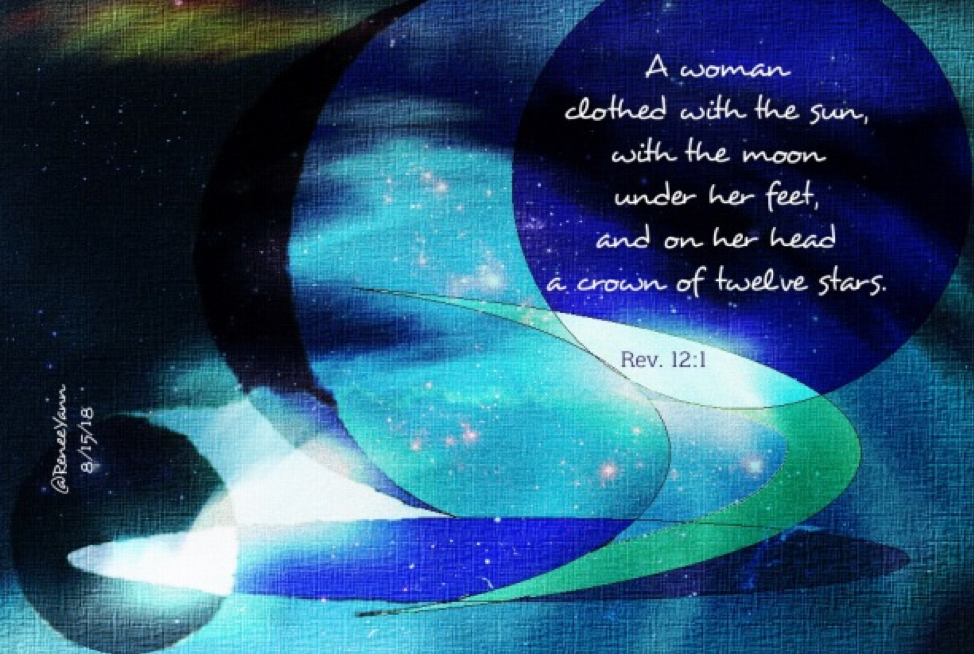
Rev 12_1 Assumption

 (Republishing last year’s reading. I’m on retreat and trying to keep my time empty. Praying for all my dear followers.)

Many of us grew up in households where we were surrounded by a strong devotional faith. I am happy to be one of those people. These simple, sacramental practices awakened and engaged my young faith and offered me a visible means to respond to its stirrings. These practices also gave my parents and grandparents the tools to teach me to love and trust God, Mary, the saints, and my Guardian Angel.

I remember with gratitude the many parameters of that deep devotion which accompanied our fundamental practice of a sacramental and liturgical life.

  • Our home had a crucifix in every room to remind us of God’s Presence
  • Over the main door was the statue of the Infant of Prague and the first Christmas card we had received depicting the Three Kings to bless us on our journeys.
  • All year, Dad’s fedora sported a tiny piece of straw tucked into its plaid band. He had plucked it from the parish Christmas crèche, near to St. Joseph who was his patron.
  • During a really violent thunderstorm, we might get a sprinkling from Mom’s holy water flask kept for especially taxing situations.

And, maybe because we live not too far from the east coast, we had one special summer practice. We went into the ocean on the Feast of the Assumption, believing that, through the water, Mary offered us special healing and graces on that day.

wedding-of-sea-mike

I can still picture young boys helping their elderly grandparents into the shallow surf. I remember mothers and fathers marking their children’s brows with a briny Sign of the Cross. There was a humble, human reverence and trust in these actions that blesses me still.

While that August 15th ritual, like similar devotions, might seem superstitious and even hokey to some today, the memory of it remains with me as a testament to the simple faith and deep love of God’s people for our Blessed Mother.

It was just such devotion and faith, expressed over centuries by the faithful, that moved Pius XII to declare the dogma of the Assumption:

“We pronounce, declare, and define it to be a divinely revealed dogma: that the Immaculate Mother of God, the ever Virgin Mary, having completed the course of her earthly life, was assumed body and soul into heavenly glory.”
(MUNIFICENTISSIMUS DEUS 44)

On November 1, 1950, Pope Pius XII defined the dogma of the Assumption in the Apostolic Constitution Munificentissimus Deus(The Most Bountiful God). The world at that time was still healing from the horrors of World War II. The Pope himself, no doubt, was wounded beyond description by what he had witnessed. One can hear his deep pain as he begins his letter by saying:

“Now, just like the present age, our pontificate is weighed down by ever so many cares, anxieties, and troubles, by reason of very severe calamities that have taken place and by reason of the fact that many have strayed away from truth and virtue. Nevertheless, we are greatly consoled to see that, while the Catholic faith is being professed publicly and vigorously, piety toward the Virgin Mother of God is flourishing and daily growing more fervent, and that almost everywhere on earth it is showing indications of a better and holier life.

This belief is complementary to the dogma of the Immaculate Conception defined by Pope Pius IX in 1854. These two articles of faith embrace the totality of Mary’s life which was uniquely blessed among all humans. Mary gives us, in our humanity, both a model of and a supportive invitation to holiness.

Marie T. Farrell, RSM presents a scholarly and insightful essay on the Assumption here. Her work gives us a rich understanding of the theological layers within this teaching.

Click here for Sr. Marie’s article

Sister Marie closes her essay with these words:
Mary assumed into heaven and Spiritualised in her whole personhood is a prophetic symbol of hope for us all. In his Resurrection-Ascension, Jesus has shown the way to eternal life. In the mystery of Assumption, the Church sees Mary as the first disciple of many to be graced with a future already opened by Christ, one that defies comprehension for ‘…no eye has seen, nor ear heard, nor the human heart conceived, what God has prepared for those who love him…(1 Cor 2: 9)

Musical Reflection with Song below: Prayer of Pure Love ~ Letty Hammock and Sue K. Riley