A Heart Beholding

November 20, 2021
Feast of Christ the King

For some, the lofty, politically-tinged title might obscure the rich devotion offered by this feast. The title “king” carries with it suggestions of exaggerated power, wealth and dominance not compatible with our Gospel perception of Jesus.

We may be more comfortable with images of Christ as infant, brother, shepherd, lamb, vine, gate, way, truth, life…

But what all these images point out is that our ability to comprehend the fullness of Christ is severely limited by our humanity. We usually choose a specific image based on our circumstances and spiritual needs.

Pope Pius XI promoted the concept of Christ the King in his 1925 encyclical Quas Primas, in response to growing international secularism and nationalism. His intent was not to compare Christ to the challenged world leaders of the time. It was to raise the perceptions of all people to the lessons of Divine Leadership: mercy, justice, inclusivity, and peace.

Oh, how we could benefit from the same understanding today! 

In this age with its culture of continual war, the human pain it causes, refugee crises, climate devastation, wealth distortion and indifference to the poor, how our hearts long for just, wise and loving leadership!

In his encyclical, Pius XI wrote:

Christ the King reigns “in the human hearts,” both by reason of the keenness of his intellect and the extent of his knowledge, and also because he is very truth, and it is from him that truth must be obediently received by all humanity. He reigns, too, in our wills, for in him the human will was perfectly and entirely obedient to the Holy Will of God, and further by his grace and inspiration he so subjects our free-will as to incite us to the most noble endeavors. He is King of hearts, too, by reason of his “charity which exceedeth all knowledge.”

— Quas primas, §7[4]

Let’s pray for these virtues for all who are charged with any form of power or leadership:

  • keen spiritual intellect
  • deep heart’s knowledge
  • uncompromising truth
  • obedience to grace
  • holy inspiration 
  • noble character
  • and surpassing charity for all Creation

May Christ the King truly live and reign among us. May we behold the “sweet light in His eyes”!


Poetry: A King Inside Who Listens - Rumi

There are many people with their eyes open
whose hearts are shut. What do they see?
Matter.

But someone whose love is alert,
even if the eyes go to sleep,
he or she will be waking up thousands of others.

If you are not one of those light-filled lovers,
restrain your desire-body's intensity.
Put limits on how much you eat
and how long you lie down.

But if you are awake here in the chest,
sleep long and soundly.

Your spirit will be out roaming and working,
even on the seventh level.

The Prophet says, I close my eyes and rest in sleep,
but my love never needs rest.

The guard at the gate drowses.
The king stays awake.

You have a king inside who listens
for what delights the soul.

That king's wakefulness
cannot be described in a poem.

Music: We Shall Behold Him – offered in American Sign Language by Kayla Seymour; sung by Sandi Patty

Thoughts of Heaven

November 20, 2021
Saturday of the Thirty-third Week in Ordinary Time

Today, in God’s Lavish Mercy, we pray with Psalm 9 and its beautiful verse which is echoed in several other Psalms:

I will give thanks to you, O LORD, with all my heart;
    I will declare all your wondrous deeds.
I will be glad and exult in you;
    I will sing praise to your name, Most High.

Psalm 9: 2-3

Like so many of our readings lately, today’s point us toward a consideration of the “afterlife” or the “end times”. I know you may have had enough of such considerations, but the Church isn’t giving up quite yet!


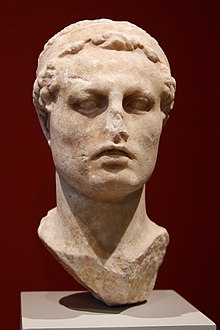
Antiochus IV, wikipedia

Maccabees gives us a colorful account of the defeat, dismay and ultimate death of Antiochus IV, persecutor of the Jews. The account, like most of the Books of Maccabees, is primarily historical, not spiritual or theological. But threaded through the books, of course, is the underlying biblical orientation that God-Yahweh is present and active in all life’s circumstances.

Today’s passage has even pagan Antiochus considering how God/Fate has brought him to judgement- to “payback” time:

But I now recall the evils I did in Jerusalem,
when I carried away all the vessels of gold and silver
that were in it, and for no cause
gave orders that the inhabitants of Judah be destroyed.
I know that this is why these evils have overtaken me;
and now I am dying, in bitter grief, in a foreign land.

1 Maccabees 6:11-13

In our Gospel account, some Sadducees question Jesus about marriage laws and the afterlife. Their questioning reminds me of modern songwriter Eric Clapton’s musings in his song:

Tears in Heaven – Eric Clapton

Jesus doesn’t sing to the Sadducees, as far as I know. Rather, he answers them this way:

Those who are deemed worthy to attain to the coming age
and to the resurrection of the dead
neither marry nor are given in marriage.
They can no longer die,
for they are like angels;
and they are the children of God
because they are the ones who will rise.

Luke 20:35-36

So for us today, the questions and concerns of both Antiochus and the Sadducees might lead us to consider how we feel about the “afterlife”.

Do you ever wonder what heaven will be like? Will we see our beloveds once again? Will we see our “unbeloveds” too and what will that be like!! Do you calculate whether or not you’ll even make the cut through the Pearly Gates?

When I think about heaven these two promises of Jesus sustain, comfort and animate me. Maybe you’ll consider their power too as you pray today.

I have come that you may have life,
and have it to the full.

John 10:10

Eternal life is this, that they know you,
the only true God,
and Jesus Christ, whom you have sent.

John 17:3

Poetry: Heaven-Haven (1864) – Gerard Manley Hopkins

A nun takes the veil

I have desired to go
Where springs not fail,
To fields where flies no sharp and sided hail,
And a few lilies blow.

And I have asked to be
Where no storms come,
Where the green swell is in the havens dumb,
And out of the swing of the sea.

Music: Here’s a beautiful piece of music to accompany you in your “considerations”.

Nocturne No.20 in C-Sharp Minor – Frédéric Chopin, played by Joshua Bell

The Heart’s Temple

November 19, 2021
Friday of the Thirty-third Week in Ordinary Time

Today, in God’s Lavish Mercy, we pray with a passage from Chronicles as our Responsorial Psalm:

Yours, O LORD, are grandeur and power,
    majesty, splendor, and glory.
For all in heaven and on earth is yours.

1 Chronicles 29:11

This passage inclines us to worship God whose “temple” is all of Creation.


Both readings today speak about the “Temple”. After the victory of Judas Maccabeus, the Jewish people restore their physical Temple with exuberant celebration, recognizing it as a symbol of God’s Presence with them.


In today’s Gospel. Jesus also “restores” the Temple by driving out the merchants who have diverted the Temple’s purpose as representative of God’s Presence.


Our bodies too are temples of the Holy Spirit. Paul, in his letter to the Corinthians tells us:

Do you not know
that your bodies are temples of the Holy Spirit,
who is in you, whom you have received from God?
You are not your own; you were bought at a price.

1 Corinthians 6:19

Through our Baptism into the Passion, Death and Resurrection of Christ, the Holy Spirit dwells in us. We are called to be transformed by this Indwelling. As in any relationship, this transformation is accomplished through transparency, communication, listening and acting on behalf of the Beloved.


Poetry: Go Not to the Temple – Tagore

Go not to the temple to put flowers upon the feet of God,
First fill your own house with the Fragrance of love…

Go not to the temple to light candles before the altar of God,
First remove the darkness of sin from your heart…

Go not to the temple to bow down your head in prayer,
First learn to bow in humility before your fellowmen…

Go not to the temple to pray on bended knees,
First bend down to lift someone who is down-trodden. ..

Go not to the temple to ask for forgiveness for your sins,
First forgive from your heart those who have sinned against you.


Music: In the Temple Garden – Aaron Kenny

Sacred Tears

November 18, 2021
Thursday of the Thirty-third Week in Ordinary Time

Today, in God’s Lavish Mercy, we pray with Psalm 50, “a prophetic imagining of God’s judgement on the Israelites”. (Wikipedia)

Our first reading from the Book of Maccabees introduces us to Mattathias, revered leader of the Jews in the city of Modein. He violently refuses the Greek Seleucid command to worship their gods, thus initiating the Maccabean Revolt. The wars lasted nearly a decade. Final victory is commemorated in the Feast of Hanukkah:

The Jewish festival of Hanukkah celebrates the re-dedication of the Temple following Judah Maccabee’s (Mattathias’s son)victory over the Seleucids. According to tradition, victorious Maccabees could find only a small jug of oil that had remained pure and uncontaminated by virtue of a seal, and although it contained only enough oil to sustain the Menorah for one day, it miraculously lasted for eight days, by which time further oil could be procured. (Wikipedia)

Our first reading is really describing the beginning of civil and intercultural wars by which dedicated Jews sought to establish both their religion and their nation. Core to their motivation was the desire to be in relationship with their one God according to their own custom and law.


In our Gospel, Jesus has come as the full manifestation of that One God. He has invited the Jewish people to a new and complete relationship with God, but they have resisted.

Now, as he nears his final fate in Jerusalem, Jesus realizes that his dream for the People will not be fully realized. They will experience a destruction like the one once feared by Mattathias. The reality causes Jesus to weep.

Are the passages only about the Jews, their religion and their history?

For us, these passages are about choosing a faithful,
evolving relationship with God
– a relationship that will demand truth,
action and at times suffering
as we pursue ever deeper understanding
of God’s Presence in our lives.

Our world and its culture place many godless choices before us, choices that could make Jesus weep because of the suffering they cause others. These choices are not as easy to identify as they were in the time of Mattathias. They don’t come dressed as a pagan soldier ready to quash our resistance.

They come in the large subtleties of politics, economics, human rights, global relationships. These choices show themselves in the small exercise of our respect, care, and reverence for all Creation. But they do come to us in every moment and they demand our witness.

Jesus wants the new Kingdom to rise in us when we open our hearts to his Word. It is an ongoing and daily Resurrection. Let’s pray for the courage for it!


Poetry: The World Is Too Much with Us – William Wordsworth

Wordsworth wrote this poem during the Industrial Revolution when he felt the complexities of the world were inhibiting our appreciation of the sacredness of nature.

The world is too much with us; late and soon,
Getting and spending, we lay waste our powers;—
Little we see in Nature that is ours;
We have given our hearts away, a sordid boon!
This Sea that bares her bosom to the moon;
The winds that will be howling at all hours,
And are up-gathered now like sleeping flowers;
For this, for everything, we are out of tune;
It moves us not. Great God! I’d rather be
A Pagan suckled in a creed outworn;
So might I, standing on this pleasant lea,
Have glimpses that would make me less forlorn;
Have sight of Proteus rising from the sea;
Or hear old Triton blow his wreathèd horn.

Music:  When Jesus Wept – William Billings

One of the most well-known of the early American canons, originally appeared in the New England Psalm Singer. It was written in 1770 by William Billings, a self-taught singing-school teacher and composer who served as choir leader at Old South Church in Boston.

(Lyrics below)

When Jesus wept, the falling tear
In Mercy flowed beyond all bound;
When Jesus groaned at rambling fear
Seized all the guilty world around.

Per a valued friend:

There is a statue in Oklahoma City called “Jesus Wept.”  It is on the grounds of St. Joseph Church in the city – which is right across from where the Oklahoma City Federal Building had been located.  The people of the parish wanted to erect the statue on their grounds because the memorial on the federal property couldn’t be religious.  It is a very moving statue.

Beyond Measure

Wednesday of the Thirty-third Week in Ordinary Time
Memorial of St. Elizabeth of Hungary
November 17, 2021

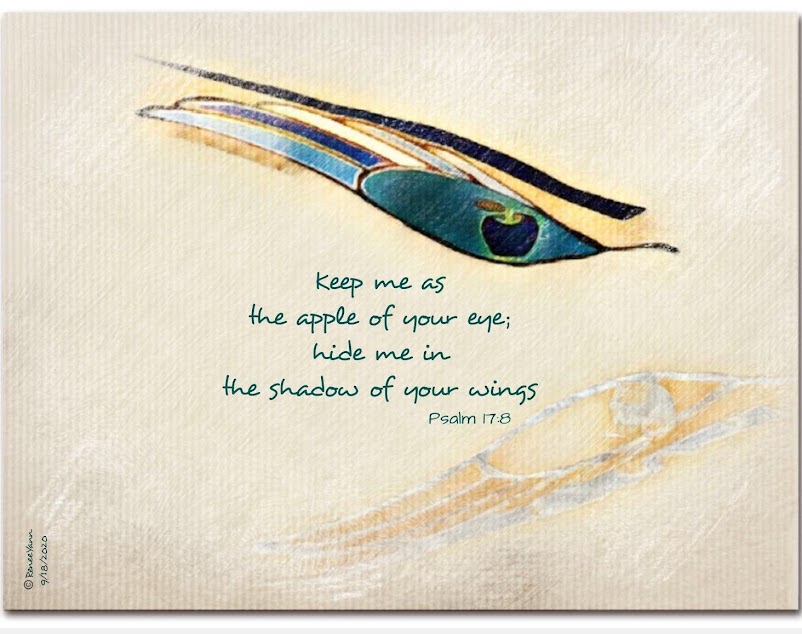
Today, in God’s Lavish Mercy, we pray a lovely verse of Psalm 17:

The psalm is a gentle plea which might serve to soften our two dramatically intense readings.

Who can read the story of the Maccabean Martyrs without a mix of horror, empathy, and astonishment?

And don’t we all feel a pang of pity for the poor, fearful servant who hid his talent in a handkerchief much to the King’s displeasure?

The two stories, (one based in fact, the other a parable), paint a contrasting picture of courageous faith against fearful subservience. The difference between the actors lies in their capacity, or lack there of, to look beyond themselves toward eternal life.

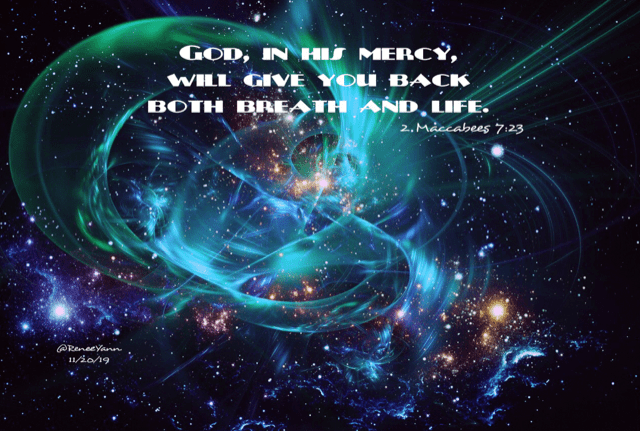
Mother Maccabee bolsters her sons with her faith in a life beyond their current circumstances:

… the Creator of the universe
who shapes each man’s beginning,
as he brings about the origin of everything,
he, in his mercy,
will give you back both breath and life,
because you now disregard yourselves
for the sake of his law.

2 Mc 7:23

The poor soul in Jesus’s parable doesn’t have that faith and vision. His perception of God, represented by the King, is one of only harsh judgement. His fear causes him to bury not only his talent, but also his openness to the possibilities of grace and transformed relationship with God.

Jesus told his parable because indeed the Kingdom was at hand. He and his disciples were near Jerusalem where the Passion, Death and Resurrection events would begin.

He wants his followers to realize the challenging gift they have been given in their call to be his disciples. He wants them to see that it is now on them to magnify his message courageously and generously until he returns to perfect the Kingdom.

Jesus wants us to understand that too.


Poetry: Sonnet 19: When I consider how my light is spent – John Milton
Milton became blind in later life. The poem reflects his concerns about all that he has left undone in his life. Ultimately, Milton expresses the confidence that God has no need of his “talent”, only his steadfast faith.

When I consider how my light is spent, 

   Ere half my days, in this dark world and wide, 

   And that one Talent which is death to hide 

   Lodged with me useless, though my Soul more bent 

To serve therewith my Maker, and present 

   My true account, lest he returning chide; 

   “Doth God exact day-labour, light denied?” 

   I fondly ask. But patience, to prevent 

That murmur, soon replies, “God doth not need 

   Either man’s work or his own gifts; who best 

   Bear his mild yoke, they serve him best. His state 

Is Kingly. Thousands at his bidding speed 

   And post o’er Land and Ocean without rest: 

   They also serve who only stand and wait.”


Music:   Be Not Afraid – written by Bob Dufford, SJ, sung here by Cat Jahnke

Stretching to See God

November 16, 2021
Tuesday of the Thirty-third Week in Ordinary Time

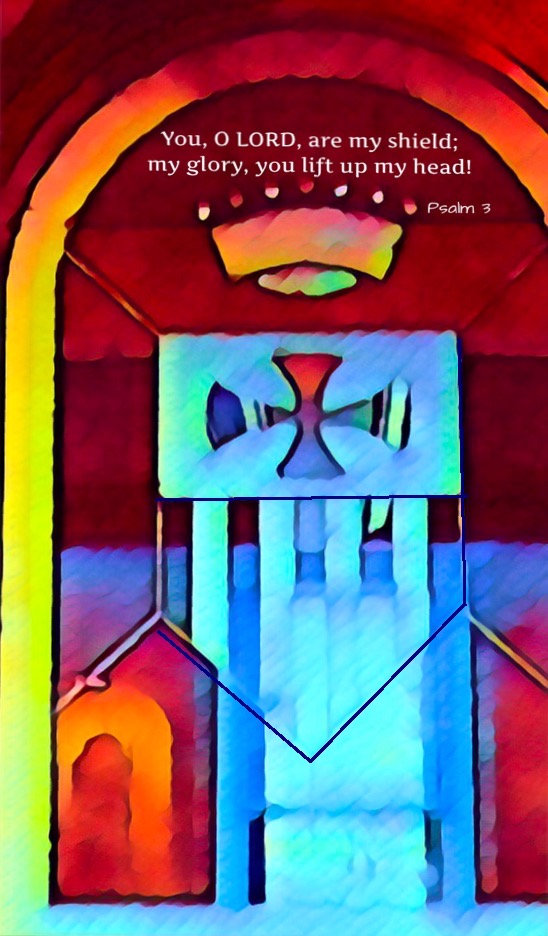
Today, in God’s Lavish Mercy, we pray with Psalm 3 which well might reflect the prayer of noble Eleazar from our first reading:

You, O LORD, are my shield;
    my glory, you lift up my head!
When I call out to the LORD,
    he answers me from his holy mountain.
R.    The Lord upholds me.
When I lie down in sleep,
    I wake again, for the LORD sustains me.
I fear not the myriads of people
    arrayed against me on every side.

Psalm 3: 4-7

Eleazar’s faithful character is so strong that he can look beyond his present circumstance to:

… leave in his death a model of courage
and an unforgettable example of virtue
not only for the young but for the whole nation.

2 Mc 6:31

Both Eleazar’s story and Zaccheus’s are about living in the big picture of God’s vision for us. These stories invite us to stretch beyond ourselves to see God in our circumstances.

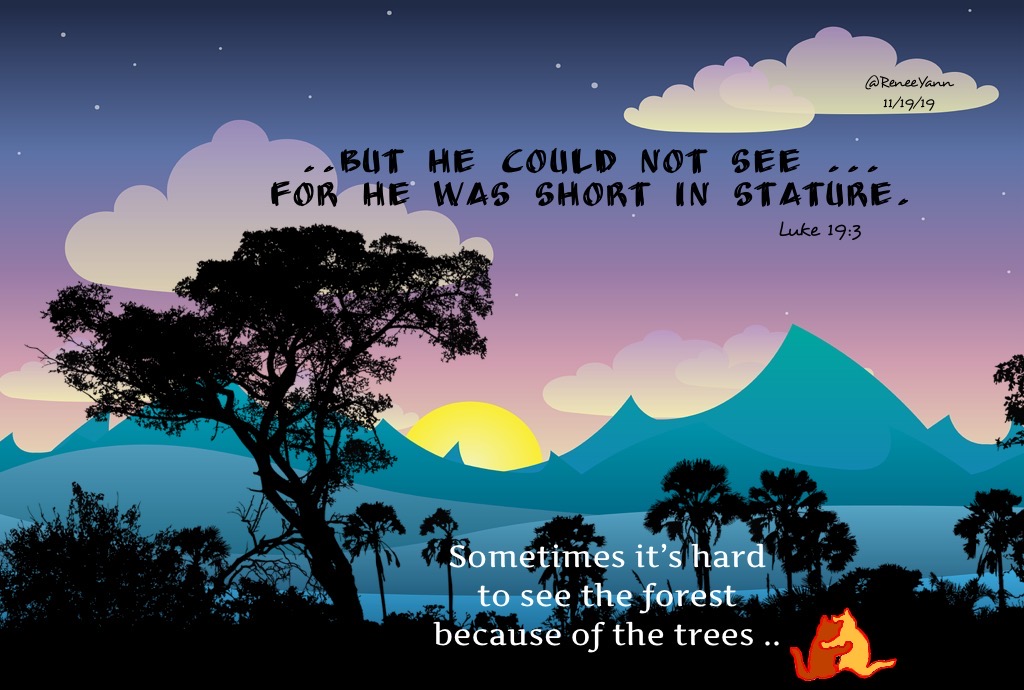
Eleazar was a giant in the virtues necessary to “see beyond the trees” of his current circumstances. A more spiritually short-sighted person might have succumbed to the temptation to save himself at the cost of his faith and witness.

But Eleazar’s faith was long, both in years and in depth. He kept the eyes of his heart focused on that faith and was delivered beyond any short-sighted choices.


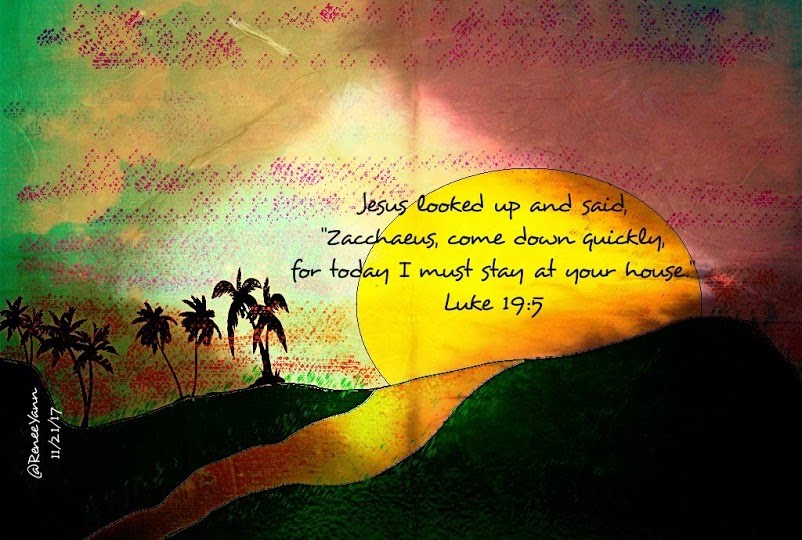
In our Gospel, we meet Zaccheus who, due to his short stature, was unable to get a glimpse of Jesus walking nearby. He wasn’t getting the whole picture – but he desperately wanted to!


Sometimes we miss Christ in our midst, don’t we? It may be because we’re “short” on time, patience, faith, attention, courage, peace, desire … you name it.

Zaccheus may have been physically short, but he was tall in will and intention to see Jesus. The trees became his tools not his obstacles.


It’s hard sometimes to see the forest beyond the trees – to direct our choices, attitudes and actions by a vision we glimpse only on the tippy toes of faith and prayer.

Perhaps these two God-seekers can inspire us today, by their courage, steadfastness and faith, to always live within God’s long eternal vision for us.


Poetry: Walking on Tiptoe by Ted Kooser

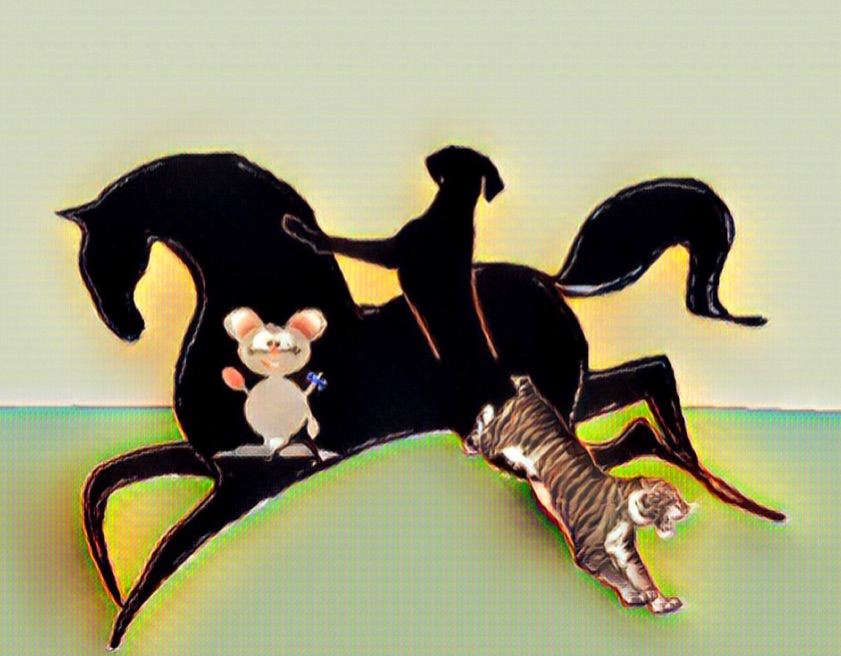
Long ago we quit lifting our heels
like the others—horse, dog, and tiger—
though we thrill to their speed
as they flee. Even the mouse
bearing the great weight of a nugget
of dog food is enviably graceful.
There is little spring to our walk,
we are so burdened with responsibility,
all of the disciplinary actions
that have fallen to us, the punishments,
the killings, and all with our feet
bound stiff in the skins of the conquered.
But sometimes, in the early hours,
we can feel what it must have been like
to be one of them, up on our toes,
stealing past doors where others are sleeping,
and suddenly able to see in the dark.

Turn Your Eyes Upon Jesus – written in 1922 by Helen Lemmel, sung here by Michael W. Smith

O soul are you weary and troubled
No light in the darkness you see
There's light for a look at the Savior
And life more abundant and free

Turn your eyes upon Jesus
Look full in his wonderful face
And the things of earth will grow strangely dim
In the light of his glory and grace

His word shall not fail you he promised
Believe him and all will be well
Then go to a world that is dying
His perfect salvation to tell

Turn your eyes upon Jesus
Look full in his wonderful face
And the things of earth will grow strangely dim
In the light of his glory and grace

O soul are you weary and troubled
No light in the darkness you see
There's light for a look at the Savior
And life more abundant and free

Turn your eyes upon Jesus
Look full in his wonderful face
And the things of earth will grow strangely dim
In the light of his glory and grace

Once Again, Heal Me!

November 15, 2021
Monday of the Thirty-third Week in Ordinary Time

Today, in God’s Lavish Mercy, w pray with just one powerful verse from Psalm 119:

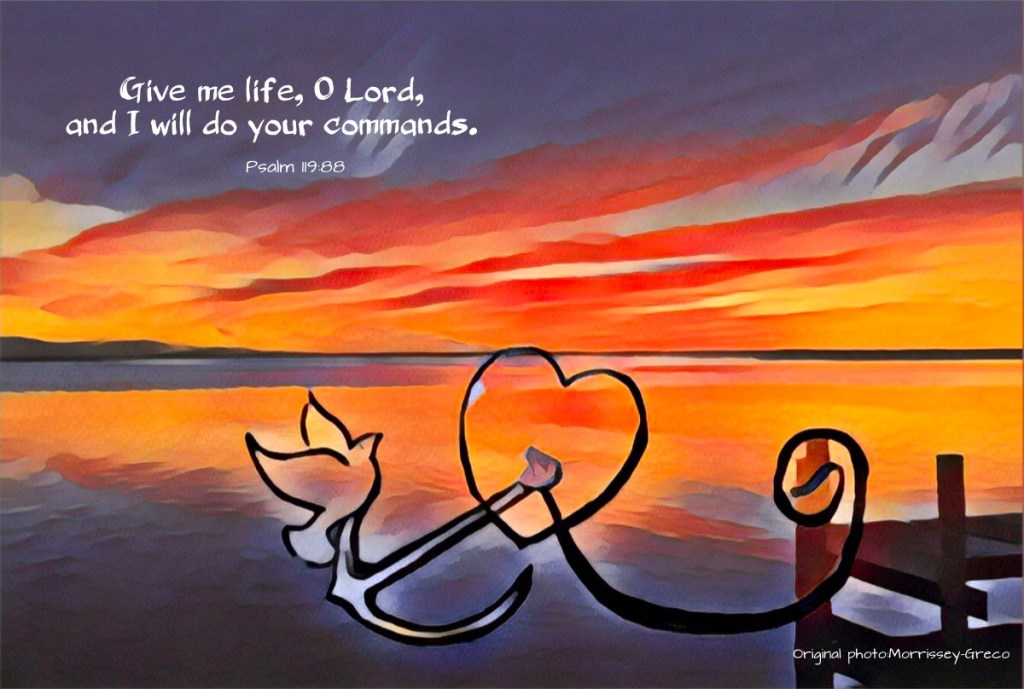
Give me life, O Lord,
and I will do your commands

Psalm 119: 88

Our first reading, which recounts a fascinating historical turmoil in immediately pre-Christian Israel, doesn’t offer an easy access to prayer. It’s historical in nature rather than spiritual.

The chosen verses of our psalm aren’t very attractive in that way either.

So we will return this morning to a recent reflection – that of the blind man Bartimeus. Unlike Mark’s Gospel, Luke’s version today does not name Bartimeus. But, trust me, it’s the same guy.

Let’s think about him again to see what new insights might come to us.


Mark’s version of the Gospel presents us with a story of the blind man named Bartimeus. He is an otherwise unknown character in scripture. Yet this passage suggests so much about him.

It is stated that he was the son of Timeus, apparently someone of note in the community – otherwise, why mention his name? And yet this notable man’s blind son is left to begging on the side of the road. Had disability driven father and son apart? Was Dad unable to accept a son with a physical challenge?

The passage also reveals that Bartimeus knew about Jesus. Perhaps while begging in the public square, he talked and listened. He daydreamed about what he planned to do if he should ever have a chance to meet Jesus!

What would you ask for
if Jesus walked into your life right now?
What we might ask for
tells a lot about who we are
(and how we are deepening – or not!)
in our deep spirit.

Bartimeus’s cronies in the marketplace were not very supportive. They told him to shut up, even as he pathetically cried for Jesus’s mercy. Still, Bartimues persisted and Jesus heard him.

When he comes to Jesus, Jesus asks, “What do you want me to do for you?” It has always struck me as a strange question. The man is obviously blind, stumbling through the crowd on some disciple’s arm. Why did Jesus bother to ask what Bartimeus wanted?

What do you want me to do for you?

That’s a question Jesus is asking us as well!

This might be the lesson hidden in this Gospel. We need to name and claim our needs before God can reach through and transform them. If we don’t even know we’re “blind”, how can we know we’re cured? If we don’t present our needs to God, how can we believe that it is God Who has healed us?

The freshly cured Bartimeus, eyes wide open in grace, now follows along the path with Jesus. All the “shut-uppers” are silenced. Perhaps, Timeus weeps off in a doorway to see the power of his son’s faith and Jesus’s love.

How might our lives be changed if we had that kind of faith… that kind of love?


Poetry: Blind Bartimeus – Henry Wadsworth Longfellow

Blind Bartimeus at the gates
Of Jericho in darkness waits;
He hears the crowd;--he hears a breath
Say, "It is Christ of Nazareth!"
And calls, in tones of agony,
Ἰησοῦ ἐλέησόν με! (Have mercy on me!)

The thronging multitudes increase;
Blind Bartimeus, hold thy peace!
But still, above the noisy crowd,
The beggar's cry is shrill and loud;
Until they say, "He calleth thee!"
Θάρσει ἔγειρε φωνεῖ σε! (Jesus is calling you)

Then saith the Christ, as silent stands
The crowd, "What wilt thou at my hands?"
And he replies, "Oh, give me light!
Rabbi, restore the blind man's sight."
And Jesus answers, "ὕπαγε
πίστις σου σέσωκέν σε!" (Your faith has saved you)

Ye that have eyes, yet cannot see,
In darkness and in misery,
Recall those mighty Voices Three,
Ἰησοῦ ἐλέησόν με! (Have mercy on me.)
Θάρσει ἔγειρε φωνεῖ σε! (Jesus is calling you.)
ἡ πίστις σου σέσωκέν σε! (Your faith has saved you.)

Music: Don’t Pass Me By – Fred Hammond (lyrics below)

There was a blind man on the road side, and he heard a commotion
It was Jesus passing by with a crowd and it stirred his emotions
He’d been displaced his whole life, should he even try

Don’t bother Jesus (they say you have nothing)
You have nothing to offer (stay in your place)
Right then he knew(he had to choose)
He had nothing to lose

So he cried Jesus (Jesus), I need you,  please don’t pass me by
He cried out Jesus, I’m not ashamed(to tell you) I need you in my life
(I need you in my life)

I’m not much different from that man, and this is the honest truth
Could this sinful one, with this messed up life, could I ever serve you
people and things clutter my mind, should I even try

Don’t bother Jesus (they say you have nothing)
You have nothing to offer (stay in your place)
Right then he knew (he had to choose)
He had nothing to lose

So I cry Jesus(Jesus), I need you
Please don’t pass me by
I’m crying out Jesus, I’m not ashamed to tell you I need you in my life

As the deer (as the deer panted)
Thirsty for the water yeah(thirsty for the water)
My soul desires and longs to be(to be with you)

Jesus, I need you, please don’t pass me by
I don’t mean to waste your time but I can’t listen to the crowd,
Situations in my life telling me to keep it down
But I need you

I know I’m broken, but you can heal me, Jesus, Jesus I’m calling you
(I might not be worth much)might not be worth much, but I’m still willing
Jesus, Jesus, I’m calling you

The “Un-pearl-y” Gates?

Thirty-third Sunday in Ordinary Time
November 14, 2021

Today, in God’s Lavish Mercy, our readings offer another taste of “pre-Advent agita”. You know what I mean. Those metaphoric gates described in our readings don’t seem all the “pearly” to me! In fact, the image that comes to mind is the massive wrought iron gates of Moffat Public School when I stood before them on my first day going to kindergarten!

Well, get ready for it! In the next few weeks of readings:

  • the sun will be darkened,
  • and the moon will not give its light,
  • and the stars will be falling from the sky,
  • and the powers in the heavens will be shaken

The phrase, “In those days” becomes prelude to some scary stuff! What’s going on here?


Well, the Church Year – symbolic of the total Christian life – is coming to an end. With its closing, we are constantly reminded that this might be our last chance to get our act together before we are judged.

I always disliked these apocalyptic readings. As a child, I was frightened by them. As an adult, they don’t easily convey the kind of God Who has loved me into my maturity. But they do reveal the God of fidelity who stays with us through it all to the end.

One line from today’s reading that captures the heart? 

When you see these things happening,
know that He is near, at the gates.

There are still a lot of closed gates in my heart – places I have not yet given over fully to God. You? Same?

This reading challenges us to go to the gate, unlock it, and let our whole heart meet God who is waiting there for us, despite any fears we may harbor – even of the end-time.


Poetry: from Paradiso – Dante Allegheri

“O grace abounding and allowing me to dare
to fix my gaze on the Eternal Light,
so deep my vision was consumed in it!
I saw how it contains within its depths
all things bound in a single book by love
of which creation is the scattered leaves:
how substance, accident, and their relation
were fused in such a way that what I now
describe is but a glimmer of that Light.”


Music: Heaven’s Gate – instrumental music to pray with as we unlock our gates. 🙂

Darkness to Light

November 13, 2021
Saturday of the Thirty-second Week in Ordinary Time

Today, in God’s Lavish Mercy, we are blessed with some of the most

Psalm 105 invites us to sing praise as we confidently seek God in our lives, and to always remember God’s merciful goodness to us:

Sing to God, sing praise,
    proclaim all God’s wondrous deeds.
Glory in the holy name;
    rejoice, O hearts that seek the LORD!
Remember the marvels the Lord has done!

Psalm 105: 2-3

Our first reading from Wisdom gives us one of the most gloriously imaginative images in Scripture.

Although the passage is a poetic recounting of the Exodus experience, it always makes me think of Christmas. 

  • Midnight on a starry night
  • Peaceful stillness over the earth
  • The all-powerful Word transformed 
  • Appearing among us like a comet in our darkness
  • Hope renewed for an otherwise doomed land

Praying with the passage this morning, I realize that my “Christmas lens” on the reading is right on target.

The Christmas event begins our Exodus story, a story completed in the Passion, Death and Resurrection of Christ.

Just as the God of Moses reached into ancient Israel’s life to free them, transform them and make them God’s People, so God reaches into our lives. God does this not only on Christmas, but in every moment of our experience.


As our media and consumer culture bombards us, all too early, with all the secularized images of Christmas, let today’s verses bring us back to the true startling grace of our own Christ/Exodus stories:

We are not alone in the midnights of our lives. 
Listen underneath all the distractions 
to the, at first, softly emerging sound of Love 
humming under all things. 
Watch for the small lights of heaven 
longing to break into our human darkness. 
Give yourself to their Light.

No matter where we are in our lives right now, 
no matter the joy or pain of our present circumstances, 
God wants to use these realities to be with us 
and to teach us Love. 
Let us invite God 
into our willingness
to learn that Love, 

to become that Love.


Music: Winter Cold Night – John Foley, SJ

Lyrics below (yes, it is an Advent/ Christmas song. But it fits so perfectly. Please forgive me if I am rushing the season too. 😉

Good Ending

Today, in God’s Lavish Mercy, we pray with Psalm 19, a prayer of awe as we see the magnificence of God’s Creation:

The heavens declare the glory of God,
    and the firmament proclaims his handiwork.
Day pours out the word to day,
    and night to night imparts knowledge.

Psalm 19: 2-3

It is a steadying psalm that we might need because our scripture message is blunt (if not downright scary!). If yesterday’s sweet words from Wisdom were like “the rich colors of a vibrant Autumn or Spring day”, today’s are more like a dark, cold winter!


Basically our first reading says “Yes”- creation is magnificent, but not as magnificent as its Creator! You, learned humans, how could you have gotten stuck only half-way to that truth? How did you end up making gods from the very things that were supposed to show you the one true God?


In our Gospel, Jesus speaks even more starkly. He describes the “end times” when “one will be taken and the other left”. That reading always scared me as a child and, to be honest, still scares me a little. The popular “rapture literature” has monopolized on that fear. Nobody likes the idea of their buddy, sitting right beside them eating ice cream, suddenly disappearing, right?


And I guess Jesus actually was trying to strike a little healthy fear into his listeners too. He told them the vultures were already gathering. It’s late in the game. Get your act together.

Early Christians thought a lot about the end times. They expected them to come quickly after the Resurrection. Well, 2000 years later, our obsession may have cooled somewhat. 

Nevertheless, an end will come to this life as we know it. And wouldn’t it be a shame if we had spent our precious worship on false and distracting gods like money, fame, power, luxury and self-aggrandizement?

“Wouldn’t it be a shame”, as one of our venerable Sisters once said, “to come to the end of your life and realize you had missed the whole point?”


Poetry: The Second Coming – W. B. Yeats

Turning and turning in the widening gyre   
The falcon cannot hear the falconer;
Things fall apart; the centre cannot hold;
Mere anarchy is loosed upon the world,
The blood-dimmed tide is loosed, and everywhere   
The ceremony of innocence is drowned;
The best lack all conviction, while the worst   
Are full of passionate intensity.

Surely some revelation is at hand;
Surely the Second Coming is at hand.   
The Second Coming! Hardly are those words out   
When a vast image out of Spiritus Mundi
Troubles my sight: somewhere in sands of the desert   
A shape with lion body and the head of a man,   
A gaze blank and pitiless as the sun,   
Is moving its slow thighs, while all about it   
Reel shadows of the indignant desert birds.   
The darkness drops again; but now I know   
That twenty centuries of stony sleep
Were vexed to nightmare by a rocking cradle,   
And what rough beast, its hour come round at last,   
Slouches towards Bethlehem to be born?


Music: Abide with Me – Sean Clive