Visions

November 26, 2021

Friday of the Thirty-fourth Week in Ordinary Time

https://bible.usccb.org/bible/readings/112621.cfm

Today, in God’s Lavish Mercy, we pray with some pretty dramatic passages from the Book of Daniel. I mean, it’s the stuff of a rather scary special effects movie!

Even Daniel indicates how disturbing his visions are:

Because of this, my spirit was anguished and I, Daniel, was terrified by my visions.

Daniel: 7:15

So does the Church, or even God, want us to be disturbed in our prayer today and tomorrow with our last two readings before Advent?

Listen! If you’re not disturbed already by the strain of unholiness in the world, then Daniel isn’t going to rock your boat!

But if you, like most good people, have trouble even watching the evening news without anguish, then Daniel is speaking to you.

The writer of Daniel was delivering a message to the people of his/her time:

The visions of chapters 7–12 reflect the crisis which took place in Judea in 167–164 BCE when Antiochus IV Epiphanes, the Greek king of the Seleucid Empire, threatened to destroy traditional Jewish worship in Jerusalem.

The message was:

pay attention to the changing world

focus on God in the disturbing change

choose to be faithful, hopeful, and brave

God will always remain faithful to us and most important of all:

God is coming to deliver us!

For us, these elements can be the core pre-Advent encouragements from Daniel. Trusting them, we are moved to pray with all Creation which is ever steadfast in praising God:

Give glory and eternal praise to him!
“Mountains and hills, bless the Lord;
    praise and exalt him above all forever.”
“Everything growing from the earth
“You springs, bless the Lord;
“Seas and rivers, bless the Lord;
“You dolphins and all water creatures, bless the Lord;
“All you birds of the air, bless the Lord;
“All you beasts, wild and tame, bless the Lord;
    praise and exalt him above all forever.”
R.    Give glory and eternal praise to him!

Poetry: The Second Coming – William Butler Yeats

Turning and turning in the widening gyre
The falcon cannot hear the falconer;
Things fall apart; the centre cannot hold;
Mere anarchy is loosed upon the world,
The blood-dimmed tide is loosed, and everywhere
The ceremony of innocence is drowned;
The best lack all conviction, while the worst
Are full of passionate intensity.
Surely some revelation is at hand;
Surely the Second Coming is at hand.
The Second Coming! Hardly are those words out
When a vast image out of Spritus Mundi
Troubles my sight: somewhere in the sands of the desert.

A shape with lion body and the head of a man,
A gaze blank and pitiless as the sun,
Is moving its slow thighs, while all about it
Reel shadows of the indignant desert birds.
The darkness drops again; but now I know
That twenty centuries of stony sleep
were vexed to nightmare by a rocking cradle,
And what rough beast, its hour come round at last,
Slouches towards Bethlehem to be born?

Music: Michael Hoppé – Shadows Fall

I’m a little on the fly today… big turkey to cook. Publishing from phone – so not too fancy. I hope y’all had a beautiful Thanksgiving Day.❤️

Happy Thanksgiving – 2021

Passing the Thanksgiving Baton

Families pass batons much like relay teams do.  One generation hands its gifts and stories on to the next.  Eventually the cycle of love and tradition wears a deep path in time that becomes known by your family name.


Our Youngest and his Dad!
Our first girl of the next generation!

How often do we see a newborn child and comment that she has her grandmother’s eyes.  How many times have we said to someone, “You remind me so much of your father.” Whenever we see the pattern of strength and generosity repeated through the generations, we are given reason to hope and be grateful.


In our family, the joint making of Thanksgiving favorites is a great tradition: chocolate pie, deviled eggs, sweet potato casserole, homemade stuffing.  Over the years, tradition has passed from my grandmother to my mother, my father, me, and my brother and his family.  

I remember a day, over twenty years ago, when I went into the kitchen to find my young teen  niece preparing the pie crust.  Under their mother’s supervision, the three younger siblings were all about the deviling, sweetening and cubing of elements for the feast. 

My parents had died not too long before, but I saw their spirit, alive and joyful, in the midst of that loving activity. The scene left a sacred impression on my heart undimmed over two decades. Looking at those beloved children, I thought how Mom and Dad would have loved them. And once again I realized that they are the precious hope of our family’s future and the blessed confirmation of its past. 


Now, the years have passed over our household in blessing, and these dear “youngsters” are themselves Moms, Dads, Aunts, and Uncles guiding our new young ones in the blessings of faith, family, friendship, and generosity.


Be especially mindful of your children this Thanksgiving. Confirm in them the traditions they continue and the newness they contribute to your family.  Whether they sit over at the kids’ table or have joined you at the “big table”, make Thanksgiving Day a special time to love them.  Tell them stories that connect them to their history and offer them an irreplaceable stability as they create their own chapter of your family’s story.


Let us pray for one another on this Thanksgiving Day, and for families who struggle with any burden. May we, and they, find the hope, strength, courage and support to live in joy, peace, and gratitude.


Music: We Are Family

Toward Thanksgiving…

November 23, 2021
Tuesday of the Thirty-fourth Week in Ordinary Time

Today, in Mercy, our readings echo the end-time themes we have been considering for several days. And we may continue to pray with these as we approach Advent.


But as we approach Thanksgiving, I want to shift gears and offer you some reflections I have written over the years in celebration of this holiday. For these next few days, I will focus on these. In the past, readers have used them for their prayer and at their own Thanksgiving tables. I hope you find them beneficial.

You’re Welcome

Bill was a big Mid-western guy with the boots and belt buckles to prove it. His wife of thirty years was a patient in our east coast cancer wing. Hearing of a break-through experimental treatment, they had come seeking a cure despite every indication of its hopelessness.

Being away from home, Bill had a lot of empty time outside of visiting hours. He spent much of it observing things that would ordinarily go unnoticed in the bustle of his regular life: weather, nature and human idiosyncrasies.

During one cafeteria lunch, over a bowl of hot soup, he observed, “People around here don’t say ‘You’re welcome’. They hold a door. You say ‘Thank you’. They just say ‘Uh huh’”.  Bill didn’t like that. It made him feel invisible. He said it was like one hand clapping.

In this season of Thanksgiving, it’s something to consider. Thanks are not offered in a vacuum. They are given to benefactors, both human and Divine, on whom we depend for a reciprocity of love, companionship, care and courage. Bill, at such a vulnerable, lonely place in his life, was infinitely sensitive when his thanks received no answer.

During this special time, we may hear a “Thank You” offered to us. In this cold age of our digital distractions, can we receive it consciously? Can we return it with a mutuality of gratitude that says, “You’re welcome! You are welcome in the embrace of my life. I see you as a unique and precious life and I rejoice at any kindness I can give you.”? A simple, sincere smile can say all that. Such is the power of our conscious spirits!

Doing this, we might even hear the Creator’s whisper, saying the same thing to us as we offer our Thanksgiving prayers: “I have created you from an abundance of love. You are precious to me and I believe in you. I hear your “Thank You” and you are welcome in the embrace of my infinite love.”


Poetry/Prayer


Music:  Thanksgiving Classical Playlist (You may want to play this hour-long compilation during your Thanksgiving meal.)

Wake Up!

November 22, 2021
Memorial of St. Cecilia

Today, in God’s Lavish Mercy, we pray with a passage from Daniel for our Responsorial Psalm:

Blessed are you, O Lord, the God of our forebearers,
    praiseworthy and exalted above all forever;
And blessed is your holy and glorious name,
    praiseworthy and exalted above all for all ages

Daniel 3:52

This week we continue with a series of readings from the Book of Daniel. It is the only time throughout the Liturgical Year that we get a good dose of Daniel. And it is well placed, coming in this final week before Advent.

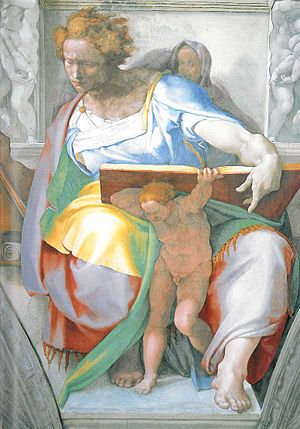
The Prophet Daniel by Michelangelo (Sistine Chapel)

Daniel is apocalyptic literature, a genre which conveys the author’s perception of the end times through dreams, visions and prophecies. Like many of our readings of the past weeks, Daniel focuses us on God’s Final Coming into time by interpreting current circumstances in a spiritual light.


Today’s Gospel does the same thing, but in a little different way. 

Jesus tells the story of the poor widow who gave everything she had for the sake of the poor. This widow, in a sense, already lives in the “end times”, a time when our only “possessions” will be the good we have done in our lives.

Both these readings set us up to reflect on our lives and times as we approach Advent. This sacred season is the annual reenactment of Christ’s First Coming in order to prepare us for:

  • Christ’s daily revelation in our lives
  • Christ’s Final Coming at the end of time

All of Daniel’s complex visions and prophecies can feel a little confusing, but we can focus on this:

  • God is continually revealing Godself in the ordinary circumstances of time.
  • We can open ourselves to this revelation by our humble prayer and good works.
  • Staying awake like this in our hearts and souls will allow us to pass seamlessly into God’s Presence when the end times come.

Poetry: Awake! awake O sleeper of the land of shadows (from Jerusalem) – William Blake

Awake! awake O sleeper of the land of shadows, wake! expand!
I am in you and you in me, mutual in love divine:
Fibres of love from man to man thro Albions pleasant land.
In all the dark Atlantic vale down from the hills of Surrey
A black water accumulates, return Albion! return!
Thy brethren call thee, and thy fathers, and thy sons,
Thy nurses and thy mothers, thy sisters and thy daughters
Weep at thy souls disease, and the Divine Vision is darkend:
Thy Emanation that was wont to play before thy face,
Beaming forth with her daughters into the Divine bosom
Where hast thou hidden thy Emanation lovely Jerusalem
From the vision and fruition of the Holy-one?
I am not a God afar off, I am a brother and friend;
Within your bosoms I reside, and you reside in me:
Lo! we are One; forgiving all Evil; Not seeking recompense!
Ye are my members O ye sleepers of Beulah, land of shades!

Music: Sleepers Awake from the beautiful album by Chris Wyton, “Music for Deep Meditation “

A Heart Beholding

November 20, 2021
Feast of Christ the King

For some, the lofty, politically-tinged title might obscure the rich devotion offered by this feast. The title “king” carries with it suggestions of exaggerated power, wealth and dominance not compatible with our Gospel perception of Jesus.

We may be more comfortable with images of Christ as infant, brother, shepherd, lamb, vine, gate, way, truth, life…

But what all these images point out is that our ability to comprehend the fullness of Christ is severely limited by our humanity. We usually choose a specific image based on our circumstances and spiritual needs.

Pope Pius XI promoted the concept of Christ the King in his 1925 encyclical Quas Primas, in response to growing international secularism and nationalism. His intent was not to compare Christ to the challenged world leaders of the time. It was to raise the perceptions of all people to the lessons of Divine Leadership: mercy, justice, inclusivity, and peace.

Oh, how we could benefit from the same understanding today! 

In this age with its culture of continual war, the human pain it causes, refugee crises, climate devastation, wealth distortion and indifference to the poor, how our hearts long for just, wise and loving leadership!

In his encyclical, Pius XI wrote:

Christ the King reigns “in the human hearts,” both by reason of the keenness of his intellect and the extent of his knowledge, and also because he is very truth, and it is from him that truth must be obediently received by all humanity. He reigns, too, in our wills, for in him the human will was perfectly and entirely obedient to the Holy Will of God, and further by his grace and inspiration he so subjects our free-will as to incite us to the most noble endeavors. He is King of hearts, too, by reason of his “charity which exceedeth all knowledge.”

— Quas primas, §7[4]

Let’s pray for these virtues for all who are charged with any form of power or leadership:

  • keen spiritual intellect
  • deep heart’s knowledge
  • uncompromising truth
  • obedience to grace
  • holy inspiration 
  • noble character
  • and surpassing charity for all Creation

May Christ the King truly live and reign among us. May we behold the “sweet light in His eyes”!


Poetry: A King Inside Who Listens - Rumi

There are many people with their eyes open
whose hearts are shut. What do they see?
Matter.

But someone whose love is alert,
even if the eyes go to sleep,
he or she will be waking up thousands of others.

If you are not one of those light-filled lovers,
restrain your desire-body's intensity.
Put limits on how much you eat
and how long you lie down.

But if you are awake here in the chest,
sleep long and soundly.

Your spirit will be out roaming and working,
even on the seventh level.

The Prophet says, I close my eyes and rest in sleep,
but my love never needs rest.

The guard at the gate drowses.
The king stays awake.

You have a king inside who listens
for what delights the soul.

That king's wakefulness
cannot be described in a poem.

Music: We Shall Behold Him – offered in American Sign Language by Kayla Seymour; sung by Sandi Patty

Thoughts of Heaven

November 20, 2021
Saturday of the Thirty-third Week in Ordinary Time

Today, in God’s Lavish Mercy, we pray with Psalm 9 and its beautiful verse which is echoed in several other Psalms:

I will give thanks to you, O LORD, with all my heart;
    I will declare all your wondrous deeds.
I will be glad and exult in you;
    I will sing praise to your name, Most High.

Psalm 9: 2-3

Like so many of our readings lately, today’s point us toward a consideration of the “afterlife” or the “end times”. I know you may have had enough of such considerations, but the Church isn’t giving up quite yet!


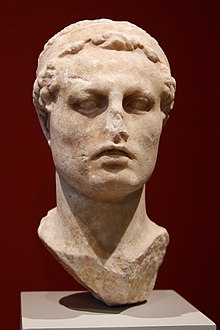
Antiochus IV, wikipedia

Maccabees gives us a colorful account of the defeat, dismay and ultimate death of Antiochus IV, persecutor of the Jews. The account, like most of the Books of Maccabees, is primarily historical, not spiritual or theological. But threaded through the books, of course, is the underlying biblical orientation that God-Yahweh is present and active in all life’s circumstances.

Today’s passage has even pagan Antiochus considering how God/Fate has brought him to judgement- to “payback” time:

But I now recall the evils I did in Jerusalem,
when I carried away all the vessels of gold and silver
that were in it, and for no cause
gave orders that the inhabitants of Judah be destroyed.
I know that this is why these evils have overtaken me;
and now I am dying, in bitter grief, in a foreign land.

1 Maccabees 6:11-13

In our Gospel account, some Sadducees question Jesus about marriage laws and the afterlife. Their questioning reminds me of modern songwriter Eric Clapton’s musings in his song:

Tears in Heaven – Eric Clapton

Jesus doesn’t sing to the Sadducees, as far as I know. Rather, he answers them this way:

Those who are deemed worthy to attain to the coming age
and to the resurrection of the dead
neither marry nor are given in marriage.
They can no longer die,
for they are like angels;
and they are the children of God
because they are the ones who will rise.

Luke 20:35-36

So for us today, the questions and concerns of both Antiochus and the Sadducees might lead us to consider how we feel about the “afterlife”.

Do you ever wonder what heaven will be like? Will we see our beloveds once again? Will we see our “unbeloveds” too and what will that be like!! Do you calculate whether or not you’ll even make the cut through the Pearly Gates?

When I think about heaven these two promises of Jesus sustain, comfort and animate me. Maybe you’ll consider their power too as you pray today.

I have come that you may have life,
and have it to the full.

John 10:10

Eternal life is this, that they know you,
the only true God,
and Jesus Christ, whom you have sent.

John 17:3

Poetry: Heaven-Haven (1864) – Gerard Manley Hopkins

A nun takes the veil

I have desired to go
Where springs not fail,
To fields where flies no sharp and sided hail,
And a few lilies blow.

And I have asked to be
Where no storms come,
Where the green swell is in the havens dumb,
And out of the swing of the sea.

Music: Here’s a beautiful piece of music to accompany you in your “considerations”.

Nocturne No.20 in C-Sharp Minor – Frédéric Chopin, played by Joshua Bell

The Heart’s Temple

November 19, 2021
Friday of the Thirty-third Week in Ordinary Time

Today, in God’s Lavish Mercy, we pray with a passage from Chronicles as our Responsorial Psalm:

Yours, O LORD, are grandeur and power,
    majesty, splendor, and glory.
For all in heaven and on earth is yours.

1 Chronicles 29:11

This passage inclines us to worship God whose “temple” is all of Creation.


Both readings today speak about the “Temple”. After the victory of Judas Maccabeus, the Jewish people restore their physical Temple with exuberant celebration, recognizing it as a symbol of God’s Presence with them.


In today’s Gospel. Jesus also “restores” the Temple by driving out the merchants who have diverted the Temple’s purpose as representative of God’s Presence.


Our bodies too are temples of the Holy Spirit. Paul, in his letter to the Corinthians tells us:

Do you not know
that your bodies are temples of the Holy Spirit,
who is in you, whom you have received from God?
You are not your own; you were bought at a price.

1 Corinthians 6:19

Through our Baptism into the Passion, Death and Resurrection of Christ, the Holy Spirit dwells in us. We are called to be transformed by this Indwelling. As in any relationship, this transformation is accomplished through transparency, communication, listening and acting on behalf of the Beloved.


Poetry: Go Not to the Temple – Tagore

Go not to the temple to put flowers upon the feet of God,
First fill your own house with the Fragrance of love…

Go not to the temple to light candles before the altar of God,
First remove the darkness of sin from your heart…

Go not to the temple to bow down your head in prayer,
First learn to bow in humility before your fellowmen…

Go not to the temple to pray on bended knees,
First bend down to lift someone who is down-trodden. ..

Go not to the temple to ask for forgiveness for your sins,
First forgive from your heart those who have sinned against you.


Music: In the Temple Garden – Aaron Kenny

Sacred Tears

November 18, 2021
Thursday of the Thirty-third Week in Ordinary Time

Today, in God’s Lavish Mercy, we pray with Psalm 50, “a prophetic imagining of God’s judgement on the Israelites”. (Wikipedia)

Our first reading from the Book of Maccabees introduces us to Mattathias, revered leader of the Jews in the city of Modein. He violently refuses the Greek Seleucid command to worship their gods, thus initiating the Maccabean Revolt. The wars lasted nearly a decade. Final victory is commemorated in the Feast of Hanukkah:

The Jewish festival of Hanukkah celebrates the re-dedication of the Temple following Judah Maccabee’s (Mattathias’s son)victory over the Seleucids. According to tradition, victorious Maccabees could find only a small jug of oil that had remained pure and uncontaminated by virtue of a seal, and although it contained only enough oil to sustain the Menorah for one day, it miraculously lasted for eight days, by which time further oil could be procured. (Wikipedia)

Our first reading is really describing the beginning of civil and intercultural wars by which dedicated Jews sought to establish both their religion and their nation. Core to their motivation was the desire to be in relationship with their one God according to their own custom and law.


In our Gospel, Jesus has come as the full manifestation of that One God. He has invited the Jewish people to a new and complete relationship with God, but they have resisted.

Now, as he nears his final fate in Jerusalem, Jesus realizes that his dream for the People will not be fully realized. They will experience a destruction like the one once feared by Mattathias. The reality causes Jesus to weep.

Are the passages only about the Jews, their religion and their history?

For us, these passages are about choosing a faithful,
evolving relationship with God
– a relationship that will demand truth,
action and at times suffering
as we pursue ever deeper understanding
of God’s Presence in our lives.

Our world and its culture place many godless choices before us, choices that could make Jesus weep because of the suffering they cause others. These choices are not as easy to identify as they were in the time of Mattathias. They don’t come dressed as a pagan soldier ready to quash our resistance.

They come in the large subtleties of politics, economics, human rights, global relationships. These choices show themselves in the small exercise of our respect, care, and reverence for all Creation. But they do come to us in every moment and they demand our witness.

Jesus wants the new Kingdom to rise in us when we open our hearts to his Word. It is an ongoing and daily Resurrection. Let’s pray for the courage for it!


Poetry: The World Is Too Much with Us – William Wordsworth

Wordsworth wrote this poem during the Industrial Revolution when he felt the complexities of the world were inhibiting our appreciation of the sacredness of nature.

The world is too much with us; late and soon,
Getting and spending, we lay waste our powers;—
Little we see in Nature that is ours;
We have given our hearts away, a sordid boon!
This Sea that bares her bosom to the moon;
The winds that will be howling at all hours,
And are up-gathered now like sleeping flowers;
For this, for everything, we are out of tune;
It moves us not. Great God! I’d rather be
A Pagan suckled in a creed outworn;
So might I, standing on this pleasant lea,
Have glimpses that would make me less forlorn;
Have sight of Proteus rising from the sea;
Or hear old Triton blow his wreathèd horn.

Music:  When Jesus Wept – William Billings

One of the most well-known of the early American canons, originally appeared in the New England Psalm Singer. It was written in 1770 by William Billings, a self-taught singing-school teacher and composer who served as choir leader at Old South Church in Boston.

(Lyrics below)

When Jesus wept, the falling tear
In Mercy flowed beyond all bound;
When Jesus groaned at rambling fear
Seized all the guilty world around.

Per a valued friend:

There is a statue in Oklahoma City called “Jesus Wept.”  It is on the grounds of St. Joseph Church in the city – which is right across from where the Oklahoma City Federal Building had been located.  The people of the parish wanted to erect the statue on their grounds because the memorial on the federal property couldn’t be religious.  It is a very moving statue.

Beyond Measure

Wednesday of the Thirty-third Week in Ordinary Time
Memorial of St. Elizabeth of Hungary
November 17, 2021

Today, in God’s Lavish Mercy, we pray a lovely verse of Psalm 17:

The psalm is a gentle plea which might serve to soften our two dramatically intense readings.

Who can read the story of the Maccabean Martyrs without a mix of horror, empathy, and astonishment?

And don’t we all feel a pang of pity for the poor, fearful servant who hid his talent in a handkerchief much to the King’s displeasure?

The two stories, (one based in fact, the other a parable), paint a contrasting picture of courageous faith against fearful subservience. The difference between the actors lies in their capacity, or lack there of, to look beyond themselves toward eternal life.

Mother Maccabee bolsters her sons with her faith in a life beyond their current circumstances:

… the Creator of the universe
who shapes each man’s beginning,
as he brings about the origin of everything,
he, in his mercy,
will give you back both breath and life,
because you now disregard yourselves
for the sake of his law.

2 Mc 7:23

The poor soul in Jesus’s parable doesn’t have that faith and vision. His perception of God, represented by the King, is one of only harsh judgement. His fear causes him to bury not only his talent, but also his openness to the possibilities of grace and transformed relationship with God.

Jesus told his parable because indeed the Kingdom was at hand. He and his disciples were near Jerusalem where the Passion, Death and Resurrection events would begin.

He wants his followers to realize the challenging gift they have been given in their call to be his disciples. He wants them to see that it is now on them to magnify his message courageously and generously until he returns to perfect the Kingdom.

Jesus wants us to understand that too.


Poetry: Sonnet 19: When I consider how my light is spent – John Milton
Milton became blind in later life. The poem reflects his concerns about all that he has left undone in his life. Ultimately, Milton expresses the confidence that God has no need of his “talent”, only his steadfast faith.

When I consider how my light is spent, 

   Ere half my days, in this dark world and wide, 

   And that one Talent which is death to hide 

   Lodged with me useless, though my Soul more bent 

To serve therewith my Maker, and present 

   My true account, lest he returning chide; 

   “Doth God exact day-labour, light denied?” 

   I fondly ask. But patience, to prevent 

That murmur, soon replies, “God doth not need 

   Either man’s work or his own gifts; who best 

   Bear his mild yoke, they serve him best. His state 

Is Kingly. Thousands at his bidding speed 

   And post o’er Land and Ocean without rest: 

   They also serve who only stand and wait.”


Music:   Be Not Afraid – written by Bob Dufford, SJ, sung here by Cat Jahnke