Grief, Honor, and Mercy

Saturday of the Second Week in Ordinary Time
January 20, 2024

Today’s Readings:

https://bible.usccb.org/bible/readings/012024.cfm


Today, in God’s Lavish Mercy, our readings center on the themes of grief, honor, and mercy.

In the passage from 2 Samuel, Saul has been killed in battle. The news is brought to David by a scheming Amalekite who (later verses reveal) hopes to profit from his enterprise. He has stripped Saul’s dead body of its kingly insignia, obsequiously depositing it at David’s feet. The messenger expects David’s vengeful rejoicing and a hefty reward.

Instead David, with reverence and honor appropriate to a future king, launches a deep public mourning for Saul and Jonathan. It is a bereavement necessary to both cleanse and heal the community’s heart from all the strife leading up to it.

David seized his garments and rent them, 
and all the men who were with him did likewise.
They mourned and wept and fasted until evening 
for Saul and his son Jonathan, 
and for the soldiers of the LORD of the clans of Israel, 
because they had fallen by the sword.

2 Samuel 1:11-12

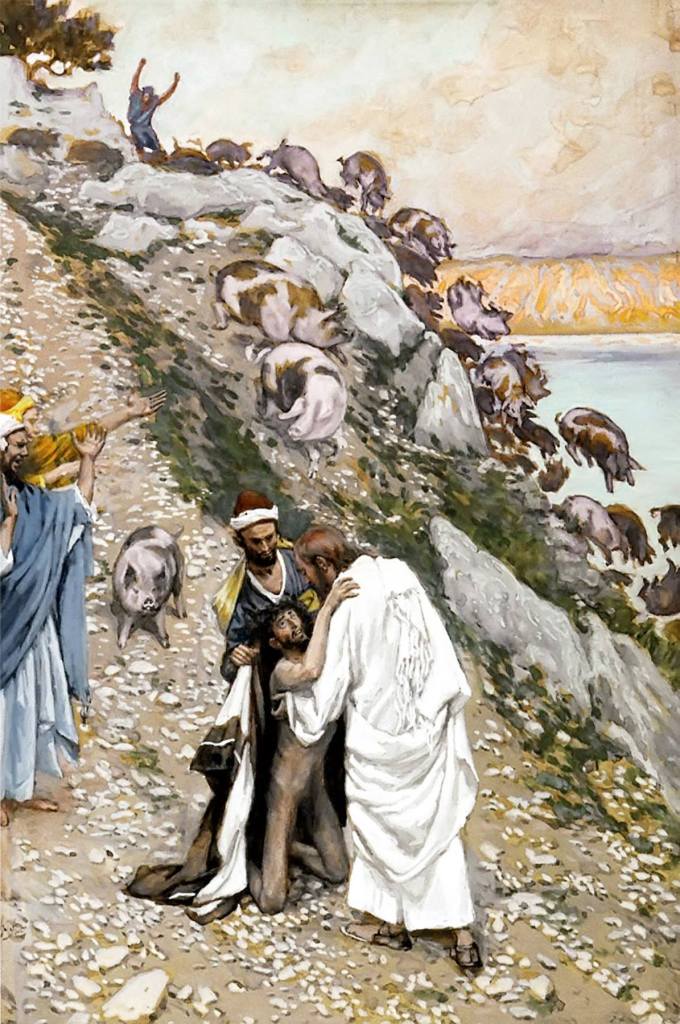
David’s lament is profound; it is ”splancha”, sprung from his innards, like the anguish Jesus felt for the suffering persons he encountered, as described in our Gospel.

A callous or indifferent heart cannot comprehend such pathos. Seeing it in Jesus, even his relatives thought him insane!

Jesus came with his disciples into the house.
Again the crowd gathered,
making it impossible for them even to eat.
When his relatives heard of this they set out to seize him, 
for they said, “He is out of his mind.” 

Mark 3: 20-21

Our God is a God of boundless love 
and impractical mercy. 
David models a bit of that godliness. 
Jesus is its complete Incarnation.

Poetry: Talking to Grief – Denise Levertov

Ah, Grief, I should not treat you
like a homeless dog
who comes to the back door
for a crust, for a meatless bone.
I should trust you.
I should coax you
into the house and give you
your own corner,
a worn mat to lie on,
your own water dish.
You think I don't know you've been living
under my porch.
You long for your real place to be readied
before winter comes. You need
your name,
your collar and tag. You need
the right to warn off intruders,
to consider
my house your own
and me your person
and yourself
my own dog.

Music: Lascia Ch’io Pianga (Let Me Weep)- Georg Frideric Handel – a single piece of beautiful music today in two version, an aria and an instrumental interpretation.

Julia Lezhneva – soprano

Can God Do It?

Memorial of Saint Anthony, Abbot
Wednesday of the Second week in Ordinary Time
January 17, 2024

Today’s Readings:

https://bible.usccb.org/bible/readings/011724.cfm


Today, in God’s Lavish Mercy, both our readings are electric with emotion.

In our first reading, Israel is mortally threatened by the Philistines. We see Saul, their King, fearful and drained of courage. And we see David, their hope, filled with confidence in God’s presence and power.

David spoke to Saul:
“Let your majesty not lose courage.
I am at your service to go and fight this Philistine.”
But Saul answered David,
“You cannot go up against this Philistine and fight with him,
for you are only a youth, while he has been a warrior from his youth.”

David continued:
“The LORD, who delivered me from the claws of the lion and the bear,
will also keep me safe from the clutches of this Philistine.”
Saul answered David, “Go! the LORD will be with you.”

1 Samuel 17: 32-33;37

Young David engages God’s power with the confidence generated by innocence and goodness. This is the same confidence that Jesus has as he lives out his call. He knows what the Divine desire for us – our healing and wholeness. He is one with that desire.


In today’s Gospel, Jesus sees a man suffering from a withered hand. He knows he has the power to heal this man and that the Father desires such healing. But the Pharisees, who are afraid of Jesus’s power, invoke the Law in an attempt to control him.

The Pharisees watched Jesus closely
to see if Jesus would cure the man on the sabbath
so that they might accuse him.
He said to the man with the withered hand,
“Come up here before us.”
Then he said to the Pharisees,
“Is it lawful to do good on the sabbath rather than to do evil,
to save life rather than to destroy it?”

Mark 3:2-4

But the Pharisees didn’t even have the guts to answer Jesus. This angered him. He was disgusted with their small-hearted selfishness. Rather than be filled with wonder at this man restored to wholeness, “… they went out and plotted against Jesus.”


We often encounter this kind of fearful smallness in our lives … sometimes even in ourselves. What can we learn from David and Jesus about confidently living a larger life, held within the power of God?


Prose Poem: West Wind 2 – Mary Oliver

You are young. So you know everything. You leap
into the boat and begin rowing. But, listen to me.
Without fanfare, without embarrassment, without
any doubt, I talk directly to your soul. Listen to me.

Lift the oars from the water, let your arms rest, and
your heart, and your heart’s little intelligence, and listen to 
me.

There is life without love. It is not worth a bent
penny, or a scuffed shoe. It is not worth the body of a 
dead dog nine days unburied.

When you hear, a mile
away and still out of sight, the churn of the water
as it begins to swirl and roil, fretting around the
sharp rocks — when you feel the mist on your mouth
and sense ahead the embattlement, the long falls
plunging and steaming—then row, row for your life
toward it.


Music: Confidence – by Sanctus Real

Listen to the Whispers

Second Sunday in Ordinary Time
January 14, 2024

Today’s Readings:

https://bible.usccb.org/bible/readings/011424.cfm


Today, in God’s Lavish Mercy, we pray with Psalm 40, the prayer of one at home with God:

I delight to do your will, my God;
your law is in my inner being!

Psalm 40:9

We are reminded that we find this kind of peace by believing and listening to our experience:

Throughout our readings today, God leans over heaven’s edge to whisper into human experience.


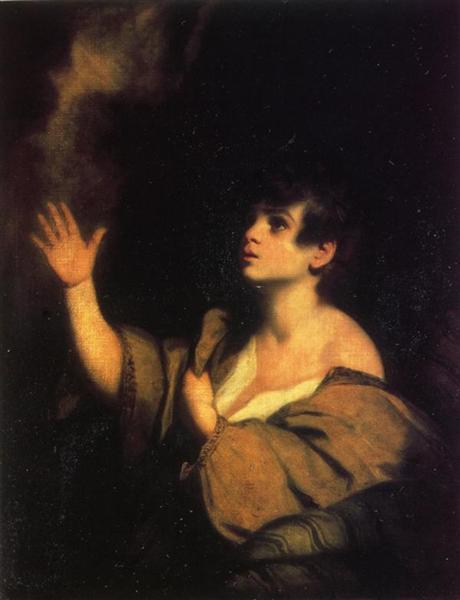
Samuel’s Call by Joshua Reynolds

In our first reading, that whisper comes in a sacred call to a listening Samuel:

When Samuel went to sleep in his place,
the LORD came and revealed his presence,
calling out as before, “Samuel, Samuel!”
Samuel answered, “Speak, for your servant is listening”.

1 Samuel 3: 9-10

In our second reading, Paul reminds us that the 
Whispering Spirit is already resident within us:

Do you not know that your body
is a temple of the Holy Spirit within you,
whom you have from God, 
and that you are not your own?

1 Corinthians 6:19

In our Gospel, Jesus – the Word, the Divine Whisper – invites us to come to him, to see his power with us in our ordinary lives.

The two disciples said to Jesus, 
“Rabbi, where do you live?”
He said to them, “Come, and you will see”.

John 1: 39

Praying with Psalm 40 can turn our hearts 
to listening for God’s voice 
under and within our experiences. 

  • It can wake us up, as Samuel was awakened.
  • It can attune us to the melody deep within our hearts.
  • It can reiterate God’s invitation to live our lives so fully in the Beloved’s Presence that, even without a sound, we know each other’s thoughts.

Poetry: from Whispers of the Beloved by Rumi

Do you know what the music is saying?
“Come follow me and you will find the way.
Your mistakes can also lead you to the Truth.
When you ask, the answer will be given.”

Music: All Praise to Him – Sovereign Grace Music

Bridges

Wednesday of the First Week in Ordinary Time
January 10, 2024

Today’s Readings:

https://bible.usccb.org/bible/readings/011024.cfm


Today, in God’s Lavish Mercy, we read about God’s call of Samuel, Hannah’s son.

New things are about to happen in Israel. The People have lived under the questionable leadership of a series of Judges. But now, threats from inside and outside loom. So God chooses to move in a new way among the community.

1Sam speak Lord

Samuel is going to be God’s bridge to that new way. In today’s reading and subsequent verses, he hears God’s call, listens, receives a vision, and prophesies to Eli.


In our reading from Mark, Jesus is the Divine Bridge to a new reality. Early now in his ministry, his call is blossoming in his heart, as he realizes that he must go all over Israel preaching and healing.

When Simon told Jesus the local villagers were looking for him, Jesus told them,

“Let us go on to the nearby villages
that I may preach there also.
For this purpose have I come.”
So he went into their synagogues,
preaching and driving out demons

throughout the whole of Galilee.”

Mark 1:38-39

Jesus continues his healing and enlightening mission through all who call themselves Christian. He calls each of us in different ways to be a “Bridge” with him to the Reign of God.

How are we hearing and listening to our particular call every day? Maybe, like Samuel, by the time God calls us three times, we may understand!😉


Music: Two songs today and no poem.

Since I mentioned “bridge”, I can’t help including one of my favorite songs, Bridge Over Troubled Water by Simon and Garfunkel. It’s not really a religious song, but their popular song actually was inspired by a great Gospel song,  Oh Mary, Don’t You Weep and its one freely interpreted verse very near the end: “I’ll be your bridge over deep water/If you trust in my name.’ 

Bridge Over Troubled Waters

Oh, Mary Don’t You Weep (Lyrics below. They are VERY liberally interpreted by these wonderful Gospel singers.)

Lord, I’m singing . . . (solo)
Oh, Mary, don’t you weep. (group)
Tell Martha not to mourn. (solo)
Tell Martha not to mourn. (group)
Listen, Mary, (solo)
Oh, Mary, don’t you weep. (group)
Tell Martha not to mourn. (solo)
Tell Martha not to mourn. (group)
Pharaoh’s army, (solo)
Oh, Mary, don’t you weep. (group)
They got drownded in the sea, (solo)
Drowned in the Red Sea. (group)
Jesus said, Mary, (solo)
Oh, Mary, don’t you weep. (group)
Tell Martha not to mourn. (solo)
Tell Martha not to mourn. (group)
Can’t you hear me singing, Mary? (solo)
Oh, Mary don’t you weep. (group)
I want you to know, Martha don’t have to mourn. (solo)
Tell Martha not to mourn. (group)
Oh, listen, Mary, (solo)
Oh, Mary don’t you weep. (group)
Tell Martha not to mourn. (solo)
Tell Martha not to mourn. (group)
Pharaoh’s army, (solo)
Oh, Mary, don’t you weep, (group)
They got drownded in the sea, (solo)
Drowned in the Red Sea. (group)
Jesus said, Mary, (solo)
Oh, Mary don’t you weep, (group)
Tell Martha not to mourn, (solo)
Tell Martha not to mourn, (group)
Lord, and if I could tonight, (solo)
If I could, (group)
I want to tell you I surely would right now. (solo)
Surely would, (group)
I would stand on the rock. (solo)
Stand on the rock, (group)
Right on the rock where Moses stood. (solo)
Moses stood, (group)
Pharaoh’s army, (solo)
Oh, Mary don’t you weep (group)
They got drownded in the sea, (solo)
Drowned in the Red Sea. (group)
Jesus say, Mary, (solo)
Oh, Mary don’t you weep. group)
He said Mary . . . (solo)
Oh, Mary don’t you weep .(group)
Oh, Mary . . . (solo)
Oh, Mary, don’t you weep. group)
Tell Martha not to mourn. (solo)
Tell Martha not to mourn. group)

Petitioning God

Tuesday of the First Week in Ordinary Time
January 9, 2023

Today’s Reading:

https://bible.usccb.org/bible/readings/010924.cfm


Today, in God’s Lavish Mercy, we resume our journey through “Ordinary Time”. Advent and Christmastide of 2023 seem to have passed very swiftly! Just a week or so beyond the New Year, life resumes the “everyday-ness” that can be either comforting or humdrum.

The Church calls this “everyday-ness” Ordinary Time. It is a time during which we are invited to recognize the extraordinary gift of each day by praying with the ordinary lives of ancient Israel and early Christianity. Key to their lives, and to ours, is this: God abides with us. Praying with the Scriptures helps us to recognize and deepen within that Presence.


Now and for several weeks, we will read from the Books of Samuel. These Books present a point of profound change in the character of ancient Israel. Before 1 Samuel, Israel is a disorganized group of tribes with an amorphous societal infrastructure. After II Samuel, Israel is characterized by a power and theology centralized around a king and kingly political power.

We could read these books simply as history, or as a fictionalized narrative, but that would be unfortunate. Praying with the Books of Samuel, and all scripture, allows us to witness God’s intervention in the human heart. We can learn from and compare our challenges to those of these ancient believers. Samuel – and his mother Hannah – is an engaging place to begin.


As 1 Samuel opens in our reading today, Israel is a mess. Externally, they are mortally threatened by the Philistines. Internally, they have devolved into a brutal, amoral, rudderless gaggle. They ache for the Leader who will restore their safety and prosperity.

The Prayer of Hannah – Julius Schnorr von Carolsfeld


Samuel’s mother, Hannah, is the first inkling of that restoration. Frustrated with her barrenness, she turns in desperation to God. She makes the ultimate promise of returning the child God might give her. Her desolation is met with mercy. With the conception of Samuel, Hannah sets in motion the dynamic line that will lead through David to Jesus, the Messiah.

Hannah rose after a meal at Shiloh,
and presented herself before the LORD;
at the time, Eli the priest was sitting on a chair
near the doorpost of the LORD’s temple.
In her bitterness she prayed to the LORD, weeping copiously,
and she made a vow, promising: “O LORD of hosts,
if you look with pity on the misery of your handmaid,
if you remember me and do not forget me,
if you give your handmaid a male child,
I will give him to the LORD for as long as he lives;


This passage is a pre-figuring of Mary and the Son she will give back to God. It offers us so many ways to pray as we live to gratefully return our lives to the Creator.

  • As we consider Hannah as an expression of Israel’s journey, where do we stand on our journey into God’s grace?
  • How do we respond to frustration in our lives, especially when our prayers seem unanswered?
  • How do we place our frustrations before God? How do we wait for an answer?
  • How do we live out and fulfill our promises, vows, and covenants with God and neighbor?
  • Are we aware, and reverent of, the influence of our salvation journey on the journeys of those around us?

It matters how we live our ordinary time. We are not just place markers in history. Like Hannah, how we live, pray, and love affects the whole flow of Creation. Like Hannah, by our faithful relationship with God, we influence a future we do not yet see.


Poetry and Music: MARBLE FLOOR – (A song in Hannah’s voice) by Alicia Jo Rabins

The composer writes that this is a song about Hannah – and what it means to ask for what you need. The story of Hannah appears in I Samuel 1-2. Hannah (Chana in Hebrew) prayed so hard her lips moved, but no sound came out; the priest threw her out of the temple, thinking she was drunk. But not only was Hannah’s prayer answered, she also became the model for the Amidah, one of the most important moments in the Jewish prayer service.
The chorus is inspired by the Chassidic story of the holiest prayer being that of the illiterate man who only knew the alphabet but recited it with perfect intention.

I opened my mouth but no words came
I lay down to sleep but I did not dream
I looked up at the stars but the sky was dark
like a mirror held up to my heart
A B C, D E F

Take away this alphabet
it’s heavy on my tongue

You can want a thing so bad it seems
That you lose yourself and everybody else
So I got down on my knees on the marble floor
And I cried until my throat was sore
A B C D, E F G

Tell me what you want from me
I’ll do it all I swear
I was not drunk, I was awake
I could not open so I had to break
to let the light come in
A B C D, E F G
Take away this alphabet from me
it’s heavy on my tongue

Find Your Star

The Epiphany of the Lord
January 7, 2023

Today’s Readings:

https://bible.usccb.org/bible/readings/010724.cfm


Today, in God’s Lavish Mercy, and on this glorious feast, we pray with Psalm 72.

The kings of Tarshish and the Isles shall offer gifts;
the kings of Arabia and Seba shall bring tribute.
All kings shall pay him homage,
all nations shall serve him.

For he shall rescue the poor when he cries out,
and the afflicted when he has no one to help him.
He shall have pity for the lowly and the poor;
the lives of the poor he shall save.

Psalm 72: 10-13

It is a gorgeous psalm that fills our senses with lights, and scents, and the tactile experience of an ancient and sacred world:

  • we inhale the flower of justice
  • wrap ourselves in its profound peace
  • gaze on a distant, moonless universe
  • stretch our prayer from sea to sea,
  • and our praise to the ends of the earth

We see the ancient nations gather in homage,
carrying the gems, spices and bounty of their homelands.

We, too, kneel in astounded wonder that this vulnerable child, 
hidden in the far reaches of both geography and imagination, 
carries to us the Promise of the Ages.

We, too, trust the star, rising in our own hearts.


Psalm 72 echoes our beautiful first reading from Isaiah, another masterpiece that, in itself, is enough simply to read and savor:

Rise up in splendor, Jerusalem!  
Your light has come,
the glory of the Lord shines upon you.
See, darkness covers the earth,
and thick clouds cover the peoples;
but upon you the LORD shines,
and over you appears his glory.

Isaiah 60: 1-2

In Isaiah, these magnificent verses follow two chapters of gloom and darkness. They break forth in true epiphany to say, “Your Light has come!” – now your life must begin to shine as well.

Epiphany is not simply about kings and camels. It is not simply about a  crèche and a star. 

It is about Divine Revelation hovering over our dailyness. It is about us, opening our eyes in faith and responsiveness to our ever-present God.

The feast of Epiphany reminds us:

Look at your life today. 
The star did not pass you by. 
Open your eyes and find it. 
Once you have seen it, 
live in its Light.


Poetry: The Journey of the Magi – T.S. Eliot

Eliot wrote the poem after his conversion to Anglicanism ( He had been a Unitarian.) The poem conveys his struggle to grow in the light of his new faith. The “journey” is life-long and demanding in a world that often  contradicts that faith.

“A cold coming we had of it,
Just the worst time of the year
For a journey, and such a long journey:
The ways deep and the weather sharp,
The very dead of winter.”
And the camels galled, sore-footed, refractory,
Lying down in the melting snow.
There were times we regretted
The summer palaces on slopes, the terraces,
And the silken girls bringing sherbet.
Then the camel men cursing and grumbling
And running away, and wanting their liquor and women,
And the night-fires going out, and the lack of shelters,
And the cities hostile and the towns unfriendly
And the villages dirty and charging high prices:
A hard time we had of it.
At the end we preferred to travel all night,
Sleeping in snatches,
With the voices singing in our ears, saying
That this was all folly.

Then at dawn we came down to a temperate valley,
Wet, below the snow line, smelling of vegetation;
With a running stream and a water-mill beating the darkness,
And three trees on the low sky,
And an old white horse galloped away in the meadow.
Then we came to a tavern with vine-leaves over the lintel,
Six hands at an open door dicing for pieces of silver,
And feet kicking the empty wine-skins.
But there was no information, and so we continued
And arrived at evening, not a moment too soon
Finding the place; it was (you may say) satisfactory.
All this was a long time ago, I remember,
And I would do it again, but set down
This set down
This: were we led all that way for
Birth or Death? There was a Birth, certainly,
We had evidence and no doubt. I had seen birth and death,
But had thought they were different; this Birth was
Hard and bitter agony for us, like Death, our death.
We returned to our places, these Kingdoms,
But no longer at ease here, in the old dispensation,
With an alien people clutching their gods.
I should be glad of another death.

Music: The People that Walk in Darkness – Bob Dufford, SJ

The people that walk in darkness 
 have seen, have seen a great light.
 And on those who dwell in endless gloom, 
 a light has shone.
 
Refrain: 
For a Child is born this day: 
Rejoice, rejoice.
Daughter of Zion, awake. 
The glory of God is born.
 
And they shall name Him counselor, 
shall call Him mighty God.
And He shall rule from age to age: 
Prince of Peace.
 
Refrain
 
Darkness covers the earth; 
thick clouds govern its pe0ple.
But the Lord will bring them light; 
the Lord will bring them light.
 
Refrain
 
The people that walk in darkness 
have seen, have seen a great light.
And on those who dwell in endless gloom, 
a light has shone.
 

Refrain

Back to the Fig Tree

Memorial of Saint John Neumann, Bishop
January 5, 2024

Today’s Readings:

https://bible.usccb.org/bible/readings/010524.cfm


Today, in God’s Lavish Mercy, John gives us this powerful verse:

Beloved, if our hearts do not condemn us,
we have confidence in God.


In our Gospel, we meet Nathaniel who has been sitting under a fig tree, perhaps examining his heart in the manner that John describes. I have frequently sat under the fig tree with Nathaniel because his was the name I was given over sixty years ago when I began my religious life.

I had never heard of him before that, nor at least had I paid attention to him. When Mother Bernard solemnly pronounced his name over me, it fell with a thud into my consciousness. Who was this guy anyway??? And what happened to “Regina”, “James Marita”, and “Eleanor Mary” – the names I had humbly requested! I imagine my eyebrows knit into a skeptical question mark!

I remember Mother Anthony peeking over Mother Bernard’s shoulder, encouraging me to smile as the superior’s hands rested on my head in blessing. Later she told me that she wasn’t so sure I would like the name, but that Mother Bernard really did. So I decided that I would learn to really like it too. That’s when I first met Nathaniel under the multi-trunked tree where he sat pondering his life.


Oddly enough at that first meeting, Nathaniel was young like I was then. He was trying to figure out, and plot out, his whole life in that one afternoon, much like I used to do when I was very young. I wanted to make the right decisions to set my life on a perfect course. So did Nathaniel I think.

Well. over the years since, both Nathaniel and I have met Jesus who has intervened in our self-interested ponderings. Jesus has called us beyond our mirror-bound reflections to the “greater things” of God’s vision for us and for Creation.

Nathaniel said to him, “How do you know me?”
Jesus answered and said to him,
“Before Philip called you, I saw you under the fig tree.”
Nathaniel answered him,
“Rabbi, you are the Son of God; you are the King of Israel.”
Jesus answered and said to him,
“Do you believe
because I told you that I saw you under the fig tree?
You will see greater things than this.”

John 1:47-50

When I meet Nathaniel these days under the aging fig, we too have aged and mellowed. Asking God’s sustaining intervention for just the day or the hour has become sufficient. Now as the plump fruit falls occasionally from the limb, we listen more than we think or speak. Jesus has joined us there under the leaves’ broad shadows. We share the fruit that has been given to us. And yes, Jesus still knows us in ways that amaze, challenge, and comfort.


Poetry: Seeing for a Moment – Denise Levertov

I thought I was growing wings—
it was a cocoon.

I thought, now is the time to step
into the fire—
it was deep water.

Eschatology is a word I learned
as a child: the study of Last Things;

facing my mirror—no longer young,
the news—always of death,
the dogs—rising from sleep and clamoring and howling, howling,

nevertheless
I see for a moment
that’s not it: it is
the First Things.

Word after word
floats through the glass.
Toward me.

Music: Under the Fig Tree – Lake Isabel

The Key Hidden in Plain Sight

Wednesday of the Third Week of Advent
December 20, 2023

Today’s Readings:

https://bible.usccb.org/bible/readings/122023.cfm


Today, in God’s Lavish Mercy, Isaiah foretells the conception and birth of the Messiah.

Therefore the Lord himself will give you this sign:
the virgin shall conceive and bear a son,
and shall name him Emmanuel.

Isaiah 7:14

Isaiah offered the prophecy to one of the bad guys of the Hebrew Scriptures – King Ahaz (who was, nevertheless, the 16th great-grandfather of Jesus in the long David line). But Ahaz refused to believe, subsequently pursuing his own agenda rather than God’s. Ahaz’s choice ended up in disaster for both the religious and social framework of Israel.

Isaiah had handed Ahaz the Key to believe
and to act in union with God’s Will,
but Ahaz remained closed to the grace.

About 700 years later, when an angel offers her the Key, a young girl opens her heart to the miracle Isaiah once prophesied.

In the sixth month,
the angel Gabriel was sent from God
to a town of Galilee called Nazareth,
to a virgin betrothed to a man named Joseph,
of the house of David,
and the virgin’s name was Mary.
And coming to her, he said,
“Hail, full of grace! The Lord is with you.”
But she was greatly troubled at what was said
and pondered what sort of greeting this might be.
Then the angel said to her,
“Do not be afraid, Mary,
for you have found favor with God.
Behold, you will conceive in your womb and bear a son,
and you shall name him Jesus.
He will be great and will be called Son of the Most High,
and the Lord God will give him the throne of David his father,
and he will rule over the house of Jacob forever,
and of his Kingdom there will be no end.”

Luke 1:26-33

The stark contrast between Ahaz’s and Mary’s responses encourages us to consider our own openness to God’s interventions in our lives. We live a series of experiences, learnings, mistakes, reminiscences, hopes, disappointments, and a thousand other turnings of circumstance and relationship. Each holds the potential to draw us closer to God if, by prayer and reverence, we can find the key hidden under human appearances.


We can hear Mary searching for that key in her question to the angel:

But Mary said to the angel,
“How can this be,
since I have no relations with a man?”

Luke 1: 34

The angel assures Mary that there is a world transcending our perceptions where God’s power holds sway beyond all human calculation.

And the angel said to her in reply,
“The Holy Spirit will come upon you,
and the power of the Most High will overshadow you.

Luke 1: 35

Expressing her profound faith and trust in God, Mary was able to suspend the limits of expectation and definition. Ahaz didn’t even try.

Mary said, “Behold, I am the handmaid of the Lord.
May it be done to me according to your word.”

Luke 1: 38

Poetry: Annunciation – Marie Howe

Even if I don't see it again—nor ever feel it
I know it is—and that if once it hailed me
it ever does—
And so it is myself I want to turn in that direction
not as towards a place, but it was a tilting
within myself,
as one turns a mirror to flash the light to where
it isn't—I was blinded like that—and swam
in what shone at me
only able to endure it by being no one and so
specifically myself I thought I'd die
from being loved like that.

Music: The Annunciation from Rosary Sonata – Heinrich Biber

Rescue Us from Ourselves, O Adonai!

Monday of the Third Week of Advent
December 18, 2023

Today’s Readings:

https://bible.usccb.org/bible/readings/121823.cfm


Today, in God’s Lavish Mercy, we pray with our beautiful O Antiphon:

In our prayer, we call out to God as a Leader, a Leader we desperately crave because we cannot find the way ourselves. Oh, how badly we need that Divine Leader today!


Throughout these past few weeks, as I have prayed and written about the salvation history of Israel, interwoven with our Christian faith, I have been so painfully aware of the current situation in the Holy Land. The human carnage being executed there, as well as in Ukraine, screams against our mounting stagnation and indifference.

As the world observes and opines over the sacrilegious slaughter of human life, I know God’s heart breaks, as does the heart of anyone who loves as God loves. Where are the human leaders who will hear God’s cries to fashion a peace for these people, and for the world which is sickened by their suffering.

“We, people of God who proclaim the Gospel of the Risen One, have the duty to cry out this truth of faith: God is a God of peace, love, and hope. A God who wants us all to be brothers and sisters, as His Son Jesus Christ taught us. The horrors of war, of every war, offend the most holy name of God. And they offend Him even more if His name is abused to justify such unspeakable carnage.”

Pope Francis

War, and its reflection in proliferating smaller violences, is the extreme expression of a heart and a civilization deadened by sin. When a culture has normalized the tactics of death, it can be rescued only by the Divine.


As we pray today with Jeremiah’s promise to a beleaguered people, let us pray for mercy and justice for all people, especially women, children, and the poor who are always the most brutalized in war. And let’s do all that we can to move our government to moral leadership against the embedded sin of global violence.

Behold, the days are coming, says the LORD,
when I will raise up a righteous shoot to David;
As king he shall reign and govern wisely,
he shall do what is just and right in the land.
In his days Judah shall be saved,
Israel shall dwell in security.
This is the name they give him:
“The LORD our justice.”

Jeremiah 3:5-6

Prayer: On Peace and War – Walter Brueggemann from Prayers for a Privileged People

We are aware, acutely aware in your presence,
of the grind of tanks,
of the blast of mines hidden against human flesh,
of the rat-tat-tat of sniper fire.
We are aware of the stench of death,
bodies of our own military women and men, bodies of countless Iraqis,
and the smell makes us shiver.

Such smells and sounds are remote from us,
but not remote from us are bewilderment,
and anxiety, and double-mindedness.
We are bewildered,
whether we are liberators or invaders,
whether they are terrorists or freedom fighters, whether we should yearn for peace or savor victory.

The world has become so strange,
and our place in it so tenuous,
where gray seems clearer than the white purity of our hopes,
or the darkness of our deathly passions.
There is so little agreement among us,
perhaps so little truth among us,
so little, good Lord, that we scarcely know how to pray,
or for what to pray.

We do know, however, to whom we pray!
We pray to you, creator God, who wills the world good;
We pray to you, redeemer God, who makes all things new.
We pray to you, stirring Spirit, healer of the nations.
We pray for guidance,
And before that, we pray in repentance,
for too much wanting the world on our own terms.

We pray for your powerful mercy,
to put the world – and us – in a new way,
a way after Jesus who gave himself,
a way after Jesus who confounded the authorities and
who lived more excellently.
Whelm us by your newness, by peace on your terms
– the newness you have promised,
of which we have seen glimpses in your Son
who is our Lord.

Music: End the War. Grant Us Peace – Lord’s Loving Melody

Without Cost

Saturday of the First Week of Advent
December 9, 2023

Today’s Readings:

https://bible.usccb.org/bible/readings/120923.cfm


Today, in God’s Lavish Mercy, our readings invite us to consider the state of our world and to imagine its transformation. And more significantly, our Gospel invites us to imagine ourselves as participants in that transformation.


This image is taken from Cassell’s Illustrated Universal History
illustrated by Edmund Ollier (1827)
This amazing book is preserved and can be accessed here:

https://archive.org/details/cassellsillustr02olligoog/page/192/mode/1up


Isaiah prophesied in a time of desperation for Israel. Crushed by the Assyrian Empire, the Jewish people languished in foreign captivity. As all prophets do, Isaiah interprets Israel’s experience in terms of its spiritual meaning – how do one’s present circumstances reveal the evolution of one’s eternal relationship with God.

The entire Book of Isaiah swings back and forth between two poles: the sin of a faithless people counterbalanced by the merciful generosity of a faithful God. Isaiah’s job is to call the people to awareness, repentance, and hope.


Today’s passage is a call to hope. In it, Isaiah describes the glorious peace that will occur when humankind truly repents from sin and turns to God for healing. The prophet assumes God’s voice in an invitation to healing and the restoration of fidelity:

Thus says the Lord GOD,
the Holy One of Israel:
O people of Zion, who dwell in Jerusalem,
no more will you weep;
He will be gracious to you when you cry out,
as soon as he hears he will answer you.
The Lord will give you the bread you need
and the water for which you thirst.
No longer will your Teacher hide himself,
but with your own eyes you shall see your Teacher,
While from behind, a voice shall sound in your ears:
“This is the way; walk in it,”
when you would turn to the right or to the left.

Isaiah 30:19-21

Scripture speaks to us as well as to the audience for whom it was originally written. And surely Isaiah’s world, distanced on a timeline, is amazingly comparable to our own.

Imagine if you can, living in a world that calls good evil and evil good. Imagine a place where the powerful store up money and treasures while the poor and vulnerable go hungry. Imagine a cultural system that applauds immorality and whose icons lead undiscerning masses to open graves of unrestrained greed, lust, and hatred. Obviously, none of us has to work too hard to imagine such a place.
These are not new problems. The book of Isaiah presents a world strangely familiar to our own. Two powerful images emerge. On one hand, is the picture of sin’s ravaging ways; the aftermath is devastating. But filtering through this awful picture is the more powerful vision of deliverance and salvation. Isaiah invites the reader to see this bright vision through eyes of faith.

Robarts, Charme (2003) “By Faith We Can See It Afar: Believing Isaiah’s Word,” Leaven: Vol. 11: Iss. 2, Article 4

In our Gospel, Jesus – like Isaiah and like us – is in the midst of such a wounded world:

Jesus went around to all the towns and villages,
teaching in their synagogues,
proclaiming the Gospel of the Kingdom,
and curing every disease and illness. 
At the sight of the crowds, his heart was moved with pity for them
because they were troubled and abandoned,
like sheep without a shepherd.

Matthew 9:35-36

Jesus tells his disciples – and us – that by selfless generosity, rooted in grace, we become God’s healing agents for our times and communities.

Then he summoned his Twelve disciples
and gave them authority over unclean spirits to drive them out
and to cure every disease and every illness.

Jesus sent out these Twelve after instructing them thus,
“Go to the lost sheep of the house of Israel.
As you go, make this proclamation: ‘The Kingdom of heaven is at hand.’
Cure the sick, raise the dead,
cleanse lepers, drive out demons.
Without cost you have received; without cost you are to give.”

Matthew 9:6-8

Prose: from “Kindness” – The First Gift by John O’Donohue

Despite all the darkness, human hope is based on the instinct that at the deepest level of reality some intimate kindness holds sway. This is the heart of blessing. To believe in blessing is to believe that our being here, our very presence in the world, is itself the first gift, the primal blessing...

... To be born is to be chosen. To be created and come to birth is to be blessed. Some primal kindness chose us and brought us through the forest of dreaming until we could emerge into the clearance of individuality, with a path of life opening before us through the world.

Music: Kindness – Steven Curtis Chapman