Wednesday of the Second Week of Easter: The Light

April 27, 2022

Today, in God’s Lavish Mercy, we read about miracles and Light. These are good things, right? It would seem that we shouldn’t be slow to acknowledge the miracles around us, nor to open our eyes to the Light.

Well, let’s see….


In our reading from Acts, we read about a miracle:

The high priest rose up and all his companions,
that is, the party of the Sadducees,
and, filled with jealousy,
laid hands upon the Apostles and put them in the public jail.
But during the night, the angel of the Lord opened the doors of the prison,
led them out, and said,
“Go and take your place in the temple area,
and tell the people everything about this life.”

Acts 5: 17-20

Still when the Temple guards and the High Priest discover God’s miraculous action, they re-arrest the disciples and try again to stop the spread of the Light!

When I read this I say, “Come on, guys! Take a hint! Maybe there is something to this preaching!”

But the truth is that it can be really hard to take that hint — to wake up, to acknowledge the miracles around us, and to choose Light over darkness. Why? Because miracles and Light get in the way of our agendas, our lazy choices, our indifference to others’ needs and our own excesses.
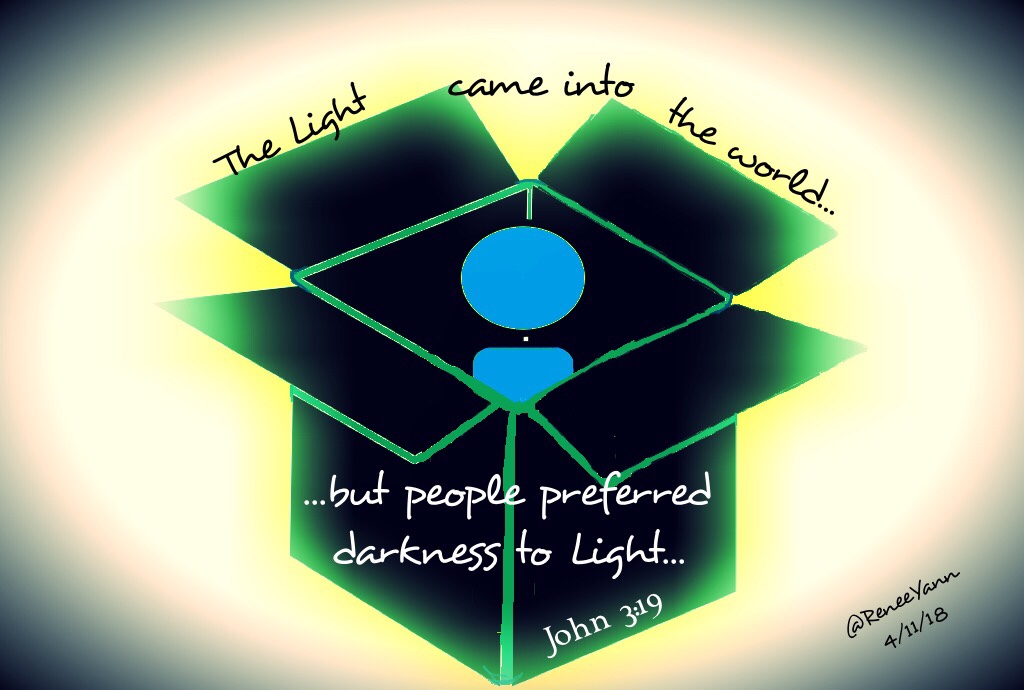
Most of us don’t want to live completely bereft of blessings and inspiration. We’d like a miracle now and again, but not enough to demand our deep conversion. We’d prefer a little shade and shadow, a little spiritual oblivion in our lives.

In our Gospel, John will have none of it! The Light demands our conversion to the fullness of the Gospel.

Listen to John’s astonishment that people choose darkness over Light.

And this is the verdict,
that the Light came into the world,
but people preferred darkness to light,
because their works were evil.

John 3:19

And yet, we see it all the time, don’t we? Even, unfortunately, sometimes in ourselves?

Let’s pray today for the strength to always choose God’s stunning yet healing Light. Let’s pray that strength for our terribly shadowed world – that we may open our prisoned hearts to the miracle of Light God has planted in each one of us.

Poetry: The Uses of Sorrow | Mary Oliver

(In my sleep I dreamed this poem)
Someone I loved once gave me
a box full of darkness.

It took me years to understand
that this, too, was a gift.


Music: Coulin – James Last
Tuesday of the Second Week of Easter: 2022

April 26, 2022

Nicodemus

Today, in God’s Lavish Mercy, we meet two towering figures of the early Christian story, Barnabas and Nicodemus.

In our first reading, Barnabas is cited as a devout member of the community of believers which …

… was of one heart and mind,
and no one claimed that any of his possessions was his own,
but they had everything in common.

Acts 4:32

Our Gospel brings us Nicodemus who “came to Jesus under cover of the night”.  Nicodemus, obviously Ph.D. material, has a long exchange with Jesus in the attempt to come to intellectual comfort with Jesus’s message.

Nicodemus wants his faith to make logical sense before committing to it, to the point that Jesus sounds a little astounded at the effort:

You are the teacher of Israel 
and you do not understand 
what I am saying to you?

John 3:10

I think a little bit of both Barnabas and Nicodemus lives within each of us.

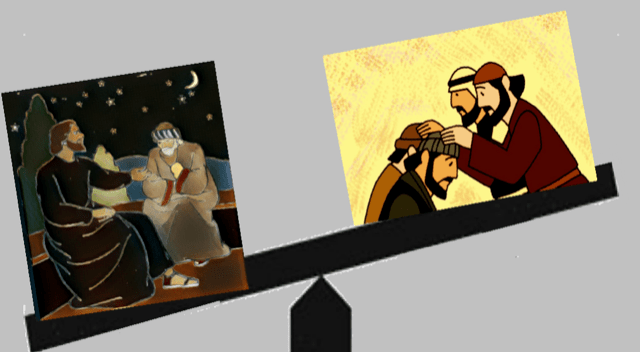
barnabas seesaw

Like Nicodemus, we do believe, but we would like to understand more. We grapple with concepts of “God’s plan”, with the problem of evil, with what seems the random mercilessness of nature, and myriad other inexplicable realities.

Still, like Barnabas, we trust and are willing to lay our lives at the feet of Christ to be his agents in the world.

That balancing of trust with anxiety is the story of faith for most of us. And it’s OK.  Both Nickie and Barnie turned out to be giants for Christ.  And so will we with God’s help.


Poetry: The Night – BY HENRY VAUGHAN
John 3.2

Through that pure virgin shrine,
That sacred veil drawn o’er Thy glorious noon,
That men might look and live, as glowworms shine,
And face the moon,
Wise Nicodemus saw such light
As made him know his God by night.

Most blest believer he!
Who in that land of darkness and blind eyes
Thy long-expected healing wings could see,
When Thou didst rise!
And, what can never more be done,
Did at midnight speak with the Sun!

O who will tell me where
He found Thee at that dead and silent hour?
What hallowed solitary ground did bear
So rare a flower,
Within whose sacred leaves did lie
The fulness of the Deity?

No mercy-seat of gold,
No dead and dusty cherub, nor carved stone,
But His own living works did my Lord hold
And lodge alone;
Where trees and herbs did watch and peep
And wonder, while the Jews did sleep.

Dear night! this world’s defeat
The stop to busy fools; care’s check and curb;
The day of spirits; my soul’s calm retreat
Which none disturb!
Christ’s progress, and His prayer time;
The hours to which high heaven doth chime;

God’s silent, searching flight;
When my Lord’s head is filled with dew, and all
His locks are wet with the clear drops of night;
His still, soft call;
His knocking time; the soul’s dumb watch,
When spirits their fair kindred catch.

Were all my loud, evil days
Calm and unhaunted as is thy dark tent,
Whose peace but by some angel’s wing or voice
Is seldom rent,
Then I in heaven all the long year
Would keep, and never wander here.

But living where the sun
Doth all things wake, and where all mix and tire
Themselves and others, I consent and run
To every mire,
And by this world’s ill-guiding light,
Err more than I can do by night.

There is in God, som say,
A deep but dazzling darkness, as men here
Say it is late and dusky, because they
See not all clear.
O for that night! where I in Him
Might live invisible and dim!


Music: Ye Must Be Born Again – sung by The Sensational Nightingales, a beloved Black Gospel Quartet that, with several membership changes, has been popular for over seven decades.  (Lyrics below)

Ye Must Be Born Again
written by William T. Sleeper in 1877

A ruler once came to Jesus by night,
To ask Him the way of salvation and light;
The Master made answer in words true and plain,
“Ye must be born again!”
“I verily, verily say unto thee,
Ye must be born again!”

Ye children of men, attend to the word
So solemnly uttered by Jesus, the Lord,
And let not this message to you be in vain,
“Ye must be born again.”

Oh, ye who would enter that glorious rest,
And sing with the ransomed the song of the blest;
The life everlasting if ye would obtain,
“Ye must be born again.”

Holy Saturday 2022

April 16, 2022

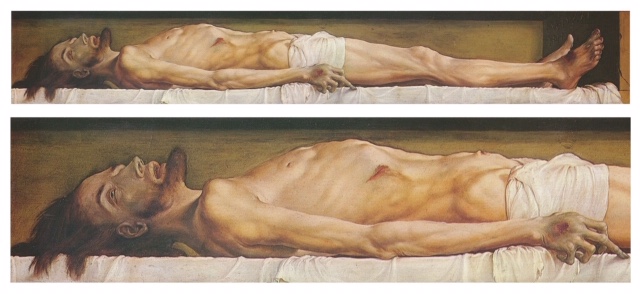
Jesus in tomb
The Body of the Dead Christ in the Tomb by Hans Holbein (c. 1522)

Today, in God’s Lavish Mercy, we wait, entombed with Jesus. The waiting has a surreal sense every year as we commemorate this day with no liturgy of its own.  Within our Holy Saturday prayer, there is a depth of meaning that eludes words. So, let us turn to poetry as we daily do:

Eliot

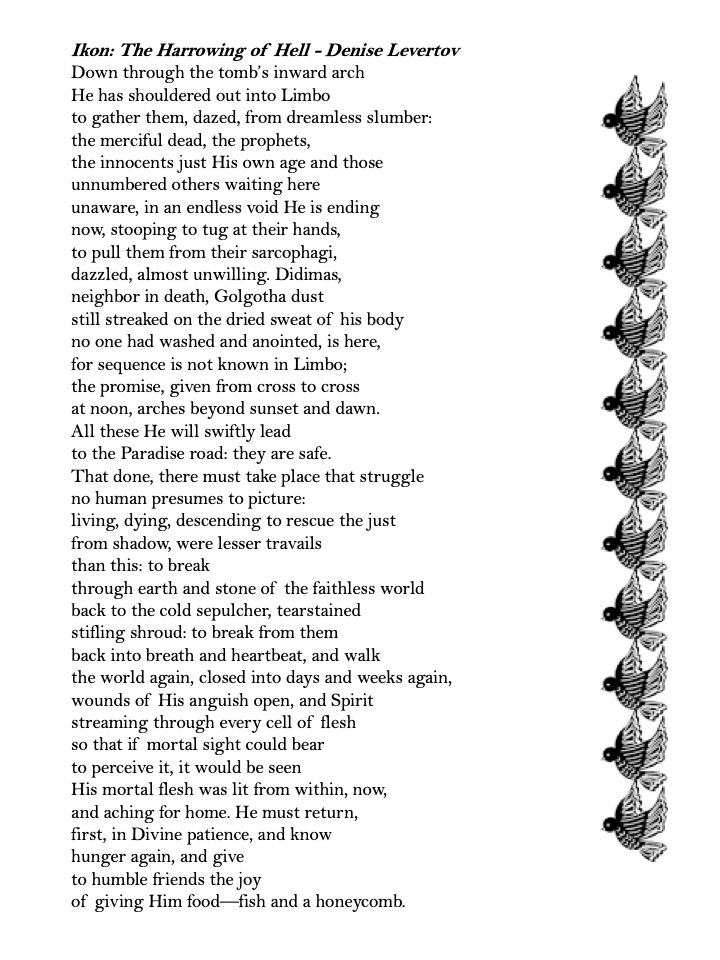
Here are two poems that may help us explore the spiritual dimensions of Holy Saturday.

meynell

levertov

Music: God Rested – Andrew Peterson

Lent: Toward a Future Unimagined

April 7, 2022
Thursday of the Fifth Week of Lent

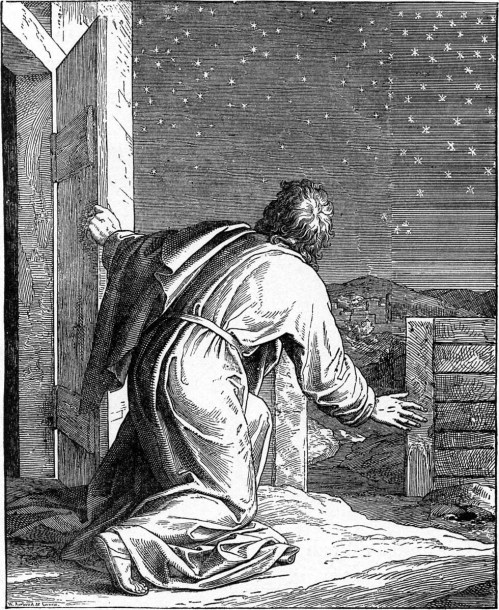
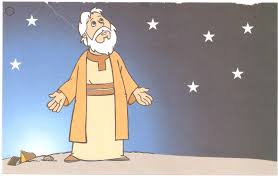
Abraham
Abraham Looks to the Heavens from Bible Pictures by Charles Foster (1897)

Today, in God’s Lavish Mercy, Yahweh is very clear with Abram that he is now in a life-changing situation:

My covenant with you is this:
you are to become the father of a host of nations.
No longer shall you be called Abram;
your name shall be Abraham,
for I am making you the father of a host of nations.

Genesis 17: 3-4

pregnant

Having witnessed how young fathers are upended by the news of impending fatherhood, I can’t even imagine what Abraham felt like when he heard this:

I will render you exceedingly fertile;
I will make nations of you;
kings shall stem from you.

But aside from the practical ramifications of God’s promise, what Abraham is invited to is a whole new outlook on the world.  God lays out before him a vision of the ages, infinitely beyond the confines of Abraham’s current understanding.

dangles

It is an existence beyond time and human definition. It is the infinite place of God’s timelessness, where we all exist, but forget when we are born. Our lifetime is a spiritual journey back to remembrance.


In our Gospel, Jesus uses a rather cryptic phrase as he challenges his listeners to look beyond their circumscribed perspectives:

Amen, amen, I say to you,
whoever keeps my word will never see death….
Abraham your father rejoiced to see my day;
he saw it and was glad.

John 8:51
Jn8_56 Abraham

By fully embracing his covenant with God, Abraham saw beyond death.  The vision of heaven was opened to him and he lived his life by its power. He lived then within the Day of the Lord, not within any small confined perspective.

Jesus offers us the same invitation. We can choose to see with God’s eyes, or with only our own. We can choose to live within God’s infinity, or in only our own earthbound borders.

In our current global situation, where some humans have lost the sense of anything beyond themselves, it may be a good time to remember the eternal character of our heart.  It may be time to have a sit-down with God about our covenant, like the conversation God had with Abraham.


Poetry: The Unwavering Nomad – Jessica Powers

I love Abraham, that old weather-beaten
unwavering nomad; when God called to him
no tender hand wedged time into his stay.
His faith erupted him into a way
far-off and strange. How many miles are there
from Ur to Haran? Where does Canaan lie,
or slow mysterious Egypt sit and wait?
How could he think his ancient thigh would bear
nations, or how consent that Isaac die,
with never an outcry nor an anguished prayer?
I think, alas, how I manipulate
dates and decisions, pull apart the dark
dally with doubts here and with counsel there,
take out old maps and stare.
Was there a call after all, my fears remark.
I cry out: Abraham, old nomad you,
are you my father? Come to me in pity.
Mine is a far and lonely journey, too.

Music: In the Day of the Lord  – M.D. Ridge

Refrain:
In the day of the Lord, the sun will shine
like the dawn of eternal day.
All creation will rise to dance and sing
the glory of the Lord!

1.
“And on that day will justice triumph,
on that day will all be free:
free from want, free from fear, free to live! Refrain

2.
Then shall the nations throng together
to the mountain of the Lord:
they shall walk in the light of the Lord! Refrain

3.
And they shall beat their swords to plowshares;
there will be an end to war:
one in peace, one in love, one in God! Refrain

4.
For Israel shall be delivered,
and the desert lands will bloom.
Say to all, “Do not fear. Here is your God!” Refrain

5.
And on that day of Christ in glory,
God will wipe away our tears,
and the dead shall rise up from their graves! Refrain

6.
O give us eyes to see your glory,
give us hearts to understand.
Let our ears hear your voice ’til you come! Refrain

Lent: Trust the Light

April 4, 2022
Monday of the Fifth Week of Lent

Today, in God’s Lavish Mercy, our first reading offers us one of the most captivating, and perhaps infuriating, stories of the Bible – the story of Susanna. This is a tale that can offer us many points of reflection. Rather than offer you my own, I would like to refer you to this excellent article by Dr. Malka Zeiger Simkovich is a the Crown-Ryan Chair of Jewish Studies at Catholic Theological Union in Chicago, and the director of their Catholic-Jewish Studies program.


Our Gospel for today picks of the themes of knowledge, truth and judgement we have found in Daniel.

Jesus in facing mounting harassment and criticism from those threatened by his message. In today’s passage, a group of Pharisees engages in a verbal duel with Jesus:

The Pharisees said to him,
“You testify on your own behalf,
so your testimony cannot be verified.”
Jesus answered and said to them,
“Even if I do testify on my own behalf, my testimony can be verified,
because I know where I came from and where I am going.
But you do not know where I come from or where I am going.
You judge by appearances, but I do not judge anyone.

Jesus makes it clear that such mental gymnastics, devoid of heart and spirit, are nothing but a journey in darkness:

Jesus spoke to them again, saying,
“I am the light of the world.
Whoever follows me will not walk in darkness,
but will have the light of life.”


We’ve all met people who want to make faith into a mental Rubik’s cube. But deep faith will never fit into blocks and clever twists. Deep faith releases us from the need to have everything fit – from the futile imagination that we are in control of anything but our power to love.

As we pray with the little pieces of Susanna, Pharisees, and wicked elders we might discover in our own lives, let’s ask for the courage and grace to relax into the Light that Jesus offers us today.


Poetry: Peter Quince at the Clavier – Wallace Stevens

  I 

Just as my fingers on these keys 

Make music, so the selfsame sounds 

On my spirit make a music, too. 

Music is feeling, then, not sound; 

And thus it is that what I feel, 

Here in this room, desiring you, 

Thinking of your blue-shadowed silk, 

Is music. It is like the strain 

Waked in the elders by Susanna: 

Of a green evening, clear and warm, 

She bathed in her still garden, while 

The red-eyed elders, watching, felt 

The basses of their beings throb 

In witching chords, and their thin blood 

Pulse pizzicati of Hosanna. 

                                              II 

In the green water, clear and warm, 

Susanna lay. 

She searched 

The touch of springs, 

And found 

Concealed imaginings. 

She sighed, 

For so much melody. 

Upon the bank, she stood 

In the cool 

Of spent emotions. 

She felt, among the leaves, 

The dew 

Of old devotions. 

She walked upon the grass, 

Still quavering. 

The winds were like her maids, 

On timid feet, 

Fetching her woven scarves, 

Yet wavering. 

A breath upon her hand 

Muted the night. 

She turned— 

A cymbal crashed, 

And roaring horns. 

                                           III 

Soon, with a noise like tambourines, 

Came her attendant Byzantines. 

They wondered why Susanna cried 

Against the elders by her side; 

And as they whispered, the refrain 

Was like a willow swept by rain. 

Anon, their lamps’ uplifted flame 

Revealed Susanna and her shame. 

And then, the simpering Byzantines 

Fled, with a noise like tambourines. 

                                             IV 

Beauty is momentary in the mind— 

The fitful tracing of a portal; 

But in the flesh it is immortal. 

The body dies; the body’s beauty lives. 

So evenings die, in their green going, 

A wave, interminably flowing. 

So gardens die, their meek breath scenting 

The cowl of winter, done repenting. 

So maidens die, to the auroral 

Celebration of a maiden’s choral. 

Susanna’s music touched the bawdy strings 

Of those white elders; but, escaping, 

Left only Death’s ironic scraping. 

Now, in its immortality, it plays 

On the clear viol of her memory, 

And makes a constant sacrament of praise.


Music: Bach: Prelude in C Major, BWV 846, The Well-Tempered Clavier

Lent: The Deep Dive

March 29, 2022
Tuesday of the Fourth Week of Lent

Today, in God’s Mercy, our readings describe a deep and hidden stream revealed by God –

first to Ezechiel …

Raffael-vision-ezechiel
The Vision of Ezechiel by Rafael

then to a long-paralyzed man …

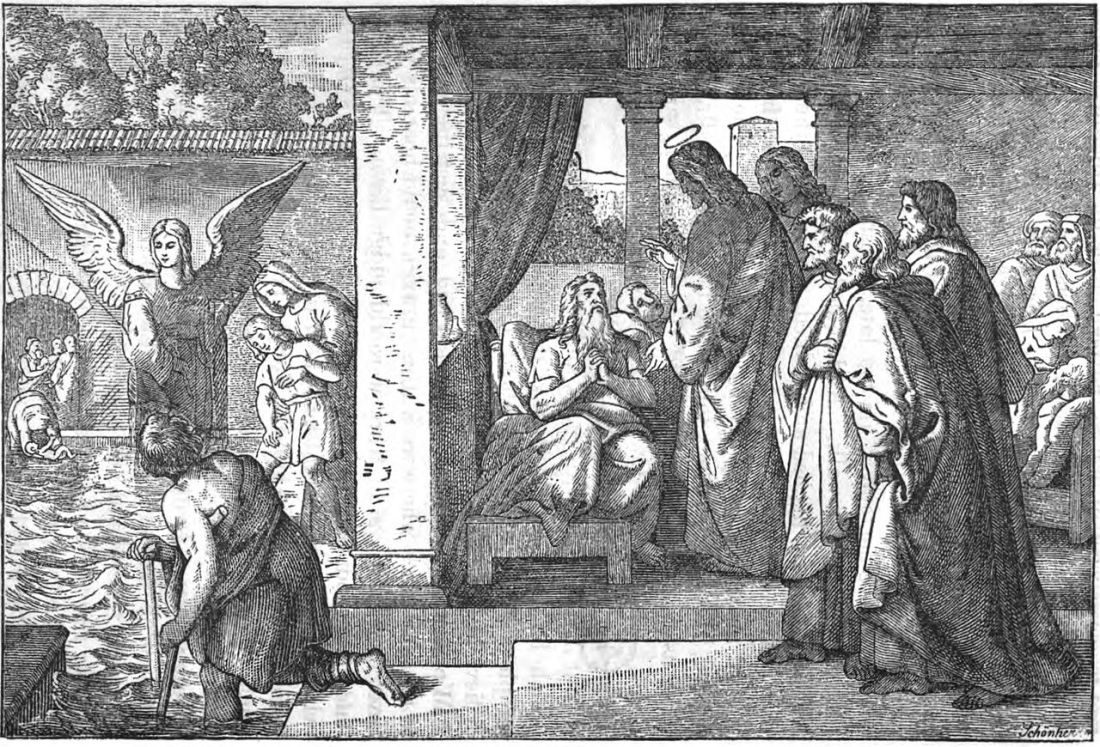
Schönherr_The_pool_of_Bethesda
The pool of Bethesda, by Schönherr.

So many stories in Scripture are laced with the same theme: there is a infinite mystery hidden under the surface of life:

  • Keep searching. Keep searching. 
  • The precious pearl that awaits discovery. 
  • The lost coin that must be found. 
  • The mustard seed buried in circumstance. 
  • The stream running deep under appearances.

We might be tempted to dismiss our first reading from Ezechiel as over-described allegory. But its rendition of the slow, steady deepening, through which God leads the prophet, offers us an apt image to reflect on our own graced journey. 

Ez47_9 stream

Hasn’t God led us gently to the faith we have today? Like young children learning to ride the ocean breakers, we have been taught by a patient God Who returns in every tide to take us deeper into our next capacity for grace.


For thirty-eight years, the man in today’s Gospel has been paralyzed by the water’s edge. Maybe we know how he feels.

duck

He believes that his life is beyond transformation. He cannot dive under the surface of his circumstances to find the quickening waters.


Jesus gives him the key to unlock his paralysis. In a short phrase, Jesus offers the man a multilayered question:

  • What do you really want in your deepest heart?
  • When you find the answer, break through all that has kept you from that deepest desire. 
  • Step with Me through the next wave, and the next until, finally, we swim together in the great ocean of covenanted trust.

As our Responsorial Psalm-poem promises:

God is our refuge and our strength,
an ever-present help in distress.
Therefore we fear not, though the earth be shaken
and mountains plunge into the depths of the sea.

There is a stream whose runlets gladden the city of God,
the holy dwelling of the Most High.
God is in its midst; it shall not be disturbed;
God will help it at the break of dawn.

Music: I Am – Marty Goetz (Lyrics below)

Come, behold the works of the Lord
How He has wrought the desolation
How He has brought His early help
The Lord of Hosts is with us
The God of Jacob is our refuge
When the nations rage and all the kingdoms fall
He says I Am, I Am, I Am all

And there’s a river whose streams make glad the city of God
They flow to His Holy habitation
They flow to the home of the Most High
The Lord of Hosts is with us
The God of Jacob is our refuge
He breaks the bow, he shatters the spear
And says I Am, I Am, I Am here!

So we will not fear
Though the worlds should change
Though the waters roar
Though the mountains shake and tremble
For He’s a present help in trouble, in trouble

Be still and know that I am God
I Am exalted in the nations
I Am exalted in the earth
The Lord of Hosts is with us
The God of Jacob is our refuge
To the ends of the earth He causes wars to cease and says
I Am, I Am, I Am peace
He says I Am, I Am, I Am peace

Lent: Pray for the Enemy

March 24, 2022
Thursday of the Third Week of Lent

Today in God’s Lavish Mercy, Jeremiah begins our readings by describing the evil heart:

… they obeyed not, nor did they pay heed.
They walked in the hardness of their evil hearts
and turned their backs, not their faces, to Me.

Jeremiah :24

It is a terrible thing to encounter a truly evil-hearted person – someone who exudes a twisted energy which is the polar opposite of God’s Love.

I believe we are seeing such a individual now in the person of Vladimir Putin. His actions leave us astounded at their arrogance and cruelty. How can such a person face himself, and certainly, how can he face God?


But our Psalm and Gospel Verse, lead me to ask myself the question:

What if we prayed FOR Vladimir Putin?

Come, let us bow down in worship;
let us kneel before the LORD who made us.
For he is our God,
and we are the people he shepherds, the flock he guides.
R. If today you hear his voice, harden not your hearts.

What if we took pity on the wretched soul he has become and asked God to heal his mind and give him a new heart? He has become sick with evil, and that is a tragic thing to see in a leader responsible for millions of lives!


All of us feel tremendous sorrow and compassion toward the Ukrainian people. But in the end, no matter what, they will triumph through their sincerity, courage and faithfulness.

Putin, on the other hand, is otherwise lost for all eternity.


Will you consider praying today for Putin and those who share his evil culpabilities that they may yet hear the voice of goodness, justice, peace, and reverence for human life?

As we witness the power of God revealed in our Gospel story, let us ask that the evil of war be driven out of the hearts of all those responsible for the outrageous suffering and inhumanity being perpetrated again the people of Ukraine and in all war-infested parts of our world.


Music: Shchedryk by Mykola Leontovich

One of the world’s most famous Christmas songs – The Carol of the Bells – was based on the Ukrainian song Shchedryk, written in 1916 by composer Mykola Leontovich, which was in turn based on the melody and lyrics of a pre-Christian folk song.

This is Gimnazija Kranj Symphony Orchestra and Choir’s dedication to brave Ukrainian people who suffer under the brutal Russian invasion. Our musicians performed this beautiful love song a couple of years ago. Tine Bec did an amazing arrangement. It was composed by Mykola Leontovych: Shchedryk (Carol the Bells) with a splendid arrangement, made by composer Slovenian Tine Bec.

This arrangement is magical. It starts like deep sad mourning and continues to strengthen, unitarian voice, which is stronger than any steel, any armoury and any Russian bullet, rocket or trank grande. Music is a winner. It gives hope, unites us in a way, that no aggression will ever win.

Arrangement: Tine Bec
Piano: Monika Podlogar; Cello: Katarina Minatti

Lent: Finding the Firelight

March 20, 2022
Third Sunday of Lent

Today, in God’s Lavish Mercy, we have powerful readings – they get really serious about repentance!

Ex3_2 bush

In our first reading, Moses has been on a kind of decades-long sabbatical on his father-in-law’s homestead. After the young glory days of Egypt, and the ensuing drama that exiled him, Moses had settled into being a humble shepherd in Midian. He probably wasn’t expecting a fiery, direct telegram from God.

But God never gives up on the eternal plan for us. So God, divinely expert at getting our attention, conflagrates a bush right in front of Moses.  Supposedly, it was not that unusual for this type of bush to spontaneously combust in the desert heat. What was unusual was for it not to be consumed by the fire.

God then delivers a message of overwhelming fidelity to Moses:

Thus shall you say to the Israelites:
The LORD, the God of your fathers,
the God of Abraham, the God of Isaac, the God of Jacob,
has sent me to you.
This is my name forever;
thus am I to be remembered through all generations.

Because of God’s mercy and fidelity, the Israelites – and Moses – are getting another chance to live in covenant with God.


In our Gospel, Jesus tells his followers not to ignore such chances. He reminds his listeners that life is fragile and transitory. If we haven’t acted on God’s invitation to grace, we might lose the opportunity. Again, using the symbol of a tree…

Jesus told them this parable:
“There once was a person who had a fig tree planted in his orchard,
and when he came in search of fruit on it but found none,
he said to the gardener,
‘For three years now I have come in search of fruit on this fig tree
but have found none.
So cut it down.


If we look back over our lives, we might realize that there have been burning bushes all over the place – times and events where life offered us a choice between grace or sin, smallness of heart, and selfishness. When we chose grace, the bush kept burning and was not consumed. It lit our way to deeper covenant with God.

These final weeks of Lent offer us countless encouragements to look for God’s Fire in our hearts and to go deeper toward the Light. Let’s not ignore them.


Poetry: Burning Bush by Karle Wilson Baker, American poet, (1878 – 1960)

This poem refers to the plant “burning bush”, but carries sentiments touching on faith, hope and peace similar to our readings.

My heart, complaining like a bird,
Kept drooping on her weary nest:
” Oh, take me out under the sky,
Find me a little rest! “

I took her out under the sky,
I climbed a straggling, sandy street,
Where little weathered houses sag,
And town and country meet,

And in the corner of a yard
Unkempt, forlorn, and winter-browned,
A single sprig of Burning Bush
Thrust up from the bare ground.

It bore no leaf as yet — one flower,
Three pointed buds of pure rose-flame:
Up whirred my heart, circled in air,
Back to my bosom came.

And that was all I showed to her —
I could not find another thing —
But, ” Take me home again, ” she cried,
” And I will sing and sing! “


Music: Fire of God – Craig Musseau

Lent: Untie the Knots

March 15, 2022
Tuesday of the Second week of Lent

Today, in God’s Lavish Mercy, in Isaiah’s prophecy, God addresses some of the most famous sinners in the Bible — the residents of Sodom and Gomorrah. And the Divine manner of that address is both gentle and direct…

Come now … let us set things right!

Come now, let us set things right,
says the LORD:
Though your sins be like scarlet,
they may become white as snow;
Though they be crimson red,
they may become white as wool.
If you are willing, and obey,
you shall eat the good things of the land;
But if you refuse and resist,
the sword shall consume you:
for the mouth of the LORD has spoken!

Isaiah 1:18-20

Setting things right! Aren’t there times in our lives when we long for that? Not in the sense of vengeance or some vigilante justice, but rather in the sense of balance, equity, peace, and understanding in our lives.


Some things go wrong in our lives – that’s just the way it is. And sometimes we struggle endlessly and futilely to realign them.

Even in the most tranquil and “together” lives, there are places of irresolution – little knots in our life story of “why” and “why not”; of “if” and “if only”.

These may be places where we can’t really “forget” and so have not really forgiven. They may be nagging questions left unanswered because we hadn’t the courage to ask. They may be reasons we wanted to explain but no one wanted to listen. They may be excuses or pretenses we have made for so long that we have begun to believe them ourselves.

In almost all such instances, a scarlet concupiscence is at the root of our suffering or pain – sin, not only in the other, but in ourselves that longs to be made white as snow.


In many such cases, the time passes when we might reach out to the other for mutual healing. Death, distance, stubborn resistance and other walls may block us from worldly reconciliation.

But in God’s realm, healing is still possible, as is the power of our desire for the other to be healed with us.

in Isaiah’s beautiful passage, God invites us to full and eternal wholeness. That wholeness is achieved through our willingness to be open before God and to practice obedient listening in our prayer.

If you are willing, and obey,
you shall eat the good things of the land.

Isaiah 1:19

Let’s listen to and trust the awesome invitation in Isaiah:
“Come now, let us set things right”
… come to Me where I will allow you to forgive yourself as I forgive you.
Let us begin to untie any grace-resistant knot in your heart.
Untied, it also frees the other to seek their own healing.


Poetry: Forgiveness – George MacDonald

God gives his child upon his slate a sum –
To find eternity in hours and years;
With both sides covered, back the child doth come,
His dim eyes swollen with shed and unshed tears;
God smiles, wipes clean the upper side and nether,
And says, ‘Now, dear, we’ll do the sum together!’

Music: White As Snow – Maranatha Singers

Lent: The Way Home

March 13, 2022
Second Sunday of Lent

Today, in God’s Lavish Mercy, our readings are about types of citizenship, that condition of knowing we are fully and irrevocably home.


In Genesis, Abraham is given a land for himself and his descendants as a sign of God’s abiding Presence.

“I am the LORD who brought you from Ur of the Chaldeans
to give you this land as a possession.”

Genesis 15:5

In Philippians, Paul tells us that, truly, “our citizenship is in heaven”.

But our citizenship is in heaven,
and from it we also await a savior, the Lord Jesus Christ.

Philippians 3:20

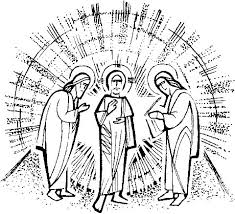
In Luke, the transfigured Jesus shows us what that heavenly reality will be like. It is a kind of glorious belonging that Peter wants to hold on to … to capture in a tent.

Jesus took Peter, John, and James
and went up the mountain to pray.
While he was praying his face changed in appearance
and his clothing became dazzling white.

Luke 9:28

But the Creator makes it clear this dwelling and citizenship exists only in the heart of Christ where we are called to listen and live our lives.

While Peter was still speaking,
a cloud came and cast a shadow over them,
and they became frightened when they entered the cloud.
Then from the cloud came a voice that said,
“This is my chosen Son; listen to him.”

Luke 9:34-35

These readings confirm that, in God, we are a people not bound by borders, ethnicities, religious cult, or any other human categorization.

Every human being belongs to God and is called to live in the fullness of that Creation. This is our shared Divine citizenship demanding a reverent mutuality for one another’s lives.


Think about that in contrast to the incomprehensible outrage of Putin’s unprovoked war against the Ukrainian people. Think about it relative to the many armed conflicts in Africa, Asia and Latin and South America.

Think of our Oneness in God compared to talk of border walls, ethnic and religious bans, white supremacy, anti-semitism, islamophobia and all the other manufactured ways we try to isolate people from this Divine citizenship which makes us brothers and sisters in God.

On this Sunday when our readings remind us of where and to whom each of our hearts belongs, let us pray for our world – for those suffering from war and isolation, and for the unfortunate lost souls executing that suffering. In differing ways, each of them, and we, need continuing redemption.


Poetry: The Man He Killed – Thomas Hardy

Had he and I but met
By some old ancient inn,
We should have sat us down to wet
Right many a nipperkin!

But ranged as infantry,
And staring face to face,
I shot at him as he at me,
And killed him in his place.

I shot him dead because –
Because he was my for,
Just so: my foe of course he was;
That’s clear enough; although

He thought he’d ‘list, perhaps,
Off-hand like – just as I –
Was out of work — had sold his traps —
No other reason why.

Yes; quaint and curious war is!
You shoot a fellow down
You’d treat if met where any bar is,
Or help to half-a-crown.


Music: The Sins of War – Timothy Shortell