Today, in God’s Lavish Mercy, we have powerful readings – they get really serious about repentance!
In our first reading, Moses has been on a kind of decades-long sabbatical on his father-in-law’s homestead. After the young glory days of Egypt, and the ensuing drama that exiled him, Moses had settled into being a humble shepherd in Midian. He probably wasn’t expecting a fiery, direct telegram from God.
But God never gives up on the eternal plan for us. So God, divinely expert at getting our attention, conflagrates a bush right in front of Moses. Supposedly, it was not that unusual for this type of bush to spontaneously combust in the desert heat. What was unusual was for it not to be consumed by the fire.
God then delivers a message of overwhelming fidelity to Moses:
Thus shall you say to the Israelites: The LORD, the God of your fathers, the God of Abraham, the God of Isaac, the God of Jacob, has sent me to you. This is my name forever; thus am I to be remembered through all generations.
Because of God’s mercy and fidelity, the Israelites – and Moses – are getting another chance to live in covenant with God.
In our Gospel, Jesus tells his followers not to ignore such chances. He reminds his listeners that life is fragile and transitory. If we haven’t acted on God’s invitation to grace, we might lose the opportunity. Again, using the symbol of a tree…
Jesus told them this parable: “There once was a person who had a fig tree planted in his orchard, and when he came in search of fruit on it but found none, he said to the gardener, ‘For three years now I have come in search of fruit on this fig tree but have found none. So cut it down.
If we look back over our lives, we might realize that there have been burning bushes all over the place – times and events where life offered us a choice between grace or sin, smallness of heart, and selfishness. When we chose grace, the bush kept burning and was not consumed. It lit our way to deeper covenant with God.
These final weeks of Lent offer us countless encouragements to look for God’s Fire in our hearts and to go deeper toward the Light. Let’s not ignore them.
Poetry: Burning Bush by Karle Wilson Baker, American poet, (1878 – 1960)
This poem refers to the plant “burning bush”, but carries sentiments touching on faith, hope and peace similar to our readings.
My heart, complaining like a bird, Kept drooping on her weary nest: ” Oh, take me out under the sky, Find me a little rest! “
I took her out under the sky, I climbed a straggling, sandy street, Where little weathered houses sag, And town and country meet,
And in the corner of a yard Unkempt, forlorn, and winter-browned, A single sprig of Burning Bush Thrust up from the bare ground.
It bore no leaf as yet — one flower, Three pointed buds of pure rose-flame: Up whirred my heart, circled in air, Back to my bosom came.
And that was all I showed to her — I could not find another thing — But, ” Take me home again, ” she cried, ” And I will sing and sing! “
Today, in God’s Lavish Mercy, in Isaiah’s prophecy, God addresses some of the most famous sinners in the Bible — the residents of Sodom and Gomorrah. And the Divine manner of that address is both gentle and direct…
Come now … let us set things right!
Come now, let us set things right, says the LORD: Though your sins be like scarlet, they may become white as snow; Though they be crimson red, they may become white as wool. If you are willing, and obey, you shall eat the good things of the land; But if you refuse and resist, the sword shall consume you: for the mouth of the LORD has spoken!
Isaiah 1:18-20
Setting things right! Aren’t there times in our lives when we long for that? Not in the sense of vengeance or some vigilante justice, but rather in the sense of balance, equity, peace, and understanding in our lives.
Some things go wrong in our lives – that’s just the way it is. And sometimes we struggle endlessly and futilely to realign them.
Even in the most tranquil and “together” lives, there are places of irresolution – little knots in our life story of “why” and “why not”; of “if” and “if only”.
These may be places where we can’t really “forget” and so have not really forgiven. They may be nagging questions left unanswered because we hadn’t the courage to ask. They may be reasons we wanted to explain but no one wanted to listen. They may be excuses or pretenses we have made for so long that we have begun to believe them ourselves.
In almost all such instances, a scarlet concupiscence is at the root of our suffering or pain – sin, not only in the other, but in ourselves that longs to be made white as snow.
In many such cases, the time passes when we might reach out to the other for mutual healing. Death, distance, stubborn resistance and other walls may block us from worldly reconciliation.
But in God’s realm, healing is still possible, as is the power of our desire for the other to be healed with us.
in Isaiah’s beautiful passage, God invites us to full and eternal wholeness. That wholeness is achieved through our willingness to be open before God and to practice obedient listening in our prayer.
If you are willing, and obey, you shall eat the good things of the land.
Isaiah 1:19
Let’s listen to and trust the awesome invitation in Isaiah: “Come now, let us set things right” … come to Me where I will allow you to forgive yourself as I forgive you. Let us begin to untie any grace-resistant knot in your heart. Untied, it also frees the other to seek their own healing.
Poetry: Forgiveness – George MacDonald
God gives his child upon his slate a sum –
To find eternity in hours and years;
With both sides covered, back the child doth come,
His dim eyes swollen with shed and unshed tears;
God smiles, wipes clean the upper side and nether,
And says, ‘Now, dear, we’ll do the sum together!’
Today, in God’s Lavish Mercy, our readings are about types of citizenship, that condition of knowing we are fully and irrevocably home.
In Genesis, Abraham is given a land for himself and his descendants as a sign of God’s abiding Presence.
“I am the LORD who brought you from Ur of the Chaldeans to give you this land as a possession.”
Genesis 15:5
In Philippians, Paul tells us that, truly, “our citizenship is in heaven”.
But our citizenship is in heaven, and from it we also await a savior, the Lord Jesus Christ.
Philippians 3:20
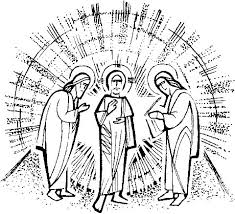
In Luke, the transfigured Jesus shows us what that heavenly reality will be like. It is a kind of glorious belonging that Peter wants to hold on to … to capture in a tent.
Jesus took Peter, John, and James and went up the mountain to pray. While he was praying his face changed in appearance and his clothing became dazzling white.
Luke 9:28
But the Creator makes it clear this dwelling and citizenship exists only in the heart of Christ where we are called to listen and live our lives.
While Peter was still speaking, a cloud came and cast a shadow over them, and they became frightened when they entered the cloud. Then from the cloud came a voice that said, “This is my chosen Son; listen to him.”
Luke 9:34-35
These readings confirm that, in God, we are a people not bound by borders, ethnicities, religious cult, or any other human categorization.
Every human being belongs to God and is called to live in the fullness of that Creation. This is our shared Divine citizenship demanding a reverent mutuality for one another’s lives.
Think about that in contrast to the incomprehensible outrage of Putin’s unprovoked war against the Ukrainian people. Think about it relative to the many armed conflicts in Africa, Asia and Latin and South America.
Think of our Oneness in God compared to talk of border walls, ethnic and religious bans, white supremacy, anti-semitism, islamophobia and all the other manufactured ways we try to isolate people from this Divine citizenship which makes us brothers and sisters in God.
On this Sunday when our readings remind us of where and to whom each of our hearts belongs, let us pray for our world – for those suffering from war and isolation, and for the unfortunate lost souls executing that suffering. In differing ways, each of them, and we, need continuing redemption.
Poetry: The Man He Killed – Thomas Hardy
Had he and I but met By some old ancient inn, We should have sat us down to wet Right many a nipperkin!
But ranged as infantry, And staring face to face, I shot at him as he at me, And killed him in his place.
I shot him dead because – Because he was my for, Just so: my foe of course he was; That’s clear enough; although
He thought he’d ‘list, perhaps, Off-hand like – just as I – Was out of work — had sold his traps — No other reason why.
Yes; quaint and curious war is! You shoot a fellow down You’d treat if met where any bar is, Or help to half-a-crown.
Today, in God’s Lavish Mercy, our readings could confuse us with their threads of legalistic logic. We see several examples of “if-then” admonitions that can make us picture God as an accountant measuring every choice we make.
If the wicked man turns, … then he shall surely live If the virtuous man turns, … then none of his good deeds shall be remembered. If you, O Lord, mark iniquities … then who can stand. If you go to the altar unreconciled … then leave and be reconciled
Sometimes, we can get obsessive about the “if-then” aspects of religion. And IF we do, THEN we probably miss the whole point. Because folded in today’s “if-then” seesaws is the truth of these passages: that the Lord does NOT sit miserly in Heaven to mark our iniquities.
God measures the righteousness of love.
Thus says the LORD, “Let not a wise man boast of his wisdom, and let not the mighty man boast of his might, let not a rich man boast of his riches; but let him who boasts boast of this, that he understands and knows Me, that I am the LORD who exercises lovingkindness, justice and righteousness on earth; for I delight in these things,” declares the LORD.
Jeremiah 9: 23-24
Today’s Responsorial Psalm offers us a beautiful prayer for today as we pray in the embrace of God’s Lavish Mercy:
I trust in the LORD; my soul trusts in his word. My soul waits for the LORD more than sentinels wait for the dawn. Let Israel wait for the LORD. For with the LORD is kindness and with him is plenteous redemption; And he will redeem Israel from all their iniquities.
Psalm 130: 5-7
Let’s wait for the Lord today to see how God’s Grace invites us to the righteousness of Love.
Poetry: Measurement by Ella Hines Stratton
Great tasks are but seldom given out, Great deeds are but for the few, Yet the little acts, not talked about, May need a faith as true.
Some things are better for being small, For a breath who wants a cyclone? And the flower which would die in a water-fall Grows bright with a drop alone.
The small is not always a little thing— The stroke of a pen may move A crown from off the brow of a king, A government from its groove.
At times our measurement cannot be right, For, when tried by the Master’s test, So little a gift as a widow’s mite Out-balances all the rest.
And whether a thing be great or small As none of us may plan, It is safe to do, what we do at all, The very best that we can.
Music: Everlasting Love – Mark Hendrickson & Family (Lyrics below)
Today, in God’s Lavish Mercy, we are invited to be like God:
The LORD said to Moses, “Speak to the whole assembly of the children of Israel and tell them: Be holy, for I, the LORD, your God, am holy.
Leviticus 19:1
Our first reading goes on to tell us how to be a decent person.
Don’t steal, lie, or cheat Pay just wages Respect and help those physically burdened Be impartial and just Defend life Don’t slander, hate, take revenge, or hold a grudge
Basically, the message is about kindness … deep kindness, the type that comes from realizing how infinitely kind God is to us.
Leviticus, after a long list of practical examples, sums it up:
You shall love your neighbor as yourself. I am the LORD.
Leviticus 19:18
Our Gospel tells us what happens when we make the choice to take the Old Testament advice — or not.
We are all familiar with the parable of the sheep and the goats. And we all hope our scorecard gets us into the right herd “When the Son of Man comes in his glory, and all the angels with him …”
In this parable, Jesus puts the advice of Leviticus into practical form for his followers. But he adds one dynamic element that not only invites but impels our wholehearted response:
Amen, I say to you, what you did not do for one of these least ones, you did not do for me.
Matthew 25:40
Leviticus invites us to become holy as God is holy. But Jesus reveals the secret that this Holy God lives in the poor, hungry, homeless, imprisoned and sick. By embracing these most beloved of God, we find the path to holiness.
Poetry: When Did I See You – Renee Yann, RSM
When Did I See You … (Woman Who Is Homeless)
In the bitter rain of February I sat inside a sunlit room, and offered You warm prayer.
Then, she passed outside my window dressed too lightly for the wind, steadied on a cane, though she was young.
She seemed searching for a comfort, unavailable and undefined. The wound of that impossibility
fell over her the way it falls on every tender thing that cries but is not gathered to a caring breast.
Suddenly she was a single anguished seed of You, fallen into all created things.
Gathering my fallen prayer, I wear the thought of her like cracked earth wears fresh rain.
I’ve misconstrued You, Holy One, to whom I spread my heart
as if it were a yearning field… Holy One, already ripe within her barest, leanest yearning.
Today, in God’s Lavish Mercy, Isaiah continues his advice begun in yesterday’s reading. When he finishes the list of things we should and should not do, Isaiah tells us how God will respond:
Then light shall rise for you in the darkness, and the gloom shall become for you like midday; Then the LORD will guide you always and give you plenty even on the parched land. God will renew your strength, and you shall be like a watered garden, like a spring whose water never fails. The ancient ruins shall be rebuilt for your sake, and the foundations from ages past you shall raise up ~
Isaiah 58: 8-12
Oh, who can resist these glorious Isaiahan lines. It’s a beautiful picture, isn’t it? To imagine it offers us great encouragement as we limp out of winter toward a spring horizon.
Each of our readings today carries a sense of shaking off old and lifeless ways to stretch toward a new promise.
The psalmist asks for God’s help in that stretching.
Teach me your way, O Lord, that I may walk in your truth.
Psalm 86:11
As I thought about “stretching” in prayer this morning, an image came to me of an experience some of you might share. After my knee replacement, I had to learn to streeeeetch my old ligaments around the new implant. It wasn’t exactly “hell” to do so, but it was at least the edge of purgatory! My perseverance paid off though when I began to walk freely and painlessly.
Stretching into the depths of God also takes a full measure of willpower and HOPE. We can hear these pleas in the rest of Psalm 86:
Incline your ear, O LORD; answer me, for I am afflicted and poor. Keep my life, for I am devoted to you; save your servant who trusts in you. You are my God.
Have mercy on me, O Lord, for to you I call all the day. Gladden the soul of your servant, for to you, O Lord, I lift up my soul.
They say that rehabbing from knee replacement surgery is a lot easier if you have exercised and kept in fair shape beforehand. In our Gospel, dear Matthew does a total , full-hearted stretch — one that he must have been preparing for all his life. Otherwise, how could he have been so immediately responsive to Christ’s unexpected invitation?
Jesus saw a tax collector named Levi sitting at the customs post. He said to him, “Follow me.” And leaving everything behind, he got up and followed him.
Luke 5:27
Visualizing this scene, we can almost see Matthew not only get up — but his spirit actually jump up at the amazing invitation of God!
Lent is a time for us to do some jumping into grace — so many invitations come to us in this season’s beautiful scriptures and rituals. So many inspirations to grow come to us in our changing seasons! Let’s not be so distracted by our daily un-importances that we miss the call to streeeetch!
Poetry: St. Matthew by John Keble – this is a section of the poem which reflects on today’s Gospel passage.Matthew is the “meek publican” of the second stanza below. Amid all the clamor of the world around him, Keble’s Matthew has a clear eye and heart for Christ. John Keble, (1792 – 1866) was an English churchman and poet, one of the leaders of the Oxford Movement. Keble College, Oxford, was named after him.
There are in this loud stunning tide
Of human care and crime,
With whom the melodies abide
Of th' everlasting chime;
Who carry music in their heart
Through dusky lane and wrangling mart,
Plying their daily task with busier feet,
Because their secret souls a holy strain repeat.
How sweet to them, in such brief rest
As thronging cares afford,
In thought to wander, fancy-blest,
To where their gracious Lord,
In vain, to win proud Pharisees,
Spake, and was heard by fell disease-
But not in vain, beside yon breezy lake,
Bade the meek Publican his gainful seat forsake:
At once he rose, and left his gold;
His treasure and his heart
Transferred, where he shall safe behold
Earth and her idols part;
While he beside his endless store
Shall sit, and floods unceasing pour
Of Christ's true riches o'er all time and space,
First angel of His Church, first steward of His Grace.
Nor can ye not delight to think
Where He vouchsafed to eat,
How the Most Holy did not shrink
From touch of sinner's meat;
What worldly hearts and hearts impure
Went with Him through the rich man's door,
That we might learn of Him lost souls to love,
And view His least and worst with hope to meet above.
These gracious lines shed Gospel light
On Mammon's gloomiest cells,
As on some city's cheerless night
The tide of sunrise swells,
Till tower, and dome, and bridge-way proud
Are mantled with a golden cloud,
And to wise hearts this certain hope us given;
“No mist that man may raise, shall hide the eye of Heaven.”
And oh! if e'en on Babel shine
Such gleams of Paradise,
Should not their peace be peace divine,
Who day by day arise
To look on clearer heavens, and scan
The work of God untouch'd by man?
Shame on us, who about us Babel bear,
And live in Paradise, as if God was not there!
Music: Stretch Out – Gospel/Soul song by the Institutional Radio Choir
The Institutional Radio Choir was a gospel choir that recorded between 1962-2003. The choir began in 1954 at the Institutional COGIC in Brooklyn, NY, under Bishop Carl E Williams Sr. After recording an album entitled: “Well Done,” the choir backed up Shirley Caesar on her two albums, I’ll Go and My Testimony. Caesar allotted the choir’s director two songs on the album, one of which was entitled (When Trouble Comes) Stretch Out. The song went on to become a gospel standard, especially in Pentecostal circles. The choir went on to record over 20 albums, most of which charted in the Top 10 on the Gospel Billboard charts.
When troubles come and storms begin to rise Hold on and learn to stretch out Oh keep on fasting, keep on praying Hold on and learn to stretch out
When Satan get on your track And tries to turn me back I won’t worry, i won’t fret. i just stretch out Stretch out, oh stretch out
When days are dark and cloudy are my skies I hold on and learn to stretch out Oh keep on fasting, keep on believing Hold on and learn to stretch out
Cause the race isn’t given to the swift Neither is it given to the strong But to him that endureth to the end Stretch out, oh stretch out
When troubles come and storms begin to rise Hold on and learn to stretch out Oh keep on fasting keep on believing Hold on and learn to stretch out
Cause the race isn’t given to the swift Neither is it given to the strong But to him that endureth to the end Stretch out, oh stretch out
When i am lost, when i am sad Jesus is there, he’ll make me glad The Lord won’t deceive you The Lord he won’t leave you
Stretch out
Stretch out Stretch out Stretch out on his word
Stretch out Stretch out Stretch out Oh, stretch out
Today, in God’s Lavish Mercy, the word “HOPE” binds our readings together.
Blessed be the God and Father of our Lord Jesus Christ, who in his great mercy gave us a new birth to a living hope through the resurrection of Jesus Christ from the dead, to an inheritance that is imperishable, undefiled, and unfading, ept in heaven for you…
1 Peter 1:3
Wow! That’s uplifting isn’t it!
But praying with this passage, I am aware of how hard it is to really define hope. We can get it mixed up with wishing or imagining.
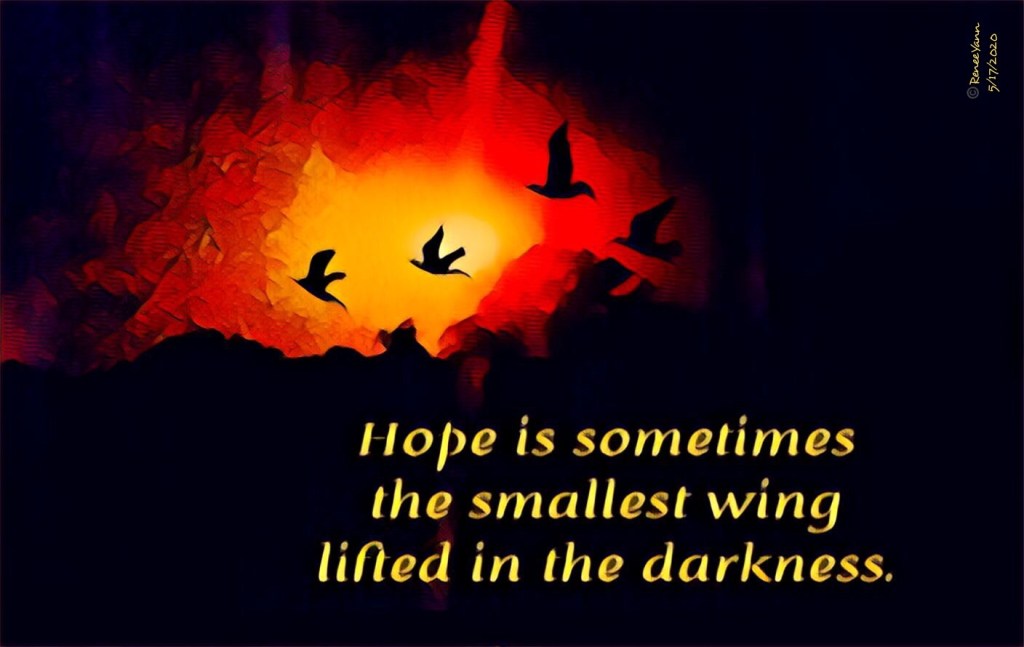
Hope is very different, and much more powerful, than wishing. It is a share in the power of God to animate our world with divine life.
When we wish, we imagine better things and often do what we can to make them happen. Sometimes our prayers take the form of wishes – our desire for people or circumstances to be well or better. Those wishes may or may not come true. And if they don’t, we may lose what we incorrectly defined as “hope”.
We see that kind loss happen in the young man from our Gospel today. He wishes to be a better person. He wishes to truly center his life on God. He even takes the first step to make his wish come true by asking Jesus for advice:
As Jesus was setting out on a journey, a man ran up, knelt down before him, and asked him, “Good teacher, what must I do to inherit eternal life?”
Mark 10:17
Jesus immediately loves this sincere young man. But says tells him that he has too many “wishes” cluttering his hope for God. Jesus encourages him to clear out space in his life for God’s Presence to transform him. Then everything will become an expression of the divine life within him.
Jesus, looking at him, loved him and said to him, “You are lacking in one thing. Go, sell what you have, and give to the poor and you will have treasure in heaven; then come, follow me.”
Mark 17:21
Sadly, the man cannot summon the spiritual strength to tap into his gift of hope – to rely fully on God in his life. The gift of hope is within him, as it is within all of us. But the way to it is so tangled with all his possessions that he despairs of finding it.
At that statement, his face fell, and he went away sad, for he had many possessions.
Mark 17:22
The Catholic encyclopedia says this:
Hope is defined to be a Divine virtue by which we confidently expect, with God’s help, to reach eternal felicity as well as to have at our disposal the means of securing it.
Being a “Divine virtue” means that hope, like faith and love, is given by God to each of us as a share in God’s own nature. It’s like a “divine” family trait that marks us as children of God.
When we see a child that looks exactly like a parent, we might hear people say, “You could never deny him. He looks exactly like you!” That’s how it is with the “divine virtues”. They allow people to see God in us and so to deepen their own faith.
Hope is that confidence in God which is so complete that it does not have to be proven by miracles or fulfilled wishes. Hope endures in all circumstances. It throbs within us like sacred DNA. All we have to do is clear the way for it to shine.
Poetry: Two of my favorite poems today:
Emily Dickinson, in her masterfully woven metaphor, says that hope is feathered:
“Hope” is the thing with feathers – That perches in the soul – And sings the tune without the words – And never stops – at all –
And sweetest – in the Gale – is heard – And sore must be the storm – That could abash the little Bird That kept so many warm –
I’ve heard it in the chillest land – And on the strangest Sea – Yet – never – in Extremity, It asked a crumb – of me.
And one of my favorite poets, Lisel Mueller, says that hope is “all we know of God”:
It hovers in dark corners before the lights are turned on, it shakes sleep from its eyes and drops from mushroom gills, it explodes in the starry heads of dandelions turned sages, it sticks to the wings of green angels that sail from the tops of maples.
It sprouts in each occluded eye of the many-eyed potato, it lives in each earthworm segment surviving cruelty, it is the motion that runs from the eyes to the tail of a dog, it is the mouth that inflates the lungs of the child that has just been born.
It is the singular gift we cannot destroy in ourselves, the argument that refutes death, the genius that invents the future, all we know of God.
It is the serum which makes us swear not to betray one another; it is in this poem, trying to speak.
Today, in God’s Lavish Mercy, hidden in our readings, are three challenges:
Where do we place our FAITH? How do we fire our HOPE? How do we LOVE?
In our Jeremiah reading, an unfortunate person has placed faith in an untrustworthy “friend”, and the results – typical of Jeremiah – are dire. But the prophet goes on to say that the one who puts trust and faith in the Lord will flourish like a tree near running water.
In the reading from Corinthians, Paul has some strong words about hope:
If for this life only we have hoped in Christ, we are the most pitiable people of all.
1 Corinthians 15:19
That sentence is powerful! It can be a life-long meditation.
In other words, where is our hope focused? Do we hope for comfort, success, healing, peace only for this earthly life? If so, we are missing the point, Paul says. Our one true hope is to be united with God in eternal life and our choices should lead to that fulfillment.
In our Gospel, Jesus shows us how to love by placing before us the “least ones” whom he loves best. We too are to love and comfort those who are poor, hungry, bereaved and despised by the heartless.
Today’s readings invite us to look at our life. Is it blossoming with joy, grace and spiritual vitality? Or are we struggling with all the doubts, worries, dramas and depression that come from a self-absorbed life?
Maybe, like me, you sometimes look at a person carrying great difficulty in their lives and wonder at their joy. How can they maintain that trust and joy in the midst of their challenges? These readings offer an answer. They have put their faith and hope in the right place. They have learned to love like God loves.
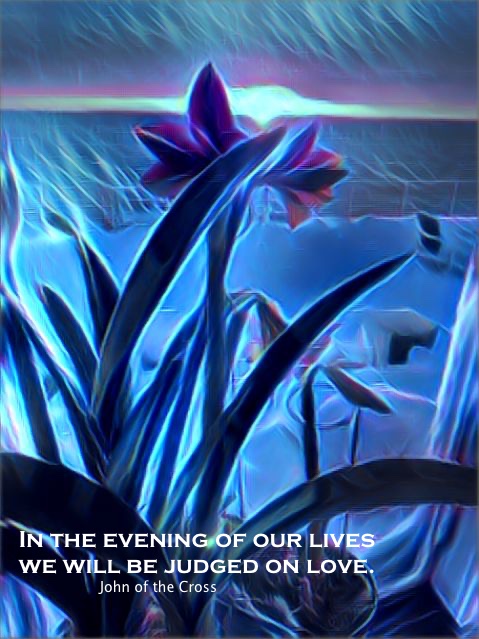
St. John of the Cross
Poetry: Bernard of Clairvaux, On the Song of Songs, vol. 4, 83.2.4.
I love because I love: I love that I may love… Love is the only one of the motions of the soul, of its senses and affections, in which the creature can respond to its Creator, even if not as an equal, and repay God’s favor in some similar way …
Music: Faith, Hope and Love ~ David Ogden ( Lyrics below)
Faith, hope, and love: let these remain among you. Faith, hope, and love: the greatest of these is love.
The love of Christ has gathered us together; let us rejoice and be glad in him. Let us fear and love the living God, and love each other from the depths of the heart.
When we are together, we should not be divided in mind; Let there be an end to bitterness and quarrels, and in our midst be Christ our God.
In company with the blessed, may we see your face in glory, pure and unbounded joy for ever and ever.
I give you a new commandment, love one another as I have loved you. Faith, hope, and love, let these remain among you. Faith, hope and love; the greatest of these is love.
Today, in Mercy, our Gospel gives us one my favorite portrayals of Jesus. It’s what I think of as “down in the dirt with us” Jesus. Let me give you some background on the image.
Me and Petey 😉 1955, looking a lot cleaner and official than we really were!
When I was a kid in North Philly, my buddy’s dog was hit by a car. We were playing baseball in a cinder lot (that’s where the railroad dumped its ashes in the old days when trains ran on coal). We were about a half block away when we heard the screeching. We turned and watched the guilty car speed off without a moment’s hesitation.
Petey ran screaming toward his dog, the rest of us cinder-dusty kids streaming behind him. I can still see Petey lie down beside that whimpering mutt who had been tossed into a muddy gully along Philip Street. He cradled the bruised head and whispered to the frightened eyes. Then Petey quietly said, “Get my Dad”, as he stroked Lightening’s heaving back.
As I remember that moment today, Petey reflects the image of the Divine Healer who – muddied and bloodied — has taken a place beside all of us as we suffer. He is unafraid of our mud and cinders. He is touched by our mumblings and tears.
In today’s Gospel, there is stunning humanness. The suffering man doesn’t just ask for a miracle. He asks for a hand to be laid on him, for a touch, for a connection he can feel. And Jesus hears his deep human need.
People brought to Jesus a deaf man who had a speech impediment who begged him to lay his hand on him.
Mark 7:32
Be Opened – Thomas Davidson (1872)
Some miracles are accomplished by a fleshless, electric word shot through the air. But not this one.
With this lonely, isolated man, feel Jesus caress your head, perhaps finger the ears that have heard so much criticism and frustration. Feel Jesus touch your tongue, twisted sometimes in its attempts to speak your meaning into the world. Receive the surprising gift of Divine spittle that intends to insure, “I am part of you now. You will never be alone again.”
Hear Christ’s groan as he prays for you in sounds that plead, “Get my Dad. ABBA, Father.”
He took him off by himself away from the crowd. He put his finger into the man’s ears and, spitting, touched his tongue; then he looked up to heaven and groaned, and said to him, “Ephphatha!” (that is, “Be opened!”)
Mark 7:32-34
Hear the definite pronouncement of your liberation from anything that tongue-ties, heart-ties, soul-ties your life: “Ephphatha!” (that is, “Be opened!”)
Poetry: I believe in all that has never been spoken – Rainer Maria Rilke ~ from Rilke’s Book of Hours: Love Poems to God, translated by Anita Barrows and Joanna Macy
I believe in all that has never yet been spoken.
I want to free what waits within me
so that what no one has dared to wish for
may for once spring clearwithout my contriving.
If this is arrogant, God, forgive me,
but this is what I need to say.
May what I do flow from me like a river,
no forcing and no holding back,
the way it is with children.
Then in these swelling and ebbing currents,
these deepening tides moving out, returning,
I will sing you as no one ever has,
streaming through widening channels
into the open sea.
Today, in God’s Lavish Mercy, our readings are woven through with the theme of “coming home”.
In 1 Kings, Solomon believes he has constructed the perfect home for God:
Then Solomon said, “The LORD intends to dwell in the dark cloud; I have truly built you a princely house, a dwelling where you may abide forever.”
1 Kings 8:13
Psalm 132 invites God to dwell in that home, and in the home of the psalmist’s heart:
Lord, go up to the place of your rest!
Psalm 132: 8
And in our Gospel, Jesus sails toward a quiet, homey place for peace and quiet:
After making the crossing to the other side of the sea, Jesus and his disciples came to land at Gennesaret and tied up there.
Mark 6:53
Thinking of home, and sailing, and sea, my prayer this sunny morning is filled with thoughts of Ann. We, with fifty other young and vibrant souls, entered the convent together almost 60 years ago.
Among us, Ann was probably the only one who had ever sailed a boat. She was the child of surf and sand while most of us were children of bricks and trolley tracks.
She told me way back then how much she loved and missed the sea spray anointing her face as she sailed. She was then, and remained, a ray of freedom and delight.
Ann died a week ago after a Sunlit Life in God’s Mercy. I can almost see her grave from my window behind the Motherhouse, especially on this brilliant morning.
Reading Mark today, and picturing Jesus tie up his boat at the golden shore, I think of Ann on heaven’s morning – Spirit’s seaspray and sunlight come fully home.















 Lavish Mercy