Jesus went around to all the towns and villages, teaching in their synagogues, proclaiming the Gospel of the Kingdom, and curing every disease and illness. At the sight of the crowds, his heart was moved with pity for them because they were troubled and abandoned, like sheep without a shepherd. Matthew 9:32-38
Have you ever felt your heart constrict or your belly drop in the face of deep sadness or shock? If so, you have felt “splancha”, the Greek word for that profound compassion that wells up from our innards for the sake of a suffering person.
Matthew tells us that Jesus felt “splancha” for the crowds because they were troubled and abandoned. They had lost their way to God and had no one to help them find it. Thus he reaches out to heal and teach them about God’s Lavish Mercy.
Today, in that same Lavish Mercy: By the grace of God may we, and all who are in need of grace, be healed of trouble and abandonment to find our way to God through the Mercy of Jesus.
Poetry: Mercy by John F. Dean
Unholy we sang this morning, and prayed
as if we were not broken, crooked
the Christ-figure hung, splayed
on bloodied beams above us;
devious God, dweller in shadows,
mercy on us;
immortal, cross-shattered Christ—
your gentling grace down upon us.
Music: Merciful God – The Gettys and Stuart Townend
I will espouse you to me forever: I will espouse you in right and in justice, in love and in mercy; I will espouse you in fidelity, and you shall know the LORD. Hosea 2:21-22
The prophet Hosea is a consummate poet. He uses the metaphor of espousal to convey the profound and merciful love of God for the people. Hosea contemplates his own life and his experience of marital infidelity to more deeply understand the relationship between a forgiving God and a false-hearted people. The language is beautiful, powerful, at times unsettling. It is intended to turn Israel’s heart – and ours – fully toward God’s love in repentance and fidelity.
Today, in God’s Lavish Mercy
God is the Lover and Spouse of our souls, of the whole Church, and of all Creation. In trust and openness, let us give ourselves to that Divine Mercy in every aspect of our lives.
Poetry: Hosea and Gomer by John Piper
This beautiful poem helps us more deeply understand the Book of Hosea.
The old man and his wife sat by The winter fire and looked out high Above the plains of Ephraim, And saw around the last regime Of Israel the shadows snake Their way from east to west and take Possession of Samaria. “How long until Assyria,’ They thought, “would break Hoshea’s rod, And violate the wife of God?”
But strange as it may seem, the doom They saw across the land left room For hope. And when they looked into Each other’s eyes, as they would do At night, they knew, as none could know But they, that God would bend his bow Against the charms of foreign men, And take his faithless wife again. They knew it could and would be done, As surely as the rising sun Drives darkness back unerringly, And drowns it in the western sea. They knew, because they had rehearsed The tragedy and played it first Themselves with passion and deceit.
“It’s true that life is far more sweet,” Hosea thought, “when it is lost, Then bought again at dreadful cost; And love grows strong when it must wait, And deep when it is almost hate.”
Such things as these he often said To Gomer as they watched the red And crimson echoes of the sky Descend Mount Tabor’s cliffs and die In darkness far below. And she Would say to him, “Your love for me Was like a mountain waterfall, And I the jagged stone. Of all The knives and hammers once applied None made me smooth or clean. They tried, But harlotry was in my blood, Until your love became a flood Cascading over my crude life And kept me as your only wife.”
They knew as none but they could know What it would mean that long ago The Lord allowed his love to swell, And married faithless Israel.
The passing of the years now found The children grown and gathered ’round This night: Jezreel and Loammi, Hosea’s sons, and at his knee Loruhamah. The room was sweet With memories, and each replete With pleasure and with ample pain. Among the memories one main Experience above the rest Embraced them all. It was the best; Indeed it was the mountain spring Of every happy stream from which The family ever drank, and rich With hope. It was Hosea’s love. The children stood in wonder of The way he loved, and Gomer too. But this had not always been true.
Hosea used to say, “It’s hard To be a seer, and prophet bard. The price is high when he must sing A song of ruin over everything In lyrics written with his life And lose his children and his wife.”
And so it was, Hosea heard The Lord. It was the strangest word A holy prophet ever got: And every pointed precept shot Like arrows at Hosea’s life: “Go take a harlot for your wife,” Thus says the Lord, “And feel with me The grief and pain of harlotry. Her father’s name is Diblaim; He makes fertility with cream And raisin cakes. He will not see Her go without a price, for she Has brought him profits from her trade. Now go, and let her price be paid; And bring her back and let her bear Your son. Call him Jezreel. For there Is coming soon a day when I Will strike and break the bloody thigh Of Jehu’s brutal house, and seal With blood the valley of Jezreel.
And after that, though she’s defiled. Go in, and get another child, And make your tender face like rock. Call her Loruahmah and lock Your heart against all sympathy: `Not pitied’ is her name. No plea From faithless Israel will wake My sympathy till I forsake My daughter in the wilderness.
Now multiply once more distress: Hosea, go beget a son, For there is yet one child to shun, And call him Loammi, in shame, For `Not My People’ is his name.”
Hosea used to walk along The Jordan rim and sing the song His father Beeri used to sing. Sometimes the tune and truth would bring Him peace, and he would pause and look At all the turns the Jordan took, To make its way down to the sea, And he would chant from memory:
Think not, my son, that God’s great river Of love flows simply to the sea, He aims not straight, but to deliver The wayward soul like you and me. Follow the current where it goes, With love and grace it ever flows. The years went by, the children grew, The river bent and Gomer knew A dozen men. And finally She left and traveled to the sea, And sold herself to foreign priests Who made the children serve at feasts Until they had no shame. And then The God of grace came down again, And said, “Hosea, go, embrace Your wife beside the sea. And place Your hand with blessing on the head Of Loammi, and raise the dead Loruhamah to life in me, And tell Jezreel that I will be For him a seed of hope to sow In righteousness. Hosea, go, The gracious river bends once more.”
And so the prophet loved these four Again, and sought them by the sea, And bought them with the equity Of everything he owned. That was The memory tonight, because Hosea loved beyond the way Of mortal man. What man would say, “Love grows more strong when it must wait, And deeper when it’s almost hate.”
Jezreel spoke softly for the rest, “Father, once more let us be blessed. What were the words from long ago That gave you strength to love us so? Would you please bless us with your rhyme, And sing it for us one more time?”
“Think not, my son, that God’s great river Of love flows simply to the sea, He aims not straight, but to deliver The wayward soul like you and me. Follow the current where it goes. With love and grace it ever flows.” “And children,” Gomer said with tears, “Mark this, the miracle of years.” She looked Hosea in the face And said, “Hosea, man of grace, Dark harlotry was in my blood, Until your love became a flood Cascading over my crude life And kept me as your only wife. I love the very ground you trod, And most of all I love your God.”
This is the lamp of candle four: A bride made ready at the door. A shabby slave waits her embrace, Blood-bought and beautified by grace.
When Jesus came down from the mountain, great crowds followed him. And then a leper approached, did him homage, and said, “Lord, if you wish, you can make me clean.” He stretched out his hand, touched him, and said, “Of course I will do it. Be made clean.” Matthew 8:1-3
This leper, this beautiful soul, trusts that Jesus’s wish is the same as his own. He wants to be clean, to be free of all that may tarnish a life as one passes through the years. And Jesus does share the leper’s wish. He transforms that “wish” into a “will” — “of course, I will do it!”.
Today, in God’s Lavish Mercy: As we look over our lives, perhaps we too carry a few unhealed pockmarks or scars. These may be past grudges, unforgivenesses, or harbored hurts. They may be a current resistance of heart, an indifference to need, an unexamined selfishness.
Like the leper, we may long to be free of any canker that we have carried too long. Jesus wills that for us too. Believing in, learning from, and imitating him is the path to healing.
Poetry: The Leper – John Newton (1725-1807)
Oft as the leper's case I read,
My own described I feel;
Sin is a leprosy indeed,
Which none but Christ can heal.
Awhile I would have passed for well,
And strove my spots to hide;
Till it broke out incurable,
Too plain to be denied.
Then from the saints I sought to flee,
And dreaded to be seen;
I thought they all would point at me,
And cry, Unclean, unclean!
What anguish did my soul endure,
Till hope and patience ceased?
The more I strove myself to cure,
The more the plague increased.
While thus I lay distressed, I saw
The Savior passing by;
To him, though filled with shame and awe,
I raised my mournful cry.
Lord, thou canst heal me if thou wilt,
For thou canst all things do;
O cleanse my leprous soul from guilt,
My filthy heart renew!
He heard, and with a gracious look,
Pronounced the healing word;
I will, be clean - and while he spoke
I felt my health restored.
Come lepers, seize the present hour,
The Saviour's grace to prove;
He can relieve, for he is pow'r,
He will, for he is love.
Give us this day our daily bread; and forgive us our trespasses, as we forgive those who trespass against us; and lead us not into temptation, but deliver us from evil.’
“If you forgive others their transgressions, your heavenly Father will forgive you. But if you do not forgive others, neither will your Father forgive your transgressions.
In these verses, Jesus utters another dangerous prayer: forgive us, God, as we forgive others.
Uh oh! I don’t know about you, but I think we can be pretty bad at forgiveness. It’s so much easier to remember a wrong done to us, to excuse ourselves of any responsibility for it, to fester in its hurt, to calculate a concomitant revenge, to demonize and ostracize the offender.
Jesus says, “Hey, is that the way you want God to forgive you?”
Today, in God’s Lavish Mercy: We examine Jesus’s words in the Our Father to find the secret to forgiveness.
We are all the children of One God, equally and completely loved.
God wills holiness and joy for every one of us.
God will always grant forgiveness to the ready heart.
We live for the hope of heaven, and the circumstances of this world pale in its Light.
Still, in our daily circumstances, we need to be fed by the Spirit in order to find the courage and desire to forgive as God does.
Poetry: Enemies – Wendell Berry
If you are not to become a monster,
you must care what they think.
If you care what they think,
how will you not hate them,
and so become a monster
of the opposite kind? From where then
is love to come—love for your enemy
that is the way of liberty?
From forgiveness. Forgiven, they go
free of you, and you of them;
they are to you as sunlight
on a green branch. You must not
think of them again, except
as monsters like yourself,
pitiable because unforgiving.
Love your enemies and pray for those who persecute you, that you may be children of our Creator God, Who makes the sun rise on the bad and the good, and causes rain to fall on the just and the unjust. Matthew 5:44-45
It must have been so hard to hear and accept Jesus’s words in his Sermon on the Mount. These listening disciples had been raised on the Deuteronomic principle “An eye for an eye and a tooth for a tooth”. What could ever make them turn that principle inside out to do just the opposite of what they had always thought? What would make us turn from this kind of “justice”? After all, it’s even-steven, isn’t it?
In Jesus Christ, there is no even-steven. The Mercy of God is given to all of us without limits. It rains from the heart of God over all Creation. Jesus showed us that there is no place in Mercy for quid pro quo justice. If a disciple wants to love like Jesus, this precept is foundational.
Today, in God’s Lavish Mercy: Perhaps we are someplace where we can watch the rain today. If not we can remember how rain falls without distinction over everything within its embrace. So too does God’s Mercy fall on us moving us to be its agents in our world.
Enjoy the Peaceful Rain
Poetry: from The Merchant of Venice – William Shakespeare
The quality of mercy is not strained;
It droppeth as the gentle rain from heaven
Upon the place beneath. It is twice blest;
It blesseth him that gives and him that takes:
'T is mightiest in the mightiest; it becomes
The throned monarch better than his crown:
His sceptre shows the force of temporal power,
The attribute to awe and majesty,
Wherein doth sit the dread and fear of kings;
But mercy is above this sceptred sway;
It is enthronèd in the hearts of kings,
It is an attribute to God himself;
And earthly power doth then show likest God's
When mercy seasons justice.
Jesus said to them: “Offer no resistance to one who is evil. When someone strikes you on your right cheek, turn the other one to them as well. If anyone wants to go to law with you over your tunic, hand them your cloak as well. Should anyone press you into service for one mile, go with theme for two miles. Give to the one who asks of you, and do not turn your back on one who wants to borrow.”
Although the word “reverence” is not specifically mentioned in our readings, it summarizes their core message.
Jezebel has no reverence for human life. She is a conspirator, thief, and murderer. Jezebel has no moral code and only one interest in life – herself.
Jesus calls his followers to be the antithesis of Jezebel. We are to so reverence life and truth that we become like Jesus. We are to be peaceful, non-violent, forgiving, and generous – even toward the “jezebels” of this world.
Today, in God’s Lavish Mercy:
Wow! No easy challenge, but nonetheless essential for discipleship! We ask Jesus to give us insight into any selfishness in our hearts, and the courage to live according to his mandate.
Prose: from Dorothy Day
“The greatest challenge of the day is: how to bring about a revolution of the heart, a revolution which has to start with each one of us?
When we begin to take the lowest place, to wash the feet of others, to love our brothers and sisters with that burning love, that passion, which led to the Cross, then we can truly say, ‘Now I have begun.'”
Children, let us love not in word or speech but in deed and truth. Now this is how we shall know that we belong to the truth and reassure our hearts before him in whatever our hearts condemn, for God is greater than our hearts and knows everything. Beloved, if our hearts do not condemn us, we have confidence in God and receive from him whatever we ask, because we keep his commandments and do what pleases him.
1 John 3:18-22
John makes it so clear and simple, doesn’t he? It’s what we do that matters, not what we say. Jesus said the same thing once when he pointed out a tree to his disciples and said, “By their fruits, you will know them..”
Today, in God’s Lavish Mercy:
Let’s take a good look at our lives, and the lives of those we allow to influence us. Are we like trees bearing good fruit – good deeds of charity, peace, forgiveness, mercy, honesty, respect, encouragement, hope, and fidelity?
If our deeds reflect the opposite of these virtues, John says they condemn us. He calls us to Gospel faithfulness in what we do as well as what we say.
Poetry:
How far that little candle throws his beams! So shines a good deed in a weary world.
William Shakespeare
Music: Good Tree – Hillbilly Thomists (I thought these guys were fascinating! See more about them on their website: https://www.hillbillythomists.com/about)
You can’t gather grapes from a bramble bush Or pick a fig from thorns What I’d like to be Oh, to be a good tree
Some fall in the rocks, on the beaten path Some sink into great soil From a tiny seed Oh, to a good tree
Like a cedar high And mustard wide Where all the birds of the air can hide Find rest inside
Oh, a good tree The beetle bites The black rot strikes From the inside Have your enemies
Oh, if you’re a good tree High and dry Some branches die From time to time A prune’s required If you wanna be Oh, a good tree
Even when I’m old I still will be Still full of sap, still green That’s what I want to be Oh, to be a good tree
By Your word The dark is light The tree of death becomes the tree of life So let it be Oh, to be a good tree Oh, to be a good tree Oh, to be a good tree Oh, to be a good tree Oh, to be a good tree
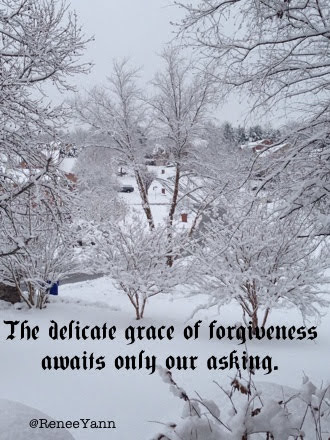
Ah, Equinox! Today our Earth will put away her winter jewels – her cold snow pearls and glistening ice diamonds stored until distant December. With them, she lays aside her cool reserve, the stark elegance of silhouetted trees against a white landscape. She says, “I have finished my silent retreat”.
Instead, Lady Earth unveils her costume jewelry – that improbable mix of pinks, purples, greens and yellows. Even though this morning in Philadelphia, she wraps them in a shimmering chill, we know it hides a riotous, tumbling April.
Every year we wonder if those bare trees and barren hillsides will ever green again. But they do! Spring is the act of “Great Forgiveness”. It is the time when Nature mirrors the Infinite Mercy of her Creator and says, “Fear not, Sweet Earth. I am deeper than your cold. My resilience has redeemed us both for another chance at life”.
We human beings, too, are capable of such resilience. I remember my mother’s infinite patience with an annoying neighbor whose seemingly innocent conversation harbored veiled references to her economic superiority. Little wintry comments like, “It’s a shame you didn’t choose a Hoover. It would make your life so much easier!” Even as a child, I was nettled almost beyond tolerance by her chilly comparisons.
But my mother, who was no push-over and who did not suffer fools gladly, was patient and faithful. She would tell me that Mary never had the love of family and friends that we enjoyed. She helped me understand that sometimes people can’t help showing the December within their hearts if they have never been kindled by another’s kindness. My mother wanted me to live from the “Great Forgiveness” that can warm any cold, indifference, or careless judgment.
At one point when I was still very young, my mother became quite ill and after a long hospitalization, returned home for an extended recuperation. During that time, Mary came every day to cook for our large, working family. Weekly, she cleaned our house with the same decrepit vacuum she had earlier criticized. Without a word, Mary challenged me to learn another lesson about the nature of fidelity and true friendship and the opportunity to give it voice without words.
Years later, I read a quote that captured these lessons: “Always be kind. We never know the battles someone else may be fighting.” These are lessons I remember with gratitude today in this equinox of another “Great Forgiveness”. It is a largesse we can imitate if we simply remember the mercies we have received from the hand of our forgiving God.
One day, while the elders were waiting for the right moment, she entered the garden as usual, with two maids only. Susanna decided to bathe, for the weather was warm. Nobody else was there except the two elders, who had hidden themselves and were watching her. “Bring me oil and soap,” she said to the maids, “and shut the garden doors while I bathe.”
Daniel 13:15-18
“Let the one among you who is without sin be the first to throw a stone at her.” Again he bent down and wrote on the ground. And in response, they went away one by one, beginning with the elders. So he was left alone with the woman before him. Then Jesus straightened up and said to her, “Woman, where are they?
John 8: 7-10
We encounter so much in life that is hidden – motives, ambitions, agendas, pasts, judgments, reactions. We hide these things for all kinds of reasons. The lustful elders hid their actions for fear of discovery and condemnation. The Gospel stone throwers hid their pasts to exonerate themselves by judgment of another.
Today, in God’s Lavish Mercy:
We are reminded that with God nothing is hidden. And nothing needs to be. We can place our lusts, false judgments, and any other shadow-laden weaknesses in God’s Light because that Light is Forgiveness and Healing. That Light will free us to become forgivers and healers ourselves.
Poetry: Peter Quince at the Clavier – Wallace Stevens
Wallace Steven’s poem and Handel’s oratorio indicate the extent to which the tale of Susanna has been culturally interpreted down through the ages.
Just as my fingers on these keys
Make music, so the selfsame sounds
On my spirit make a music, too.

Music is feeling, then, not sound;
And thus it is that what I feel,
Here in this room, desiring you,
Thinking of your blue-shadowed silk,
Is music. It is like the strain
Waked in the elders by Susanna:
Of a green evening, clear and warm,
She bathed in her still garden, while
The red-eyed elders, watching, felt
The basses of their beings throb
In witching chords, and their thin blood
Pulse pizzicati of Hosanna.
II
In the green water, clear and warm,
Susanna lay.
She searched
The touch of springs,
And found
Concealed imaginings.
She sighed,
For so much melody.
Upon the bank, she stood
In the cool
Of spent emotions.
She felt, among the leaves,
The dew
Of old devotions.
She walked upon the grass,
Still quavering.
The winds were like her maids,
On timid feet,
Fetching her woven scarves,
Yet wavering.
A breath upon her hand
Muted the night.
She turned—
A cymbal crashed,
And roaring horns.
III
Soon, with a noise like tambourines,
Came her attendant Byzantines.
They wondered why Susanna cried
Against the elders by her side;
And as they whispered, the refrain
Was like a willow swept by rain.
Anon, their lamps' uplifted flame
Revealed Susanna and her shame.
And then, the simpering Byzantines
Fled, with a noise like tambourines.
IV
Beauty is momentary in the mind—
The fitful tracing of a portal;
But in the flesh it is immortal.
The body dies; the body's beauty lives.
So evenings die, in their green going,
A wave, interminably flowing.
So gardens die, their meek breath scenting
The cowl of winter, done repenting.
So maidens die, to the auroral
Celebration of a maiden's choral.
Susanna's music touched the bawdy strings
Of those white elders; but, escaping,
Left only Death's ironic scraping.
Now, in its immortality, it plays
On the clear viol of her memory,
And makes a constant sacrament of praise.
Music: Guilt trembling spoke my doom – George Frideric Handel
Susanna is an oratorio by George Frideric Handel. Handel composed the music in the summer of 1748 and premiered the work the next season at Covent Garden theatre, London, on 10 February 1749. (Lyrics below.)
Guilt trembling spoke my doom, And vice her joy display’d, Till truth dispell’d the gloom And came to virtue’s aid. Kind Heav’n, my pray’rs receive, They’re due alone to thee, Oppression’s left to grieve, And innocence is free.
Your piety is like a morning cloud, like the dew that early passes away.
Hosea 6:4
_______
… the tax collector stood off at a distance and would not even raise his eyes to heaven but beat his breast and prayed, ‘O God, be merciful to me a sinner.’ I tell you, the latter went home justified, not the former; for everyone who exalts himself will be humbled, and the one who humbles himself will be exalted.”
Luke 18: 13-14
I think the word “Piety” has taken on a rather saccharine connotation because we mistake it for an overly sentimental, and sometimes insincere, devotion. However, the word piety comes from the Latin word pietas, the noun form of the adjective pius (which means “devout” or “dutiful”).
Today, in God’s Lavish Mercy:
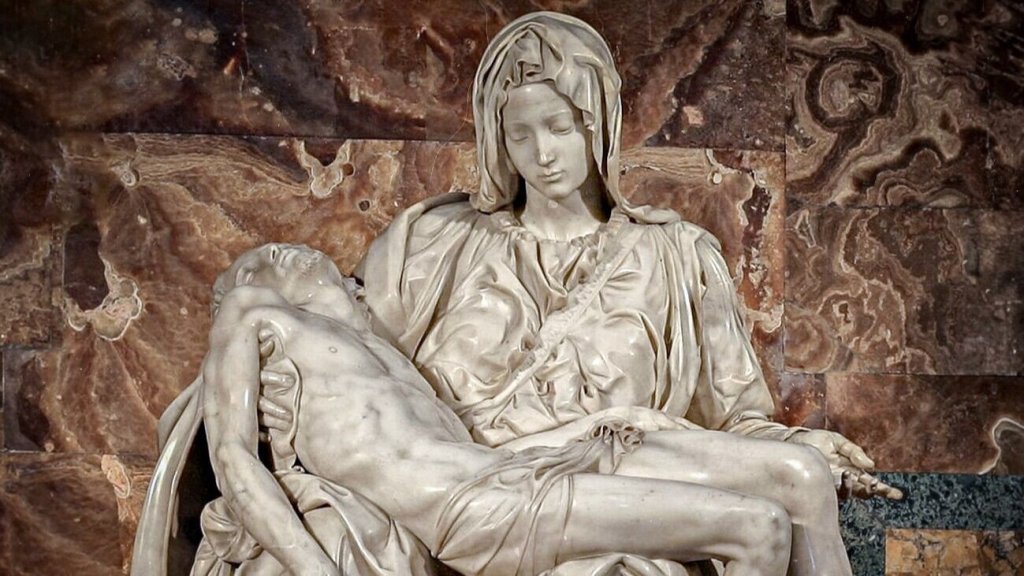
Picture Michelangelo’s Pieta. Let yourself feel the emotion captured in the heart of that sculpture. That is pietas/piety – a deep, penetrating presence and love that cannot fully be put into words. A humble, sincere prayer like that of the tax collector is the fruit of such piety.
Most of us are not great sinners. We just make some mean – and perhaps continual – choices that can block the flow of grace into our hearts. God stands beside us as we make such choices, ready to hear us when we turn and ask for the Mercy that will free and deepen us.
Prose: from Point Counterpoint by Aldous Huxley
Aldous Huxley (1894 – 1963) was an English writer and philosopher. His bibliography spans nearly 50 books, including novels and non-fiction works, essays, narratives, and poems. By the end of his life, Huxley was widely acknowledged as one of the foremost intellectuals of his time. He was nominated for the Nobel Prize in Literature nine times.
From the quote below, Huxley obviously had strong opinions about religion but especially about false piety. Although Jesus would never have put it this way, the sentiments echo those in today’s readings.
“In the abstract you know that music exists and is beautiful. But don’t therefore pretend, when you hear Mozart, to go into raptures which you don’t feel. If you do, you become one of those idiotic music-snobs … unable to distinguish Bach from Wagner, but mooing with ecstasy as soon as the fiddles strike up.

It’s exactly the same with God. The world’s full of ridiculous God-snobs. People who aren’t really alive, who’ve never done any vital act, who aren’t in any living relation with anything; people who haven’t the slightest personal or practical knowledge of what God is. But they moo away in churches, they coo over their prayers, they pervert and destroy their whole dismal existences by acting in accordance with the will of an arbitrarily imagined abstraction which they choose to call God.

Just a pack of God-snobs. They’re as grotesque and contemptible as the music-snobs … but nobody has the sense to say so. The God-snobs are admired for being so good and pious and Christian. When they’re merely dead and ought to be having their bottoms kicked and their noses tweaked to make them sit up and come to life.”










 Lavish Mercy