A Plea for Mercy

Monday of the Second Week in Lent

March 9, 2020

Click here for readings

bruggemann

Today, in Mercy, our reading from Daniel gives us one of the Great Prayers of the Old Testament (according to Walter Brueggemann’s like-named book.)

The Book of Daniel and chapter nine in particular, have been the subjects of extensive biblical exegesis. Chapter nine in considered one of the Messianic Prophecies, Old Testament markers pointing to Christ. So there is much we could study about today’s first reading.


But how might we pray with it?

Naming the sins of all the People, Daniel’s great prayer is a plea for mercy:

Lord, great and awesome God,
you who keep your merciful covenant
toward those who love you
and observe your commandments! …
… yours, O Lord, our God,
are compassion and forgiveness!

Three themes, so strikingly germane to Lent, arise from Daniel’s prayer:

Repentance
Forgiveness
Transformation


Our Responsorial Psalm picks up this plea to Mercy for Mercy:

Remember not against us the iniquities of the past;
may your compassion quickly come to us,
for we are brought very low.
R.    Lord, do not deal with us according to our sins.
Help us, O God our savior,

because of the glory of your name;
Deliver us and pardon our sins
for your name’s sake.


The questions for each of us as we pray today —

Is there someplace in my life
longing for such mercy and healing?

Where can my spirit grow
from repentance, forgiveness, and transformation?

be Mercy

In our Gospel Jesus tells us how to open our hearts to this merciful healing.

Be merciful, just as your Father is merciful.
Stop judging and you will not be judged.
Stop condemning and you will not be condemned.
Forgive and you will be forgiven.
Give and gifts will be given to you;
a good measure, packed together, shaken down, and overflowing,
will be poured into your lap.
For the measure with which you measure
will in return be measured out to you.”

There it is in black and white. Whether or not the advice changes my heart is up to me!

Music: Kyrie Eleison (Lord, have mercy) Beethoven- Missa Solemnis
Be Careful of Love

Saturday of the First Week of Lent

March 7, 2020

Click here for readings

Moses spoke to the people, saying:
“This day the LORD, your God,
commands you to observe these statutes and decrees.
Be careful, then,
to observe them with all your heart and with all your soul.


Today, in Mercy, Moses tells us this:

Be careful, then …

Be careful of what? Does he mean be careful like,”Don’t fall down the steps!”. Or does he mean be careful like, “Hold tenderly to love in your life.”?

In this passage from Deuteronomy, Moses goes on to say one of my favorite biblical phrases:

… today the LORD is making this agreement with you:
you are to be a people peculiarly his own, as he promised you…

Since the 17th century, the word “peculiar” has taken on the meaning of “odd” or “unusual”.  But the original sense comes from the Latin peculiaris meaning “of private property”

Moses is reminding us that we belong to God and God to us in a covenant similar to, but far exceeding, the mutuality of a marriage.

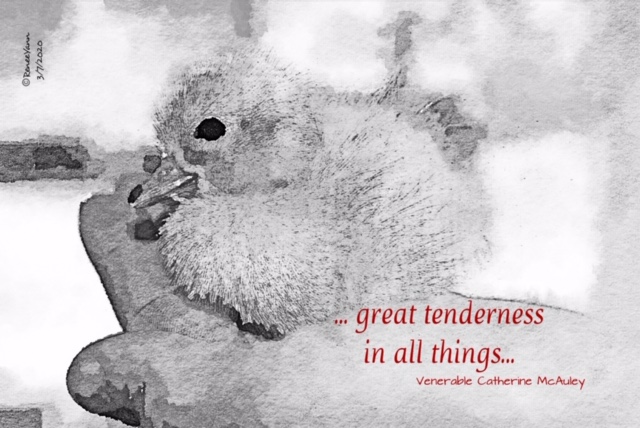
So we should “be careful”, full of care, in appreciation for this infinite love.


chick

In our Gospel, Jesus tells us how to take this exquisite care of our precious relationship with God:

But I say to you, love your enemies,
and pray for those who persecute you,
that you may be children of your heavenly Father,
for God makes the sun rise on the bad and the good,
and causes rain to fall on the just and the unjust.
… Be compassionate as your Heavenly Father is compassionate.

So, let’s be careful of love today when we find this precious God in our sisters and brothers and in all God’s Creation. Let us be compassionate.

Music:  Compassion Hymn – The Gettys 

Beyond Measure

Friday of the First Week of Lent

March 6, 2020

Click here for readings

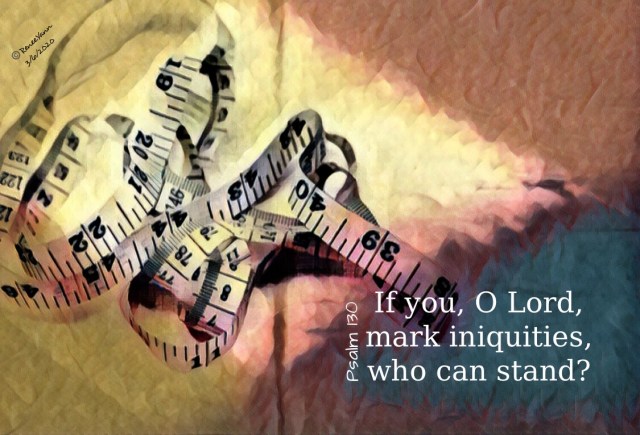
ps130 iniquities

Today, in Mercy, our readings could confuse us with their threads of legalistic logic. We see several examples of “if-then” admonitions that can make us picture God as an accountant measuring every choice we make.

  • If the wicked man turns, … then he shall surely live
  • If the virtuous man turns, … then none of his good deeds shall be remembered.
  • If you, O Lord, Mark iniquities … then who can stand.
  • If you go to the altar unreconciled … then leave and be reconciled.

measure

Sometimes, we can get obsessive about the “if-then” aspects of religion. And IF we do, THEN we probably miss the whole point. Because folded in today’s “if-then” seesaws is the truth of these passages: that the Lord does NOT sit miserly in Heaven to mark our iniquities.

The Lord measures the righteousness of love.


“Thus says the LORD, “Let not a wise man boast of his wisdom, and let not the mighty man boast of his might, let not a rich man boast of his riches; but let him who boasts boast of this, that he understands and knows Me, that I am the LORD who exercises lovingkindness, justice and righteousness on earth; for I delight in these things,” declares the LORD.—Jeremiah 9:23-24


Today’s Responsorial Psalm offers us a beautiful prayer for this morning as we pray in the embrace of God’s Lavish Mercy:

I trust in the LORD;
my soul trusts in his word.
My soul waits for the LORD
more than sentinels wait for the dawn.
Let Israel wait for the LORD.
For with the LORD is kindness
and with him is plenteous redemption;
And he will redeem Israel
from all their iniquities.

Let’s wait for the Lord today to see where God’s Grace invites us to the righteousness of Love.

Music: Everlasting Love – Mark Hendrickson & Family (Lyrics below)

Chorus
With an everlasting love
I love you I love you
With an everlasting love
a love that’ll never end
I love you.

Till the stars lose their way
In the heavens up above
And the oceans all run dry
Till the clouds in the sky
Keep the rain all to themselves
Even longer I’ll love you
This I promise I’ll love you
My word I give it’s true
I love you

Till the morning sun ceases to arise
And the moon forgets to shine
Until heaven’s blue is erased from the sky
Even longer I’ll love you
This I promise I’ll love you
My word I give it’s true
I love you

Sheep or Goat?

Monday of the First Week of Lent

March 2, 2020

Click here for readings

sheep mosaic

Today, in Mercy, we are invited to be like God:

The LORD said to Moses,
“Speak to the whole assembly of the children of Israel
and tell them:
Be holy, for I, the LORD, your God, am holy.

Our first reading goes on to tell us how: be a decent person.

  • Don’t steal, lie, or cheat
  • Pay just wages
  • Respect and help those physically burdened
  • Be impartial and just
  • Defend life
  • Don’t slander, hate, take revenge, or hold a grudge

Basically, the message is about kindness … deep kindness, the type that comes from realizing how infinitely kind God is to us.

Leviticus, after a long list of practical examples, sums it up:

You shall love your neighbor as yourself.
I am the LORD.


Our Gospel tells us what happens when we make the choice to take the Old Testament advice — or not.

little lamb

We are all familiar with the parable of the sheep and the goats. And we all hope our scorecard gets us in the right herd “When the Son of Man comes in his glory, and all the angels with him …”


Basically, in this parable, Jesus puts the advice of Leviticus into practical form for his followers. But he adds one dynamic element that not only invites but impels our wholehearted response:

Amen, I say to you,
what you did not do for one of these least ones,
you did not do for me.

Leviticus invites us to become holy as God is holy. But Jesus reveals the secret that this Holy God lives in the poor, hungry, homeless, imprisoned and sick. By embracing these most beloved of God, we find the pattern of Holiness.

Music: The Least of These – Karl Kohlhase

No Apples!

First Sunday of Lent

March 1, 2020

Click here for readings

Today, in Mercy, we encounter themes of creation, life, temptation, sin, death, and repentance. I’d say that’s a pretty loaded Sunday!

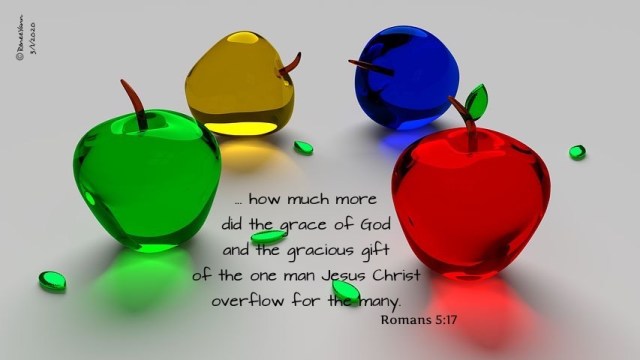
apples

We start out with the simple, but heavily misinterpreted, story of Adam and Eve. This creation myth shared by Judea-Christian and Islamic religions serves as a foundation of these great faith traditions. 

The story is often the first we learn as we are introduced to our family’s faith practice. We imagine Adam and Eve as historically real personalities and the snake as a flesh and blood devil. Some of us never get beyond that elementary understanding of the story.

A and EA few decades ago, I taught New Testament Studies to a class of men aspiring to become deacons. During the session on today’s reading from Romans, a discussion arose about whether an entire human race could descend from just a “first man and woman”. When I pointed out that the creation story uses mythical elements to represent a broader reality, one man reacted adamantly. He could not imagine that there were not a specific “Adam” and “Eve”, but that instead these names represented humankind in their evolving relationship with God. The thought was so shattering to him that he dropped the class. 

That made me sad. But it also caused me to focus on the creation story myself to examine ways in which I might be missing or blocking its deep spiritual significance. Is it really just about temptation, sin, punishment, and death? Or is there a much deeper message for our faith?

One of my go-to theologians has helped me significantly. Walter Brueggemann says this about our consideration of the Creation Story:


Like the people in this narrative, our concern is not finally the danger of sex, the origin of evil, the appearance of death, or the power of the fall. It is, rather, the summons of this calling God for us to be his creatures, to live in his world on his terms.


We struggle throughout our lives to understand God and God’s ways – to live on God’s terms. We will never accomplish it.  We will always meet the “snakes” of questions like:
why

  • Why is there evil in the world?
  • Why does God let innocent people suffer?
  • Why is “this” (Whatever trial) happening to me?
  • Why did he or she have to die so young?
  • Why don’t the bad people die instead?
  • Why? Why? Why?

We want KNOWLEDGE – just what the “serpent” facetiously offered from the forbidden tree!


But this beautiful creation story teaches us that what God desires from us is not knowledge but rather TRUST – trust to live in the unfolding, but never fully-unfolded, mystery of God’s faithfulness to us.

So much in us wants to pluck the magic apple that will make us the “gods” of our existence, controlling life as we would like it to be.

God says instead that we should trust, and delight in sitting under the mysterious, nurturing tree of God’s irreversible, covenantal love – the same love Jesus trusts in today’s challenging Gospel.

Music: Nothing I Hold on To – Will Reagan ( Listen to it like a mantra and let your breathing synch to it. Breathe in Love. Breathe out Trust. No apples necessary.)

Leap … and Be Held

Saturday after Ash Wednesday

February 29, 2020

Click here for readings

Today, in Mercy, Isaiah continues his advice begun in yesterday’s reading. When he finishes the list of things we should and should not do, Isaiah tells us how God will respond:

Then light shall rise for you in the darkness,
and the gloom shall become for you like midday;
Then the LORD will guide you always
and give you plenty even on the parched land.
God will renew your strength,
and you shall be like a watered garden,
like a spring whose water never fails.
The ancient ruins shall be rebuilt for your sake,
and the foundations from ages past you shall raise up ~

Oh, who can resist these glorious Isaiahan lines. It’s a beautiful picture, isn’t it? To imagine it offers us great encouragement as we lumber through Lent and out of the doldrums of February.

deer

How fitting that this should be our reading on “Leap Day”, a 24-hour period that many of us consider an extra gift.


Here’s a thought I wrote several years ago that I hope you will find beneficial:

Mitch Albom, the author who wrote “Tuesdays with Morrie”, wrote another book entitled “Just One More Day”.

It is an appropriate title to think about in this week in Leap Year when we will actually have “just one more day” than normal.

How often have we wished that phrase, perhaps near the end of a great vacation, or before an important project is due? Or maybe as Mitch Albom uses it: to have just one more day with someone who has passed from our lives.

With God, we always have one more day. God is Infinite Possibility and Eternal Generosity. Saturday – February 29 – is a good day to stretch our faith and ask what God would have us do with “just one more day” to witness to Divine Abundance in our lives.

Leap2020

Will it be one more day to love, to work, to be thankful, to be competitive, to take advantage or to give it?  The way we use that “one more day” will tell us a lot about how we are using all our days. Maybe we could consider a question that one of our older Sisters is famous for: “Wouldn’t it be sad to come to the last day of our lives – (no more days) —  and realize that we had missed the whole point?”


May all your “leaps” take you to blessed places, dear Friends.
Let go. Take the leap into God’s way, as Isaiah counsels. And just be held.

Music: Just Be Held – Casting Crown 

Lent: The Wound

Friday after Ash Wednesday

February 28, 2020

Click here for readings

Today, in Mercy, Isaiah cuts his listeners no slack — and we too are his listeners.

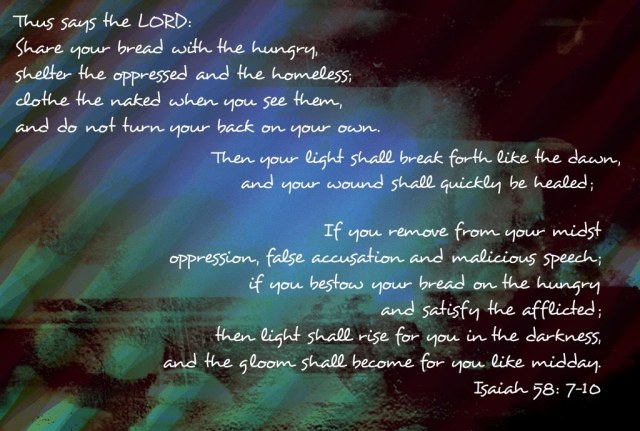
Is58_7_10

In this powerful passage, the prophet shatters the pretenses of those who make a show of religion. Speaking with God’s voice, Isaiah lambastes those who fast and pray but practice no works of justice and mercy.

“Lo, on your fast day you carry out your own pursuits,
and drive all your laborers.
Yes, your fast ends in quarreling and fighting,
striking with wicked claw.”

These “fake fasters” are left wondering why God doesn’t answer their prayers. The prophet tells them that God isn’t fooled by their pretenses:

Is this the manner of fasting I wish,
of keeping a day of penance:
That a man bow his head like a reed
and lie in sackcloth and ashes?

Isaiah says that God’s not into sackcloth and ashes. God’s into good works of mercy and justice. These are the actions that change our hearts, opening us to deeper relationship with God.

This, rather, is the fasting that I wish:
releasing those bound unjustly,
untying the thongs of the yoke;
Setting free the oppressed,
breaking every yoke;
Sharing your bread with the hungry,
sheltering the oppressed and the homeless;
Clothing the naked when you see them,
and not turning your back on your own.


Listen, dear friends. It can’t be clearer than that.

priscilla-du-preez-FOsina4f7qM-unsplash
Photo by Priscilla Du Preez on Unsplash

In a world full of prosperity gospels, false piety and pretend religion – used to justify all kinds of injustice – we may get mixed up sometimes about what pleases God.

Let’s really open our hearts to Isaiah’s message and try to rid our own lives of any pretense about these things.

Let’s confront such hypocrisy when we see it used to subtly oppress rather than to lift up others.


Then your light shall break forth like the dawn,
and your wound shall quickly be healed.

Perhaps we might spend sometime today thinking about that “wound” we need healed. Might there be some harbored prejudice, indifference, fear, or ignorance that distances us from others who are different, vulnerable, or in need?

Isaiah cautions that until that wound is healed, we will never hear God’s true answer to our prayers.

Music:  Respond – Collin Campbell (Lyrics below)


Oh how long will you cry out
And never truly seek my face
You come to me with heavy hearts
But you ignore what makes mine break

I see your thoughts, I hear your words
And I have watched you as you’ve prayed
I’ve told you my desires
But you don’t follow all the way

Children, I’m crying out
Break the chains
Let the oppressed go free
Empty yourselves to those in need
Be my hands Be my feet
What you do unto them You do unto Me

Every day you lift your voice
And await my swift response
But I see only what’s inside
And it’s (what i see on the inside) an offering I don’t want

Children, I’m crying out
Break the chains
Let the oppressed go free
Empty yourselves to those in need
Be my hands Be my feet
What you do unto them You do unto Me

Then your Salvation will come like the dawn
And my glory will be your shield
When you call on My name I will not turn away
I am Your God And I am here
And your light it will shine from the dark
You will be like a free flowing stream
And when you call on My name I will not turn away
I am your God And I am here

Lent: A Closer Walk

Thursday after Ash Wednesday

February 27, 2020

Click here for readings

Today, in Mercy, our readings confirm that a life patterned on Christ contradicts worldly definitions.

Dt.30_19 Chhose

Deuteronomy gives us stark, either-or, advice:

I have set before you life and death,
the blessing and the curse.
Choose life, then,
that you and your descendants may live,
by loving the LORD, your God,
heeding his voice,
and holding fast to him.

It’s definitive, but we could probably do that, right? Choose life, love God, heed God’s voice, hold fast to God? Sounds OK, doesn’t it?


It’s when Jesus comes along that it sounds difficult. 

Jesus tells us, “Here’s how you choose life –

“Whoever wishes to save his life will lose it,
but whoever loses his life for my sake will save it.”


Jesus tells us, “Here’s the God you must love, one who

“suffers greatly, is rejected, and is killed.”


Jesus tells us, “Here’s what my voice says to you –

“What profit is there for you to gain the whole world
yet lose or forfeit yourself?”


Jesus tells us, “Here’s how you hold fast to me –

‘Take up your cross daily and follow me.”

mcA Cross


Some have huge crosses to carry in their lives – perhaps famine, enslavement, untended illness, homelessness, persecution, poverty. Those who carry such crosses are singularly loved by God who dwells with them.

But if we don’t have big, obvious crosses in our lives – if we are among those the world deems fortunate – how do we follow the crucified Jesus to find our way to eternal life?

How do we really CHOOSE LIFE?


cross icon WP

We need to get close to the ones God singularly loves. We need to walk beside them and lift some of their heavy crosses. We need to help their voices be heard, their needs be met, their rights be honored.

Not all of us can do this by direct service. But we can do it by our advocacy, our material contributions, and our articulated support for justice.

We need to make these choices for life all the time. But Lent is a great time to examine the vigor and commitment of our choices, a time to take a closer walk with our suffering Christ and ask him to inspire our courage.

Music:  Just a Closer Walk with Thee – Patsy Cline and Willie Nelson

Even Now…

Ash Wednesday

February 26, 2020

Click here for readings

Today, in Mercy, we resolve to turn our hearts more fully to God. The sacred journey of Lent, one we have traveled so often over the years, invites us each time to go deeper into the Well of Mercy.

Joel’s pregnant phrase summons us:

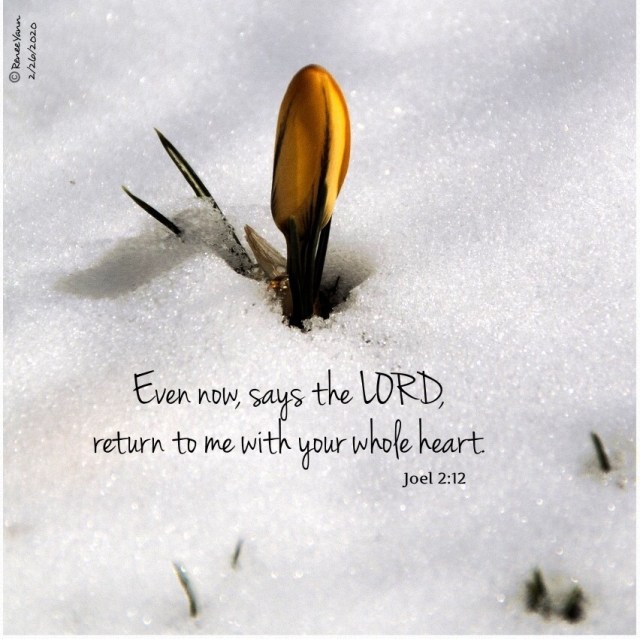
Joel2_12 even now

Think of the “even now” moments of your life, those times when, despite darkness and cold, you turned toward light and warmth. Think of a time when, in contradiction to all negativity, your soul proclaimed

  • Even now I hope
  • Even now I believe
  • Even now I love
  • Even now I care
  • Even now I repent
  • Even now I forgive
  • Even now I begin again

buddingThe rise of an “Even Now” moment in our souls is like the hint of spring pushing its head through the winter snow.

It is the reddish-green thread suggesting life at the tip of the brown, cold-cracked branch.

It is the moment we believe that what we desire and love will turn toward us and embrace us.


Can you imagine God having such moments, longing for our attention, love, presence, catching a glimpse of our turning?

Our reading from Joel describes such a God.

Even now, says the LORD,
return to me with your whole heart…

These words suggest God’s longing for us, for our devotion and love.

But our holy intentions weaken and we often drift away from our “first fervors”. Our hearts attach to distractions from God. So God says:

Rend your hearts …
and return to the LORD, your God.
For I am gracious and merciful,
slow to anger, rich in kindness …
Come back to Me, with all your heart.

This is what Lent is all about. Each of us knows where our hearts have wandered. Each of knows what we must turn from — even now — to return to God’s embrace.

If we can hear God’s longing in this haunting reading from Joel perhaps the true turning will begin. A blessed Lent, my friends.


I found this modern song helpful to my prayer. I imagine God singing it to me, to the world, as we begin our Lenten journey. Perhaps it may touch your prayer too. God loves us so much, infinitely more than we can comprehend. But imagining God’s love in human terms, as John of the Cross did, can sometimes deepen our understanding and response to God.

Music: Even Now – Nana Mouskouri

Creeping Up to Lent?

Tuesday of the Seventh Week of Ordinary Time

February 25, 2020

Click here for readings

Today, in Mercy, we are creeping up to Lent’s doorstep.

Doorstep

Are you beginning to consider your Lenten rituals? Our readings today might help orient us.

They leave this question hanging in the air: Who do I really want to be in my life?

Mk9_34 first last

James says that if we are someone who loves the world, we will find ourselves at enmity with God. James defines “the world” as a place in discord, conflicted by covetousness, envy, frustration, and death-dealing.

James is directly addressing damaging squabbles within the Church itself. Infighting has caused fractures within his believing community. Failures in mutual charity and sincere prayer have generated “wars” among the members.

Why would anybody choose to contribute to such a negative environment? 

James pins it on one thing: jealousy. We are jealous to be, have, control, and possess more than others. We are tempted by power, riches and esteem. We want our opinions to be honored, our needs to be met above and before others.


The reality exists today as well, as we know too well.

  • We see it in the Church from factions who want to bend the Gospel to their own agenda.
  • We see it within and between nations who raise the advantage of some over the welfare of others.
  • We see it in families, businesses, and social circles where individuals volley for position, influence, or control over others.

These conflicts pour out in criticism, judgements, biases, shunning, and all kinds of failures in compassion, respect, and honesty. They blind us to our common creaturehood in God, and to its demand for an equity of love, mercy, and justice.

Otherwise, 

  • How could we ever kill or enslave one another, either by aggression or neglect?
  • How could we separate parents from their children and put babies in cages?
  • How could we participate in a global economic tyranny that leaves some without land, homes, health care, or hope?
  • How could we use other human beings – or their vital resources – only for our own pleasure, power or enrichment?

Most of us do not outrightly choose these sinful behaviors. But we must ask ourselves to what degree we are complicit in them by our failures in just judgement, advocacy, political responsibility, globally sustainable choices, — just plain care and reverence for all human beings, all Creation.


The approach of Lent is a great time to revisit the question James hangs in the air for us:

  • Who do I really want to be in my life? 
  • Do I need to make changes to do that? 
  • How can I prepare for a Lent that helps me make those Grace-filled changes?

We are grown-ups now, and our Lenten repentances demand more than those we learned in grade school. Fasting from candy won’t cut it anymore. 

  • How about we fast from cable news that feeds our biases?
  • Or actually do something for our parish besides critique the Sunday sermon?
  • Maybe give up some of our polluting behaviors requiring plastic and other non-recyclables?
  • How about including a outsider in something where they are otherwise ignored?
  • Or providing for someone’s need who would hesitate to ask for your attention?

I think James would approve of choices like that because he says:

God bestows a greater grace; therefore, it says:
God resists the proud,
but gives grace to the humble.
So submit yourselves to God.

Resist the Devil, and he will flee from you.
Draw near to God, and he will draw near to you.

Music: When It’s All Been Said and Done – Robin Mark