Thursday of the Twenty-first Week in Ordinary Time

Thursday, August 26, 2021

Today, in God’s Lavish Mercy, we pray with Psalm 90 whose selected verses for today present three brilliant images for our prayer.


The image of an eternal God, who spins time like the threads of a dream:
You turn us back to the dust and say,
“Go back, O child of earth.”
For a thousand years in your sight 
are like yesterday when it is past 
and like a watch in the night.
You sweep us away like a dream;
we fade away suddenly like the grass.

Psalm 90: 3-5

The image of us, ordering our days on the great abacus of Grace:

So teach us to number our days aright
that we may apply our hearts to wisdom.
Return, O Lord; 
how long will you tarry?

Psalm 90:12-13

The image of God, each morning answering our prayer, and we weaving that delicate gift, like fine lace, into the handiwork of our lives

Fill us at daybreak with your kindness,
that we may shout for joy and gladness all our days.
And may the gracious care of the LORD our God be ours;
prosper the work of our hands for us!
Prosper our fragile handiwork!

Psalm 90:14,17

These images converge to remind us that time, from our perspective, is brief. But, with God, there is no “time”. God has breathed us forth, a song without end, into an eternal melody of love and joy.

The psalmist prays to honor that indescribable gift of life by making something beautiful of it in the time allotted.

We pray for that too, and are  invited to reflect on Paul’s prayer for the Thessalonians in our first reading. This prayer captures what Paul believes to be something beautiful for God:

Now may God our Creator, and our Lord Jesus
direct our way to you,
and may the Lord make you increase
and abound in love for one another and for all,
just as we have for you,
so as to strengthen your hearts, 
to be blameless in holiness before our God and Creator
at the coming of our Lord Jesus with all his holy ones. Amen.

1 Thessalonians: 3:11-13

Prose: Something Beautiful for God – Mother Teresa

What I can do, you cannot. 
What you can do, I cannot. 
But together we can do 
something beautiful for God.
Yes, you must live life beautifully 
and not allow the spirit of the world 
that makes gods out of power, riches, and pleasure 
make you to forget that 
you have been created for greater things
 – to love and to be loved.

Music: Psalm 90 – Marty Goetz

Wednesday of the Twenty-first Week in Ordinary Time

Wednesday, August 25, 2021

Today, in God’s Lavish Mercy, we pray with Psalm 139, a familiar and powerful favorite for many of us.

As a whole, the psalm conveys an assurance that God is everywhere, caring for and directing our lives toward good.

Still, the psalmist paints the picture of a treacherous journey to that assurance, a journey through various levels of darkness:

the darkness of the womb:

You formed my inmost being;
you knit me in my mother’s womb.

139:13

the darkness of life’s “secrets”

LORD, you have probed me, you know me:
you know when I sit and stand;
you understand my thoughts from afar.
You sift through my travels and my rest;
with all my ways you are familiar.

139: 1-3

the darkness of people who make evil choices:

Do I not hate, LORD, those who hate you?
Those who rise against you, do I not loathe?
With fierce hatred I hate them,
enemies I count as my own.

139: 21-22

the darkness within the one who prays


Probe me, God, know my heart;
try me, know my thoughts.
See if there is a wicked path in me;
lead me along an ancient path.

139: 23-24


Even though we try – and often succeed – to live in God’s Light, as long as we live in this world we will be besieged by darkness. It is simply part of being human. The darkness can come to us, as it did to the psalmist, in many forms:

doubt, fear, sin, illness, loneliness, addiction, mental anguish, poverty, hunger, death and bereavement 


The triumphant core of Psalm 139 is the faith-filled assertion that God is greater than any darkness. God is always Light.

If I say, “Surely darkness shall hide me,
and night shall be my light”, –
Darkness is not dark for you,
and night shines as the day.
Darkness and light are but one.

139: 11-12

Like the psalmist, we may struggle at times to find God in our shaded experiences. But God has, from the beginning and forever, already found us.

Behind and before you encircle me
and rest your hand upon me.
Such knowledge is too wonderful for me,
far too lofty for me to reach

139: 5-6

Prose: Pope Benedict XVI on the Trinity

God is love and only love, 
most pure, infinite and eternal love. 
The Trinity does not live in a splendid solitude, 
but is rather the inexhaustible font of life 
that unceasingly gives itself and communicates itself….
The “name” of the Most Holy Trinity is in a certain way 
impressed upon everything that exists, 
because everything that exists, 
down to the least particle, 
is a being in relation, 
and thus God-relation shines forth, 
ultimately creative Love shines forth…. 
The strongest proof that we are made 
in the image of the Trinity is this: 
only love makes us happy, 
because we live in relation, 
and we live to love and be loved.

Address at The Angelus, June 7, 2009

Music: The Sound of Silence – Simon and Garfunkel 

Hello, Darkness, my old friend …

Feast of Saint Bartholomew, Apostle

Tuesday, August 24, 2021

Today, in God’s Lavish Mercy, we pray with Psalm 145, a luxuriant song of praise to a God who overwhelms us with generosity.

I will extol you, my God and king;
I will bless your name forever and ever.

Every day I will bless you;
I will praise your name forever and ever.

Great is the LORD and worthy of much praise,
whose grandeur is beyond understanding.

Psalm 145: 1-3

Citing verses 13-20 which are structured around the word “all”, Walter Brueggemann says:

The image is an overflow of limitless blessing
given without reservation
to all who are in need
and turn to the Creator.

Which brings us to Nathaniel and how this prayer might have sung in his heart.


I got to be friends with Nathaniel over 50 years ago when, at my reception in our community, Mother Bernard decided to give me his name. And after an initial shock, I came to love it.

Nathaniel and I have spent countless hours under his fig tree sharing both our lives. I’ve asked him many times what he was thinking about when Philip came to invite him to meet Jesus. Nathaniel always has a different answer… one amazingly similar to whatever happens to be preoccupying me at the time.😇

a favorite old book that started some of my conversations with Nathaniel

One element remains constant in every circumstance: in his quiet moment, Nathaniel sought God’s Light. As our Gospel shows, that Luminous Word came to him and he responded.


I think that in our “fig tree moments”, we have finally sifted through all that we are capable of in order to find Grace in our lives. Now we wait, in the shade and quiet of prayer, for the True Answer.

When that answering Word comes, it shatters our doubts and pretenses like an egg. And like a shattered egg, the Word releases new life in us. We move deeper into the unbreakable Wholeness and Infinity. Like Nathaniel, even in our ordinary lives, we begin to “see greater things” than we had ever imagined.


Nathanael said to him, “How do you know me?” 
Jesus answered and said to him,
“Before Philip called you, I saw you under the fig tree.”
Nathanael answered him,
“Rabbi, you are the Son of God; you are the King of Israel.”
Jesus answered and said to him,
“Do you believe
because I told you that I saw you under the fig tree?
You will see greater things than this.”
And he said to him, “Amen, amen, I say to you,
you will see heaven opened and the angels of God
ascending and descending on the Son of Man.”


After that momentous afternoon when he was drawn from the shade into the Light, Nathaniel’s life became a hymn of praise and thanksgiving.

Let all your works give you thanks, O LORD,
    and let your faithful ones bless you.
Let them discourse of the glory of your Kingdom
    and speak of your might.


Poem-Prayer from Christine Robinson

Psalm 145 – Opening Heart

I exalt you, Holy One, and open my heart to you
by remembering your great love.
Your expansiveness made this beautiful world
in a universe too marvelous to understand.
Your desire created life, and you nurtured
that life with your spirit.
You cherish us all—and your prayer
in us is for our own flourishing.
You are gracious to us
slow to anger and full of kindness
You touch us with your love—speak to us
with your still, small voice, hold us when we fall.
You lift up those who are oppressed
by systems and circumstances.
You open your hand
and satisfy us.
You ask us to call on you—
and even when you seem far away, our
longings call us back to you.
Hear my cry, O God, for some days, it is all I have.

Music: I Will Praise Your Name – Bob Fitts

Lord I will praise your name

I will praise your name

I will praise your name and extol You

I will praise Your name (I will praise Your name)

I will praise Your name

I will praise Your name

As I behold You

I will magnify, I will glorify

I will lift on high Your name, Lord Jesus

I will magnify, I will glorify

I will lift on high Your name, Lord Jesus

For Your love is never ending

And Your mercy ever true

I will bless Your name Lord Jesus

For my heart belongs to You

I will praise Your name

I will praise Your name

I will praise Your name and extol you

I will magnify, I will glorify

I will lift on high Your name, Lord Jesus

For Your love is never ending

And Your mercy ever true

I will bless Your name Lord Jesus

For my heart belongs to You

I will praise Your name

I will praise Your name

I will praise Your name and extol you

I will magnify, I will glorify

I will lift on high Your name, Lord Jesus

Monday of the Twenty-first Week in Ordinary Time

Monday, August 23, 2021

Today, in God’s Lavish Mercy, we pray with Psalm 149, the beautiful praise song which is part of the rousing conclusion of this Book:

Let them praise God’s name in the festive dance,
    let them sing praise to God with timbrel and harp.
For the LORD loves this people,
    and adorns the lowly with victory.

Psalm 149: 3-4
Let them praise God’s Name in festive dance,
for the Lord takes delight in them.
Psalm 149: 3-4

Walter Brueggemann describes these final psalms here:

One of the richest deposits of such hymns of praise is at the conclusion of the Psalter in Psalms 146–150, in which the particulars of psalmic praise wanes, and the exuberance of praise becomes more vigorous and bold. In Psalm 148, the singers can imagine all creation, all creatures, including sea monsters and creeping things, united in praise of YHWH. By the culmination of the sequence in Psalm 150, there is a total lack of any specificity, and users of the psalm are invited to dissolve in a glad self-surrender that is to be enacted in the most lyrical way imaginable. Such praise is a recognition that the wonder and splendor of this God—known in the history of Israel and in the beauty of creation—pushes beyond our explanatory categories so that there can be only a liturgical, emotive rendering of all creatures before the creator.

Walter Brueggemann: From Whom No Secrets Are Hid

For me, these final psalms are like a resounding cymbal crash at the masterpiece’s end. It is a prayer simply to let these glorious lines sing and dance in our hearts:

Hallelujah!
Sing to the Lord a new song;
sing the praises of God in the beloved community. 
Let us rejoice in our maker;
let us be joyful in our sovereign God.
Let us praise the name of the Lord in the dance;
let us sing praise to God with timbrel and harp. 
For the Lord takes pleasure in this people
and adorns the poor with victory. 
Let the faithful rejoice in triumph;
let them be joyful even as they rest.

Psalm 149

No poem today. Instead two pieces of music to delight in Psalm 149

  1. Total Praise: One of my favorite hymns beautifully performed here in sign language.

2. Psalm 149 by Antonín Leopold Dvořák, original Czech. English version and sample of music below.

English

Memorial of Saint Bernard

Friday, August 20, 2021

Today, in God’s Lavish Mercy, we pray with Psalm 146, chosen today to complement our first reading which is a rare lectionary passage from the Book of Ruth. In it, we meet Naomi who is, at one point, widowed and alone. 

The fatherless and the widow the Lord sustains,
    but the way of the wicked is thwarted.

Psalm 146:9
Ruth Carries Her Gleanings – James Tissot

The Book of Ruth is familiar to many of us because some of its charming story and verses seem a lovely fit for weddings and anniversaries. But in some ways, that isolated use tends to trivialize the powerful messages embedded in this short volume.


If we have a limited view of the Book of Ruth, Psalm 146 can help us widen it. The psalm points to elements central to a hopeful and just community, to a community in right relationship with God. This too is a core message of Ruth.


It is a community strengthened by compassion, loyalty, inclusivity, trust, hope and grateful praise. Each character, at some point in the story’s unfolding, exhibits some aspect of God’s merciful nature and steadfast attachment to us. They put flesh on the psalm’s Antiphons:

Happy are they who have the God of Jacob for their help! 
For their hope is in the Lord their God,
who made heaven and earth, 
the seas, and all that is in them;
who keeps promises for ever;
who gives justice to those who are oppressed,
food to those who hunger
and sets the prisoners free.
The Lord opens the eyes of the blind!
The Lord lifts up those who are bowed down
and loves the righteous.
The Lord cares for the stranger
and sustains the orphan and widow,
but frustrates the way of the wicked. 
The Lord shall reign for ever,
your God, O Zion, throughout all generations.
Hallelujah!

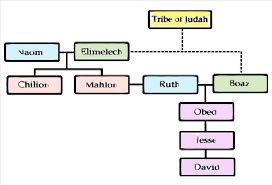
Ruth was the great-grandmother of David and blood ancestor of Jesus. Her story, and the tender mercy it declares, foretells the character of the Beloved Community Christ will establish.


The heart of that community – our community – is aptly described in today’s Gospel. When the Pharisees ask Jesus what is most important, he replies:

You shall love the Lord, your God, with all your heart,
with all your soul, and with all your mind.
This is the greatest and the first commandment.
The second is like it:
You shall love your neighbor as yourself.
The whole law and the prophets depend on these two commandments.

Ruth already knew what was most important.
May we learn it deeply from her story.


Poem: Ruth and Naomi by Frances Ellen Watkins Harper (1825-1911), an African American abolitionist and poet. Born free in Baltimore, Maryland, she had a long and prolific career, publishing her first book of poetry at twenty and her first novel, the widely praised Iola Leroy, at age 67. 

"Turn my daughters, full of woe,
Is my heart so sad and lone? 
Leave me children — I would go 
To my loved and distant home. 

From my bosom death has torn 
Husband, children, all my stay, 
Left me not a single one, 
For my life's declining day 

Want and woe surround my way, 
Grief and famine where I tread; 
In my native land they say
"God is giving Jacob bread.”

Naomi ceased, her daughters wept, 
Their yearning hearts were filled; 
Falling upon her withered neck, 
Their grief in tears distill'd. 

Like rain upon a blighted tree, 
The tears of Orpah fell 
Kissing the pale and quivering lip, 
She breathed her sad farewell. 

But Ruth stood up, on her brow 
There lay a heavenly calm; 
And from her lips came, soft and low 
Words like a holy charm. 

"I will not leave thee, on thy brow 
Are lines of sorrow, age and care; 
Thy form is bent, thy step is slow, 
Thy bosom stricken, lone and sear. 

Oh! when thy heart and home were glad, 
I freely shared thy joyous lot; 
And now that heart is lone and sad, 
Cease to entreat — I'll leave thee not. 

Oh! if a lofty palace proud 
Thy future home shall be; 
Where sycophants around thee crowd, 
I'll share that home with thee. 

And if on earth the humblest spot, 
Thy future home shall prove; 
I'll bring into thy lonely lot 
The wealth of woman's love. 

Go where thou wilt, my steps are there, 
Our path in life is one; 
Thou hast no lot I will not share, 
'Till life itself be done. 

My country and my home for thee, 
I freely, willingly resign, 
Thy people shall my people be, 
Thy God he shall be mine. 

Then, mother dear, entreat me not 
To turn from following thee; 
My heart is nerved to share thy lot, 
Whatever that may be.”

Music: Ruth’s Song – Marty and Misha Goetz

(Verse 1)
All my life, I have wondered
Wondered where I might belong
Feeling lost, like a stranger
Wandering far all on my own
(Verse 2)
Without a home. Without a people
Without a hope, without a prayer
Without a way, that I could follow
Then I turned, and you were there
(Chorus)
Where you go, I will go
Where you stay, I will stay forever
Where you lead, I will follow
So I can know the one you know
(Verse 3)
Under his wings, you found a shelter
You have no fear, you have no shame
And when you call, he seems to answer
He even seems to know your name
(Chorus)
(Bridge)
Then somehow should I find his favor
I won’t look back on all I’ve known
Your people then will be my people
And Your God my God alone
(Chorus)
Where you go, I will go
And you know I will never leave you
Not even death, will ever part us
Now that I know the one you know
I will go now, where you go

Thursday of the Twentieth Week in Ordinary Time

Thursday, August 19, 2021

Today, in God’s Lavish Mercy, we pray with Psalm 40, and wow, do we need it after an astounding heartless first reading!

The Return of Jephthah
by Giovanni Antonio Pellegrini
The Yorck Project ( Public Domain)

The story of Jephthah and his daughter is one of the most disturbing in the Bible! It contains so many flaws in faith and reason that it becomes almost unusable for prayer. Then again, maybe that’s the very reason we should pray with it.

Jephthah:

  • was so full of his own lust for victory that he made a promise to God which God would never want.
  • was so focused on himself that he ignored the maxim against human sacrifice
  • had such a distorted concept of God that he made an excuse to kill on God’s supposed behalf

The lesson for me? Don’t be like Jephthah.

We can use God, distort God, and manufacture what we believe to be God’s Will. Countless people have done so down through the centuries and are still doing it. Just shake a history book, and a thousand Jephthahs fall out wrapped in other inglorious names.

We constantly see religion manipulated into a tool for political and personal aggression. The world is full of people who purport to know God’s Will for the rest of us.


Psalm 40 blessedly contradicts this kind of idolatry. We must never attempt to create God in our own image, to satisfy our own agendas.

Psalm 40 lists those practices that will help us to sincere relationship with God and God’s power in our lives:

  • steadfast trust
  • unvarnished honesty
  • humble praise
  • prayerful obedience
  • responsiveness to grace

Happy are they who trust in the Lord!
they do not resort to evil spirits or turn to false gods.
Great things are they that you have done, O Lord my God! 
how great your wonders and your plans for us!
There is none who can be compared with you.
Oh, that I could make them known and tell them, 
but they are more than I can count.
In sacrifice and offering you take no pleasure
(you have given me ears to hear you);
burnt-offering and sin-offering you have not required.

Psalm 40:4-8

These virtues are powereded by a deeply prayerful and reflective life which roots God’s Goodness in our souls.

And so I said, “Behold, I come.
In the roll of the book it is written concerning me:
‘I love to do your will, O my God; 
your law is deep within my heart.’”

Psalm 40:

Poetry: I Know What You Want – a Psalm 40 prayer by Rev. Christine Robinson

I have trusted You, Holy One
  and waited for You.
When I was mired in misery
  you touched me with your spirit.
You pulled me out
  and set me on solid ground.
You put a song in my heart and work in my hands. 
  I praise you.
I know what you want from me,
  and where the meaning of my life lies—
Not in rituals, offerings, sacrifices, or creeds,
  just my heart; open to others, and open to You.
I try to live that way.
  I fail often but you nudge and beckon and I follow.
I pray that my words, my song, my life
  show forth your light and light others’ way.
May all who seek you find you.
Touch us with your spirit, that we may be glad.

Music: Take, Lord, Receive – John Foley, SJ

This prayer is the Suscipe of St. Ignatius Loyola found in the final part of his book, “The Spiritual Exercises”.

Wednesday of the Twentieth Week in Ordinary Time

Wednesday, August 18, 2021

Today, in God’s Lavish Mercy, we pray with Psalm 21, a companion piece to Psalm 20. In these verses, the king asks for victory, receives it, and rejoices in domination over his enemies. The psalm follows our first reading from Judges which is a parable that criticizes Abimelech’s seizure of kingship over Israel by treacherous means.


Without getting too deep into the complex exegesis of these passages, suffice it to say that they invite us to consider the nature of leadership – its source, exercise, and meaning relative to our spiritual and moral life.

St. Augustine, in his commentary on the Psalms, teaches that Psalm 21 foretells the kingship of Jesus. This kingship (as opposed to that of Abimelech) is marked by humility, mercy, and obedience to the Creator.


We see a wide and confusing range of “leadership” in our world today, from figures like Pope Francis to Kim Jong-Un. But in our prayer today, we are given a very clear picture of what true leadership looks like.

A perfect leader is to God like the moon is to the sun. The leader only reflects the True Light given to them as a gift. 

Recognizing fruitful leadership as a gift, they dispense it graciously to others as in our Gospel parable, imparting mercy even to those considered last in line for it.

In various circumstances, we can be either leader and follower. How do we invite Grace to inform us in either case?


Poetry-Prayer: A Leader’s Prayer – from xavier.edu

Leadership is hard to define. 
Lord, let us be the ones to define it with justice. 
   Leadership is like a handful of water. 
   Lord, let us be the people to share it with those who thirst.
Leadership is not about watching and correcting. 
Lord, let us remember it is about listening and connecting. 
   Leadership is not about telling people what to do. 
   Lord, let us find out what people want.
Leadership is less about the love of power,
and more about the power of love.
   Lord, as we continue to undertake the role of leader let us be 
   affirmed by the servant leadership we witness in your son Jesus.
Let us walk in the path He has set and let those who will, follow.
Let our greatest passion be compassion. 
   Our greatest strength love. 
   Our greatest victory the reward of peace.
In leading let us never fail to follow. 
In loving let us never fail.

Music: Lead Me Lord -Samuel S. Wesley

Memorial of Saint Maximilian Kolbe

Saturday, August 14, 2021

Today, in God’s Lavish Mercy, we pray with Psalm 16, a prayer for God’s protection and blessing on the path of life. It is the prayer of one whose heart is committed to God, and recognizes God as the Source of All Life.

Keep me, O God, for in you I take refuge;
    I say to the LORD, “My Lord are you.”
O LORD, my allotted portion and my cup,
    you it is who hold fast my lot.

Psalm 16: 1-2

In our first reading, as Israel takes possession of the Promised Land, Joshua gathers the people in a recommitment reflective of Moses’ call to the people at Sinai. Joshua says that there is no either/or. Today is the day to choose and commit to the One God of your life:

Fear the LORD and serve him completely and sincerely.
Cast out the gods your fathers served beyond the River and in Egypt,
and serve the LORD.
If it does not please you to serve the LORD,
decide today whom you will serve,
the gods your fathers served beyond the River
or the gods of the Amorites in whose country you are dwelling.
As for me and my household, we will serve the LORD

Joshua 24: 14-15

Like those ancient Israelites, we need faith and courage not to fall back on our false gods — half-heartedness, hard-heartedness, heartlessness. This beautiful offering of Psalm 16 by the Dameans is a prayer for protection and grace for our commitment.


Music: And to give Joshua stage time, here is another song

As for Me and My House – Pat Barrett, Chris Tomlin

Friday of the Nineteenth Week in Ordinary Time

Friday, August 13, 2021

Today, in God’s Lavish Mercy, we pray with Psalm 136 – a short course in Bible history.

Didn’t you love Bible History when you were in school? I remember my little 1950’s McLoughlin Notes and my old Benzinger Bible History book.

After learning that copper was Chile’s chief export, an exciting Bible story was a welcome change. Sister  Stella Mercedes had the great Bible figures pinned over the blackboard, just above the permanent, perfectly painted border which warned me (fruitlessly🤣)

Oh, what a tangled net we weave, when first we practice to deceive.

Psalm 136 could serve as an index for those wonderful Old Testament stories. As Walter Brueggemann notes:

In Psalm 136, the whole history is again recited, punctuated this time with the repeated refrain, “for his steadfast love endures forever.” All of Israel’s history, indeed all of world history, is an arena that exhibits God’s abiding fidelity.

Brueggemann: From Whom No Secrets Are Hid

With this encouragement, today we might reflect on what our own catalogue of God’s fidelity might look like.

  • How has God’s mercy and love endured in my life?
  • How has God loved, protected, and delivered me?
  • How has God deepened in me the call to responsive love?

Poetry: We might like to pray with Rev. Christine Robinson’s prayer “Mercy Forever”:

Give thanks to God, who is good—
Whose mercy endures forever.
    Whose love expands with the expanding universe--
    whose mercy endures forever.
Whose breath gives life to matter--
whose mercy endures forever.
    Who animates life with spirit--
    whose mercy endures forever.
Who plants a fierce unrest in our hearts--
whose mercy endures forever.
    Who bends the universe towards justice--
    whose mercy endures forever.
Who holds the whole world, and our hearts--
whose mercy endures forever.
    Give thanks to God, who is good—
    whose mercy endures forever.

Music: How Deep, How Simple – Kathryn Kaye

Thursday of the Nineteenth Week in Ordinary Time

Thursday, August 12, 2021

Today, in God’s Lavish Mercy, we pray with Psalm 114, eight short but extremely powerful verses. They summarize the entire faith journey of Israel, a People born in the Exodus and coming to full promise as they pass over the Jordan.

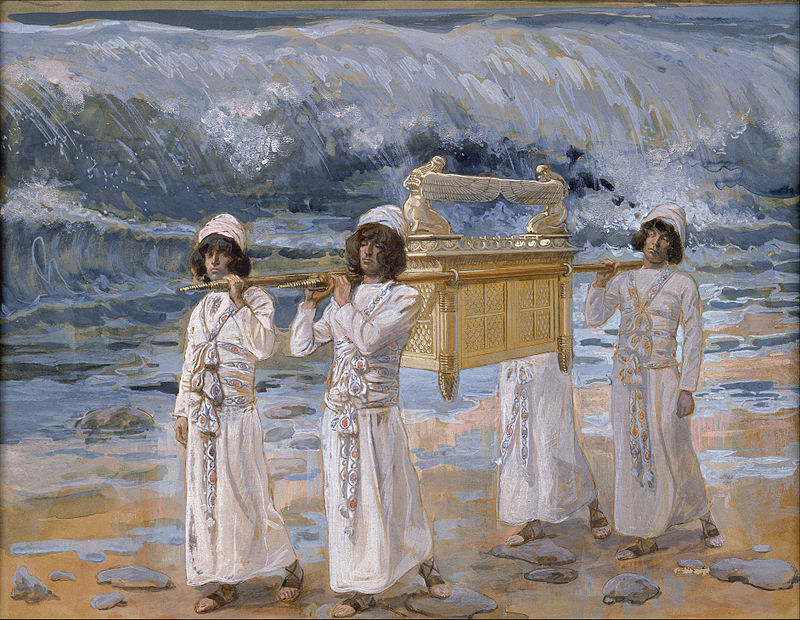
Crossing the Jordan by James Tissot

Our first reading describes that Jordan passage which mirrors the miraculous passage through the Red Sea. Joshua becomes the new Moses leading the people, finally, into the Promised Land

As early as the 6th century, Psalm 114 was included in funeral and burial liturgies in order to emphasize the triumphant and joyful character of our final passage into heaven.


It’s hard for us to think of death that way. On a purely human level, death feels sad – like an end or a loss. But our faith says differently. 

Even throughout life, in all our smaller losses, frustrations and failures, our faith encourages us to see things differently. Faith calls us to see each “exodus” , each “crossing”, as the beginning of a journey to a new promise. It calls us to remember that the seas and rivers will part – that God always makes a way.

Faith calls us to receive
life’s contradictions and impasses
as opportunities to learn a different way.

In Psalm 114, the poet-psalmist uses natural metaphors to remind us of God’s transformative presence in our lives. The Red Sea disappears. The Jordan River opens a path. Mountains skip and hills leap out of our way.

Why was it, sea, that you fled?
Jordan, that you turned back?
Mountains, that you skipped like rams?
You hills, like lambs?

Psalm 114: 5-6

When we face turbulent seas, overwhelming passages, exoduses from the comfortable places, may we find courage in remembering God’s faithfulness as Psalm 114 encourages us to do.


Poetry: The Valley of Vision – Taken from The Valley of Vision: A Collection of Puritan Prayers & Devotions, edited by Arthur Bennett.

Lord, high and holy, meek and lowly,
Thou hast brought me to the valley of vision,
where I live in the depths but see Thee in the heights;
hemmed in by mountains of sin I behold Thy glory. 
Let me learn by paradox that the way down is the way up,
that to be low is to be high,
that the broken heart is the healed heart,
that the contrite spirit is the rejoicing spirit,
that the repenting soul is the victorious soul, 
that to have nothing is to possess all,
that to bear the cross is to wear the crown,
that to give is to receive,
that the valley is the place of vision.
Lord, in the daytime stars can be seen from deepest wells, 
and the deeper the wells the brighter Thy stars shine;
let me find Thy light in my darkness,
Thy life in my death,
Thy joy in my sorrow,
Thy grace in my sin,
Thy riches in my poverty,
Thy glory in my valley.

Music: God Will Make a Way – Don Moen