Today, in God’s Lavish Mercy, we pray with inspired Isaiah who must have had such a beautiful mind – a mind to imagine God making a tired world new!
In our first reading, Isaiah shows us what our radiant and nourishing God can do for those who live in darkness, destitution and fear. (Once we get past the unfortunate metaphor of being called a worm!)
I will open up rivers on the bare heights, and fountains in the broad valleys; I will turn the desert into a marshland, and the dry ground into springs of water. I will plant in the desert the cedar, acacia, myrtle, and olive; I will set in the wasteland the cypress, together with the plane tree and the pine, That all may see and know, observe and understand, That the hand of the LORD has done this, the Holy One of Israel has created it.
Isaiah 41:18-20
Psalm 145 reminds that God is with us – on our side – in both Advent and our Life Journey.
As the year moves closer to its time of deepest darkness, may we know God’s bright Presence in our hearts. May we sense God lighting, once again, the dark places in our lives and in our world.
We all have parched and painful situations, unanswered hopes, lingering fears. Let us bring them out of the shadows today and open them to the refreshing grace of God who made the stars to give us hope.
Today, in God’s Lavish Mercy, we pray with Baruch, Paul, Luke (channeling Isaiah), and Psalm 126. The passages given us are rich, lyrical, joyful and profound.
The Lord has done great things for us; we are filled with joy.
Psalm 126:3
For this whole coming week, we are invited to a scriptural banquet – the table set with preciously familiar Advent phrases to, once again, enrich and challenge our hearts.
Jerusalem, take off your robe of mourning and misery; put on the splendor of glory from God forever…
Baruch 5:1
I am confident of this, that the one who began a good work in you will continue to complete it until the day of Christ Jesus.
Philippians 1:6
A voice of one crying out in the desert: “Prepare the way of the Lord, make straight his paths. Every valley shall be filled and every mountain and hill shall be made low. The winding roads shall be made straight, and the rough ways made smooth, and all flesh shall see the salvation of God.”
Luke 3: 4-6
As with any banquet, we can approach this richness by taking a little bit of every offering, or we might prefer to fill up on one inspiration that particularly speaks to us at this moment in our lives.
Is there a misery we long to have lifted from our shoulders?
Is there a confidence and strength we seek from God?
Is there a sacred voice we need to hear,
a crooked way needing straightening,
an emptiness to be filled,
an insurmountable challenge to be faced,
a roughness to be smoothed?
Whatever our situation, by placing our needs faithfully before the promise of Advent, we will find the healing, hope, and grace we need.
Let these magnificent words seep into your heart to ready it for the promised salvation. For it is Advent – and
God is leading Israel in joy by the light of Divine Glory, with mercy and justice for company.
Baruch 5:9
Prose: from Pierre Teilhard de Chardin.
Above all, trust in the slow work of God.
We are quite naturally impatient in everything
to reach the end without delay.
We should like to skip the intermediate stages.
We are impatient of being on the way to something
unknown, something new.
And yet it is the law of all progress
that it is made by passing through
some stages of instability –
and that it may take a very long time.
And so I think it is with you.
Your ideas mature gradually—let them grow,
let them shape themselves, without undue haste.
Don’t try to force them on,
as though you could be today what time
(that is to say grace and circumstances
acting on your own good will)
will make of you tomorrow.
Only God can say what this new spirit
gradually forming within you will be.
Give our Lord the benefit of believing
that his hand is leading you,
and accept the anxiety of feeling yourself
in suspense and incomplete.
Music: Starlight through Barren Branches – Joel Clarkson
Today, in God’s Lavish Mercy, we pray with the Apostle Andrew – one who was called and gifted to bring the Good News – and with the Paul, and Isaiah ‘s beautiful song:
As Isaiah has written, How beautiful are the feet of those who bring the good news! But not everyone has heeded the good news; for Isaiah says, Lord, who has believed what was heard from us? Thus faith comes from what is heard, and what is heard comes through the word of Christ. But I ask, did they not hear? Certainly they did; for
Their voice has gone forth to all the earth, and their words to the ends of the world.
Romans 10:16-18
As we stand just past Advent’s front threshold, it is fitting to do so here beside Andrew, on his feast, remembering how one day Jesus invited him to launch out into a whole new world.
Today teases us with something we cannot yet imagine. Tomorrow, it will be December – the last month of 2021. And, as for the past two years, we still wait for the world to be delivered from pandemic. It is a waiting that takes great faith, courage, and perseverance – virtues, at times, difficult to summon.
Still as people of faith, we know that Advent is time to wait in silence for unfathomed miracles. Advent teases us with something we can not yet imagine.
What graces will these days hold for us as we prepare for Christmas?
Jesus teased Andrew and Peter too with the promise to be “fishers of men”. Wading knee-deep in the Galilean Sea, do you think they had any hint of what Jesus was talking about? I don’t. I think they simply caught the faith, hope and love in his eyes the way a match catches flame when it’s struck.
Let’s stand with Andrew today in these beginning hours of Advent, on the edge of the long nights or days of December (depending on our hemisphere)
Let’s trust the fire we find in Christ’s eyes as we pray through this Holy Season. Let’s be very intentional not to miss the point of these sacred days by losing them to the fears or frenzies that may threaten us.
An old devotion that I still love is the St. Andrew Novena. The prayer, prayed from November 30 until December 24th, is meant to remind us of the true meaning of these days leading to Christmas. Because my mother said it with me when I was a little girl, it carries both spiritual and emotional riches for me.
It is traditionally suggested that we say it fifteen times a day. I will confess that I say it only once a day, but I do that slowly, focusing on the sacred mystery held within the words.
Poetry – Prayer
I also have created my personal version without specific petitions. I think God knows what we need and provides for us. God’s Lavish Mercy is enough and everything.
My St. Andrew’s Prayer:
Hail, and blessed be the hour and moment at which the Son of God was born of our dear Mother Mary in a stable at midnight in Bethlehem in the piercing cold. At that hour, I ask you dear God, to hear my prayer and grant my hope that you fill our world again with your Loving Presence. Through Jesus Christ and His most Blessed Mother. Amen.
Music: We Shall Behold Him – Ron Kenoly (Lyrics below)
I love this hymn, especially the line “the sweet light in his eyes shall enhance those awaiting”. Maybe that’s the light Andrew saw. May we see it too!
Today, in God’s Lavish Mercy, we begin our Advent journey remembering a promise:
The days are coming, says the LORD, when I will fulfill the promise I made to the house of Israel and Judah.
Jeremiah 33:14
“Promise” is a powerfully dynamic concept whose meaning we sometimes constrict.
We might say something like, “I promise to pay you back someday” – thereby limiting “promise” to some future event that may or may not happen.
But “promise”, in its richer meaning, is an inward turning toward a journey, each step a necessary component of the ultimate fulfillment.
In this sense, “promise” is more akin to “vow” or “covenant”. It unfolds as life unfolds. It grows through stages, like a fruit tree from a tiny seed. Its meaning, at first indistinctly seen, blossoms as it is fed with faith, hope, and enduring love.
This is the nature of God’s promise to us. It is not only some salvific event in our future. It is the flowering of grace, again and again, in our life choices for God.
It is the classic example of that insightful phrase, “The journey is the destination.” In other words, Jesus cannot be born for us on Christmas if He is not born in us every day.
Thus, Psalm 25 is the perfect prayer as we reflect on our journey during Advent.
To you, O Lord, I lift my soul.
Your ways, O LORD, make known to me; teach me your paths, Guide me in your truth and teach me, for you are God my savior, and for you I wait all the day.
All Your paths are kindness and constancy toward those who keep Your covenant and decrees. Your friendship is with those
who hold themselves in awe before You, and Your covenant is for their daily instruction.
Psalm 25: 4-5; 10,14
As we begin this Advent, let us ask God to show us the promise longing for fulfillment in each moment and in every event of our daily lives. Let us give our hearts to it.
Poetry: Advent Credo from Walking on Thorns by Allan Boesak
It is not true that creation and the human family are doomed to destruction and loss— This is true: For God so loved the world that He gave his only begotten Son, that whoever believes in Him shall not perish but have everlasting life;
It is not true that we must accept inhumanity and discrimination, hunger and poverty, death and destruction— This is true: I have come that they may have life, and that abundantly.
It is not true that violence and hatred should have the last word, and that war and destruction rule forever— This is true: Unto us a child is born, unto us a Son is given, and the government shall be upon his shoulder, his name shall be called wonderful councilor, mighty God, the Everlasting, the Prince of peace.
It is not true that we are simply victims of the powers of evil who seek to rule the world— This is true: To me is given authority in heaven and on earth, and lo I am with you, even until the end of the world.
It is not true that we have to wait for those who are specially gifted, who are the prophets of the Church before we can be peacemakers— This is true: I will pour out my spirit on all flesh and your sons and daughters shall prophesy, your young men shall see visions and your old men shall have dreams.
It is not true that our hopes for liberation of humankind, of justice, of human dignity of peace are not meant for this earth and for this history— This is true: The hour comes, and it is now, that the true worshipers shall worship God in spirit and in truth.
So let us enter Advent in hope, even hope against hope. Let us see visions of love and peace and justice. Let us affirm with humility, with joy, with faith, with courage: Jesus Christ—the life of the world.
Today, in God’s Lavish Mercy, we pray with Psalm 9 and its beautiful verse which is echoed in several other Psalms:
I will give thanks to you, O LORD, with all my heart; I will declare all your wondrous deeds. I will be glad and exult in you; I will sing praise to your name, Most High.
Psalm 9: 2-3
Like so many of our readings lately, today’s point us toward a consideration of the “afterlife” or the “end times”. I know you may have had enough of such considerations, but the Church isn’t giving up quite yet!
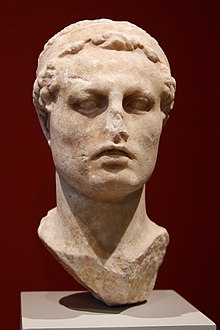
Antiochus IV, wikipedia
Maccabees gives us a colorful account of the defeat, dismay and ultimate death of Antiochus IV, persecutor of the Jews. The account, like most of the Books of Maccabees, is primarily historical, not spiritual or theological. But threaded through the books, of course, is the underlying biblical orientation that God-Yahweh is present and active in all life’s circumstances.
Today’s passage has even pagan Antiochus considering how God/Fate has brought him to judgement- to “payback” time:
But I now recall the evils I did in Jerusalem, when I carried away all the vessels of gold and silver that were in it, and for no cause gave orders that the inhabitants of Judah be destroyed. I know that this is why these evils have overtaken me; and now I am dying, in bitter grief, in a foreign land.
1 Maccabees 6:11-13
In our Gospel account, some Sadducees question Jesus about marriage laws and the afterlife. Their questioning reminds me of modern songwriter Eric Clapton’s musings in his song:
Tears in Heaven – Eric Clapton
Jesus doesn’t sing to the Sadducees, as far as I know. Rather, he answers them this way:
Those who are deemed worthy to attain to the coming age and to the resurrection of the dead neither marry nor are given in marriage. They can no longer die, for they are like angels; and they are the children of God because they are the ones who will rise.
Luke 20:35-36
So for us today, the questions and concerns of both Antiochus and the Sadducees might lead us to consider how we feel about the “afterlife”.
Do you ever wonder what heaven will be like? Will we see our beloveds once again? Will we see our “unbeloveds” too and what will that be like!! Do you calculate whether or not you’ll even make the cut through the Pearly Gates?
When I think about heaven these two promises of Jesus sustain, comfort and animate me. Maybe you’ll consider their power too as you pray today.
I have come that you may have life, and have it to the full.
John 10:10
Eternal life is this, that they know you, the only true God, and Jesus Christ, whom you have sent.
I have desired to go
Where springs not fail,
To fields where flies no sharp and sided hail,
And a few lilies blow.

And I have asked to be
Where no storms come,
Where the green swell is in the havens dumb,
And out of the swing of the sea.
Music: Here’s a beautiful piece of music to accompany you in your “considerations”.
Nocturne No.20 in C-Sharp Minor – Frédéric Chopin, played by Joshua Bell
Today, in God’s Lavish Mercy, we pray with Psalm 50, “a prophetic imagining of God’s judgement on the Israelites”. (Wikipedia)
Our first reading from the Book of Maccabees introduces us to Mattathias, revered leader of the Jews in the city of Modein. He violently refuses the Greek Seleucid command to worship their gods, thus initiating the Maccabean Revolt. The wars lasted nearly a decade. Final victory is commemorated in the Feast of Hanukkah:
The Jewish festival of Hanukkah celebrates the re-dedication of the Temple following Judah Maccabee’s (Mattathias’s son)victory over the Seleucids. According to tradition, victorious Maccabees could find only a small jug of oil that had remained pure and uncontaminated by virtue of a seal, and although it contained only enough oil to sustain the Menorah for one day, it miraculously lasted for eight days, by which time further oil could be procured. (Wikipedia)
Our first reading is really describing the beginning of civil and intercultural wars by which dedicated Jews sought to establish both their religion and their nation. Core to their motivation was the desire to be in relationship with their one God according to their own custom and law.
In our Gospel, Jesus has come as the full manifestation of that One God. He has invited the Jewish people to a new and complete relationship with God, but they have resisted.
Now, as he nears his final fate in Jerusalem, Jesus realizes that his dream for the People will not be fully realized. They will experience a destruction like the one once feared by Mattathias. The reality causes Jesus to weep.
Are the passages only about the Jews, their religion and their history?
For us, these passages are about choosing a faithful, evolving relationship with God – a relationship that will demand truth, action and at times suffering as we pursue ever deeper understanding of God’s Presence in our lives.
Our world and its culture place many godless choices before us, choices that could make Jesus weep because of the suffering they cause others. These choices are not as easy to identify as they were in the time of Mattathias. They don’t come dressed as a pagan soldier ready to quash our resistance.
They come in the large subtleties of politics, economics, human rights, global relationships. These choices show themselves in the small exercise of our respect, care, and reverence for all Creation. But they do come to us in every moment and they demand our witness.
Jesus wants the new Kingdom to rise in us when we open our hearts to his Word. It is an ongoing and daily Resurrection. Let’s pray for the courage for it!
Poetry: The World Is Too Much with Us – William Wordsworth
Wordsworth wrote this poem during the Industrial Revolution when he felt the complexities of the world were inhibiting our appreciation of the sacredness of nature.
The world is too much with us; late and soon,
Getting and spending, we lay waste our powers;—
Little we see in Nature that is ours;
We have given our hearts away, a sordid boon!
This Sea that bares her bosom to the moon;
The winds that will be howling at all hours,
And are up-gathered now like sleeping flowers;
For this, for everything, we are out of tune;
It moves us not. Great God! I’d rather be
A Pagan suckled in a creed outworn;
So might I, standing on this pleasant lea,
Have glimpses that would make me less forlorn;
Have sight of Proteus rising from the sea;
Or hear old Triton blow his wreathèd horn.
Music: When Jesus Wept – William Billings
One of the most well-known of the early American canons, originally appeared in the New England Psalm Singer. It was written in 1770 by William Billings, a self-taught singing-school teacher and composer who served as choir leader at Old South Church in Boston.
(Lyrics below)
When Jesus wept, the falling tear
In Mercy flowed beyond all bound;
When Jesus groaned at rambling fear
Seized all the guilty world around.
Per a valued friend:
There is a statue in Oklahoma City called “Jesus Wept.” It is on the grounds of St. Joseph Church in the city – which is right across from where the Oklahoma City Federal Building had been located. The people of the parish wanted to erect the statue on their grounds because the memorial on the federal property couldn’t be religious. It is a very moving statue.
Today, in God’s Lavish Mercy, we pray with Psalm 3 which well might reflect the prayer of noble Eleazar from our first reading:
You, O LORD, are my shield; my glory, you lift up my head! When I call out to the LORD, he answers me from his holy mountain. R. The Lord upholds me. When I lie down in sleep, I wake again, for the LORD sustains me. I fear not the myriads of people arrayed against me on every side.
Psalm 3: 4-7
Eleazar’s faithful character is so strong that he can look beyond his present circumstance to:
… leave in his death a model of courage and an unforgettable example of virtue not only for the young but for the whole nation.
2 Mc 6:31
Both Eleazar’s story and Zaccheus’s are about living in the big picture of God’s vision for us. These stories invite us to stretch beyond ourselves to see God in our circumstances.
Eleazar was a giant in the virtues necessary to “see beyond the trees” of his current circumstances. A more spiritually short-sighted person might have succumbed to the temptation to save himself at the cost of his faith and witness.
But Eleazar’s faith was long, both in years and in depth. He kept the eyes of his heart focused on that faith and was delivered beyond any short-sighted choices.
In our Gospel, we meet Zaccheus who, due to his short stature, was unable to get a glimpse of Jesus walking nearby. He wasn’t getting the whole picture – but he desperately wanted to!
Sometimes we miss Christ in our midst, don’t we? It may be because we’re “short” on time, patience, faith, attention, courage, peace, desire … you name it.
Zaccheus may have been physically short, but he was tall in will and intention to see Jesus. The trees became his tools not his obstacles.
It’s hard sometimes to see the forest beyond the trees – to direct our choices, attitudes and actions by a vision we glimpse only on the tippy toes of faith and prayer.
Perhaps these two God-seekers can inspire us today, by their courage, steadfastness and faith, to always live within God’s long eternal vision for us.
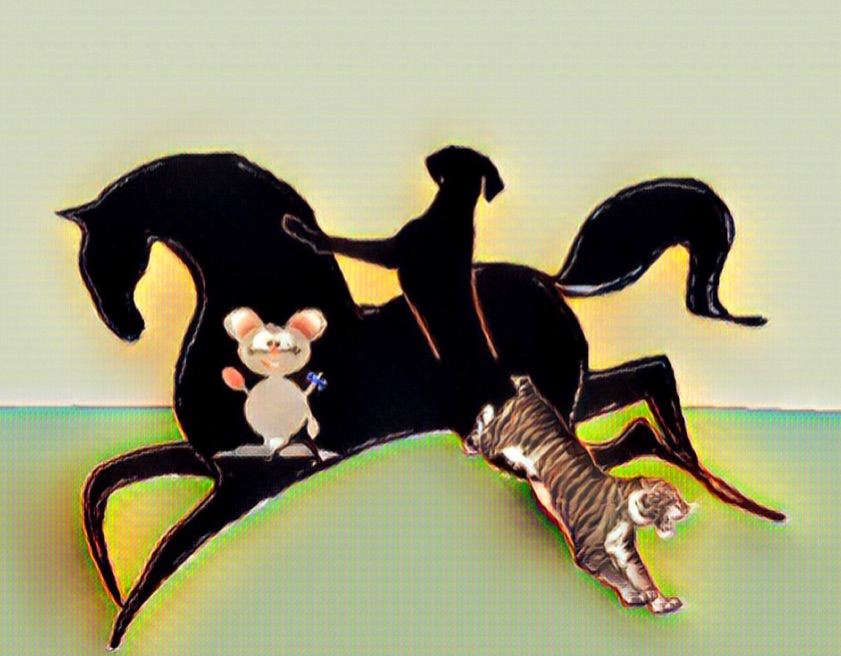
Poetry: Walking on Tiptoe by Ted Kooser
Long ago we quit lifting our heels
like the others—horse, dog, and tiger—
though we thrill to their speed
as they flee. Even the mouse
bearing the great weight of a nugget
of dog food is enviably graceful.
There is little spring to our walk,
we are so burdened with responsibility,
all of the disciplinary actions
that have fallen to us, the punishments,
the killings, and all with our feet
bound stiff in the skins of the conquered.
But sometimes, in the early hours,
we can feel what it must have been like
to be one of them, up on our toes,
stealing past doors where others are sleeping,
and suddenly able to see in the dark.
Turn Your Eyes Upon Jesus – written in 1922 by Helen Lemmel, sung here by Michael W. Smith
O soul are you weary and troubled
No light in the darkness you see
There's light for a look at the Savior
And life more abundant and free

Turn your eyes upon Jesus
Look full in his wonderful face
And the things of earth will grow strangely dim
In the light of his glory and grace

His word shall not fail you he promised
Believe him and all will be well
Then go to a world that is dying
His perfect salvation to tell

Turn your eyes upon Jesus
Look full in his wonderful face
And the things of earth will grow strangely dim
In the light of his glory and grace

O soul are you weary and troubled
No light in the darkness you see
There's light for a look at the Savior
And life more abundant and free

Turn your eyes upon Jesus
Look full in his wonderful face
And the things of earth will grow strangely dim
In the light of his glory and grace
Today, in God’s Lavish Mercy, we are blessed with some of the most
Psalm 105 invites us to sing praise as we confidently seek God in our lives, and to always remember God’s merciful goodness to us:
Sing to God, sing praise, proclaim all God’s wondrous deeds. Glory in the holy name; rejoice, O hearts that seek the LORD! Remember the marvels the Lord has done!
Psalm 105: 2-3
Our first reading from Wisdom gives us one of the most gloriously imaginative images in Scripture.
Although the passage is a poetic recounting of the Exodus experience, it always makes me think of Christmas.
Midnight on a starry night
Peaceful stillness over the earth
The all-powerful Word transformed
Appearing among us like a comet in our darkness
Hope renewed for an otherwise doomed land
Praying with the passage this morning, I realize that my “Christmas lens” on the reading is right on target.
The Christmas event begins our Exodus story, a story completed in the Passion, Death and Resurrection of Christ.
Just as the God of Moses reached into ancient Israel’s life to free them, transform them and make them God’s People, so God reaches into our lives. God does this not only on Christmas, but in every moment of our experience.
As our media and consumer culture bombards us, all too early, with all the secularized images of Christmas, let today’s verses bring us back to the true startling grace of our own Christ/Exodus stories:
We are not alone in the midnights of our lives. Listen underneath all the distractions to the, at first, softly emerging sound of Love humming under all things. Watch for the small lights of heaven longing to break into our human darkness. Give yourself to their Light.
No matter where we are in our lives right now, no matter the joy or pain of our present circumstances, God wants to use these realities to be with us and to teach us Love. Let us invite God into our willingness to learn that Love, to become that Love.
Music: Winter Cold Night – John Foley, SJ
Lyrics below (yes, it is an Advent/ Christmas song. But it fits so perfectly. Please forgive me if I am rushing the season too. 😉
Today, in God’s Lavish Mercy, we pray with Psalm 19, a prayer of awe as we see the magnificence of God’s Creation:
The heavens declare the glory of God, and the firmament proclaims his handiwork. Day pours out the word to day, and night to night imparts knowledge.
Psalm 19: 2-3
It is a steadying psalm that we might need because our scripture message is blunt (if not downright scary!). If yesterday’s sweet words from Wisdom were like “the rich colors of a vibrant Autumn or Spring day”, today’s are more like a dark, cold winter!
Basically our first reading says “Yes”- creation is magnificent, but not as magnificent as its Creator! You, learned humans, how could you have gotten stuck only half-way to that truth? How did you end up making gods from the very things that were supposed to show you the one true God?
In our Gospel, Jesus speaks even more starkly. He describes the “end times” when “one will be taken and the other left”. That reading always scared me as a child and, to be honest, still scares me a little. The popular “rapture literature” has monopolized on that fear. Nobody likes the idea of their buddy, sitting right beside them eating ice cream, suddenly disappearing, right?
And I guess Jesus actually was trying to strike a little healthy fear into his listeners too. He told them the vultures were already gathering. It’s late in the game. Get your act together.
Early Christians thought a lot about the end times. They expected them to come quickly after the Resurrection. Well, 2000 years later, our obsession may have cooled somewhat.
Nevertheless, an end will come to this life as we know it. And wouldn’t it be a shame if we had spent our precious worship on false and distracting gods like money, fame, power, luxury and self-aggrandizement?
“Wouldn’t it be a shame”, as one of our venerable Sisters once said, “to come to the end of your life and realize you had missed the whole point?”
Poetry: The Second Coming – W. B. Yeats
Turning and turning in the widening gyre The falcon cannot hear the falconer; Things fall apart; the centre cannot hold; Mere anarchy is loosed upon the world, The blood-dimmed tide is loosed, and everywhere The ceremony of innocence is drowned; The best lack all conviction, while the worst Are full of passionate intensity.
Surely some revelation is at hand; Surely the Second Coming is at hand. The Second Coming! Hardly are those words out When a vast image out of Spiritus Mundi Troubles my sight: somewhere in sands of the desert A shape with lion body and the head of a man, A gaze blank and pitiless as the sun, Is moving its slow thighs, while all about it Reel shadows of the indignant desert birds. The darkness drops again; but now I know That twenty centuries of stony sleep Were vexed to nightmare by a rocking cradle, And what rough beast, its hour come round at last, Slouches towards Bethlehem to be born?
November 10, 2021 Memorial of Saint Leo the Great, Pope and Doctor of the Church
Today, in God’s Lavish Mercy, we pray with Psalm 82 considered, by at least one Biblical scholar, to be:
“the single most important text in the entire Christian Bible.”
John Domenic Crossan, an Irish-American New Testament scholar, historian of early Christianity, and former Catholic priest
Council of the Gods by Raphael, (Public domain, via Wikimedia Commons)
Psalm 82 best summarizes for me the character of (the early Biblical) God. It imagines a scene in which God sits among the gods and goddesses in divine council. Those pagan gods and goddesses are dethroned not just because they are pagan, nor because they are other, nor because they are competition. They are dethroned for injustice, for divine malpractice, for transcendental malfeasance. They are rejected because they do not demand and effect justice among the peoples of the earth. And that justice is spelled out as protecting the poor from the rich, protecting the systemically weak from the systemically powerful.
excerpts from Crossan: The Birth of Christianity
Rise up, O God, bring judgment to the earth. Defend the lowly and the fatherless; render justice to the afflicted and the destitute. Rescue the lowly and the poor; from the hand of the wicked deliver them. Psalm 82: 3-4
In today’s Gospel, we encounter this just and supreme God in the person of Jesus when we witness the cure of the ten lepers.
You know, it would be startling enough to run into one leper on your daily walk, right? But TEN! That must have been an astounding situation. And to see those sad, disfigured people restored to wholeness must have been nearly overwhelming for the entourage accompanying Jesus.
Can you imagine that the recipients of such a miracle wouldn’t have clung in gratitude to Jesus for the rest of their days??? But, wow, only one even bothered to say “Thank you”.
What might have kept the other nine away, locked in their blind ingratitude?
Perhaps it’s not such a mystery if we allow ourselves to examine our own often ungrateful hearts. We don’t necessarily mean to be boorish in the face of God’s kindness and the generosity of others, but we sometimes suffer from …
Distraction: our lives are filled with frenetic activity which causes our blessings to flit by us into dizzying forgetfulness
Entitlement: we think we deserve or have earned those blessings
Self-absorption: we are so wrapped up in ourselves that we don’t even notice that our whole life is a gift
Laziness: we might say thanks if we get around to it. But we never get around to it.
Unresolved anger: we’re mad that we even needed help
Non-intentionality: we fail to live with intention and reflection, thus missing the opportunities for gratitude
Pride: we are too proud to acknowledge that we need anything
Fear: we are afraid something will be required of us in return for the gift
Spiritual blindness: we just don’t see the nurturing power of God and others in our life
It’s likely that our nine ungrateful lepers had these human frailties. But don’t be thinking about them, or your acquaintances who share their failings.
Let’s think about ourselves and how we want to be more grateful. Let’s think about our omnipotent God who is always Justice and Mercy.
The story is a powerful wake-up call to do better than the poor lepers did by living this prayer:
May I live humbly and gratefully today.
Poetry: The Ten Lepers – by Rosanna Eleanor (Mullins) Leprohon who was both a poet and novelist. Born in Montreal in 1829, Rosanna Mullins was educated at the convent of the Congregation of Notre Dame.
’Neath the olives of Samaria, in far-famed Galilee, Where dark green vines are mirrored in a placid silver sea, ’Mid scenes of tranquil beauty, glowing sun-sets, rosy dawn, The Master and disciples to the city journeyed on.
And, as they neared a valley where a sheltered hamlet lay, A strange, portentous wailing made them pause upon their way— Voices fraught with anguish, telling of aching heart and brow, Which kept moaning: “Jesus, Master, have mercy on us now!”
Softly raised the gentle Saviour His eyes like midnight star, And His mournful gaze soon rested on ten lepers, who, afar, Stood motionless and suppliant, in sackcloth rudely clothed, Poor Pariahs! by their nearest, their dearest, shunned and loathed.
Not unto Him prayed vainly those sore afflicted ten, No! He yearned too fondly over the erring sons of men, Even sharing in their sorrows, though He joined not in their feasts,— So He kindly told the Lepers: “Show yourselves unto the priests.”
When, miracle of mercy! as they turned them to obey, And towards the Holy Temple quickly took their hopeful way, Lo! the hideous scales fell off them, health’s fountains were unsealed, Their skin grew soft as infant’s—their leprosy was healed.
O man! so oft an ingrate, to thy thankless nature true, Thyself see in those Lepers, who did as thou dost do; Nine went their way rejoicing, healed in body—glad in soul— Nor once thought of returning thanks to Him who made them whole.
One only, a Samaritan, a stranger to God’s word, Felt his joyous, panting bosom, with gratitude deep stirred, And without delay he hastened, in the dust, at Jesus’ feet, To cast himself in worship, in thanksgiving, warm and meet.
Slowly questioned him the Saviour, with majesty divine:— “Ten were cleansed from their leprosy—where are the other nine? Is there none but this one stranger—unlearned in Gods ways, His name and mighty power, to give word of thanks or praise?”
The sunbeams’ quivering glories softly touched that God-like head, The olives blooming round Him sweet shade and fragrance shed, While o’er His sacred features a tender sadness stole: “Rise, go thy way,” He murmured, “thy faith hath made thee whole!”
Music: Hymn of Grateful Praise – Folliott S. Pierpoint












 Lavish Mercy