Today, in God’s Lavish Mercy, we pray with Isaiah and Luke who both offer us passages in which God self-describes in displays of omnipotence and tenderness.
In Isaiah, we meet the powerful Creator Who dispenses both justice and mercy.
In Luke, we meet the merciful Savior Who tenderly uses that power to heal.
With our psalm response from Isaiah, we voice our longing to be healed by God’s infinite power – a power which finds the world’s brokenness, seeps into it like rain, transforms it with love.
Poetry: I Rain by Hafiz
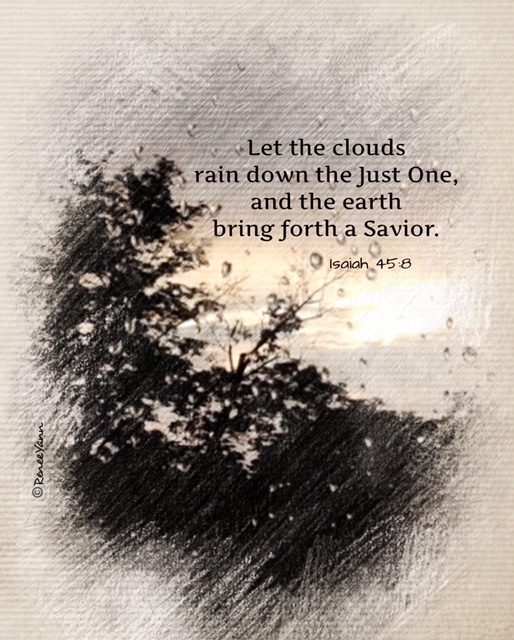
The poem came to mind when I prayed the verse: Let the clouds rain down the Just One, and the earth bring forth a Savior.
I rain
Because your meadows call
For God.

I weave light into words so that
When your mind holds them

Your eyes will relinquish their sadness,
Turn bright, a little brighter, giving to us
The way a candle does
To the dark.

I have wrapped my laughter like a gift
And left it beside your bed.

I have planted my heart’s wisdom
Next to every signpost in the sky.

A wealthy one, seeing all this,
May become eccentric,

A divinely wild soul
transformed to infinite generosity

Tying gold sacks of gratuity
To the dangling feet of moons, planets, ecstatic
Midair dances, and singing birds.

I speak
Because every cell in your body
Is thirsty
For God.
Today, in God’s Lavish Mercy, we pray with Psalm 34 and its tender verses. They remind us that God has a special love for those who suffer, who are poor, who are humble. That special love allows us to be joyful even in difficulty. It invites us to depend on God when things are roughest for us.
I will bless the LORD at all times; praise shall be ever in my mouth. Let my soul glory in the LORD; the lowly will hear me and be glad.
Psalm 34: 2-3
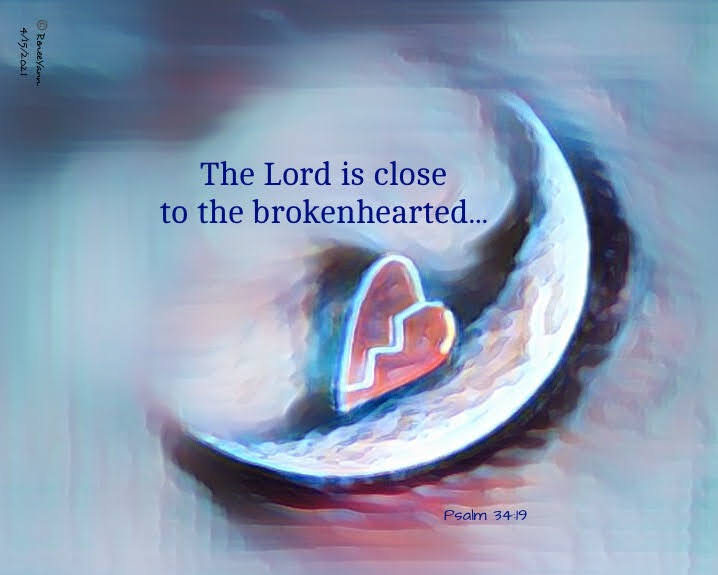
The LORD is close to the brokenhearted; and those who are crushed in spirit are saved. The LORD redeems the lives who serve with love; no one incurs guilt who takes refuge in God.
Psalm 34: 19,23
In our first reading, the prophet Zephaniah reveals a key promise. After all is said and done, God will remain with those who keep faith. Scripture scholars refer to these faithful ones as “the remnant people” – those whose faith is so strong that it cannot be dislodged from God.
These “remnant people” are the ones who are found ready and waiting when the Savior is born. They are people like Mary and Joseph, Elizabeth and Zechariah, Anna and Simeon.
As we approach the Christmas Promise, may we be among the awaiting faithful too. May we look to the Lord for whom we waited and be “radiant with joy”!
Poetry: Radiant from “In the Arms of the Beloved” by Rumi
Lose yourself, Lose yourself in this love. When you lose yourself in this love, you will find everything.
Lose yourself, Lose yourself. Do not fear this loss, For you will rise from the earth and embrace the endless heavens.
Lose yourself, Lose yourself. Escape from this earthly form, For this body is a chain and you are its prisoner. Smash through the prison wall and walk outside with the kings and princes.
Lose yourself, Lose yourself at the foot of the Holy One. When you lose yourself before the Holy you will become the holy.
Lose yourself, Lose yourself. Escape from the black cloud that surrounds you. Then you will see your own light as radiant as the full moon.
Now enter that silence. This is the surest way to lose yourself. . . .
What is your life about, anyway?— Nothing but a struggle to be someone, Nothing but a running from your own silence.
Today, in God’s Lavish Mercy, we pray with the beautiful, humble Psalm 25. Pastor Christine Robinson interprets the prayer in this way:
I put my trust in you, O God, as best as I am able. May I be strong. May I not be afraid May all who open their hearts hear your voice and know your love. Lead me, teach me, help me to trust.
You are gracious to us, O God You guide us, you forgive our clumsy ways You help us prosper.
When I am sad and anxious I school my heart to trust I act with integrity and uprightness And hope to feel your touch in my heart. May it be so for all the peoples of the earth Who call you by many names.
Psalms for the New World – Christine Robinson
The psalm anchors our other readings today to suggest a theme of searching for Light in the darkness. Certainly, this was the quest of St. Lucy whose memorial we also mark today.
Lucy is the patroness of the blind. She was a brave young woman, martyred during the persecutions. Her name meaning “Light”, she has been venerated for millennia as one who can bring clarity and insight to places of darkness.
In our first reading, we hear the first messianic prophecy of the Bible. It is offered by a source perhaps unfamiliar to us — a teller of the future, Balaam.
Balaam is a diviner in the Torah (Pentateuch) whose story begins in Chapter 22 of the Book of Numbers. Every ancient reference to Balaam considers him a non-Israelite, a prophet, and the son of Beor.King Balak of Moab offered him money to curse Israel (Numbers 22–24), but Balaam blessed the Israelites instead as dictated by God. Nevertheless, he is reviled as a "wicked man" in both the Torah and the New Testament. (Wikipedia)
That story is the one we read today, and it contains a beautiful prophecy to be fulfilled fifteen hundred years after its utterance:
The utterance of Balaam, son of Beor,
        the utterance of the man whose eye is true,
    The utterance of one who hears what God says,
        and knows what the Most High knows,
    Of one who sees what the Almighty sees,
        enraptured, and with eyes unveiled.
    I see him, though not now;
        I behold him, though not near:
    A star shall advance from Jacob,
        and a staff shall rise from Israel.
Sometimes we just need to be pointed toward that star, don’t we? We kind of “see God – but not now; behold God — but not near”. It’s not always easy to believe, to trust.
We all have painful situations, unanswered hopes, lingering fears. Let us bring them out of the shadows today with the help of St. Lucy and our Brilliant God who made the stars to give us hope.
As the year moves closer to its time of deepest darkness, may we know God’s brightness in our hearts. May we sense God lighting, once again, the dark places in our lives and in our world — leading us to a “Christmas Resurrection”.
Prose: from The Seaboard Parish by George Macdonald
The world ... is full of resurrections...
Every night that folds us up in darkness
is a death; and those of you that have
been out early, and have seen the
first of dawn, will know it -
the day rises out of the night like
a being that has burst its tomb
and escaped into life.
Today, in Mercy, we celebrate Gaudete Sunday, Advent’s joyful midway pause.
Advent was originally, like Lent, a time of fasting. Midway in the fast, the Church took a break from its rigors and rejoiced prematurely for the coming Christmas.
I remember going, as a grade schooler, with my mother to buy two candy bars on the Saturday before Gaudete (because most stores were closed on Sunday back then!) After Sunday Mass, we would hold a sort of “sweetness ceremony”, delighting in our choices. Mom’s was always a Milky Way. My choice ran with the fads, sticking for a few years on Rollos – remember them?
The Church has its own “sweet ceremony” on Gaudate Sunday. Pink vestments worn for the liturgy indicate joy, as do the uplifting readings.
In our first reading, Zephania tells us that “the Lord will rejoice over us with gladness!”
Shout for joy, O daughter Zion! Sing joyfully, O Israel! Be glad and exult with all your heart, O daughter Jerusalem!
Zephania 3:14
In a reassuring blessing, Paul tells us, “Don’t worry. Be happy!”
Rejoice in the Lord always. I shall say it again: rejoice! Your kindness should be known to all. The Lord is near. Have no anxiety at all, but in everything, by prayer and petition, with thanksgiving, make your requests known to God. Then the peace of God that surpasses all understanding will guard your hearts and minds in Christ Jesus.
Philippians 4: 4-7
Even serious John the Baptist seems to tingle with expectation of the coming Savior. He’s just a little more taciturn in his proclamations.
John answered them all, saying, “I am baptizing you with water, but one mightier than I is coming. I am not worthy to loosen the thongs of his sandals. He will baptize you with the Holy Spirit and fire.
Luke 3: 16-17
In our terribly commercialized holiday world, let’s stop and remember the true cause of our hope and celebration.
What gives your heart real joy as we approach the holy celebration of Christmas?
What is the sacred delight you long for in your heart and soul?
Let’s make a deeper effort this week, which will require so much bustle of us, to settle our hearts on God – remembering that God’s sweet presence with us is what this whole season is about.
Poetry: The Flower by George Herbert
How fresh, oh Lord, how sweet and clean Are thy returns! even as the flowers in spring; To which, besides their own demean, The late-past frosts tributes of pleasure bring. Grief melts away Like snow in May, As if there were no such cold thing.
Who would have thought my shriveled heart Could have recovered greenness? It was gone Quite underground; as flowers depart To see their mother-root, when they have blown, Where they together All the hard weather, Dead to the world, keep house unknown.
These are thy wonders, Lord of power, Killing and quickening, bringing down to hell And up to heaven in an hour; Making a chiming of a passing-bell. We say amiss This or that is: Thy word is all, if we could spell.
Oh that I once past changing were, Fast in thy Paradise, where no flower can wither! Many a spring I shoot up fair, Offering at heaven, growing and groaning thither; Nor doth my flower Want a spring shower, My sins and I joining together.
But while I grow in a straight line, Still upwards bent, as if heaven were mine own, Thy anger comes, and I decline: What frost to that? what pole is not the zone Where all things burn, When thou dost turn, And the least frown of thine is shown?
And now in age I bud again, After so many deaths I live and write; I once more smell the dew and rain, And relish versing. Oh, my only light, It cannot be That I am he On whom thy tempests fell all night.
These are thy wonders, Lord of love, To make us see we are but flowers that glide; Which when we once can find and prove, Thou hast a garden for us where to bide; Who would be more, Swelling through store, Forfeit their Paradise by their pride.
Music: Gaudete in Domino sung by the Schola of St. Meinrad Abbey (Latin and English lyrics below)
Gaudete in Domino semper iterum dico gaudete. Modestia vestra nota sit omnibus hominibus. Dominus prope est. Nihil solliciti sitis sed in omni oratione et obsecratione cum gratiarum actione petitiones vestrae innotescant apud Deum. Et pax Dei quae exsuperat omnem sensum custodiat corda vestra et intellegentias vestras in Christo Iesu [Domino nostro].
Rejoice in the Lord always: and again I say, rejoice. Let your moderation be known unto all men. The Lord is at hand. Be careful for nothing; but in every thing by prayer and supplication with thanksgiving let your requests be made known unto God. And the peace of God, which passeth all understanding, shall keep your hearts and minds through Christ Jesus [our Lord].
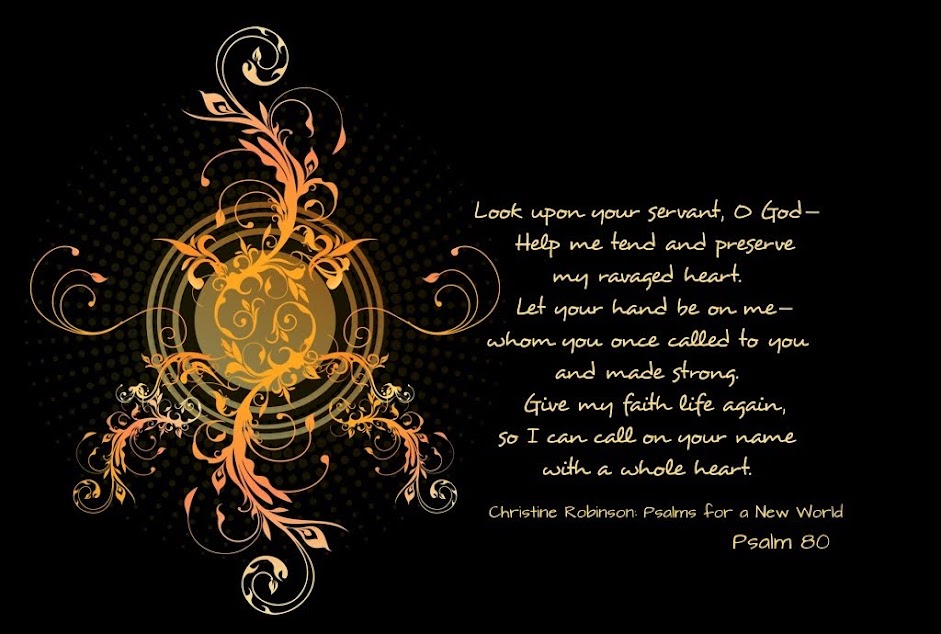
Today, in God’s Lavish Mercy, we pray with Psalm 80 which calls upon God to “rouse” – to wake up, to look toward us from heaven, and to take care of us. Perhaps the psalm calls us to wake too????
O shepherd of Israel, hearken, From your throne upon the cherubim, shine forth. Rouse your power. Once again, O LORD of hosts, look down from heaven, and see; Take care of this vine, and protect what your right hand has planted the we whom you yourself made strong.
Psalm 80: 2-3;15-16
Our Gospel places us with Jesus, as he descends the mountain after the Transfiguration.
He speaks about two great prophets – Elijah and John the Baptist:
Elijah – the fiery reformer who “turned back hearts” to the day of the Lord
John – who cried out in the desert, “Prepare the way of the Lord!”
These prophets open the door to our final approach to Christmas – our last few days to heed their advice and ready our hearts for the awesome, yet humble, coming of Christ.
Is there anything in my heart that needs to be turned back to God — any energy, dedication or insight that has shifted from God’s Way to my own selfish way?
Is there anything I must prepare so that my life is ready to receive Christ?
These are the questions Elijah and John offer us today.. Praying Psalm 80, we might ask that God care for us and show us the way to the Christmas Light.
Poetry: The God We Hardly Knew – Saint Oscar Romero
No one can celebrate a genuine Christmas without being truly poor.
The self-sufficient, the proud, those who, because they have everything, look down on others, those who have no need even of God – for them there will be no Christmas.
Only the poor, the hungry, those who need someone to come on their behalf, will have that someone. That someone is God. Emmanuel. God-with-us. Without poverty of spirit there can be no abundance of God.
Music: Prepare the Way, O Zion – Fernando Ortega (Lyrics below)
Prepare the way O Zion Your Christ is drawing near Let every hill and valley A level way appear Greet One who comes in glory Foretold in sacred story
Chorus: O blest is Christ that came In God’s most holy name Christ brings God’s rule O Zion He comes from heaven above His rule is peace and freedom And justice truth and love Lift high your praise resounding For grace and joy abounding
Fling wide your gates, O Zion Your Savior’s rule embrace And tidings of salvation Proclaim in every place All lands will bow rejoicing Their adoration voicing
Today, in God’s Lavish Mercy, Isaiah paints a poetic picture of the soul fully taught by God. He describes that sacred obedience, or heart’s listening to God, which leads to fullness of joy, peace and eternal life.
I, the LORD, your God, teach you what is for your good, and lead you on the way you should go. If you would hearken to my commandments, your prosperity would be like a river, and your vindication like the waves of the sea; Your descendants would be like the sand, and those born of your stock like its grains, Their name never cut off or blotted out from my presence.
Isaiah 48:17-19
When looking for music to complement Isaiah’s passage, I found a hymn written in 1876 by Frances R. Havergal, an English Anglican poet and hymn writer.
Her hymn Like a River Glorious, although written in older style language, contains several beautiful metaphors, many reflective of today’s passage from Isaiah.
You might want to pray with one or two of these images today:
A river of grace – perfect, yet deepening
Our hearts “stayed” upon God, anchored in faith
Being hidden in the hollow of God’s hand
“no blast of hurry” to disturb our peace (so appropriate to this busy season)
Our joys and sorrows falling like shadows across the sundial of our lives
I hope you enjoy praying with this hymn, and the accompanying pictures, as much as I did. Be peaceful with them, and let the one meant for you find you
Music: Like a River Glorious – Frances R. Havergal – 1876; performed here by the Parkview Mennonite Church. Follow the images and verses below.
Like a river glorious is God’s perfect peace, Over all victorious, in its bright increase; Perfect, yet it floweth fuller every day, Perfect, yet it groweth deeper all the way.
Refrain: Stayed upon Jehovah, hearts are fully blest Finding, as He promised, perfect peace and rest.
Hidden in the hollow of His blessed hand, Never foe can follow, never traitor stand;
Not a surge of worry, not a shade of care, Not a blast of hurry touch the spirit there.
(Refrain then …)
Every joy or trial falleth from above, Traced upon our dial by the Sun of Love; We may trust Him fully, all for us to do; They who trust Him wholly find Him wholly true.
Today, in God’s Lavish Mercy, we pray with inspired Isaiah who must have had such a beautiful mind – a mind to imagine God making a tired world new!
In our first reading, Isaiah shows us what our radiant and nourishing God can do for those who live in darkness, destitution and fear. (Once we get past the unfortunate metaphor of being called a worm!)
I will open up rivers on the bare heights, and fountains in the broad valleys; I will turn the desert into a marshland, and the dry ground into springs of water. I will plant in the desert the cedar, acacia, myrtle, and olive; I will set in the wasteland the cypress, together with the plane tree and the pine, That all may see and know, observe and understand, That the hand of the LORD has done this, the Holy One of Israel has created it.
Isaiah 41:18-20
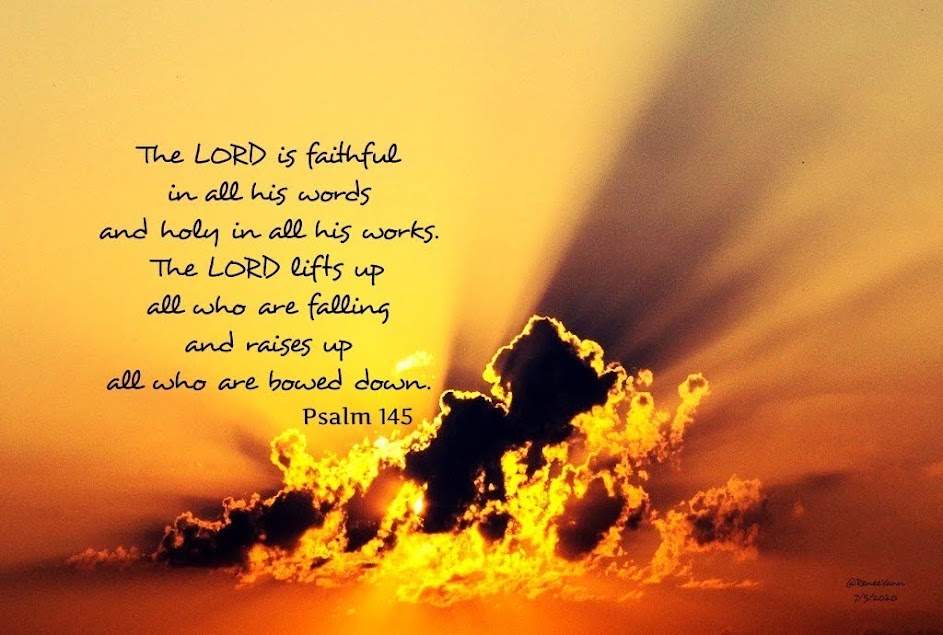
Psalm 145 reminds that God is with us – on our side – in both Advent and our Life Journey.
As the year moves closer to its time of deepest darkness, may we know God’s bright Presence in our hearts. May we sense God lighting, once again, the dark places in our lives and in our world.
We all have parched and painful situations, unanswered hopes, lingering fears. Let us bring them out of the shadows today and open them to the refreshing grace of God who made the stars to give us hope.
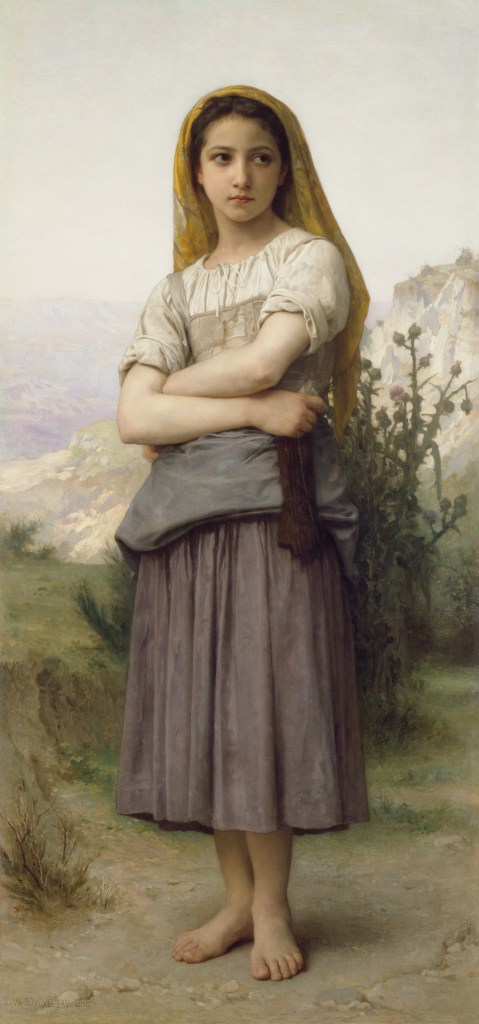
With these two brief excerpts from Father John Foley’s magnificent book, we see a young Mary – innocent, joyful, and delightfully human. She is a Mary we can relate to and turn to in trusted prayer.
by Bouguereau
This was a little child who knew not man, Nor life, nor all the needed frauds of life, Nor any compromise, and when she turned To raise the earthen jar, and faced the airs Of Spring, she smiled for young security, And she was glad. These were her own, these lanes, Of Nazareth. She’d known the slope and feel Of them for all her years, and they had known Of her, and she was walking now and was Familiar, and the well she sought not far Beyond the clustered house was so old It had become a part of permanence. The sky around it was so clear, serene With blue, and framed with hills that had been hers For always, and which lifted up a silence She had loved. These thresholds were her friends, These white walls leaning, and the narrow doors, And she could watch the shadows and the slant Of sun, and turn a corner so, and hear The farther crowing of a cock, and guess That in the marketplace were dusty sheep She could not hear; and passing on, she marked With deeper care that from an opened window Rose the sound of psalms. She was at home. few streets and the ruts in them were home, And she was sure, and young, and now the others At the well had called to her, and said Among them it was Mary who had come.
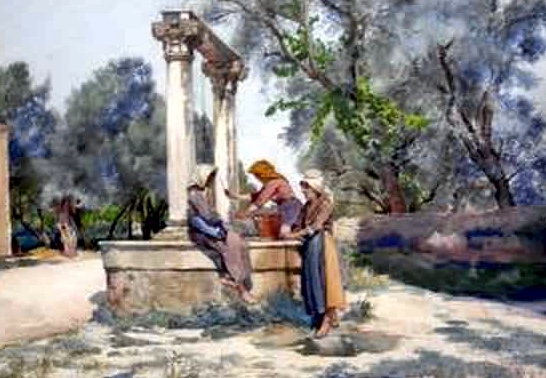
by Mercier
…
And smiling in the peace that mantled her, She reached her father’s door again and stepped Within to old repeated tasks and cares That for these brief months still would be her own. No change had come because the plighted word Of Joseph had been said, and villagers Could recognize she was betrothed to him. The spinning must be done, the weaving threads Be caught and mended, and the knots untied, The pans and ovens filled with bread, the crusts Must still be hoarded, and the counted needs Of poverty be met. She walked upon The stairs and watched for Joachim, and called Across the street to neighbors and received Their news, and when the day was bright, she closed The shutters to the sun.
by Degas
She woke, and slept, And moved, and bound her hair up in a braid. She saved the moments out that gave her heart To God, as she had always done, and all Around her, Nazareth was small and old And settled on its hills, and kept the old Ways it had learned. She was a young girl here….
But when across the years we see her so, Our generation finds it hard to think Of her as one with us. Our stains have made Us hesitant, and sad remembrance curls And turns within to slow the prideful binding To ourselves, as if the very claim Could soil in her the grace whose essence is It is not soiled. This name is benediction On our blood, defense and refuge, hope And harbor, and our one fair memory Of innocence, and we have known too long Its silence on the world’s wild clamoring Not now to know this name is uttered prayer And not a name.
Today, in God’s Lavish Mercy, we celebrate one of the many feasts honoring Mary, Mother of Jesus.
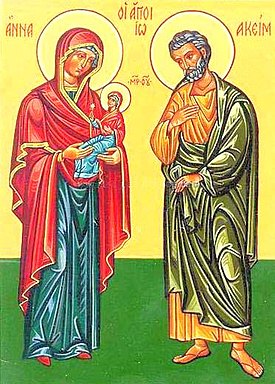
Anna and Joachim
Today’s feast can be confusing to people. It is sometimes mixed up with the Virgin Birth – the moment when Jesus was born. What we celebrate today, however, is the moment Mary was conceived by her parents, Anna and Joachim.
Over the centuries, devotional practice has tended to make Mary more than human – to separate her from the rest us because of her great holiness. However, many theologians today encourage us to find in Mary the same human struggles and triumphs we all meet in life. In this way, we can learn from her and be supported on our own path to holiness.
Today, as we pray with our many images, devotions and understandings of Mary, may we open our hearts to be inspired by her singular witness to God’s desire to be among us.
Poetry: On a separate entry today, I have copied a few passages from the beautiful classic, ” A Woman Wrapped in Silence”. I absolutely love this book and it has been my treasured companion through at least fifty Advents (and Lents). I highly recommend it to you. Read it in small doses that you can break open in your prayer.
Music: The Magnificat – Mary’s radical prayer for justice and mercy, sung here in Latin by the Daughters of Mary (English below)
My soul magnifies the Lord, and my spirit rejoices in God my Savior. For he has regarded the lowliness of his handmaiden. For behold, from henceforth all generations shall call me blessed. And his mercy is on them that fear him throughout all generations. He has shown strength with his arm. He has scattered the proud in the imagination of their hearts. He has put down the mighty from their seat s and has exalted the humble and meek. He has filled the hungry with good things. And the rich he has sent empty away. Remembering his mercy, he has helped his servant Israel as he promised to our forefathers Abraham, and his posterity forever.















 Lavish Mercy