Worthy of the Call

Feast of Saint Matthew, Apostle and evangelist
September 21, 2023

Today’s Readings:

https://bible.usccb.org/bible/readings/092123.cfm

Today, in God’s Lavish Mercy, we pray with Paul and Matthew that we may deepen our reverence for the call we have received.

I, a prisoner for the Lord,
urge you to live in a manner worthy of the call you have received,
with all humility and gentleness, with patience,
bearing with one another through love,
striving to preserve the unity of the Spirit
through the bond of peace:
one Body and one Spirit,
as you were also called to the one hope of your call;
one Lord, one faith, one baptism;
one God and Father of all,
who is over all and through all and in all.

But grace was given to each of us
according to the measure of Christ’s gift. 
Ephesians 4:1-7

Many of us think of a “call” as a one-time event, for example, the moment we say “yes” to a marriage proposal, or the profession of vows in religious commitment.

Our Gospel describes such a life call for Matthew:

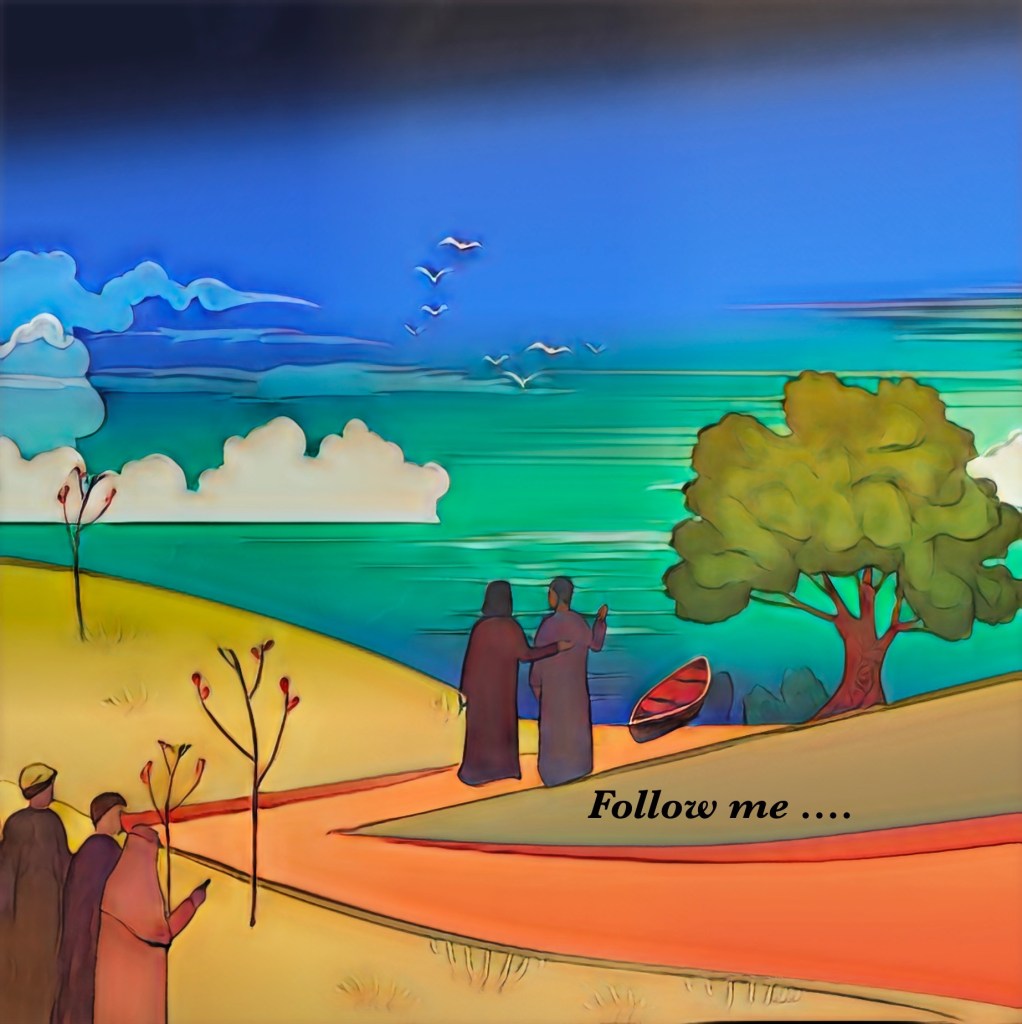
As Jesus passed by,
he saw a man named Matthew sitting at the customs post.
He said to him, “Follow me.”
And he got up and followed him.

Matthew 9:9

But we can be certain that this was not Matthew’s only and final call. Jesus kept calling Matthew every day of his life to move deeper and deeper into the heart of God.

Like Matthew, we are all sitting at the table of life sometimes unaware of God’s power passing right in front of us. Matthew looked up from his tax sheets just in time to see Jesus’s all-knowing, all-loving glance. And that moment changed everything for Matthew. The call, crystalized in that sacred moment, had unfolded for years and would continue to unfold throughout Matthew’s life.


Maybe we spend a lot of our time fiddling with life’s calculations like Matthew did. We need to make our checkbooks balance, our calendars synchronize, our recipes succeed, our bills resolve. Sometimes we have so much ciphering going on that we don’t even glance up to see real Life passing by.


Jesus teaches that the underlying calculus of our lives must be mercy. He wants us to see where mercy is needed and to spend ourselves in its name. When Matthew’s buddies criticized him for following his call, Jesus confronted them with their own call, “Go and learn…”

The Pharisees saw this and said to his disciples,
“Why does your teacher eat with tax collectors and sinners?”
He heard this and said,
“Those who are well do not need a physician, but the sick do.
Go and learn the meaning of the words,
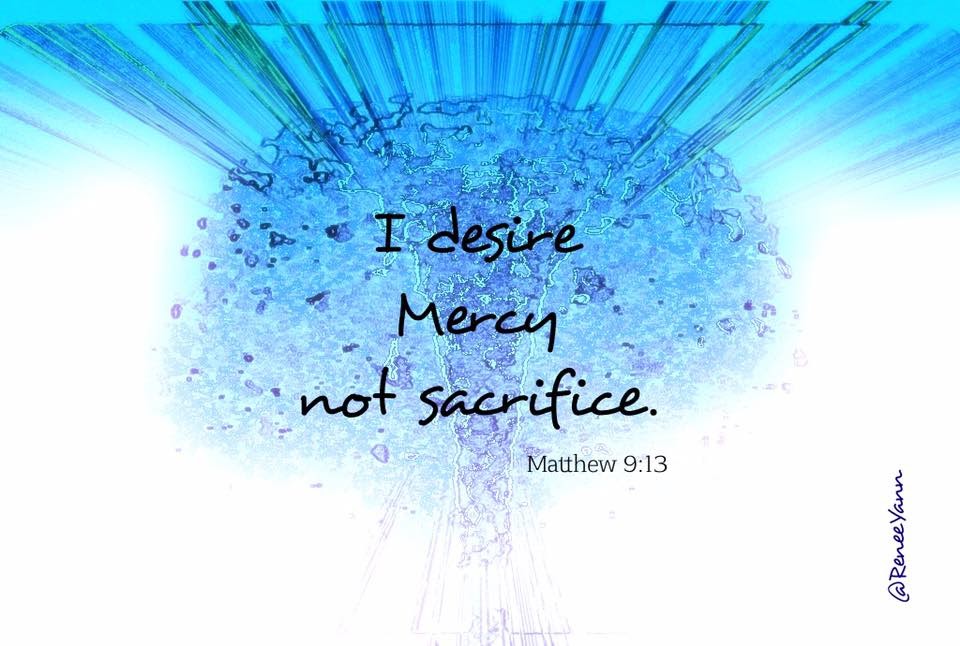
I desire mercy, not sacrifice.
I did not come to call the righteous but sinners.”

Matthew 9:11-13

I hope those pharisaical critics listened. I hope I do too.


Poetry: The Calling of St. Matthew – James Lasdun

This beautiful, thought-provoking poem by James Ladsun suggests that Matthew had prepared himself, over many years and through many choices, to hear the call when it finally came. The poet imagines that Matthew had completed a slow emptying of his life in charity and thus left the space for God’s voice.

Lasdun wrote the poem referencing a painting of the same name by Caravaggio. ‘The painting was completed in 1599–1600 for the Contarelli Chapel in the church of the French congregation, San Luigi dei Francesi in Rome, where it remains. This painting, by the way, is a favorite of Pope Francis. He has said he went often to contemplate it on his earlier visits to Rome.

Not the abrupt way, frozen
In the one glance of a painter’s frame
Christ in the doorway pointing. Matthew’s face
Bright with perplexity, the glaze
Of a lifetime at the countinghouse
Cracked in the split second’s bolt of being chosen.

But over the years, slowly,
Hinted at, an invisible curve;
Persistent bias always favoring
Backwardly the relinquished thing
Over the kept, the gold signet ring
Dropped in a beggar’s bowl, the eye not fully

Comprehending the hand, not yet;
Heirloom damask thrust in a passing
Stranger’s hand, the ceremonial saddle
(Looped coins, crushed clouds of inline pearl)
Given on an irresistible
impulse to a servant. Where it sat

A saddle-shaped emptiness
Briefly, obscurely brimming … Flagons
Cellars of wine, then as impulse steadied
into habit, habit to need,
Need to compulsion, the whole vineyard
The land itself, graves, herds, the ancestral house,

Given away, each object’s
Hollowed-out void successively
More vivid in him than the thing itself,
As if renouncing merely gave
Density to having; as if
He’s glimpsed in nothingness a derelict’s

Secret of unabated,
Inverse possession … And only then,
Almost superfluous, does the figure
Step softly to the shelter door;
Casual, foreknown, almost familiar,
Calmly received, like someone long awaited.

Music: The Call – Vaughan Williams

Come, my Way, my Truth, my Life:
Such a Way, as gives us breath:
Such a Truth, as ends all strife:
Such a Life, as killeth death

Come, My Light, my Feast, my Strength:
Such a Light, as shows a feast:
Such a Feast, as mends in length:
Such a Strength, as makes his guest

Come, my Joy, my Love, my Heart:
Such a Joy, as none can move:
Such a Love, as none can part:
Such a Heart, as joys in love
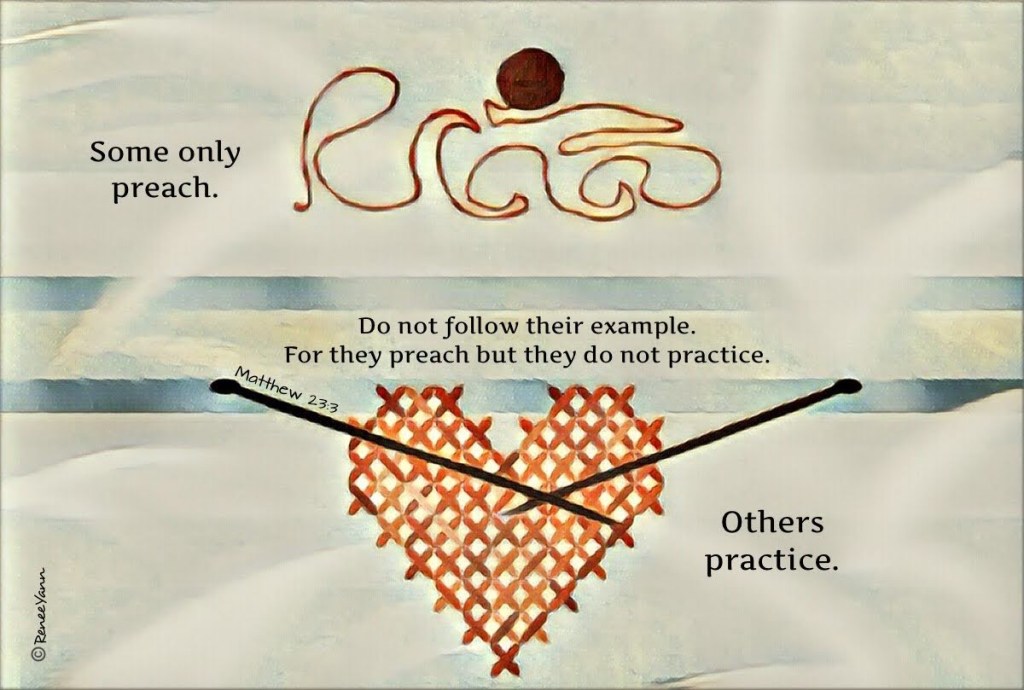

Leadership: Service not Status

Saturday of the Twentieth Week in Ordinary Time
August 26, 2023

Today’s Readings:

https://bible.usccb.org/bible/readings/082623.cfm


Today, in God’s Lavish Mercy, we continue with the story of Ruth, prototype of the Servant Christ. And we pray our first reading in the light of today’s Gospel in which Jesus teaches his disciples a key lesson in servant leadership:

Jesus spoke to the crowds and to his disciples, saying,
“The scribes and the Pharisees
have taken their seat on the chair of Moses.
Therefore, do and observe all things whatsoever they tell you,
but do not follow their example.
For they preach but they do not practice.
They tie up heavy burdens hard to carry
and lay them on people’s shoulders,
but they will not lift a finger to move them.
All their works are performed to be seen.
They widen their phylacteries and lengthen their tassels.
They love places of honor at banquets, seats of honor in synagogues,
greetings in marketplaces, and the salutation ‘Rabbi.’

Matthew 23: 1-7

Jesus is so clear in this teaching. How is it that, even after 2000 years, we still don’t get it!

Stop and think about our culture – how we worship glitz, and bling, and “blow-em-up”! Listen to some of our political rhetoric filled with narcissistic “me-ism” and violent braggadocio. Look at some of the people in leadership positions around the world! They are tangled in their “phylacteries and tassels” and tripping us up with them.

Yes, even in our churches, we sometimes encounter supposed leaders who delight in places of honor and who lay burdens on the faithful rather than lift them.


Our first reading offers us humble Ruth who led and healed by selfless love.

Our Gospel reminds us that the Christian life is one of servant leadership fueled in a God-centered community to which all belong as sisters and brothers.

As for you, do not be called ‘Rabbi.’
You have but one teacher, and you are all brothers.
Call no one on earth your father;
you have but one Father in heaven.
Do not be called ‘Master’;
you have but one master, the Christ.
The greatest among you must be your servant.
Whoever exalts himself will be humbled;
but whoever humbles himself will be exalted.

Matthew 23:8-12

History is the story of our struggle to find that balance of leadership and community that will foster the life of all people. It is the great struggle between sin and goodness, between a life lived only for self and a life lived generously with others.

As we deepen our spiritual understanding with today’s readings, we may see ways that we want to act and choose more intentionally around the ministry of leadership – as it is exercised by ourselves and by others.


Prayer: from Jesuit Resources at Xavier University.org

A Leader’s Prayer

Leadership is hard to define.
Lord, let us be the ones to define it with justice.
Leadership is like a handful of water.
Lord, let us be the people to share it with those who thirst.
Leadership is not about watching and correcting.
Lord, let us remember it is about listening and connecting.
Leadership is not about telling people what to do.
Lord, let us find out what people want.
Leadership is less about the love of power,
and more about the power of love.

Lord, as we continue to undertake the role of leader let us be
affirmed by the servant leadership we witness in your son Jesus.
Let us walk in the path He has set and let those who will, follow.

Let our greatest passion be compassion.
Our greatest strength love.
Our greatest victory the reward of peace.

In leading let us never fail to follow.
In loving let us never fail.


Hymn: Prayer of St. Francis

Universal Call

Friday of the Thirteenth Week in Ordinary Time
July 7, 2023

Today’s Readings:

https://bible.usccb.org/bible/readings/070723.cfm


Today, in God’s Lavish Mercy, each of our readings presents a story of vocation and how it is fulfilled in a lifespan.

Our reading from Genesis describes four people at different stages of their life’s vocation: Abraham and Sarah in its fulfillment, Isaac and Rebekah in its initial hope.


For my prayer, I focused on Abraham who is closing out his story in peace, prosperity, and active hope for a future he will not see:

Abraham had now reached a ripe old age,
and the LORD had blessed him in every way.
Abraham said to the senior servant of his household,
who had charge of all his possessions:
“Put your hand under my thigh,
and I will make you swear by the LORD,
the God of heaven and the God of earth, …
… that you will go to my own land and to my kindred
to get a wife for my son Isaac.”

Genesis 24:1-4

Both Abraham and Sarah lived long and fruitful lives, matured in faith, and died in peace. Through the extensive history of their lives, they listened to and trusted God (on and off!), acted for God’s glory, and guided their household in God’s way.

They listened, responded and connected their lives irrevocably to God’s vision.
It is at once a simple and a challenging formula for spiritual fulfillment.


In our Gospel, Matthew is called to the same formula which is the underpinning of any vocation:

As Jesus passed by,
he saw a man named Matthew sitting at the customs post.
He said to him, “”Follow me.””
And he got up and followed him.
While he was at table in his house,
many tax collectors and sinners came
and sat with Jesus and his disciples.
The Pharisees saw this and said to his disciples,
“”Why does your teacher eat with tax collectors and sinners?””
He heard this and said,
“Those who are well do not need a physician, but the sick do.
Go and learn the meaning of the words,
I desire mercy, not sacrifice.”

Matthew 9:9-12

Matthew listens to Jesus’ call, responds,
and connects his life irrevocably to Jesus’ vision.


The continuing call for each of us is clear. Each of our lives offers us a particular expression of “vocation”. It may be as religious, priest, parent, spouse, family member, teacher, caregiver, public servant, or any other role that places us in loving and responsible relationship with our neighbor.

In that role, can we/do we:

  • listen for God in every circumstance
  • respond in faith, hope, and love
  • witness a Christ-rooted life by our actions for Gospel justice and mercy

Poetry: Vocation by William E. Stafford

This dream the world is having about itself 
includes a trace on the plains of the Oregon trail, 
a groove in the grass my father showed us all 
one day while meadowlarks were trying to tell
something better about to happen. 

I dreamed the trace to the mountains, over the hills, 
and there a girl who belonged wherever she was; 
but then my mother called us back to the car: 
she was afraid; she always blamed the place,
the time, anything my father planned. 

Now both of my parents, the long line through the plain, 
the meadowlarks, the sky, the world's whole dream 
remain, and I hear him say while I stand between the two,
helpless, both of them part of me:
"Your job is to find what the world is trying to be."

Music: The Call – Celtic Women sing a song written by Anthony Downes


God Has Always Been in Love with Us!

Eleventh Sunday in Ordinary Time
January 18, 2023

Today’s Readings:

https://bible.usccb.org/bible/readings/061823.cfm


Today, in God’s Lavish Mercy, our beautiful readings this Sunday paint the picture of a God Who is eternally in love with us.

The writer of Exodus twenty-five hundred years ago knew this.

Then the LORD called to Moses and said,
“Thus shall you say to the house of Jacob;
tell the Israelites:
You have seen for yourselves how I treated the Egyptians
and how I bore you up on eagle wings
and brought you here to myself.
Therefore, if you hearken to my voice and keep my covenant,
you shall be my special possession,
dearer to me than all other people
,
though all the earth is mine.

Exodus 19:3-5

Yes, God is eternally in love with us. Paul knew this when he wrote to the Romans about a half-century after Jesus lived on earth.

For Christ, while we were still helpless,
yet died at the appointed time for the ungodly.
Indeed, only with difficulty does one die for a just person,
though perhaps for a good person one might even find courage to die.
But God proves his love for us in that
while we were still sinners Christ died for us
.

Romans 5:6-8

And Matthew knew that God is eternally in love with us when he recorded this memory of his beloved Jesus:

At the sight of the crowds, Jesus’ heart was moved with pity for them
because they were troubled and abandoned,
like sheep without a shepherd.
….
Jesus sent out these twelve after instructing them thus,
“Do not go into pagan territory or enter a Samaritan town.
Go rather to the lost sheep of the house of Israel.
As you go, make this proclamation: ‘The kingdom of heaven is at hand.’
Cure the sick, raise the dead, cleanse lepers, drive out demons.

Matthew 9:36; 10:5-8

If God has loved us this long and this much, isn’t it time for us to really love God back?

In the above situations, and in our own lives, all that God ever asks for is faithfulness – through ups and downs, through ins and outs – God longs for our unwavering relationship.

A deep loving relationship like that requires our complete attention toward the Beloved.

How’re you doing with that?

It’s a question I’ll be asking myself – and God – in my prayer today.


Poetry: from Love’s Fire: Re-Creations of Rumi by Andrew Harvey

It is He who suffers his absence in me 
Who through me cries out to himself.
Love’s most strange, most holy mystery--
We are intimate beyond belief.

Music: The Everlasting Love of God – Matt Boswell and Matt Papa

Blessed

Monday of the Tenth Week in Ordinary Time
June 12, 2023

Today’s Readings:

https://bible.usccb.org/bible/readings/monday-tenth-week-ordinary-time


Today, in God’s Lavish Mercy, we resume reading Matthew’s Gospel which will last all the way to the beginning of September. What a gift to spend the summer with Jesus as Matthew came to understand and proclaim him.

So who is the “Jesus of Matthew”? Matthew’s Jesus is the Messiah, the long-awaited fulfillment of God’s promise to Abraham, a promise woven throughout the Hebrew Scriptures. Matthew writes to an audience who believe in Christ but who are nevertheless steeped in the Jewish religion. Matthew is intent on showing Jesus as the fulfillment of all they have believed.

Matthew’s Jesus is very Jewish. He is the Promise realized, the Hope fulfilled, Salvation achieved.


But Matthew’s Jesus is also the Challenger, the Upsetter and the Revolutionary.

In his Gospel sermon today, Jesus asks his believers to invert their worldly thinking and to take on the new mind of God – a God who loves the losers more than the winners! In the Beatitudes, Jesus gives an astounding new meaning to the word ‘blessed”.

In the Sermon on the Mount, Jesus contradicted all human judgments and all nationalistic expectations of the kingdom of God. The kingdom is given to the poor, not the rich; the feeble, not the mighty; to little children humble enough to accept it, not to soldiers who boast that they can obtain it by their own prowess.

John R. W. Stott, The Message of the Sermon on the Mount

I’ve been reading the Beatitudes my whole life, and they still confound me. I can’t honestly say that I want to be poor, mourning, meek, hungry, or thirsty. The only way I have been able to comprehend the Beatitudes is when I have found them in someone else and they have been kind enough to teach me.

I found “Blessed are the poor in spirit” one morning where he lived on a steam vent in downtown Philadelphia. He taught me courage and honesty.

Blessed are those who mourn” was a brokenhearted young wife who taught me how to love by steadfastly caring for her dying husband during his hospice journey.

Blessed are the meek” was a Cuban exile physician who was barred from a U.S. medical license. He taught me by lovingly serving as an orderly in the E.R. where I worked.

Blessed are those who hunger for righteousness” was an old Franciscan sister who was arrested with me in the Nevada desert as we protested nuclear war. Authorities had to handcuff her to her walker so that she could remain standing in the holding cell in the wretched heat.

Blessed are the merciful” is the name of our sisters and nurses at our healthcare facility who teach me by their tireless tenderness toward those who suffer

Blessed are the pure of heart” has sat with me a thousand times to pray and discern God’s Spirit in our hearts

Blessed are the peacemakers” have walked beside me in protests, written letters, made phone calls, witnessed peace in their own lives

Blessed are the persecuted” are my Black, Latino, differently-abled, and LGBTQ friends who have both taught and forgiven me for my prejudices, stereotyping, and ignorance


Learning to really live the Beatitudes is key to the Christian life, and it is an ongoing education until the day we die. As we pray with today’s Gospel, may we receive abundant grace for our learning.


Poetry: The Beatitudes – Malcolm Guite

We bless you, who have spelt your blessings out,
And set this lovely lantern on a hill
Lightening darkness and dispelling doubt
By lifting for a little while the veil.
For longing is the veil of satisfaction
And grief the veil of future happiness
We glimpse beneath the veil of persecution
The coming kingdom’s overflowing bliss
Oh make us pure of heart and help us see
Amongst the shadows and amidst the mourning
The promised Comforter, alive and free,
The kingdom coming and the Son returning,
That even in this pre-dawn dark we might
At once reveal and revel in your light.

Music: The Beatitudes – John Michael Talbot

Blessed are the poor in spirit
Theirs is the kingdom of heaven
Blessed are those who mourn
They shall be comforted

Blessed are the lowly of heart
They shall inherit the earth
Blest are those who hunger for God
Nevermore shall they hunger or thirst

CHORUS:
Blessings upon the disciples of Jesus
Blessings upon al the multitudes
Blessings upon those who climb the mountain
With Jesus the Lord, with Jesus our Lord

Blessed are those who show mercy
They shall inherit the mercy of God
Blessed are the pure of heart
They shall see the face of God

Blest are those who strive for peace
They shall be the children of God
Blest are those who suffer for holiness
Theirs is the kingdom of God

The Spread of the Gospel

Feast of Saint Matthew, Apostle and evangelist
September 21, 2022

Today’s Readings:

https://bible.usccb.org/bible/readings/092122.cfm

Today, in God’s Lavish Mercy, on this feast of St. Matthew, Apostle and Evangelist, we are blessed with an inspiring reading from Ephesians. We are reminded that each of us is called in God according to our particular gifts. Paul encourages us to live “in a manner worthy of the call we have received” in our Baptism.

evangel Matthew

For most of us, it has been quite a while since we were washed in the waters of our Baptism. A lot of other waters have passed under the bridge since then. We may, or may not, have recognized and responded to our call, continually carried to us on those life waters.

Each moment, each choice, each act and decision asks us once again to choose Christ – over sin, over self, over meaninglessness. Each life opportunity calls us closer to Jesus, to the pattern of his Cross, to the witness of his Resurrection.


Matthew heard such a call as he sat, perhaps dulled by the unconscious disengagement of his life, by the failure to live with intention and openness to grace. As He passed by Matthew, Jesus reached into that ennui, calling Matthew to evangelize all the future generations by his Gospel.

Jesus calls us to be evangelists too – every moment, every day. Our “Yes” to our particular call writes its own Gospel, telling the Good News through our faith, hope and love.


Pope Francis says this:

The spread of the Gospel is not guaranteed either by the number of persons, or by the prestige of the institution, or by the quantity of available resources. What counts is to be permeated by the love of Christ, to let oneself be led by the Holy Spirit and to graft one’s own life onto the tree of life, which is the Lord’s Cross.


Poetry: The Calling of Matthew by James Lasdun

Not the abrupt way, frozen
In the one glance of a painter’s frame
Christ in the doorway pointing. Matthew’s face
Bright with perplexity, the glaze
Of a lifetime at the countinghouse
Cracked in the split second’s bolt of being chosen.
But over the years, slowly,
Hinted at, an invisible curve;
Persistent bias always favoring
Backwardly the relinquished thing
Over the kept, the gold signet ring
Dropped in a beggar’s bowl, the eye not fully
Comprehending the hand, not yet;
Heirloom damask thrust in a passing
Stranger’s hand, the ceremonial saddle
(Looped coins, crushed clouds of inline pearl)
Given on an irresistible
impulse to a servant. Where it sat
A saddle-shaped emptiness
Briefly, obscurely brimming … Flagons
Cellars of wine, then as impulse steadied
into habit, habit to need,
Need to compulsion, the whole vineyard
The land itself, graves, herds, the ancestral house,
Given away, each object’s
Hollowed-out void successively
More vivid in him than the thing itself,
As if renouncing merely gave
Density to having; as if
He’s glimpsed in nothingness a derelict’s
Secret of unabated,
Inverse possession … And only then,
Almost superfluous, does the figure
Step softly to the shelter door;
Casual, foreknown, almost familiar,
Calmly received, like someone long awaited.

Music: When You Call My Name ~ Brian Doerksen & Steve Mitchinson

Alleluia: I’m Rich!

Saturday of the Eleventh Week in Ordinary Time
June 18, 2022

Today’s readings:

https://bible.usccb.org/bible/readings/061822.cfm

Today, in God’s Lavish Mercy, our Alleluia Verse tells us a secret: there is a greater wealth than this world would have us believe. It is a wealth contradicted by human definitions but proven in the Resurrection of Christ.

Alleluia, alleluia.
Jesus Christ became poor although he was rich,
so that by his poverty you might become rich.

This secret doesn’t make sense to one without faith. But if we observe the Iives of those with faith, we will discover their accumulating riches: peace, joy, trust, enthusiasm, hope, gratitude, wisdom, courage….


The Gospel to which our verse leads describes such a faithful life:

Look at the birds in the sky;
they do not sow or reap, they gather nothing into barns,
yet your heavenly Father feeds them.
Are not you more important than they?
Can any of you by worrying add a single moment to your life-span?
Why are you anxious about clothes?
Learn from the way the wild flowers grow.
They do not work or spin.
But I tell you that not even Solomon in all his splendor
was clothed like one of them.

Matthew 6: 26-27

Does this all mean we won’t have challenges in our lives, or disappointment, or suffering? No, I don’t think so.

What is does mean is that we will know what is truly important and precious in our lives – those things that “money can’t buy”. And we will honor them, work for them, share them. Hopefully, people can look at us and find that kind of wealth.


Poetry: Worry About Money – Kathleen Raine

Wearing worry about money like a hair shirt
I lie down in my bed and wrestle with my angel.

My bank-manager could not sanction my continuance for another day
But life itself wakes me each morning, and love

Urges me to give although I have no money
In the bank at this moment, and ought properly

To cease to exist in a world where poverty
Is a shameful and ridiculous offence.

Having no one to advise me, I open the Bible
And shut my eyes and put my finger on a text

And read that the widow with the young son
Must give first to the prophetic genius
From the little there is in the bin of flour and the cruse of oil.


Music: two songs today – one for reflection and one for fun

The Glory Way – Badnarik

Side by Side – Brenda Lee

Alleluia: A Heart Freed to Love

Friday of the Eleventh Week in Ordinary Time
June 17, 2022

Today’s Readings:

https://bible.usccb.org/bible/readings/061722.cfm


Today, in God’s Lavish Mercy, our Alleluia Verse blesses us with one of the Beatitudes

Alleluia, alleluia.
Blessed are the poor in spirit;
for theirs is the Kingdom of heaven.

Poverty of spirit! The concept presents all kinds of questions:

  • What does it really mean? 
  • Must we be materially poor?
  • Will material poverty make us holy?
  • What other kinds greed, besides the love of money, can consume the soul?

Michael Crosby wrote a book – decades ago now – that touched me deeply. It’s one of the signature books of my spiritual life. Here is a quote from it about being poor in spirit:

The Kingdom of God can only be received by empty hands. Jesus warns against

(a) worldly self-sufficiency: you trust yourself and your own resources and don’t need God; 

(b) religious self-sufficiency: you trust your religious attitude and moral life and don’t need Jesus.

Michael H. Crosby, Spirituality of the Beatitudes: Matthew’s Vision for the Church in an Unjust World

Our verse today leads to one of the most profound lines of the Gospel:

Let’s think on these simple yet power-packed encouragements as we examine our own possessions and poverties.


Poetry: from Augustine of Hippo

Thou hast made us for thyself, O Lord, 
and our heart is restless 
until it finds its rest in thee.


Music: St. Augustine’s Prayer – Ed Conlin

Lent: On God’s Good Side?

March 7, 2022
Monday of the First week of Lent

Today, in God’s Lavish Mercy, we are invited to be like God:

The LORD said to Moses,
“Speak to the whole assembly of the children of Israel
and tell them:
Be holy, for I, the LORD, your God, am holy.

Leviticus 19:1

Our first reading goes on to tell us how to be a decent person.

Don’t steal, lie, or cheat
Pay just wages
Respect and help those physically burdened
Be impartial and just
Defend life
Don’t slander, hate, take revenge, or hold a grudge

Basically, the message is about kindness …
deep kindness,
the type that comes from realizing
how infinitely kind God is to us.

Leviticus, after a long list of practical examples, sums it up:

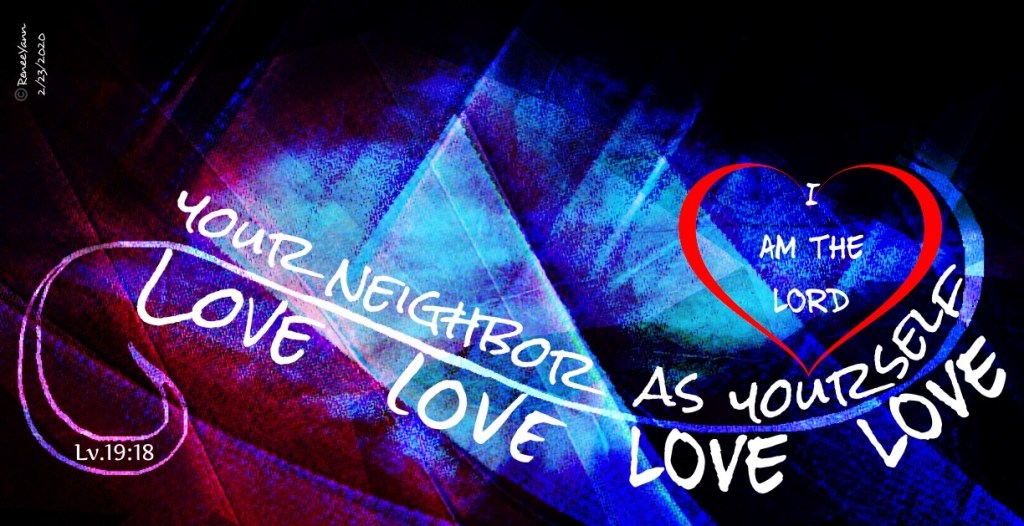
You shall love your neighbor as yourself.
I am the LORD.

Leviticus 19:18

Our Gospel tells us what happens when we make the choice to take the Old Testament advice — or not.

We are all familiar with the parable of the sheep and the goats. And we all hope our scorecard gets us into the right herd “When the Son of Man comes in his glory, and all the angels with him …”

In this parable, Jesus puts the advice of Leviticus into practical form for his followers. But he adds one dynamic element that not only invites but impels our wholehearted response:

Amen, I say to you,
what you did not do for one of these least ones,
you did not do for me.

Matthew 25:40

Leviticus invites us to become holy as God is holy. But Jesus reveals the secret that this Holy God lives in the poor, hungry, homeless, imprisoned and sick. By embracing these most beloved of God, we find the path to holiness.


Poetry: When Did I See You – Renee Yann, RSM

When Did I See You …
(Woman Who Is Homeless)

In the bitter rain of February
I sat inside a sunlit room,
and offered You warm prayer.

Then, she passed outside my window
dressed too lightly for the wind,
steadied on a cane, though she was young.

She seemed searching for
a comfort, unavailable and undefined.
The wound of that impossibility

fell over her the way it falls
on every tender thing that cries
but is not gathered to a caring breast.

Suddenly she was a single
anguished seed of You,
fallen into all created things.

Gathering my fallen prayer,
I wear the thought of her
like cracked earth wears fresh rain.

I’ve misconstrued You,
Holy One, to whom
I spread my heart

as if it were a yearning field…
Holy One, already ripe within
her barest, leanest yearning.

Music: The Least of These – Karl Kohlhase

Catching the Vision

January 15, 2022
Saturday of the First Week in Ordinary Time

Today, in God’s Lavish Mercy, we are introduced to Saul and Matthew. Both these friends of God went through a spiritual process to confirm that Friendship. The process included:

Seeing
Trusting
Choosing


Seeing

In our first reading, Saul first appears chasing a bunch of asses. (I’m not even going there. Draw your own parallels 🤣)

But in his heart of hearts, Saul had another agenda. He wanted to confirm that a growing vision within him was also God’s vision:

Saul met Samuel in the gateway and said,
“Please tell me where the seer lives.”
Samuel answered Saul: “I am the seer.
Go up ahead of me to the high place and eat with me today.
In the morning, before dismissing you,
I will tell you whatever you wish.”

1 Samuel 9:1-19


Trusting

Once our inner horizon begins to clear, our greatest challenge may be to trust what we see. For Saul, that power to trust came by benefit of Samuel’s anointing with oil.

As our jubilant psalm exerts, when we recognize God as our strength, our trust is confirmed:

O LORD, in your strength the king is glad;
            in your victory how greatly he rejoices!
You have granted him his heart’s desire;
            you refused not the wish of his lips.

Psalm 21: 2-3

Choosing

Each one of us, in our own way, experiences this spiritual process. Certainly we see it in how we find our life’s vocation. But we see it in smaller, daily ways as well. Each choice we make in life is a step toward or away from God – toward or away from Love, Mercy, Wholeness and Justice as we learn it in the Gospel.

In our reading from Mark, we witness Matthew in a critical process of “seeing-trusting-choosing”. 

Could more hidden drama
be packed in two simple lines than in these!

Jesus said to him, “Follow me.”
And he got up and followed Jesus.

Wrapped in those verses is Matthew’s whole life up to this point – all the choices that left him leaning so toward God that he could drop everything in one transforming moment to follow God’s call.

Ah, what might Saul and Matthew inspire in us today?

The Calling of St. Matthew – Caravaggio

Poetry: The Calling of the Apostle Matthew – James Lasdun

Not the abrupt way, frozen 
In the one glance of a painter’s frame,
Christ in the doorway pointing, Matthew’s face
Bright with perplexity, the glaze
Of a lifetime at the counting house

Cracked in the split-second’s bolt of being chosen,
But over the years,slowly, Hinted at, an invisible curve;
Persistent bias always favoring
Backwardly the relinquished thing
Over the kept, the gold signet ring
Dropped in a beggar’s bowl, the eye not fully

Comprehending the hand, not yet;
Heirloom damask thrust in passing
Stranger’s hand, the ceremonial saddle
(Looped coins, crushed clouds of inlaid pearl)
Given on an irresistible
Impulse to a servant. Where it sat,

A saddle-shaped emptiness
Briefly, obscurely brimming … Flagons
Cellars of wine, then as impulse steadied
Into habit, habit to need,
Need to compulsion, the whole vineyard,
The land itself, groves, herds, the ancestral house,

Given any, each object’s
Hollowed-out void successively
More vivid in him than the thing itself,
As if renouncing merely gave
Density to having, as if
He’d glimpsed in nothingness a derelict’s

Secret of unabated
Inverse possession … And only then
Almost superfluous, does the figure
Step softly to the shelter door,
Casual, foreknown, almost familiar,
Calmly received, like someone long awaited.

Music: The Call – Vaughn Williams from a poem by George Herbert

Herbert’s short poem is simple and direct. It is almost completely composed of words of one syllable. Allusions to the Old and New testaments, as well as to the Church of England liturgy, abound in Herbert’s poetry. In this short poem there are references to Revelations 22:26: ‘Come, Lord Jesus..’ and to John 14:6, where Jesus is described as ‘the way, the truth and the life’. ‘Come’ is the call of the poet to God, but it is also the response of the poet to a call from God.

This poem has been set to music several times, notably by Ralph Vaughan Williams in his ‘Five Mystical Songs’.

Come, my Way, my Truth, my Life:
Such a Way, as gives us breath:
Such a Truth, as ends all strife:
Such a Life, as killeth death.

Come, My Light, my Feast, my Strength:
Such a Light, as shows a feast:
Such a Feast, as mends in length:
Such a Strength, as makes his guest.

Come, my Joy, my Love, my Heart:
Such a Joy, as none can move:
Such a Love, as none can part:
Such a Heart, as joys in love.