
Friday of the Fifteenth Week in Ordinary Time
July 21, 2023
Today’s Readings:
https://bible.usccb.org/bible/readings/072123.cfm
Today, in God’s Lavish Mercy, we hear the familiar tones of the central Exodus story.

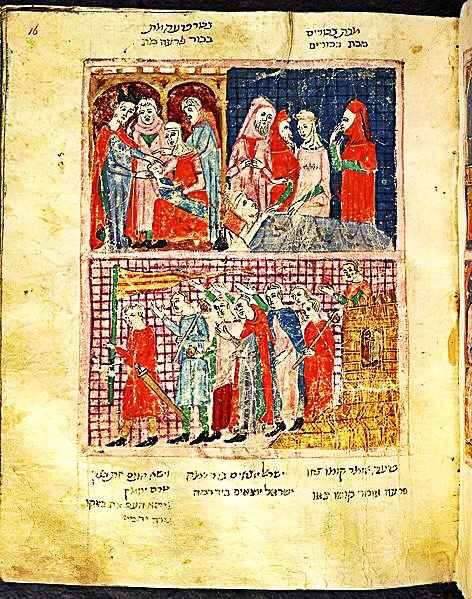
As we prayerfully read this passage, we may be carried back to the many Holy Saturday liturgies we have attended in our lives. In our memories, it is early spring, the evenings are still dark, and chapel is barely lit. We know the momentous story we are about to hear and re-enact. We believe it is brought to fruition in the sacramental liturgy we are about to offer. And, within all the memories, all the rituals, and all the words, one phrase stands out:
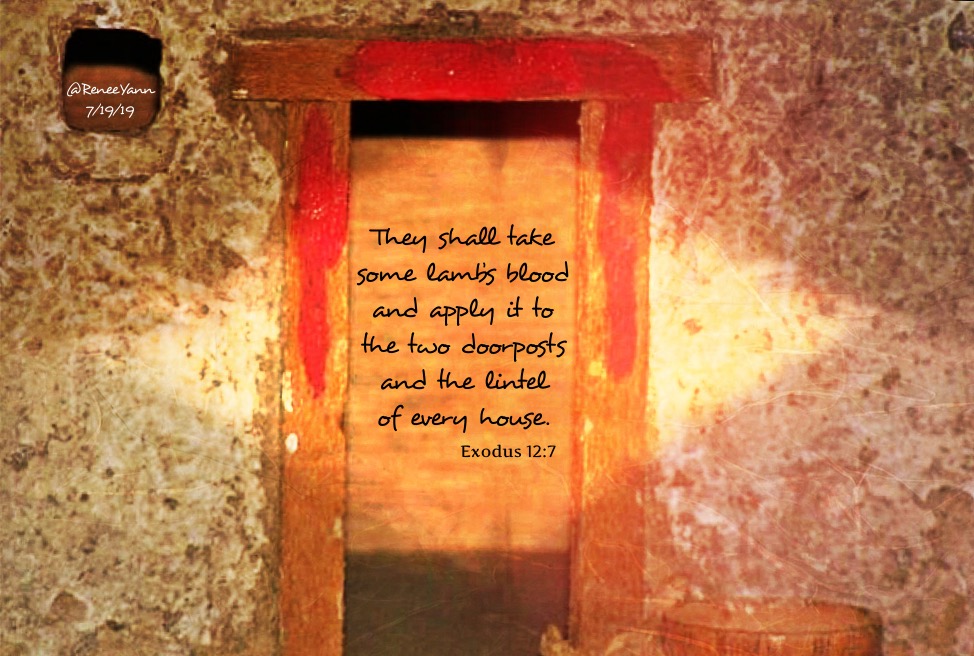
It is the Passover of the Lord.
“This is how you are to eat the lamb:
with your loins girt, sandals on your feet
and your staff in hand,
you shall eat like those who are in flight.
It is the Passover of the LORD.
Walter Brueggemann says that, in the act of “passover”, the community chooses to move on from its prohibitive existence to a new way of being. It chooses an alternative that requires “departure”:
That alternative is not easy or obvious or automatic. It requires a departure, an intentional departure from that system that the Bible terms “exodus.” In that ancient narrative the Israelites did not want to go, and once they had gone they wished to resubmit to Pharaoh. The departure is a piece of demanding, sustained work. The capacity to think and imagine and act and live beyond that system requires imagination that has dimensions of the psychological, the economic, and the liturgical. Indeed, the core liturgy of Israel (Passover) and the derivative liturgies of the church are practiced departures that now and then take on reality in the world.
Walter Brueggemann: Journey to the Common Good

In our reading from Matthew, and continually throughout the Gospel, Jesus invites his community to a profound “departure” – to a new understanding of the Law as love not requirement.
When the Pharisees criticize the hungry disciples for plucking and eating grain heads on the Sabbath, Jesus confronts them:
I say to you, something greater than the temple is here.
Matthew 12:7-8
If you knew what this meant, I desire mercy, not sacrifice,
you would not have condemned these innocent men.
For the Son of Man is Lord of the sabbath.”
Something greater than the Temple?????? The Pharisees stare at Jesus in stunned amazement! Could such a thing be possible?
Our Gospel tells us that not only is it possible, it is reality. The “Temple” and the old Law had lost their heart to the belief that personal power and affluence trumped human need. Their “systems” for becoming holy had become vacuous.
Jesus teaches that gaining sanctity requires that we live in mercy toward ourselves and others. Rituals, Temples, Churches and codes of conduct are meaningless unless they direct us always to act in mercy. When these same institutions and practices contradict God’s Mercy, we must have the courage for “departure” and “passover”.
“Departure” though does not mean abandonment. It means ceasing the merciless practices condoned by institutionalization, and having the courageous perseverance to build new paths to meaning.
It is clear in the Jewish practice of Passover that the exodus memory became a paradigmatic narrative through which all social reality is described and re-experienced. That is, the narrative pertains to a one-time remembered social upheaval caused by God’s holiness; but the narrative looks beyond that one-time memory to see that the same transactions of oppression and emancipation continue everywhere to evoke holy power.
Walter Brueggemann, Journey to the Common Good
Every day of our lives, we are called to “passover” into greater spiritual awareness, merciful practice, and just living. We may hear the call in small personal interactions, or in the larger context of our fragmented world.
We are faced constantly with alternatives between (just to name a few):
- selfishness or generosity
- forgiveness or vengefulness
- honesty or pretense
- peacemaking or rabble-rousing
- addiction or freedom
- informed decision-making or arrogant ignorance
- gossip or respect
- action for the poor or indifferent comfort
- political and economic elitism or social justice
- respect fro Creation or utilitarian ignorance
The sacred bridge in each of these passovers is the Gospel of Jesus Christ. Choosing it wholeheartedly, we will arrive on the right side of God.
Poetry: Journey – by Mary Oliver
One day you finally knew
what you had to do, and began,
though the voices around you
kept shouting
their bad advice--
though the whole house
began to tremble
and you felt the old tug
at your ankles.
"Mend my life!"
each voice cried.
But you didn't stop.
You knew what you had to do,
though the wind pried
with its stiff fingers
at the very foundations,
though their melancholy
was terrible.
It was already late
enough, and a wild night,
and the road full of fallen
branches and stones.
But little by little,
as you left their voices behind,
the stars began to burn
through the sheets of clouds,
and there was a new voice
which you slowly
recognized as your own,
that kept you company
as you strode deeper and deeper
into the world,
determined to do
the only thing you could do--
determined to save
the only life you could save.
Music: Took Me Out of Egypt – David Baroni (lyrics below)
Lord I’m feel so empty seems like we’re so far apart
Even tho’ some may applaud me
You alone can see my heart
You don’t look at my achievements or my ability
All You really wants is all of me
And though it frightens me to give my control
There is only room for one King
In the throne room of my soul
Lord You took me out of Egypt
Now take Egypt out of me
You delivered me from Pharaoh
now set me free from me
Let my heart become a promised land
Where the desert used to be
Lord You took me out of Egypt
Now take Egypt out of me
Blessed are the pure in heart
For they shall see the Lord
But eyes that only look to earth
Will lose the rich reward
Of the fellowship eternal the blissful unity
Of the ones who live in Jesus
And no longer serve King Me
Lord You took me out of Egypt…….
Lord I love the gifts You’ve given me
But I love the Giver more
And to worship You more perfectly
That’s what those gifts are for
Lord You took me out of Egypt…….
 Lavish Mercy