Thoughts of Heaven

November 20, 2021
Saturday of the Thirty-third Week in Ordinary Time

Today, in God’s Lavish Mercy, we pray with Psalm 9 and its beautiful verse which is echoed in several other Psalms:

I will give thanks to you, O LORD, with all my heart;
    I will declare all your wondrous deeds.
I will be glad and exult in you;
    I will sing praise to your name, Most High.

Psalm 9: 2-3

Like so many of our readings lately, today’s point us toward a consideration of the “afterlife” or the “end times”. I know you may have had enough of such considerations, but the Church isn’t giving up quite yet!
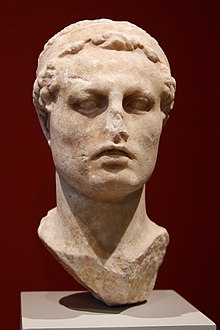

Antiochus IV, wikipedia

Maccabees gives us a colorful account of the defeat, dismay and ultimate death of Antiochus IV, persecutor of the Jews. The account, like most of the Books of Maccabees, is primarily historical, not spiritual or theological. But threaded through the books, of course, is the underlying biblical orientation that God-Yahweh is present and active in all life’s circumstances.

Today’s passage has even pagan Antiochus considering how God/Fate has brought him to judgement- to “payback” time:

But I now recall the evils I did in Jerusalem,
when I carried away all the vessels of gold and silver
that were in it, and for no cause
gave orders that the inhabitants of Judah be destroyed.
I know that this is why these evils have overtaken me;
and now I am dying, in bitter grief, in a foreign land.

1 Maccabees 6:11-13

In our Gospel account, some Sadducees question Jesus about marriage laws and the afterlife. Their questioning reminds me of modern songwriter Eric Clapton’s musings in his song:

Tears in Heaven – Eric Clapton

Jesus doesn’t sing to the Sadducees, as far as I know. Rather, he answers them this way:

Those who are deemed worthy to attain to the coming age
and to the resurrection of the dead
neither marry nor are given in marriage.
They can no longer die,
for they are like angels;
and they are the children of God
because they are the ones who will rise.

Luke 20:35-36

So for us today, the questions and concerns of both Antiochus and the Sadducees might lead us to consider how we feel about the “afterlife”.

Do you ever wonder what heaven will be like? Will we see our beloveds once again? Will we see our “unbeloveds” too and what will that be like!! Do you calculate whether or not you’ll even make the cut through the Pearly Gates?

When I think about heaven these two promises of Jesus sustain, comfort and animate me. Maybe you’ll consider their power too as you pray today.

I have come that you may have life,
and have it to the full.

John 10:10

Eternal life is this, that they know you,
the only true God,
and Jesus Christ, whom you have sent.

John 17:3

Poetry: Heaven-Haven (1864) – Gerard Manley Hopkins

A nun takes the veil

I have desired to go
Where springs not fail,
To fields where flies no sharp and sided hail,
And a few lilies blow.

And I have asked to be
Where no storms come,
Where the green swell is in the havens dumb,
And out of the swing of the sea.

Music: Here’s a beautiful piece of music to accompany you in your “considerations”.

Nocturne No.20 in C-Sharp Minor – Frédéric Chopin, played by Joshua Bell

Out of the Gloom

Friday of the Twenty-seventh Week in Ordinary Time 
October 8, 2021

Today, in God’s Lavish Mercy, we pray with Psalm 9. It, together with Psalm 10, forms an acrostic which ultimately proclaims profound hope in God’s immutable justice, especially toward the poor and oppressed. But it takes us through a lot fire and brimstone to get there!


When we read the entire Psalm 9, we realize that the psalmist starts out in a lot of trouble:

Be gracious to me, LORD;
see how my foes afflict me!
You alone can raise me from the gates of death

Psalm 9:14

Match that with Joel’s community which is in the midst of a terrible drought. Joel uses the situation to teach that we must withstand many evils in life — not just droughts — in order to keep faith with God.

Blow the trumpet in Zion,
    sound the alarm on my holy mountain!
Let all who dwell in the land tremble,
    for the day of the LORD is coming;
Yes, it is near, a day of darkness and of gloom,
    a day of clouds and somberness!

Joel 2:1-2

In the end however, Joel assures the community — as does the psalmist — that God is present even in treacherous circumstances and will finally bring “right-balance” or justice to all things.

The LORD sits enthroned forever;
setting up a throne for judgment.
God judges the world with justice;
and governs the peoples with equity.

Psalm 9:8-9

I think these readings are difficult to pray with, but it’s worth a try. How we respond to challenge in our personal circumstances – and even evil in the world at large – depends a lot on how we view God’s Presence in our lives. Both Joel and the psalmist ask us to hold fast to our confidence in God.

Praying with these readings may provoke questions like this for us:  Do I believe God’s justice and mercy truly will prevail in Creation? And how will I help bring about this holy “equity”?

Poetry: Faith is the Pierless Bridge – Emily Dickinson

Faith is the Pierless Bridge
Supporting what We see
Unto the Scene that We do not
Too slender for the eye
It bears the Soul as bold
As it were rocked in Steel
With Arms of Steel at either side
It joins behind the Veil
To what, could We presume
The Bridge would cease to be
To Our far, vacillating Feet
A first Necessity.

Music: Bridge Over Troubled Waters – Simon and Garfunkel

Psalm 9: You Alone, O God

Memorial of Saint Dominic, Priest

August 8, 2020


Today, in God’s Lavish Mercy, we pray with Psalm 9. It, together with Psalm 10, forms an acrostic which proclaims profound hope in God’s immutable justice, especially toward the poor and oppressed.

The LORD sits enthroned forever;
he has set up his throne for judgment.
He judges the world with justice;
he governs the peoples with equity.
When we read the entire psalm, we realize that the psalmist is in a lot of trouble:
Be gracious to me, LORD;
see how my foes afflict me!
You alone can raise me from the gates of death

Psalm 9:14

But for our verses today, the writer focuses on God and God’s power rather than on the psalmist’s own dire situation. As Walter Brueggemann writes:

In this poem [Psalms 9 & 10], the decisive party is Yahweh,
who governs powerfully and equitably. 

That kind of focus is a really good way to pray, especially when we are faced with an issue over which we have no power. In such a situation, we can spend a lot of time fretting for an inaccessible solution. It can help just to stop and place our trust in God Who abides with us in any suffering and never abandons us.

For the needy will never be forgotten,
nor will the hope of the afflicted ever fade.

Psalm 9:19

It’s not an easy task to give ourselves to such trusting prayer, but if we can, peace and healing ensue.

I will praise you, LORD, with all my heart;
I will declare all your wondrous deeds.
I will delight and rejoice in you;
I will sing hymns to your name, Most High.

When my troubles recede,
they disappear before your power.
For you upheld my right and my hope,
seated on your throne, judging justly.


Poetry: Zion by Rudyard Kipling
Kipling used the image of Zion to inspire courage during World War I.
Kipling’s son had been killed in the war, so the poem is both a lament and a rally to hope.

The Doorkeepers of Zion,
They do not always stand
In helmet and whole armour,
With halberds in their hand;
But, being sure of Zion,
And all her mysteries,
They rest awhile in Zion,
Sit down and smile in Zion;
Ay, even jest in Zion;
In Zion, at their ease.


The Gatekeepers of Baal,
They dare not sit or lean,
But fume and fret and posture
And foam and curse between;
For being bound to Baal,
Whose sacrifice is vain,
Their rest is scant with Baal,
They glare and pant for Baal,
They mouth and rant for Baal,
For Baal in their pain!


But we will go to Zion,
By choice and not through dread,
With these our present comrades
And those our present dead;
And, being free of Zion
In both her fellowships,
Sit down and sup in Zion --
Stand up and drink in Zion
Whatever cup in Zion
is offered to our lips

Music: Marching to Zion (Come, We That Love the Lord) – a wonderfully melodious old hymn written by Isaac Watts, first published in his Hymns & Sacred Songs, 1707. A great song to wake up our morning and rouse up our trust.

The song became a Gospel staple often associated with the Civil Rights marches of the 1960s. Here is a Gospel rendering by The Famous Ward Gospel Singers.