Our Saints

November 1, 2025

Often, we see someone more clearly in death than we do in life.

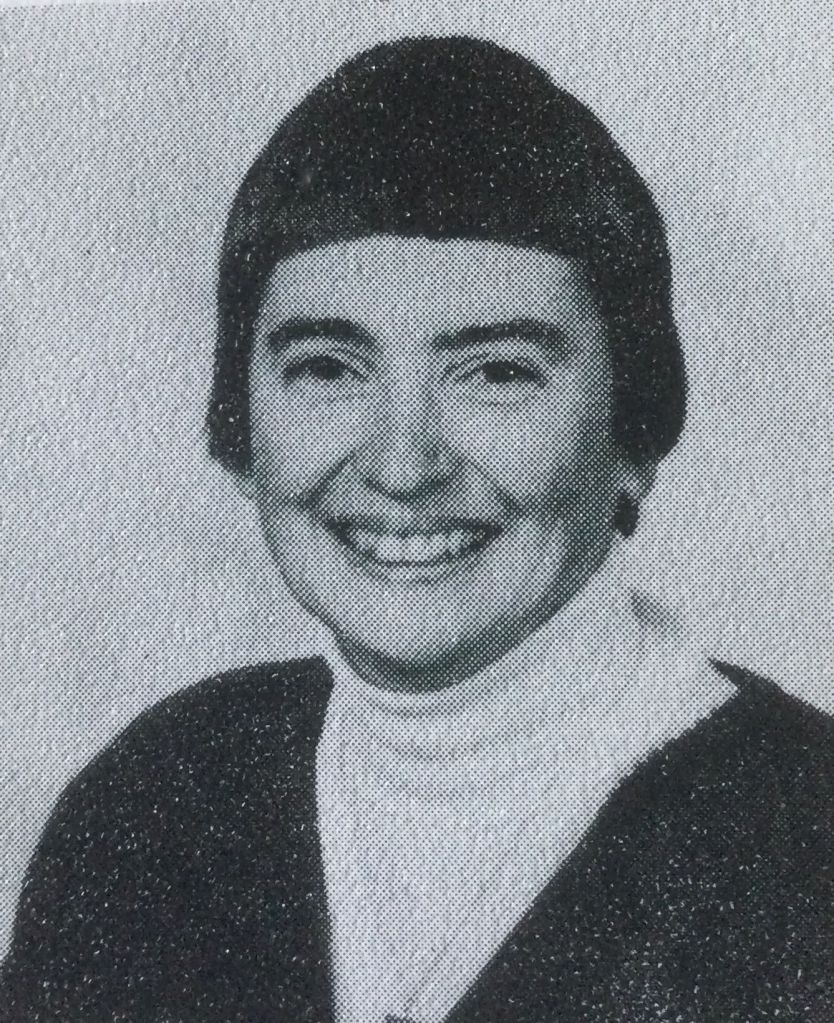
One Sunday, nearly 25 years ago, our religious community gathered to commemorate the precious life of our Sister Germaine Donohue. Germaine, who was more familiarly called Mercedes (Mercy), was one of our missionaries in Peru. She was vivacious, compassionate, holy, and too young to die. While ministering in our remote mountain home village of Pacaipampa, Peru, this marathon runner who loved to dance suffered an unexpected heart attack. By the time the neighboring villagers brought her down the eight-hour descent to Lima, she lived only a few more hours. It was All Saints Day.

At her funeral liturgy, the legacy of love she had quietly planted throughout her life blossomed like a field of vibrant wildflowers. Listening to stories that spanned the 40 years of her religious life, it was easy to see how consistently she chose to be with others in simplicity, honesty, and joy. It became clear that everything in her life had led her to a remote mountain village among the poor, who perfectly mirrored her deepest values. They were her heart’s companions.

Just like producing a prize-winning garden, bringing one’s life to such a degree of simplicity and beauty is no easy task. As human beings, we are constantly battling the weeds of self-interest and the complexity it breeds. But when, like Germaine, we choose to learn from those who are poor, we can grow in our capacity to trust a Power greater than ourselves to sustain our lives. We thus become freer to celebrate the beauty of others and of life around us.

For their first ten years in Pacaipampa, our Mercy community had been laboring — without success – to bloom roses in their tiny garden. When the sisters returned from Lima with Sister Germaine’s body to bury her among her beloved poor, they were greeted with the miracle of the first Pacaipampa rose. It blossomed there, a new life among the simple “pueblos jóvenes”. Perhaps they named that rose “Mercedes”.

I share the story of Sister Germaine’s passing because I hope it will offer you the gift it gave to me. The slow, daily, and sometimes frustrating work of building our lives around truly important values will — in the long run — transform and bless us. In everyday decisions, it is difficult to get enough perspective always to realize that. But when our lives are gathered someday in the story-telling of our children, our friends, and our communities, may we be fortunate enough to have left a legacy of beauty — our own miracle “rose”.


Music: El Condor Pasa

This song, popularized by Simon and Garfunkel, is actually drawn from a Peruvian folk song.

For Your Reflection

  • What feelings or reactions do I have after reading this reflection?
  • Do my feelings or reactions remind me of any passage or event in scripture, especially in the life of Christ? 
  • What actions might I take today because of my response to these readings?

Suggested Scripture: Proverbs 31 (Adaptation)

Who can find a merciful woman?
She is worth far more than rubies.
Her community has full confidence in her
and lacks nothing of value.
She brings them good, not harm,
all the days of her life.
She gets up while it is still night;
she provides food for her neighbors
and portions for the very poor.
She considers a field and buys it;
out of her earnings she plants a vineyard.
She sets about her work vigorously;
her arms are strong for her tasks.
She sees that her work is fruitful,
and her lamp does not go out at night.
In her hand she holds the distaff
and grasps the spindle with her fingers.
She opens her arms to the poor
and extends her hands to the needy.
When it snows, she has no fear for her household;
for all of them are clothed in scarlet.
She is clothed with strength and dignity;
she can laugh at the days to come.
She speaks with wisdom,
and faithful instruction is on her tongue.
She watches over the affairs of her beloved community
and does not eat the bread of idleness.
Her neighbors arise and call her blessed;
her family also praises her:
“Many women do noble things,
but you surpass them all.”
Charm is deceptive, and beauty is fleeting;
but a woman of mercy is to be praised.
Honor her for all that her hands have done,
and let her works bring her praise at the heavenly gate.
Autumn Lessons

October 24, 2025

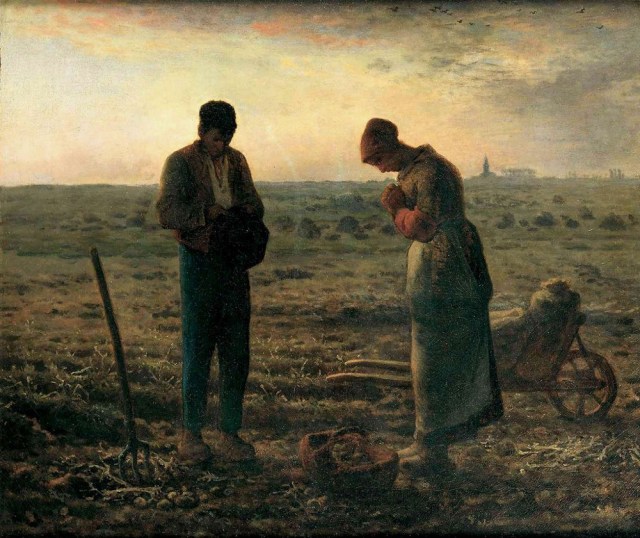
“The Angelus” – Jean-François Millet

In grade school, we had a course called “Picture Study”. Every Friday afternoon, Sister distributed small blue McLaughlin Notebooks. In them, we found the treasures of the great art galleries – paintings by Monet, Van Gogh, and Rembrandt. One of my favorites was a picture by Millet called “The Angelus”. In it, peasant farmers pause to pray as they gather their small harvest at the close of day. All the colors of late fall had dripped from the artist’s brush to capture feelings of peace, completion and hope.


I have a dear friend who doesn’t like fall. She is a complete and beautiful “summer” spirit! For her, autumn brings a sense of “closing down”. The freedom of summer evaporates; the heavy sharpness of winter looms. Some of us might feel that way as the sunlit hours shrink. But, for the reflective heart, there are deep blessings in Autumn’s ebbing.


Indeed, fall dances to a different tune from summer. The carefree skip of July becomes the thoughtful stroll of late October. It is a time for gathering, for counting the harvest, for putting up the fuel to sustain us through the winter. It is a time no longer to take things for granted. It is a time to pause and prepare. We begin to consider what the waning year has given us, and what it has taken.


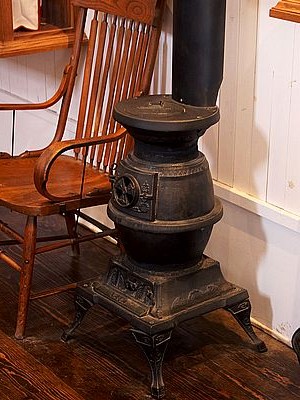
As a child, I lived in a very old home originally built to house the 19th century immigrant factory workers of North Philadelphia. The kitchen, added by my grandfather’s own hands, was unheated. In the 1940s, my dad installed a pot-belly stove to warm this preferred gathering spot for our family.

Dad always left for work before the rest of us woke up. Beginning in the late fall, he would light a fire in that little stove every morning. By the time the rest of us assembled for breakfast, a freshly-perked pot of coffee awaited us atop the stove as a greeting from dad. I associated my father with that comfort and that delicious scent. Although we wouldn’t see him until late at night, his kindness accompanied us in the cozy, inviting kitchen every morning.


As deep October approaches, the earth steeps itself like fragrant tea in its own magnificent colors, but the chill suggests the coming change. Seeing this, I remember Dad and realize, such is the work of autumn:

  • to express beauty in the subtle colors of our kindness
  • to build the warm fires we know our loved ones will need
  • to brew the fresh tonic that wakes others to life and warms them against its sometime chill

It is a time now to glean summer’s final fruits and to wrap ourselves in their bounty; to listen, in the snug quiet of our spirits, to the voice of Love in our lives. What does Love ask of us as winter approaches? For each of us, the answers will be different. In the gathering October stillness, to what does the Divine Spirit invite me?


Music: Autumn “Allegro-Adagio Molto” (The Four Seasons) – Antonio Vivaldi


For Your Reflection:

  • What feelings or reactions do I have after reading this reflection?
  • Do my feelings or reactions remind me of any passage or event in scripture, especially in the life of Christ? 
  • What actions might I take today because of my response to these readings?

Suggested Reading: James 5:7

Pride of Place

October 19, 2025

 “Pride of Place”.  That’s what my Dad called it.  I asked him one Sunday when I was about six years old, “How come Mamie Ounan always sits all alone up in that front pew?” Mamie was an elegant old woman, a little like Madame Belvedere in the classic movie, “Mrs. Miniver”.  Each Sunday, Mamie Ounan processed up the aisle to commandeer the entire front pew in our parish church.  

“Pride of Place”, Dad said.  When I looked up at him, clueless, he explained.  “Mamie’s been sitting there every Sunday for forty years. She sat there the Sunday after her husband died in a shop accident.  She sat there every Sunday through the Depression when she struggled to keep her corner grocery open. She sat there the day her son was killed at Pearl Harbor.   All the while, no homeless person ever went away hungry from Mamie’s back steps.  She earned that pew and the rest of us are proud for her to have it.”


“Pride of Place” isn’t always something physical like a pew in church.  More often it’s a moral or spiritual position that’s granted to us by others after we pay moral dues.  These dues include trustworthiness, sacrifice, contribution, and wisdom.

All of us experience at least some “Pride of Place” passages in our lives.  Remember when you moved up from the kids’ table at Thanksgiving dinner?  Remember being a sophomore on freshman day? Throughout our lives, we advance through grade levels, job levels, military levels, even golf and bridge levels.  


But earning real “Pride of Place” is very different from “making it to the top of the heap”.  We receive the “Pride of Place” from others who recognize and respect us.  We take “the top of the heap” from others who may begrudge it to us. Mamie was given “Pride of Place”. She didn’t take it.  Otherwise, someone else would have beaten her to that pew each Sunday.

“Pride of Place” doesn’t come automatically with power or position.  It comes with respect. Unfortunately, not every parent, boss, teacher, pastor, elder, president, or champion deserves it.  It must be earned and kept as a trust.  Even in hard times, its owner has to honor it and use it for others.  Jimmy Carter had “Pride of Place”.  Richard Nixon never did.  


We all have the potential for “Pride of Place” in our lives. We can discover that potential by considering our responsibilities. We have kids, elders, employees, co-workers, neighbors, customers, and friends.  We have homes, neighborhoods, and futures.  We can impact all these things for better or worse.

Do we dispense those responsibilities with love, courage, and honesty?  Do we use the power we have for others, not over or against them?  Mamie Ounan, that little old lady in a tiny city neighborhood, had tremendous power.  She gave people hope and example by the way she endured, by the way she cared, and by the way she lived.

If we haven’t begun to exercise that kind of power in our lives, maybe it’s time to stand up from the kids’ table and walk toward our own “Pride of Place”.


Music: The Arrival of the Queen of Sheba – George Frideric Handel


For Your Reflection

  • What feelings or reactions do I have after reading this reflection?
  • Do my feelings or reactions remind me of any passage or event in scripture, especially in the life of Christ? 
  • What actions might I take today because of my response to these readings?

Suggested Scripture – Proverbs 31 – Adaptation

Who shall find a valiant woman?
She is worth far more than rubies.
Her family has full confidence in her
and lacks nothing of value.
She brings them good, not harm,
all the days of her life.
She gets up while it is still night;
she provides food for her neighbors
and portions for the very poor.
She considers a field and buys it;
out of her earnings she plants a vineyard.
She sets about her work vigorously;
her arms are strong for her tasks.
She sees that her work is fruitful,
and her lamp does not go out at night.
In her hand she holds the distaff
and grasps the spindle with her fingers.
She opens her arms to the poor
and extends her hands to the needy.
When it snows, she has no fear for her household;
for all of them are clothed in scarlet.
She is clothed with strength and dignity;
she can laugh at the days to come.
She speaks with wisdom,
and faithful instruction is on her tongue.
She watches over the affairs of her beloveds
and does not eat the bread of idleness.
Her neighbors arise and call her blessed;
her family also praises her:
“Many women do noble things,
but you surpass them all.”
Charm is deceptive, and beauty is fleeting;
but a generous woman is to be praised.
Honor her for all that her hands have done,
and let her works bring her praise at the heavenly gate.
October Blue

October 14, 2025

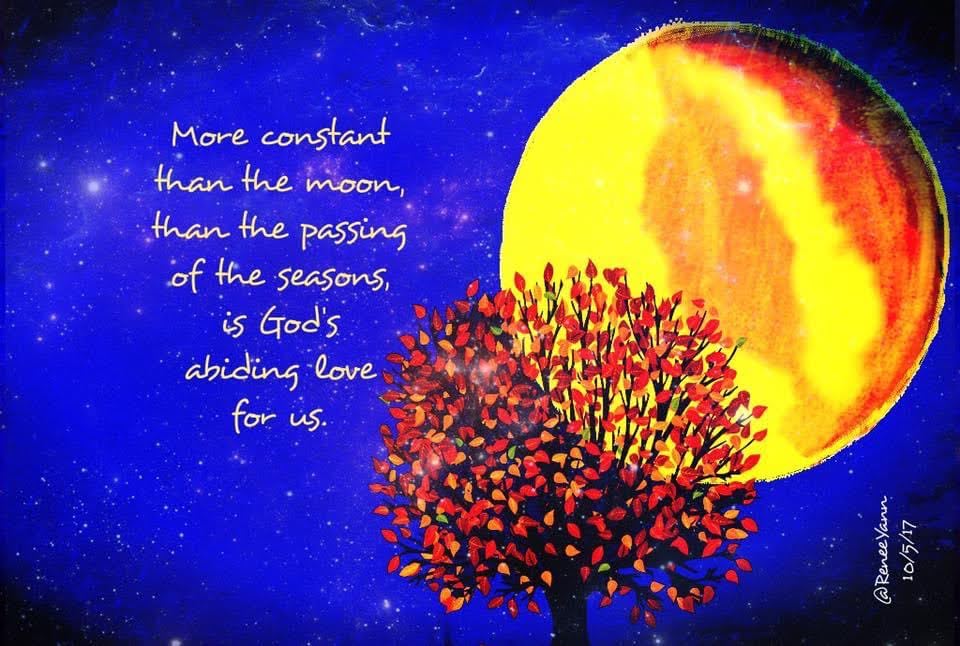
That long-ago October was particularly brilliant. It was one of those rare seasons where each morning was filled with sunshine and promise. It was a month that measured up to the poet, Helen Hunt Jackson’s, description:

O suns and skies and clouds of June,
And flowers of June together,
Ye cannot rival for one hour
October’s bright blue weather.


I remember that October so well because one of my friends was dying, stricken suddenly and irrevocably by a severe pneumonia. Only two of us could visit at a time, so I, along with her many other friends, would gather at times on the bench outside the hospital where she struggled to survive. We would watch that bright blue sky and turn over and over in our minds those questions that have no answers. Why so young, why now, why her?


Starling Murmuration – Joe Hisaishi

Flocks of starlings were in their seasonal dance, bold against that brilliant blue sky. Maybe you have noticed a few already this month, swerving through the air in their perfectly balanced helix, like smoke at the wind’s disposal. I remember watching them during that distant October, wondering if we had told Gail often enough how precious she was. She was a small, humble, and joyous person – very quiet and unassuming. I wondered if people fully understood the powerhouse of generosity and goodness underneath that humility.


Gail De Macedo, RSM
August 11, 1937 – October 14, 1995

I found the answer at her funeral. Hundreds of people jammed the lanes to our Motherhouse and filled the chapel with their song to celebrate her life. She had quietly made her mark – and what a mark it was! Now, years later, the sharp edge of her loss has dulled somewhat, but her bold, quiet, courageous legacy has only deepened. In times when I need the gifts of humility, patience, generosity, and kindness, I pray to her. She always helps me.

Over this weekend, we should begin to see that “bright blue weather”. Watch for the graceful starlings, pirouetting their way to a winter refuge. Above all, as you wonder at Creation, reflect on love and kindness. Honor these virtues where you find them in yourself and your neighbors. They endure beyond all seasons.


Music: No More Goodbyes – Tom Dermody

For Your Reflection

  • What feelings or reactions do I have after reading this reflection?
  • Do my feelings or reactions remind me of any passage or event in scripture, especially in the life of Christ? 
  • What actions might I take today because of my response to these readings?

Suggested Scripture: Revelation 21:1-4

Healing

October 2, 2025


Artwork by Judy Ward, RSM

Today, for your reflection, a poem I wrote decades go. I offer it today in memory of Judy Ward, RSM who passed away on September 27, 2025. Her life will be celebrated on October 2nd in a Mass of Christian Burial in the chapel at Mt. St. Mary, where Judy attended school, became a Sister of Mercy, and taught for many years.

Judy, a gifted artist, did so much to encourage me and to illustrate and promulgate my work. I will miss her generous kindness and her friendship.


October is a time when nature changes clothes.
Leaves, like miniature volcanoes, flare up and die, ashes at the foot of a silent, seemingly immortal tree.
Geese, having dawdled all summer in veiled expectation, suddenly leap into the clouds and disappear.
These solemn miracles may incline us to consider our own impermanence and the gossamer phenomenon we call life.


Healing


Music: A Playlist of Autumn Music

For Your Reflection

  • What feelings or reactions do I have after reading this reflection?
  • Do my feelings or reactions remind me of any passage or event in scripture, especially in the life of Christ? 
  • What actions might I take today because of my response to these readings?

Suggested Scripture: Psalm 104