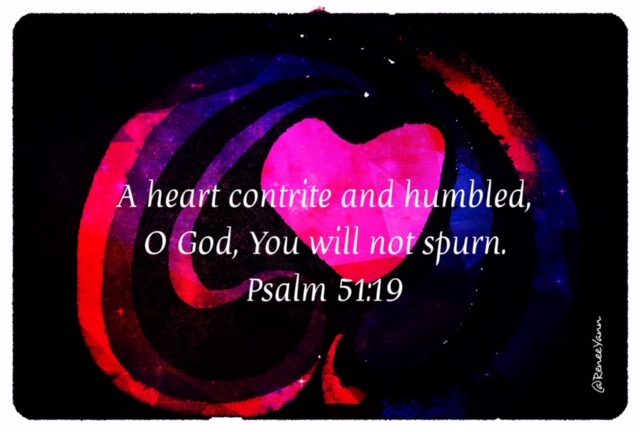
Psalm 31: Strife of Tongues

Wednesday of the Eleventh Week in Ordinary Time

June 17, 2020

Today, in God’s Lavish Mercy, we pray with Psalm 31, just three of its twenty-five passionate verses in today’s liturgy. These three will echo in you, as will many others if you read the whole psalm. The images are so strong and yet comforting, the prayer so sincere.

  • In you, LORD, I take refuge.
  • Let me never be put to shame.
  • Incline your ear to me;
  • For you are my rock and my fortress.
  • I will rejoice and be glad in your mercy.
  • Let your face shine on your servant.
  • Save me in your mercy.
  • You hide your beloved in the shelter of your presence.
  • You heard my voice, my cry for mercy.

In my prayer, I focused on this line:

You hide your beloved in the shelter of your presence
from the plottings of evil hearts;
You screen them within your abode
from the strife of tongues.


The strife of tongues”. What a phrase! And what a reality! Our divisive culture is drowning in it – in political, religious and civic contexts. It is often very hard for us to know whom to listen to and believe. But the psalmist helps us to understand a key characteristic of destructive speech – pride and boasting:

Love the LORD, all you his faithful ones!
The LORD keeps those who are constant,
but more than requites those who act proudly.


Today, I prayed for anyone caught in a persecution of words. Specifically, I prayed for Pope Francis and for the Archbishop of Washington, DC, Wilton Gregory. Both men have been victims of “the strife of tongues”.

In a publicized letter written to Donald Trump, Pope Francis was targeted by reactionary clergyman Carlo Viganò who dabbles in conspiracy theories and misinformation in order to undermine Francis’s ministry.

Archbishop Gregory described Donald Trump’s photo op at the Shrine of St. John Paul II as “reprehensible“, condemning the politicization of religion for “manipulative” purposes. As a result, the Archbishop, who is Black, has been racially and sexually slurred by, among others, a far-right hate group claiming to be “Catholic”.


As I prayed for these good priests, and for all others condemned for truthful and compassionate testimony, I asked God to enfold them in the verse from Psalm 31, part of which Jesus prayed on the cross:

Into your hands I commend my spirit;
you will redeem me, LORD, God of truth.

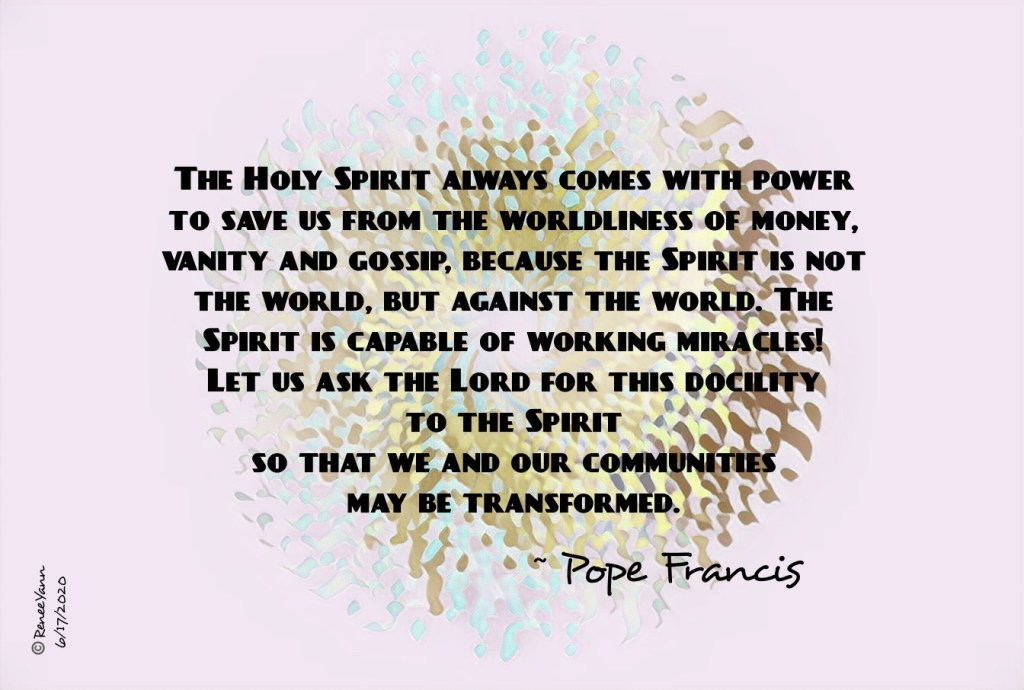
It is painful to witness this kind of sinful negativity in the Church, and the pain does enter into our prayer. Pope Francis points to a way to heal that pain:
Poetry: Our poem today is by a 19th century poet, Susan S. Button from her only book I could find which she published herself. She strikes me as an Emily Dickinson type without the same degree of literary accomplishment. There is very little information on her although she was notable enough in society to have a portrait by John Sartain (currently in the Pennsylvania Academy of Fine Arts.)

The poem, although on a serious topic, still provided a level of delight about what happens to those who slander the innocent. I offer just a few verses of the long composition and hope you enjoy it as much as I did!

Slander

What is the slander’s tongue? An arrow strong,
And sharp, and fierce, empoisoning many a word,
Such as to devil’s only do belong,
When they, by Envy and by Malice stirred,
Do contemplate dark deeds, and souls do gird
For vilest crimes, and with their deadly bane,
The good man rob of fame — with lies absurd
Asunder rend kind Friendship’s gold-linked chain,
And break the three-fold, silken cord of Love amain.
——
For though Slander’s pliant bow was newly strung,
And thick and fast her feathered arrows flew,
And through the misty air their echoes rung,
The light around his head more lustrous grew;
For Innonence forth from her treasures drew
A golden shield, and clasped it o’er his heart,
While Truth held up a golden lamp and new!
While through its lucent flame flew on the dart
From Slander’s quiver, brighter light it did impart.

It trembled on the shield of Innocence—
The good man gazed, and by its blood-stained shade
He knew full well who formed it, and from whence
It came — he plucked it from the shield and bade
The innocent “tremble not, nor be afraid.”
With force redoubled Slander drew her bow
And furious all her cruel haste betrayed,
But soon was heard a horrid shriek of woe,
As her rebounding dart did to her forehead go.

~ Susan S. Button (1858)

Music: Herr, auf dich traue ich – Otto Nicolai (1810-1849j, one of the founders of the Vienna Philharmonic

Psalm 31:1-2

Herr, auf dich traue ich,
Laß mich nimmermehr zu Schanden werden,
Errette mich nach deiner Barmherzigkeit,
Und hilf mir aus.
Neige deine Ohren zu mir, und hilf mir;
Sei mir ein starker Hort,
Ein Hort, dahin ich immer fliehen möge,
Der du hast zugesaget mir zu helfen.
Lord, I trust in you,
Let me never be ashamed;
Deliver me in your mercy And assist me.
Incline your ear to me and help me;
Be a strong refuge for me,
A refuge to which I may always flee,
Which you have promised to me for my aid.

Psalm 51: A Contrite Spirit

Tuesday of the Eleventh Week in Ordinary Time

June 16, 2020

Today, in God’s Lavish Mercy, we pray with Psalm 51, the Miserere. Perhaps the most recognized of the penitential psalms, it is said to have been written by David after his adulterous affair with Bathsheba. ( although it more likely was written separately and applied to David’s situation later.)

This psalm is so rich in deep spiritual psychology that it would be a shame to dismiss it simply as a “confessional”. The psalm truly teaches us how our soul’s vigor and wholeness may be restored in an environment of sin where we are often both consciously and unconsciously complicit.


Let me give an example of how I see this. Last night in my city, a group of protesters gathered around a statue of Christopher Columbus, supposedly, “to protect it” from dismantling by “them”. Many in the group carried clubs and bats; a few carried military-style weapons. All of the “defenders” were white, angry, and mostly men.

I ask myself what were they really there to do. What did they really feel they had to defend? Did their violent public intimidation scream out, “We love Christopher Columbus!”? Or did it shout, “We refuse to acknowledge that our heritage is laced with racism and sinful domination!”?


For me, this is the kind of sinful circumstance which Psalm 51 can help us redeem. We may not act out our culpable ignorance, violence, defensiveness, or racism like last night’s threatening mob. But we must examine what we retain of these sins in our choices, attitudes, speech, and complicit silence.

How does Psalm 51 guide us to that kind of redemption?

First, there is a broken-hearted recognition of failure in holding up our end of relationship with God. Because, as David acknowledges, it is God whom we ultimately offend in our crassness toward one another. It’s not about only one sinful act, like the list we made before our grade school confessions. It’s about a fissure in love, honesty, and loyalty to the One who gives us all life.


Second, there is confession – saying out loud the failure that has replaced love. My favorite Biblical scholar, Walter Brueggemann, describes it as Truth-telling:

Psalm 51 makes available the truth of our life before God. On the one hand, it resists arrogant autonomy that imagines (with David) that we can live without accountability or dependence on the will and purpose of God. On the other hand, it contradicts the practice of denial that is so seductive in a society that has no time, patience, or energy for the nurture of an interior life. It turns out that truth-telling before God is an indispensable condition for joyous existence. Such emancipation makes for exuberant singing and glad generosity. (Walter Brueggemann: From Whom No Secrets are Hid)

Third, and most important because it is woven through and sustains the other two, is the immovable confidence in God’s mercy and God’s desire to give it.

For you do not desire sacrifice or I would give it;
a burnt offering you would not accept.

My sacrifice, O God, is a contrite spirit;
a contrite, humbled heart, O God, you will not scorn.

Psalm 51 is a big one. If you have time, read the whole thing reflectively. It’s good medicine once we have the courage to swallow it.


Poetry: To Live in the Mercy of God – Denise Levertov

To lie back under the tallest
oldest trees. How far the stems
rise, rise
               before ribs of shelter
                                           open!

To live in the mercy of God. The complete
sentence too adequate, has no give.
Awe, not comfort. Stone, elbows of
stony wood beneath lenient
moss bed.

And awe suddenly
passing beyond itself. Becomes
a form of comfort.
                      Becomes the steady
air you glide on, arms
stretched like the wings of flying foxes.
To hear the multiple silence
of trees, the rainy
forest depths of their listening.

To float, upheld,
                as salt water
                would hold you,
                                        once you dared.

 To live in the mercy of God.

To feel vibrate the enraptured
waterfall flinging itself
unabating down and down
                              to clenched fists of rock.

Swiftness of plunge,
hour after year after century,
                                                   O or Ah
uninterrupted, voice
many-stranded.
                              To breathe
spray. The smoke of it.
                              Arcs
of steelwhite foam, glissades
of fugitive jade barely perceptible. Such passion—
rage or joy?

                              Thus, not mild, not temperate,
God’s love for the world. Vast
flood of mercy
                      flung on resistance.

Music: Miserere Mei Deus – Gregorio Allegri 

Psalm 5: A Deep Groan

Monday of the Eleventh Week in Ordinary Time

June 15, 2020

Click here for readings.

Today, in God’s Lavish Mercy, we pray with Psalm 5, a psalm of lament.

Do you ever get really fed up with the world, to a point that you can’t even put into words? If so, and when, Psalm 5 is your psalm.

David can’t even describe how disgusted he is with the evil around him. As is his custom, he wants to tell God all about it, but he can’t find words enough to do so. The best he can do is groan!


My own heart has sounded such a prayer many times. Hasn’t yours? 

Sometimes, it’s a petty prayer, frustrated with individuals or myself. But usually such a groan rises from a more global consciousness:

  • When we see bombed out and weeping children on the evening news
  • When wanton violence infects our city streets
  • When clerical and other institutional sex abuse is uncovered
  • When suffering refugees are rebuffed, caged, and abused
  • When human beings are degraded and persecuted because of their race, sexual identity, ethnicity, or personal traits
  • Whenever people with power exploit it for their own deceitful self-interest 

We could go on and on, couldn’t we? We know what David felt like when he arose and offered his morning prayer:

At dawn I bring my plea expectantly before you.
For you, O God, delight not in wickedness;
no evil man remains with you;
the arrogant may not stand in your sight.

David is confident that, ultimately, God will not abide such evil, and that gives him hope:

You hate all evildoers.
You destroy all who speak falsehood;
The bloodthirsty and the deceitful
the LORD abhors.

But in the meantime, how will David stand up in the face of it all?

This is the very question that gnaws at us as we find ourselves in a place of “groaning” prayer. How do we respond to evil with good?

The final verse of Psalm 5, not included in today’s response, offers an answer:

For you, LORD, bless the just one;
you surround that person with favor like a shield.

By our choices and our actions, we must become a “just one”. Doing so, we give God the instrument to bring right-balance to Creation.

Then all who trust in you will be glad
and forever shout for joy.

You will protect them and those will rejoice in you
who love your name. (Psalm 5:12)

Living justice is hard work. Such enduring labor will draw many a prayerful sigh from us. But always, like David, if we work patiently, we can be confident:

For to you I will pray, LORD;
in the morning you will hear my voice;

in the morning I will plead before you and wait.

Poem: The Weighing – Jane Hirshfield 

The heart’s reasons
seen clearly,
even the hardest
will carry
its whip-marks and sadness
and must be forgiven.

As the drought-starved
eland forgives
the drought-starved lion
who finally takes her,
enters willingly then
the life she cannot refuse,
and is lion, is fed,
and does not remember the other.

So few grains of happiness
measured against all the dark
and still the scales balance.

The world asks of us
only the strength we have and we give it.
Then it asks more, and we give it.

Music: Psalm 5 – Chuck Girard

Lauda Sion: Eucharistic Gratitude

Solemnity of the Body and Blood of Christ
June 14, 2020

Click here for readings

Today, in God’s Lavish Mercy, and on this solemn feast, we pray with the ancient sequence Lauda Sion.

This laudatory prayer was written by St.Thomas Aquinas around 1264, at the request of Pope Urban IV for a new Mass for the feast of Corpus Christi. St. Thomas also wrote four more magnificent hymns for the feast: Pange Lingua, Sacris solemniis, Adoro Te Devote, and Verbum supernum prodiens which are all prayed during the Divine Office.

Lauda Sion repeatedly affirms our belief in Christ’s Presence in the consecrated Bread and Wine. In lovely, poetic meter, the Sequence presents erudite theology in accessible, memorable form. It is an amazing work of art and pedagogy!

After reading through the entire piece, we might choose one or two verses which resound with our personal Eucharistic devotion. In these times when many of us find our liturgical participation limited, the words of this Sequence are particularly poignant.

These verses from the beginning and end of the Sequence are some of my favorites. The various English translations are masterful, but never capture the complete essence of the Latin which I have therefore included here.

Special theme for glad thanksgiving
Is the quick’ning and the living
Bread today before you set:
From his hands of old partaken,
As we know, by faith unshaken,
Where the Twelve at supper met.

Laudis thema speciális,
Panis vivus et vitális,
Hódie propónitur.
Quem in sacræ mensa cœnæ,

Turbæ fratrum duodénæ
Datum non ambígitur


Very bread, good shepherd, tend us,
Jesu, of your love befriend us,
You refresh us, you defend us,
Your eternal goodness send us
In the land of life to see.
You who all things can and know,
Who on earth such food bestow,
Grant us with your saints, though lowest,
Where the heav’nly feast you show,
Fellow heirs and guests to be. Amen. Alleluia.

Bone pastor, panis vere,
Jesu, nostri miserére:
Tu nos pasce, nos tuére:
Tu nos bona fac vidére
In terra vivéntium.
Tu, qui cuncta scis et vales:
Qui nos pascis hic mortáles:
Tuos ibi commensáles,
Cohærédes et sodáles,
Fac sanctórum cívium. Amen. Alleluia.


MusicEcce Panis Angelorum – sung at the Papal Mass in Namugongo, Uganda.  The site is an open-air shrine to the Ugandan Martyrs, forty-five Christians burned alive in the 1880s on the orders of the king who feared the growing influence of Christianity.

This rendition of the hymn is the one I love from novitiate days. Though the video is shaky, it is wonderful to hear these African sisters and brothers singing with such obvious joy and devotion, in a language and with a faith that we can all share.

Psalm 16: A Night Prayer

Memorial of Saint Anthony of Padua, Priest and Doctor of the Church

Saturday, June 13, 2020

Click here for readings

psalm16 path2

Today, in God’s Lavish Mercy, we pray once again with Psalm 16. Verses 1-10 strike me as a perfect “nighttime” prayer.

In his musical Phantom of the Opera, Andrew Lloyd Weber lyricizes about the “beauty of the night”.  

It’s a soulful song, and in itself could be used for prayer, especially when we pray in times of spiritual darkness or unknowing. In many ways, it reminds me of John of the Cross’s poem, “The Dark Night”. (Verses below for our poetry today).


All of us have times when our prayer seems to echo back to us without a response from God. Our faith may be tested and our trust stretched very thin. God seems so distant that we wonder what happened to cloud the relationship! We linger in a spiritual darkness that is dry and disconcerting.

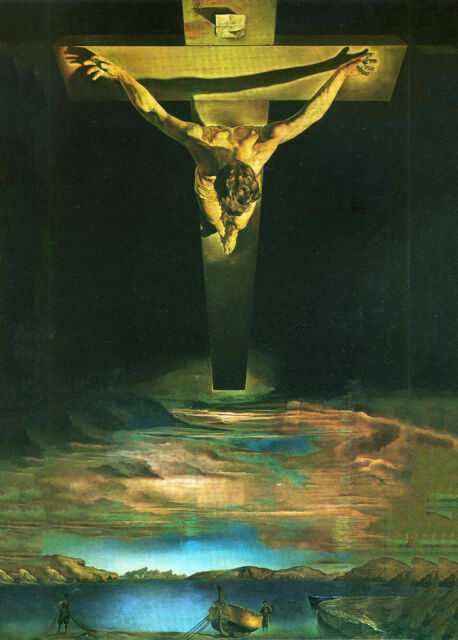
Dali John of Cross
Christ of St. John of the Cross by Salvador Dali (1951) – Kenmore Art Gallery, Glasgow

These times in the spiritual life were experienced and described by writers like John of the Cross and the author of “The Cloud of Unknowing”. They are times when our experiences and prayer invite us to a new and deeper understanding of God. They ask us to let go of our intellectual certainties and abandon ourselves to God without demands.


Recently, while describing how disappointed he was in God, a friend told me that he had “lost” his faith long ago. Well, obviously, he hadn’t because he still held expectations of the “God” who was disappointing him. I told him that I had lost my faith a few times too, and that every time I got it back, it was new and deeper than the one I had lost. My “septuagenarian God” is very different from the one I came to follow when I was eighteen!


Our minds and souls are so small next to God’s Infinity. But slowly, through a life of prayerful fidelity and loving service, God stretches our capacity to know and return a Love which is beyond reason.

But the stretching times can be dark – times when Psalm 16 is a comforting prayer.

I like to pray with this transliteration by Steven Mitchell – A Book of Psalms

Unnamable God,
I feel you with me at every moment.
You are my food, my drink,
my sunlight, and the air I breathe.
You are the ground I have built on
and the beauty that rejoices my heart. 

I give thanks to you at all times
for lifting me from my confusion,
for teaching me in the dark
and showing me the path of life. 

I have come to the center of the universe;
I rest in your perfect love.
In your presence there is fullness of joy
and blessedness forever and ever.

Music: Path of Life – The Dameans

Poetry: The Dark Night – Stanzas Of The Soul

( Some people find John of the Cross surprising, if not strange or shocking, in his imagery. He was a grace-filled mystic and poet whose images of God expanded beyond the boundaries we might be accustomed to. And that very extravagance is John’s beauty — he invites us to a place we might not otherwise think to go.)

1. One dark night,
fired with love’s urgent longings
— ah, the sheer grace! —
I went out unseen,
my house being now all stilled.

2. In darkness, and secure,
by the secret ladder, disguised,
— ah, the sheer grace! —
in darkness and concealment,
my house being now all stilled.

3. On that glad night,
in secret, for no one saw me,
nor did I look at anything,
with no other light or guide
than the one that burned in my heart.

4. This guided me
more surely than the light of noon
to where he was awaiting me
— him I knew so well —
there in a place where no one appeared.

5. O guiding night!
O night more lovely than the dawn!
O night that has united
the Lover with his beloved,
transforming the beloved in her Lover.

6. Upon my flowering breast
which I kept wholly for him alone,
there he lay sleeping,
and I caressing him
there in a breeze from the fanning cedars.

7. When the breeze blew from the turret,
as I parted his hair,
it wounded my neck
with its gentle hand,
suspending all my senses.

8. I abandoned and forgot myself,
laying my face on my Beloved;
all things ceased; I went out from myself,
leaving my cares
forgotten among the lilies.

Psalm 27: Lift the Veil

Friday of the Tenth Week in Ordinary Time

June 12, 2020

Click here for readings

Psalm 27JPG

Today, in God’s Lavish Mercy, we pray with Psalm 27, a popular psalm used often in the liturgy.

The psalm rocks back and forth between a desperate cry for light and a firm confidence that it will come. No wonder it’s so popular. Isn’t our whole life filled with that rocking?

How many times have we said or heard the plea, “God help me/us!”? I know someone who punctuates almost her entire conversation with similar exclamations. Whenever her own circumstances, or the world in general, disappoints or astounds her, some form of the aspiration arises. Often, it takes a secular form like, “Ay, ay, ay!”, but it is still the same prayer.😀


2bubble

How about you? Have you heard that kind of plea resounding in your own heart lately? The world has been pretty overwhelming recently with disease, death, brutality, anger, and hatred all spilling out like lava from a frightening volcano. And you’ve probably got your own few personal boilers to add!

Unless we’re living in some kind of bubble, it all has to have some impact on our faith, hope and joy.


Psalm 27 is made for these times. It does not fail to acknowledge the weight of circumstances:

Hear, O LORD, the sound of my call;
have pity on me, and answer me…
Hide not your face from me;
do not in anger repel your servant.
You are my helper: cast me not off...

Nevertheless, under its pleading, rests a complete and steadfast confidence in God’s favor:

I believe that I shall see the bounty of the LORD
in the land of the living.
Wait for the LORD with courage;
be stouthearted, and wait for the LORD.

The psalmist invites us to share in this honest prayer, for ourselves and for all the anxious world which may carry troubles greater than our own.

(P.S. Be sure to read today’s first reading. Elijah was looking for God’s Face/Voice too. He found it in the most delightful way. Don’t miss it.)


For poetry today, a selection from the powerful poet Denise Levertov

The Tide

Where is the Giver to whom my gratitude
rose? In this emptiness
there seems no Presence.
*
How confidently the desires
of God are spoken of!
Perhaps God wants
something quite different.
Or nothing, nothing at all.
*
Blue smoke from small
peaceable hearths ascending
without resistance in luminous
evening air.
Or eager mornings—waking
as if to a song’s call.
Easily I can conjure
a myriad images
of faith.
Remote. They pass
as I turn a page.
*
Outlying houses, and the train’s rhythm
slows, there’s a signal box,
people are taking their luggage
down from the racks.
Then you wake and discover
you have not left
to begin the journey.
*
Faith’s a tide, it seems, ebbs and flows responsive
to action and inaction.
Remain in stasis, blown sand
stings your face, anemones
shrivel in rock pools no wave renews.
Clean the littered beach, clear
the lines of a forming poem,
the waters flood inward.
Dull stones again fulfill
their glowing destinies, and emptiness
is a cup, and holds
the ocean.

Music: Psalm 27 – Choir of St. John’s College Elora

Psalm 98: Nice Job, Lord!

Memorial of Saint Barnabas, Apostle

June 11, 2020

Click here for readings

psalm 98 strings
Today, in God’s Lavish Mercy, we pray with Psalm 98, one of a small knot of psalms whose point is to shout praise over and over to God. It is a hymn psalm, and one of the ten Royal Psalms themed with “kingship”.

As we pray this exultant psalm, in Latin called “Cantate Domino” (Sing to the Lord), we can almost visualize the psalmist and fellow praisers clapping God on the back and chanting, “Great job! Nice work!”.

All the ends of the earth have seen
the salvation by our God.
Sing joyfully to the LORD, all you lands;
break into song; sing praise.


psalms
Walter Brueggemann has written extensively about the Psalms. He says this about the act of praise:

Praise articulates and embodies our capacity to yield, submit, and abandon ourselves in trust and gratitude to the One whose we are. … We have a resilient hunger to move beyond self. God is addressed not because we have need, but simply because God is God.
(Israel’s Praise: Doxology against Idolatry and Ideology)


We don’t have to be as articulate as the psalmist to weave praise into our prayer. 

Sometimes when we catch the sunrise at a morning window, we might quietly say, “Great job! Thank You, Radiant God”

When we look at the magnificence of a natural wonder like the Grand Canyon, we might abandon words and simply let our breathing be praise.

When we study the finely-aged face of a beloved elder, we might praise the monument of grace God has worked in her/his life.

When we finger the strings of our own faith history, we might, in our own words, echo the psalmist:

I sing You a new song in every moment, Lord
for You have done wondrous deeds;
Your loving hand has strung grace through my life,
your generous heart has blessed me amazingly.


Poetry today from Mary Oliver who rejoices in the redbird’s morning praise:

All night my heart makes its way
however it can over the rough ground
of uncertainties, but only until night
meets and then is overwhelmed by
morning, the light deepening, the
wind easing and just waiting, as I
too wait (and when have I ever been
disappointed?) for redbird to sing
― A Thousand Mornings

Music: Cantate Domino – Claudio Monteverdi 

Psalm 16: The Secret

Wednesday of the Tenth Week in Ordinary Time

June 10, 2020

Click here for readings

psalm16

Today, in God’s Lavish Mercy, we pray with Psalm 16.  This Psalm is introduced as “A Michtam of David”. “Michtam” can be interpreted as either “golden” or “secret” by various translators. 

For prayer this morning, I focused on “secret” because, in the psalm, David expresses what he considers the secret to a joyful, holy life even in difficulty.

O LORD, my allotted portion and cup,
you it is who hold fast my lot.
I set the LORD ever before me;
with him at my right hand I shall not be disturbed.

The last line of this verse immediately brought to mind St. Teresa of Avila’s transcendent advice:

Nada te turbe
nada te espante
Todo se pasa
Dios no we muda.
La paciencia todo alcanza.
Quien a Dios tiene
nada le falta
Solo Dios basta.

Let nothing disturb you,
Let nothing frighten you,
All things are passing.
God alone is changeless.
Patience obtains all things
Whoever has God lacks nothing;
God alone suffices.

Repeating this Psalm slowly and intentionally, let us pray for that kind of peace today:

  • for ourselves
  • our beloveds
  • our world, especially those from whom peace has been stolen by injustice, war, greed, and hate.

Music: Psalm 16 – Shane and Shane

There is fullness
Of joy
Of joy
At Your right hand
There are pleasures
Forevermore
Forevermore

My heart is glad and my soul rejoices
My flesh it dwells secure
Because You put on flesh
Lived a blameless life
My curse on the cross You bore

Then You ripped the doors off the City of Death
And the chains fell to the floor
Now the serpent’s crushed
It has been finished
And You reign forevermore

You are my portion
My cup and you make my lot secure
The lines have fallen
For me in pleasant places
A beautiful inheritance

Psalm 4: To See God’s Face

Tuesday of the Tenth Week in Ordinary Time

June 9, 2020

Click here for readings

king harp

Today, in God’s Lavish Mercy, we pray with Psalm 4, a lament written to be sung with stringed instruments.

The psalmist expresses confidence that God rewards the prayer of the just, warning the “dull of heart” to wake up!


When I call, answer me, O my just God,
you who relieve me when I am in distress;
Have pity on me, and hear my prayer!
Men of rank, how long will you be dull of heart?
Why do you love what is vain and seek after falsehood?

Surely, the psalmist’s sentiments echo in our hearts:

  • We all pray, in these conflicted times, for the grace to wake up to the justice and mercy of God.
  • We pray, like the psalmist, to see the face of God in ourselves and in our neighbor.
  • We pray to finally be able to break through the falsehood of racism to the Presence of our Creator in every person.

shane mccrae
The poem I offer today was written by Shane McCrae, an American poet and recipient of a 2011 Whiting Award. McCrae earned a BA at Linfield College, an MA at the University of Iowa, an MFA at the Iowa Writers’ Workshop, and a JD at Harvard Law School. He currently teaches at Columbia University.

In this poem, the poet and his young daughter trace faces in the waves, the way many of us have in waves or clouds.

psalm4

Like all great poems, this one allows us to find our own meaning within it. I see a father looking to find the reflection of his own face in our representations of God, and hoping that his little child might do so a well. We sense their hopes disappear in the waves and in a culture that has enthroned God’s image as a white male.

Still When I Picture It the Face of God Is a White Man’s Face

Before it disappears
on the sand his long white      beard before it disappears
The face of the man
in the waves I ask her does she see it ask her does
The old man in the waves      as the waves crest she see it does
she see the old man his
White     his face crumbling face it looks
as old as he’s as old as
The ocean looks
and for a moment almost looks
His face like it’s     all the way him
As never such old skin
looks my / Daughter age four
She thinks it might he might be real she shouts Hello
And after there’s no answer answers No


Music:
  The Whole Book of Psalmes: Psalm 4, “Oxford Tune”
written by – Thomas Ravenscroft (1588 – 1635)
rendered here by Richard Muenz


Psalm 121: A Climbing Song

Monday of the Tenth Week in Ordinary Time

June 8, 2020

Click here for readings

Today, in God’s Lavish Mercy, we pray with Psalm 121, another of the fifteen Psalms of Ascent.

(Placing the hymn early today. You might want to play it as you read the psalm.)
Waldorf Davies: Psalm 121 St. John’s College Choir Cambridge


climber

Picture the ancient pilgrims on their way up to Jerusalem. They carry in their hearts all the joys and burdens of their lives, just like everyone else in the world.

Psalm 121 eyes
What blesses them particularly is that they have turned their eyes toward God as they journey, singing both their griefs and their delights in hope and thanksgiving.


The psalm moves from a plea for help in the beginning: 

I lift up my eyes toward the mountains;
whence shall help come to me?

To, at the close, a triumphant confidence in that help in perpetuity:

The LORD will guard you from all evil;
he will guard your life.
The LORD will guard your coming and your going,
both now and forever.


May we, too, fix our eyes on God,
vigilantly seeking God’s truth
at the core of our experiences.

May our faithful, lifelong dialogue with God
lead us, like the psalmist,
to the same blessed assurance.


Just for a little added joy, here is the glorious hymn Blessed Assurance
– sung by CeCe Winans honoring Cicely Tyson at the Kennedy Center Honors.


Poem: Prayer by David Gioia

(In this poem, we glimpse one particular pilgrim and the prayer he is carrying. The poet addresses God in lovely ways, ( I really loved “Jeweller of the spiderweb”). Finally he prays for protection for a beloved. I think we’ve all prayed that kind of prayer.)

Echo of the clocktower, footstep
in the alleyway, sweep
of the wind sifting the leaves.
Jeweller of the spiderweb, connoisseur
of autumn’s opulence, blade of lightning
harvesting the sky.
Keeper of the small gate, choreographer
of entrances and exits, midnight
whisper traveling the wires.
Seducer, healer, deity or thief,
I will see you soon enough—
in the shadow of the rainfall,
in the brief violet darkening a sunset—
but until then I pray watch over him
as a mountain guards its covert ore
and the harsh falcon its flightless young.