Sacred Tears

November 18, 2021
Thursday of the Thirty-third Week in Ordinary Time

Today, in God’s Lavish Mercy, we pray with Psalm 50, “a prophetic imagining of God’s judgement on the Israelites”. (Wikipedia)

Our first reading from the Book of Maccabees introduces us to Mattathias, revered leader of the Jews in the city of Modein. He violently refuses the Greek Seleucid command to worship their gods, thus initiating the Maccabean Revolt. The wars lasted nearly a decade. Final victory is commemorated in the Feast of Hanukkah:

The Jewish festival of Hanukkah celebrates the re-dedication of the Temple following Judah Maccabee’s (Mattathias’s son)victory over the Seleucids. According to tradition, victorious Maccabees could find only a small jug of oil that had remained pure and uncontaminated by virtue of a seal, and although it contained only enough oil to sustain the Menorah for one day, it miraculously lasted for eight days, by which time further oil could be procured. (Wikipedia)

Our first reading is really describing the beginning of civil and intercultural wars by which dedicated Jews sought to establish both their religion and their nation. Core to their motivation was the desire to be in relationship with their one God according to their own custom and law.


In our Gospel, Jesus has come as the full manifestation of that One God. He has invited the Jewish people to a new and complete relationship with God, but they have resisted.

Now, as he nears his final fate in Jerusalem, Jesus realizes that his dream for the People will not be fully realized. They will experience a destruction like the one once feared by Mattathias. The reality causes Jesus to weep.

Are the passages only about the Jews, their religion and their history?

For us, these passages are about choosing a faithful,
evolving relationship with God
– a relationship that will demand truth,
action and at times suffering
as we pursue ever deeper understanding
of God’s Presence in our lives.

Our world and its culture place many godless choices before us, choices that could make Jesus weep because of the suffering they cause others. These choices are not as easy to identify as they were in the time of Mattathias. They don’t come dressed as a pagan soldier ready to quash our resistance.

They come in the large subtleties of politics, economics, human rights, global relationships. These choices show themselves in the small exercise of our respect, care, and reverence for all Creation. But they do come to us in every moment and they demand our witness.

Jesus wants the new Kingdom to rise in us when we open our hearts to his Word. It is an ongoing and daily Resurrection. Let’s pray for the courage for it!


Poetry: The World Is Too Much with Us – William Wordsworth

Wordsworth wrote this poem during the Industrial Revolution when he felt the complexities of the world were inhibiting our appreciation of the sacredness of nature.

The world is too much with us; late and soon,
Getting and spending, we lay waste our powers;—
Little we see in Nature that is ours;
We have given our hearts away, a sordid boon!
This Sea that bares her bosom to the moon;
The winds that will be howling at all hours,
And are up-gathered now like sleeping flowers;
For this, for everything, we are out of tune;
It moves us not. Great God! I’d rather be
A Pagan suckled in a creed outworn;
So might I, standing on this pleasant lea,
Have glimpses that would make me less forlorn;
Have sight of Proteus rising from the sea;
Or hear old Triton blow his wreathèd horn.

Music:  When Jesus Wept – William Billings

One of the most well-known of the early American canons, originally appeared in the New England Psalm Singer. It was written in 1770 by William Billings, a self-taught singing-school teacher and composer who served as choir leader at Old South Church in Boston.

(Lyrics below)

When Jesus wept, the falling tear
In Mercy flowed beyond all bound;
When Jesus groaned at rambling fear
Seized all the guilty world around.

Per a valued friend:

There is a statue in Oklahoma City called “Jesus Wept.”  It is on the grounds of St. Joseph Church in the city – which is right across from where the Oklahoma City Federal Building had been located.  The people of the parish wanted to erect the statue on their grounds because the memorial on the federal property couldn’t be religious.  It is a very moving statue.
We Are the Church

November 9, 2021
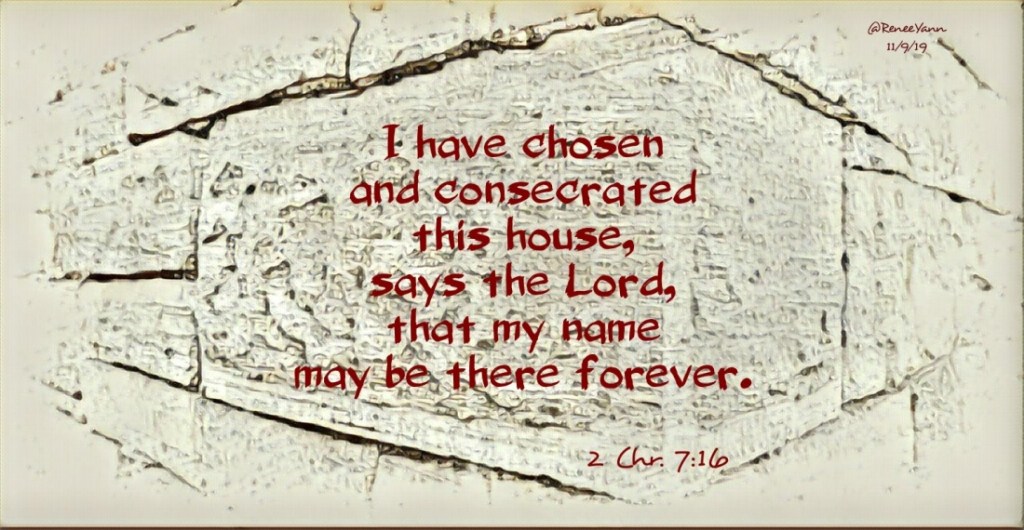
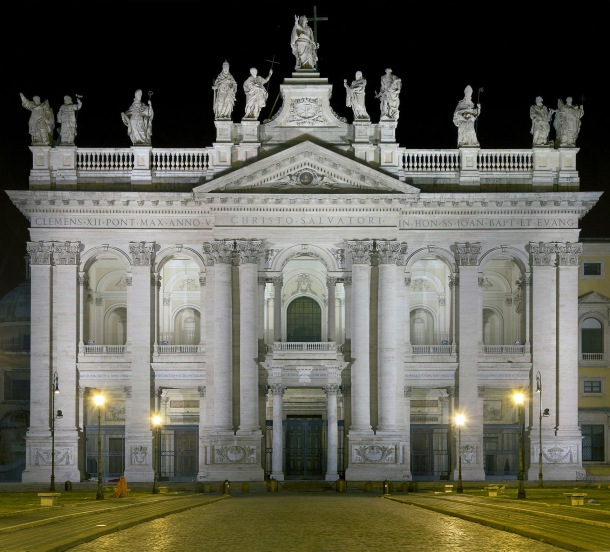
Feast of the Dedication of the Lateran Basilica in Rome

Today, in God’s Lavish Mercy, we celebrate a rare type of feast day – one that marks the dedication of a church building.  For many, that seems a little odd. We are accustomed to celebrating Mary, Joseph and other saints and feasts of Our Lord.

Here’s the thing: we are not actually celebrating a building.  We are celebrating what the building represents – the Body of Christ, the Church, made of living stones – us.

St. John Lateran Basilica in Rome

But sometimes it helps to have visible symbols of the things we venerate and celebrate. That’s why we have medals, rosary beads and candles – so that we can SEE something as we try to conceptualize a spiritual reality.


St. John Lateran is the Pope’s parish church.
Since he is the Bishop of the whole People of God,
his physical church has come to symbolize
the universal Body of Christ, the world Church.


Pope Benedict XVI in his Angelus Address, on November 9, 2008 said this:

Dear friends, today’s feast celebrates a mystery that is always relevant: God’s desire to build a spiritual temple in the world, a community that worships him in spirit and truth
(cf. John 4:23-24).
But this observance also reminds us of the importance of the material buildings in which the community gathers to celebrate the praises of God.
Every community therefore has the duty to take special care of its own sacred buildings, which are a precious religious and historical patrimony. For this we call upon the intercession of Mary Most Holy, that she help us to become, like her, the “house of God,” living temple of his love.


As we pray today, we might want to consider the gift of faith on which our own lives are built – a faith whose cornerstone is Jesus Christ. In our second reading, Paul says this:

Brothers and sisters:
You are God’s building…..
Do you not know that you are the temple of God,
and that the Spirit of God dwells in you?

1 Corinthians 3:16

And in our Gospel, Jesus speaks of his own body as a temple which, though apparently destroyed by his enemies, will be raised up in three days.

By our Baptism, that same spiritual temple lives in us and in all the community of faith. That same power of Resurrection is alive in us! So in a very real sense, what we celebrate today is ourselves – the Living Church – raised up and visible as a sign of God’s Life in the world.

Happy Feast Day, Church!


Poetry: A Perfect Church – the Roseville Bulletin. A light-hearted but honest look at ourselves as Church 🙂

I think that I will never see
A church that’s all it ought to be 
A church that has no empty pews
A church where people never get the blues
A church whose music is always great
A church where people are never late

Such perfect churches there may be 
But none of them are known to me 
If you could find the perfect church
Without one fault or smear
For goodness sake, don’t join that church
You’ll spoil the atmosphere

If you should find the perfect church
Then don’t you even dare
To tread upon such holy ground
You wouldn’t fit in there
But since no perfect church exists
Where people never sin
Then let’s stop looking for that church
And love the one we’re in

Amen


Music: Cornerstone – Hillsong

We Remember

November 2, 2021
All Souls Day

Today, in God’s Lavish Mercy, we pray with Psalm 23, that familiar pastoral which, for millennia, has comforted our griefs and fears.

The Lord is my shepherd; 
I shall not want.
You make me lie down in green pastures 
and lead me beside still waters.
You revive my soul
and guide me along right pathways for your name’s sake.

Psalm 23: 1-3

But even for us who believe, it’s a somber day.

Because we just don’t know, do we? We believe. We hope. We trust. But we just don’t know

  • how life can seem to end so finally
  • why love’s cord seems to break, or at least to tangle
  • where they go when they leave us
  • when we will see them again

That’s why I think that, in many ways, All Souls Day is for us, the living. The act of corporate remembrance lets us hold up before one another these profound “unanswerables” while saying, “Still, I believe; I hope; I love.”

We give one another strength on All Souls Day to choose eternal life in a world that often casts only a deadly shadow. 

Even though I walk through the valley of the shadow of death,
I will fear no evil, for you are with me;
your rod and your staff comfort me.

Psalm 23: 4

Today, we participate in a treasured spiritual exercise for us – those who remain:

We remember.

By our holy remembering:

  • We bless in our departed beloveds what – in life – we might have taken for granted.
  • We cherish their goodness and acknowledge their weaknesses.
  • We consider that our love and longing for them is but a pale reflection of God’s own.
  • We release our dear family and friends into that Immense Love.

As part of the great Communion of Saints, we release even those who have no one holding on to them. By our prayer for them, we attest our love to a heavenly family we have yet to meet.

Our dear Catherine McAuley said this, even in a time when she was faced with constant loss and bereavement:

Shall we all meet in Heaven?
Oh what joy even to think of it!

Venerable Catherine McAuley

On All Souls Day, we do think of it – and are consoled by a quiet, indescribable joy.

You spread a table before me
despite anything that troubles me;
you have anointed my head with oil;
Indeed, my cup is running over.
Surely this goodness and mercy follows us always
and we will dwell in your house for ever.

Psalm 23: 5-6

Poetry: Hildegard of Bingen (1098–1179) – O Shepherd of Souls

O Shepherd of souls
and O, First Voice
through whom all creation was summoned,
now to you,
to you may it give pleasure and dignity
to liberate us
from our miseries and languishing.

Music: Stand in the Light – Jordan Smith 

As we remember all our faithful departed today, we pray that we may all stand in the Light.

Becoming Saints

Monday, November 1, 2021
Feast of All Saints

Synaxis of All Saints – Anonymous Russian icon

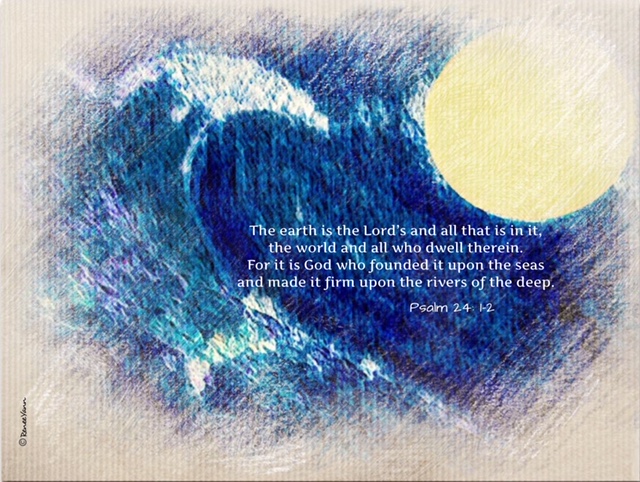
Today, in God’s Lavish Mercy, we pray with Psalm 24, an exultant song of praise and celebration whose opening lines leave no doubt of God’s overarching Supremacy

The earth is the Lord’s and all that is in it, 
the world and all who dwell therein.
For it is God who founded it upon the seas
and made it firm upon the rivers of the deep.

Psalm 24: 1-2

The psalmist then asks and answers the burning question of all spiritual seekers: who may come into the presence of this Omnipotent Being? Who may live in Eternal Love?

Who can ascend the mountain of the Lord,
and who can stand in the holy place of God?
Those who have clean hands and a pure heart, 
who have not pledged themselves to falsehood, 
nor sworn by what is a fraud.
They shall receive a blessing from the Lord
and a just reward from the God of their salvation.

Psalm 24: 3-5

It is these successful seekers whom we celebrate today,
the ones already embraced in everlasting glory.

As we consider their lives, we might ask the further question: how did they do it; how did they achieve holiness.

John, in our second reading, says the key to holiness is to honor the gift already given to each of us at our creation and confirmed in our Baptism:

Beloved:
See what love God has bestowed on us
that we may be called the children of God.
Yet so we are.
The reason the world does not know us
is that it did not know God.
Beloved, we are God’s children now;
what we shall be has not yet been revealed.
We do know that when it is revealed we shall be like God
for we shall see God as God truly is.
Everyone who shares this hope seeks a heart purified in God.


We honor all the Saints today, especially the multitudes whose names are unknown to us. They are the ones who lived lives of Beatitude among us, as our Gospel teaches. May they help us to learn the lessons of:

  • a liberated spirit
  • an unpretentious persistance
  • a hopeful endurance
  • a thirst for righteousness
  • a merciful and pure heart
  • a gentle peace-making
  • and a courageous pursuit of justice

These are the keys that will lift up the gates of Heaven for us, allowing the Holy One to make us holy:

Lift up your heads, O gates;
lift them high, O everlasting doors;
and the One who reigns in glory shall come in.

Psalm 24:7

Poetry: In Whom We Live and Move and Have Our Being – Denise Levertov 

Birds afloat in air’s current,
sacred breath? No, not breath of God,
it seems, but God
the air enveloping the whole
globe of being.
It’s we who breathe, in, out, in, the sacred,
leaves astir, our wings
rising, ruffled—but only saints
take flight. We cower
in cliff-crevice or edge out gingerly
on branches close to the nest. The wind
marks the passage of holy ones riding
that ocean of air. Slowly their wake
reaches us, rocks us.
But storm or still,
numb or poised in attention,
we inhale, exhale, inhale,
encompassed, encompassed.

Music: two songs for the big feast🤗

Psalm 24: Lift up your heads, ye gates – Georg Friedrich Handel
Sung by the Gramophone Chorus – Ghana


Give Us Clean Hands – Charlie Hall

A Blessed Mercy Day

Friday of the Twenty-fifth Week in Ordinary Time
September 24, 2021

The link below will take you to Mercy International Center’s website. About mid-page, you can click to see Catherine McAuley’s story, “In God Alone”. It is a wonderful short film. Please take time to enjoy it and to thank God with the Sisters of Mercy for our blessed founder, dear Catherine. Blessings and love to all our Mercy family throughout the world!

Music: In God Alone by Bernadette Farrell

Jubilate Deo!

Saturday of the Twenty-fourth Week in Ordinary Time

September 18, 2021

Today, in God’s Lavish Mercy, we pray with Psalm 100, called the “Jubilate Deo” because of its opening pronouncement:

Shout joyfully to the LORD, all you peoples;
serve the Lord with gladness;
come before the Lord with joyful song.

Psalm 100: 1-2

This is such a perfect prayer today for our Mercy community as we will gather to celebrate the Jubilee of many of our sisters this afternoon. It will be a huge celebration in which the Jubilarians of both 2020 and 2021 will be honored, due to last year’s Covid restrictions.

For many of us, the most moving parts of the celebration are the procession and recession. These celebratory passages are a testament to God’s faithfulness over many lifetimes, and to the women who have received and responded to God’s gifts.

Some sisters, who have been given the gift of long years, will process with a cane or walker to assist them. Some will move with an achieved maturity, and some still with the vigor of youth.

But our Mercy family, gathered in the pews, walks in Spirit with each of the Jubilarians, carrying her within a bond of mutual love. As we see each sister whom we have lived with, worked with, loved and learned from, our hearts indeed sing with them, “Jubilate!”


Poetry: The Neophyte – Alice Meynell

 
Who knows what days I answer for to-day:
  Giving the bud I give the flower.  I bow
  This yet unfaded and a faded brow;
Bending these knees and feeble knees, I pray.
Thoughts yet unripe in me I bend one way,
  Give one repose to pain I know not now,
  One leaven to joy that comes, I guess not how.
I dedicate my fields when Spring is grey.
Oh, rash! (I smile) to pledge my hidden wheat.
  I fold to-day at altars far apart
Hands trembling with what toils?  In their retreat
  I seal my love to-be, my folded art.
I light the tapers at my head and feet,
  And lay the crucifix on this silent heart.
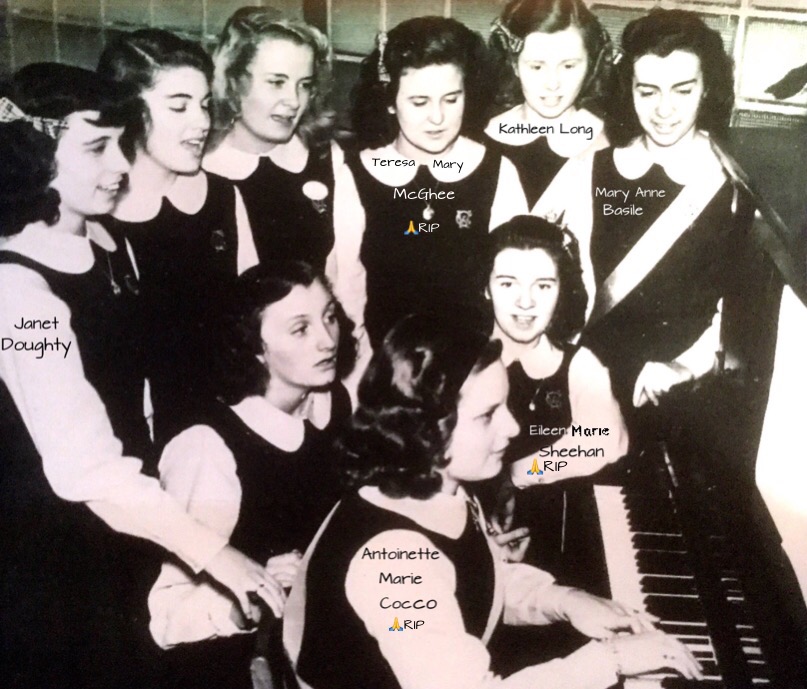
Some of 2021’s Sapphire/Diamond Jubilarians when they were true Neophytes

Please join us in your grateful prayers for these Sisters of Mercy:

Jubilarians 2020
80 years
Sister Rita Powell

70 years
Sister Mary Georgina Hasson 
Sister Mary Hentz
Sister Kathleen Kelly
Sister Marie Lynch
Sister Antoinette Medori 
Sister Clare Miriam Schrant 
Sister Marianna Walsh

60 Years
Sister Rosellen Bracken
Sister Mary Elizabeth Burke 
Sister Emily Therese Connor 
Sister Marie Michele Donnelly 
Sister Patricia Anne Flynn
Sister Kathleen Marie Fox
Sister Mary Ann Giordano
Sister Patricia Anne Kennedy 
Sister Barbara Ann MacWilliams 
Sister Kathleen McAlpin
Sister Mercedes Joan McCann 
Sister Kathleen McGovern 
Sister Josephine McGrory
Sister Mary Sarah McNally 
Sister Mary Anne Nolan
Sister Stella Mary O’Brien
Sister Frances Paglione
Sister Rose Carmel Scalone 
Sister Barbara Smiley
Sister Patricia Talone
Sister Angela Welsh

50 years
Sister Mary Beth Geraghty 
Sister Mary Jane Morrison 
Sister Katherine Bednarcik

Jubilarians 2021
75 years
Sister Mary Ann Basile 
Sister Marie Helene Bradley 
Sister Mary Janet Doughty 
Sister Kathleen Mary Long 
Sister Marita Lyons
Sister Catherine Rawley 
Sister Ethel Sweeney

70 years
Sister Therese Marie Kenny 
Sister Alice Mary Meehan 
Sister Rose Morris
Sister Kathleen Waugh 
Sister Anne Marie Berenato 
Sister Mary Anton Frick

60 years
Sister Francis Haddow 
Sister Anna Marie Lesutis 
Sister Margery Lowry
Sister Mary Mester
Sister Sheila Murphy
Sister Anne Marie Weisglass 
Sister Joanne Whitaker 
Sister Beverly Wilde

50 years
Sister Maureen Conklin 
Sister Susan Myslinski

25 Years
Sister Guia Jimenez


Music: Utrecht Jubilate – Handel

Monday of the Twenty-second Week in Ordinary Time

Monday, August 30, 2021

Today, in God’s Lavish Mercy, we pray with Psalm 96. Following as it does on our first reading from Thessalonians, the psalm is an encouragement to trust God completely and to demonstrate that trust in unconditional praise.

The tone of Paul’s letter to the Thessalonians suggests that, since his last visit, many of their community have died. The people are grieving, and they are unsure of what their new faith offers them.

Reading this passage today, I was taken back a few months to the first wave of COVID through our local Mercy community. Several of our sisters died. Their deaths came relentlessly, one after the other. There was a painful point at which we hated to hear the phone ring in the morning because it carried so many daily losses to us.

When, after weeks of bereavement, we were unlocked to visit one another again, there was a stunning emptiness in so many of the beloved spaces of our community!

We, who loved these sisters and the brave beauty of their generous lives, felt a grief reminiscent of the emotions in this plaintive song from Les Miserables.

That same kind of grief ripped though our nation this week with the murders of thirteen service members and nearly 200 Afghans at the Kabul airport as they sought freedom and peace.

from PBS.org

Death is cruel, and when it comes in a ravenous cluster, it is overwhelming. It was to such an overwhelmed community that Paul wrote these words:

We do not want you to be unaware, brothers and sisters,
about those who have fallen asleep,
so that you may not grieve like the rest, who have no hope.
For if we believe that Jesus died and rose,
so too will God, through Jesus,
bring with him those who have fallen asleep.

1 Thessolonians 4:13-14

This remarkable hope, this blessed assurance, is the defining character of the Christian heart. It is the power that lifts us out of darkness and gives us the courage to praise God in all circumstances.

Sing to the Lord a new song;
sing to the Lord, all the whole earth.
Sing to the Lord and bless the divine name;
proclaim the good news of our salvation from day to day.
Declare the glory of the Lord among the nations 
and the wonders of God among all peoples.
For great is the Lord and greatly to be praised, 
more awesome than all other gods….

Psalm 96: 1-4

… “more awesome than all our gods”…

even the false gods of death and war …

We are a people called to believe the declaration of today’s Gospel, that Jesus Christ is among us to restore Creation to eternal life:

He stood up to read and was handed a scroll of the prophet Isaiah.

He unrolled the scroll and found the passage where it was written:
    The Spirit of the Lord is upon me,
        because he has anointed me
            to bring glad tidings to the poor.
    He has sent me to proclaim liberty to captives
        and recovery of sight to the blind,
            to let the oppressed go free,
    and to proclaim a year acceptable to the Lord.

Rolling up the scroll,
he handed it back to the attendant and sat down,
and the eyes of all in the synagogue looked intently at him.

He said to them,
“Today this Scripture passage is fulfilled in your hearing.”

Luke 4:17-21

And it is fulfilled every day,
in our lights and even in our shadows,
if we but believe.

Bring us, O Lord, at our last awakening into the house and gate of heaven,
to enter into that gate and dwell in that house,
where there shall be no darkness nor dazzling, but one equal light;
no noise nor silence, but one equal music;
no fears nor hopes, but one equal possession;
no ends nor beginning, but one equal eternity;
in the habitation of thy glory and dominion, world without end.

Prayer of John Donne

Poetry: John Donne (1572–1631)- Death Be Not Proud (Holy Sonnet X)

Death, be not proud, though some have called thee
Mighty and dreadful, for thou are not so;
For those whom thou think'st thou dost overthrow
Die not, poor Death, nor yet canst thou kill me.

From rest and sleep, which but thy pictures be,
Much pleasure; then from thee much more must flow,
And soonest our best men with thee do go,
Rest of their bones, and soul's delivery.

Thou'art slave to fate, chance, kings, and desperate men,
And dost with poison, war, and sickness dwell,
And poppy'or charms can make us sleep as well
And better than thy stroke; why swell'st thou then?

One short sleep past, we wake eternally,
And death shall be no more; Death, thou shalt die.

Music: Benedictus – 2Cellos

Memorial of Saint Bernard

Friday, August 20, 2021

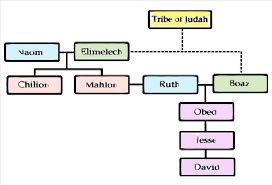
Today, in God’s Lavish Mercy, we pray with Psalm 146, chosen today to complement our first reading which is a rare lectionary passage from the Book of Ruth. In it, we meet Naomi who is, at one point, widowed and alone. 

The fatherless and the widow the Lord sustains,
    but the way of the wicked is thwarted.

Psalm 146:9
Ruth Carries Her Gleanings – James Tissot

The Book of Ruth is familiar to many of us because some of its charming story and verses seem a lovely fit for weddings and anniversaries. But in some ways, that isolated use tends to trivialize the powerful messages embedded in this short volume.


If we have a limited view of the Book of Ruth, Psalm 146 can help us widen it. The psalm points to elements central to a hopeful and just community, to a community in right relationship with God. This too is a core message of Ruth.


It is a community strengthened by compassion, loyalty, inclusivity, trust, hope and grateful praise. Each character, at some point in the story’s unfolding, exhibits some aspect of God’s merciful nature and steadfast attachment to us. They put flesh on the psalm’s Antiphons:

Happy are they who have the God of Jacob for their help! 
For their hope is in the Lord their God,
who made heaven and earth, 
the seas, and all that is in them;
who keeps promises for ever;
who gives justice to those who are oppressed,
food to those who hunger
and sets the prisoners free.
The Lord opens the eyes of the blind!
The Lord lifts up those who are bowed down
and loves the righteous.
The Lord cares for the stranger
and sustains the orphan and widow,
but frustrates the way of the wicked. 
The Lord shall reign for ever,
your God, O Zion, throughout all generations.
Hallelujah!

Ruth was the great-grandmother of David and blood ancestor of Jesus. Her story, and the tender mercy it declares, foretells the character of the Beloved Community Christ will establish.


The heart of that community – our community – is aptly described in today’s Gospel. When the Pharisees ask Jesus what is most important, he replies:

You shall love the Lord, your God, with all your heart,
with all your soul, and with all your mind.
This is the greatest and the first commandment.
The second is like it:
You shall love your neighbor as yourself.
The whole law and the prophets depend on these two commandments.

Ruth already knew what was most important.
May we learn it deeply from her story.


Poem: Ruth and Naomi by Frances Ellen Watkins Harper (1825-1911), an African American abolitionist and poet. Born free in Baltimore, Maryland, she had a long and prolific career, publishing her first book of poetry at twenty and her first novel, the widely praised Iola Leroy, at age 67. 

"Turn my daughters, full of woe,
Is my heart so sad and lone? 
Leave me children — I would go 
To my loved and distant home. 

From my bosom death has torn 
Husband, children, all my stay, 
Left me not a single one, 
For my life's declining day 

Want and woe surround my way, 
Grief and famine where I tread; 
In my native land they say
"God is giving Jacob bread.”

Naomi ceased, her daughters wept, 
Their yearning hearts were filled; 
Falling upon her withered neck, 
Their grief in tears distill'd. 

Like rain upon a blighted tree, 
The tears of Orpah fell 
Kissing the pale and quivering lip, 
She breathed her sad farewell. 

But Ruth stood up, on her brow 
There lay a heavenly calm; 
And from her lips came, soft and low 
Words like a holy charm. 

"I will not leave thee, on thy brow 
Are lines of sorrow, age and care; 
Thy form is bent, thy step is slow, 
Thy bosom stricken, lone and sear. 

Oh! when thy heart and home were glad, 
I freely shared thy joyous lot; 
And now that heart is lone and sad, 
Cease to entreat — I'll leave thee not. 

Oh! if a lofty palace proud 
Thy future home shall be; 
Where sycophants around thee crowd, 
I'll share that home with thee. 

And if on earth the humblest spot, 
Thy future home shall prove; 
I'll bring into thy lonely lot 
The wealth of woman's love. 

Go where thou wilt, my steps are there, 
Our path in life is one; 
Thou hast no lot I will not share, 
'Till life itself be done. 

My country and my home for thee, 
I freely, willingly resign, 
Thy people shall my people be, 
Thy God he shall be mine. 

Then, mother dear, entreat me not 
To turn from following thee; 
My heart is nerved to share thy lot, 
Whatever that may be.”

Music: Ruth’s Song – Marty and Misha Goetz

(Verse 1)
All my life, I have wondered
Wondered where I might belong
Feeling lost, like a stranger
Wandering far all on my own
(Verse 2)
Without a home. Without a people
Without a hope, without a prayer
Without a way, that I could follow
Then I turned, and you were there
(Chorus)
Where you go, I will go
Where you stay, I will stay forever
Where you lead, I will follow
So I can know the one you know
(Verse 3)
Under his wings, you found a shelter
You have no fear, you have no shame
And when you call, he seems to answer
He even seems to know your name
(Chorus)
(Bridge)
Then somehow should I find his favor
I won’t look back on all I’ve known
Your people then will be my people
And Your God my God alone
(Chorus)
Where you go, I will go
And you know I will never leave you
Not even death, will ever part us
Now that I know the one you know
I will go now, where you go

Wednesday of the Twentieth Week in Ordinary Time

Wednesday, August 18, 2021

Today, in God’s Lavish Mercy, we pray with Psalm 21, a companion piece to Psalm 20. In these verses, the king asks for victory, receives it, and rejoices in domination over his enemies. The psalm follows our first reading from Judges which is a parable that criticizes Abimelech’s seizure of kingship over Israel by treacherous means.


Without getting too deep into the complex exegesis of these passages, suffice it to say that they invite us to consider the nature of leadership – its source, exercise, and meaning relative to our spiritual and moral life.

St. Augustine, in his commentary on the Psalms, teaches that Psalm 21 foretells the kingship of Jesus. This kingship (as opposed to that of Abimelech) is marked by humility, mercy, and obedience to the Creator.


We see a wide and confusing range of “leadership” in our world today, from figures like Pope Francis to Kim Jong-Un. But in our prayer today, we are given a very clear picture of what true leadership looks like.

A perfect leader is to God like the moon is to the sun. The leader only reflects the True Light given to them as a gift. 

Recognizing fruitful leadership as a gift, they dispense it graciously to others as in our Gospel parable, imparting mercy even to those considered last in line for it.

In various circumstances, we can be either leader and follower. How do we invite Grace to inform us in either case?


Poetry-Prayer: A Leader’s Prayer – from xavier.edu

Leadership is hard to define. 
Lord, let us be the ones to define it with justice. 
   Leadership is like a handful of water. 
   Lord, let us be the people to share it with those who thirst.
Leadership is not about watching and correcting. 
Lord, let us remember it is about listening and connecting. 
   Leadership is not about telling people what to do. 
   Lord, let us find out what people want.
Leadership is less about the love of power,
and more about the power of love.
   Lord, as we continue to undertake the role of leader let us be 
   affirmed by the servant leadership we witness in your son Jesus.
Let us walk in the path He has set and let those who will, follow.
Let our greatest passion be compassion. 
   Our greatest strength love. 
   Our greatest victory the reward of peace.
In leading let us never fail to follow. 
In loving let us never fail.

Music: Lead Me Lord -Samuel S. Wesley

Memorial of Saint Clare

Wednesday, August 11, 2021

Today, in God’s Lavish Mercy, we pray with Psalm 66 – a psalm which, according to scripture scholar Roland Murphy, mixes two genres:

  1. A thanksgiving song of the community:

Shout joyfully to God, all the earth;
    sing praise to the glory of God’s name;
    proclaim God’s glorious praise.
Say to God: “How tremendous are your deeds!”

Psalm 66: 1-3
  1. A thanksgiving song of an individual:

Hear now, all you who fear God, while I declare 
    what God has done for me.
When I appealed to God  in words,
    praise was on the tip of my tongue.

Psalm 66: 16-17

Psalm 66 reminds us that we come to know,
love and serve God
both as individuals
and within the community of faith.
Our union with God is deepened at both fountains.

Today, we celebrate the feast of Clare of Assisi who praised God through a life of service shaped by a radical understanding of holy poverty.

We become what we love 
and who we love shapes what we become. 
If we love things, we become a thing. 
If we love nothing, we become nothing. 
Imitation is not a literal mimicking of Christ, 
rather it means becoming the image of the beloved, 
an image disclosed through transformation. 
This means we are to become vessels of God’s 
compassionate love for others.

Clare of Assisi

Poetry/Prayer: As we pray to live lives of love and compassion, may St. Clare’s blessing encourage us.

Go forth in peace, 
for you have followed the good road. 
Go forth without fear, 
for the One who created you 
has made you holy, 
has always protected you, 
and loves you as a mother. 
Blessed be you, my God, for having created me.


Music: Let the Love that Dwells in Your Heart – Poor Clare’s of Arundel