Today, in God’s Lavish Mercy, Paul counsels us to be steadfast in our faith. Jesus counsels us to avoid greed. How might the two be connected?
Perhaps like this. Only by faith do we have the courage to repudiate the allurements of greed.
Paul lauds Abraham whose faith convinced him that God’s promise to him would be fulfilled. Jesus promises us eternal life in a realm apart from any earthly treasure. If we believe in Jesus’s promise, we realize the futility of possessiveness, greed and consumerism.
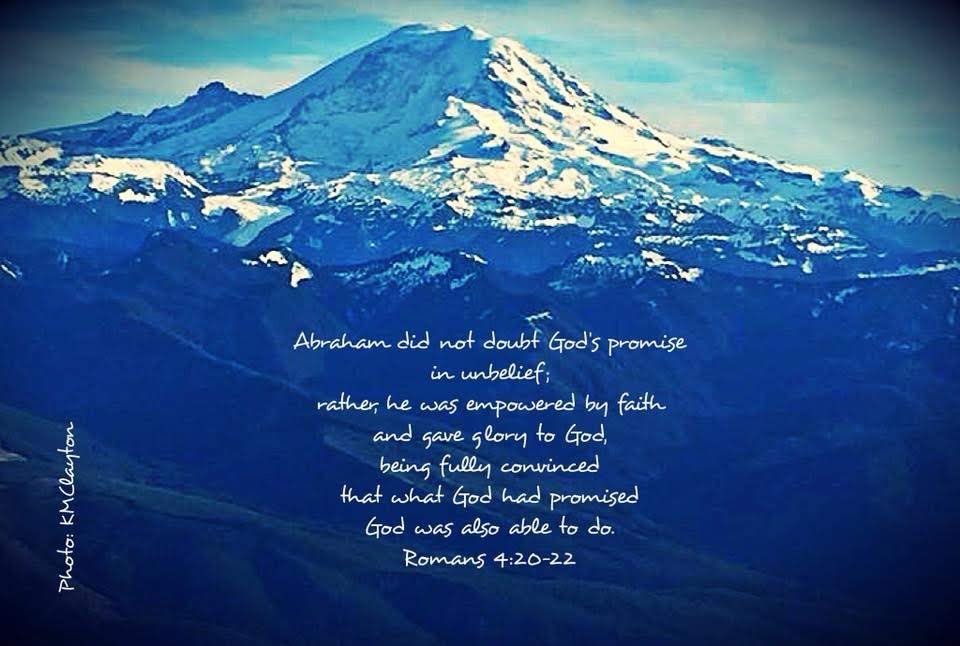
Abraham did not doubt God’s promise in unbelief; rather, he was empowered by faith and gave glory to God and was fully convinced that what God had promised he was also able to do. That is why it was credited to him as righteousness.
Romans 4:20-22
That’s a really hard call in our society which makes it hard to believe in anything including God and ourselves! Every type of media conspires to convince us that we are not enough as we are. We need a better car, house, clothes, haircut, and on and on to make us “acceptable”. Populism and racism ingrained in our politics convince us that we need to be a certain color, nationality, religion, speak a certain language to be worth anything.
Jesus says NO. You are beautiful just as I created you. And you already have everything you need to merit my promise of eternal life. You have only one need in this world — to love yourself and one another so that my promise can be released in you and in all Creation.
Then Jesus said to the crowd, “Take care to guard against all greed, for though one may be rich, one’s life does not consist of possessions.”
Luke 12:15
Poetry: from Rumi
When I am with you, everything is prayer.
I prayed for change,
so, I changed my mind.

I prayed for guidance
and learned to trust myself.

I prayed for happiness
and realized I am not my ego.

I prayed for peace
and learned to accept others unconditionally.

I prayed for abundance
and realized my doubt kept it out.

I prayed for wealth
and realized it is my health.

I prayed for a miracle
and realized I am the miracle.

I prayed for a soul mate
and realized I am with the One.

I prayed for love
and realized it is always knocking,
but I have to allow it in.
Music: How Could Anyone Ever Tell You – Shaina Noll
Today, in God’s Lavish Mercy, our scripture readings are a little heavy. I had to dig to get my inspiration. But there are gems in these dense words!
It was not through the law that the promise was made to Abraham and his descendants that he would inherit the world, but through the righteousness that comes from faith.
This is a spiritually freeing passage. It assures us that God is with us through our faith, not through the perfection with which we keep laws and rules.
Our Gospel reinforces the message:
Everyone who speaks a word against the Son of Man will be forgiven, but the one who blasphemes against the Holy Spirit will not be forgiven.
Luke 12:10
The passage is a little scary when first read, because we all hope we haven’t done anything to offend the Holy Spirit. But what Jesus is telling his listeners is this:
If a person criticizes or rejects Christ’s life and teaching, forgiveness is still possible when they come to their senses and repent. It’s like cutting the bad spot out of an otherwise good apple.
But if a person chooses to live a life which blasphemes (mocks, dismisses) the Spirit of life, love, mercy and peace, that person can never be forgiven — because they can never repent. They will be hardened and rotten to the core.
So the advice of Paul and Jesus boils down to this, I think. Befriend the Holy Spirit by your life of faithful choices. Listen to Her inspiration. Help others to do the same. And do not worry when you make a few mistakes. God stands by the promise to be with us always.
Prose: Christmas Address of Pope Francis – 12/22/2022
Much has happened in the course of this year and, before anything else, we want to thank the Lord for all his blessings. Yet we hope that among those blessings is that of our conversion. Conversion is a never-ending story. The worst thing that could happen to us is to think that we are no longer in need of conversion, either as individuals or as a community.
To be converted is to learn ever anew how to take the Gospel message seriously and to put it into practice in our lives. It is not simply about avoiding evil but doing all the good that we can. That is what it means to be converted. Where the Gospel is concerned, we are always like children needing to learn. The illusion that we have learned everything makes us fall into spiritual pride.
Today, in God’s Lavish Mercy, we begin about a month of readings from Paul’s letter to the Romans. We will also continue with Luke’s Gospel all the way up to Advent.
In my 2019 reflections on these passages, to help me understand Romans, I used a book by Scott W. Hahn, Father Michael Scanlan Chair of Biblical Theologyat Steubenville University. I decided to return to that opening reflection as we meet Romans again today.
In his introduction, Hahn says this:
Today’s reading offered me these elements to ponder and pray with:
Paul calls himself a “slave” of Jesus Christ
He invokes his call as an Apostle
He sets himself in the company of the prophets
He appeals to Jews who revere David
but proclaims Christ, through his Resurrection, as Messiah beyond human lineage
He proclaims his mission to the Gentiles
to bring about “the obedience of faith”
I’ll be honest with you. I’ve read or heard this passage maybe fifty times in my lifetime, and it has meant little or nothing to me. At best, it has sounded like a formal introduction such as those we hear from government “whereas” type decrees.
But I took Dr. Hahn’s advice, studying the passage, and reading it slowly and prayerfully. Here’s what I received:
Paul’s Apostolic call, to which he willingly enslaved his heart, was to preach the Good News of our redemption in Jesus Christ – to preach it to Jews, Romans, Gentiles, and all people.
It is an awesome and incredible message that can be received only through the gift of faith.
It is a message rooted in the scripture stories we love, and where we look to find a reflection of our own stories.
Learning from these realities will help us come to a faith which expresses itself in action and gives glory to God in our own time.
Luke gives us one such story today. Jesus reminds the crowd of two familiar passages – that of Jonah and the “Queen of the South” (the Queen of Sheba, 1 Kings 10). He indicates that the people in these stories believed without a sign.
Jesus tells the people gathered around him to learn from this. The crowd demands a sign, but Jesus says the sign is right in front of you – it is only your open heart that is lacking.
In his introduction, Paul prays for such open hearts in the Romans:
Grace to you and peace from God our Father and the Lord Jesus Christ.
By that same grace, may we receive faith’s blessing as well.
Poetry: Love Constraining to Obedience – William Cowper (1731-1800) Cowper’s poem captures the interior transformation that occurs when our obedience is motivated by love rather than simply by duty.
No strength of nature can suffice
To serve the Lord aright:
And what she has she misapplies,
For want of clearer light.

How long beneath the Law I lay
In bondage and distress;
I toiled the precept to obey,
But toiled without success.

Then, to abstain from outward sin
Was more than I could do;
Now, if I feel its power within,
I feel I hate it too.

Then all my servile works were done
A righteousness to raise;
Now, freely chosen in the Son,
I freely choose His ways.

‘What shall I do,’ was then the word,
‘That I may worthier grow?’
‘What shall I render to the Lord?’
Is my inquiry now.

To see the law by Christ fulfilled
And hear His pardoning voice,
Changes a slave into a child,
And duty into choice.
Today, in God’s Lavish Mercy, Joel launches into a cautionary poem replete with metaphors. His images are so effective that, even 3000 years later, many will be very familiar to us from the liturgy and even from modern culture.
Some of my readers may be of an age to remember the wonderful film “The Valley of Decision” starring two of the all-time greats, Greer Garson and Gregory Peck. The film’s title is plucked right out of Joel.
Apply the sickle, for the harvest is ripe; Come and tread, for the wine press is full; The vats overflow, for great is their malice. Crowd upon crowd in the valley of decision; For near is the day of the LORD in the valley of decision. Sun and moon are darkened, and the stars withhold their brightness. The LORD roars from Zion, and from Jerusalem raises his voice; The heavens and the earth quake, but the LORD is a refuge to his people, a stronghold to the children of Israel.
By using metaphors, the poet-prophet accomplishes an extensive lesson that, delivered in prose, would have exhausted his beleaguered audience.
Metaphors have a way of holding the most truth in the least space.
Orson Scott Card
Like all prophets, Joel employs current events to point to a deeper understanding. Many of the metaphors he uses throughout his prophecy have been employed in the liturgy, particularly during Lent. Joel’s message is a universal call to repentance germane to every generation, but particularly to that liturgical season.
Yet even now,’ declares the Lord, ‘return to me with all your heart, with fasting, with weeping, and with mourning; and rend your hearts and not your garments.
Joel 2: 12-13
In our Gospel. the core of Joel’s message is given direct and fuller voice in Jesus’ statement:
Blessed are those who hear the Word of God and observe it.
Luke 11:28
In our own lives – our own “valleys of decision”, this is the foolproof way we prepare for the Day of the Lord – hearing and observing the Word of God.
Music: Valley of Decision – Christafari
(When I read about Christafari, I am reminded that we can never underestimate or judge the many ways that people come to Christ.)
Christafari was founded in 1989 by Pastor Mark Mohr. Raised in a Christian family, during his teens Mohr strayed from his spiritual upbringing and turned to drugs and alcohol, going as far as growing and even dealing marijuana. After running away from home, living on the streets, and hitting rock-bottom, he had an undeniable encounter with God that drastically transformed his world. At 17, Mark re-committed his life to Christ and took what he now calls his “Freedom Step” out of addiction.
Christafari is comprised of men and women from various continents, countries, and cultures who are true missionaries at heart and share a love for reggae music and passion for following Jesus to the ends of the earth.
Run come and fall People take heed to His call Valley of decision (Valley of decision) This is no game People have to die in His name Valley of decision (Valley of decision) Darkness, it looms all around us I find it hard to see But I don’t know, I don’t know, I don’t know, I don’t know, I don’t know Whether I should stay or whether I should flee People all around me seem, they seem to be so sad I hear them cry, I hear them ball I see them back against the wall I wish I could wipe away their tears There’s a Holy A Holy hill Holy mount Zion Holy, Holy mount Zion Just know that He’s the Lord, Your God, yeah In this valley of decision Valley of decision Even though I run through enough hills and valleys I fear no evil, ’cause God is with me Even though I run through enough hills and valleys Thy rod and staff, they will comfort me Even though I run through enough hills and valleys I fear no evil, ’cause God is with me Even though I run through enough hills and valleys Thy rod and staff, they will comfort me Run come and fall People take heed to His call Valley of decision (Valley of decision) This is no game People have to die in His name Valley of decision (Valley of decision) There’s a Holy A Holy hill Holy mount Zion Holy, Holy mount Zion Just know that He’s the Lord, Your God, yeah In this valley of decision Valley of decision Even though I run through enough hills and valleys I fear no evil, ’cause God is with me Even though I run through enough hills and valleys Thy rod and staff, they will comfort me Even though I run through enough hills and valleys I fear no evil, ’cause God is with me Even though I run through enough hills and valleys Thy rod and staff, they will comfort me Jah great and dreadful day will soon come Jah will pour out His mighty, mighty, mighty Spirit to all mankind Through Him all creation, all creation was made Those who call upon His name (Call on His name and You will be saved) There’s a Holy A Holy hill Holy mount Zion Holy, Holy mount Zion Just know that He’s the Lord, Your God, yeah In this valley of decision Valley of decision Run come and fall People take heed to His call Valley of decision (Valley of decision) This is no game People have to die in His name Valley of decision (Valley of decision) Even though I run through enough hills and valleys I fear no evil, ’cause God is with me Even though I run through enough hills and valleys Thy rod and staff, they will comfort me Even though I run through enough hills and valleys I fear no evil, ’cause God is with me Even though I run through enough hills and valleys Thy rod and staff, they will comfort me Even though I run through enough hills and valleys I fear no evil, ’cause God is with me Even though I run through enough hills and valleys Thy rod and staff, they will comfort me
Today, in God’s Lavish Mercy, we pray with Psalm 80, rather a desperate plea in the midst of devastation.
… the vineyard which you planted … Why have you broken down its walls, so that every passer-by plucks its fruit, The boar from the forest lays it waste, and the beasts of the field feed upon it?
Psalm 80: 13-14
Angelus – Jean Francois Millet
Among my readers there are probably not too many farmers, but there may be a few serious gardeners. You would know what it feels like to lose a valued and tendered crop. And all of us have probably seen a movie or two where early settlers lose the crop which sustained their existence, or a news story of the same tragedy in real life. No words.
So Isaiah tells us that Israel, and by extension the People of God, is that precious vineyard, lovingly planted in hope by the Creator. The prophet paints the image of a deeply disappointed God:
The vineyard of the LORD of hosts is the house of Israel, and the people of Judah are his cherished plant; he looked for judgment, but see, bloodshed! for justice, but hark, the outcry!
Isaiah 5:7
But Psalm 80 calls out to that “disappointed” God and asks for forgiveness and restoration. The psalmist is inspired by the same kind of relentless hope Paul encourages in our second reading:
Have no anxiety at all, but in everything, by prayer and petition, with thanksgiving, make your requests known to God. Then the peace of God that surpasses all understanding will guard your hearts and minds in Christ Jesus.
Philippians 4:6-7
Our Gospel demonstrates for us that the cycle continues throughout history: hope – sin – devastation- repentance – forgiveness – renewed hope. It continues in individuals, families, societies, churches.
But that cycle has been forever absorbed into the Passion, Death and Resurrection of Christ who once and for all redeemed us from its clutches. In the grace of Jesus Christ, we can never remain devastated or bereft of life. This is the glory of our Baptism into Christ, if we will but claim it!
Paul guides us, himself like a tender gardener, in this passage that is so worth our quiet reflection. It will be our “poem” for today!
Finally, brothers and sisters, whatever is true, whatever is honorable, whatever is just, whatever is pure, whatever is lovely, whatever is gracious, if there is any excellence and if there is anything worthy of praise, think about these things. Keep on doing what you have learned and received and heard and seen in me. Then the God of peace will be with you.
Music: Shen Khar Venakhi ( You are a Vineyard ) A hymn of praise to God’s perfect vineyard, the Virgin Mary who brought forth Christ
You are a vineyard newly blossomed. Young, beautiful, growing in Eden, A fragrant poplar sapling in Paradise. May God adorn you. No one is more worthy of praise. You yourself are the sun, shining brilliantly.
Thou Art a Vineyard (Georgian: შენ ხარ ვენახი, transliterated: Shen Khar Venakhi) is a medieval Georgian hymn. The text is attributed to King Demetrius I of Georgia (1093–1156). The composer of the music is unknown. Supposedly Demetrius wrote it during his confinement as a monk in the monastery. The hymn is dedicated to Georgia and the patronage of the Virgin Mary: it is also a prayer of praise to Mary in the Georgian Orthodox Church
As the lyrics did not mention any saints or gods, this was the only church-song that was permitted to be performed in the anti-religious Soviet Union. There are East Georgian (Kartli-Kakhetian) and West Georgian (Gurian) versions of this chant with very different musical compositions.
Today, in God’s Lavish Mercy, Baruch continues to instruct his flock on the necessity and practice of repentance.
Baruch puts this wonderful image into the mouth of personified Jerusalem as she calls her people to repentance:
As your hearts have been disposed to stray from God, turn now ten times the more to seek him…
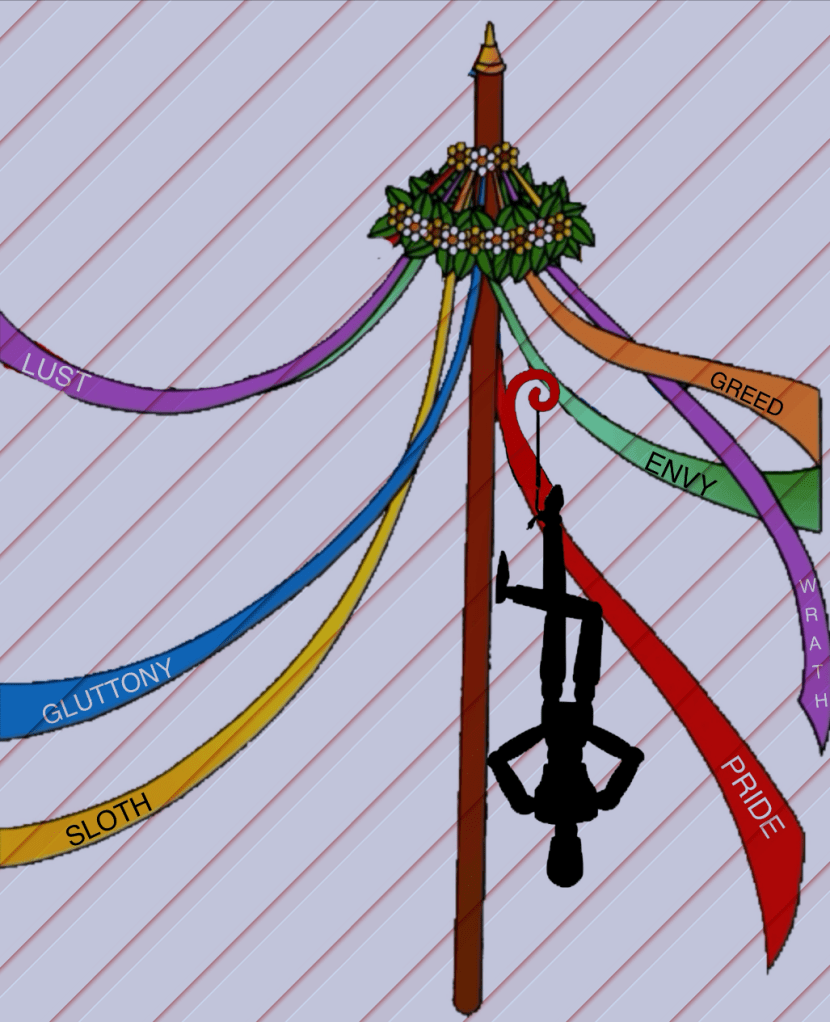
Doesn’t that verse perfectly describe how we struggle to move beyond our sinful fascinations into freedom and wholeness? I’m sure that, at some time in our lives, we have twirled more than once around some of the deadly sins to the point of getting ourselves all wound up!
Baruch says, “Rewind — even ten times! Go back to the heart of God!”
But that repentance to the tenth power may not be so easy to achieve. The topic of sin isn’t so popular today, although its practice seems to be doing just fine. Dr. Rebecca DeYoung, graduate of Notre Dame, specializes in research about the seven deadly sins and spiritual formation. She says this about our density to the power of sin in our lives:
We deceive ourselves about how powerful sin actually is, and when we finally do face our flaws, we often find ourselves, as Augustine said in his Confessions, “chained by the power of habit.” What would it look like to take sin seriously—to acknowledge how susceptible we are to the dark power of our own disordered desires? And what difference does it make to think of sin as self-destructive habit that shapes our lives from the inside out?
Prose: You may enjoy reading Professor DeYoung’s article as much as I did. Here is the link;
That moment of repentance and redemption can come in the most unexpected ways as attested to in this great country song. Fleet wrote this song which was one of the 50 most listened to country songs of 2021.
The night I hit rock bottom, sittin’ on an old barstool He paid my tab and put me in a cab, but he didn’t have to But he could see I was hurtin’, oh, I wish I’d got his name ‘Cause I didn’t feel worth savin’, but he saved me just the same
That day out on the water, when the fish just wouldn’t bite I put my pole down, I floated around, was just so quiet And I could hear my old man sayin’ “Son, just be still ‘Cause you can’t find peace like this in a bottle or a pill”
From a bar stool to that Evinrude Sunday mornin’ in a church pew In a deer stand or a hay field An interstate back to Nashville A Chevrolet with the windows down Me and him just ridin’ around Sometimes, whether I’m lookin’ for Him or not That’s where I find God
Sometimes late at night, I lie there and listen To the sound of her heart beatin’ And the song the crickets are singin’ And I don’t know what they’re sayin’ But it sounds like a hymn to me Naw, I ain’t too good at prayin’ But thanks for everything
From a bar stool, to that Evinrude Sunday mornin’ in a church pew In a deer stand or a hay field An interstate back to Nashville A Chevrolet with the windows down Me and him just ridin’ around Sometimes, whether I’m lookin’ for Him or not That’s where I find God
From a bar stool, to that Evinrude Sunday mornin’ in a church pew In a deer stand or a hay field An interstate back to Nashville A Chevrolet with the windows down Me and him just ridin’ around Talkin’, well I do that a lot Well, I do that a lot That’s where I find God
(I chose to offer a reflection on the readings for the Memorial of St. Francis rather than for Wednesday of the Twenty-sixth Week)
Today, in God’s Lavish Mercy, we pray with St. Francis of Assisi (1181-1226) , one of the most revered figures in Christianity, an Italian mystic and Catholic friar who founded the Franciscans.
The simple holiness of St. Francis has had an immeasurable effect not only on Christianity but even on secular culture. No matter their religious interest, most people would recognize this humble, medieval itinerant preacher and understand the witness of his life.
from phillyvoice.com
Our current Holy Father, in a surprise move, chose St. Francis as his patron and model:
When the former Cardinal Jorge Mario Bergoglio went over the 77 votes needed to become pope, he said that his friend Cardinal Hummes “hugged me, kissed me and said, ‘Don’t forget the poor.’” At the time of his election, Pope Francis told thousands of journalists that he took to heart the words of his friend and chose to be called after St. Francis of Assisi, “the man of poverty, the man of peace, the man who loves and protects creation.”
In our readings today, both the Responsorial Psalm and the Gospel echo a spirituality deeply compatible with the Franciscan spirit.
Francis, who renounced his wealthy lifestyle and inheritance for the riches of Christ, surely found inspiration when he prayed Psalm 16:
You are my inheritance, O Lord. Keep me, O God, for in you I take refuge. I say to the LORD, “My Lord are you.” O LORD, my allotted portion and my cup, you it is who hold fast my lot.
I bless the LORD who counsels me; even in the night my heart exhorts me. I set the LORD ever before me; with him at my right hand I shall not be disturbed.
You will show me the path to life, fullness of joys in your presence, the delights at your right hand forever.
Most of us reading this reflection have so much in life. We are blessed beyond description with everything we need and even want. Praying in the spirit of St. Francis can help us discern how to honor and use what we have in a way that pleases God.
Keep a clear eye toward life’s end. Do not forget your purpose and destiny as God’s creature. What you are in God’s sight is what you are and nothing more. Remember that when you leave this earth, you can take nothing that you have received…but only what you have given; a full heart enriched by honest service, love, sacrifice, and courage.
Francis of Assisi
Poetry: ST. FRANCIS OF ASSISI – A SERMON TO THE BIRDS Francis made his deep spirituality and radical teaching easily accessible with unpretentious parables like this one. He imitated Jesus himself who taught us how to live by telling simple stories in which we could find ourselves. So let’s learn from this one, my little “birds”.
My little sisters the birds,
Ye owe much to God, your Creator,
And ye ought to sing his praise at all times and in all places,
Because he has given you liberty to fly about into all places;
And though ye neither spin nor sew,
He has given you a twofold and a threefold clothing
For yourselves and for your offspring.
Two of all your species He sent into the Ark with Noah
That you might not be lost to the world;
Besides which, He feeds you, though ye neither sow nor reap.
He has given you fountains and rivers to quench your thirst,
Mountains and valleys in which to take refuge,
And trees in which to build your nests;
So that your Creator loves you much,
Having thus favored you with such bounties.
Beware, my little sisters, of the sin of ingratitude,
And study always to give praise to God.” Amen
Today, in God’s Lavish Mercy, Luke gives us a jolt with this Gospel passage that has always disturbed me:
The mother of Jesus and his brothers came to him but were unable to join him because of the crowd. He was told, “Your mother and your brothers are standing outside and they wish to see you.” He said to them in reply, “My mother and my brothers are those who hear the word of God and act on it.”
Luke 8:19-21
Honestly, I don’t want Jesus to sound officious like that with his family! I want him to wiggle through the crushing crowd and run into Mary’s loving arms. I want him to hug his mom to bits and pummel his little brothers on the back with callow delight.
And you know what – I think that might be exactly what Jesus did, on the way uttering the seemingly callous phrase which Luke has isolated and immortalized.
Like all scripture passages, we can read this one in the slant of our own light. At the same time, it is important to access the wisdom of scripture scholars in order to understand depths we might not otherwise discern. There is a scholarly consensus that this Lucan passage is intended to show us how radically dedicated Jesus was to his mission. The passage affirms that the mission is more important even than family ties … in other words, more important than anything. For thirty years Jesus had lived a quiet life somewhere within his mother’s circle of care. In this Gospel, that quiet time is over and he is on the path to his Passion, Death, and Resurrection.
I understand that radicality and the courage it takes to live it. I failed at it once (at least) but learned immensely from the failure.
When I was a young religious, there was a call for US nuns to minister in Nicaragua. I wanted to answer that call. When I told my mother about my emerging decision, she froze in time. My father had died just about a year and a half before. The thought of also “losing” me to a socio-politically volatile Central America traumatized my mom.
But my mom was so brave. She didn’t say, “Don’t go.” She simply said, “Take me with you. I can cook for all of you.”
Mom and I at the 41st Eucharistic Congress Philadelphia (1976)
Needless to say, I wasn’t going to take my mom into a political boiler in order to satisfy my plans. But I also wasn’t going to leave her alone in the thinly-veiled desperation of her offer. I didn’t go to Nicaragua and, like Robert Frost’s split road, that has made a profound difference in my life.
That decision almost fifty years ago was a good one, and opened the way for me into other opportunities to serve God’s people. The Gospel did not suffer because of my hesitations or my mother’s. We both trusted our humanity that had, for all our lives, been directed toward God’s love.
But at this juncture in Jesus’s life, the Gospel demands that he open his heart beyond any familial or personal ties in order to embrace all people in the Gospel.
There are frequent times in each of our lives when we must choose for the largeness of the Gospel over limited self-interest. Enriching ourselves daily in scriptural wisdom will strengthen us to respond generously at those times.
Prose: Pope Francis on praying with the scriptures:
Through prayer a new incarnation of the Word takes place. And we are the “tabernacles” where the words of God want to be welcomed and preserved, so that they may visit the world. This is why we must approach the Bible without ulterior motives, without exploiting it. The believer does not turn to the Holy Scriptures to support his or her own philosophical and moral view, but because he or she hopes for an encounter; the believer knows that those words were written in the Holy Spirit, and that therefore in that same Spirit they must be welcomed and understood, so that the encounter can occur.
Music: O Word of God – Ricky Manolo – In this hymn, passages from the Psalms – snippets of God’s Word – are sung in a round within the plea for God’s Word to come into our hearts.
O Word of God, come into this space. O Word of God, come send us your grace. Open our minds; show us your truth. Transform our lives anew.
O Word of God, come into this space. O Word of God, come send us your grace. Open our minds; show us your truth. Transform our lives anew.
Here I am, O Lord my God I come to do your Will.
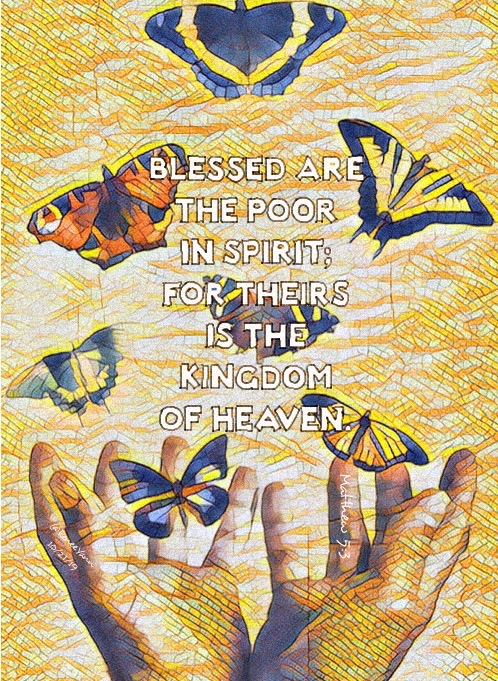
Blessed are the poor in spirit, the Kingdom of Heaven is theirs.
To the upright, I will show the saving power of God.
Let all the nations praise You, O God. Let all the nations praise You.
The Lord is my shepherd, there is nothing I shall want.
Today, in God’s Lavish Mercy, we begin three weeks of readings from some of the lesser known prophets and reformers in ancient Israel:
Ezra: instrumental in restoring the Jewish scriptures and religion to the people after the return from the Babylonian Captivity and is a highly respected figure in Judaism.
Nehemiah: his book describes his work in rebuilding Jerusalem during the Second Temple period.
Haggai: a Hebrew prophet during the building of the Second Temple in Jerusalem, and one of the twelve minor prophets in the Hebrew Bible. He is known for his prophecy in 520 BCE, commanding the Jews to rebuild the Temple
Zechariah: His greatest concern was with the building of the Second Temple
Baruch: the prophet Jeremiah’s scribe who is mentioned at Baruch 1:1. The book is a reflection of a late Jewish writer on the circumstances of Jewish exiles from Babylon
Malachi: Malachi describes a priesthood that is forgetful of its duties, a Temple that is underfunded because the people have lost interest in it, and a society in which Jewish men divorce their Jewish wives to marry out of the faith. (W. Gunther Plaut)
Joel: delivers a message of warning and repentance to the southern kingdom of Judah after the nation was divided.
Jonah: prophesied the destruction of Nineveh, but attempts to escape his divine mission.
Now some of my readers who are scripture geeks like me may have been interested in the above list. The rest of you skipped down to this paragraph to see if I had anything at all interesting to say about today’s readings. 😉
How about this? While Israel’s prophets and reformers speak to a certain time in history, their themes speak powerfully to our own times and culture as well:
Walter Brueggemann describes the prophets’ two primary themes:
First, they are very sure that political economic arrangements that contradict the purpose of God cannot be sustained.
Second, the prophets are voices of hope that affirm that God is a future-creating agent who keeps promises and who, against all odds, creates a new world reality that is distinct from present power arrangements.
Walter Brueggemann: From Judgment to Hope
The prophets remind us that, beyond any purely temporal interpretation of life, God is real and intimately involved in the unfolding of both our personal and global histories. When we pray with the prophets, we are strengthened in courage to engage our world, and to act in hope for the redemption of our culture.
In today’s reading, the reformer Ezra speaks a word of liberating alternative hope to a people who had been decimated by the Babylonian Captivity. Many of them thought they had lost their soul in Babylon. Ezra, by the power of God, breathes it back into them.
Therefore, whoever among you belongs to any part of his people, let him go up, and may his God be with them! Let everyone who has survived, in whatever place they may have dwelt, be assisted by the people of that place with silver, gold, goods, and cattle, together with free-will offerings for the house of God in Jerusalem
Ezra 1:3-4
As we consider our own times, our “breathers of hope” may come to mind: Pope Francis working to rebuild the Church, and Martin Luther King inspiring a vision of equity, respect and inclusion. We may think of voices like St. Oscar Romero, Venerable Catherine McAuley, Simone Weil, St. Edith Stein, Greta Thunberg, Servant of God Dorothy Day, or Pierre Teilhard de Chardin. Each one has spoken selflessly for peace, mercy, justice, and wholeness in a fragmented, sinfully distracted society.
In today’s Gospel, Jesus, Divine Daystar of every prophet’s hope, calls each one of us to the work of hope-filled prophecy, and faith-filled listening:
Jesus said to the crowd: “No one who lights a lamp conceals it with a vessel or sets it under a bed; rather, he places it on a lampstand so that those who enter may see the light. For there is nothing hidden that will not become visible, and nothing secret that will not be known and come to light. Take care, then, how you hear. To anyone who has, more will be given, and from the one who has not, even what he seems to have will be taken away.”
Matthew 5:1-6
Poetry: Advice to a Prophet – Richard Wilbur
When you come, as you soon must, to the streets of our city,
Mad-eyed from stating the obvious,
Not proclaiming our fall but begging us
In God’s name to have self-pity,
Spare us all word of the weapons, their force and range,
The long numbers that rocket the mind;
Our slow, unreckoning hearts will be left behind,
Unable to fear what is too strange.
Nor shall you scare us with talk of the death of the race.
How should we dream of this place without us?—
The sun mere fire, the leaves untroubled about us,
A stone look on the stone’s face?
Speak of the world’s own change. Though we cannot conceive
Of an undreamt thing, we know to our cost
How the dreamt cloud crumbles, the vines are blackened by frost,
How the view alters. We could believe,
If you told us so, that the white-tailed deer will slip
Into perfect shade, grown perfectly shy,
The lark avoid the reaches of our eye,
The jack-pine lose its knuckled grip
On the cold ledge, and every torrent burn
As Xanthus once, its gliding trout
Stunned in a twinkling. What should we be without
The dolphin’s arc, the dove’s return,
These things in which we have seen ourselves and spoken?
Ask us, prophet, how we shall call
Our natures forth when that live tongue is all
Dispelled, that glass obscured or broken
In which we have said the rose of our love and the clean
Horse of our courage, in which beheld
The singing locust of the soul unshelled,
And all we mean or wish to mean.
Ask us, ask us whether with the worldless rose
Our hearts shall fail us; come demanding
Whether there shall be lofty or long-standing
When the bronze annals of the oak tree close.
Lily of the Valley, let your sweet aroma fill my life
Rose of Sharon show me how to grow in beauty in God's sight
Fairest of ten thousand make me a reflection of your light
Daystar shine down on me let your love shine through me in the night

Lead me Lord, I'll follow. Anywhere you open up the door
Let your word speak to me, show me what I've never seen before
Lord I want to be your witness, you can take what's wrong and make it right
Daystar shine down on me, let your love shine through me in the night

Lord I've seen a world that's dying wounded by the master of deceit
Groping in the darkness, haunted by the years of past defeat
But when I see you standing near me shining with compassion in your eyes
I pray Jesus shine down on me let your love shine through me in the night

Lead me Lord, I'll follow anywhere you open up the door
Let your word speak to me, show me what I've never seen before
Lord I want to be your witness, you can take what's wrong and make it right
Daystar shine down on me, let your love shine through me in the night
Today, in God’s Lavish Mercy, we pray with Paul and Matthew that we may deepen our reverence for the call we have received.
I, a prisoner for the Lord, urge you to live in a manner worthy of the call you have received, with all humility and gentleness, with patience, bearing with one another through love, striving to preserve the unity of the Spirit through the bond of peace: one Body and one Spirit, as you were also called to the one hope of your call; one Lord, one faith, one baptism; one God and Father of all, who is over all and through all and in all.
But grace was given to each of us according to the measure of Christ’s gift.
Ephesians 4:1-7
Many of us think of a “call” as a one-time event, for example, the moment we say “yes” to a marriage proposal, or the profession of vows in religious commitment.
Our Gospel describes such a life call for Matthew:
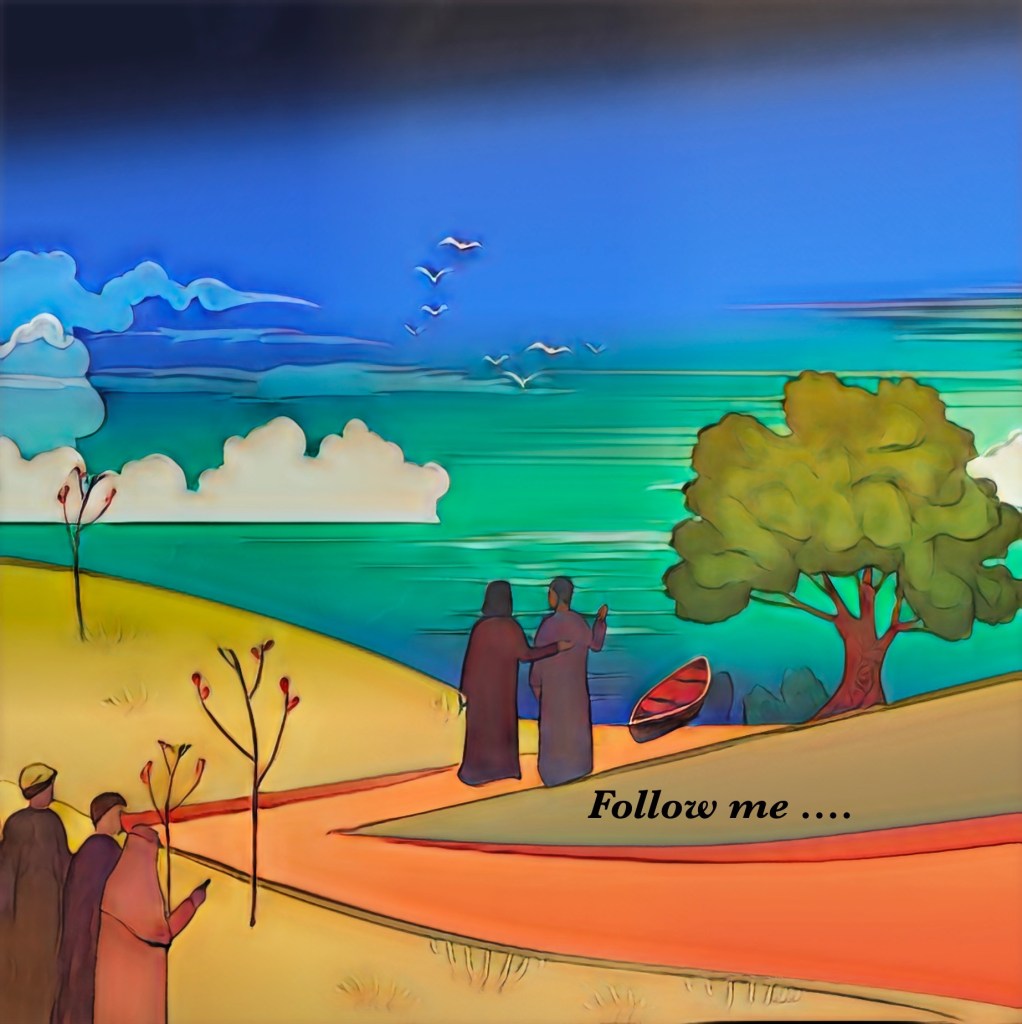
As Jesus passed by, he saw a man named Matthew sitting at the customs post. He said to him, “Follow me.” And he got up and followed him.
Matthew 9:9
But we can be certain that this was not Matthew’s only and final call. Jesus kept calling Matthew every day of his life to move deeper and deeper into the heart of God.
Like Matthew, we are all sitting at the table of life sometimes unaware of God’s power passing right in front of us. Matthew looked up from his tax sheets just in time to see Jesus’s all-knowing, all-loving glance. And that moment changed everything for Matthew. The call, crystalized in that sacred moment, had unfolded for years and would continue to unfold throughout Matthew’s life.
Maybe we spend a lot of our time fiddling with life’s calculations like Matthew did. We need to make our checkbooks balance, our calendars synchronize, our recipes succeed, our bills resolve. Sometimes we have so much ciphering going on that we don’t even glance up to see real Life passing by.
Jesus teaches that the underlying calculus of our lives must be mercy. He wants us to see where mercy is needed and to spend ourselves in its name. When Matthew’s buddies criticized him for following his call, Jesus confronted them with their own call, “Go and learn…”
The Pharisees saw this and said to his disciples, “Why does your teacher eat with tax collectors and sinners?” He heard this and said, “Those who are well do not need a physician, but the sick do. Go and learn the meaning of the words, I desire mercy, not sacrifice. I did not come to call the righteous but sinners.”
Matthew 9:11-13
I hope those pharisaical critics listened. I hope I do too.
Poetry: The Calling of St. Matthew – James Lasdun
This beautiful, thought-provoking poem by James Ladsun suggests that Matthew had prepared himself, over many years and through many choices, to hear the call when it finally came. The poet imagines that Matthew had completed a slow emptying of his life in charity and thus left the space for God’s voice.
Lasdun wrote the poem referencing a painting of the same name by Caravaggio. ‘The painting was completed in 1599–1600 for the Contarelli Chapel in the church of the French congregation, San Luigi dei Francesi in Rome, where it remains. This painting, by the way, is a favorite of Pope Francis. He has said he went often to contemplate it on his earlier visits to Rome.
Not the abrupt way, frozen
In the one glance of a painter’s frame
Christ in the doorway pointing. Matthew’s face
Bright with perplexity, the glaze
Of a lifetime at the countinghouse
Cracked in the split second’s bolt of being chosen.

But over the years, slowly,
Hinted at, an invisible curve;
Persistent bias always favoring
Backwardly the relinquished thing
Over the kept, the gold signet ring
Dropped in a beggar’s bowl, the eye not fully

Comprehending the hand, not yet;
Heirloom damask thrust in a passing
Stranger’s hand, the ceremonial saddle
(Looped coins, crushed clouds of inline pearl)
Given on an irresistible
impulse to a servant. Where it sat

A saddle-shaped emptiness
Briefly, obscurely brimming … Flagons
Cellars of wine, then as impulse steadied
into habit, habit to need,
Need to compulsion, the whole vineyard
The land itself, graves, herds, the ancestral house,

Given away, each object’s
Hollowed-out void successively
More vivid in him than the thing itself,
As if renouncing merely gave
Density to having; as if
He’s glimpsed in nothingness a derelict’s

Secret of unabated,
Inverse possession … And only then,
Almost superfluous, does the figure
Step softly to the shelter door;
Casual, foreknown, almost familiar,
Calmly received, like someone long awaited.
Music: The Call – Vaughan Williams
Come, my Way, my Truth, my Life: Such a Way, as gives us breath: Such a Truth, as ends all strife: Such a Life, as killeth death
Come, My Light, my Feast, my Strength: Such a Light, as shows a feast: Such a Feast, as mends in length: Such a Strength, as makes his guest
Come, my Joy, my Love, my Heart: Such a Joy, as none can move: Such a Love, as none can part: Such a Heart, as joys in love












 Lavish Mercy