Faith Begets Miracles!

Friday of the Twelfth Week in Ordinary Time
June 30, 2023

Today’s Readings:

https://bible.usccb.org/bible/readings/063023.cfm


Today, in God’s Lavish Mercy, our readings offer us a contrast in faith between Genesis’s unconvinced Abraham and Matthew’s expectant leper.


Like any relationship, deepening our friendship with God takes time, attention, patience, and love. In our first reading, Abraham struggles with his part in that deepening. God has been promising Abraham an heir, but almost-centenarian Abraham is impatient to see the incredible promise fulfilled. He basically tells God to forget about “the promise” and just let his illegitimate son Ishmael serve as his heir.

Abraham prostrated himself and laughed as he said to himself,
“Can a child be born to a man who is a hundred years old?
Or can Sarah give birth at ninety?”
Then Abraham said to God,
“Let but Ishmael live on by your favor!”

Genesis 17:17-18

The entire text of Genesis 17 concerns binding Abraham to God in radical faith. Yet by verses 17–18, Abraham completely doubts the promise, laughs a mocking laugh, and appeals to the son already in hand. Abraham, the father of faith, is here again presented as the unfaithful one, unable to trust, and willing to rely on an alternative to the promise.

Walter Brueggemann. Genesis: Interpretation: A Bible Commentary for Teaching and Preaching

When you get right down to it, you really can’t blame Abraham, can you? After all, he is 99 years old! His wife Sarah is 90! It would take a humongous amount of faith to believe that a newborn in going to pop out of this relationship. Right?


Not right.
That transcendent and absolute faith
is exactly what God is asking for
– from Abraham, and from you and me.

Today’s Gospel helps us understand what that kind of faith looks like.

When Jesus came down from the mountain, great crowds followed him.
And then a leper approached, did him homage, and said,
“Lord, if you wish, you can make me clean.”

Matthew 8:1-2

  • This unnamed believer’s faith was so great that he trusts the promise without it needing to be spoken. He believes Jesus can heal him.
  • He expresses his relationship to Jesus in reverence and trust. He believes Jesus has divine power.
  • He speaks his need, and let’s it go, knowing that it will be heard.

The leper’s faith immediately releases the mercy in Jesus’s heart.

Jesus stretched out his hand, touched him, and said,
“I will do it. Be made clean.”

Mark 8:3

The passage seems to suggest that God cannot be fully God for us unless we allow it by our faith, worship, and trust. Abraham took a little more time to learn this kind of faith. The leper, perhaps deepened by his long-suffering prayer, came to Jesus already convinced that God fulfills promises. And Christ’s answering healing was immediate.


Poetry: To Be Held – Linda Hogan ( maybe this is all the leper really wanted, or any of us when we pray.)

To be held
by the Light
was what I wanted,
to be a tree drinking the rain,
no longer parched in this hot land.
To be roots in a tunnel growing
but also to be sheltering the inborn leaves
and the green slide of mineral
down the immense distances
into infinite comfort
and the land here, only clay,
still contains and consumes
the thirsty need
the way a tree always shelters the unborn life
waiting for the healing
after the storm
which has been our life.


Music: Loving Touch – Deuter


The Root of Your Self

Twelfth Sunday in Ordinary Time
June 25, 2023

Today’s Readings:

https://bible.usccb.org/bible/readings/062523.cfm


Today, in God’s Lavish Mercy, our readings are studies in darkness and light.

Jeremiah – from the Sistine Chapel ceiling painted by Michelangelo c. 1512


Our first reading comes from Jeremiah, sometimes referred to as “the weeping prophet”. Jeremiah was pretty much a sad sack, as today’s selection demonstrates. He wrote for the Jews during the darkness of the Babylonian exile, helping them to mourn their situation which had been brought upon themselves by their unfaithfulness and sin. Jeremiah calls the people to repent and to find a healing grace by trusting God.

Sing to the LORD,
praise the LORD,
who has rescued the life of the poor
from the power of the wicked!

Jeremiah 22:13

Paul, addressing the Romans, uses the same light/dark, sin/redemption theme. He says that all of us display an inclination to darkness by any choice to break relationship with God, neighbor and Creation.


In the Genesis allegory of Adam and Eve, they choose to supersede God’s terms of relationship, eschewing the pure abundance of Creation for the sake of a self-satisfying “apple”.


The magnificent encyclical “Laudato Si” leads us through an enlightened understanding of of this Genesis story:

The creation accounts in the book of Genesis contain, in their own symbolic and narrative language, profound teachings about human existence and its historical reality. They suggest that human life is grounded in three fundamental and closely intertwined relationships: with God, with our neighbor and with the earth itself. According to the Bible, these three vital relationships have been broken, both outwardly and within us. This rupture is sin. The harmony between the Creator, humanity and creation as a whole was disrupted by our presuming to take the place of God and refusing to acknowledge our creaturely limitations. This in turn distorted our mandate to “have dominion” over the earth (cf. Gen 1:28), to “till it and keep it” (Gen 2:15). As a result, the originally harmonious relationship between human beings and nature became conflictual (cf. Gen 3:17-19). It is significant that the harmony which Saint Francis of Assisi experienced with all creatures was seen as a healing of that rupture. Saint Bonaventure held that, through universal reconciliation with every creature, Saint Francis in some way returned to the state of original innocence. This is a far cry from our situation today, where sin is manifest in all its destructive power in wars, the various forms of violence and abuse, the abandonment of the most vulnerable, and attacks on nature.

Laudato Sì, paragraph 66

Our Gospel so beautifully complements this enlightened understanding. Jesus encourages his disciples not to be afraid because the Creator embraces them in love and care. They, as we, need not make parsimonious choices that fracture essential relationships with God, neighbor, self, or Creation. We are already safe and whole in God.

Jesus said to the Twelve:
“Fear no one.
Nothing is concealed that will not be revealed,
nor secret that will not be known.
What I say to you in the darkness, speak in the light;
what you hear whispered, proclaim on the housetops…

… Are not two sparrows sold for a small coin?
Yet not one of them falls to the ground without your Father’s knowledge.
Even all the hairs of your head are counted.
So do not be afraid; you are worth more than many sparrows…

Matthew 10:26-33

Poetry: The Root of the Root of Yourself – Rumi

(Reading this poem, we might imagine that the Trinity is inviting us to recover the pristine goodness of our creation.)

Don’t go away, come near.
Don’t be faithless, be faithful.
Find the antidote in the venom.
Come to the root of the root of yourself.
Molded of clay, yet kneaded
from the substance of certainty,
a guard at the Treasury of Holy Light —
come, return to the root of the root of your Self.
Once you get hold of selflessness,
You’ll be dragged from your ego
and freed from many traps.
Come, return to the root of the root of your Self.
You are born from the children of God’s creation,
but you have fixed your sight too low.
How can you be happy?
Come, return to the root of the root of your Self.
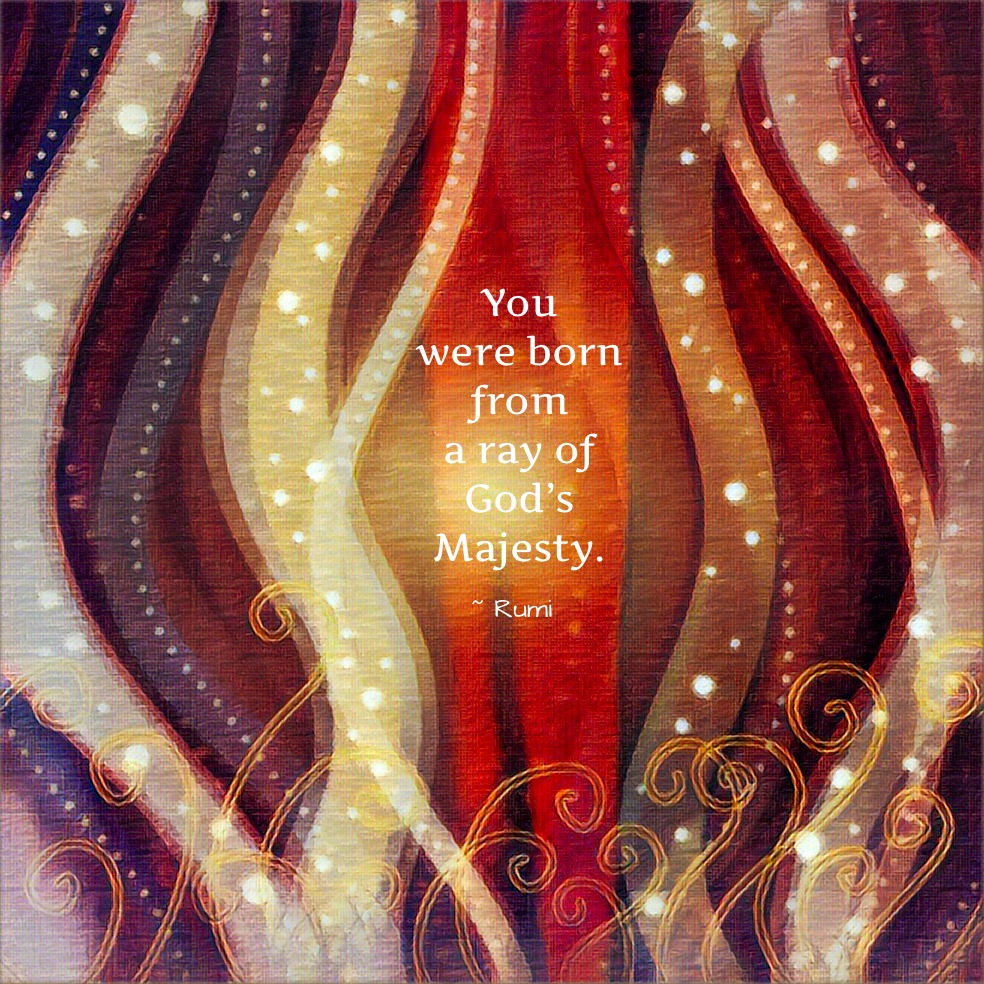
You were born from a ray of God’s majesty
and have the blessings of a good star.
Why suffer at the hands of things that don’t exist?
Come, return to the root of the root of your Self.
You are a ruby embedded in granite.
How long will you pretend it’s not true?
We can see it in your eyes.
Come to the root of the root of your Self.
You came here from the presence of that fine Friend,
a little dazed, but gentle, stealing our hearts
with that look so full of fire; so,
come, return to the root of the root of your Self.

Music: Rainlight – David Lanz

Paul’s Insanity

Friday of the Eleventh Week in Ordinary Time
June 23, 2023

Today’s readings:

https://bible.usccb.org/bible/readings/062323.cfm


Today in God’s Lavish Mercy, our dear Apostle Paul is pretty much around the twist with the Corinthians. As the Church grows and the faith spreads, many “Christian” teachers arise. Some are truly called to the mission and ministry. They engage it and discharge it with humility and grace.

But some get their motives all mixed up with their own agenda for aggrandizement. They are flashy eloqutionists who can mesmerize an audience with their practiced charms. But they have missed the point of the Gospel of Jesus Christ. Instead they make the mission all about themselves – their wealth, success, prosperity and power. . These are the ones who are driving Paul “nuts” – to the point of speaking “insanely” in verse 23:

Are they ministers of Christ? (I am talking like an insane person.) 
I am still more,
with far greater labors, far more imprisonments,
far worse beatings, and numerous brushes with death.

2 Corinthians 11:23

Living the Gospel is not easy, and preaching it with integrity may be even harder. The Gospel contradicts everything our unredeemed human nature craves. To demonstrate this, Paul says that he too will boast like the errant preachers boast. But Paul contradicts them by boasting not of his personal gifts and powers, but of his sufferings, weaknesses, anxieties and catastrophes. He shows that he loves the Gospel and the Church so much that he will suffer for it to keep it aligned with the Truth of Jesus Christ.


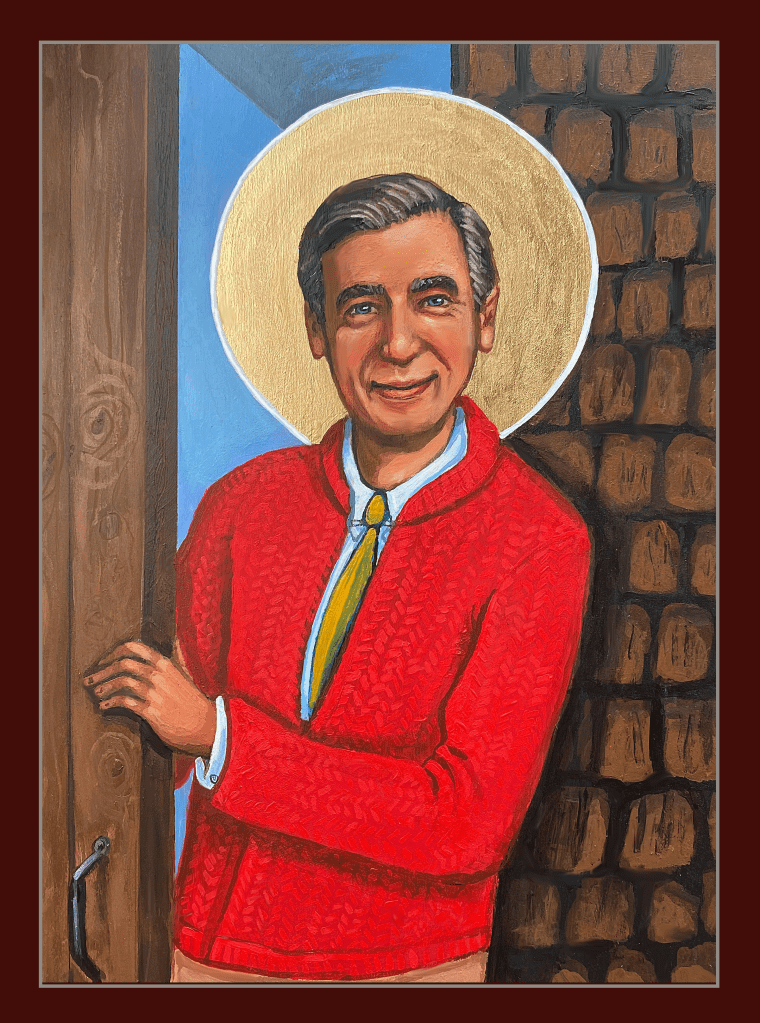
Kelly Latimore IconsMr. Rogers ( a truthful preacher himself)

When I read 2 Corinthians, I realize that Paul was no Mr. Rogers humming soft philosophy to his followers. Paul could be a fiery hot head unafraid to show his anxious love and indignant frustration for a dense yet beloved community. When they were “stupid” enough to be infatuated with a worldly teacher, Paul suffered intensely for their loss of the Gospel:

And apart from these things, there is the daily pressure upon me
of my anxiety for all the churches.
Who is weak, and I am not weak?
Who is led to sin, and I am not indignant?

2 Corinthians 11:28-29

In our Gospel, Jesus paints an ominous metaphor for those who distort truth for their own purposes. If we allow ourselves, as individuals or as a culture, to normalize dishonesty, we are doomed to an incomprehensible darkness. When we practice such normalization, we eventually forget how to even discern the truth and we become convinced of the lie we have become.

“The lamp of the body is the eye.
If your eye is sound, your whole body will be filled with light;
but if your eye is bad, your whole body will be in darkness.
And if the light in you is darkness, how great will the darkness be.”


These are powerful readings and have much to say to us and to our socio-political institutions. If we truly are people of faith, we will listen.


Poetry: We Grow Accustomed to the Dark – Emily Dickinson

We grow accustomed to the Dark –
When Light is put away –
As when the Neighbor holds the Lamp
To witness her Good bye –
A Moment – We Uncertain step
For newness of the night –
Then – fit our Vision to the Dark –
And meet the Road – erect …

Music: The Sound of Silence – Simon and Garfunkel

The Indescribable Gift

Thursday of the Tenth Week in Ordinary
June 15, 2023

Today’s Reading:

https://bible.usccb.org/bible/readings/061523.cfm


Today, in God’s Lavish Mercy, our readings offer us insight into spiritual clarity.

For sure I, like all of you reading this blog, want to know God more deeply.
Moses did.
The people of the Hebrew Scriptures did.
But Paul tells us in our first reading that they didn’t have the advantage – the “indescribable gift” – that we have: Jesus, the Incarnate Word of God.

To this day, whenever Moses is read,
a veil lies over the hearts of the children of Israel,
but whenever a person turns to the Lord the veil is removed.
Now the Lord is the Spirit and where the Spirit of the Lord is,
there is freedom.

2 Corinthians 3:15-17

Paul says that despite this gift, some of us, blinded by “the god of this age” may remain in darkness:

And even though our Gospel is veiled,
it is veiled for those who are perishing,
in whose case the god of this age
has blinded the minds of the unbelievers,

2 Corinthians 4:3-4

Paul compares this blocked vision to a veil covering our eyes and distancing us from the fullness of God.

It’s a great image! Don’t we unconsciously cover our eyes when we don’t want to see what’s really going on? Don’t we cast our own glance downward to obscure our eyes when we are unsure of ourselves or, maybe, telling a white lie?


This morning, when I read about Paul’s “veil”, I remembered a funny but instructive incident from my childhood. I was about seven years old and had been sent to my room for some egregious infraction of household law. Convinced of my innocence and righteousness, I pouted there until Mom called me downstairs for dinner.

Still angry, I didn’t want to go, so I decided not to “face” my family at the dinner table. Probably, deep in my heart, I knew I had been wrong but didn’t yet have the freedom to “face” myself. So, employing a pair of Mom’s old sunglasses and Grandpop’s handkerchief, I appeared at the dinner table like this – “veiled”. (Believe me, it was no fun trying to eat my mashed potatoes that way!)


I am a long, long way from that bratty little girl now. But there are still places in my life where I want to reach for the hanky and the glasses because I’m not ready for God’s overwhelming grace offered to me in every life circumstance. So often, I am still convinced that I see the darkness that I see, rather than the Mystery within it inviting me to Light..

For God who said, “Let light shine out of darkness”,
has shone in our hearts to bring to light
the knowledge of the glory of God
on the face of Jesus Christ.

1 Corinthians 4:6

Back when I was seven years old, it was Uncle Joe who teased me, with a gentle love, out of my peevishness. Maybe God is trying to do that for you, for me, today. What do you think?

(Uncle Joe and me, about 35 years after the described incident.)


Poetry: from Rumi

Your thoughts are a veil 
on the face of the Moon.

That Moon is your heart,
and those thoughts cover your heart.

So let them go,
just let them fall into the water.

Music: Heaven’s Window – Peter Kater – you will hear a gentle call to Agnus Dei, Jesus Lamb of God as the music lifts the veil to heaven. Just relax and let the music lift you too.

Promise Fulfilled

Wednesday of the Tenth Week in Ordinary Time
June 14, 2023

Today’s Readings:

https://bible.usccb.org/bible/readings/061423.cfm


Today, in God’s Lavish Mercy, both Paul and Jesus work to open the minds of their listeners to the wonder and mystery of Jesus Christ and his Gospel.

Paul tells the Corinthians that the old law did not bring life. In other words, it was a set of laws, precriptions, and memories. The old law was only letters. The New Law gives life through the living Spirit of God into Whom we have been baptized.

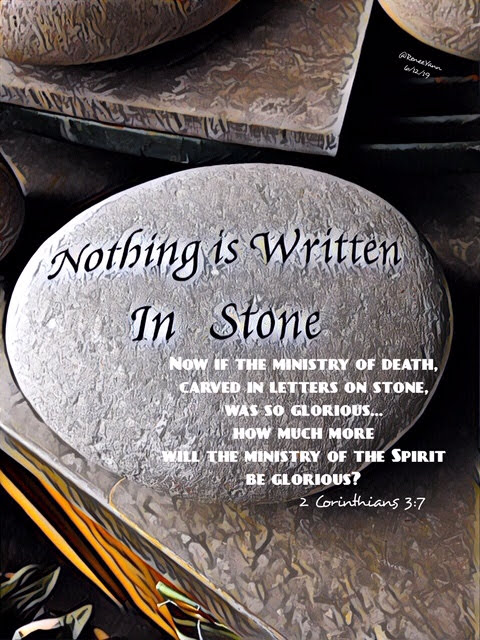
Now if the ministry of death, carved in letters on stone, was so glorious
that the children of Israel could not look intently at the face of Moses
because of its glory that was going to fade,
how much more will the ministry of the Spirit be glorious?
For if the ministry of condemnation was glorious,
the ministry of righteousness will abound much more in glory.

2 corinthians 3:7-9

Jesus talks about the old law too. He assures his listeners that he has not come to abolish it, but to fulfill it.

Do not think that I have come to abolish the law or the prophets.
I have come not to abolish but to fulfill.
Amen, I say to you, until heaven and earth pass away,
not the smallest letter or the smallest part of a letter
will pass from the law,
until all things have taken place.

Matthew 5: 17-18

I’m sure you’ve spent a few Easters opening plastic eggs with the kids in the family. Early on Easter morning, the eggs look so pretty sparkling undisturbed in their tiny baskets. But they can’t stay like that because the real treasure is inside – candy, coins or other little joy-giving gifts.

The Old Law was like those eggs, beautiful and perfect for its time, but existing for the sake of what would follow. With each Gospel teaching and act of his life, Jesus breaks open the Old to fulfill God’s promise and reveal the life-giving New.

Once again, Matthew paints a picture of Jesus as God’s Promise fulfilled. In each of our lives, that fulfillment continues as we grow in our love for and commitment to the Gospel.. May we “break open a few eggs”, and deepen in grateful awareness and understanding.


Poetry: Breakage – Mary Oliver

I go down to the edge of the sea.
How everything shines in the morning light!
The cusp of the whelk,
the broken cupboard of the clam,
the opened, blue mussels,
moon snails, pale pink and barnacle scarred—
and nothing at all whole or shut, but tattered, split,
dropped by the gulls onto the gray rocks and all the moisture gone.
It's like a schoolhouse
of little words,
thousands of words.
First you figure out what each one means by itself,
the jingle, the periwinkle, the scallop
full of moonlight.

Then you begin, slowly, to read the whole story.

Music: Morning Has Broken – Cat Stevens

Blessed

Monday of the Tenth Week in Ordinary Time
June 12, 2023

Today’s Readings:

https://bible.usccb.org/bible/readings/monday-tenth-week-ordinary-time


Today, in God’s Lavish Mercy, we resume reading Matthew’s Gospel which will last all the way to the beginning of September. What a gift to spend the summer with Jesus as Matthew came to understand and proclaim him.

So who is the “Jesus of Matthew”? Matthew’s Jesus is the Messiah, the long-awaited fulfillment of God’s promise to Abraham, a promise woven throughout the Hebrew Scriptures. Matthew writes to an audience who believe in Christ but who are nevertheless steeped in the Jewish religion. Matthew is intent on showing Jesus as the fulfillment of all they have believed.

Matthew’s Jesus is very Jewish. He is the Promise realized, the Hope fulfilled, Salvation achieved.


But Matthew’s Jesus is also the Challenger, the Upsetter and the Revolutionary.

In his Gospel sermon today, Jesus asks his believers to invert their worldly thinking and to take on the new mind of God – a God who loves the losers more than the winners! In the Beatitudes, Jesus gives an astounding new meaning to the word ‘blessed”.

In the Sermon on the Mount, Jesus contradicted all human judgments and all nationalistic expectations of the kingdom of God. The kingdom is given to the poor, not the rich; the feeble, not the mighty; to little children humble enough to accept it, not to soldiers who boast that they can obtain it by their own prowess.

John R. W. Stott, The Message of the Sermon on the Mount

I’ve been reading the Beatitudes my whole life, and they still confound me. I can’t honestly say that I want to be poor, mourning, meek, hungry, or thirsty. The only way I have been able to comprehend the Beatitudes is when I have found them in someone else and they have been kind enough to teach me.

I found “Blessed are the poor in spirit” one morning where he lived on a steam vent in downtown Philadelphia. He taught me courage and honesty.

Blessed are those who mourn” was a brokenhearted young wife who taught me how to love by steadfastly caring for her dying husband during his hospice journey.

Blessed are the meek” was a Cuban exile physician who was barred from a U.S. medical license. He taught me by lovingly serving as an orderly in the E.R. where I worked.

Blessed are those who hunger for righteousness” was an old Franciscan sister who was arrested with me in the Nevada desert as we protested nuclear war. Authorities had to handcuff her to her walker so that she could remain standing in the holding cell in the wretched heat.

Blessed are the merciful” is the name of our sisters and nurses at our healthcare facility who teach me by their tireless tenderness toward those who suffer

Blessed are the pure of heart” has sat with me a thousand times to pray and discern God’s Spirit in our hearts

Blessed are the peacemakers” have walked beside me in protests, written letters, made phone calls, witnessed peace in their own lives

Blessed are the persecuted” are my Black, Latino, differently-abled, and LGBTQ friends who have both taught and forgiven me for my prejudices, stereotyping, and ignorance


Learning to really live the Beatitudes is key to the Christian life, and it is an ongoing education until the day we die. As we pray with today’s Gospel, may we receive abundant grace for our learning.


Poetry: The Beatitudes – Malcolm Guite

We bless you, who have spelt your blessings out,
And set this lovely lantern on a hill
Lightening darkness and dispelling doubt
By lifting for a little while the veil.
For longing is the veil of satisfaction
And grief the veil of future happiness
We glimpse beneath the veil of persecution
The coming kingdom’s overflowing bliss
Oh make us pure of heart and help us see
Amongst the shadows and amidst the mourning
The promised Comforter, alive and free,
The kingdom coming and the Son returning,
That even in this pre-dawn dark we might
At once reveal and revel in your light.

Music: The Beatitudes – John Michael Talbot

Blessed are the poor in spirit
Theirs is the kingdom of heaven
Blessed are those who mourn
They shall be comforted

Blessed are the lowly of heart
They shall inherit the earth
Blest are those who hunger for God
Nevermore shall they hunger or thirst

CHORUS:
Blessings upon the disciples of Jesus
Blessings upon al the multitudes
Blessings upon those who climb the mountain
With Jesus the Lord, with Jesus our Lord

Blessed are those who show mercy
They shall inherit the mercy of God
Blessed are the pure of heart
They shall see the face of God

Blest are those who strive for peace
They shall be the children of God
Blest are those who suffer for holiness
Theirs is the kingdom of God

Faith and Truth

Wednesday of the Sixth Week of Easter
May 17, 2023

Today’s Readings:

https://bible.usccb.org/bible/readings/051723.cfm

Today, in God’s Lavish Mercy, Paul is the headliner at the famed Areopagus in Athens.

The Areopagus is a prominent rock outcropping located northwest of the Acropolis in Athens, Greece. The name Areopagus also referred, in classical times, to the Athenian governing council, because they convened in this location. It was the ancient version of a stadium, but one provided by nature rather than human hands.

Paul’s address, from Acts today, has been perfectly crafted for his audience who are Gentile intellectuals and philosophers. We are familiar, up until now, with Paul’s speeches to Jews whom he wishes to convert. In those circumstances, he drew on the Hebrew scriptures with which they are familiar. But for the Athenians, Paul uses their art, poetry and philosophy to lead them to the topic of Jesus as the one true God.

And things go well for Paul in his long and finely detailed oration. The thoughtful Athenians are listening, that is until they hit a snag:

(Paul proclaimed) God demands that all people everywhere repent
because he has established a day on which he will ‘judge the world
with justice’ through a man he has appointed,
and he has provided confirmation for all
by raising him from the dead.”

When they heard about resurrection of the dead,
some began to scoff, but others said,
“We should like to hear you on this some other time.”
And so Paul left them.

Acts 17:30-33

Jesus Christ, Risen from the dead is the touchstone of our Christian faith. It is the Sacred Reality that surpasses and changes every other reality we encounter.

Resurrection faith is not something we can study, analyze, or comprehand with simply the powers of our minds. That’s what the Athenians tried to do, but their analytical inclinations blocked them.

Resurrection faith is a Divine gift, given through the Spirit, to a heart opened in trust and readiness to God. It defies logic and philosophy because it is greater than they are. For one who has this kind of faith, explanations are not only unnecessary, they are restrictive and superfluous.

Jesus understood that to live with such faith is challenging. He suggests that the disciples cannot bear the weight of it without the indwelling companionship of the Holy Spirit.

Jesus said to his disciples:
“I have much more to tell you, but you cannot bear it now.
But when the Spirit comes, the Spirit of truth,
you will be guided to all truth.

John 16:12-13

As people desiring to grow in faith, we can learn from the Athenians who walked away from the Grecian hillside. Is my capacity to believe limited by what my small human intellect can define? Or are my heart and mind given in trust to the infinite God Who loves me into the fullness of Truth.


Poetry: Tell All the Truth, but Tell It Slant – Emily Dickenson

Tell all the Truth but tell it slant –
Success in Circuit lies
Too bright for our infirm Delight
The Truth’s superb surprise
As Lightning to the Children eased
With explanation kind
The Truth must dazzle gradually
Or every man be blind –


Music: The Faith – Leonard Cohen

The sea so deep and blind
The sun, the wild regret
The club, the wheel, the mind,
O love, aren’t you tired yet?
The club, the wheel, the mind
O love, aren’t you tired yet?

The blood, the soil, the faith
These words you can’t forget
Your vow, your holy place
O love, aren’t you tired yet?
The blood, the soil, the faith
O love, aren’t you tired yet?

A cross on every hill
A star, a minaret
So many graves to fill
O love, aren’t you tired yet?
So many graves to fill
O love, aren’t you tired yet?

The sea so deep and blind
Where still the sun must set
And time itself unwind
O love, aren’t you tired yet?
And time itself unwind
O love, aren’t you tired yet?

A Circumcised Heart

Wednesday of the Fifth Week of Easter
May 10, 2023

Today’s Readings:

https://bible.usccb.org/bible/readings/051023.cfm

Today, in God’s Lavish Mercy, there’s a lot of clipping going on and being talked about.

In Acts, we read about the hubbub around circumcision of the Gentile Christians. Basically, early Christianity was an offshoot of Judaism. All the very earliest Christians were Jews. In many ways, they still thought with Jewish minds not new Christian ones.

The question of circumcision is one of their first wake-ups. Jews considered circumcision a sign of their covenant with God. Greeks on the other hand abhorred the practice. The Apostles were faced with the dilemma:

If our new faith is for all people, how will that change some of our practices?
Which pratices are essential to Christian life, and which are not?

As today’s reading ends, the Apostles are still sequestered on the issue. But the eventual resolution around circumcision proved to be a key factor in the cultural separation of Christianity from Judaism.


In our Gospel, Jesus talks about another kind of pruning, but the parallels are interesting.

A healthy and vigorous life in Christ is one that is “cultured” by God’s grace. That grace serves to cut away the unholy accretions that sometimes surface in our lives – sin, temptation, spiritual indifference, rampant self-interest, religious ennui……

Jesus said to his disciples:
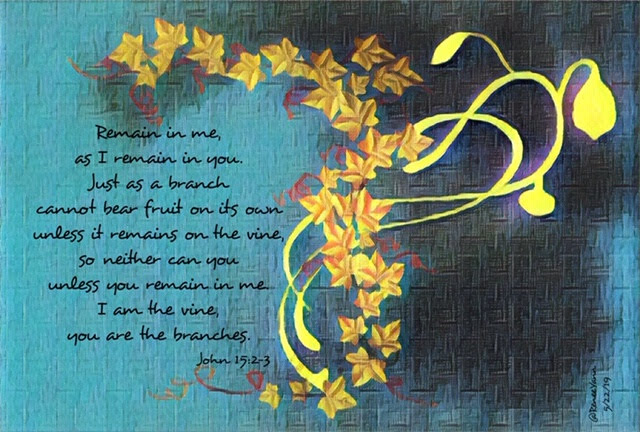
“I am the true vine, and my Father is the vine grower.
He takes away every branch in me that does not bear fruit,
and everyone that does he prunes so that it bears more fruit.
You are already pruned because of the word that I spoke to you.

John 15: 1-3

God’s Word touches us through scripture, through spiritual teaching, and through our reverent assimilation of our life experiences. We must listen to our lives to hear God’s Word. There is never a moment when God is not speaking to us in love – and often to a completely new understanding of what it means to be in covenant with God.


The Apostles finally come to the decision that one does not become a disciple by physical circumcision but rather by a grafting of one’s heart to God’s own heart. May we, the Church, learn from that openness for our own times. May we become more aware of those assumptions which cut off whole segments of humanity, relegating them to the ecclesiastical sidelines.

I am the vine, you are the branches.
Whoever remains in me and I in him will bear much fruit,
because without me you can do nothing…

If you remain in me and my words remain in you,
ask for whatever you want and it will be done for you.
By this is my Father glorified,
that you bear much fruit and become my disciples.”

John 15: 5;7-8

Poetry: I Am the Vine – Malcolm Guite

How might it feel to be part of the vine?
Not just to see the vineyard from afar
Or even pluck the clusters, press the wine,
But to be grafted in, to feel the stir
Of inward sap that rises from our root,
Himself deep planted in the ground of Love,
To feel a leaf unfold a tender shoot,
As tendrils curled unfurl, as branches give
A little to the swelling of the grape,
In gradual perfection, round and full,
To bear within oneself the joy and hope
Of God’s good vintage, till it’s ripe and whole.
What might it mean to bide and to abide
In such rich love as makes the poor heart glad?


Music: Landscapes of the Heart – Gary Schmidt

Find the Light Within the Question

Saturday of the Fourth Week of Easter
May 6, 2023

Today’s Readings:

https://bible.usccb.org/bible/readings/050623.cfm

Today, in God’s Lavish Mercy, our readings present us with two strikingly different forms of resistance to God’s Word.

In our first reading, we see that the community in Pisidian Antioch has responded positively to Paul’s inaugural preaching. He has returned, by invitation, for a second Sabbath to share the Good News. But the reaction is not so smooth this second time.

In a pattern very similar to what Jesus experienced when he preached in his home town synagogue, Paul meets initial approbation, cynicism, rejection and expulsion. And, like Jesus, he turns on his heel, leaving his rejectors tangled in their own faithless criticisms.

The resistance we see here is active. It is a choice not to believe.

On the following sabbath
almost the whole city
gathered to hear the word of the Lord. 
When the Jews saw the crowds, they were filled with jealousy
and with violent abuse contradicted what Paul said. 
Both Paul and Barnabas spoke out boldly and said,
“It was necessary that the word of God be spoken to you first,
but since you reject it
and condemn yourselves as unworthy of eternal life,
we now turn to the Gentiles. 

Acts 13:44-46

Today’s Gospel shows us another kind of resistance to the full embrace of faith.

Philip said to Jesus, 
“Master, show us the Father, and that will be enough for us.” 
Jesus said to him, “Have I been with you for so long a time
and you still do not know me, Philip? 
Whoever has seen me has seen the Father. 
How can you say, ‘Show us the Father’? 
Do you not believe that I am in the Father and the Father is in me? 

This is a passive resistance, one Philip didn’t even recognize in himself. What was it in him that made him impervious to the presence of God in Jesus? Was Philip dull, distracted, hyper-critical, unreflective?


I can’t speak for Philip, but I can tell you that when I miss a sacred point in my life, it is exectly for those reasons! When the moment of grace has passed me by, I do a swift re-take and realize that I had been caught in one or more of the following passive resistant behaviors:

  • too noisy
  • too opinionated
  • too sure of myself
  • too busy
  • too tired
  • too impatient
  • too scattered

If Philip was in the same boat, he did a good job getting out of it. He sailed on to be one of the great saints and teachers of the Church. Philip really heard Jesus’s answer to his oblivious question:

Jesus said:
The words that I speak to you I do not speak on my own. 
The Father who dwells in me is doing his works. 
Believe me that I am in the Father and the Father is in me,
or else, believe because of the works themselves. 
Amen, amen, I say to you,
whoever believes in me will do the works that I do,
and will do greater ones than these,
because I am going to the Father. 
And whatever you ask in my name, I will do,
so that the Father may be glorified in the Son. 
If you ask anything of me in my name, I will do it.”

John 14:10-14

May we not miss the point of Christ’s Presence in our lives. May we notice and lower our own resistances to hear the sacred answers right in front of us.


Poetry: After the Rain – Jared Carter

After the rain, it’s time to walk the field
again, near where the river bends. Each year
I come to look for what this place will yield—
lost things still rising here.
The farmer’s plow turns over, without fail,
a crop of arrowheads, but where or why
they fall is hard to say. They seem, like hail,
dropped from an empty sky,
Yet for an hour or two, after the rain
has washed away the dusty afterbirth
of their return, a few will show up plain
on the reopened earth.
Still, even these are hard to see—
at first they look like any other stone.
The trick to finding them is not to be
too sure about what’s known;
Conviction’s liable to say straight off
this one’s a leaf, or that one’s merely clay,
and miss the point: after the rain, soft
furrows show one way
Across the field, but what is hidden here
requires a different view—the glance of one
not looking straight ahead, who in the clear
light of the morning sun
Simply keeps wandering across the rows,
letting his own perspective change.
After the rain, perhaps, something will show,
glittering and strange.

Music: The Light Within – Peter Sterling

Believe and Abide in Me

Friday of the Third Week of Easter
April 28, 2023

Today’s Readings:

https://bible.usccb.org/bible/readings/042823.cfm

Today, in God’s Lavish Mercy, we have two powerful and life-changing readings.

The Conversion of St. Paul – Nicolas Bernard Lepicie


Paul’s conversion is high drama. And Jesus’ invitation to “consume” him is both pivotal and a bit confounding. Both accounts make clear that living our faith is not a walk in the park. It is a wholehearted, dynamic commitment to render the vital presence of Jesus in our lives.


We can probably find ourselves rather easily in Paul’s story, so let’s take on Jesus’ more complex challenge in our prayer today.

The setting is after the miracle of the loaves and fishes. The crowd presses Jesus for another miracle. They like miracles and they like to eat. Hey, I understand!

But Jesus realizes that they’re missing the point. The tsunami of bread and fish was just a sign not the essence of Jesus’ message. His message was, “Now you must BELIEVE!”

The Jews quarreled among themselves, saying,
“How can this man give us his Flesh to eat?”
Jesus said to them,
“Amen, amen, I say to you,
unless you eat the Flesh of the Son of Man and drink his Blood,
you do not have life within you.

John 6:52-53

So Jesus tells them that it was not enough to eat the miracle bread. He says that now they must consume him, make him their source of sustenance, live in such a way that they cannot live without him


Just as food feeds our emptiness and becomes one with us, so Jesus nourishes our spirit and unites with us. And this happens, not by physical consumption, but by our deep and transcendent believing in Jesus.

Whoever eats my Flesh and drinks my Blood
has eternal life,
and I will raise them on the last day.
For my Flesh is true food,
and my Blood is true drink.
Whoever eats my Flesh and drinks my Blood
remains in me and I in them.

John 6:53-54

Jesus’ words threw a powerful challenge to the hungry crowd as they do to us. We can’t just make ourselves believe. Faith is a gift, and sometimes the channels that allow it to pour into our hearts get a little clogged with worldly junk. How can we open those channels up a bit to release the power of faith in our lives?

Perhaps a prayer like this might help:

I exist because of You and within You.
I have nothing and am nothing without You.
You breathe Your life into every moment of my own.
May I see You, trust You, hear Your loving hints to me.
May I make room for You in my heart 
by my choices, prayer, and generosity.
May I abide in You as You so completely abide in me.

Poetry: If Only – Rainer Maria Rilke

If only there were stillness, full, complete.
If all the random and approximate
were muted, with neighbors’ laughter, for your sake,
and if the clamor that my senses make
did not confound the vigil I would keep —
Then in a thousandfold thought I could think
you out, even to your utmost brink,
and (while a smile endures) possess you, giving
you away, as though I were but giving thanks,
to all the living.

Music: Abide – Aaron Williams