Lent: The Way Home

March 13, 2022
Second Sunday of Lent

Today, in God’s Lavish Mercy, our readings are about types of citizenship, that condition of knowing we are fully and irrevocably home.


In Genesis, Abraham is given a land for himself and his descendants as a sign of God’s abiding Presence.

“I am the LORD who brought you from Ur of the Chaldeans
to give you this land as a possession.”

Genesis 15:5

In Philippians, Paul tells us that, truly, “our citizenship is in heaven”.

But our citizenship is in heaven,
and from it we also await a savior, the Lord Jesus Christ.

Philippians 3:20

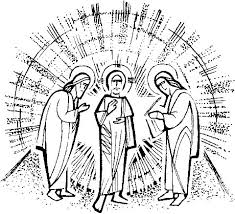
In Luke, the transfigured Jesus shows us what that heavenly reality will be like. It is a kind of glorious belonging that Peter wants to hold on to … to capture in a tent.

Jesus took Peter, John, and James
and went up the mountain to pray.
While he was praying his face changed in appearance
and his clothing became dazzling white.

Luke 9:28

But the Creator makes it clear this dwelling and citizenship exists only in the heart of Christ where we are called to listen and live our lives.

While Peter was still speaking,
a cloud came and cast a shadow over them,
and they became frightened when they entered the cloud.
Then from the cloud came a voice that said,
“This is my chosen Son; listen to him.”

Luke 9:34-35

These readings confirm that, in God, we are a people not bound by borders, ethnicities, religious cult, or any other human categorization.

Every human being belongs to God and is called to live in the fullness of that Creation. This is our shared Divine citizenship demanding a reverent mutuality for one another’s lives.


Think about that in contrast to the incomprehensible outrage of Putin’s unprovoked war against the Ukrainian people. Think about it relative to the many armed conflicts in Africa, Asia and Latin and South America.

Think of our Oneness in God compared to talk of border walls, ethnic and religious bans, white supremacy, anti-semitism, islamophobia and all the other manufactured ways we try to isolate people from this Divine citizenship which makes us brothers and sisters in God.

On this Sunday when our readings remind us of where and to whom each of our hearts belongs, let us pray for our world – for those suffering from war and isolation, and for the unfortunate lost souls executing that suffering. In differing ways, each of them, and we, need continuing redemption.


Poetry: The Man He Killed – Thomas Hardy

Had he and I but met
By some old ancient inn,
We should have sat us down to wet
Right many a nipperkin!

But ranged as infantry,
And staring face to face,
I shot at him as he at me,
And killed him in his place.

I shot him dead because –
Because he was my for,
Just so: my foe of course he was;
That’s clear enough; although

He thought he’d ‘list, perhaps,
Off-hand like – just as I –
Was out of work — had sold his traps —
No other reason why.

Yes; quaint and curious war is!
You shoot a fellow down
You’d treat if met where any bar is,
Or help to half-a-crown.


Music: The Sins of War – Timothy Shortell

Lent: Persevering Prayer

March 9, 2022
Thursday of the First Week of Lent

Today, in Mercy, our readings could be so reassuring about the power of our prayer, except …..

How often have you prayed
for something that you didn’t get?


In our reading from the Book of Esther, Esther certainly puts everything she has into her prayer for deliverance:

Queen Esther – By Jean-François Portaels

She lay prostrate upon the ground, together with her handmaids,
from morning until evening, and said:
“God of Abraham, God of Isaac, and God of Jacob, blessed are you.
Help me, who am alone and have no help but you,
for I am taking my life in my hand.

The passage, in isolation from the rest of the Book, might lead us to conclude that Esther’s prayer is simply about her asking for, and receiving, what she wants from God. It’s about much more.


Esther, like Christ, is in a position to save her people. She must risk her life to do so. She is praying for the courage to do God’s will, to look past her own comfort and become an agent of grace in her circumstances.

Now that’s some kind of prayer!


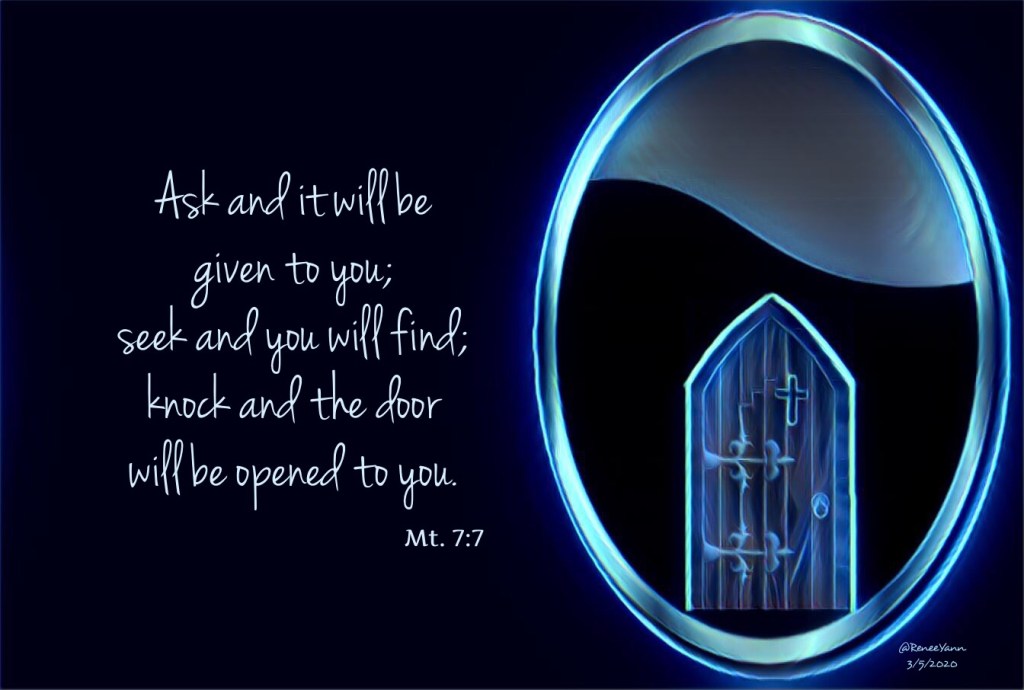
Prayer can be like looking in a mirror. All we see reflected back is our own need and desire. We don’t pray honestly and openly enough to let God open a door in the mirror – a door into God’s own will and hope for us.

That’s the door Jesus is talking about in today’s Gospel.

  • What we ASK is not just for something we want, but rather to know God’s heart.
  • What we SEEK is not our own satisfaction, but the grace to embrace God’s mysterious energy in our lives no matter how it comes to us.
  • What we KNOCK for and desire to be opened to us is deeper love and fuller relationship with our loving God.

Sometimes, the problem with prayer is that we think it’s like asking our rich uncle for a permanent loan. It’s only when we comprehend that prayer is a relationship that the RECEIVE, FIND, and OPENED parts become real for us.


Poetry: Morning Prayer – Renee Yann, RSM

Photo by WARREN BLAKE on Pexels.com

I walk the earth, soft
from yesterday’s long rain.
Mists ascend like incense
under my indulgent footfalls.
Birdsongs thin themselves
between the early light;
chanting, contrapuntal, in
the well-laved trees.

Nothing grey is left now
in the wide sky.
Rinsed in light
it spreads to dry
in sere, blue wind.

Momentarily, earth
is wholly God’s;
deep, true colors fall to it,
rich, unshadowed.
Your Word, Creator,
WaterGod, has penetrated.
It returns to You in crystal images
from a finally uncomplicated world.

As if within a lucent globe
I hold You still,
in perfect, silent love,
clear, inexplicable
like sunlit rain.


Music: two offerings today. One is old-time revival. The other is classic beauty. Enjoy.

Prayer Is the Key to Heaven – Alan Brewster

Music: Overture from Esther – George Frideric Handel

Lent: Second Chances

March 9, 2022
Wednesday of the Third Week of Lent

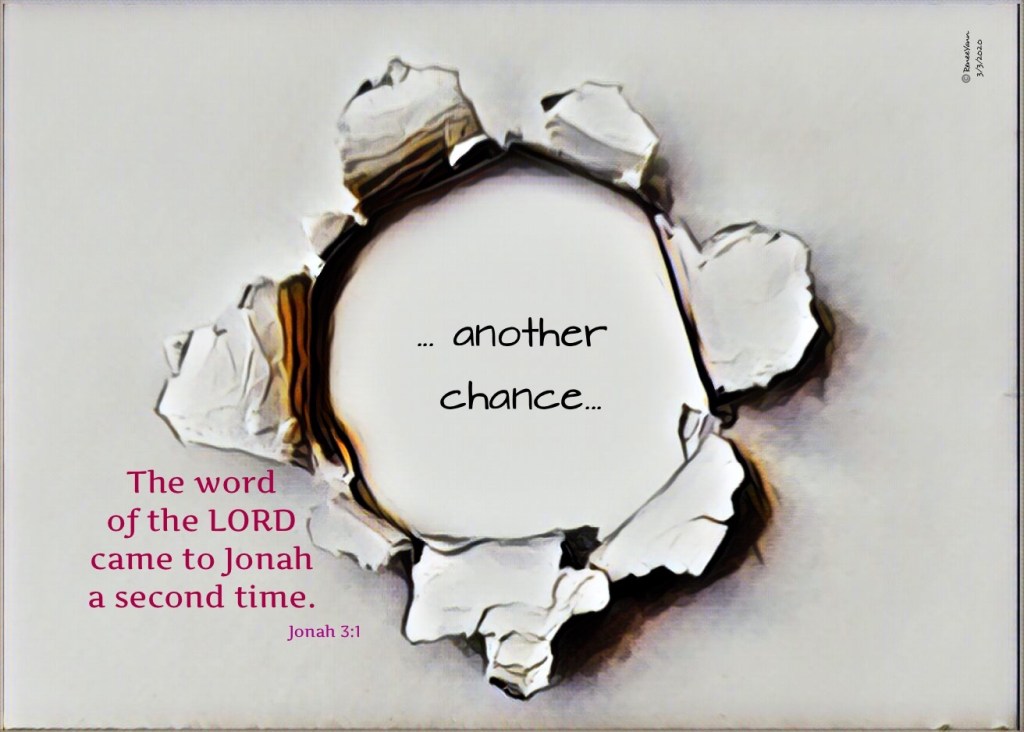
Today, in God’s Lavish Mercy, one line from our readings hit me like a lightening bolt:

The word of the LORD
came to Jonah
a second time.

Jonah 3:1

Yes, it’s the truth! God will keep coming back again and again to encourage us to hear the true message for our lives.

Our Gospel gives us a hint about how resistant we sometimes are to do this deep listening:

This generation is an evil generation;
it seeks a sign, but no sign will be given it,
except the sign of Jonah.

Luke 11:29

What is the sign of Jonah anyway?

To put it simply, it is the witness of the Resurrection – that overarching event that changed everything for believers. For just as Jonah was able to return from certain death in the whale’s belly, so Christ conquered death and rose to new life, promising us the same power.

This is the central, life-changing belief for Christians. It should make a difference in how we live.


By our Lenten repentance, we can be like Jonah, grasping the second chance God always gives us to respond to our life circumstances with faith, hope, and love.

I would bet there is something in your life right now that is calling you to such a response. Someplace in your life, you may be caught in a bit of a “whale’s belly 🐳” about some issue, am I right?

God makes us ask ourselves questions most often when He intends to resolve them. He gives us needs that He alone can satisfy, and awakens capacities that He means to fulfill. Any perplexity is liable to be a spiritual gestation, leading to a new birth and a mystical regeneration.

Thomas Merton, The Sign of Jonas

Today’s readings remind us that we already have the glorious sign of the Resurrection to inspire us to leap from that dark “belly” into God’s hope for us!


Poetry: WE ARE JONAH – Rabbi Rachel Barenblat

In Rabbi Eliezer’s vision
Jonah entered the whale’s mouth
as we enter a synagogue.
Light streamed in through its eyes.
Jonah approached the bimah, the whale’s head.
Show me wonders, he said, as though
his own life weren’t a miracle.

The whale obliged, swimming down
to the foundation stone,
the navel of creation
fixed deep beneath the land.
Tsk tsk, chided the fish:
you’re beneath God’s temple —
you should pray.

Prayer requires stillness.
Running away had always been
so easy. Sitting silent
in self-judgement — forget it!
But waves only churn the surface.
In the deep beneath the deep
Jonah was wholly present.

We all flee
from uncomfortable conversations
the drip of a hospital IV
the truths we don’t want to own
the work we don’t want to do.
Now we’re in the belly of the whale,
someplace deep and strange.

God calls us to awareness:
to stand our ground
in the place where we are,
to do the work which needs doing.
To bring kindness and mercy
even to those who are unlike us.
Are we listening?


Music: a fun song “In the Belly of Whale” – The Newsboys

Lent: On God’s Good Side?

March 7, 2022
Monday of the First week of Lent

Today, in God’s Lavish Mercy, we are invited to be like God:

The LORD said to Moses,
“Speak to the whole assembly of the children of Israel
and tell them:
Be holy, for I, the LORD, your God, am holy.

Leviticus 19:1

Our first reading goes on to tell us how to be a decent person.

Don’t steal, lie, or cheat
Pay just wages
Respect and help those physically burdened
Be impartial and just
Defend life
Don’t slander, hate, take revenge, or hold a grudge

Basically, the message is about kindness …
deep kindness,
the type that comes from realizing
how infinitely kind God is to us.

Leviticus, after a long list of practical examples, sums it up:

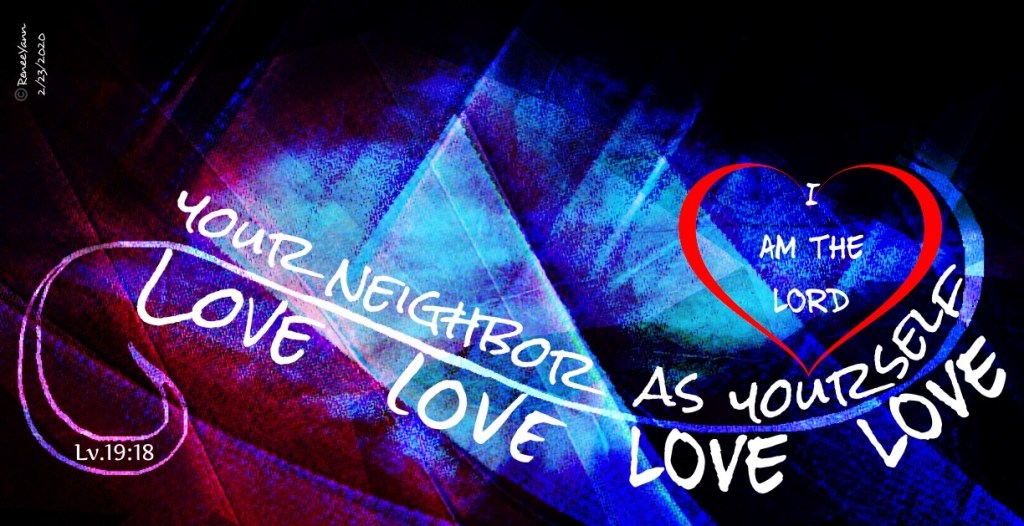
You shall love your neighbor as yourself.
I am the LORD.

Leviticus 19:18

Our Gospel tells us what happens when we make the choice to take the Old Testament advice — or not.

We are all familiar with the parable of the sheep and the goats. And we all hope our scorecard gets us into the right herd “When the Son of Man comes in his glory, and all the angels with him …”

In this parable, Jesus puts the advice of Leviticus into practical form for his followers. But he adds one dynamic element that not only invites but impels our wholehearted response:

Amen, I say to you,
what you did not do for one of these least ones,
you did not do for me.

Matthew 25:40

Leviticus invites us to become holy as God is holy. But Jesus reveals the secret that this Holy God lives in the poor, hungry, homeless, imprisoned and sick. By embracing these most beloved of God, we find the path to holiness.


Poetry: When Did I See You – Renee Yann, RSM

When Did I See You …
(Woman Who Is Homeless)

In the bitter rain of February
I sat inside a sunlit room,
and offered You warm prayer.

Then, she passed outside my window
dressed too lightly for the wind,
steadied on a cane, though she was young.

She seemed searching for
a comfort, unavailable and undefined.
The wound of that impossibility

fell over her the way it falls
on every tender thing that cries
but is not gathered to a caring breast.

Suddenly she was a single
anguished seed of You,
fallen into all created things.

Gathering my fallen prayer,
I wear the thought of her
like cracked earth wears fresh rain.

I’ve misconstrued You,
Holy One, to whom
I spread my heart

as if it were a yearning field…
Holy One, already ripe within
her barest, leanest yearning.

Music: The Least of These – Karl Kohlhase

Lent: Time of Holy Listening

March 2, 2022
Ash Wednesday

Today, in God’s Lavish Mercy, we resolve to turn our hearts more fully to God. The sacred journey of Lent, one we have traveled so often over the years, invites us each time to go deeper into the Well of Mercy.

Joel’s pregnant phrase summons us:

Think of the “even now” moments of your life, those times when, despite darkness and cold, you turned toward light and warmth. Think of a time when, in contradiction to all negativity, your soul proclaimed:

  • Even now I hope
  • Even now I believe
  • Even now I love
  • Even now I care
  • Even now I repent
  • Even now I forgive
  • Even now I begin again

The rise of an “Even Now” moment in our souls is like the hint of spring pushing its head through the winter snow.

It is the reddish-green thread suggesting life at the tip of the brown, cold-cracked branch.

It is the moment we believe that what we desire and love will turn toward us and embrace us.

Can you imagine God having such moments, longing for our attention, love, presence, catching a glimpse of our turning?

Our reading from Joel describes such a God.

Even now, says the LORD,
return to me with your whole heart…
These words suggest God’s longing for us, for our devotion and love.

But our holy intentions weaken and we often drift away from our “first fervors”. Our hearts attach to distractions from God. So God says:

Rend your hearts …
and return to the LORD, your God.
For I am gracious and merciful,
slow to anger, rich in kindness …
Come back to Me, with all your heart.

Joel 2: 13-14

This is what Lent is all about. Each of us knows where our hearts have wandered. Each of knows what we must turn from — even now — to return to God’s embrace.

If we can hear God’s longing in this haunting reading from Joel perhaps the true turning will begin. A blessed Lent, a holy listening, my friends.


Poetry: God’s Longing – from Rumi

All night, a man called out “God! God!”
Until his lips were bleeding.
Then the Adversary of mankind said, “Hey! Mr Gullible!
… How come you’ve been calling all night
And never once heard God say, “Here, I AM”?
You call out so earnestly and, in reply, what?
I’ll tell you what. Nothing!”

The man suddenly felt empty and abandoned.
Depressed, he threw himself on the ground
And fell into a deep sleep.
In a dream, he met an angel, who asked,
“Why are you regretting calling out to God?”

The man said, “ I called and called
But God never replied, “Here I AM.”

The Angel explained, “God has said,
“Your calling my name is My reply.
Your longing for Me is My message to you.
All your attempts to reach Me
Are in reality My attempts to reach you.
Your fear and love are a noose to catch Me.
In the silence surrounding every call of “God”
Waits a thousand replies of “Here I AM.”


Music: Come Back to Me – Gregory Norbet, sung by John Michael Talbot

Primed for Transformation

February 27, 2022
Eighth Sunday in Ordinary Time

Today, in God’s Lavish Mercy, our readings prime us for the coming of Lent. Lent is all about the transformation of our hearts within of the Passion, Death, and Resurrection of Jesus.

But before we are ready for such transformation, we must be totally aware of ourselves and open to God’s Presence in our lives.


Our readings call us to a deep look at our spiritual integrity as it is revealed in our words and actions. The image of a good tree, bearing fruit, suffuses all our scriptures today.

What about the integrity of our words:

The fruit of a tree shows the care it has had;
so too does one’s speech disclose the bent of one’s mind.
Praise no one before he speaks,
for it is then that people are tested.

Sirach 27:6-7

What about the integrity of our faith:

The just one shall flourish like the palm tree,
like a cedar of Lebanon shall he grow.
They that are planted in the house of the LORD
shall flourish in the courts of our God.

Psalm 92: 13-14

What about the perseverance of our faithful labor:

Be firm, steadfast, always fully devoted to the work of the Lord,
knowing that in the Lord your labor is not in vain.

1 Corinthians 92:15-16

What about our actions – the fruit we bear to the world:

A good tree does not bear rotten fruit,
nor does a rotten tree bear good fruit.
For every tree is known by its own fruit.
For people do not pick figs from thornbushes,
nor do they gather grapes from brambles.
A good person out of the store of goodness in his heart produces good,
but an evil person out of a store of evil produces evil;
for from the fullness of the heart the mouth speaks.

Luke 6:43-54

Let’s set our sights on the beginning of Lent which is now on the near horizon. How do we want to begin the transformative journey offered us once again in this magnificent liturgical cycle? Now is the time to prepare.


Poetry: Birches BY ROBERT FROST

When I see birches bend to left and right
Across the lines of straighter darker trees,
I like to think some boy’s been swinging them.
But swinging doesn’t bend them down to stay
As ice-storms do. Often you must have seen them
Loaded with ice a sunny winter morning
After a rain. They click upon themselves
As the breeze rises, and turn many-colored
As the stir cracks and crazes their enamel.
Soon the sun’s warmth makes them shed crystal shells
Shattering and avalanching on the snow-crust—
Such heaps of broken glass to sweep away
You'd think the inner dome of heaven had fallen.
They are dragged to the withered bracken by the load,
And they seem not to break; though once they are bowed
So low for long, they never right themselves:
You may see their trunks arching in the woods
Years afterwards, trailing their leaves on the ground
Like girls on hands and knees that throw their hair
Before them over their heads to dry in the sun.
But I was going to say when Truth broke in
With all her matter-of-fact about the ice-storm
I should prefer to have some boy bend them
As he went out and in to fetch the cows—
Some boy too far from town to learn baseball,
Whose only play was what he found himself,
Summer or winter, and could play alone.
One by one he subdued his father's trees
By riding them down over and over again
Until he took the stiffness out of them,
And not one but hung limp, not one was left
For him to conquer. He learned all there was
To learn about not launching out too soon
And so not carrying the tree away
Clear to the ground. He always kept his poise
To the top branches, climbing carefully
With the same pains you use to fill a cup
Up to the brim, and even above the brim.
Then he flung outward, feet first, with a swish,
Kicking his way down through the air to the ground.
So was I once myself a swinger of birches.
And so I dream of going back to be.
It’s when I’m weary of considerations,
And life is too much like a pathless wood
Where your face burns and tickles with the cobwebs
Broken across it, and one eye is weeping
From a twig’s having lashed across it open.
I'd like to get away from earth awhile
And then come back to it and begin over.
May no fate willfully misunderstand me
And half grant what I wish and snatch me away
Not to return. Earth’s the right place for love:
I don’t know where it's likely to go better.
I'd like to go by climbing a birch tree,
And climb black branches up a snow-white trunk
Toward heaven, till the tree could bear no more,
But dipped its top and set me down again.
That would be good both going and coming back.
One could do worse than be a swinger of birches.

Music: Tree Song – sung by Evie Karlsson

Live in Truth

February 25, 2022
Friday of the Seventh Week in Ordinary Time

Today, in God’s Lavish Mercy, our readings instruct us on one of life’s most important realities: truthful relationship – with God, nature, other people, and ourselves.

James reminds us that the prophets spoke the truth at great personal cost.

Take as an example of hardship and patience, brothers and sisters,
the prophets who spoke in the name of the Lord.
Indeed we call blessed those who have persevered.

James 5:10

Culture sometimes characterizes a “prophet” as one who can foresee the future, one who has a greater capacity than the normal person. And indeed there are great leaders who fit that understanding. They see things rightly and help us to realign our vision.


But, in an everyday sense, a prophet is simply someone who sees the truth and is unafraid to speak it. A prophet doesn’t pretend, deflect, lie, ignore, hide, distort or abuse Truth. The call to this kind of prophecy is one that we all share.

Such a call requires that we are honest, first and foremost, with God and with ourselves. It asks that we live a discerning and courageous life, reverently telling our truth as best we understand before God:

… let your “Yes” mean “Yes” and your “No” mean “No,”
that you may not incur condemnation.

James 5:12

In our Gospel, we find the Pharisees trying trip up Jesus with their pretend concern for the Law. Instead, what they are really concerned about is that they could lose their hold on power if the people turn to Jesus and his teaching.


Jesus calls them “hard of heart” because they are not open to the Spirit. They hide in a labyrinth of minutiae rather than the clarity of Love and Truth.

Living in the Truth of God’s grace and mercy, we grow in our ability to be prophetic. It means that people know they will get the truth from us — not opinion or advice; not bluntness or unnecessary critique — but a discernment offered in love, reverence, and mutual hope.

Like the biblical prophets, and like Jesus himself, we will meet people who don’t want that kind of truth. They haven’t been able to espouse it in themselves, so they don’t want to hear it from us. We see this played out daily in a sham political world that continually creates its own version of reality to suit its selfish ends.

In such situations, James would offer us this encouragement:

You have heard of the perseverance of Job,
and you have seen the purpose of the Lord,
because the Lord is compassionate and merciful.

And our Alleluia Verse offers us a prayer for such times:

Your word, O Lord, is truth;
consecrate us in the truth.


So persevere.
Seek your truth in prayer.
Give it to the world generously
with compassion and mercy.

Poetry: A Legend of Truth – Rudyard Kipling
“A Friend of the Family”
From “Debits and Credits” (1919-1923)

Once on a time, the ancient legends tell,
Truth, rising from the bottom of her well,
Looked on the world, but, hearing how it lied,
Returned to her seclusion horrified.
There she abode, so conscious of her worth,
Not even Pilate’s Question called her forth,
Nor Galileo, kneeling to deny
The Laws that hold our Planet ‘neath the sky.
Meantime, her kindlier sister, whom men call
Fiction, did all her work and more than all,
With so much zeal, devotion, tact, and care,
That no one noticed Truth was otherwhere.

Then came a War when, bombed and gassed and mined,
Truth rose once more, perforce, to meet mankind,
And through the dust and glare and wreck of things,
Beheld a phantom on unbalanced wings,
Reeling and groping, dazed, dishevelled, dumb,
But semaphoring direr deeds to come.

Truth hailed and bade her stand; the quavering shade
Clung to her knees and babbled, “Sister, aid!
I am–I was–thy Deputy, and men
Besought me for my useful tongue or pen
To gloss their gentle deeds, and I complied,
And they, and thy demands, were satisfied.
But this–” she pointed o’er the blistered plain,
Where men as Gods and devils wrought amain–
“This is beyond me! Take thy work again.”

Tablets and pen transferred, she fled afar,
And Truth assumed the record of the War…
She saw, she heard, she read, she tried to tell
Facts beyond precedent and parallel–
Unfit to hint or breathe, much less to write,
But happening every minute, day and night.
She called for proof. It came. The dossiers grew.
She marked them, first, “Return. This can’t be true.”
Then, underneath the cold official word:
“This is not really half of what occurred.”

She faced herself at last, the story runs,
And telegraphed her sister: “Come at once.
Facts out of hand. Unable overtake
Without your aid. Come back for Truth’s own sake!
Co-equal rank and powers if you agree.
They need us both, but you far more than me


Music: Beautiful Truth – Angela Predhomme

Pepper and Salt

February 24, 2022
Thursday of the Seventh Week in Ordinary Time

Today, in God’s Lavish Mercy, both James and Jesus pepper us with some fire and brimstone.

James is preaching against the sin of exploitation, especially as it relates to economic justice, the sanctity of work, and reverence for the worker.

Come now, you rich, weep and wail over your impending miseries…
Behold, the wages you withheld from the workers who harvested your fields are crying aloud; and the cries of the harvesters have reached the ears of the Lord of hosts.

James 5: 1;4

James, in his time, is condemning a sin that has endured throughout history. In a 2020 address, Pope Francis confronted the same evil:

The pandemic has exposed and aggravated social problems, above all that of inequality…These symptoms of inequality reveal a social illness; it is a virus that comes from a sick economy. And we must say it simply: the economy is sick. It has become ill. It is the fruit of unequal economic growth — this is the illness: the fruit of unequal economic growth — that disregards fundamental human values. In today’s world, a few wealthy people possess more than all the rest of humanity. I will repeat this so that it makes us think: a few wealthy people, a small group, possess more than all the rest of humanity. This is pure statistics. This is an injustice that cries out to heaven!

General Audience, August 26, 2020

James and Francis – speaking the same message for different times.


In our Gospel, Jesus teaches that the rewards of a well-lived life are measured in mutuality and generosity, not dollars:


In concluding his above referenced address, Pope Francis, like Jesus, focused on children:

Let us think about the children. Read the statistics: how many children today are dying of hunger because of broken distribution of riches, because of a sick economic system; and how many children today do not have the right to education for the same reason. May this image of children in want due to hunger and the lack of education help us understand that after this pandemic crisis we must learn and do better.


Jesus too measured a soul’s health by its effect on children:

Whoever causes one of these little ones who believe in me to sin,  it would be better for him if a great millstone were put around his neck and he were thrown into the sea.

Mark 9:42

These readings teach hard lessons, lessons which society still seems unable to learn. Let’s ask for the grace to see our own role in helping to realize the sacred balance of goods that Jesus, James, and Francis call for.

Let us not tire in advocating for social Justice because, as our Gospel warns:

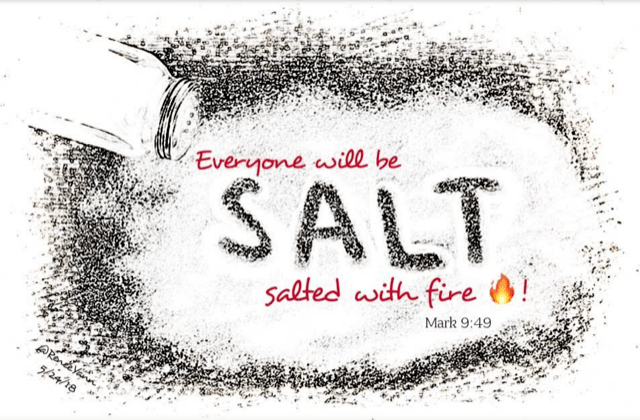
Everyone will be salted with fire. Salt is good,
but if salt becomes insipid,
with what will you restore its flavor?

Mark 9:49

Poetry and Music: Salt of the Earth – The Rolling Stones
In this song, Mick Jagger writes an anthem to the working class. But in a twice-repeated stanza, the singer professes a distance from this very group, perhaps loosing touch because of his own material success:

And when I search a faceless crowd
A swirling mass of grey and black and white
They don’t look real to meIn fact, they look so strange

The song uses a quote that refers to a passage in the Bible where Jesus encourages people to give the best of themselves:

You are the salt of the earth; but if the salt loses its flavor, how shall it be seasoned ? It is then good for nothing but to be thrown out and trampled underfoot.

Matthew 5:13

Hear God Speak Your Name

February 22, 2022
Feast of the Chair of St. Peter

Today, in God’s Lavish Mercy, our readings invite to consider God’s naming us – calling us.

We celebrate wonderful Saint Peter – so fully human, so fully holy, so fully in love with God! As we pray the Gospel of Peter’s naming, may we deepen in understanding our own naming by God.

Once, Jesus asked Peter what he believed. Peter answered, simply and magnificently:
“YOU ARE THE CHRIST, THE SON OF THE LIVING GOD.”
Peter was an ordinary man who responded to Jesus with a clear and extraordinary faith.


One June morning, nearly fifty years ago, I sat in a sun-drenched field in the Golan Heights of Israel at a spot called Caesarea Philippi. Thirty other pilgrims composed the group as we heard today’s Gospel being read. Listening, I watched the rising sun grow brilliant on the majestic rock face in the near distance.

I thought how Peter might have watched his day’s sun playing against the same powerful cliffs as Jesus spoke his name:

Jesus said to him,
You are Peter (which means “Rock”),
and upon this Rock
I will build my Church.


A few years later, I stood at the center of St. Peter’s Basilica in the Vatican. Looking up, I saw these words emblazoned around the awesome rotunda dome:

Tu es Petrus,
et super hanc petram
aedificabo ecclesiam.

On that sunlit afternoon two-thousand years ago,
Peter could never have imagined
what God already saw for him.
Yet, Peter responded – with his whole life.
This is what makes a Saint.

Jesus calls us to be saints too. He lovingly speaks our name into a sacred future we cannot even imagine. But if, like Peter, we trust and believe, God does the rest.


Poetry: Peter by John Poch.
The poem captures the transformation of Peter’s humanness into God’s hope for him – the “changing” of his name.


There are three things which are too wonderful for me,
Yes, four which I do not understand.
The way of an eagle in the air,
The way of a serpent on a rock,
The way of a ship in the heart of the sea,
And the way of a man with a maid

–Prov. 30:18, 19

I
Contagious as a yawn, denial poured
over me like a soft fall fog, a girl
on a carnation strewn parade float, waving
at everyone and no one, boring and bored.
There actually was a robed commotion parading.
I turned and turned away and turned. A swirl
of wind pulled back my hood, a fire of coal
brightened my face, and those around me whispered:
You’re one of them, aren’t you? You smell like fish.
And wine, someone else joked. That’s brutal. That’s cold,
I said, and then they knew me by my speech.
They let me stay and we told jokes like fisher-
men and houseboys. We gossiped till the cock crowed,
his head a small volcano raised to mock stone.

II
Who could believe a woman’s word, perfumed
in death? I did. I ran and was outrun
before I reached the empty tomb. I stepped
inside an empty shining shell of a room,
sans pearl. I walked back home alone and wept
again. At dinner. His face shone like the sun.
I went out into the night. I was a sailor
and my father’s nets were calling. It was high tide,
I brought the others. Nothing, the emptiness
of business, the hypnotic waves of failure.
But a voice from shore, a familiar fire, and the nets
were full. I wouldn’t be outswum, denied
this time. The coal-fire before me, the netted fish
behind. I’m carried where I will not wish.


Music: Peter’s Song – Face to Face – Michael O’Brien

I recall
something in the way
you called my name,
an ordinary fisherman you called me friend and took me in.
How everything had changed
because then I knew I’d never be the same.

Love came and rescued me.
I gave up my everything to follow.
Now I know.
All that I was before
won’t matter anymore
for I am a new man
because I have seen my Savior
face-to-face.

I recall
standing in the courtyard by the fire,
words still ringing in my head,
three times before the break of dawn
you would be denied.
And yet I saw no judgment in your eyes.

Love came and died for me.
I gave up my everything,
gave up my everything to follow.
Now I know
all that I was before
is dead and it lives no more
for I am a new man
because I have seen
my savior face-to-face.

The dark night, the new day –
The stone was rolled away –
my Savior, You are the Light
You are alive! Ascended to heaven.
I know that you will come again.

That moment I will arise
to worship before your throne,
to bow down for you alone are worthy,
so worthy
and there with saints of old,
I’ll sing a brand new song in heaven
forever
where I will see my Savior face-to-face.

Twists of Faith

February 21, 2022
Monday of the Seventh Week in Ordinary Time

Today, in God’s Lavish Mercy, the deep undercurrent of our readings is about the power and difficulties of faith.

James talks about how our faith can be choked by the weeds of “bitter jealousy and selfish ambition”. These chokers make us “boast and be false to the truth”. They fill us with a “pretend wisdom” that is not from the Holy Spirit.

Praying with this passage, I asked myself why we allow these ugly constraints to grasp our souls when the alternative James describes is so beautiful:

… the wisdom from above is first of all pure,
then peaceable, gentle, compliant,
full of mercy and good fruits,
without inconstancy or insincerity.
And the fruit of righteousness is sown in peace
for those who cultivate peace.

James 3:17-18

The Gospel helped me with an answer.

Unconditional faith is scary. It requires us to give control over to God. It asks us to let go of fear and to trust God’s Spirit within us. It needs us to empty our hearts of pretense and self-protection in order to make room for God’s transforming Mercy and Love.

This kind of faith will change us. It will make us “foolish” and insecure in worldly terms. It will cause us to live from a Wisdom the world misunderstands and mocks.

It’s hard to live that kind of faith. The dad in today’s Gospel admits it. He wants to have a faith that invites Christ’s power into his life. But he’s afraid. What if God wants something different for him and his son? What happens if he gives control over to God?

This yearning father confesses his ambivalence
in a plea for Christ’s assistance:
Lord, I do believe. Help my unbelief!

We all find ourselves within that plea sometimes in our lives. It’s a faith of “if”, “maybe”, and “but” – all of which are hardly faith at all. Unconditional faith is “Yes”, no matter what. It is the place where Faith and Love merge.


Our faithful “Yes”, as the e.e.cummings poem might describe it:

love is a place
& through this place of
love move
(with brightness of peace)
all places

yes is a world
& in this world of
yes live
(skillfully curled)
all worlds


Music: When we live this “Yes Faith”, God’s love, God’s heart lives in us. This song by Michael Hedges, based on another poem by e.e.cummings, can be a prayer for us. We may be unused to calling God “my dear”, “my darling”. But a loving name for God can be helpful to our prayer. And it is an ancient practice of mystics like St. John of the Cross. Use whatever might feel natural for you. Don’t be hesitant about being in love with God❤️

I Carry Your Heart – Michael Hedges (Lyrics below)

I carry your heart with me
I carry it in my heart
I am never without it
Anywhere i go you go, my dear
And whatever is done by only me
Is your doing, my darling.

I fear no fate
For you are my fate, my sweet
I want no world
For beautiful you are my world, my true
And it’s you are whatever a moon has always meant
And whatever a sun will always sing is you

Here is the deepest secret nobody knows
Here is the root of the root
And the bud of the bud
And the sky of the sky
Of a tree called life;
Which grows higher than the soul can hope
Or mind can hide
And this is the wonder that’s keeping the stars apart
I carry your heart
I carry it in my heart