Psalm 19: The Law

Third Sunday of Lent

March 7, 2021


Today, in God’s Lavish Mercy, we pray with Psalm 19.

Those of you who click through to our daily readings on the USCCB website may notice that two sets of readings are offered for this 3rd Sunday in Lent. The alternative set is for a Mass which incorporates “The Scrutinies”.

“The Scrutinies” are part of the process of admitting adults into the Catholic Church which typically takes place throughout Lent and culminates in Easter Baptism. 

There are several steps in the admission process beginning with discernment and in-depth education. The Scrutinies occur near the end, during the 3rd, 4th, and 5th Sundays of Lent. As the name indicates, these exercises have us look deep into our hearts and souls for the healing and forgiveness we need in faith.


However, most of us attending this Sunday’s liturgy will hear the Year B readings which center on LAW and how our developing faith understands it.


For the ancient Israelites, as Exodus tells us, that understanding took the form of a specified discipline in the Ten Commandments.

For I, the LORD, your God, am a jealous God, 
inflicting punishment for their fathers’ wickedness 
on the children of those who reproach me …

Exodus 20:5

In our second reading, Paul preaches a new understanding of Law – the Law of Sacrificial Love revealed in the sacred contradiction of Cross.

… but we proclaim Christ crucified, 
a stumbling block to Jews and foolishness to Gentiles, 
but to those who are called, Jews and Greeks alike, 
Christ the power of God and the wisdom of God.

1 Corinthians 1: 23-25

And in our Gospel, Jesus confronts those whose faith is hardened against the new Law which he embodies:

While he was in Jerusalem for the feast of Passover, 
many began to believe in his name 
when they saw the signs he was doing.
But Jesus would not trust himself to them because he knew them all, 
and did not need anyone to testify about human nature.
He himself understood it well.

John 2:23-25

Our psalm offers us an opportunity to “scrutinize” the sincerity of this prayer in our own hearts:


Poetry: As Kingfishers Catch Fire Gerard Manley Hopkins sees the law as acting in God’s eye…

As kingfishers catch fire, dragonflies dráw fláme;
As tumbled over rim in roundy wells
Stones ring; like each tucked string tells, each hung bell’s
Bow swung finds tongue to fling out broad its name;
Each mortal thing does one thing and the same:
Deals out that being indoors each one dwells;
Selves–goes itself; _myself_ it speaks and spells,
Crying _Whát I do is me: for that I came.

Í say móre: the just man justices;
Kéeps grace: thát keeps all his goings graces;
Acts in God’s eye what in God’s eye he is–
Chríst–for Christ plays in ten thousand places,
Lovely in limbs, and lovely in eyes not his
To the Father through the features of men’s faces.

Music: The Law of the Lord is Perfect

Psalm 31: The Plot

Wednesday of the Second Week of Lent

March 3, 2021

Today, in God’s Lavish Mercy, we pray with Psalm 31 which expresses a pleading reflective of our first powerful reading from Jeremiah.

Come, let us contrive a plot against Jeremiah.
… let us destroy him by his own tongue;
let us carefully note his every word.

Jeremiah 18:18

This verse (18:18) is the pivotal turning point where everything goes south for Jeremiah. The Israelite power structure really didn’t want to hear what Jeremiah was telling them. He pins their troubles – the destruction the Temple and Babylonian Captivity – on one thing: their faithlessness to the Covenant with Yahweh.


Jeremiah is an archetype of the condemned prophet whom we meet in Jesus. Today’s Gospel reveals the same pivotal turning point for Jesus:

We are going up to Jerusalem,
and the Son of Man will be handed over to the chief priests
and the scribes,
and they will condemn him to death,
and hand him over to the Gentiles
to be mocked and scourged and crucified,
and he will be raised on the third day.

Matthew 20:18-19

They told the Truth – that we must continually discern God’s Word for our lives, always seeking love, mercy and justice. Few had the courage to listen. Most chose sinful resistance.

The suffering prophet has only one recourse when “hearing the whispers of the crowd, that frighten me from every side, as they consult together against me, plotting to take my life.” Psalm 31:14

That recourse is complete and trusting surrender to God. Psalm 31 reveals this surrender in a verse Jesus ultimately prays from the Cross:

Into your hands I commend my spirit;
    you will redeem me, O LORD, O faithful God.

Psalm 31:6

Lent calls us to the message of Jeremiah and Jesus – to examine our lives in light of love, mercy and justice. Let us pray in the spirit of Jesus today to be open to Truth in our own lives and to build Truth in our communities.


Poetry: The Paradox by Paul Laurence Dunbar
The poem carries a tone similar to sorrowful Jeremiah’s poetry.

I am the mother of sorrows,
I am the ender of grief;
I am the bud and the blossom,
I am the late-falling leaf.

I am thy priest and thy poet,
I am thy serf and thy king;
I cure the tears of the heartsick,
When I come near they shall sing.

White are my hands as the snowdrop;
Swart are my fingers as clay;
Dark is my frown as the midnight,
Fair is my brow as the day.

Battle and war are my minions,
Doing my will as divine;
I am the calmer of passions,
Peace is a nursling of mine.

Speak to me gently or curse me,
Seek me or fly from my sight;
I am thy fool in the morning,
Thou art my slave in the night.

Down to the grave will I take thee,
Out from the noise of the strife;
Then shalt thou see me and know me–
Death, then, no longer, but life.

Then shalt thou sing at my coming.
Kiss me with passionate breath,
Clasp me and smile to have thought me
Aught save the foeman of Death.

Come to me, brother, when weary,
Come when thy lonely heart swells;
I ‘ll guide thy footsteps and lead thee
Down where the Dream Woman dwells.

Music: Symphony No.1 – Jeremiah by Leonard Bernstein 

Summary: an excellent introduction to this symphony

Entire Symphony:

Psalm 50: Clean It Up!

Tuesday of the Second Week of Lent

March 2, 2021


Today, in God’s Lavish Mercy, we pray with Psalm 50 which Wikipedia describes as “a prophetic imagining of God’s judgement on the Israelites”.


It’s a rainy day here, after a foggy yesterday. A cheery psalm this morning would have been nice…. but, well it’s Lent.

Why do you recite my statutes,
    and profess my covenant with your mouth,
Though you hate discipline
    and cast my words behind you?

Psalm 50: 16-17

The psalm is a divine rebuke. It shouts, “Wake up! You’re missing the point!”

Psalm 50 calls us to examine the failures in love that we might bury under routine. It demands that we look under the surface of our daily practice for the depths of grace and transformation that we might be overlooking.


We can get pretty comfortable with our beliefs, our judgements, our attitudes, our habits. Left unexamined, these can deteriorate into prejudices and indifferences, into bigotry and self-righteousness, into betrayals of mercy.

Today’s Gospel gives us a perfect description of what happens to us when we fail to discern the “hardening of our spiritual arteries”. We get Pharisaical! Here’s what Jesus says about pharisees:

… they preach but they do not practice.
They tie up heavy burdens hard to carry
and lay them on people’s shoulders,
but they will not lift a finger to move them.
All their works are performed to be seen.
They widen their phylacteries and lengthen their tassels.
They love places of honor at banquets, seats of honor in synagogues,
greetings in marketplaces, and the salutation ‘Rabbi.’

Matthew 23:4-7

Let’s learn humble, contrite self-examination by sincerely praying Psalm 50:

Those who offer praise as a sacrifice glorify me;
    and to those who go the right way 
    I will show the salvation of God.

Psalm 50: 23

Our first reading from Isaiah sums it up:

Wash yourselves clean!
Put away your misdeeds from before my eyes;
    cease doing evil; learn to do good.
Make justice your aim: redress the wronged,
    hear the orphan’s plea, defend the widow.

Isaiah 1:16-17

Poetry: God must give us a renewed mind (from Vale Millies) by Hadewijch. She was mystic of the 13th century
English version by Mother Columba Hart, Original Language Dutch

God must give us a renewed mind
     For nobler and freer love,
To make us so new in our life
     That Love may bless us
And renew, with new taste,
     Those to whom she can give new fulness;
Love is the new and powerful recompense
     Of those whose life renews itself for Love alone.
— Ay, vale, vale, millies — (farewell, farewell, a million times)
     That renewing of new Love
— Si dixero, non satis est — (If I can speak, it is not enough)
     Which renewal will newly experience.


Music: Psalm 50

Psalm 116: Listen!

Second Sunday of Lent

February 28, 2021


Today, in God’s Lavish Mercy, we pray with Psalm 116 which Pope John Paul II called “A Prayer of Thanksgiving to the Lord”.

Praying the psalm today, in the context of our other Sunday readings, leads us deeper into the nature of that “thanksgiving” and its relationship to sacrifice.

Abraham and Isaac by Rembrandt

In our first reading, we meet Abraham, full of thanks that God reconsidered the command to sacrifice his dear son.


But then our second reading expresses thanks that God was willing to sacrifice his own Son for our sakes.

The Transfiguration by Titian

Finally, our Gospel takes us to the Transfiguration where that Son who will be sacrificed is revealed in his true glory.

What is the thread binding these readings? I think it can be found in this Gospel verse:

This is my beloved Son.  
Listen to him.

True listening is obedience. The words come from the same root: obedience = listen to,” from ob “to” + audire “listen, hear”.

  • Abraham listens, no matter how hard, and finally hears God’s real command to love.
  • Jesus listens to the Will of the Father even through his suffering, and is led to Resurrection.
  • We, like Peter, James and John, are called to listen to Jesus who will transfigure our perceptions about what life is really calling us to.

In each case, intent “obedience” allows the listener to hear and see beneath circumstances to the deeper Grace beyond appearances. Deep spiritual listening transfigures us!

This is the whole point of the spiritual life. Our lives are so much more than mere circumstances or appearance. Our psalm calls us to believe this even in difficulty:

I believed, even when I said,
    “I am greatly afflicted.”
Precious in the eyes of the LORD
    is the death of his faithful ones.

Psalm 116:10

When we do this, we are freed to engage our lives at the level of God’s Will which is always for our good, which is always from Love. The long tradition of faith, learned from our forbearers, assures us of this:

O LORD, I am your servant;
    I am your servant, the child of your faithful ones;
    you have loosed my bonds.
To you will I offer sacrifice of thanksgiving,
    and I will call upon the name of the LORD.

Psalm 116:16-17

Some of us go through life continually angry, frustrated, or overwhelmed by our challenges. Others, experiencing similar or even greater challenges, reflect a spirit of joy, peace, and gratitude. Why is that? I think today’s readings give us a big clue. Let’s listen to them!


Poetry: Story of Isaac, written and chanted by the bard Leonard Cohen who also wrote the currently popular “Hallelujah “.


Music: Psalm 116: Steve Green

Lyrics

I love the Lord, He heard my voice
He heard my voice. He heard my voice
He heard my cry for mercy
Because He has turned His ear to me
I will call (I will call)
I will call on the Lord for as long as I live

I love the Lord, He heard my voice
He heard my voice. He heard my voice
He heard my cry
I love the Lord, He heard my voice
He heard my voice. He heard my voice
He heard my cry for mercy

Psalm 25: Grace through Prisms

First Sunday of Lent

February 21, 2021

Today, in God’s Lavish Mercy, we pray with Psalm 25, a prayer full of humility, thanksgiving, and hope.

Your ways, O LORD, make known to me;
    teach me your paths,
Guide me in your truth and teach me,
    for you are God my savior.

Psalm 25: 4-5

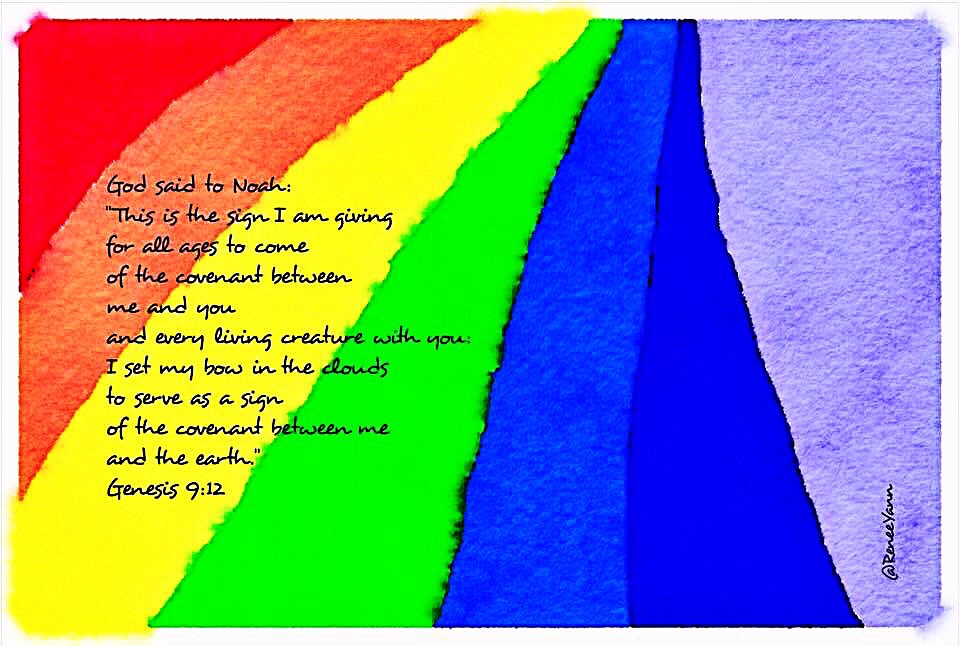
Genesis 9:12

On this First Sunday of Lent, the psalm is set between the wonderful Noah story, its interpretation by Peter, and the proclamation of Christ’s redemptive mission.

Like Noah, humankind has come through the storm of an ages-long messianic longing. Jesus is the Rainbow rising out of that darkness. His Light passes into us through the prismed waters of our Baptism. Indeed, as our Psalm declares:

Good and upright is the LORD,
    showing sinners the way.
God guides the humble to justice,
    and teaches the humble the godly way.

Psalm 25: 8-9

When our psalmist first begins to pray, the light within seems shadowed and the vibrancy of his soul perhaps fractured. At times, we have felt the same way. 

But the psalmist’s sincere and humble prayer catches God’s Light, allowing the passage from shadows to to the full rainbow of Mercy. May it be so for all of us as well as we journey with Jesus through Lent.

Poetry: on a separate post today due to its length — but so worth the time to read and savor.


Music: Rainbow by Robert Plant – Let God sing this song to you, perhaps the way God sang in Noah’s heart when he was delivered from the flood.

I found a lucky charm
I dressed it up with love
I crossed the Seven Seas to you
Will it be enough?

And I will be a rainbow
Oh, now your storm is gone
And I will bring the song for you
And I will carry on
Ooh Ooh Ooh
Ooh Ooh Ooh

I'm reachin' for the stars
In the sky above
Oh, I will bring their beauty home
The colors of my love

And I will be a rainbow
Now your storm is gone
And I will bring my song to you
And I will carry on
(Hummed interlude)

Love is enough
Though the world be a wind
And the woods have no voice but the voice of complaining

My hands shall not tremble, my feet shall not falter
The voyage shall not weary, the fish shall not alter
Hmm, It's rainbow, oh it's rainbow
Oh, can't you see the eyes are the eyes of a lover

Pocket full of hearts
A world that's filled with love
A love that carries all before
The passion and the flood

I lie beneath the rainbow
Now your tears have gone
And I will sing my song for you
And I will carry on
(Repeated interlude)

Psalm 51: In Accord with Your Merciful Love

Friday after Ash Wednesday

February 19, 2021


Today, in God’s Lavish Mercy, we pray with Psalm 51, that magnificent penitential psalm which is one of only seven among the 150. The psalm, set between two readings that do with fasting, suggests that what we should “fast” from is sin.

Some interpreters attribute the psalm to David, deeply repentant after his treacherous acts toward Uriah and Bathsheba. Others say that this was a subsequent assignation because the psalm so fit the incident.


Whatever the case, Psalm 51 gives of us a picture of someone profoundly aware of failure in faithfulness to God – not just a sin against another human being, but against God.

For I acknowledge my offense,
    and my sin is before me always:
“Against you only have I sinned,
    and done what is evil in your sight.”

Psalm 51:5-6

Still, coupled with this aching repentance
is the absolute conviction
of God’s superseding Mercy.

Have mercy on me, O God, in your goodness;
    in the greatness of your compassion wipe out my offense.
Thoroughly wash me from my guilt
    and of my sin cleanse me.

Psalm 51: 3-4

The psalmist has a large, lyrical notion in mind:
that God should take the scattered, chaotic, failed self that he is,
and out of it form a new, restored self.
The movement from failed self to restored self
is a gift asked of God in confidence.

Walter Brueggemann: From Whom No Secrets Are Hid


Praying with this psalm, the symbol of an arrow came to mind. You might have noticed the symbol recently on Valentines Day, used to describe the power of love to engage the heart.


But if the arrow is broken, how will it be made whole again?

Lord, you will open my lips;
and my mouth will proclaim your praise.
For you do not desire sacrifice or I would give it;
a burnt offering you would not accept.
My sacrifice, O God, is a contrite spirit;
a contrite, humbled heart, O God, you will not scorn.

Psalm 51:17-19

On this Lenten journey,
may we bring contrite hearts
– our “broken arrows” – 
to God,
asking to recognize our failures in love
and to repent sincerely of them.


Poetry: Possible Answers to Prayer by Scott Cairns

Your petitions—though they continue to bear
just the one signature—have been duly recorded.
Your anxieties—despite their constant,
relatively narrow scope and inadvertent
entertainment value—nonetheless serve
to bring your person vividly to mind.
Your repentance—all but obscured beneath
a burgeoning, yellow fog of frankly more
conspicuous resentment—is sufficient.
Your intermittent concern for the sick,
the suffering, the needy poor is sometimes
recognizable to me, if not to them.
Your angers, your zeal, your lipsmackingly
righteous indignation toward the many
whose habits and sympathies offend you—         
these must burn away before you’ll apprehend
how near I am, with what fervor I adore
precisely these, the several who rouse your passions.

Music: Broken Arrow – Let God turn your whole world around in this song by Rod Stewart

Who else is gonna bring you a broken arrow
Who else is gonna bring you a bottle of rain
There he goes moving across the water
There he goes turning my whole world around

Do you feel what I feel
Can we make it so that's part of the deal
I gotta hold you in these arms of steel
Lay your heart on the line this time

I want to breathe when you breathe
When you whisper like that hot summer breeze
Count the beads of sweat that cover me
Didn't you show me a sign this time

Who else is gonna bring you a broken arrow
Who else is gonna bring you a bottle of rain
There he goes moving across the water
There he goes turning my whole world around, around

Do you feel what I feel
Ah can you see what I see
Can you cut behind the mystery
I will meet you by the witness tree
Leave the whole world behind

I want to come when you call
I'll get to you if I have to crawl
They can't hold me with these iron walls
We got mountains to climb, to climb

Who else is gonna bring you a broken arrow
Who else is gonna bring you a bottle of rain
There he goes moving across the water
There he goes turning my whole world around
Turning my whole world around

Psalm 51: Even now…

February 17, 2021

Today, in God’s Lavish Mercy, as we begin the Holy Season of Lent, we pray with Psalm 51. It is an elegiac summons the Lord offers to those who hunger for restoration, for those on hope’s last shore.

Blow the trumpet in Zion!
    proclaim a fast,
    call an assembly;
Gather the people,
    notify the congregation;
Assemble the elders,
    gather the children
    and the infants at the breast;
Let the bridegroom quit his room
    and the bride her chamber.


Perhaps there is something that dramatic in your life that you will want to bring to God’s Mercy. But for many of us, Lent is a time to stop ignoring the little things in our lives that cripple our full redemption.

Those:

  • unforgiven hurts 
  • unresolved angers
  • petty jealousies
  • unloving criticisms
  • unkindnesses
  • petty cynicisms.

It is a time to face up to our failures to
pray, listen, hope, encourage,
witness, truth-tell, bless.

It is a time to:

  • become poor in spirit
  • mourn our suffering world
  • be meek before the power God’s Word
  • deepen in hunger and thirst for righteousness
  • be merciful
  • be pure of heart
  • be peacemaking
  • befriend persecuted

Lent reminds us that it’s not good enough to be good enough. Lent is about the “whole heart” thing. Is there anything keeping us from it?

Even now, says the LORD,
    return to me with your whole heart,
    with fasting, and weeping, and mourning;
Rend your hearts, not your garments,
    and return to the LORD, your God.


Psalm 51 gives us a time-tested formula for a transformative Lent:

  • acknowledge sinfulness
  • ask forgiveness
  • act on God’s Grace
  • give thanks for God’s mercy

It’s a cycle we should repeat daily, but during Lent it’s time to take it up a notch.


Poetry: Marked by Ashes – Walter Brueggemann

Ruler of the Night, Guarantor of the day
This day — a gift from you.
This day — like none other you have ever given, or we have ever received.
This Wednesday dazzles us with gift and newness and possibility.
This Wednesday burdens us with the tasks of the day, for we are already halfway home
     halfway back to committees and memos,
     halfway back to calls and appointments,
     halfway on to next Sunday,
     halfway back, half frazzled, half expectant,
     half turned toward you, half rather not.

This Wednesday is a long way from Ash Wednesday,
   but all our Wednesdays are marked by ashes —
     we begin this day with that taste of ash in our mouth:
       of failed hope and broken promises,
       of forgotten children and frightened women,
     we ourselves are ashes to ashes, dust to dust;
     we can taste our mortality as we roll the ash around on our tongues.

We are able to ponder our ashness with
   some confidence, only because our every Wednesday of ashes
   anticipates your Easter victory over that dry, flaky taste of death.

On this Wednesday, we submit our ashen way to you —
   you Easter parade of newness.
   Before the sun sets, take our Wednesday and Easter us,
     Easter us to joy and energy and courage and freedom;
     Easter us that we may be fearless for your truth.
   Come here and Easter our Wednesday with
     mercy and justice and peace and generosity.

We pray as we wait for the Risen One who comes soon.


Music: Tears at Bedtime – Grundman

Psalm 50: Love Bears Sacrifice

Monday of the Sixth Week in Ordinary Time

February 15, 2021


Today, in God’s Lavish Mercy, we pray with Psalm 50, set as a scene from a court proceeding. That seems rather appropriate after watching the impeachment proceedings, doesn’t it!

Psalm 50 is written to evoke the imagery of trial in which God calls all Creation as witnesses.

God the LORD has spoken and summoned the earth,
    from the rising of the sun to its setting.

Psalm 50: 1

God expresses displeasure to the people about two specific things.

  1. The substance of their sacrifices:

Offer praise as your sacrifice to God;
fulfill your vows to the Most High.
Then call on me on the day of distress;
I will rescue you, and you shall honor me.

Psalm 50: 15-16

2. Their blatant hypocrisy:

But to the wicked God says:
“Why do you recite my commandments
and profess my covenant with your mouth?
You hate discipline;
you cast my words behind you!

Psalm 50: 17-18

in judgement, God requires a conversion in the people:

Now understand this, you who forget God,
lest I start ripping apart and there be no rescuer.

Psalm 50:23

The psalm’s imagery was no doubt effective for its first listeners because they, like us, had witnessed many a court proceeding that was all about “law” but very little about justice. They recognized hypocrisy clothed in pretense, even in themselves.

God, on the other hand speaks clearly about truth and justice:

Those who offer praise as a sacrifice honor me;
I will let him whose way is steadfast
look upon the salvation of God.

Psalm 50: 24

Praise is the prayer of a humble, aware, truthful, and obedient spirit. Our Gospel verse instructs us that we learn how to offer a sacrifice of praise by living in the pattern of Jesus:

I am the way and the truth and the life, says the Lord;
no one comes to the Father except through me.

John 14:6

Poetry: Praise Song for the Day by ELIZABETH ALEXANDER

A Poem for Barack Obama’s Presidential Inauguration
Each day we go about our business,
walking past each other, catching each other’s
eyes or not, about to speak or speaking.

All about us is noise. All about us is
noise and bramble, thorn and din, each
one of our ancestors on our tongues.

Someone is stitching up a hem, darning
a hole in a uniform, patching a tire,
repairing the things in need of repair.

Someone is trying to make music somewhere,
with a pair of wooden spoons on an oil drum,
with cello, boom box, harmonica, voice.

A woman and her son wait for the bus.
A farmer considers the changing sky.
A teacher says, Take out your pencils. Begin.

We encounter each other in words, words
spiny or smooth, whispered or declaimed,
words to consider, reconsider.

We cross dirt roads and highways that mark
the will of some one and then others, who said
I need to see what’s on the other side.

I know there’s something better down the road.
We need to find a place where we are safe.
We walk into that which we cannot yet see.

Say it plain: that many have died for this day.
Sing the names of the dead who brought us here,
who laid the train tracks, raised the bridges,

picked the cotton and the lettuce, built
brick by brick the glittering edifices
hey would then keep clean and work inside of.

Praise song for struggle, praise song for the day.
Praise song for every hand-lettered sign,
the figuring-it-out at kitchen tables.

Some live by love thy neighbor as thyself,
others by first do no harm or take no more
than you need. What if the mightiest word is love?

Love beyond marital, filial, national,
love that casts a widening pool of light,
love with no need to pre-empt grievance.

In today’s sharp sparkle, this winter air,
any thing can be made, any sentence begun.
On the brink, on the brim, on the cusp,

praise song for walking forward in that light.

Music: Total Praise – Richard Smallwood

I just love this hymn and this choir!

Lord, I will lift my eyes to the hills
Knowing my help is coming from You
Your peace You give me in time of the storm
You are the source of my strength
You are the strength of my life
I lift my hands in total praise to You
You are the source of my strength
You are the strength of my life
I lift my hands in total praise to You
Amen, Amen, Amen, Amen
You are the source of my strength
You are the strength of my life
I lift my hands in total praise to You
Amen, Amen, Amen, Amen

Psalm 128: Fear?

Thursday of the Fifth Week in Ordinary Time

February 11, 2021


Today, in God’s Lavish Mercy, we pray with Psalm 128 which some describe as a blueprint for a happy home.

Happy are they all who fear the Lord, 
and who follow in the ways of God!
You shall eat the fruit of your labor;
happiness and prosperity shall be yours.
Your wife shall be like a fruitful vine 
within your house, 
your children like olive shoots 
round about your table.

Psalm 128, Canadian Inclusive Psalter

As lovely as it is, this interpretation may be overly simple. 


Psalm 128, written in the post-exilic period, is the people’s song of gratitude for the chance to return to their homeland after the Babylonian captivity.

For Israel, the captivity was the result of their faithlessness to their covenant with God. The core sentiment of the psalm is awareness, repentance, and conviction to live life more intentionally – to live in fear of the Lord and thus preserve oneself from future calamity:

Blessed are you who fear the LORD,
    who walk in the Lord’s ways!


For us, that word “fear” is a tough one. It seems to contradict our desired relationship with the God who is Love, the God we have met in the person of Jesus Christ. How do we reconcile the contradiction?

Proverbs tells us this:

The fear of the LORD is the beginning of wisdom,
and knowledge of the Holy One is understanding.

Proverbs 9:10

So this “fear” is significantly different from the emotion we might feel when, for example, we hear an unfamiliar noise in our darkened house.

Thus the ‘fear of the Lord’ is a relational term signifying the Israelites’ response to God’s grace displayed in salvation (especially the Exodus). As Walter Brueggemann has aptly written, it means: to take God with utmost seriousness as the premise and perspective from which life is to be discerned and lived. That ‘utmost seriousness’ requires attentiveness to some things rather than others, to spend one’s energies in response to this God who has initiated our life.

Mark J. Boda, Professor of Old Testament, McMaster Divinity College

This, in fact, is the rich sentiment underlying Psalm 128, and that will yield the security of an intimate relationship with God

May the LORD bless you from Zion;
may you see Jerusalem’s prosperity
all the days of your life,
and live to see your children’s children.
Peace upon Israel!

Psalm 128: 4-5
…as our life unfolds in God’s grace.

The psalmist’s “fear” might be more akin to awe, reverence, glad obedience to our God who loves us and wills our good. It is a virtue rooted in our search for a holy awe and wisdom as our life unfolds in God’s Grace:

Old Testament scholar, Walter Brueggemann, says we live in a technological society that has grossly confused knowledge and wisdom. He says wisdom is the mystery, held by God, about how and why life works…how creation holds together…and how human reason has its limits. Wisdom is God’s secret and even our bold Enlightenment expectations barely lay a finger on that secret. Wisdom involves recognizing limits before the mystery of God. Knowledge has to do with control, says Brueggemann. Wisdom has to do with awe.

William M. Klein, Pastor, Lexington Presbyterian Church

Poem: I Am Bending My Knee
Originally from the Carmina Gadelica I, 3. Taken from Esther de Waal, editor, The Celtic Vision (Liguori, MO: Liguori/Triumph, 1988, 2001), p. 7.

I am bending my knee
In the eye of the Father who created me,
In the eye of the Son who purchased me,
In the eye of the Spirit who cleansed me,
In friendship and affection.
Through Thine own Anointed One, O God,
Bestow upon us fullness in our need,
Love towards God,
The affection of God,
The smile of God,
The wisdom of God,
The grace of God,
The fear of God,
And the will of God
To do on the world of the Three,
As angels and saints
Do in heaven;
Each shade and light,
Each day and night,
Each time in kindness,
Give Thou us Thy Spirit.

Music: The Fear of the Lord – First Baptist Dallas (Wow! How about this music ministry!)

Psalm 95: Listening Softly

Fourth Sunday in Ordinary Time

January 31, 2021


Today, in God’s Lavish Mercy, we pray with Psalm 95, once again a call to a holy tenderheartedness – that mix of love, discernment, and generosity that magnetizes us into dynamic relationship with God.

Oh, that today you would hear his voice:
    “Harden not your hearts as at Meribah,
    as in the day of Massah in the desert,
Where your fathers tempted me;
    they tested me though they had seen my works.”

Psalm 95: 7-9

Our other Sunday readings, which Psalm 95 anchors, clarify the reason we seek this tenderheartedness. It is so that we might not only hear, but really listen and respond to the Truth of God in our lives.

Those who will not listen to my words
which a prophet speaks in my name,
I myself will make them answer for it.

Deuteronomy 18:18

In our first reading from Deuteronomy, the people were confused. They were passing into a new land with lots of rivaling religions and spiritualities. Moses was nearing the end of his life and leadership over them. They wanted to know who to listen to and how to behave in order to stay in God’s favor.

God promises that God’s voice will come through a prophet like Moses:

I will raise up for them a prophet like you from among their kin,
and will put my words into his mouth;
he shall tell them all that I command him.

Deuteronomy 18: 19

In our Gospel, we see Jesus – the fulfillment of the Deuteronomic Promise. The people witnessing his power are amazed. They struggle with whether they can believe in him when he seems just one of them, a Nazarene, Joseph’s son.

But some could believe – readily. Some, like the disciples, discerned quickly the Truth Jesus was. They heard, listened, believed and obeyed the Word.

Our psalm suggests that such readiness, such tenderheartedness comes from the consistent practice of relationship with God through praise, witness, thanksgiving, prayer, worship, humility, and obedience.


To me, it boils down to this:

  • let your life unfold in God’s Presence
  • be silent under God’s loving gaze
  • thank God for all you have been given
  • realize you are nothing without God
  • listen to your life as God speaks it to you
  • act on what you hear
Come, let us sing joyfully to the LORD;
    let us acclaim the rock of our salvation.
Let us come into God’s presence with thanksgiving;
    let us joyfully sing psalms to the Lord.
R. If today you hear God’s voice, harden not your hearts.
Come, let us bow down in worship;
    let us kneel before the LORD who made us.
For the Lord is our God,
    and we are the people God shepherds, the flock God guides.

Poetry: Rumi

I keep telling my heart,
“Go easy now.
I am submerged in golden treasure.”
It replies,
“Why should I be afraid of love?”

Music: Soften My Heart – by Music Meets Heaven