Brothers and sisters: You are no longer strangers and sojourners, but you are fellow citizens with the holy ones and members of the household of God, built upon the foundation of the Apostles and prophets, with Christ Jesus himself as the capstone.
Ephesians 2:19-20
Today, in God’s Lavish Mercy, we celebrate the feast of the Apostles Simon and Jude. Not much is really known about either of these men. One tradition suggests that after the Ascension, they went together to carry the Gospel to Persia where they were eventually martyred.
Since we have so few facts, many legends and interpretations have grown up around these saints. Probably the strongest and most familiar of these is of St. Jude as the patron of hopeless cases.
There are probably very few of us who haven’t asked at least one favor from St. Jude in our lifetimes. This probability begs the question of why and how do we pray with the saints.
Our tradition holds that we exist in the Communion of Saints with all of God’s creatures, and that we inspire and support one another by the sharing of our lives. This sharing is not limited by time, nor is it constricted by death.
When we pray with the saints, we draw on their faithful witness to inspire, motivate and sustain us in our lives.
Today, we might pray within the spirit of these two great Christians whose witness, though historically muted, transcends time. May they inspire in us the passion and joy to speak Christ in our lives.
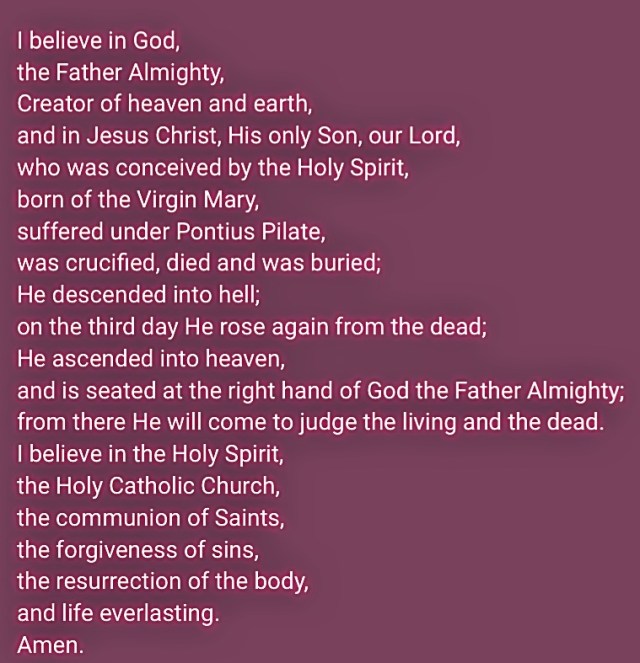
Prose: Since we celebrate two Apostles today, we might want to slowly and carefully pray this prayer. The Apostles’ Creed is a statement of Christian belief that is used by Western churches, both Catholic and Protestant. While it is explicitly affirmed only in Western churches, it reflects traditions that were affirmed officially by the entire Church in the Nicene Creed. Although its roots are much earlier, in its present form it dates to about the eighth century.
Music: Apostles’ Creed – sung here by Rebecca Gorzynska, a beautiful and talented artist (Latin and English text below.)
Today, in God’s Lavish Mercy, “the Law” plays a central role in our readings.
At their best, laws are those commonly agreed-upon markers that guide the human community on its shared journey. Ideally conceived in the context of justice, every law will lead to a balance of well-being for all concerned.
It is in the human administration of law that we meet challenges. Such administration rests in the hands of “superiors” who are, like all of us, subject to prejudice, ignorance, domination, and arrogance. These individuals can regress to an interpretation of law that benefits only themselves and those they favor.
In our Gospel, Jesus vociferously condemns this corruption of the Law by the very people who have been entrusted with its integrity:
Woe to you, scholars of the law! You have taken away the key of knowledge. You yourselves did not enter and you stopped those trying to enter.
Luke 11:52
What is that “key of knowledge” Jesus refers to? I think it is this: that the Law is only peripheral. While it must be respected, it must also be transcended so that we live beyond it and into the Spirit Who generates it.
In our first reading, Paul makes an astounding statement that surely knocked the pharisaical legalists on their pins! Paul says that God’s righteousness is not found in the Law but solely in faith in Jesus Christ.
Now the righteousness of God has been manifested apart from the law, though testified to by the law and the prophets, the righteousness of God through faith in Jesus Christ for all who believe.
Romans 3:21-22
This passage in Romans is critical to the Christian understanding of “righteousness”. No one can achieve righteousness apart from the grace of God which is given to us solely as gift and not reward for our actions. But it is also essential that a person create an inner receptivity to grace, a receptivity achieved through the personal exercise of faith, hope, and love – that is, by the works of mercy.
Since the early 16th century, various Christian denominations have been trying to split the hair of this argument which is dubbed “Sola Fide (faith alone)”. The argument asks, “Are we made right with God by faith alone, or by faith demonstrated in good works?”.
Paul and Jesus addressed the question fifteen hundred years before anybody even thought up the Sola Fide conundrum. They did so in direct and simple language so that their listeners could learn and feel confident in their faith life.
The debate around “sola fide” can devolve into theological hair-splitting, an exercise that seems almost like an intellectual game. Contrary to hair-splitting, our faith life is fostered by a theology deeply rooted in spirituality and evidenced in reverent, grateful, and charitable living. Laws can help us with that pursuit but they can’t accomplish it. Only an active, loving faith, responsive to God’s grace, can unlock that door.
Prose: Excerpt from Lumen Fidei (The Light of Faith), the first encyclical of Pope Francis (June 29, 2013)
(This passage and the encyclical as a whole are so beautiful that I hope you will take time to savor the words, even in small doses. I broke it up into small sections because that’s the way I best prayed with it.)
Since faith is a light, it draws us into itself,
inviting us to explore ever more fully
the horizon which it illumines,
all the better to know the object of our love.

Christian theology is born of this desire.
Clearly, theology is impossible without faith;
it is part of the very process of faith,
which seeks an ever deeper understanding
of God’s self-disclosure culminating in Christ.

It follows that theology is more
than simply an effort of human reason
to analyze and understand,
along the lines of the experimental sciences.
God cannot be reduced to an object.
He is a subject who makes himself known
and perceived in an interpersonal relationship.

Right faith orients reason to open itself
to the light which comes from God,
so that reason, guided by love of the truth,
can come to a deeper knowledge of God.

The great medieval theologians and teachers
rightly held that theology, as a science of faith,
is a participation in God’s own knowledge of himself.
It is not just our discourse about God,
but first and foremost the acceptance and the pursuit
of a deeper understanding
of the word which God speaks to us,
the word which God speaks about himself,
for he is an eternal dialogue of communion,
and he allows us to enter into this dialogue.

Theology thus demands the humility
to be "touched" by God,
admitting its own limitations before the mystery,
while striving to investigate,
with the discipline proper to reason,
the inexhaustible riches of this mystery.
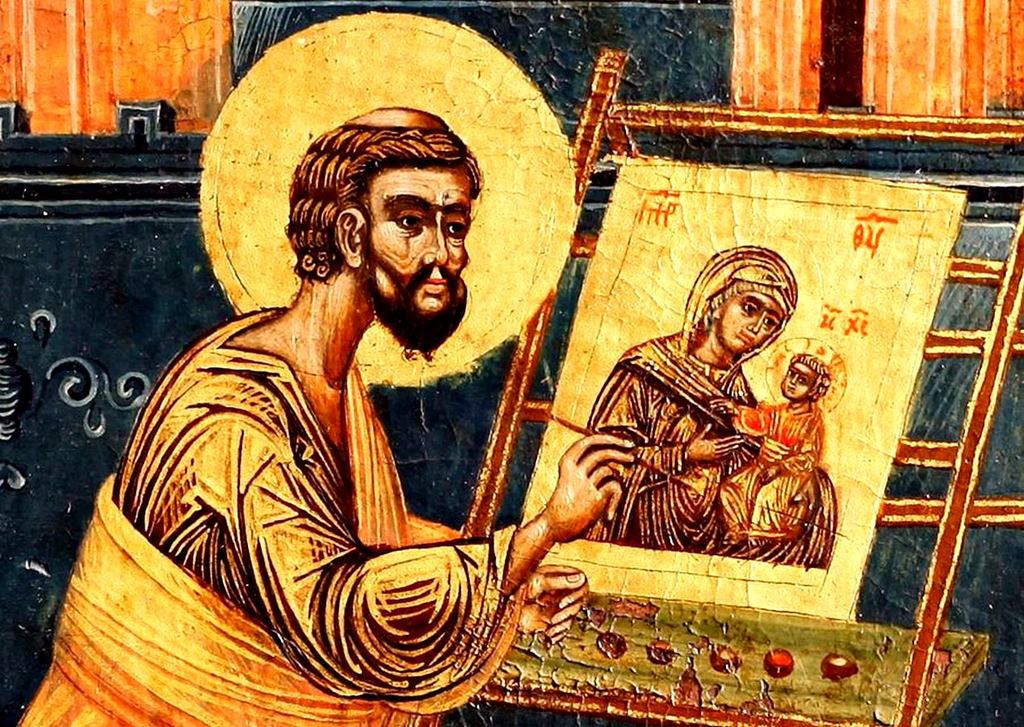
“The Tradition of the Orthodox Church says that Luke was a painter who created icons of Mary. Historian Theodorus Lector mentions St Luke drawing the Virgin; Saint Andrew of Crete wrote about St Luke depicting both Mary and Christ; Saint Simeon the Metaphrast, historian and the author of many biographies of saints, mentioned one icon of the Virgin Mary holding Christ. He said that it was painted by St Luke and is “honored even to this day.” (from the Convent of St. Elizabeth website: https://obitel-minsk.org/history)
Today, in God’s Lavish Mercy, we pray with St. Luke, the elegant author who has painted a tender picture of God on human hearts. That picture has the beautiful face of Jesus Christ, Incarnate Mercy for all people.
God is portrayed throughout the Old and New Testaments as a warrior or a stern judge, but Luke, through his parables, presents God as a loving, anxious father who forgives his erring son before the boy can ask to be forgiven and lavishes love on him.
Joseph Blenkinsopp: Luke’s Jesus
Today’s first reading gives us some insight into Luke’s character and personal committment to the spread of the Gospel:
Beloved: Demas, enamored of the present world, deserted me and went to Thessalonica, Crescens to Galatia, and Titus to Dalmatia. Luke is the only one with me.
2 Timothy 4:10
Apparently Luke, unlike Demas, was not “enamored of the present world”. Wow! What a packed description that is! Paul is obviously disappointed. It would appear that Demas, Crescens, and Titus decided to opt out of their contracts. Only Luke hung on with a rather gloomy-sounding Paul who is pining for his cloak and papyrus rolls.
I would imagine Paul was not an easy boss to work for. He was a firebrand – both when he fought against the Gospel and when he fought for it. No doubt he demanded the same intensity from those who directly assisted him. And the work itself was daunting. Luke recounts in the Acts of the Apostles the many trials that had to be met before any small success.
Some of the apostolic candidates just didn’t vibe with all of that. But Luke could work with Paul’s fire. And he could uncover the glorious story within the many challenging folds they navigated. What a blessing he must have been to the wildly dynamic and sometimes mercurial Paul!
Luke had incorporated into his own life Jesus’s ministerial call so clearly described in today’s Gospel:
Go on your way; behold, I am sending you like lambs among wolves. Carry no money bag, no sack, no sandals; and greet no one along the way. Into whatever house you enter, first say, ‘Peace to this household.’ If a peaceful person lives there, your peace will rest on him; but if not, it will return to you.
Luke 10:3-6
Like Paul, Luke never met Jesus in person. Both were born shortly after Jesus’s time on earth. But the two of them knew Christ intimately and carried that inspirited knowledge to their own world and to the ages.
Our picture of Jesus would be a lot blurrier without Luke. Nearly half of Luke’s content is not found in the other three Gospels.
Many stories, sayings, and images found only in Luke have become an indispensable part of Christian consciousness. The Prodigal Son, the Good Samaritan, the Rich Man and Lazarus, the Pharisee and the Publican, the encounter with the Risen One on the Road to Emmaus, the Magnificat, the angel’s song Peace on Earth are only in Luke, but it is difficult to imagine the Christian tradition without them.
Eugene Boring: Introduction to the New Testament: History, Literature, Theology
Perhaps you have a favorite among the exclusive stories cited above. This feast of St. Luke may be a good day to remember why that story is important to you and to thank Luke for its gift.
Poetry: Luke – Malcolm Guite
His gospel is itself a living creature
A ground and glory round the throne of God,
Where earth and heaven breathe through human nature
And One upon the throne sees it is good.
Luke is the living pillar of our healing,
A lowly ox, the servant of the four,
We turn his page to find his face revealing
The wonder, and the welcome of the poor.
He breathes good news to all who bear a burden
Good news to all who turn and try again,
The meek rejoice and prodigals find pardon,
A lost thief reaches paradise through pain
The voiceless find their voice in every word
And, with Our Lady, magnify Our Lord.
Music: Luke’s Gospel contains four special canticles connected to the Birth of Jesus:
Today, in God’s Lavish Mercy, we begin about a month of readings from Paul’s letter to the Romans. We will also continue with Luke’s Gospel all the way up to Advent.
In my 2019 reflections on these passages, to help me understand Romans, I used a book by Scott W. Hahn, Father Michael Scanlan Chair of Biblical Theologyat Steubenville University. I decided to return to that opening reflection as we meet Romans again today.
In his introduction, Hahn says this:
Today’s reading offered me these elements to ponder and pray with:
Paul calls himself a “slave” of Jesus Christ
He invokes his call as an Apostle
He sets himself in the company of the prophets
He appeals to Jews who revere David
but proclaims Christ, through his Resurrection, as Messiah beyond human lineage
He proclaims his mission to the Gentiles
to bring about “the obedience of faith”
I’ll be honest with you. I’ve read or heard this passage maybe fifty times in my lifetime, and it has meant little or nothing to me. At best, it has sounded like a formal introduction such as those we hear from government “whereas” type decrees.
But I took Dr. Hahn’s advice, studying the passage, and reading it slowly and prayerfully. Here’s what I received:
Paul’s Apostolic call, to which he willingly enslaved his heart, was to preach the Good News of our redemption in Jesus Christ – to preach it to Jews, Romans, Gentiles, and all people.
It is an awesome and incredible message that can be received only through the gift of faith.
It is a message rooted in the scripture stories we love, and where we look to find a reflection of our own stories.
Learning from these realities will help us come to a faith which expresses itself in action and gives glory to God in our own time.
Luke gives us one such story today. Jesus reminds the crowd of two familiar passages – that of Jonah and the “Queen of the South” (the Queen of Sheba, 1 Kings 10). He indicates that the people in these stories believed without a sign.
Jesus tells the people gathered around him to learn from this. The crowd demands a sign, but Jesus says the sign is right in front of you – it is only your open heart that is lacking.
In his introduction, Paul prays for such open hearts in the Romans:
Grace to you and peace from God our Father and the Lord Jesus Christ.
By that same grace, may we receive faith’s blessing as well.
Poetry: Love Constraining to Obedience – William Cowper (1731-1800) Cowper’s poem captures the interior transformation that occurs when our obedience is motivated by love rather than simply by duty.
No strength of nature can suffice
To serve the Lord aright:
And what she has she misapplies,
For want of clearer light.

How long beneath the Law I lay
In bondage and distress;
I toiled the precept to obey,
But toiled without success.

Then, to abstain from outward sin
Was more than I could do;
Now, if I feel its power within,
I feel I hate it too.

Then all my servile works were done
A righteousness to raise;
Now, freely chosen in the Son,
I freely choose His ways.

‘What shall I do,’ was then the word,
‘That I may worthier grow?’
‘What shall I render to the Lord?’
Is my inquiry now.

To see the law by Christ fulfilled
And hear His pardoning voice,
Changes a slave into a child,
And duty into choice.
Today, in God’s Lavish Mercy, Joel launches into a cautionary poem replete with metaphors. His images are so effective that, even 3000 years later, many will be very familiar to us from the liturgy and even from modern culture.
Some of my readers may be of an age to remember the wonderful film “The Valley of Decision” starring two of the all-time greats, Greer Garson and Gregory Peck. The film’s title is plucked right out of Joel.
Apply the sickle, for the harvest is ripe; Come and tread, for the wine press is full; The vats overflow, for great is their malice. Crowd upon crowd in the valley of decision; For near is the day of the LORD in the valley of decision. Sun and moon are darkened, and the stars withhold their brightness. The LORD roars from Zion, and from Jerusalem raises his voice; The heavens and the earth quake, but the LORD is a refuge to his people, a stronghold to the children of Israel.
By using metaphors, the poet-prophet accomplishes an extensive lesson that, delivered in prose, would have exhausted his beleaguered audience.
Metaphors have a way of holding the most truth in the least space.
Orson Scott Card
Like all prophets, Joel employs current events to point to a deeper understanding. Many of the metaphors he uses throughout his prophecy have been employed in the liturgy, particularly during Lent. Joel’s message is a universal call to repentance germane to every generation, but particularly to that liturgical season.
Yet even now,’ declares the Lord, ‘return to me with all your heart, with fasting, with weeping, and with mourning; and rend your hearts and not your garments.
Joel 2: 12-13
In our Gospel. the core of Joel’s message is given direct and fuller voice in Jesus’ statement:
Blessed are those who hear the Word of God and observe it.
Luke 11:28
In our own lives – our own “valleys of decision”, this is the foolproof way we prepare for the Day of the Lord – hearing and observing the Word of God.
Music: Valley of Decision – Christafari
(When I read about Christafari, I am reminded that we can never underestimate or judge the many ways that people come to Christ.)
Christafari was founded in 1989 by Pastor Mark Mohr. Raised in a Christian family, during his teens Mohr strayed from his spiritual upbringing and turned to drugs and alcohol, going as far as growing and even dealing marijuana. After running away from home, living on the streets, and hitting rock-bottom, he had an undeniable encounter with God that drastically transformed his world. At 17, Mark re-committed his life to Christ and took what he now calls his “Freedom Step” out of addiction.
Christafari is comprised of men and women from various continents, countries, and cultures who are true missionaries at heart and share a love for reggae music and passion for following Jesus to the ends of the earth.
Run come and fall People take heed to His call Valley of decision (Valley of decision) This is no game People have to die in His name Valley of decision (Valley of decision) Darkness, it looms all around us I find it hard to see But I don’t know, I don’t know, I don’t know, I don’t know, I don’t know Whether I should stay or whether I should flee People all around me seem, they seem to be so sad I hear them cry, I hear them ball I see them back against the wall I wish I could wipe away their tears There’s a Holy A Holy hill Holy mount Zion Holy, Holy mount Zion Just know that He’s the Lord, Your God, yeah In this valley of decision Valley of decision Even though I run through enough hills and valleys I fear no evil, ’cause God is with me Even though I run through enough hills and valleys Thy rod and staff, they will comfort me Even though I run through enough hills and valleys I fear no evil, ’cause God is with me Even though I run through enough hills and valleys Thy rod and staff, they will comfort me Run come and fall People take heed to His call Valley of decision (Valley of decision) This is no game People have to die in His name Valley of decision (Valley of decision) There’s a Holy A Holy hill Holy mount Zion Holy, Holy mount Zion Just know that He’s the Lord, Your God, yeah In this valley of decision Valley of decision Even though I run through enough hills and valleys I fear no evil, ’cause God is with me Even though I run through enough hills and valleys Thy rod and staff, they will comfort me Even though I run through enough hills and valleys I fear no evil, ’cause God is with me Even though I run through enough hills and valleys Thy rod and staff, they will comfort me Jah great and dreadful day will soon come Jah will pour out His mighty, mighty, mighty Spirit to all mankind Through Him all creation, all creation was made Those who call upon His name (Call on His name and You will be saved) There’s a Holy A Holy hill Holy mount Zion Holy, Holy mount Zion Just know that He’s the Lord, Your God, yeah In this valley of decision Valley of decision Run come and fall People take heed to His call Valley of decision (Valley of decision) This is no game People have to die in His name Valley of decision (Valley of decision) Even though I run through enough hills and valleys I fear no evil, ’cause God is with me Even though I run through enough hills and valleys Thy rod and staff, they will comfort me Even though I run through enough hills and valleys I fear no evil, ’cause God is with me Even though I run through enough hills and valleys Thy rod and staff, they will comfort me Even though I run through enough hills and valleys I fear no evil, ’cause God is with me Even though I run through enough hills and valleys Thy rod and staff, they will comfort me
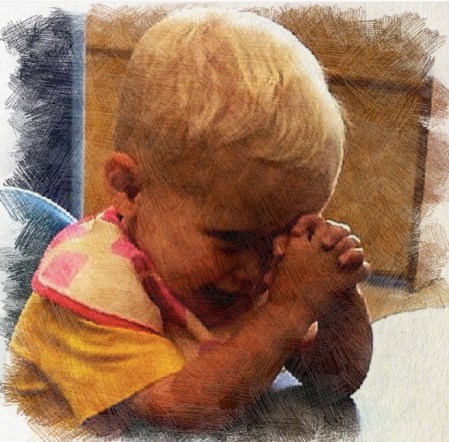
Today, in God’s Lavish Mercy, Jesus teaches his disciples how to pray. His prayer is simple and direct, like talking to your best friend over a morning cup of coffee.
What about us? How do we pray?
Most of our first learned prayers are a lot like Jesus’s simple Our Father. We praise God, giving thanks, and asking for what we need.
Then we grow up and get sophisticated. We may begin to “say” or read prayers rather than use our own words. While such a practice can deepen our understanding of prayer, it places a layer between us and our conversation with God.
Sometimes others lead our prayer in the community of faith. This too can enrich us as we are inspired by a shared faith. But, sorry to say, at other times such prayer, indifferently led, can leave us empty and even frustrated. The whole process can be a little like trying to have a private conversation in an elevator full of noisy people.
Just as Jesus often went off in solitude to pray, this kind of prayer is our most intimate time with God – a time when God allows us to know God and ourselves in a deeper way. This sacred time alone with God may be spent in words, song, or the silence that speaks beyond words.
It is a time to be with the Beloved as we would be with our dearest, most faithful companion. We rest in the field of our experiences, letting them flow over God’s heart in tenderness. We listen with the ear of absolute trust to the secrets God tells us in the quiet.
When we become deeply accustomed to this type of intimate prayer, it transforms our self-understanding. Our every thought, word, and action is in the Presence of God. It is God Who hears our joys, sorrows, fears, and inspirations rising up in our hearts even before we hear them ourselves. It is God Who holds us at the center of our lives in communion with all Creation. It is God Who breathes grace into our human moments in acts of mercy, joy, charity, and justice.
Father, hallowed be your name, your Kingdom come. Give us each day our daily bread and forgive us our sins for we ourselves forgive everyone in debt to us, and do not subject us to the final test.
Luke 11:2-4
Poetry: Praying – Mary Oliver
It doesn’t have to be
the blue iris, it could be
weeds in a vacant lot, or a few
small stones; just
pay attention, then patch

a few words together and don’t try
to make them elaborate, this isn’t
a contest but the doorway

into thanks, and a silence in which
another voice may speak.
Today, in God’s Lavish Mercy, we pray with Martha and Mary. These sisters are the personification of the Benedictine motto: Ora et labora: Pray and work – the two essentials that we all struggle to balance in our lives.
They, with their brother Lazarus, are dear friends of Jesus. The scriptures show us that Jesus felt comfortable at their home, and that they loved to have him stay with them.
As all of us do with our closest friends, Jesus understood the lights and shadows of their personalities – and they of his. He knew that Martha was the organizer, the one who planned and worried about the incidentals. Mary was deeply spiritual, but maybe had her head in the clouds a bit when it came to getting things done.
Perhaps these personality differences caused some tensions between the sisters, as they might between us and our family members or close friends. Sometimes these little, unnoticed frictions can suddenly become chasms between us and those we love.
How and why does it happen?
Jesus gives us the answer in this Gospel passage. He hears Martha’s simmering frustration. He calms her, as one might a child – “Martha, Martha…”. We can hear his gentle tone. Jesus tells her that worry and anxiety are signs that we are not spiritually free. He tells her that Mary has focused on the important thing.
This may sound repetitious, but just think about it a while:
It is so important to know what is important.
It is so freeing to agree on what matters with those closest to us. Talking with each other in openness, respect, and unconditional love is the only path to that freedom.
Maybe Martha and Mary slipped off that path a bit in this situation. But with Jesus’ help, they righted their relationship.
That’s the best way for us to do it too. Let Jesus show us what is most important through sharing our faith, and even our prayer, with those closest to us. Let him show us where our self-interests, need for control, fears and anxieties are blocking us from love and freedom.
It is the same way that we, like Mary, can strengthen our relationship with God. It is not sufficient for our prayer to consist of incidentals — pretty words and empty practices.
We must sit open-hearted at the feet of Jesus and let him love us, let him change us. Even in the midst of our responsibilities and duties, we must balance “the better part”.
Poetry: Bethany Decisions – Irene Zimmerman, OSF
As Jesus taught the gathered brothers and Martha boiled and baked their dinner, Mary eavesdropped in the anteroom between the great hall and the kitchen. Her dying mother’s warning words clanged clearly in her memory— “Obey your sister. She has learned the ways and duties of a woman.”
She’d learned her sister’s lessons well and knew a woman’s place was not to sit and listen and be taught. But when she heard the voice of Jesus call to her above the din of Martha’s boiling pots and pans, she made her choice decisively— took off her apron and traditions, and walked in.
Music: a charming little song by Peg Angell which leaves me with same practical question I always have when reading this passage: who actually did get the dinner ready?
(I chose to offer a reflection on the readings for the Memorial of St. Francis rather than for Wednesday of the Twenty-sixth Week)
Today, in God’s Lavish Mercy, we pray with St. Francis of Assisi (1181-1226) , one of the most revered figures in Christianity, an Italian mystic and Catholic friar who founded the Franciscans.
The simple holiness of St. Francis has had an immeasurable effect not only on Christianity but even on secular culture. No matter their religious interest, most people would recognize this humble, medieval itinerant preacher and understand the witness of his life.
from phillyvoice.com
Our current Holy Father, in a surprise move, chose St. Francis as his patron and model:
When the former Cardinal Jorge Mario Bergoglio went over the 77 votes needed to become pope, he said that his friend Cardinal Hummes “hugged me, kissed me and said, ‘Don’t forget the poor.’” At the time of his election, Pope Francis told thousands of journalists that he took to heart the words of his friend and chose to be called after St. Francis of Assisi, “the man of poverty, the man of peace, the man who loves and protects creation.”
In our readings today, both the Responsorial Psalm and the Gospel echo a spirituality deeply compatible with the Franciscan spirit.
Francis, who renounced his wealthy lifestyle and inheritance for the riches of Christ, surely found inspiration when he prayed Psalm 16:
You are my inheritance, O Lord. Keep me, O God, for in you I take refuge. I say to the LORD, “My Lord are you.” O LORD, my allotted portion and my cup, you it is who hold fast my lot.
I bless the LORD who counsels me; even in the night my heart exhorts me. I set the LORD ever before me; with him at my right hand I shall not be disturbed.
You will show me the path to life, fullness of joys in your presence, the delights at your right hand forever.
Most of us reading this reflection have so much in life. We are blessed beyond description with everything we need and even want. Praying in the spirit of St. Francis can help us discern how to honor and use what we have in a way that pleases God.
Keep a clear eye toward life’s end. Do not forget your purpose and destiny as God’s creature. What you are in God’s sight is what you are and nothing more. Remember that when you leave this earth, you can take nothing that you have received…but only what you have given; a full heart enriched by honest service, love, sacrifice, and courage.
Francis of Assisi
Poetry: ST. FRANCIS OF ASSISI – A SERMON TO THE BIRDS Francis made his deep spirituality and radical teaching easily accessible with unpretentious parables like this one. He imitated Jesus himself who taught us how to live by telling simple stories in which we could find ourselves. So let’s learn from this one, my little “birds”.
My little sisters the birds,
Ye owe much to God, your Creator,
And ye ought to sing his praise at all times and in all places,
Because he has given you liberty to fly about into all places;
And though ye neither spin nor sew,
He has given you a twofold and a threefold clothing
For yourselves and for your offspring.
Two of all your species He sent into the Ark with Noah
That you might not be lost to the world;
Besides which, He feeds you, though ye neither sow nor reap.
He has given you fountains and rivers to quench your thirst,
Mountains and valleys in which to take refuge,
And trees in which to build your nests;
So that your Creator loves you much,
Having thus favored you with such bounties.
Beware, my little sisters, of the sin of ingratitude,
And study always to give praise to God.” Amen
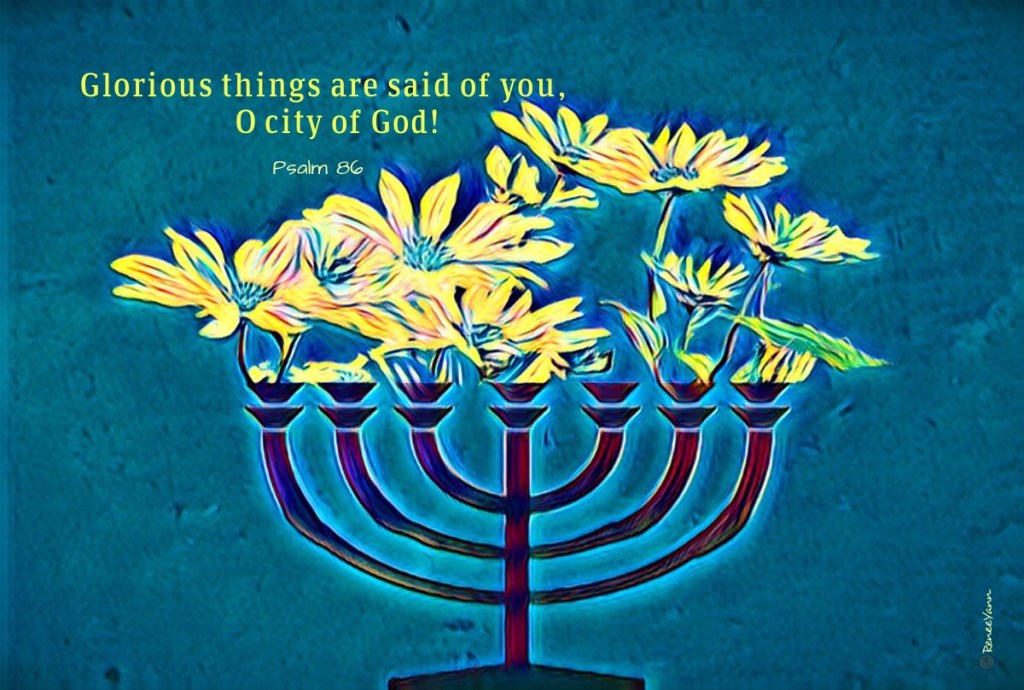
Today, in God’s Lavish Mercy, we pray with Psalm 87, a Song of Zion which imagines the future Jerusalem as the world’s center of worship.
The foundation upon the holy mountains the LORD loves: The gates of Zion, more than any dwelling of Jacob. Glorious things are said of you, O city of God!
Psalm 87: 1-3
For centuries, the Jews had been scattered through many alien countries. Some had lost their ties to their inherited faith. The psalm calls all people “home” to the worship of the one, true God.
Jerusalem from the Mount of Olives by Frederic Edwin Church
Jerusalem is a profoundly unifying symbol for Jews. That is why it is so important for Jesus to “go up to Jerusalem” in order to accomplish our redemption. As today’s Gospel tells us:
When the days for Jesus to be taken up were fulfilled, he steadfastly turned his face to Jerusalem.
Luke 9:51
Praying with these passages may seem difficult for Christians if we have no emotional ties to the city of Jerusalem. But for us too, the concept of “Jerusalem” serves as a symbol of that stable and committed faith that allows us to live our lives in the pattern of Jesus.
We journey too, as Jesus did toward the fullness of life in God. Our journey takes singular steadfastness, just as his did, a commitment rooted in faith and grace.
Together in faith, we form a New Jerusalem, glorious in each one of us through our Baptism into Christ.
Poetry: A Sonnet – Malcolm Guite
Now to the gate of my Jerusalem, The seething holy city of my heart, The saviour comes. But will I welcome him? Oh crowds of easy feelings make a start; They raise their hands, get caught up in the singing, And think the battle won. Too soon they’ll find The challenge, the reversal he is bringing Changes their tune. I know what lies behind The surface flourish that so quickly fades; Self-interest, and fearful guardedness, The hardness of the heart, its barricades, And at the core, the dreadful emptiness Of a perverted temple. Jesus come Break my resistance and make me your home.
Today, in God’s Lavish Mercy, we pray with Paul and Matthew that we may deepen our reverence for the call we have received.
I, a prisoner for the Lord, urge you to live in a manner worthy of the call you have received, with all humility and gentleness, with patience, bearing with one another through love, striving to preserve the unity of the Spirit through the bond of peace: one Body and one Spirit, as you were also called to the one hope of your call; one Lord, one faith, one baptism; one God and Father of all, who is over all and through all and in all.
But grace was given to each of us according to the measure of Christ’s gift.
Ephesians 4:1-7
Many of us think of a “call” as a one-time event, for example, the moment we say “yes” to a marriage proposal, or the profession of vows in religious commitment.
Our Gospel describes such a life call for Matthew:
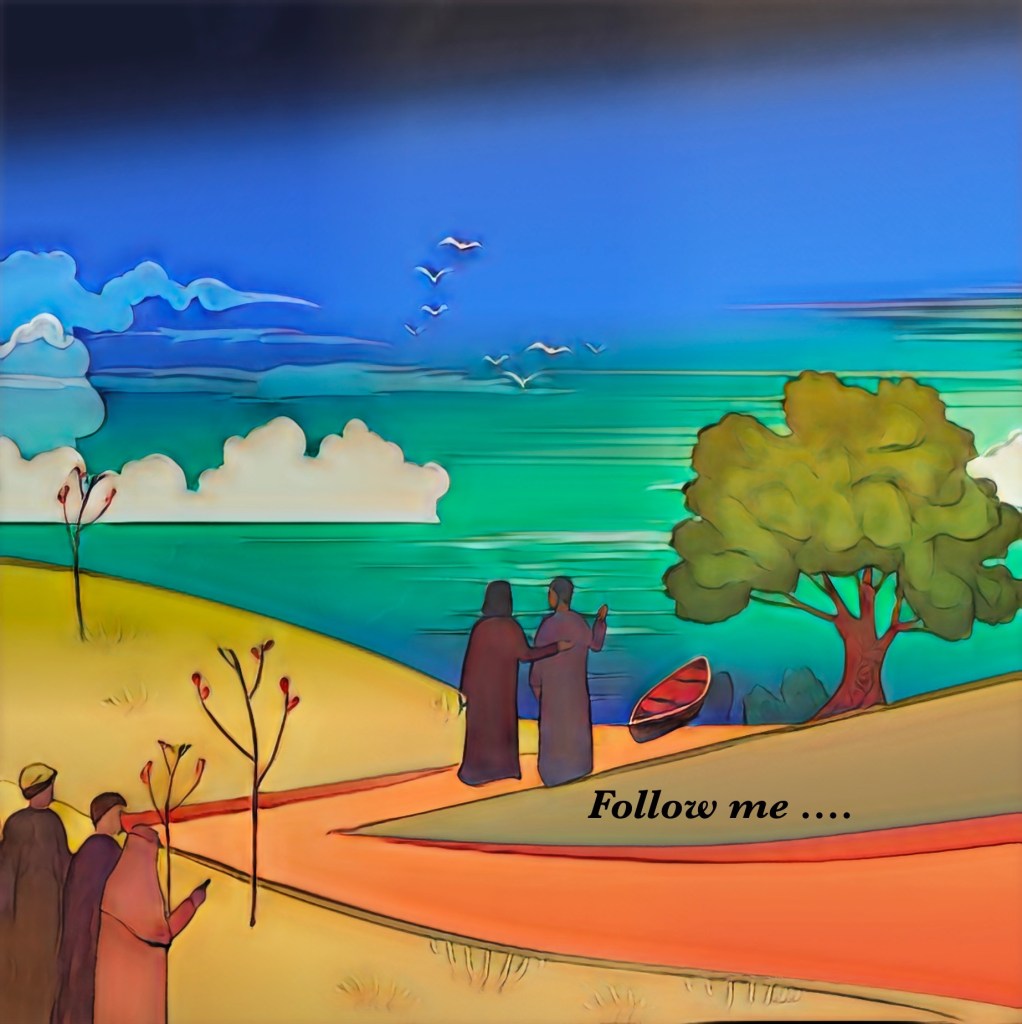
As Jesus passed by, he saw a man named Matthew sitting at the customs post. He said to him, “Follow me.” And he got up and followed him.
Matthew 9:9
But we can be certain that this was not Matthew’s only and final call. Jesus kept calling Matthew every day of his life to move deeper and deeper into the heart of God.
Like Matthew, we are all sitting at the table of life sometimes unaware of God’s power passing right in front of us. Matthew looked up from his tax sheets just in time to see Jesus’s all-knowing, all-loving glance. And that moment changed everything for Matthew. The call, crystalized in that sacred moment, had unfolded for years and would continue to unfold throughout Matthew’s life.
Maybe we spend a lot of our time fiddling with life’s calculations like Matthew did. We need to make our checkbooks balance, our calendars synchronize, our recipes succeed, our bills resolve. Sometimes we have so much ciphering going on that we don’t even glance up to see real Life passing by.
Jesus teaches that the underlying calculus of our lives must be mercy. He wants us to see where mercy is needed and to spend ourselves in its name. When Matthew’s buddies criticized him for following his call, Jesus confronted them with their own call, “Go and learn…”
The Pharisees saw this and said to his disciples, “Why does your teacher eat with tax collectors and sinners?” He heard this and said, “Those who are well do not need a physician, but the sick do. Go and learn the meaning of the words, I desire mercy, not sacrifice. I did not come to call the righteous but sinners.”
Matthew 9:11-13
I hope those pharisaical critics listened. I hope I do too.
Poetry: The Calling of St. Matthew – James Lasdun
This beautiful, thought-provoking poem by James Ladsun suggests that Matthew had prepared himself, over many years and through many choices, to hear the call when it finally came. The poet imagines that Matthew had completed a slow emptying of his life in charity and thus left the space for God’s voice.
Lasdun wrote the poem referencing a painting of the same name by Caravaggio. ‘The painting was completed in 1599–1600 for the Contarelli Chapel in the church of the French congregation, San Luigi dei Francesi in Rome, where it remains. This painting, by the way, is a favorite of Pope Francis. He has said he went often to contemplate it on his earlier visits to Rome.
Not the abrupt way, frozen
In the one glance of a painter’s frame
Christ in the doorway pointing. Matthew’s face
Bright with perplexity, the glaze
Of a lifetime at the countinghouse
Cracked in the split second’s bolt of being chosen.

But over the years, slowly,
Hinted at, an invisible curve;
Persistent bias always favoring
Backwardly the relinquished thing
Over the kept, the gold signet ring
Dropped in a beggar’s bowl, the eye not fully

Comprehending the hand, not yet;
Heirloom damask thrust in a passing
Stranger’s hand, the ceremonial saddle
(Looped coins, crushed clouds of inline pearl)
Given on an irresistible
impulse to a servant. Where it sat

A saddle-shaped emptiness
Briefly, obscurely brimming … Flagons
Cellars of wine, then as impulse steadied
into habit, habit to need,
Need to compulsion, the whole vineyard
The land itself, graves, herds, the ancestral house,

Given away, each object’s
Hollowed-out void successively
More vivid in him than the thing itself,
As if renouncing merely gave
Density to having; as if
He’s glimpsed in nothingness a derelict’s

Secret of unabated,
Inverse possession … And only then,
Almost superfluous, does the figure
Step softly to the shelter door;
Casual, foreknown, almost familiar,
Calmly received, like someone long awaited.
Music: The Call – Vaughan Williams
Come, my Way, my Truth, my Life: Such a Way, as gives us breath: Such a Truth, as ends all strife: Such a Life, as killeth death
Come, My Light, my Feast, my Strength: Such a Light, as shows a feast: Such a Feast, as mends in length: Such a Strength, as makes his guest
Come, my Joy, my Love, my Heart: Such a Joy, as none can move: Such a Love, as none can part: Such a Heart, as joys in love













 Lavish Mercy