Not So Easy to Be Born Again!

Tuesday of the Second Week of Easter
April 18, 2023

Today’s Readings:

https://bible.usccb.org/bible/readings/041823.cfm

The words in today’s readings are little explosives camouflaged in familiarity.

We are used to reading how the earliest Christians formed a loving and mutual community. We might admire how they held everything in common. We might think how nice and comforting that must have been for everyone.

The community of believers was of one heart and mind,
and no one claimed that any of his possessions was his own,
but they had everything in common.
With great power the Apostles bore witness
to the resurrection of the Lord Jesus,
and great favor was accorded them all.

Acts 4:32

But, friends, I don’t think it was all that comforting! I think it was hard! People who had worked tirelessly to build secure lives had to rethink that security. Whether in material goods or established reputations, they had to give up houses, businesses, rabbi-ships, and political offices to truly be part of this radical new “community”.

They had to split the last two matzah balls with some dude who never worked a day in his life. It’s not easy!


Picture the heated conversations between someone choosing this “community” and a spouse who preferred to keep their big boat and villa by the seaside.

Imagine the rumbling synagogue crowd when the beloved old rabbi told them just to call him “brother”! Hear the distressed uproar when he announced that the Holy Law he had confidently taught them now must be rethought in Gospel light!

I’m pretty sure it wasn’t as smooth as Acts seems to imply. There is a small acknowledgment of that in the notoriety given to astoundingly generous Joseph. He stood out for buying in completely to this new community. ( We’ll hear more about him later under his new name “Barnabas”).

Thus Joseph, also named by the Apostles Barnabas
(which is translated “”son of encouragement””),
a Levite, a Cypriot by birth,
sold a piece of property that he owned,
then brought the money and put it at the feet of the Apostles.

Acts 4:36-37

By Henry Ossawa Tanner

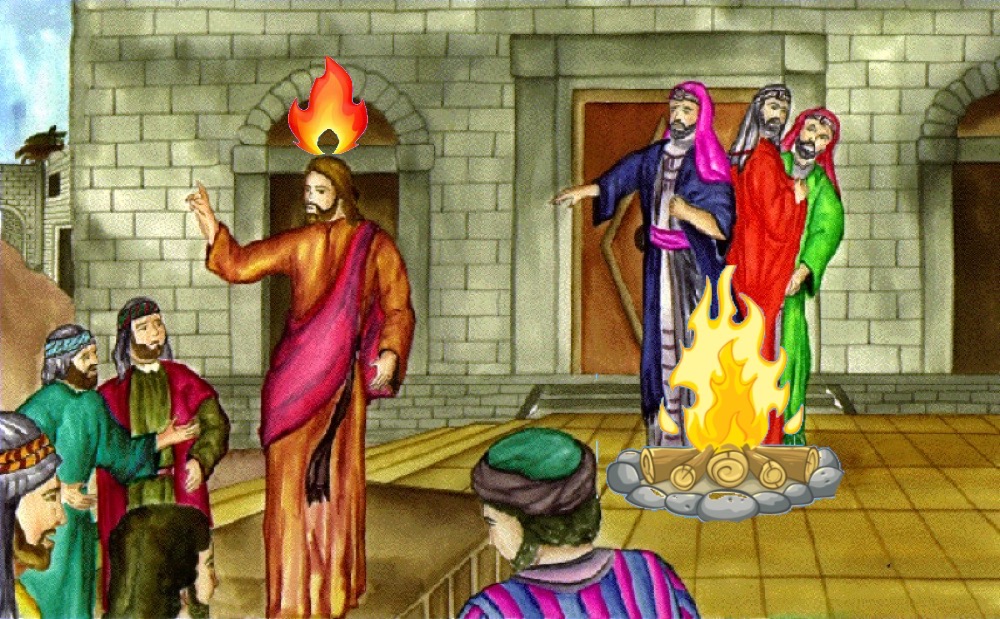
The Gospel story of Nicodemus confirms the struggle to really become a Gospel person. It should be profoundly unsettling to those of us  -and I think that is ALL of us – who sometimes thrive on security, status, and control.

Nicodemus had “made it” in Jewish society. He was considered a good, learned, influential and wealthy man. But Jesus challenges him on every level of his success to test what he values and builds his life on.

  • Is Nicodemus really “good” in light of the Beatitudes?
  • Is he really “learned” in living the law of radical love?
  • Is he really “rich” in holy grace?

  • Or is his “goodness” tinged with judgement?
  • His “learning” mired in self-righteousness?
  • His “wealth” rooted in complacency with systemic injustice?

Jesus tells Nicodemus that the Spirit of God will not be tamed or controlled by these supposed “successes” of his life. Rather, Nicodemus must start all over again to be transformed in God:

Jesus said to Nicodemus:
“‘You must be born from above.’
The wind blows where it wills, and you can hear the sound it makes,
but you do not know where it comes from or where it goes;
so it is with everyone who is born of the Spirit.”

John 3:7-8

And here’s the really hard thing. We must make the “Nicodemus Choice” every day of our lives. Every circumstance invites us either to be “born again” or to choose the old securities we are so falsely comfortable with. Those securities can blind us with the complacency of one who has forgotten how to see.

Jesus answered and said to him,
“You are the teacher of Israel and you do not understand this?
Amen, amen, I say to you,
we speak of what we know and we testify to what we have seen,
but you people do not accept our testimony.
If I tell you about earthly things and you do not believe,
how will you believe if I tell you about heavenly things?

John 3:10-12

Poetry: Nicodemus – Mary Elizabeth Coleridge (1861-1907) 

With slow and stealthy steps he trod 
— The darkening and deserted streets; 
— And no one in the market greets 
The man upon his way to God. 

By night he left the splendid home 
— That sheltered many a sleeping guest. 
— One and another lay at rest — 
The master of the house would roam. 

Was there a single soul that knew? 
— No! For he feared the eye of scorn, 
— The crooked laugh of anger born. 
Only the bats about him flew. 

The broidered borders of his gown 
— He covered o’er, that none might see. 
— Shall good come out of Galilee? 
This were the mock of all the town. 

But in the City named for Peace 
— No peace his weary heart had known, 
— And ever in the crowd alone 
He waged a war that would not cease. 

He came by night — and yet he came. 
— And He that was Himself the Way 
— Shall own him in the Judgment Day, 
And to the world confess his name.


Music: Nicodemus – Graham Kendrick

Born Again

Monday of the Second Week of Easter
April 17, 2023

Today’s Readings:

https://bible.usccb.org/bible/readings/041723.cfm

Today, in God’s Lavish Mercy, our readings open with the disciples praying for courage in the midst of surrounding threats – and the Holy Spirit hears them!

Peter and John had been imprisoned by the priests, the captain of the temple guard, and the Sadducees. And the memory of Jesus horrendous trials is still fresh in the community’s mind. Fear nips at their spirits and so they prayed.

After their release Peter and John went back to their own people
and reported what the chief priests and elders had told them.
And when they heard it,
they raised their voices to God with one accord …
And now, Lord, take note of their threats,
and enable your servants to speak your word
with all boldness, as you stretch forth your hand to heal,
and signs and wonders are done
through the name of your holy servant Jesus.

Acts 4:23-23;29-30

The disciples were asking people to change. And many people don’t like change, especially change that asks them to shake off old, comfortable ways. Even life-giving change is often rejected for the sake of unexamined custom and unwarranted fear.


Just look at Nicodemus in our Gospel. Here is a good man whose heart aches to open to Jesus’s call. But he just can’t imagine himself beyond the old definitions he has allowed to define him for decades.

“Rabbi, we know that you are a teacher who has come from God,
for no one can do these signs that you are doing
unless God is with him.”
Jesus answered and said to him,
“Amen, amen, I say to you,
unless one is born from above, he cannot see the Kingdom of God.” 
Nicodemus said to him,
“How can a man once grown old be born again?’

John 3:2-4

Our Easter-life in Christ calls us to be reborn too. It calls us to be our best selves in light of the Gospel. Often this means breaking through a worldly interpretation of love, justice or wealth to witness the Gospel definition of these things our lives:

Jesus answered,
“Amen, amen, I say to you,
unless one is born of water and Spirit
he cannot enter the Kingdom of God.
What is born of flesh is flesh
and what is born of spirit is spirit.
Do not be amazed that I told you,
‘You must be born from above.’

John 3: -7

What Jesus says to Nicodemus may be hard for us to understand too, but Christ made it very clear and simple in the Sermon on the Mount. Maybe Nicodemus had been there on that earlier day, beginning to wonder about this amazing man. Maybe he will remember and find the courage to respond now that he has actually sought Jesus out for advice.

We will let those crystal clear Beatitudes be our poetry for today, maybe inspiring us to have a Nicodemus style sit-down with Jesus ourselves.


Blessed are the poor in spirit,
    for theirs is the kingdom of heaven.

Blessed are those who mourn,
    for they will be comforted.

Blessed are the meek,
    for they will inherit the earth.

Blessed are those who hunger and thirst for righteousness,
    for they will be filled.

Blessed are the merciful,
    for they will be shown mercy.

Blessed are the pure in heart,
    for they will see God.

Blessed are the peacemakers,
    for they will be called children of God.

Blessed are those who are persecuted because of righteousness,
    for theirs is the kingdom of heaven.

Matthew 5:1-12

Music: Born of God – Steven Kapp Perry

Even When We Do Not See

Second Sunday of Easter
(Sunday of Divine Mercy)
April 16, 2023

Today’s Readings:

https://bible.usccb.org/bible/readings/041623.cfm

Today, in God’s Lavish Mercy, we read about the “Golden Years” of Christianity, those early days when Resurrection glory still lay fresh and warm over the nascent Church:

Awe came upon everyone,
and many wonders and signs were done through the apostles.
All who believed were together and had all things in common;
they would sell their property and possessions
and divide them among all according to each one’s need.
Every day they devoted themselves
to meeting together in the temple area
and to breaking bread in their homes.
They ate their meals with exultation and sincerity of heart,
praising God and enjoying favor with all the people.
And every day the Lord added to their number those who were being saved.

Acts 2: 43-47

Have you had times like that in your life where circumstances merged to make life a little piece of heaven? The right time, the right people, the right work to share? Perhaps the effort was taxing, but the merged joy and enthusiasm carried you through.

Some of my wonderful friends sharing a joyful project together

We cherish such times when we have them. And we remember their stories with tenderness, laughter and gratitude. This kind of remembering is what Luke, Peter, and John offer in our readings. They invite to experience the “indescribable joy” of our “new birth in Christ“ just as they experienced it.


Of course, we weren’t with the disciples in that first post-Easter glow. We might struggle a little, like absent Thomas did, to enthusiastically believe. He demanded to SEE before he would give his heart over:

Thomas, called Didymus, one of the Twelve,
was not with them when Jesus came.
So the other disciples said to him, “We have seen the Lord.”
But he said to them,
“Unless I see the mark of the nails in his hands
and put my finger into the nailmarks
and put my hand into his side, I will not believe.”

John 20:24-25

Jesus was so kind to Thomas, wasn’t he – allowing Thomas not only to see, but to touch his sacred wounds.

Jesus is kind to us too. Through our Baptism, we are invited to see and touch Christ’s wounds in our own time and, like the gloriously joyous disciples, to be healers in God’s name.

In this you rejoice, although now for a little while
you may have to suffer through various trials,
so that the genuineness of your faith …
may prove to be for praise, glory, and honor
at the revelation of Jesus Christ.

Although you have not seen him you love him;
even though you do not see him now yet believe in him,
you rejoice with an indescribable and glorious joy,
as you attain the goal of your faith, the salvation of your souls.

1 Peter 1:6-8

Poetry: from “Sounding of the Seasons” by Malcolm Guite

“We do not know… how can we know the way?”
Courageous master of the awkward question,
You spoke the words the others dared not say
And cut through their evasion and abstraction.

Oh doubting Thomas, father of my faith,
You put your finger on the nub of things
We cannot love some disembodied wraith,
But flesh and blood must be our king of kings.

Your teaching is to touch, embrace, anoint,
Feel after Him and find Him in the flesh.
Because He loved your awkward counter-point
The Word has heard and granted you your wish.

Oh place my hands with yours, help me divine
The wounded God whose wounds are healing mine.

Music: Surely God Is With Us – Rich Mullins 

Impossible Not to Speak the Name

Saturday in the Octave of Easter
April 15, 2023

Today’s Readings:

https://bible.usccb.org/bible/readings/041523.cfm

Today, in God’s Lavish Mercy, the reasonable Sanhedrin try to deal with Peter and John’s “bold” testimony for Christ.

Observing the boldness of Peter and John
and perceiving them to be uneducated, ordinary men,
the leaders, elders, and scribes were amazed,
and they recognized them as the companions of Jesus.
Then when they saw the man who had been cured standing there with them,
they could say nothing in reply.

Acts 4: 13-14

The Sanhedrin was an assembly of elders or rabbis appointed to sit as a tribunal in every city in the ancient Israel. As a body, they claimed powers that lesser Jewish courts did not have. As such, they were the only ones who could try the king, extend the boundaries of the Temple and Jerusalem, and were the ones to whom all questions of law were finally put.

from Wikipedia

Peter Before the Sanhedrin by Nikolai Ge (1892)

These men existed on the ultimate power they had over the people. It was the source of their influence, wealth and independence. Now this Jesus and his bold buddies come along trying to upset the apple cart. The old familiar, comfortable world is threatened and they don’t like it.

Their solution is overly simplistic. They tell Peter and John to just shut up:

The Sanhedrin conferred with one another, saying,
“What are we to do with these men?
Everyone living in Jerusalem knows that a remarkable sign
was done through them, and we cannot deny it.
But so that it may not be spread any further among the people,
let us give them a stern warning
never again to speak to anyone in this name.”
So they called them back
and ordered them not to speak or teach at all in the name of Jesus.

Acts 4: 15-17

Peter and John say “sorry guys”! Easter-inspired faith doesn’t work that way:

Peter and John, however, said to them in reply,
“Whether it is right in the sight of God
for us to obey you rather than God, you be the judges.
It is impossible for us not to speak about what we have seen and heard.

Acts 4:18

Peter and John make it sound simple too, don’t they. They tell us that it is impossible not to live our witness to the Gospel.

But I think we all know that it’s not that simple. Witnessing our faith in a morally complex world takes courage, insight, humility and wisdom. 

We are not passive participants in the often crippled world around us. Like Peter and John, we are called to pay attention to suffering, and to be healers. We are called to be witnesses to the Resurrection by the faithful generosity of our lives.


Prose: Marianne Williamson – from A Return to Love

Our deepest fear is not that we are inadequate. 
Our deepest fear is that we are powerful beyond measure. 
It is our light not our darkness that frightens us. 
We ask ourselves 'who am I to be brilliant, gorgeous, talented and fabulous?'
Actually, who are you not to be?

You are a child of God. 
You’re playing small doesn't serve the world. 
There's nothing enlightened about shrinking 
so that other people won't feel insecure around you. 
We were born to make manifest the glory of God that is within us.

It's not just in some of us; its in everyone. 
And as we let our own light shine, 
we unconsciously give other people permission to do the same.
As we are liberated from our own fear,
our presence automatically liberates others

Music: Speak the Name – Koryn Hawthorne 

Extra Song: I can’t help thinking of — Perry Como singing “Impossible”. Of course, this is a romantic song, but the same principles hold in our devotion to God, and God’s to us. Think about it 🙂

Breakfast with Jesus

Friday in the Octave of Easter
April 14, 2023

Today’s Readings:

https://bible.usccb.org/bible/readings/041423.cfm

Today, in God’s Lavish Mercy, we once again have readings sprinkled with the names of ancient people who lived in the immediate Resurrection light.

In our first reading from Acts:

After the crippled man had been cured,
while Peter and John were still speaking to the people,
the priests, the captain of the temple guard,
and the Sadducees confronted them,
disturbed that they were teaching the people
and proclaiming in Jesus the resurrection of the dead.

Acts 4:1-2
  • Peter and John, courageously, exuberantly sharing the Word
  • Annas, the retired but still influential high priest to whom Jesus was first brought when arrested
  • Caiaphas, the reigning high priest, who plotted to kill Jesus, condemned him for blasphemy, and sent him for judgment to Pilate
  • John and Alexander, less known priestly trainees, but known well enough to have their names recorded

Christ Before Caiaphas- Matthias Stom


In our Gospel, John names some of the group lolling along the beach one day. It’s interesting how he remembers and identifies them as he tells the story many years later:

  • Simon Peter – remembered with both his original and later Christ-given name
  • Thomas called Didymus – a name meaning “twin”, who was his twin and why is he never mentioned as a disciple?
  • Nathanael from Cana in Galilee – identified here by his home town of Cana. Had it been at his home, perhaps his wedding, that Christ’s first miracle occurred?
  • Zebedee’s sons – John, writer of the Gospel identifies himself and his brother (James) only by their relationship to their very influential father
  • two others of his disciples – what about these two? Why has John, who was there, conveniently forgotten their names? Were they women, whom custom often left unnamed and perhaps overlooked?

Breakfast with Jesus – C.Michael Dudash


These readings offer us rich opportunities to chose one of these people and sit with them as they condition their hearts to the overwhelming truth of the Resurrection.

How does each one respond to their redeemed reality? We have the same choice these ancient persons had. Do we:

  • live and preach the Good News by our choices, as Peter and John did?
  • resist its call to us like the high priests?
  • dive whole-heartedly toward Jesus like half-clad Peter?
  • surrender our doubts and finally believe like Thomas?
  • invite Jesus into our life, home and celebrations like Nathaniel may have?
  • realize how our elders have gifted us with faith and honor them as Zebedee’s sons did?

And what about the “two others of his disciples” left in the unnamed shadows of history? Perhaps we are more like them – quietly doing, praying, loving, hoping to respond with humble hearts to the Easter gift we have been given.


This morning, let’s sit beside Jesus and his barbecued fish to talk about it. Let’s listen to what he hopes for and loves in us.

Jesus said to them, “Come, have breakfast.”
And none of the disciples dared to ask him, “Who are you?”
because they realized it was the Lord.
Jesus came over and took the bread and gave it to them,
and in like manner the fish.
This was now the third time Jesus was revealed to his disciples
after being raised from the dead.

John 21:12-14

Poetry:  Jesus Makes Breakfast: A Poem about John 21:1-14 
– by Carol Penner, Mennonite pastor currently teaching theology at Conrad Grebel University College in Waterloo, Ontario.

I could smell that charcoal fire a long way off
while we were still rowing far from shore.
As we got closer I could smell the fish cooking,
I imagined I could hear it sizzling.
When you’re hungry, your mind works that way.

When the man by the fire called out asking us about our catch,
we held up the empty nets.
And his advice to throw the nets in once more
is something we might have ignored,
except for the smell of cooking fish…
this guy must know something  about catching fish!

The catch took our breath away;
never in my life have we pulled so many in one heave.
I was concentrating on the catch,
but John wasn’t even paying attention,
he was staring at the shore
as if his life depended on it.
Then he clutched my shoulder, crying,
“It is the Lord!”

Suddenly, everything came into focus,
the man, the catch, the voice,
and nothing could stop me,
I had to be with the Master.

There were no words at breakfast,
beyond, “Pass the fish,”
or “I’ll have a bit more bread.”
We sat there, eating our fill,
basking in the sunrise.
We didn’t have to say anything.
Jesus just smiled and served.


Music: Spend some time on that morning beach with Jesus:

On the Road Together

Wednesday in the Octave of Easter
April 12, 2023

Today’s Readings:

https://bible.usccb.org/bible/readings/041223.cfm

Today, in God’s Lavish Mercy, we enfold ourselves in some of our favorite post-Easter stories. They warm our hearts with their humanness. They help us understand how people just like us processed the astounding news of the Resurrection.

Two of our beloved senior sisters … on the road together with Him…


In Acts, we find Peter and John, the same ones Mary had summoned to the empty tomb. Now, in place of their tentative searching, ministerial confidence pours out of them. The long-crippled man wants only a coin but Peter yearns to give the treasure he now knows he possesses. 

By faith, Peter’s heart has risen from death with Christ, and he is compelled to share that redemption with the world:

Peter said, “I have neither silver nor gold,
but what I do have I give you: 
in the name of Jesus Christ the Nazorean, rise and walk.”

Acts 3: 6-7

Listen, this is the same guy who, on the way to Jerusalem, begged Jesus not even to mention Calvary. This is the guy who, on Good Friday eve, cowered by the fire and denied he even knew Jesus. 

Look what Easter faith can do
for a doubtful, frightened heart!

ALLELUIA!

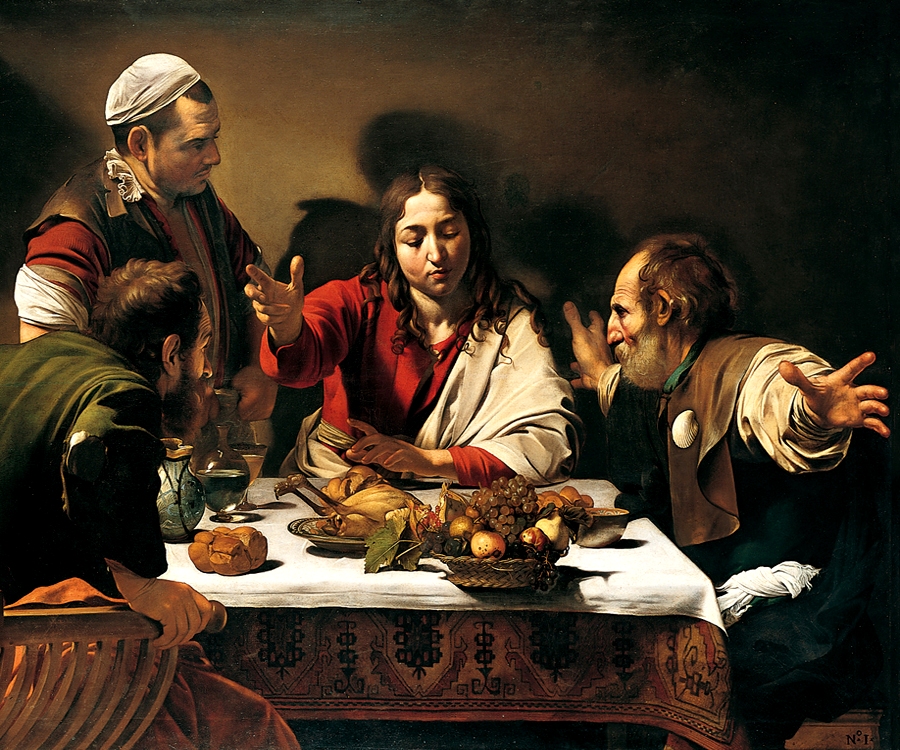
In our beautiful Gospel, a miracle dose of this faith was given to two journeying friends. Can’t you see them – perhaps two old men or women. Arm in arm, they trudge along the dusty road, gabbing their weary heads off. As evening falls, they are slowly wrapped in all kinds of inner and outer shadows:

  • Has this all really happened?
  • Wasn’t He the One we thought he might be?
  • Have our dearest hopes all been in vain?

When Jesus joins them, he wants to hear their mumbled questions. By his abiding, honest,and patient Presence, he walks them out of doubtful logic into faith’s freedom:

He asked them, 
“What are you discussing as you walk along?”
They stopped, looking downcast.
One of them, named Cleopas, said to him in reply,
“Are you the only visitor to Jerusalem
who does not know of the things
that have taken place there in these days?”….

And he said to them, “Oh, how foolish you are!
How slow of heart to believe all that the prophets spoke!
Was it not necessary that the Christ should suffer these things
and enter into his glory?”
Then beginning with Moses and all the prophets,
he interpreted to them what referred to him
in all the Scriptures.

Luke 24: 17-18; 25-27

Jesus is listening and walking with us too. He wants to give us the same confidence Peter had as we proclaim our faith by the merciful actions of our life. Just like the Emmaus friends, let’s invite him to stay with us as evening falls.


Poetry: The Servant Girl at Emmaus (A Painting by Velázquez) by Denise Levertov

The Kitchen Maid, Diego Velazquez, National Gallery of Ireland

She listens, listens, holding
her breath. Surely that voice
is his—the one
who had looked at her, once, across the crowd,
as no one ever had looked?
Had seen her? Had spoken as if to her?
Surely those hands were his,
taking the platter of bread from hers just now?
Hands he'd laid on the dying and made them well?
Surely that face—?
The man they'd crucified for sedition and blasphemy.
The man whose body disappeared from its tomb.
The man it was rumoured now some women had seen this morning, alive?
Those who had brought this stranger home to their table
don't recognise yet with whom they sit.
But she in the kitchen, absently touching
           the winejug she's to take in,
a young Black servant intently listening,
swings round and sees
the light around him
and is sure.

Music: I Can See (The Road To Emmaus) Steve Green

Turn toward Light!

Tuesday in the Octave of Easter
April 11, 2023

Today’s Readings:

https://bible.usccb.org/bible/readings/041123.cfm

Today, in God’s Lavish Mercy, we share the heartfelt experience of the early disciples captured in a few poignant comments.

Sometimes words are so full of meaning that they burst in your heart when you read them — when you hear them

Two such phrases rise up from our readings today: 

Cut to the heart

In our first reading, the Easter-liberated Apostles preach the Gospel with gusto! They tell it – exactly like it is- to the crowd gathered in Jerusalem:

On the day of Pentecost, Peter said to the Jewish people,
“Let the whole house of Israel know for certain
that God has made him both Lord and Christ,
this Jesus whom you crucified.”

Acts 2:36

….” this Jesus whom you crucified..”

For those in that crowd, these were shattering words to hear! The feeling is like when you drop a precious vase and it crumbles at your feet! What do you do now? It is too late to redeem the brokenness! They were “cut to the heart” by the realization.

But that is the wonder of the Resurrection. It is never too late! Our life in God is never irrevocably broken!

Peter, motivated by Jesus’ own act of forgiveness from the cross, said to them,

“Repent and be baptized, every one of you,
in the name of Jesus Christ, for the forgiveness of your sins;
and you will receive the gift of the Holy Spirit.
For the promise is made to you and to your children
and to all those far off,
whomever the Lord our God will call.”

Acts 2:38-39

Rabbouni 

Our Gospel extends this theme of restoration and hope. As we pray with its grace-filled drama, we thank John for being the only Evangelist to record this poignant moment between Jesus and Mary.

After Mary had discovered the empty tomb, and summoned the other disciples to see it, she lingers there once they have returned the city. 

She doesn’t know what to do! Feel her confusion, her distress. Easter faith has not yet dawned in her. She thinks the precious body of Jesus has been stolen, perhaps desecrated – again, like a beautiful vessel splintered and lost forever.

Then she turns toward the Light – as we all must do when we are overshadowed in doubt.

She said to the angels, “They have taken my Lord,
and I don’t know where they laid him.”
When she had said this, she turned around and saw Jesus there…

John 20:14

Still, she doesn’t fully recognize him until he lovingly speaks her name. Then she in turn utters the word so full of devotion and love: Rabbouni 

Noli Me Tangere – Antonio Corregio

Think about it! You can imagine how she felt when she said it – just like you would feel if you thought you had lost a Beloved but they returned to you alive and transformed!

Let’s be with Jesus and Mary in this sacred moment, hearing our own name spoken by our Beloved, responding in amazed tenderness from the depths of our heart.


Poetry: Rabboni! by John Banister Tabb (1845 – 1909) an American poet, Roman Catholic priest, and professor of English.

"I bring thee balm, and, lo, Thou art not here!
Twice have I poured mine ointment on Thy brow,
And washed Thy feet with tears. Disdain'st Thou now
The spikenard and the myrrh?"
“Has Death, alas, betrayed Thee with a kiss
That seals Thee from the memory of mine?”
“Mary!” It is the self-same Voice Divine.
"Rabboni!" -- only this.

Music: Rabboni – Ken Young

You were there when the world had turned against me.
When the darkness had possessed my soul,
Your tender mercy made me whole.
When I followed You, my life was filled with meaning
From the morning to the evening.
I’ve seen the face of God.

Chorus:
Rabboni! My Teacher and my God!
You’re alive and my burdens melt away.
Rabboni! Sweet Son of God Most High!
I know death has lost its power
And Your glory’s here to stay. (repeat).

When I close my eyes
I can hear Your voice so clearly saying,
“Father, please forgive them,
For they know not what they do.”
What good reason did they have to do
The things they did to You?

So I come once again bringing all I have to offer,
Just to find a dark and empty tomb,
Your holy frame somehow exhumed.
Then I hear someone say,
“Why are tears so freely falling?
Can’t You hear the voice that’s calling?
A voice that knows Your name.”

The Other Mary

Monday in the Octave of Easter
April 10, 2023

Today’s Readings:

https://bible.usccb.org/bible/readings/041023.cfm

Today, in God’s Lavish Mercy, our readings remind us that the witness of others, and their faithful companionship, are incalculable gifts to strengthen our faith.


In the passage from Acts, Peter summons the ancient witness of David in attestation to the Resurrection. David is the perfect exponent, because Peter is speaking to the Jews whose faith is built on David’s heritage.

My brothers and sisters, one can confidently say to you
about the patriarch David that he died and was buried,
and his tomb is in our midst to this day.
But since he was a prophet and knew that God had sworn an oath to him
that he would set one of his descendants upon his throne,
he foresaw and spoke of the resurrection of the Christ,
that neither was he abandoned to the netherworld
nor did his flesh see corruption.

Acts 2: 29-31

Our Responsorial Psalm recalls David’s Resurrection testimony, particularly these lines:

Therefore my heart is glad and my soul rejoices,
my body, too, abides in confidence;
Because you will not abandon my soul to the nether world,
nor will you suffer your faithful one to undergo corruption.

You will show me the path to life,
fullness of joys in your presence,
the delights at your right hand forever.

Psalm 16: 9-11

Matthew’s Gospel retells the witness scene John gave us, allowing us a slightly different slant on the story:

Mary Magdalene and the other Mary went away quickly from the tomb,
fearful yet overjoyed,
and ran to announce the news to his disciples.
And behold, Jesus met them on their way and greeted them.
They approached, embraced his feet, and did him homage.
Then Jesus said to them, “Do not be afraid.
Go tell my brothers to go to Galilee, 
and there they will see me.”

Matthew 28:7-10

The Two Marys Watch the Tomb – James Tissot


Matthew incorporates the “other Mary” as a first witness to the Resurrection. How wonderful for that faithful disciple whoever she was!

We may not know her full name but we can be rather certain of this – she was Mary Magdalen’s treasured friend. “Other Mary” was the one Magdalen went to when she was just a little too afraid to go find Jesus all by herself. And “Other Mary” was close enough to Jesus that he chose her too to be a “First Witness” of the Resurrection.

“Other Mary” didn’t have the notoriety that Mary Magdalen had. Magdalen was prominent enough that she carried the name of her hometown. “Other Mary” didn’t have such a designation. She was probably a quieter, less recognized, but nevertheless invaluable contributor to the early Christian community.

We know the kind of person “Other Mary” was. We may be blessed with such friends and companions in our own lives, always there, always supportive, always faithful.

Perhaps we want to spend a little time in prayer with “Other Mary”, asking her to help us gratefully recognize those who have companioned us in our faith life.

We might ask her too to help us deepen our own steadfast presence to others in faith, hope and love.


Poetry: An Easter Flower Gift – John Greenleaf Whittier

O dearest bloom the seasons know,
Flowers of the Resurrection blow,
Our hope and faith restore;
And through the bitterness of death
And loss and sorrow, breathe a breath
Of life forevermore!

The thought of Love Immortal blends
With fond remembrances of friends;
In you, O sacred flowers,
By human love made doubly sweet,
The heavenly and the earthly meet,
The heart of Christ and ours!

Music: Bridge Over Troubled Waters – Simon and Garfunkel

Don’t Be Afraid

Monday in the Octave of Easter
April 10, 2023

Today’s Readings:

https://bible.usccb.org/bible/readings/041023.cfm

Today, in God’s Lavish Mercy, we begin to read and relish the post-Resurrection stories.

As I begin my prayer with these stories, I am reminded of a sweet cartoon I recently saw on Facebook. The illustration showed an elderly couple relaxing outside a simple home. The woman is shelling peas; the man whittling some wood. The comment below the picture reads, “If only I could visit my grandparents one more time!”. 

Haven’t we all felt that way about someone dear who has died.  If only we could be with them one more time!


Well, that’s exactly what happens in these post-Resurrection stories. The disciples, and we, get to be with Jesus one more time:

  • to re-hear his Truth more clearly in the light of the Resurrection 
  • to get right the Gospel imperatives we might have missed in our distractions 
  • to heal the doubts which his suffering, and ours, may have caused us
  • to have our faith irrevocably affirmed by his real and transformed Presence

The Three Marys at the Tomb – WILLIAM-ADOLPHE BOUGUEREAU


Mary Magdalene and the other Mary went away quickly from the tomb,
fearful yet overjoyed,
and ran to announce the news to his disciples.
And behold, Jesus met them on their way and greeted them.
They approached, embraced his feet, and did him homage.
Then Jesus said to them, “Do not be afraid.
Go tell my brothers to go to Galilee, 
and there they will see me.”

Mark 28:8-10

Like Mary Magdalen and the “other Mary”, we too might be “fearful but overjoyed” at moments in our faith life – those moments when we are confronted with our own small Calvaries. 

But Jesus, filled with the glory of Resurrection, greets us on our way. He tells us too, “Do not be afraid” —— you will see me, risen in your life. And you will understand.


Prose: from Paula D’Arcy

Who would I be,
and what power

would be expressed in my life,
if I were not dominated by fear.


Music: Don’t Be Afraid – Mac Lynch

The Pretender

Wednesday of Holy  Week
April 5, 2023

Today’s Readings:

https://bible.usccb.org/bible/readings/040523.cfm

Today, in God’s Lavish Mercy, we stand beside Jesus in a tangled world of insults, violence,  plots, and dirty money. How sickening and painful such an atmosphere must have been to him who is Love and Divine Innocence. The psalmist describes the pain like this:

Insult has broken my heart, and I am weak,
I looked for sympathy, but there was none;
for consolers, not one could I find.
Rather they put gall in my food,
and in my thirst they gave me vinegar to drink.

Psalm 69: 21-22

Despite such trauma, we see Christ’s trust and holy determination to embrace the Father’s Will however it is revealed to him.

The Lord GOD is my help,
therefore I am not disgraced;
I have set my face like flint,
knowing that I shall not be put to shame.

Isaiah 50:7

As we look to Jesus’s fidelity to find courage in our own challenges, we must also be starkly aware of what opposing infidelity looks like. We see it in the face of Judas – the Pretender who reclines at the Lord’s table, still eats the sacred food, dissembles his innocence while the blood-coins jingle in his pocket.

Once again, as the Passion story unfolds before us, we can find ourselves somewhere – perhaps many places – in its lines. Wherever that is, let us pray there with Jesus to be open in trust and fidelity to its transformative grace.


Poetry: Slow through the Dark – Paul Lawrence Dunbar

Slow moves the pageant of a climbing race;
   Their footsteps drag far, far below the height,
   And, unprevailing by their utmost might,
Seem faltering downward from each hard won place.
No strange, swift-sprung exception we; we trace
   A devious way thro’ dim, uncertain light,—
   Our hope, through the long vistaed years, a sight
Of that our Captain’s soul sees face to face.

   Who, faithless, faltering that the road is steep,
Now raiseth up his drear insistent cry?
   Who stoppeth here to spend a while in sleep
Or curseth that the storm obscures the sky?
   Heed not the darkness round you, dull and deep;
The clouds grow thickest when the summit’s nigh.


Music: The Betrayal of Judas – George Sviridov