Let’s Meet in Heaven

The Commemoration of All the Faithful Departed
Thursday, November 2, 2023

Today’s Readings:

https://bible.usccb.org/bible/readings/110223.cfm


Today, in God’s Lavish Mercy, the whole Church joins in praying for the wholeness of the Communion of Saints. We all desire to be together again, with everyone we have loved, in eternal life.


This morning, as I prepare the reflection for All Souls Day, I consider how much religious practice can change in one’s lifetime. The Church and we are always growing in understanding and truth if we have open hearts. This graced understanding is exactly what the Church seeks in the current Synod on Synodality. Yet, as with all growth, we may tend to resist.


Today, I am taken (waaay) back to how All Souls Day was commemorated in my youth. My teachers impressed me with the idea that this special day was a time when repentant souls could be released from Purgatory if I prayed hard enough. I thought the process was similar to Amazon Prime Day where costs/penalties dropped and the early and persistent pray-er could snag a lot of souls for heaven.


(not us, but close enough)

We always had off from school on All Souls Day, so Janie McFadden and I would meet up about 5:45 AM to begin our marathon of Masses.  We had four parish priests so at three Masses a piece, Janie and I were set for the next few hours of liberating prayer. About 7:00 AM, Harry diNicolo finally showed up but he certainly didn’t get full credit like me and Janie!


The scene was somber.  The priests wore black vestments then, spoke mostly in Latin, and turned their backs to the participating congregation. There were a lot of candles and not very much real light that early in the morning. You guessed it – Janie and I took turns falling asleep. About every 10 minutes, one would punch the other in an effort to rev up purgatorial releases. Still not sure if any of that worked. Harry, by the way, went back home about 7:15 because he was hungry for breakfast.

One year, after the third Nicene Creed or so, Janie fainted. Sister Eucharistica told her not to do the All Souls Marathon again without drinking “a wee bit of milk before you come to Church”. Given our understanding of Divine Law at the time, requiring total fasting, we fourth graders were pretty sure Sr. Eucharistica would be the next soul we were praying out of Purgatory!


But as I think of her now, she was exactly the kind of person we need today for a “synodal Church”. She was a woman full of wisdom, courage, and common sense. She knew how to prioritize human needs long before the institutional Church figured it out. She knew Jesus desired communion with someone who wasn’t in a dead faint!

I think she probably knew too that we hadn’t come to Mass on that cold 1955 morning just to help “release” folks from purgatory.  We had come to remember people we loved who had gone ahead of us, to reflect on their lives, to miss them, love them, and to learn from both their lights and their shadows. 

We were young kids who, in our own small way, wanted to honor and face the meaning of death in human life. We wanted to know that God cared about our sadness over losing Grandmom or Uncle Joe. We wanted to know that God cared about us even though we too would face the same mysterious completion of our earthly lives.

Unfortunately, the Tridentine Mass didn’t provide much of that spiritual enrichment. But Sr. Eucharistica did. God bless her!


Today, in a language still very heavy with 16th-century concepts, the Catholic Encyclopedia defines purgatory as a place or condition of temporal punishment for those who, departing this life in God’s grace, are, not entirely free from venial faults, or have not fully paid the satisfaction due to their transgressions.

That language doesn’t do much for me either. I choose to think that most of us do the best we can with our lifetimes, but maybe there are a few who don’t. They don’t quite create the space in themselves to receive and eternally embrace God.  “Purgatory” is their second chance, a “time out” God gives them to get their heads together and realize how much they have been missing. Then, violà, they like all the saints are flooded with glory.


My dear friend Janie has long ago gone to the heavenly understanding.  I’m not sure what happened to Harry, even though we dated off and on well into high school.  I think he finally found somebody who liked to eat more than she liked to go to Mass. Meanwhile, my likes were going in a different direction.


Prose: from Pope Francis’s homily on November 2, 2022

Brother and sisters, let us feed our expectation for Heaven, let us exercise the desire for paradise. Today it does us good to ask ourselves if our desires have anything to do with Heaven. Because we risk continuously aspiring to passing things, of confusing desires with needs, of putting expectations of the world before expectation of God. But losing sight of what matters to follow the wind would be the greatest mistake in life.


Remembering Our Merion Mercy Family – lyrics below

We lovingly remember these dear Sisters and Associates who shared Mercy life with us and who have gone home to God in 2023.

One day in the love of Christ
we’ll meet once again
We’ll laugh as we celebrate a life with no end
Where death has been overcome by our Risen Lord

And there are no more goodbyes,
no more tears, no more loneliness,
and no more fear

Our pain turns to joy
darkness to light
in God’s heaven
there are no more goodbyes

No words tell the gratitude
we have for the gift
your life was to each of us
We’ll never forget

May angels now
lead you home
to our Risen Lord

And there are no more goodbyes,
no more tears, no more loneliness,
and no more fear

Our pain turns to joy
darkness to light, in God’s heaven
there are no more goodbyes

Though now with our heavy hearts
we go separate ways
we trust in the certain hope
there will come a day
we’ll join you in paradise
with our risen Lord

There will be no more goodbyes,
no more tears, no more loneliness,
and no more fear
Our pain turns to joy
darkness to light God’s heaven
there are no more goodbyes

Eternal Compassion

Tuesday of the Twenty-fourth Week in Ordinary Time
September 19, 2023

Today’s Readings:

https://bible.usccb.org/bible/readings/tuesday-twenty-fourth-week-ordinary-time


Today, in God’s Lavish Mercy, Paul gives the Church a job description for bishops. Obviously, there was a time when the worshipping community had significant input into the choice of its spiritual leaders. Therefore, Paul counsels the community to look for appointees who are well-balanced at:

  • the family level
  • the ministry level
  • the societal level

While directed toward bishops and deacons, Paul’s words could serve as an examen for anyone who professes to minister in God’s name.


nain

However, it is the Gospel story of the widow of Nain where my prayer rests today. Reading it, I remember standing by a large walkway window at the Louisville Airport on a sweltering July day nearly twenty years ago.

Down on the heat-softened tarmac, a small bevy of soldiers stood at attention. Slowly, a flag-draped casket was lowered into their waiting arms. Just to the side, a huddled family waited as well. Two children clung to either side of their young mother. An older couple stood behind her, hands gentled on her shoulders.

At the window with me, several other travelers gathered in silence. A few teenage boys removed their inverted baseball caps when they noticed a distinguished older gentleman stand tall and hold a salute.

No one who witnessed that brief ceremony will ever forget it. The grief, reverence and astonishment at life’s fragility emblazoned the moment on every witnessing heart.


When Jesus passed the gates of Nain on that ancient morning, he had a like experience. He saw this “only son of a widowed mother”. Once again, shaken to his roots with compassion –splancha– he pulled heaven down to heal heart-breaking loss.


How I wished Jesus were flying out of Louisville that day in 2005! But then I realized He was there. The miracle was hidden, but still real. The Divine Compassion flowed through me, through the reverent gathering beside me, through the soldiers’ honoring arms, through the long prayerful memory we would all forever share.


That young man from Nain was raised from the dead… but only for a while. He, like all of us, eventually died. The miracle was not about him and the restoration of his life. The miracle was the visible sign of God’s infinite compassion for his mother, and for all of us – God’s “feeling-with-us” in all our experiences. That compassion, whether miraculously visible or not, is always with us.

It just took a different form that day in Louisville.

military funeral

Poetry: First Born Sons and the Widow of Main by Irene Zimmerman, OSF

Jesus halted on the road outside Nain
where a woman’s wailing drenched the air.
Out of the gates poured a somber procession
of dark-shawled women, hushed children,
young men bearing a litter that held
a body swathed in burial clothes,
and the woman, walking alone.
A widow then—another bundle 
of begging rags at the city gates. 
A bruised reed! 
Her loud grief labored and churned in him till
“Halt!” he shouted.
The crowd, the woman, the dead man stopped.
Dust, raised by sandaled feet,
settled down again on the sandy road.
Insects waited in shocked silence.
He walked to the litter, grasped a dead hand.
“Young man,” he called
in a voice that shook the walls of Sheol,
“I command you, rise!”
The linens stirred.
Two firstborn sons from Nazareth and Nain
met, eye to eye.
He placed the pulsing hand into hers.
“Woman, behold your son,” he smiled.

Music:  I was reminded of this consoling country song for today’s prayer. Like much country music, it hits the heart where it matters, even if the theology is a little frayed.

God Only Cries – written by Tim Johnson, sung here by Diamond Rio
Lyrics below

On an icy road one night
A young man loses his life
They marked the shoulder with a cross
An’ his family gathers round
On a piece of Hallowed ground
Their hearts are heavy with their loss
As the tears fall from their eyes
There’s one who’ll always sympathise

God only cries for the living
‘Cause it’s the living that are left to carry on
An’ all the angels up in Heaven
They’re not grieving because they’re gone
There’s a smile on their faces
‘Cause they’re in a better place than…
They’ve ever known.

God only cries for the living
‘Cause it’s the living that are so far from home

It still makes me sad
When I think of my Grand-dad
I miss him each and every day
But I know the time will come
When my own grandson
Wonders why I went away
Maybe we’re not meant to understand
Till we meet up in the Promised Land

Remember and Love Generously

Memorial of Saint Clare, Virgin
August 11, 2023
Friday of the Eighteenth Week in Ordinary Time

Today’s Readings:

https://bible.usccb.org/bible/readings/081123.cfm


Today, in God’s Lavish Mercy, our readings continue to take us through Deuteronomy, and for the next two weeks, through Joshua, Judges, and Ruth.

The word “Deuteronomy” means “second law” because the book is a reiteration and refinement of the Law given in Exodus. The Book of Deuteronomy is basically three big speeches by Moses, the commissioning of Joshua as Israel’s next leader, and a recounting of the death of Moses.


Today’s speech is powerful and beautiful. Moses calls on the people to remember and give thanks for the immense blessings they have received at the hand of God.

Ask now of the days of old, before your time,
ever since God created man upon the earth;
ask from one end of the sky to the other:
Did anything so great ever happen before?
Was it ever heard of? 
Did a people ever hear the voice of God
speaking from the midst of fire, as you did, and live?

Deuteronomy 4:32-33

At length, Moses recounts the sacred history of the people and tells them that, because of it, they are called to respond in covenanted fidelity.

This is why you must now know, and fix in your heart,
that the LORD is God in the heavens above and on earth below,
and that there is no other.
You must keep his statutes and commandments which I enjoin on you today,
that you and your children after you may prosper,
and that you may have long life on the land
which the LORD, your God, is giving you forever.”

Deuteronomy 4: 39-40

Moses offered these encouraging and directive speeches because he sensed he was near the end of his life and that Israel was moving into a new phase of its life.

In our Gospel, Jesus feels the same way. In the section immediately preceding today’s reading, Matthew says this:

From that time on, Jesus began to show his disciples that he must go to Jerusalem and suffer greatly from the elders, the chief priests, and the scribes, and be killed and on the third day be raised


In today’s passage, Jesus calls his disciples to live in covenanted fidelity by imitating his life.

Whoever wishes to come after me must deny himself,
take up his cross, and follow me.
For whoever wishes to save his life will lose it,
but whoever loses his life for my sake will find it.
What profit would there be for one to gain the whole world
and forfeit his life?
Or what can one give in exchange for his life?

Matthew 16: 25-26

I’ve read this Gospel passage a thousand times in the past sixty or seventy years. And I ask myself each time, “Do you really take this seriously? Do you really understand that your life is not for yourself but for God and all of God’s beloved creatures?”

It takes radical courage to live that kind of understanding. But continually remembering God’s Presence and Promises throughout our own lives strengthens us. That’s what Moses was trying to tell his people. That’s what Jesus is encouraging his disciples to recognize.

Jesus promises that, at the end of time, each will be repaid according to the level of their generosity. But the repayment doesn’t wait for the end times. Remembering our lives in grateful prayer will convince us of this: there is no true happiness, no deep joy, unless we learn to live beyond our own self-interests.


Poetry: Unless a Grain of Wheat Falls into the Ground and Dies – Malcolm Guite

Oh let me fall as grain to the good earth
And die away from all dry separation,
Die to my sole self, and find new birth
Within that very death, a dark fruition,
Deep in this crowded underground, to learn
The earthy otherness of every other,
To know that nothing is achieved alone
But only where these other fallen gather.

If I bear fruit and break through to bright air,
Then fall upon me with your freeing flail
To shuck this husk and leave me sheer and clear
As heaven-handled Hopkins, that my fall
May be more fruitful and my autumn still
A golden evening where your barns are full.

Music: Unless a Grain of Wheat – Bernadette Farrell


Unless a grain of wheat shall fall upon the ground and die,
it remains but a single grain with no life.

If we have died with him then we shall live with him;
if we hold firm, we shall reign with him.
Unless a grain of wheat shall fall upon the ground and die,
it remains but a single grain with no life.

If anyone serves me then they must follow me;
wherever I am my servants will be.
Unless a grain of wheat shall fall upon the ground and die,
it remains but a single grain with no life.

Make your home in me as I make mine in you;
those who remain in me bear much fruit.
Unless a grain of wheat shall fall upon the ground and die,
it remains but a single grain with no life.

If you remain in me and my word lives in you,
then you will be my disciples.
Unless a grain of wheat shall fall upon the ground and die,
it remains but a single grain with no life.

Those who love me are loved by my Father;
we shall be with them and dwell in them.
Unless a grain of wheat shall fall upon the ground and die,
it remains but a single grain with no life.

Peace I leave with you, my peace I give to you;
peace which the world cannot give is my gift.
Unless a grain of wheat shall fall upon the ground and die,
it remains but a single grain with no life.

Friends of Jesus

Memorial of Saints Martha, Mary and Lazarus
Saturday of the Sixteenth Week in Ordinary Time
July 29, 2023

Today’s Readings:

https://bible.usccb.org/bible/readings/072923.cfm


Today, in God’s Lavish Mercy, we pray with three beloved friends of Jesus. And I mean real, down-to-earth buddies, heart-companions like the ones we seek out in the peaks and valleys of our lives. Jesus loved these three friends as John tells us in his Gospel:

Jesus loved Martha, and her sister Mary, and Lazarus.

John 11:5

Like many of the inspirational Bible figures, we know little about Martha, Mary and Lazarus. But the little we know goes deep when we consider it in prayerful reflection. For today’s prayer, I am focusing on Martha.


Martha is the doer – the wise, practical, and somewhat anxious member of the family. I think Martha had to have been the oldest, the big sister who watched over her younger siblings. She was the one who made sure the house was clean, the shopping done, the meal prepared. And, probably, she got a little annoyed when the others took these important responsibilities for granted. She obviously felt a bit unappreciated at times. Martha was confident in how she wanted things to be and worked to make them so.

Everyone needs a friend like Martha, even though they are sometimes a little annoying. They help keep us on the right track by their honest assessment of reality and their robust engagement of its demands. They prod us to recognize the call within our circumstances and the grace it will yield if attended to.


The Church offers us two readings to choose from today recounting incidents in the life of this family. In one of them, Martha even prods Jesus to do what needs to be done:

When Martha heard that Jesus was coming,
she went to meet him;
but Mary sat at home.
Martha said to Jesus,
“Lord, if you had been here,
my brother would not have died.
But even now I know that whatever you ask of God,
God will give you.

John 11:20-22

In the other reading choice, Martha (by tattling to Jesus) prods contemplative Mary to be a little more practical in their domestic situation.

Jesus entered a village
where a woman whose name was Martha welcomed him.
She had a sister named Mary
who sat beside the Lord at his feet listening to him speak.
Martha, burdened with much serving, came to him and said,
“Lord, do you not care
that my sister has left me by myself to do the serving?

Luke 10:38-40

Finally, in a monumental unwillingness to let unwanted things be as they are, Martha won’t even let Lazarus rest in peace. She wants him raised from the dead, and so she prods Jesus with the veiled request cited above.

The Raising of Lazarusby Duccio di Buoninsegna c.1513
(note the practical guy in the yellow cloak holding his nose!)

We can use our imagined insights into Martha’s nature to help us understand our own approach to the presence of God in our lives. What can guide us in such a meditation is the key component of this Gospel reading – the response of Jesus to Martha’s search for balance in her life:

Jesus said to her,
“Your brother will rise.”
Martha said to him,
“I know he will rise,
in the resurrection on the last day.”
Jesus told her,
“I am the resurrection and the life;
whoever believes in me, even if he dies, will live,
and anyone who lives and believes in me will never die.
Do you believe this?”
She said to him, “Yes, Lord.
I have come to believe that you are the Christ, the Son of God,
the one who is coming into the world.”

John 11:23-27

Jesus asks Martha to shift her perspective from practical knowledge to unquestioning faith. In a very real sense, Jesus is raising Martha to new life before he raises Lazarus. Ultimately, Jesus does what Martha asks, but not because she thinks it’s a good idea. The miracle is released from Christ’s heart by Martha’s unqualified faith.

And so it is with us when we pray. If our “prayer” is a dictation of how we would like God to behave, it will not engender the transformative grace of new life. That miracle is accomplished only if our prayer is an expression of absolute faith in God’s loving Will.


Poetry: The Raising of Lazarus – Rainer Maria Rilke, translated by Hanz Wright
This poem, unpublished in the poet’s lifetime, appears in a notebook that the Austro-German Rilke (1875–1926) kept while in Ronda, Spain, in 1913. The translation was begun by Wright decades ago (“I have been working on it, in a hundred versions, since I was in college,” he says). – source: Boston College Magazine


Evidently, this was needed. Because people need
to be screamed at with proof.
But Jesus knew his friends. Before they were,
he knew them; and they knew
that he would never leave them
desolate here. So he let his exhausted eyes close
at first glimpse of the village.
And immediately he seemed
to be standing in their midst.
Here was Martha, the dead boy’s sister.
He knew he would always find her
at his right hand, and beside her
Mary. They were all here.
Yet opening his eyes it was not so.
He was standing apart,
even the two women
slowly backing away,
as if from concern for their good name.
Then he began to hear voices
muttering under their breath
quite distinctly; or thinking,
Lord, if you had been hereour friend might not have died.
(At that, he seemed to reach out
to touch someone’s face
with infinite gentleness,
and silently wept.) He asked them the way
to the grave. And he followed
behind them, preparing
to do what is not done
to that green silent place
where life and death are one.
Merely to walk down this road
had started to feel like a test,
or a poorly prepared-for performance
with actors unsure of their lines,
or which play they were supposed to be in;
a feverish outrage rising inside him
at the glib ease with which words like “living”
and “being dead” rolled off their tongues.
And awe flooded his body
when he hoarsely cried,
“Move the stone!”
“By now he must stink,”
somebody helpfully shouted.
(And it was true, the body
had been lying in the tomb
four days.) But he was far away,
too far away inside himself
to hear it, beginning
to fill with that gesture
which rose through him:
no hand this heavy
had ever been raised, no human hand
had ever reached this height
shining an instant in air, then
all at once clenching into itself
at the thought all the dead might return
from that tomb where
the enormous cocoon
of the corpse was beginning to stir.
In the end, though, nobody stood
there at its entrance
but the young man
who had freed his right arm
and was pulling at his face,
at small strips of grave wrappings.
Peter looked across at Jesus
with an expression that seemed to say
You did it, or What have you done? And all
saw how their vague and inaccurate
life made room for him once more.

Music: Rise Up, Lazarus – CAIN

For Us…

Good Friday
April 7, 2023

Today’s Readings:

https://bible.usccb.org/bible/readings/040723.cfm

Today, in God’s Lavish Mercy, we pray the most painful story of our faith. 

So they took Jesus, and, carrying the cross himself, 
he went out to what is called the Place of the Skull, 
in Hebrew, Golgotha.
There they crucified him, and with him two others, 
one on either side, with Jesus in the middle.
Pilate also had an inscription written and put on the cross.
It read,
“Jesus the Nazorean, the King of the Jews.”

John 19:16-18

As we watch Infinite Goodness broken on the altar of evil, our own sufferings and those of all the world pour out before us. Because it was for our suffering that Christ died, not only for that of his own time.

Yet it was our infirmities that he bore,
    our sufferings that he endured,
while we thought of him as stricken,
    as one smitten by God and afflicted.
But he was pierced for our offenses,
    crushed for our sins;
upon him was the chastisement that makes us whole,
    by his stripes we were healed.

Isaiah 53:4-5

Haven’t you asked yourself the question at least once, “Why did it have to be like this? Couldn’t our Redemption have been accomplished without this agony?

It is a question we carry with us throughout our lives as the profound contradiction of suffering challenges and often confounds us. Our faith is tested in pain’s relentless onslaught. Our souls struggle to understand what suffering is trying to tell us about God!


Jesus himself knew that struggle as we see so clearly in the Gethsemane story.

Good Friday is a day to sit quietly with that question, and to finally release it into the Mystery of God. We can never reach an answer or solution. We were not meant to.

We can only trust. That trust will allow suffering to transform us. And though we cannot find a solution, we can, like Jesus in the Garden, reach a place of sacred abandonment to God. From there, our true salvation can begin.

In the days when Christ was in the flesh, 
he offered prayers and supplications with loud cries and tears 
to the one who was able to save him from death, 
and he was heard because of his reverence.
Son though he was, he learned obedience from what he suffered; 
and when he was made perfect,
he became the source of eternal salvation for all who obey him.

Hebrews 5:7-9

Poetry: What If I Fall? by Erin Hanson

There is freedom waiting for you,
On the breezes of the sky,
And you ask, "What if I fall?"
Oh, but my darling,
What if you fly?

Music: Take, Lord, Receive: the prayer of St. Ignatius of Loyola – John Foley, SJ

Take, Lord, receive.
all my liberty.
My memory, understanding, my entire will!
Give me only your LOVE, and your Grace,
that’s enough for me!
Your love and your grace, are enough for me!
Take Lord, receive,
All I have and posses.
You have given unto me,
Now I return it.
Give me only your love, and your grace,
that’s enough for me!
Your love and your grace,
are enough for me!
Take Lord receive,
all is yours now.
Dispose of it,
wholey according to your will.
Give me only your love, and your grace,
that’s enough for me!
Your love and your grace,
are enough for me!

Now, Dismiss Your Servant

December 29, 2022
The Fifth Day in the Octave of Christmas

Today’s Readings:

https://bible.usccb.org/bible/readings/122922.cfm

Today, in God’s Lavish Mercy, as I begin to create today’s reflection, Pope Francis has asked the world to pray for Pope Emeritus Benedict XVI who is mortally ill. Perhaps by the time you red this, God will already have taken Benedict home. If so, may he rest in peace.


Today’s readings fit so well for this moment for Benedict and for the Church. Our first reading offers us John’s perfect honesty and simplicity:

Whoever says, “I know him,” but does not keep his commandments
is a liar, and the truth is not in him.
But whoever keeps his word,
the love of God is truly perfected in him.
This is the way we may know that we are in union with him:
whoever claims to abide in him ought to walk just as he walked.

1 John 2:5-6

Yes, it’s that simple and that hard!


It is so fitting that as we pray Pope Benedict home to heaven, we meet Simeon in our Gospel. He speaks with the holy confidence of a long and well-lived life. His lifelong dream was that he might not die before seeing the Messiah. That dream now fulfilled, Simeon intones one of the most beautiful prayers in Scripture:

Lord, now let your servant go in peace;
your word has been fulfilled:
my own eyes have seen the salvation
which you prepared in the sight of every people,
a light to reveal you to the nations
and the glory of your people Israel.

Luke 2: 29-32

If we live by the Light, we too will see the Messiah within our own life’s experiences. We too will come to our final days confident and blessed by that enduring recognition.

For as John also assures us:

Whoever says they are in the light,
yet hates their brother or sister is still in the darkness.
But whoever loves their brother and sister remains in the light …

1 John 2:9-10

Let’s pray today for those all who are dying, that they may know this kind of peace, especially for Pope Emeritus Benedict XVI.

Let us pray for ourselves, that when our time comes, we too may experience this confidence.


Poetry: Nunc Dimittis – Joseph Brodsky  
(from Joseph Brodsky, A Part of Speech by George L. Kline (NY: Noonday, 1996)
The poem is long but exceptionally beautiful. I hope you can take the time to enjoy it.


‘Nunc Dimittis’

When Mary first came to present the Christ Child
to God in His temple, she found—of those few
who fasted and prayed there, departing not from it—
devout Simeon and the prophetess Anna.

The holy man took the Babe up in his arms.
The three of them, lost in the grayness of dawn,
now stood like a small shifting frame that surrounded
the Child in the palpable dark of the temple.

The temple enclosed them in forests of stone.
Its lofty vaults stooped as though trying to cloak
the prophetess Anna, and Simeon, and Mary—
to hide them from men and to hide them from Heaven.

And only a chance ray of light struck the hair
of that sleeping Infant, who stirred but as yet
was conscious of nothing and blew drowsy bubbles;
old Simeon's arms held him like a stout cradle.

It had been revealed to this upright old man
that he would not die until his eyes had seen
the Son of the Lord. And it thus came to pass. And
he said: ‘Now, O Lord, lettest thou thy poor servant,

according to thy holy word, leave in peace,
for mine eyes have witnessed thine offspring: he is
thy continuation and also the source of
thy Light for idolatrous tribes, and the glory

of Israel as well.' The old Simeon paused.
The silence, regaining the temple's clear space
oozed from all its corners and almost engulfed them,
and only his echoing words grazed the rafters,

to spin for a moment, with faint rustling sounds,
high over their heads in the tall temple's vaults,
akin to a bird that can soar, yet that cannot
return to the earth, even if it should want to.

A strangeness engulfed them. The silence now seemed
as strange as the words of old Simeon's speech.
And Mary, confused and bewildered, said nothing—
so strange had his words been. He added, while turning

directly to Mary: ‘Behold, in this Child,
now close to thy breast, is concealed the great fall
of many, the great elevation of others,
a subject of strife and a source of dissension,

and that very steel which will torture his flesh
shall pierce through thine own soul as well. And that wound
will show to thee, Mary, as in a new vision
what lies hidden, deep in the hearts of all people.’

He ended and moved toward the temple's great door.
Old Anna, bent down with the weight of her years,
and Mary, now stooping gazed after him, silent.
He moved and grew smaller, in size and in meaning,

to these two frail women who stood in the gloom.
As though driven on by the force of their looks,
he strode through the cold empty space of the temple
and moved toward the whitening blur of the doorway.

The stride of his old legs was steady and firm.
When Anna's voice sounded behind him, he slowed
his step for a moment. But she was not calling
to him; she had started to bless God and praise Him.

The door came still closer. The wind stirred his robe
and fanned at his forehead; the roar of the street,
exploding in life by the door of the temple,
beat stubbornly into old Simeon's hearing.

He went forth to die. It was not the loud din
of streets that he faced when he flung the door wide,
but rather the deaf-and-dumb fields of death's kingdom.
He strode through a space that was no longer solid.

The rustle of time ebbed away in his ears.
And Simeon's soul held the form of the Child—
its feathery crown now enveloped in glory—
aloft, like a torch, pressing back the black shadows,

to light up the path that leads into death's realm,
where never before until this present hour
had any man managed to lighten his pathway.
The old man's torch glowed and the pathway grew wider.

Music:  Nyne Otpushchayeshi ~Sergei Rachmaninoff (translated Nunc Dimittis, Now Let Your Servant Go). This was sung at Rachmaninoff’s funeral, at his prior request. 

Pure Gold

Friday of the Fourth Week of Advent
December 23, 2022

Today’s Readings:

https://bible.usccb.org/bible/readings/122322.cfm

Today, in God’s Lavish Mercy, Malachi preaches the news of God’s Coming with dramatic authority! He tells us that the Lord is sending a messenger, somewhat in the mode of John the Baptist, to prepare the Lord’s way.

 Thus says the Lord GOD:
Lo, I am sending my messenger
    to prepare the way before me;
And suddenly there will come to the temple
    the LORD whom you seek,
And the messenger of the covenant whom you desire.
    Yes, he is coming, says the LORD of hosts.
But who will endure the day of his coming?
    And who can stand when he appears?

Malachi 3:1-4

The passage is so dramatic that it inspired Handel to include it in his magnificent “Messiah”. Handel captures Malachi’s ominous tone, asking the key question: Who shall abide the day of his coming?

These are words of purification and judgement, with tiny tinges of fire and brimstone! Indeed the Lord’s coming is often stunningly fast and awesome. Just last week, our dear Sister Rosemary Herron passed away suddenly and unexpectedly while enjoying a holiday evening. Her death left all who knew her in a state of utter shock and heartbreak.


As we read Malachi today, we might wonder, “Was she ready?” Could she “withstand the Day of His Coming”? What was it like to have her world spun from earth to heaven in the matter of a few moments?

The second part of our reading gives us an answer.

Lo, I will send you
    Elijah, the prophet,
Before the day of the LORD comes,
    the great and terrible day,
To turn the hearts of the parents to their children,
    and the hearts of the children to their parents,

Lest I come and strike
    the land with doom.

Malachi 3:23-24

If our hearts have been turned toward one another in this world, and if our time on earth has been spent in so turning others, then the Lord’s coming is not a “terrible day”. As Malachi alludes, our lives refine us like gold or silver. At the Lord’s coming, these precious elements will be tested.

  • Did we love inclusively?
  • Did we turn others toward love?
  • Did we try to turn the selfish worldly tide toward love?

All who knew Sister Rosemary know that she was pure gold, already refined by her lifelong choice to be Mercy in the world. That’s what makes her sudden passing so very difficult to cope with. But for Rosemary, that Divine Coming must have been a glorious surprise when she no doubt heard the words of Matthew’s Gospel:

Then the King will say to those on his right,
‘Come, you who are blessed by my Father; take your inheritance,
the kingdom prepared for you since the creation of the world.
For I was hungry and you gave me something to eat,
I was thirsty and you gave me something to drink,
I was a stranger and you invited me in,
I needed clothes and you clothed me,
I was sick and you looked after me,
I was in prison and you came to visit me.

Matthew 25:34-36

Perhaps all of you kind readers would offer a prayer of consolation today for our Sister Rosemary’s family and friends, for her beloved school community at Mercy Career and Technical High School, for her religious community – the Sisters of Mercy, and for the many people she influenced throughout her very generous life.


R. Alleluia, alleluia.
O King of all nations and keystone of the Church;
come and save your beloved, whom you formed from the dust!
R. Alleluia, alleluia.


Poetry: Good-bye Poem – Meg Bowman

Life is but weak if we waste it in weeping:
So, she has left you, she would soon or late.
Death from our lives takes all in her keeping,
Nothing we do can our sorrow abate.
Love, be it ever so deep and entire,
Asks that we strive for the end that she sought:
Catch the tossed torch! Take up the fire!
Light up our world, and teach as she taught.

Music: We Miss You by Eternity

Out of Gloom, LIGHT!

Friday of the First Week of Advent
December 2, 2022

Today’s Readings:

https://bible.usccb.org/bible/readings/120222.cfm

Today, in God’s Lavish Mercy, Isaiah once again promises light despite the darkness, understanding despite the emptiness, life despite the devastating hold of poverty.

Thus says the Lord GOD:
But a very little while,
and Lebanon shall be changed into an orchard,
and the orchard be regarded as a forest!
On that day the deaf shall hear
the words of a book;
And out of gloom and darkness,
the eyes of the blind shall see.
The lowly will ever find joy in the LORD,
and the poor rejoice in the Holy One of Israel.

Isaiah 29:18-19

Isaiah’s promises shone a beacon of hope to the oppressed people of his time. As I pray with his words today, I am deeply aware of the oppressions of our own time and the people who suffer under them.

Over the course of these days, I am praying with a delegation of people currently in Central America to remember, bless, learn from, and bear witness to the lives of four martyrs.


http://www.share-elsalvador.org/el-salvador-and-honduras-roses-delegation.html


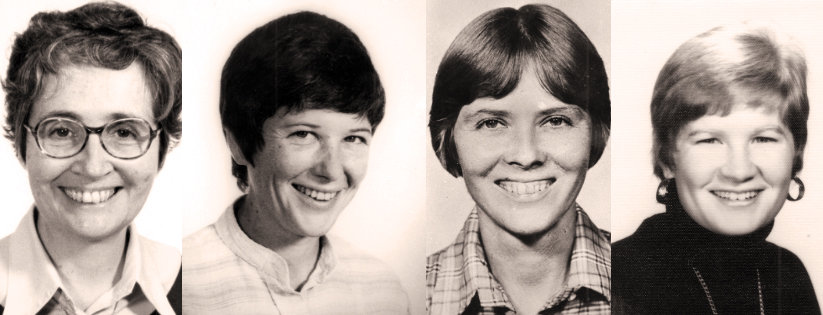
The Roses in December delegation marks the 42nd anniversary of the martyrdom of four U.S. women religious. On December 2, 1980, members of the U.S.-trained-Salvadoran National Guard raped and killed lay worker Jean Donovan, Maryknoll Sisters Ita Ford, MM, and Maura Clarke, MM, and Ursuline Sister Dorothy Kazel, OSU. The women had been accompanying the Salvadoran people displaced by war and poverty. Their witness cost them their lives. Their deaths shook the world and were emblematic of the violence suffered by the Salvadoran people and the power of accompaniment.

These women lived with the kind of hope and faith Isaiah describes. It is an active faith necessary in all times because, sadly, in all times there will be brutal and inhuman oppression of the vulnerable by the powerful. These woman chose to stand for the Gospel instead.


During an earlier anniversary of the Roses in December event, social justice activist Jean Stolkan asked the question, “What do these women call us to today?” Jean served in El Salvador herself and has continued to advocate for human rights and social justice. Jean is currently Social Justice Coordinator for the Sisters of Mercy of the Americas. She offered these insights in answer to her question:

The challenges we face today are different from the challenges we faced when the four church women died. They call for new perspectives and new structures, new vision and new social movements to adequately respond to the need for justice for present and future generations.

Today our hearts go out to the peoples of El Salvador and Honduras, Guatemala and Mexico, as they struggle with basic issues of survival and rebuilding of their lives after so many disasters: hurricanes and earthquakes, but also violence and poverty. We pray for an outpouring of compassion and solidarity, that we may continue to address in systemic ways the underlying human failings – structural poverty, racism, violation of human rights, destruction of the environment – that these and other natural and human disasters unmask with such brutal clarity.

Please join your own prayer today
for a new flowering of social justice,
respect for human rights,
and a mutual reverence for our common home
as we remember these valiant Gospel women.

Poetry: El Salvador – Javier Zamora

( Poet Javier Zamora was born in the small El Salvadoran coastal fishing town of La Herradura and immigrated to the United States at the age of nine, joining his parents in California. He earned a BA at the University of California-Berkeley and an MFA at New York University and was a 2016-2018 Wallace Stegner Fellow at Stanford University.)

Salvador, if I return on a summer day, so humid my thumb
will clean your beard of  salt, and if  I touch your volcanic face,

kiss your pumice breath, please don’t let cops say: he’s gangster.
Don’t let gangsters say: he’s wrong barrio. Your barrios

stain you with pollen, red liquid pollen. Every day cops
and gangsters pick at you with their metallic beaks,

and presidents, guilty. Dad swears he’ll never return,
Mom wants to see her mom, and in the news:

every day black bags, more and more of us leave. Parents say:
don’t go; you have tattoos. It’s the law; you don’t know

what law means there. ¿But what do they know? We don’t
have greencards. Grandparents say: nothing happens here.

Cousin says: here, it’s worse. Don’t come, you could be    ...    
Stupid Salvador, you see our black bags,

our empty homes, our fear to say: the war has never stopped,
and still you lie and say: I’m fine, I’m fine,

but if  I don’t brush Abuelita’s hair, wash her pots and pans,
I cry. Like tonight, when I wish you made it

easier to love you, Salvador. Make it easier
to never have to risk our lives.

Music: El Salvador – Peter, Paul and Mary

“El Salvador” is a 1982 protest song about United States involvement in the Salvadoran Civil War, written by Noel Paul Stookey and performed by Peter, Paul and Mary. The song originally appeared on the 1986 album No Easy Walk To Freedom.

There’s a sunny little country south of Mexico
Where the winds are gentle and the waters flow
But breezes aren’t the only things that blow in El Salvador

If you took the little lady for a moonlight drive
Odds are still good you’d come back alive
But everyone is innocent until they arrive in El Salvador

If the rebels take a bus on the grand highway
The government destroys a village miles away
The man on the radio says: “now, we’ll play South of the Border”

And in the morning the natives say
“We’re happy you have lived another day
Last night a thousand more passed away in El Salvador”
Ooh, ooh, ooh, ooh
Ooh, ooh, ooh, ooh, ooh, ooh, ooh

There’s a television crew here from ABC
Filming Rio Lempe and the refugees
Calling murdered children: “The Tragedy of El Salvador”

Before the government camera twenty feet away
Another man is asking for continued aid
Food and medicine and hand grenades for El Salvador

There’s a thump, a rumble, and the buildings sway
A soldier fires the acid spray
The public address system starts to play: “South of the Border”

You run for cover and hide your eyes
You hear the screams from paradise
They’ve fallen further than you realize in El Salvador
La la la, la la la la
La la la, la la la la la
Ooh, ooh ooh ooh ooh

Just like Poland is protected by her Russian friends
The junta is assisted by Americans
And if sixty million dollars seems too much to spend in El Salvador

They say for half a billion they could do it right
Bomb all day and burn all night
Until there’s not a living thing upright in El Salvador

And they’ll continue training troops in the USA
And watch the nuns that got away
And teach the military bands to play: “South of the Border”

Killed the people to set them free
Who put this price on their liberty
Don’t you think it’s time to leave El Salvador?
Oh, oh oh oh oh
Oh oh oh oh oh, oh oh, oh oh oh oh oh

Remembering ..

All Souls Day
November 2, 2022

Today, in God’s Lavish Mercy, we remember the beloved Holy Souls who have gone before us. They are never far from us. Some of us may visit cemeteries today. Some will place a list of names upon the altar. But all of us will whisper their names: grandparents, parents, spouses, children, brothers, sisters and beloved friends — meeting each name in a sacred memory.

Romans6_8 All Souls

May those memories, whatever they contain, be transformed by our loving prayers. May whatever grief remains in us be blessed by the grace of faith and thanksgiving. And may the Holy Ones we honor today brighten us with some of their overwhelming Eternal Light in God.


Poetry: All Souls Day – Frances Bellerby, (1899–1975) was an English poet, novelist and short story writer. “Her poetry is imbued with a spiritual awareness encoded through the natural environment while her political socialism is more evident in her prose”. (from The Encyclopedia of British Women’s Writing – Jane Dowson)

Let’s go our old way
by the stream, and kick the leaves
as we always did, to make
the rhythm of breaking waves.

This day draws no breath –
shows no colour anywhere
except for the leaves – in their death
brilliant as never before.

Yellow of Brimstone Butterfly,
brown of Oak Eggar Moth –
you’d say. And I’d be wondering why
a summer never seems lost

if two have been together
witnessing the variousness of light,
and the same two in lustreless November
enter the year’s night…

The slow-worm stream – how still!
Above that spider’s unguarded door,
look – dull pearls…Time’s full,
brimming, can hold no more.

Next moment (we well know,
my darling, you and I)
what the small day cannot hold
must spill into eternity.

So perhaps we should move cat-soft
meanwhile, and leave everything unsaid,
until no shadow of risk can be left
of disturbing the scatheless dead.

Ah, but you were always leaf-light.
And you so seldom talk
as we go. But there at my side
through the bright leaves you walk.

And yet – touch my hand
that I may be quite without fear,
for it seems as if a mist descends,
and the leaves where you walk do not stir.

Music: Lux Aeterna- Eternal Light – Michael Hoppé

Lux aeterna
Lux aeterna luceat eis, Domine,
cum sanctis tuis in aeternum,
quia pius es.

Requiem aeternam
dona eis, Domine,
et lux perpetua luceat eis.

May light eternal shine upon them, O Lord,
with Your saints forever,
for You are Mercy.

Eternal rest
give to them, O Lord,
and let perpetual light shine upon them.

Run the Race

Memorial of Saint Peter Claver, Priest
September 9, 2022

May we begin today with a prayer of gratitude and respect
for the remarkable life of service of

Queen Elizabeth II

sketch for the Queen’s Jubilee by Eleanor Tomlinson

Today’s Readings:

https://bible.usccb.org/bible/readings/090922.cfm

Today, in God’s Lavish Mercy, there is a powerful urgency in Paul’s preaching.

Do you not know that the runners in the stadium all run in the race,
but only one wins the prize?
Run so as to win.
Every athlete exercises discipline in every way.
They do it to win a perishable crown,
but we an imperishable one.
Thus I do not run aimlessly;
I do not fight as if I were shadowboxing.
No, I drive my body and train it,
for fear that, after having preached to others,
I myself should be disqualified.

1 Corinthians 9:24-27

Let’s face it: Paul must have been a seriously intense guy. I mean look at his life! Early on, he took it on himself to personally go around “murderously” persecuting Christians. He got knocked off his high horse in a bolt from heaven, was struck blind, cured, and converted. This man did not live a laid-back life!

Conversion of Paul – Caravaggio

In today’s scripture, Paul tells the Corinthians to have an equal passion in living out their Christian faith. He describes his own complete dedication and chosen sacrifices to live and preach Christ’s message, saying:

All this I do for the sake of the Gospel,
so that I too may have a share in it.

In our Gospel, Jesus says that to live the faith sincerely, we must be rid of anything that blinds us. Paul got his corrected vision in a lightning induced horse-fall. Maybe we need similar drama to achieve ours. Or maybe we just need to consistently place our judgements, beliefs, passions, and convictions before God humbly asking for the grace of discernment.

Why do you notice the splinter in your brother’s eye,
but do not perceive the wooden beam in your own?
How can you say to your brother,
“Brother, let me remove that splinter in your eye,’”
when you do not even notice the wooden beam in your own eye?
You hypocrite!  Remove the wooden beam from your eye first;
then you will see clearly
to remove the splinter in your brother’s eye.”


Poetry: The Racer – John Masefield

And as he landed I beheld his soul
Kindle, because, in front, he saw the Straight
With all its thousands roaring at the goal,
He laughed, he took the moment for his mate.
I saw the racer coming to the jump,
Staring with fiery eyeballs as he rusht,
I heard the blood within his body thump,
I saw him launch, I heard the toppings crusht.
Would that the passionate moods on which we ride
Might kindle thus to oneness with the will;
Would we might see the end to which we stride,
And feel, not strain, in struggle, only thrill.
And laugh like him and know in all our nerves
Beauty, the spirit, scattering dust and turves.

Music: Chariots of Fire – Vangelis

God bless Queen Elizabeth II
who has faithfully run the race.
May she rest in peace.