That Day Is Today!

Tuesday of the First Week of Advent
November 29, 2022

Today’s Readings:

https://bible.usccb.org/bible/readings/112922.cfm

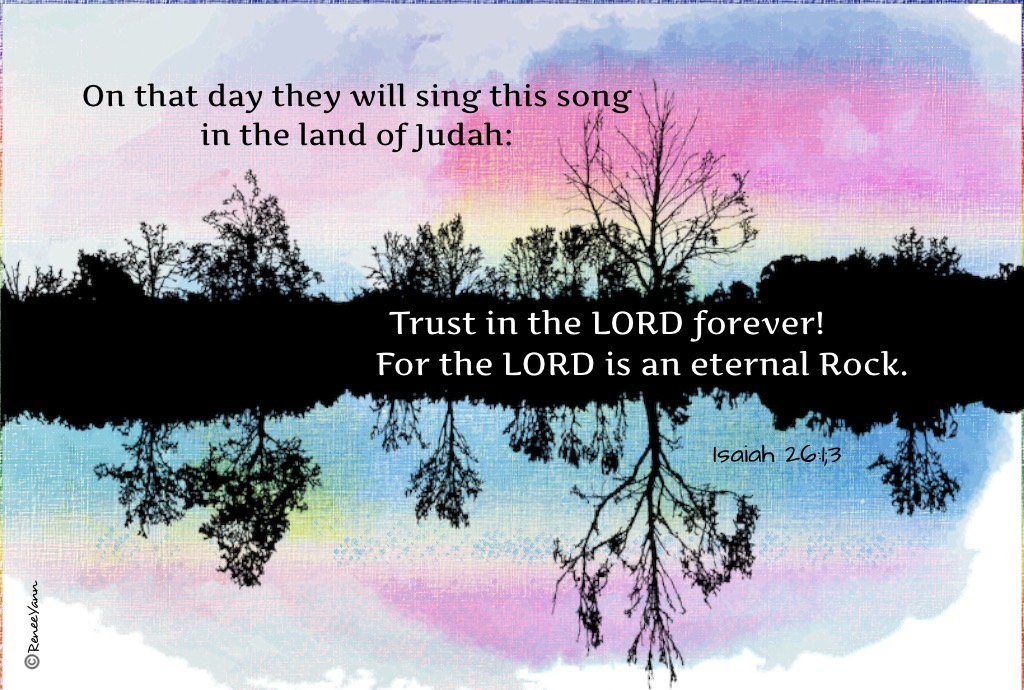
Today, in God’s Lavish Mercy, Isaiah greets us once again with the inspiring phrase, “On that day …”

That day … the one whose dawning we are all awaiting, when all shall be complete and well in God:

There shall be no harm or ruin on all my holy mountain;
for the earth shall be filled with knowledge of the LORD,
as water covers the sea.

Isaiah 11:9

How will we know when that day has come? Will it be dramatically different from today or yesterday? Will time have paused and the world be turned upside down? 

Or will it simply be that in my heart – right here and now – a “new day” has dawned?


Isaiah indicates that the “new day” is potentially present in the day we have, that when we see experience through God’s eyes, the stagnated stump of our lives blossoms in sacred possibility. 

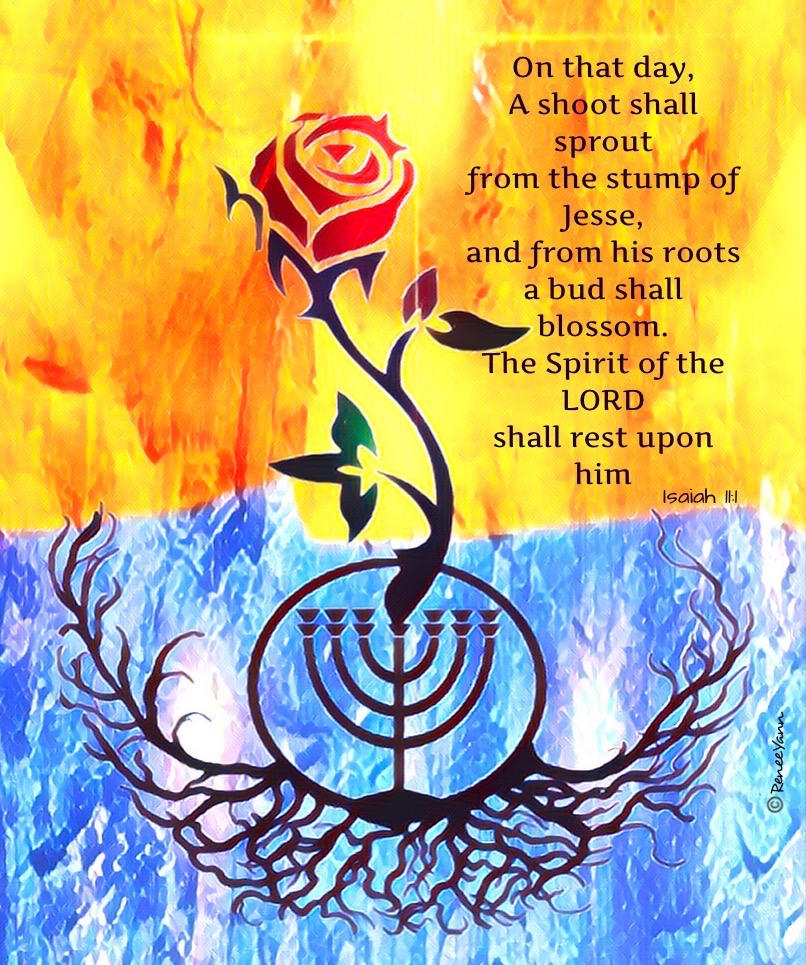
On that day,
A shoot shall sprout from the stump of Jesse,
and from his roots a bud shall blossom.

Isaiah 11: 1

What a glorious description Isaiah offers us of the world transformed by the longed-for Messiah, that shoot which shall sprout from the stump of Jesse:


The Spirit of the LORD shall rest upon him:
a Spirit of wisdom and of understanding,
A Spirit of counsel and of strength,
a Spirit of knowledge and of fear of the LORD,
and his delight shall be the fear of the LORD.
Not by appearance shall he judge,
nor by hearsay shall he decide,
But he shall judge the poor with justice,
and decide aright for the land’s afflicted.
He shall strike the ruthless with the rod of his mouth,
and with the breath of his lips he shall slay the wicked.
Justice shall be the band around his waist,
and faithfulness a belt upon his hips.

Isaiah 11:2-5

As we pray these magnificent words this morning, we should let them thrill us with the truth that the “new day” has come! Indeed, since Christ has transformed us through his Incarnation, that “new day” dawns through us when we choose to live our lives impelled by its graces.


In our Gospel, Jesus says we can live in that divine possibility simply by trusting God the way a child trusts.

Jesus rejoiced in the Holy Spirit and said,
“I give you praise, Father, Lord of heaven and earth,
for although you have hidden these things
from the wise and the learned
you have revealed them to the childlike. 
Yes, Father, such has been your gracious will. 
All things have been handed over to me by my Father. 
No one knows who the Son is except the Father,
and who the Father is except the Son
and anyone to whom the Son wishes to reveal him.”

Luke 10:21-22

Let’s know and believe that Jesus turns to us as well as we pray today’s Gospel:

Turning to the disciples in private he said,
“Blessed are the eyes that see what you see. 
For I say to you,
many prophets and kings desired to see what you see,
but did not see it,
and to hear what you hear, but did not hear it.”

Luke 10:23-24

Poetry: Advent Good Wishes – David Grieve

I found this poem in a book by one of my favorite poets, Malcolm Guite. It’s a great book for Advent if you are interested.

Give you joy, wolf, 
when Messiah makes you meek 
and turns your roar into a cry that 
justice has been done for the poor. 
Give you joy, lamb, 
when Messiah saves you from jeopardy  
and all fear is overwhelmed 
by his converting grace. 
Give you joy, wolf and lamb together, 
as Messiah brings worldwide peace 
and, side by side, you shelter  
under Jesse’s spreading shoot.

Music: Memory – Trevor Nunn / Thomas Stearns Eliot / Andrew Lloyd-webber / Otto Eckelmann

In this beautiful song from Cats, the writers tap some of the same feelings Isaiah calls up – acknowledgement of the night, hope for the morning, and trust that “that new day” can begin.

Face to Face

Saturday of the Thirty-fourth Week in Ordinary Time
November 26, 2022

Today’s Readings:

https://bible.usccb.org/bible/readings/112622.cfm

Today, in God’s Lavish Mercy, we come to the end of our readings from Revelation.  ( I can hear a few of you muttering, “Thank goodness!”) They have been challenging, to say the least.

The passage from Luke’s Gospel today is just as confronting.  God is serious about wanting our complete love!


Our prayer over these past few days has led us to deeper understanding of a challenging truth: life as we know it will be transformed and we will be judged at the transformation.

But hopefully our reflections have also assured us that the Master and Judge of Life is the same merciful God who forgave and healed the sinful and suffering.

By our faithfulness to this merciful God, we will be redeemed. Revelation puts it this way:

The servants of God
will look upon God’s face,
and God’s name
will be on their foreheads.


When a person is filled with goodness (or evil), we often say it is “written all over her face”.  So it is with those who love and long for God and for God’s peaceable kingdom.

God will recognize us at the judgment because our hope and desire for God are written all over our face. And God’s love for us will be written all over that Divine Countenance as we see it clearly for the first time! And once more, as Catherine McAuley might say, “Oh what a joy, even to think of it!”


Poetry: In Memoriam A.H.H. – Alfred Lord Tennyson (1809-1892) was the Poet Laureate of England during much of Queen Victoria’s reign. A number of phrases from Tennyson’s work have become commonplace in the English language, including “Nature, red in tooth and claw” (“In Memoriam A.H.H.”), “‘Tis better to have loved and lost / Than never to have loved at all”, “Theirs not to reason why, / Theirs but to do and die”, “My strength is as the strength of ten, / Because my heart is pure”, “To strive, to seek, to find, and not to yield”, “Knowledge comes, but Wisdom lingers”, and “The old order changeth, yielding place to new”. He is the ninth most frequently quoted writer in The Oxford Dictionary of Quotations.

Below is the first section of the poem. It is a requiem for the poet’s beloved Cambridge friend Arthur Henry Hallam, who died suddenly, aged 22. It contains some of Tennyson’s most accomplished lyrical work, and is an unusually sustained exercise in lyric verse. It is widely considered to be one of the greatest poems of the 19th century. (Wikipedia)

Strong Son of God, immortal Love,
   Whom we, that have not seen thy face,
   By faith, and faith alone, embrace,
Believing where we cannot prove;

Thine are these orbs of light and shade;
   Thou madest Life in man and brute;
   Thou madest Death; and lo, thy foot
Is on the skull which thou hast made.

Thou wilt not leave us in the dust:
Thou madest man, he knows not why,
He thinks he was not made to die;
And thou hast made him: thou art just.

Thou seemest human and divine,
   The highest, holiest manhood, thou.
   Our wills are ours, we know not how;
Our wills are ours, to make them thine.

Our little systems have their day;
   They have their day and cease to be:
   They are but broken lights of thee,
And thou, O Lord, art more than they.

We have but faith: we cannot know;
   For knowledge is of things we see
   And yet we trust it comes from thee,
A beam in darkness: let it grow.

Let knowledge grow from more to more,
   But more of reverence in us dwell;
   That mind and soul, according well,
May make one music as before,

But vaster. We are fools and slight;
   We mock thee when we do not fear:
   But help thy foolish ones to bear;
Help thy vain worlds to bear thy light.

Forgive what seem'd my sin in me;
   What seem'd my worth since I began;
   For merit lives from man to man,
And not from man, O Lord, to thee.

Forgive my grief for one removed,
   Thy creature, whom I found so fair.
   I trust he lives in thee, and there
I find him worthier to be loved.

Forgive these wild and wandering cries,
   Confusions of a wasted youth;
   Forgive them where they fail in truth,
And in thy wisdom make me wise.

If you would like to read the entire poem, follow this link:

https://poets.org/poem/memoriam-h-h


Music: The Face of God – Karen Drucker

Faithful Forever

Wednesday of the Thirty-fourth Week in Ordinary Time
November 23, 2022

Today’s Readings:

https://bible.usccb.org/bible/readings/112322.cfm

Today, in God’s Lavish Mercy,  our Responsorial Verse captures the essence of all the readings:

Rev 2_10JPG

It’s one of those scripture passages that makes one want to say, “Oh, really? Is that all?” 

Because, you know, it’s a pretty tall order to remain faithful until death. Sometimes it’s a real pinch to remain faithful for a week! 


Remember that exercise bike you bought in January 2020? Yeah, that one with your yoga pants, umbrella, and assorted tote bags hanging on it.

Or what about that South Beach diet book you’re using to prop open the closet door? How did all that faithfulness work out?

So, given our very human condition, what is the “faithfulness” these readings enjoin?

I believe it is not a faithfulness that never fails.

Rather, it tries. When it does fail, it believes in and seeks forgiveness. It trusts, even in its weakness. It is grateful, abiding, and loving. It is not afraid to begin again and again, because our faithfulness depends on God’s mercy not our strength.


When we were young nuns making our final vows, this phrase was part of our commitment: 

“… and to persevere, until death …” 

One of our wise leaders, Mother Bernard, told us, “Don’t pray for final perseverance. Pray to be worthy of it.”


I think we become worthy of perseverance by that trusting faithfulness which turns again and again into Mercy’s waiting, understanding arms. It is a faithfulness that fully believes these words from the Book of Lamentations:

The steadfast love of the Lord never ceases;
God’s mercies never come to an end;
they are new every morning;
so great is your faithfulness.

Lamentations 3: 22-23

Poetry: What God Hath Promised – Annie Johnson Flint (1866-1932) was born in Vineland, NJ. Incapacitated by severe arthritis, she started composing religious poetry, and became “a renowned writer across the Christian world.” Her popular poems include He Giveth More Grace and Christmas Carols, which were published in Christian Endeavour World and Sunday School Times. (Wikipedia)

God hath not promised skies always blue,
Flower strewn pathways all our lives through;
God hath not promised sun without rain,
Joy without sorrow, peace without pain.

But God hath promised strength for the day,
Rest for the labor, light for the way,
Grace for the trials, help from above,

Unfailing sympathy, undying love.


Music: Great Is Thy Faithfulness – Westminster Abbey

This is probably not the most perfect rendition of this beautiful hymn, but I just love seeing all these various people singing their praise. Imagine all of the stories and histories of faith woven through this worshipping congregation — and each one of them grateful for God’s faithfulness. As Catherine McAuley would say, “Oh what a joy even to think of it!”

The Winepress

Memorial of Saint Cecilia, Virgin and Martyr
November 22, 2022

Today’s Readings:

https://bible.usccb.org/bible/readings/112222.cfm

Rev 14_19 furyJPG

Today, in God’s Lavish Mercy, we are struck, once again, with Revelation’s images of the end time!

  • a crowned Christ wielding a sharp sickle
  • angels commanding the final harvest of the earth

and perhaps the most powerful

  • the earth’s vintage thrown into the great winepress of God’s fury!

This author could write! We can almost imagine the scene, filmed with all the pyro-technics of today’s computer age.

But besides the amazing imagery,
what does the passage say to our hearts?

In Biblical symbolism, the winepress almost always stands for judgment. The passage reminds us that we all will be judged.  The divine winepress will compress the sinful gaps that plague our human existence.  In the end time, there will be no “other” — no judgmental spaces separating us from one another.  We will all be one, like wine mingled.

We will be judged on how we lived that oneness in this life, on where we have stood in the worldly gap between the:

  • rich and poor
  • well and sick
  • citizen and refugee
  • abled and disabled
  • powerful and vulnerable

The questions for us as we pray today amy be these:

  • Do we live in ignorance or indifference to those who suffer on the other side of the human scale?
  • Have we been impervious to the imbalances of justice and charity in this world?
  • And how do we respond?

The passage suggests that we do some weeding of our spiritual gardens before the harvest of our souls. The intention of this fiery writer is to tell us that we still have a little time to do so.

Photo by Yan Krukov on Pexels.com

Poetry: Barnfloor and Winepress – Gerard Manley Hopkins

And he said, If the Lord do not help thee, whence shall I help thee?
out of the barnfloor, or out of the winepress? 
2 Kings VI: 27

Thou that on sin's wages starvest, 
Behold we have the joy in harvest: 
For us was gather'd the first fruits, 
For us was lifted from the roots, 
Sheaved in cruel bands, bruised sore, 
Scourged upon the threshing-floor; 
Where the upper mill-stone roof'd His head, 
At morn we found the heavenly Bread, 
And, on a thousand altars laid, 
Christ our Sacrifice is made! 
Thou whose dry plot for moisture gapes, 
We shout with them that tread the grapes: 
For us the Vine was fenced with thorn, 
Five ways the precious branches torn; 
Terrible fruit was on the tree
In the acre of Gethsemane; 
For us by Calvary's distress
The wine was racked from the press; 
Now in our altar-vessels stored
Is the sweet Vintage of our Lord.
In Joseph's garden they threw by 
The riv'n Vine, leafless, lifeless, dry: 
On Easter morn the Tree was forth, 
In forty days reach'd heaven from earth; 
Soon the whole world is overspread; 
Ye weary, come into the shade.
The field where He has planted us
Shall shake her fruit as Libanus, 
When He has sheaved us in His sheaf, 
When He has made us bear his leaf. - 
We scarcely call that banquet food, 
But even our Saviour's and our blood, 
We are so grafted on His wood. 

Music:  The Day Is Surely Drawing Near – written by the prolific 16th century Lutheran hymnist Bartholomaüs Ringwaldt. This piece is a majestic instrumental rendering, but if you would like to see the words, they are below. 

1 The day is surely drawing near
When Jesus, God’s anointed,
In all His power shall appear
As judge whom God appointed.
Then fright shall banish idle mirth,
And flames on flames shall ravage earth
As Scripture long has warned us.

2 The final trumpet then shall sound
And all the earth be shaken,
And all who rest beneath the ground
Shall from their sleep awaken.
But all who live will in that hour,
By God’s almighty, boundless pow’r,
Be changed at His commanding.

3 The books are opened then to all,
A record truly telling
What each has done, both great and small,
When he on earth was dwelling,
And ev’ry heart be clearly seen,
And all be known as they have been
In thoughts and words and actions.

4 Then woe to those who scorned the Lord
And sought but carnal pleasures,
Who here despised His precious Word
And loved their earthly treasures!
With shame and trembling they will stand
And at the judge’s stern command
To Satan be delivered.

5 My Savior paid the debt I owe
And for my sin was smitten;
Within the Book of Life I know
My name has now been written.
I will not doubt, for I am free,
And Satan cannot threaten me;
There is no condemnation!

6 May Christ our intercessor be
And through His blood and merit
Read from His book that we are free
With all who life inherit.
Then we shall see Him face to face,
With all His saints in that blest place
Which He has purchased for us. 

7 O Jesus Christ, do not delay,
But hasten our salvation;
We often tremble on our way
In fear and tribulation.
O hear and grant our fervent plea;
Come, mighty judge, and make us free
From death and ev’ry evil.

The Times of Our Lives

Saturday of the Thirty-third Week in Ordinary Time
November 19, 2022

Today’s Readings:

https://bible.usccb.org/bible/readings/111922.cfm

Today, in God’s Lavish Mercy, our readings are challenging. 

Revelation, a very complex book of the Bible, uses symbols, prophecies and allegorical references to make its point. There are huge bodies of scholarship written in the attempt to interpret these passages.

Our Gospel has Jesus describing what it will be like in heaven – when our human perceptions will be erased and we will finally be absorbed into God’s understanding.

These are BIG thoughts and my mind, at least, needs some more manageable inspirations for my morning prayer.  So here’s how I prayed with these readings today.

Lit yr flowerJPG

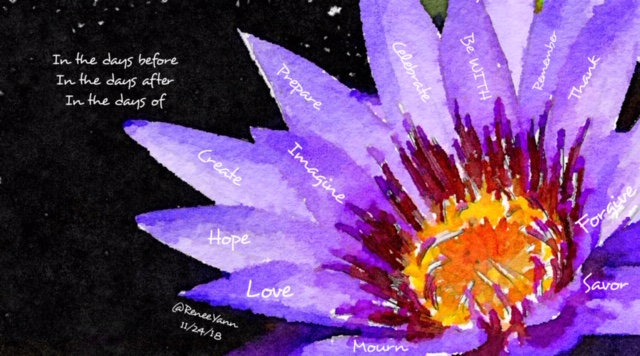
What both passages share are continual references to time – past, present and future. They reference then-time, now-time, and to-be-time. These passages, and others in Scripture like them, talk about time like this:

  • “in the days before” (then time)
  • “in the days after” (to -be time)
  • “in the day of” (now time)

So what is this day, November 19th, for me?
How is God revealing Love to me in this, my time? 

Today is among “the days after” the last memorable thing that happened in my life – maybe a good thing, maybe not so much. In “the days after”, we spend time with a completed event – learning, savoring, or perhaps regretting and recovering. The “days after” are a time to pray for grace and blessing over what cannot be changed.

Today is also among “the days before” the next big events of my life. So my prayer includes a petition for new and continued courage, hope and enthusiasm for life.

And, most importantly, today is “a day of”. I ask God to help me see and receive the graces of this present moment – not to miss them because I am looking only back or forward. Let me look God square in the eye on this day, which is the only place that I can really find the God Who is always Now.


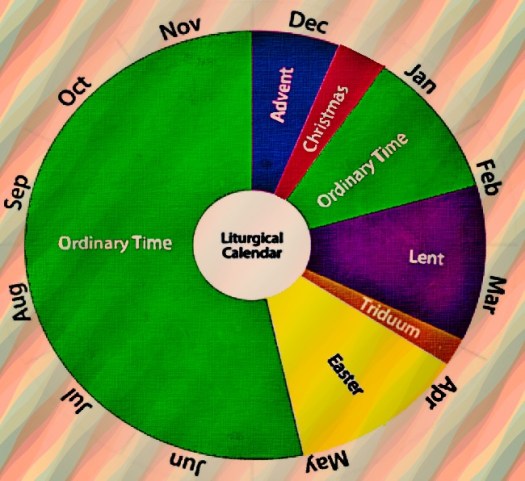
The entire liturgical year is built on this understanding of time. 

  • Advent and Lent are “the days before”, the days of preparation, anticipation, imagining, creating, hoping.
  • The feasts like Christmas, Easter and Pentecost are “the days of”, days of celebrating, loving, being with.
  • The various Octaves are “the days after”, days of remembering, thanking, appreciating, understanding, mourning, forgiving and savoring
lit yr

Where are you today in the times of your life? It may be in a very different place from what is printed on the calendar. The events of our lives create their own personal liturgies.

No matter where that happens to be, let us meet God there with full and open hearts.


Poetry: from Burnt Norton by T.S. Eliot

Time present and time past
Are both perhaps present in time future,
And time future contained in time past.
If all time is eternally present
All time is unredeemable.
What might have been is an abstraction
Remaining a perpetual possibility
Only in a world of speculation.
What might have been and what has been
Point to one end, which is always present.
Footfalls echo in the memory
Down the passage which we did not take
Towards the door we never opened
Into the rose-garden. My words echo
Thus, in your mind.
But to what purpose
Disturbing the dust on a bowl of rose-leaves
I do not know.
Other echoes
Inhabit the garden. Shall we follow?


Music: God of All My Days – Casting Crowns

Promises, Promises!

Friday of the Thirty-third Week in Ordinary Time
November 18, 2022

Today’s Readings:

https://bible.usccb.org/bible/readings/111822.cfm

Today, in God’s Lavish Mercy, we pray with our longest Psalm 119. 

This morning, we take one little morsel from its extended string of reflections :


The word “promise” can evoke a range of responses from us. Indeed, they are sweet as the psalmist says. But they can also be elusive, ephemeral, and easily broken. I know I’ve have made a few promises in my lifetime that have fizzled away unfulfilled. Haven’t you?

On the other hand, there are some promises, kept, that have rooted and defined my life. These, made in the bud, have blossomed in a long, tendered fidelity. They have dug the deep roots of trust for the essential relationships of my life with God, beloved neighbor, and all Creation.


Such vital promises can be made and kept when we act in the image of God, the loving and faithful Promise Keeper described in Psalm 119:

Your word, LORD, stands forever;
it is firm as the heavens.
Through all generations your truth endures;
fixed to stand firm like the earth.Psalm 119: 89 – 90


Like the psalmist, we pray:

  • to be imitators of God who is always faithful.
  • to be promise-keepers in response to the trust God has placed in us by the gift of our creation.
  • to meditate on, and understand in our hearts, the divine order of God’s immutable Law of Love

Poetry: Psalm 119 – Christine Robinson

Dear God, The seed of your love is deep within
every molecule of the universe, and it abides through time.
The laws of the cosmos serve your purpose to the end.
If I remember this, I can abide all manner of trouble.
If I delight in this, it gives me life.
I belong to you to my very core.
Holding firm to that knowledge, I can live my life in love.
All things will come to and end.
And in the end all will be One
My mind is filled with your Way
Making me wise like a teacher or an elder.
Mastering my life in your way gives me purpose.
Many times I use it to guide my steps.
My mouth waters and my heart softens to consider your Way.

Music: God Hath Not Promised – Annie Johnson Flint

This charming 19th century hymn captures the faithful spirit of it composer whose life, though beset by suffering, radiated faith and joy. 

Read more about her life here

A Dance of Praise

Memorial of St. Elizabeth of Hungary
November 17, 2022

Today’s Readings:

https://bible.usccb.org/bible/readings/111722.cfm

Today, in God’s Lavish Mercy, we pray with Psalm 149 which calls the community to sing and dance because God has delivered them.

This happy, celebratory summons is set, contrastingly, between two readings that mention weeping.

Then I saw a mighty angel who proclaimed in a loud voice,
“Who is worthy to open the scroll and break its seals?”
But no one in heaven or on earth or under the earth
was able to open the scroll or to examine it.
I shed many tears because no one was found worthy
to open the scroll or to examine it.

Revelation 5: 2-4

As Jesus drew near Jerusalem,
he saw the city and wept over it, saying,
“If this day you only knew what makes for peace–
but now it is hidden from your eyes.

Luke 19: 41-42

The readings leave us with a sense that there is a secret to eternal life –
a secret to which only grace can open our eyes and hearts.


John writes that “the Lion of Judah” has the key:

One of the elders said to me, “Do not weep.
The lion of the tribe of Judah, the root of David, has triumphed,
enabling him to open the scroll with its seven seals.”

Revelation 5: 5-6

Jesus, Uncreated Grace, is the Lion of Judah. He has incarnated the sacred key in his Life, Death, and Resurrection. For those who receive him and share his life, the door is opened, the scroll unrolled.

So what is the path to such union with Jesus? 


Our psalm contains a brief line tucked at its center which foreshadows the entire message of the Gospel. 

Let them praise God’s name in the festive dance,
let them sing praise with timbrel and harp.
For the LORD loves us,
and adorns the lowly with victory.

We will find a dancing, singing joy when we give ourselves to these truths:

  • God loves us irrevocably
  • We can fully receive this great love to the degree that we become like Christ whose image we find among the poor, lowly, and suffering.

Poetry: Dance from Rumi

Come to me, and I shall dance with you
In the temples, on the beaches, through the crowded streets
Be you man or woman, plant or animal, slave or free
I shall show you the brilliant crystal fires, shining within
I shall show you the beauty deep within your soul
I shall show the path beyond Heaven.
Only dance, and your illusions will blow in the wind
Dance, and make joyous the love around you
Dance, and your veils which hide the Light
Shall swirl in a heap at your feet.

Music:  Psalm 149 – Antonín Dvořák

Our Splendid God

Wednesday of the Thirty-third Week in Ordinary Time
November 16, 2022

Today’s Readings:

https://bible.usccb.org/bible/readings/111622.cfm

Today, in God’s Lavish Mercy, we move deeper into the final weeks of Ordinary Time. Our readings continue to offer us images about what it will be like at the end of time.  

In our passage from Revelation, we are given an ornate and exuberant description of how the author envisions God’s “headquarters”, so to speak. With all its gems and thrones and crowns and flaming torches, the passage can be a little overwhelming. But what is the core message? I think it is this:

God is the Splendid Creator. Despite time’s destruction, Creation will be ultimately perfected by our Perfect God. Believing this, we are called to awe-filled worship and gratitude, as spoken in these two verses from the passage:

“Holy, holy, holy is the Lord God almighty,
who was, and who is, and who is to come.”

Revelation 4:8

“Worthy are you, Lord our God,
to receive glory and honor and power,
for you created all things;
because of your will they came to be and were created.”

Revelation 4:11

Today’s Gospel about the talents reminds us that we each have been given particular gifts with which to build up God’s Creation. Like the watchful Master, God expects – and needs – us to use these gifts, and to increase their value by sharing them with our sisters and brothers.

Sometimes we think we have no real gifts to give. But the witness of a simple, faithful, generous life is beyond price.

We may want to spend some prayer time reflecting on the many gifts we have been given – by God and by those who love us, and how we might offer these in worship to our Splendid Generous God.


Poetry: Advice to a ProphetRichard Wilbur (1921 – 2017) was an American poet and literary translator. One of the foremost poets of his generation, Wilbur’s work, composed primarily in traditional forms, was marked by its wit, charm, and gentlemanly elegance. He was appointed the second Poet Laureate Consultant in Poetry to the Library of Congress in 1987 and received the Pulitzer Prize for Poetry twice, in 1957 and 1989.

In Wilbur’s poem, we get a different vision of what the end of times might be like, and how we might respond to the prophet who describes such times.

When you come, as you soon must, to the streets of our city,
Mad-eyed from stating the obvious,
Not proclaiming our fall but begging us
In God's name to have self-pity,

Spare us all word of the weapons, their force and range,
The long numbers that rocket the mind;
Our slow, unreckoning hearts will be left behind,
Unable to fear what is too strange.

Nor shall you scare us with talk of the death of the race.
How should we dream of this place without us?—
The sun mere fire, the leaves untroubled about us,
A stone look on the stone's face?

Speak of the world's own change. Though we cannot conceive
Of an undreamt thing, we know to our cost
How the dreamt cloud crumbles, the vines are blackened by frost,
How the view alters.  We could believe,

If you told us so, that the white-tailed deer will slip
Into perfect shade, grown perfectly shy,
The lark avoid the reaches of our eye,
The jack-pine lose its knuckled grip

On the cold ledge, and every torrent burn
As Xanthus once, its gliding trout
Stunned in a twinkling.  What should we be without
The dolphin's arc, the dove's return, 

These things in which we have seen ourselves and spoken?
Ask us, prophet, how we shall call
Our natures forth when that live tongue is all
Dispelled, that glass obscured or broken

In which we have said the rose of our love and the clean
Horse of our courage, in which beheld
The singing locust of the soul unshelled,
And all we mean or wish to mean.

Ask us, ask us whether with the worldless rose
Our hearts shall fail us; come demanding
Whether there shall be lofty or long standing
When the bronze annals of the oak-tree close.

Music: We Have Gifts to Share – Susan Kay Wyatts – This is a childlike song, but the point is profound. For those with young children and Grands, you might like to share this song with them.

Invisible Presence

Memorial of St. Leo the Great
November 10, 2022

https://bible.usccb.org/bible/readings/111022.cfm

Today, in God’s Lavish Mercy, Jesus tells us a secret about the Kingdom of God:

“The coming of the Kingdom of God
cannot be observed,
and no one will announce,
‘Look, here it is,’ or, ‘There it is.’
For behold, the Kingdom of God
is among you.”

And it remains a bit of a secret, even after He tells it, because it is often very hard to discern the “Kingdom among us”. There is nothing more invisible than something hiding in plain sight.

Lk17_21JPG

Through prayer, we discover that it is about our eyes – not about visibility. It is about the power of grace within us to see beyond appearances. We need a soul that can “peel the onion” of experience to find the face of God resident within all things.

  • With that kind of eyes, you don’t just have a business meeting today.
    You have an opportunity to build God’s Kingdom through respect, encouragement and mutuality.
  • You don’t just pass a person begging on the corner.
    You walk near Christ himself accompanying a broken spirit.
  • You don’t just encounter the hurts and challenges of your life.
    You are invited by God into a living faith that finds God’s will in all things.
  • You don’t live in the world with just other creatures.
    You meet and honor the Divine Presence in every living thing.

Indeed, the Kingdom of God is right here among us.

May we see it!
May we treasure it!
May we reveal it!


Photo by Johannes Plenio on Pexels.com

Poetry: In No Strange Land – Francis Thompson

O world invisible, we view thee,
O world intangible, we touch thee,
O world unknowable, we know thee,
Inapprehensible, we clutch thee!

Does the fish soar to find the ocean,
The eagle plunge to find the air—
That we ask of the stars in motion
If they have rumour of thee there?

Not where the wheeling systems darken,
And our benumbed conceiving soars!—
The drift of pinions, would we hearken,
Beats at our own clay-shuttered doors.

The angels keep their ancient places;—
Turn but a stone and start a wing!
’Tis ye, ’tis your estrangèd faces,
That miss the many-splendoured thing.

But (when so sad thou canst not sadder)
Cry;—and upon thy so sore loss
Shall shine the traffic of Jacob’s ladder
Pitched betwixt Heaven and Charing Cross.

Yea, in the night, my Soul, my daughter,
Cry,—clinging to Heaven by the hems;
And lo, Christ walking on the water,
Not of Genesareth, but Thames!


Music:  Let Your Kingdom Come – Tommy Walker

A God-aligned Heart

Thirty-second Sunday in Ordinary Time
November 6, 2022

Today’s Readings

https://bible.usccb.org/bible/readings/110622.cfm

Today, in God’s Lavish Mercy, one theme threaded through our readings is that of “The Law”.

“Law” is a frustratingly elastic word and concept which runs the gamut from tyranny to benevolent guidance depending on who administers it.

2thess3_5 scale

In both our first reading and our Gospel, we find people trying to curtail the freedom of others by invoking the Law. In 2 Maccabees, King Antiochus attempts to incorporate the Jewish people by fracturing their religious practice, that which identifies and unites them as Jews. On the surface, the story seems to be about eating pork, and one might wonder if that resistance is worth dying for.

But the real conflict is between tyrannical domination and spiritual freedom, between “Empire” and “Kingdom” – a struggle we have seen endlessly repeated through history and current events.

When “law” is interpreted to advantage some and suppress others, it is no longer law. The essence of law is always the wise administration of mercy balanced with justice. The understanding of such law grows from covenanted relationship with the Creator who wills the good and wholeness of all Creatures.


In today’s Gospel, some Sadducees (perhaps sincere, but more likely trying to trap Jesus) ask him to solve a hypothetical problem regarding marriage in the afterlife.

Jesus doesn’t bite. He explains to the questioners that eternal life transcends all their human perceptions of time, relationship and law. The earthly laws by which we either bind or free one another in this world evaporate in Heaven. Only Mercy and Justice order eternal life in the Kingdom of God. ultimately, “law” is alignment of heart with God’s.


Paul tells us that we are called to be examples of that eternal kingdom now. He knows how hard it is, and so he blesses us:

May our Lord Jesus Christ himself and God our Father,
who has loved us and given us everlasting encouragement
and good hope through his grace,
encourage your hearts and strengthen them in every good deed
and word.


May God’s law of love align our hearts
so that we
– like the Maccabees, like Jesus –
will have the courage and strength to live it
in a sometimes hostile world.


Poetry: The Higher Pantheism – Alfred, Lord Tennyson

The sun, the moon, the stars, the seas, the hills and the plains,- 
Are not these, O Soul, the Vision of Him who reigns?
 
Is not the Vision He, tho’ He be not that which He seems? 
Dreams are true while they last, and do we not live in dreams? 

Earth, these solid stars, this weight of body and limb, 
Are they not sign and symbol of thy division from Him? 

Dark is the world to thee; thyself art the reason why, 
For is He not all but thou, that hast power to feel “I am I”? 

Glory about thee, without thee; and thou fulfillest thy doom, 
Making Him broken gleams and a stifled splendour and gloom. 

Speak to Him, thou, for He hears, and Spirit with Spirit can meet- 
Closer is He than breathing, and nearer than hands and feet. 

God is law, say the wise; O soul, and let us rejoice, 
For if He thunder by law the thunder is yet His voice. 

Law is God, say some; no God at all, says the fool, 
For all we have power to see is a straight staff bent in a pool; 

And the ear of man cannot hear, and the eye of man cannot see; 
But if we could see and hear, this Vision-were it not He? 


Music: The Law of the Lord is Perfect