Cloak

Friday of the Second Week of Lent
March 1, 2024

Today’s Readings:

https://bible.usccb.org/bible/readings/030124.cfm


Israel loved Joseph best of all his sons,
for he was the child of his old age;
and he had made him a beautiful long cloak.
When his brothers saw that their father loved him best of all his sons,
they hated him so much that they would not even greet him.

Genesis 37: 3-4

Joseph, beloved of his father Jacob, wore a multi-colored expression of his father’s love. Because others were jealous of this love, Joseph, the innocent one, was persecuted. Nevertheless, he endured and eventually forgave his brothers, giving them the means for a new life.

Joseph is a prototype of Jesus, the Beloved Son who displayed his Father’s love by his life of mercy. Jesus, Supreme Innocence, was persecuted too, endured death, forgave his persecutors, and gave us new life.

Today, in God’s Lavish Mercy:

In my prayer, I ask myself what patterns of Joseph and Jesus do I see in my world? Where do I see Innocence suffering? Where do I see mercy offered rather than persecution? Where do I see the need for acknowledgement and forgiveness?

Where do I see these things in my wider world and in myself? My awareness and response is the way I walk with Christ this Lent.


Poetry: Joseph’s Coat – George Herbert (1593-1633), English poet, orator, priest, and venerated Saint of the Church of England.

Herbert’s poem suggests that through the “joyes” and “griefs” of life, one finds sanctification only through God’s love and mercy. His imagery references Joseph’s downfall at the hands of his brothers and restoration through God’s design

Wounded I sing, tormented I indite,
Thrown down I fall into a bed, and rest:
Sorrow hath chang’d its note: such is his will,
Who changeth all things, as him pleaseth best.
For well he knows, if but one grief and smart
Among my many had his full career,
Sure it would carrie with it ev’n my heart,
And both would runne untill they found a biere
To fetch the bodie; both being due to grief.
But he hath spoil’d the race; and giv’n to anguish
One of Joyes coats, ticing it with relief
To linger in me, and together languish.
I live to shew his power, who once did bring
My joyes to weep, and now my griefs to sing.

Music: Coat of Many Colors – Brandon Lake

Cup

Wednesday of the Second Week of Lent
February 28, 2024

Today’s Readings:

https://bible.usccb.org/bible/readings/022824.cfm


Then the mother of the sons of Zebedee approached Jesus with her sons
and asked …
“Command that these two sons of mine sit,
one at your right and the other at your left, in your kingdom.”
Jesus said in reply,
“You do not know what you are asking.
Can you drink the chalice that I am going to drink?”
They said to him, “We can.”
He replied,
“My chalice you will indeed drink,
but to sit at my right and at my left,
this is not mine to give
but is for those for whom it has been prepared by my Father.”

Mark 10:20-23

In our Gospel, Jesus makes it clear that the path to heavenly glory is bound by a spiritual discipline that, in this contrary world, will cause us suffering. The cup is that chasm in life where we must choose peace over violence, generosity over selfishness, mercy over judgment, truth over deception, love over indifference. There will be resistance, both within us and around us, when we make such choices.

Today, in God’s Lavish Mercy:

Let’s be honest with ourselves as we answer Jesus’s question:
“Can you drink the cup that I will drink?”
Let’s pray for the grace to drink that cup as it comes to us in the particularities of our own lives.
Let’s ask for the spiritual confidence and understanding that the cup – our cup – leads to eternal life.


Poetry: Can You Drink the Cup? – by Scott Surrency, O.F.M. Cap. (2015)

I found this poem on the website https://thejesuitpost.org/2015/10/can-you-drink-the-cup/

Can you drink the cup?
Drink, not survey or analyze,
ponder or scrutinize –
from a distance.
But drink – imbibe, ingest,
take into you so that it becomes a piece of your inmost self.
And not with cautious sips
that barely moisten your lips,
but with audacious drafts
that spill down your chin and onto your chest.
(Forget decorum – reserve would give offense.)
Can you drink the cup?
The cup of rejection and opposition,
betrayal and regret.
Like vinegar and gall,
pungent and tart,
making you wince and recoil.
But not only that – for the cup is deceptively deep –
there are hopes and joys in there, too,
like thrilling champagne with bubbles
that tickle your nose on New Year’s Eve,
and fleeting moments of almost – almost – sheer ecstasy
that last as long as an eye-blink, or a champagne bubble,
but mysteriously satisfy and sustain.
Can you drink the cup?
Yes, you — with your insecurities,
visible and invisible.
You with the doubts that nibble around the edges
and the ones that devour in one great big gulp.
You with your impetuous starts and youth-like bursts of love and devotion.
You with your giving up too soon – or too late – and being tyrannically hard on yourself.
You with your Yes, but’s and I’m sorry’s – again.
Yes, you – but with my grace.
Can you drink the cup?
Can I drink the cup?
Yes.

Music: We Will Drink the Cup

We will drink the cup.
We will win the fight.
We will stand against the darkness of the night.
We will run the race
And see God’s face,
And build the Kingdom of love.

Do not fear for I am with you.
Be still and know that I am God.

You will run and not grow weary,
For I your God will be your strength.
Refrain

We are the Church, we are the Body.
We are God’s great work of art.

And build the Kingdom of love.

Turn …

Friday of the First Week of Lent
February 23, 2024

Today’s Readings:

https://bible.usccb.org/bible/readings/022324.cfm


If the wicked man turns away from all the sins he committed,
if he keeps all my statutes and does what is right and just,
he shall surely live, he shall not die….

…. And if the virtuous man turns from the path of virtue to do evil,
the same kind of abominable things that the wicked man does,
can he do this and still live?
None of his virtuous deeds shall be remembered,
because he has broken faith and committed sin;
because of this, he shall die. 

Exodus 18:21;24

Sometimes our life, with its many challenges and mysteries, can seem like an amusement ride spinning in the middle of the universe. We can be turned this way and that by forces such as our doubts, fears, disappointments, shocks, failures, unmet expectations, and the many figments of our imaginations. Oddly enough, these tumbling realities are the very places we meet God to Whom we desire to turn our lives no matter how our circumstances turn.

Today, in God’s Lavish Mercy:

We might use this simple prayer to turn our hearts to God in every moment.

Dear God, in all things, I wish to turn my heart to You.
Receive my desire and steady me in your Love.


Poetry: Thee, God, I come from, to Thee I go – Gerard Manley Hopkins (1844–1889)

Thee, God, I come from, to thee go,           
All day long I like fountain flow    
From thy hand out, swayed about  
Mote-like in thy mighty glow.  

What I know of thee I bless,      
As acknowledging thy stress        
On my being and as seeing  
Something of thy holiness.   

Once I turned from thee and hid,     
Bound on what thou hadst forbid;       
Sow the wind I would; I sinned:
I repent of what I did.      

Bad I am, but yet thy child.   
Father, be thou reconciled.      
Spare thou me, since I see               
With thy might that thou art mild.   

I have life before me still 
And thy purpose to fulfil;  
Yea a debt to pay thee yet:   
Help me, sir, and so I will.           

But thou bidst, and just thou art,      
Me shew mercy from my heart         
Towards my brother, every other   
Man my mate and counterpart.

Music: Turn to Me – written by John Foley, SJ

Constant Mercy

Tuesday of the Sixth Week in Ordinary Time
February 13, 2024

Today’s Readings:

https://bible.usccb.org/bible/readings/021324.cfm


Today, in God’s Lavish Mercy, James continues his spiritual encouragements.

For one thing, he makes it clear that God doesn’t tempt us. Some of us make the mistake of thinking that, saying things like, “God is testing me.”

James, outlining a perfect way to examine one’s conscience, says this:

No one experiencing temptation should say,
“I am being tempted by God”;
for God is not subject to temptation to evil,
and God himself tempts no one.
Rather, each person is tempted when lured and enticed by his own desire.
Then desire conceives and brings forth sin,
and when sin reaches maturity it gives birth to death.

James 1:13-15

Sin is an uncomfortable topic, and it’s an elusive one. Most of us aren’t outright blatant sinners. I think most of our sins are quiet indifferences, failures to love, unacknowledged greeds, self-imposed blindnesses to our responsibilities toward one another. These generate excuses that allow us to gossip, judge, blame, ignore, hurt and even use others both in our immediate world and in the larger global community.

In my experience, these desires are usually disguised, pretending to be beneficial for us at first sight. But underneath, they are rooted in selfishness and excess, diverting us from our center in God. 

So if we have some little labyrinths of temptation and sinful habits ensnaring us, we should listen to James. He encourages us to examine and check our own concupiscent desires as they are the seeds of our spiritual undoing.


In the second part of this passage, James takes the tone up a notch. He reminds us that, once centered on God, we realize that only good things come from God.

All good giving and every perfect gift is from above,
coming down from the Father of lights,
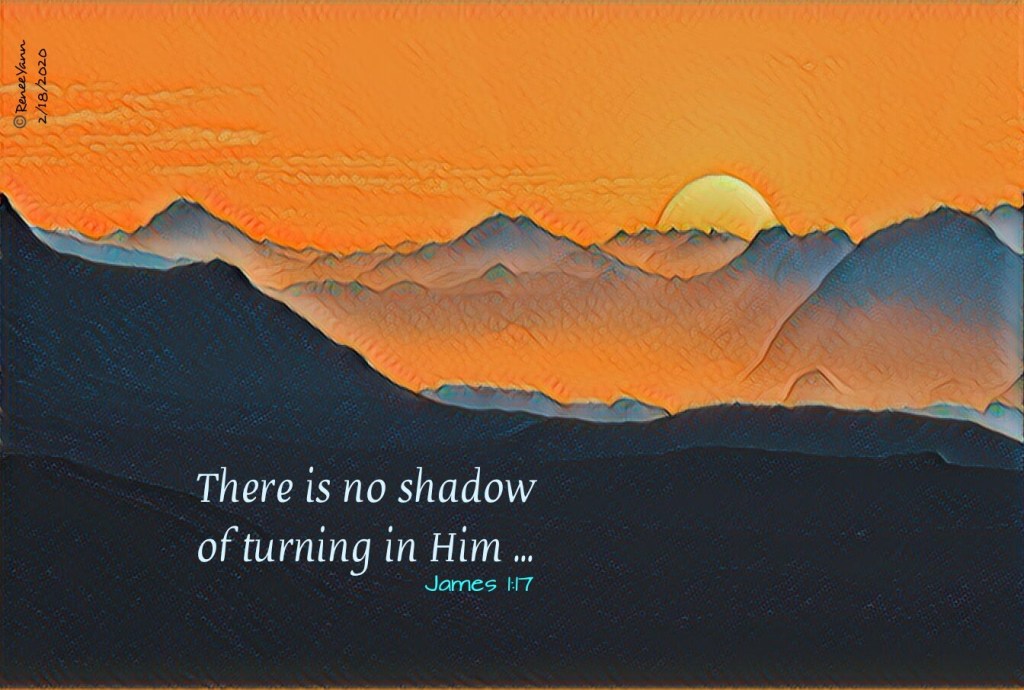
with whom there is no alteration or shadow of turning.

James 1:17

I particularly love that last phrase, rendered in our hymn today like this:

It’s beautiful to see how James, as a real spiritual leader, is so aware of his flock’s human struggles. No doubt, he shares them. What a blessing that his wise and loving guidance has come down through the ages to us!


Prose: from Carl Jung

The worst sin is unconsciousness, 
but it is indulged in with the greatest piety 
even by those who should serve humankind 
as teachers and examples.

Music: Great Is Thy Faithfulness – sung by Chris Rice

Crippling Regret

Tuesday of the Fourth Week in Ordinary Time
January 30, 2024

Today’s Readings:

https://bible.usccb.org/bible/readings/013024.cfm


Today, in God’s Lavish Mercy, we read one of the saddest lines in Scripture.

2Sam18_32

You have followed the story in these daily passages. Absalom rebels, designing to usurp his father’s throne. A massive battle rises between them. David, as commander-in-chief, remains behind, but gives instructions to his generals to spare Absalom’s life. Joab ignores the command, killing Absalom in a moment of vulnerability.

David is devastated.

david mourns
David Mourning Absalom’s Death –
Jean Colombe

I think there is no more wrenching human emotion than regret. When I ministered for nearly a decade as hospice chaplain, and later in the hospital emergency room, I saw so much regret.

People who had waited too long to say “I’m sorry”, “I forgive you”, “Let’s start over”, ” It was my fault too..”, “Thank you for all you did for me”, “I love you”…..

Instead, these people stood at lifeless bedsides saying things like, “I should have”, “I wish…”, “If only…”


Life is complex and sometimes difficult. We get hurt, and we hurt others — sometimes so hurt that we walk away from relationship, or stay but wall ourselves off.

We might think that what is missing in such times is love. But I think it is more likely truth. In times of painful conflict, if we can hear and speak our truth to ourselves and one another, we open the path to healing.


If you want the truth, I’ll tell you the truth.
Listen to the secret sound,
the real sound, which is inside you.
~ Kabir


That healing may demand adjustments, agreements, even a willingness to step apart in mutual respect. But if the changes emerge from shared truth, restoration and wholeness are possible.

David and Absalom never found that path because they were so absorbed in their own self-interests. Theirs was the perfect formula for regret – that fruitless stump that perpetually sticks in the heart.


I remember a trauma surgeon leaving the hospital late one night after an unsuccessful effort to save a young boy who had been shot. The doctor carried the loss so heavily as he walked into the night saying to me, “I’m just going to go home and hug my kids.”

As we pray over David and Absalom today, let us examine our lives for the still healable fractures and act on them. Let us “hug” the life we have. Regret is a useless substitute.


Poetry: The Eyes of My Regret – Angelina Weld Grimké

Angelina Weld Grimké was born in Boston on February 27, 1880. She was the daughter of Archibald Grimké, who had been born a slave in Charleston, South Carolina, and Sarah Stanley Grimké, a white woman and the daughter of an abolitionist. Named after her great-aunt, the abolitionist and suffragist, Angelina Grimké Weld, Grimké grew up in liberal, aristocratic Boston society. She attended the best preparatory schools in Massachusetts, including Cushing Academy and the now defunct Carleton School.

My readers might be interested in Sue Monk Kidd’s excellent historical novel “The Invention of Wings” which tells the story of the poet’s abolitionist great-aunts, the Grimké sisters.


The Eyes of My Regret

Always at dusk, the same tearless experience,
The same dragging of feet up the same well-worn path
To the same well-worn rock;
The same crimson or gold dropping away of the sun
The same tints—rose, saffron, violet, lavender, grey
Meeting, mingling, mixing mistily;
Before me the same blue black cedar rising jaggedly to a point;
Over it, the same slow unlidding of twin stars,
Two eyes, unfathomable, soul-searing,
Watching, watching—watching me;
The same two eyes that draw me forth, against my will dusk after dusk;
The same two eyes that keep me sitting late into the night, chin on knees
Keep me there lonely, rigid, tearless, numbly miserable,
—The eyes of my Regret.

Music: When David Heard – Eric Whitaker (The piece builds. Be patient. Lyrics below)

When David heard that Absalom was slain,
he went up into his chamber over the gate and wept,
and thus he said;

My son, my son,
O Absalom my son,
would God I had died for thee!

When David heard that Absalom was slain,
he went up into his chamber over the gate and wept,
and thus he said;

My son, my son.

Grief, Honor, and Mercy

Saturday of the Second Week in Ordinary Time
January 20, 2024

Today’s Readings:

https://bible.usccb.org/bible/readings/012024.cfm


Today, in God’s Lavish Mercy, our readings center on the themes of grief, honor, and mercy.

In the passage from 2 Samuel, Saul has been killed in battle. The news is brought to David by a scheming Amalekite who (later verses reveal) hopes to profit from his enterprise. He has stripped Saul’s dead body of its kingly insignia, obsequiously depositing it at David’s feet. The messenger expects David’s vengeful rejoicing and a hefty reward.

Instead David, with reverence and honor appropriate to a future king, launches a deep public mourning for Saul and Jonathan. It is a bereavement necessary to both cleanse and heal the community’s heart from all the strife leading up to it.

David seized his garments and rent them, 
and all the men who were with him did likewise.
They mourned and wept and fasted until evening 
for Saul and his son Jonathan, 
and for the soldiers of the LORD of the clans of Israel, 
because they had fallen by the sword.

2 Samuel 1:11-12

David’s lament is profound; it is ”splancha”, sprung from his innards, like the anguish Jesus felt for the suffering persons he encountered, as described in our Gospel.

A callous or indifferent heart cannot comprehend such pathos. Seeing it in Jesus, even his relatives thought him insane!

Jesus came with his disciples into the house.
Again the crowd gathered,
making it impossible for them even to eat.
When his relatives heard of this they set out to seize him, 
for they said, “He is out of his mind.” 

Mark 3: 20-21

Our God is a God of boundless love 
and impractical mercy. 
David models a bit of that godliness. 
Jesus is its complete Incarnation.

Poetry: Talking to Grief – Denise Levertov

Ah, Grief, I should not treat you
like a homeless dog
who comes to the back door
for a crust, for a meatless bone.
I should trust you.
I should coax you
into the house and give you
your own corner,
a worn mat to lie on,
your own water dish.
You think I don't know you've been living
under my porch.
You long for your real place to be readied
before winter comes. You need
your name,
your collar and tag. You need
the right to warn off intruders,
to consider
my house your own
and me your person
and yourself
my own dog.

Music: Lascia Ch’io Pianga (Let Me Weep)- Georg Frideric Handel – a single piece of beautiful music today in two version, an aria and an instrumental interpretation.

Julia Lezhneva – soprano

Noble Soul

Friday of the Second Week in Ordinary Time
January 19, 2024

Today’s Readings:

https://bible.usccb.org/bible/readings/011924.cfm


Today, in God’s Lavish Mercy, David spares Saul’s life even though Saul is in murderous pursuit of him. (Here is a video for kids featuring the moment. But I thought it was pretty cool. Maybe you will too.)

Is David noble or naïve? Is he magnanimous or stupid? As I pray this morning, I ask myself what it is that God might be saying to me through this passage.

Two things rise up:

  1. Above all else, David is motivated by a deep respect for God’s Will and Presence in his life.

David said to his men,
“The LORD forbid that I should do such a thing to my master,
the LORD’s anointed, as to lay a hand on him,
for he is the LORD’s anointed.”

1 Samuel 24:7

    2.  David engages Saul directly and respectfully in the hope of reaching a resolution of    their issues.

When David finished saying these things to Saul, Saul answered,
“Is that your voice, my son David?”
And Saul wept aloud.

1 Samuel 24:17

Reverence and honesty rooted in sincere love and respect for one another! What a world we would live in if each of us practiced these things unfailingly!


In our Gospel, Jesus calls his disciples to live in the world in just such a way – to bring healing and wholeness in the Name of Christ, for the sake of Love.

Our Alleluia Verse today captures the essence of Christ’s call to them —- and to us:

God was reconciling the world to himself in Christ,
and entrusting to us the message of that reconciliation.

2 Corinthians 5:19

Poetry: Noble Deeds – Henry Wadsworth Longfellow

Whene'er a noble deed is wrought,
Whene'er is spoken a noble thought,
Our hearts in glad surprise,
To higher levels rise.

The tidal wave of deeper souls
Into our inmost being rolls,
And lifts us unawares
Out of all meaner cares.

Honor to those whose words or deeds
Thus help us in our daily needs,
And by their overflow
Raise us from what is low!

Music: To Fill the World with Love sung by Richard Harris
(Lyrics below, but you will no doubt recall them from the fabulous film “Goodbye Mr. Chips”.)

In the morning of my life I shall look to the sunrise.
At a moment in my life when the world is new.
And the blessing I shall ask is that God will grant me,
To be brave and strong and true,
And to fill the world with love my whole life through.

And to fill the world with love
And to fill the world with love my whole life through

In the noontime of my life I shall look to the sunshine,
At a moment in my life when the sky is blue.
And the blessing I shall ask shall remain unchanging.
To be brave and strong and true,
And to fill the world with love my whole life through

In the evening of my life I shall look to the sunset,
At a moment in my life when the night is due.
And the question I shall ask only You can answer.
Was I brave and strong and true?
Did I fill the world with love my whole life through?

Renewal Offer

Second Sunday of Advent
December 10, 2023

Today’s Readings:

https://bible.usccb.org/bible/readings/121023.cfm


Today, in God’s Lavish Mercy, our readings ask us, for an Advent moment, to disentangle ourselves from time and space, and to see the world as God sees it.


Isaiah, hearing God’s insistence in his prophet’s heart, assures us of God’s mercy and of our deliverance from the world’s confusions:

Handel: Messiah / Part 1 – “Comfort ye, My people… Ev’ry Valley shall be exalted”
Conducted by Sir Neville Mariner

Comfort, give comfort to my people,
says your God.
Speak tenderly to Jerusalem, and proclaim to her
that her service is at an end,
her guilt is expiated;
indeed, she has received from the hand of the LORD
double for all her sins.

Isaiah 40: 1-2

Isaiah analogizes these confusions in rich terrestrial metaphors: a desert, a wasteland, a depressed valley, a rough road. Probably most of us have been in one or two of these spots in the past year. Am I right?

A voice cries out:
In the desert prepare the way of the LORD!
Make straight in the wasteland a highway for our God!
Every valley shall be filled in,
every mountain and hill shall be made low;
the rugged land shall be made a plain,
the rough country, a broad valley.
Then the glory of the LORD shall be revealed,
and all people shall see it together;
for the mouth of the LORD has spoken.

Isaiah 40:3-5

But just how is our deliverance from these dead-end places to be accomplished? Peter offers an answer – it is accomplished through repentance.

Do not ignore this one fact, beloved,
that with the Lord one day is like a thousand years
and a thousand years like one day.
The Lord does not delay his promise, as some regard “delay,”
but he is patient with you,
not wishing that any should perish
but that all should come to repentance.

2 Peter 3:8-9

If we were lost in a desert or trapped in an unscalable valley, all we would want is to get out. We might not pause to ask ourselves, “How did I get here?”, or “How can I avoid a return?”. The same thing might be true of our spiritual deserts and valleys.

Isaiah, Peter, and Jesus tell us that it is our resistance to God’s vision, our sinfulness, that captures us in our desolations – and that “repentance” is the antidote.

Since everything is to be dissolved in this way,
what sort of persons ought you to be,
conducting yourselves in holiness and devotion,
waiting for and hastening the coming of the day of God,
because of which the heavens will be dissolved in flames
and the elements melted by fire.
But according to his promise
we await new heavens and a new earth
in which righteousness dwells.
Therefore, beloved, since you await these things,
be eager to be found without spot or blemish before him, at peace.

2 Peter 3:11-14

In our Gospel, John the Baptist also tells us to repent. And, honestly, when I first read his Advent proclamation every year, I find myself telling God something like this:

You know, dear God, I’m not really that bad off that I need to — well, you know…. like actually REPENT!!!! I’ve been doing the best I can. I’m one of the “Goodies” in this bad, bad world! You see that, don’t You?

Then Isaiah’s gentle Shepherd comes along, lifts me into those comforting arms, and convinces me that the world can be transformed if I will let myself see it as God sees it. All the normalized uncharities of my life — the judgments, the ungenerous hesitations, the excused prejudices, the unforgiven mistakes, the selfish expectations. Yes, all those deserts and valleys that we dismiss unresolved will just accumulate and stagnate in our listless spirits! It is from these crooked ways that God offers to deliver us once again in this year’s Advent reimagining.


So, what a wonderful invitation we receive in today’s readings! It is time to begin again – fresh, reinvigorated, and amazed at the power of grace in our lives!

Go up on to a high mountain,
Zion, herald of glad tidings;
cry out at the top of your voice,
Jerusalem, herald of good news!
Fear not to cry out
and say to the cities of Judah:
Here is your God!
Here comes with power
the Lord GOD,
who rules by his strong arm;
here is his reward with him,
his recompense before him.
Like a shepherd he feeds his flock;
in his arms he gathers the lambs,
carrying them in his bosom,
and leading the ewes with care.

Isaiah 40:9-11

On this Advent’s Second Sunday, let’s rest with that comforting but convincing Shepherd to learn where graceful change will free us for rebirth.


Poetry: Reminder – Mark Jarman

For God is in heaven, and you upon earth.
—Ecclesiastes 5:2

Don’t take your eyes off the road.
Accept nothing as given.
Watch where you put your hands.
You’re here and God’s in heaven.

Be careful where you step.
The drop-off’s somewhere near.
The fog won’t lift tonight.
God’s in heaven. You’re here.

That word you wish to say,
That score you’d like to even—
Don’t hurry either while
You’re here and God’s in heaven.

The earth says, “Take the wheel.
But no matter how you steer,
I’ll still go round in circles.
God’s in heaven. You’re here.”


Music: Like A Shepherd – John Foley, SJ

One Bad Apple …?

Saturday of the Twenty-eighth Week in Ordinary Time
October 21, 2023

Today’s Readings:

https://bible.usccb.org/bible/readings/102123.cfm


Today, in God’s Lavish Mercy, our scripture readings are a little heavy. I had to dig to get my inspiration. But there are gems in these dense words!

It was not through the law
that the promise was made to Abraham and his descendants
that he would inherit the world,
but through the righteousness that comes from faith.

This is a spiritually freeing passage. It assures us that God is with us through our faith, not through the perfection with which we keep laws and rules.


Our Gospel reinforces the message:

Everyone who speaks a word against the Son of Man will be forgiven,
but the one who blasphemes against the Holy Spirit
will not be forgiven.

Luke 12:10
lk12_10HolySpirit

The passage is a little scary when first read, because we all hope we haven’t done anything to offend the Holy Spirit. But what Jesus is telling his listeners is this:

If a person criticizes or rejects Christ’s life and teaching, forgiveness is still possible when they come to their senses and repent. It’s like cutting the bad spot out of an otherwise good apple.

But if a person chooses to live a life which blasphemes (mocks, dismisses) the Spirit of life, love, mercy and peace, that person can never be forgiven — because they can never repent. They will be hardened and rotten to the core.


So the advice of Paul and Jesus boils down to this, I think. Befriend the Holy Spirit by your life of faithful choices. Listen to Her inspiration. Help others to do the same. And do not worry when you make a few mistakes. God stands by the promise to be with us always.


Prose: Christmas Address of Pope Francis – 12/22/2022

Much has happened in the course of this year and, before anything else, we want to thank the Lord for all his blessings. Yet we hope that among those blessings is that of our conversion. Conversion is a never-ending story. The worst thing that could happen to us is to think that we are no longer in need of conversion, either as individuals or as a community.
To be converted is to learn ever anew how to take the Gospel message seriously and to put it into practice in our lives. It is not simply about avoiding evil but doing all the good that we can. That is what it means to be converted. Where the Gospel is concerned, we are always like children needing to learn. The illusion that we have learned everything makes us fall into spiritual pride.

Music: Spirit of the Living God- Divine Hymns

Got Sin?

Memorial of Our Lady of the Rosary
Saturday of the Twenty-sixth Week in Ordinary Time
October 7, 2023

Today’s Readings:

https://bible.usccb.org/bible/readings/100723.cfm


Today, in God’s Lavish Mercy, Baruch continues to instruct his flock on the necessity and practice of repentance.

Baruch puts this wonderful image into the mouth of personified Jerusalem as she calls her people to repentance:

As your hearts have been disposed to stray from God,
turn now ten times the more to seek him…

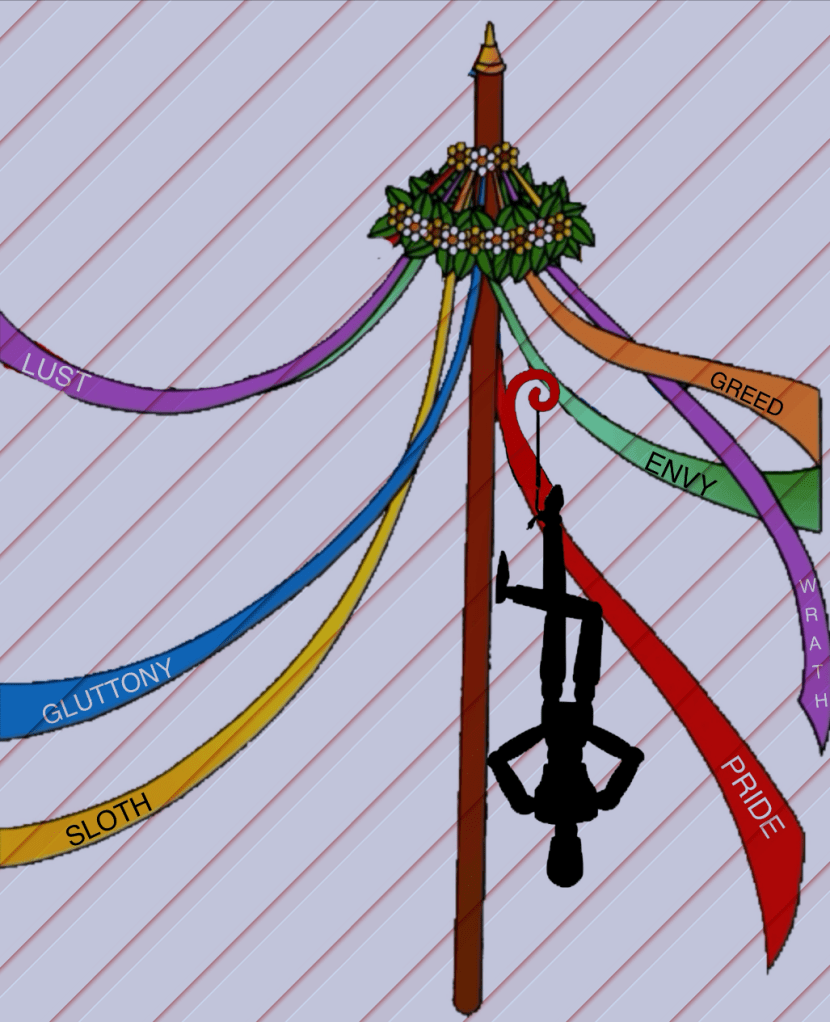
Doesn’t that verse perfectly describe how we struggle to move beyond our sinful fascinations into freedom and wholeness? I’m sure that, at some time in our lives, we have twirled more than once around some of the deadly sins to the point of getting ourselves all wound up!

Baruch says, “Rewind — even ten times! Go back to the heart of God!”


But that repentance to the tenth power may not be so easy to achieve. The topic of sin isn’t so popular today, although its practice seems to be doing just fine. Dr. Rebecca DeYoung, graduate of Notre Dame, specializes in research about the seven deadly sins and spiritual formation. She says this about our density to the power of sin in our lives:

We deceive ourselves about how powerful sin actually is, and when we finally do face our flaws, we often find ourselves, as Augustine said in his Confessions, “chained by the power of habit.” What would it look like to take sin seriously—to acknowledge how susceptible we are to the dark power of our own disordered desires? And what difference does it make to think of sin as self-destructive habit that shapes our lives from the inside out?


Prose: You may enjoy reading Professor DeYoung’s article as much as I did. Here is the link;


Music: Where I Find God – Larry Fleet

That moment of repentance and redemption can come in the most unexpected ways as attested to in this great country song. Fleet wrote this song which was one of the 50 most listened to country songs of 2021.

The night I hit rock bottom, sittin’ on an old barstool
He paid my tab and put me in a cab, but he didn’t have to
But he could see I was hurtin’, oh, I wish I’d got his name
‘Cause I didn’t feel worth savin’, but he saved me just the same

That day out on the water, when the fish just wouldn’t bite
I put my pole down, I floated around, was just so quiet
And I could hear my old man sayin’ “Son, just be still
‘Cause you can’t find peace like this in a bottle or a pill”

From a bar stool to that Evinrude
Sunday mornin’ in a church pew
In a deer stand or a hay field
An interstate back to Nashville
A Chevrolet with the windows down
Me and him just ridin’ around
Sometimes, whether I’m lookin’ for Him or not
That’s where I find God

Sometimes late at night, I lie there and listen
To the sound of her heart beatin’
And the song the crickets are singin’
And I don’t know what they’re sayin’
But it sounds like a hymn to me
Naw, I ain’t too good at prayin’
But thanks for everything

From a bar stool, to that Evinrude
Sunday mornin’ in a church pew
In a deer stand or a hay field
An interstate back to Nashville
A Chevrolet with the windows down
Me and him just ridin’ around
Sometimes, whether I’m lookin’ for Him or not
That’s where I find God

From a bar stool, to that Evinrude
Sunday mornin’ in a church pew
In a deer stand or a hay field
An interstate back to Nashville
A Chevrolet with the windows down
Me and him just ridin’ around
Talkin’, well I do that a lot
Well, I do that a lot
That’s where I find God