The Heart to Give My All

Memorial of Saint Aloysius Gonzaga, Religious
Wednesday, June 21, 2023

Today’s Readings:

https://bible.usccb.org/bible/readings/062123.cfm
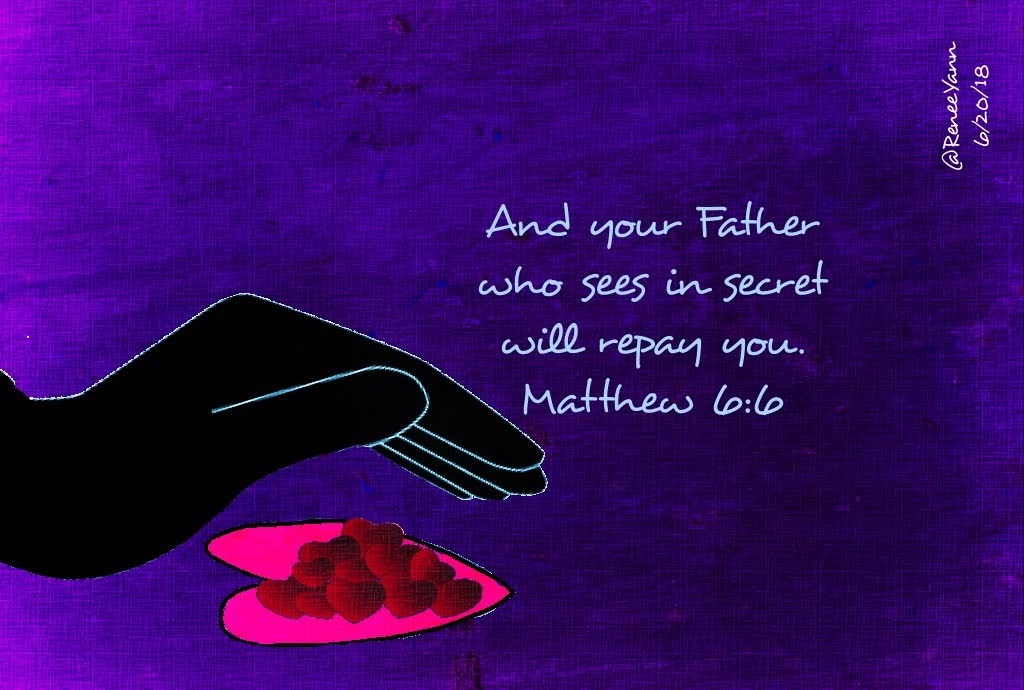

Today, in God’s Lavish Mercy, Paul and Jesus give us some tips on sound Christian living.

Paul instructs us to live out of our abundance rather than our scarcity.

Brothers and sisters, consider this:
whoever sows sparingly will also reap sparingly,
and whoever sows bountifully will also reap bountifully.
Each must do as already determined, without sadness or compulsion,
for God loves a cheerful giver.
Moreover, God is able to make every grace abundant for you,
so that in all things, always having all you need,
you may have an abundance for every good work.

2 Corinthians 9:6-8

It seems like responding to Paul’s challenge shouldn’t be hard for those of us who actually have an abundance of this world’s goods and benefits. But I think sometimes it is.

It’s pretty easy to assess our generosity when we look at money or physical goods. It’s clear when I give someone in need $5.00 or a warm shirt. What’s not so clear is how generous I am , both locally and globally, with non-material goods like my prayer, respect, time, service, patience, understanding, forgiveness, tolerance, appreciation, encouragement or the many hidden awarenesses that might make someone else’s life more gracefully abundant.


Jesus tells us that if we offer these invisible generosities, we will be divinely enriched:

… your Father who sees what is hidden will repay you.


Jesus also expects us to make that offering. Notice that, when describing good works, Jesus doesn’t say “IF” you do these things. He says “WHEN” you do them:

When you give alms, do not blow a trumpet before you…
when you give alms,
do not let your left hand know what your right is doing,
so that your almsgiving may be secret.
And your Father who sees in secret will repay you.


When you pray, do not be like the hypocrites,
who love to stand and pray on street corners …
when you pray, go to your inner room, close the door,
and pray to your Father in secret.
And your Father who sees in secret will repay you.


When you fast, do not look gloomy like the hypocrites …
when you fast, anoint your head and wash your face,
so that you may not appear to others to be fasting,
except to your Father who is hidden.
And your Father who sees what is hidden will repay you.”


Many of us are embarrassingly blessed in this life. Living gratefully is the first step to easing that embarrassment and turning it into spiritual self-knowledge. That deep gratitude will strengthen us for quiet, joyous generosity and the recognition that all our true abundance belongs to God.


Prose: from Gitanjali 50 – Rabindranath Tagore

I had gone a-begging from door to door in the village path, when thy golden chariot appeared in the distance like a gorgeous dream and I wondered who was this King of all kings!

My hopes rose high and methought my evil days were at an end, and I stood waiting for alms to be given unasked and for wealth scattered on all sides in the dust.

The chariot stopped where I stood. Thy glance fell on me and thou camest down with a smile. I felt that the luck of my life had come at last. Then of a sudden thou didst hold out thy right hand and say “What hast thou to give to me?”

Ah, what a kingly jest was it to open thy palm to a beggar to beg! I was confused and stood undecided, and then from my wallet I slowly took out the least grain of corn and gave it to thee.

But how great my surprise when at the day’s end I emptied my bag on the floor to find a least little grain of gold among the poor heap. I bitterly wept and wished that I had had the heart to give thee to my all.

Music: Soul Food – Dean Evenson

The Indescribable Gift

Thursday of the Tenth Week in Ordinary
June 15, 2023

Today’s Reading:

https://bible.usccb.org/bible/readings/061523.cfm


Today, in God’s Lavish Mercy, our readings offer us insight into spiritual clarity.

For sure I, like all of you reading this blog, want to know God more deeply.
Moses did.
The people of the Hebrew Scriptures did.
But Paul tells us in our first reading that they didn’t have the advantage – the “indescribable gift” – that we have: Jesus, the Incarnate Word of God.

To this day, whenever Moses is read,
a veil lies over the hearts of the children of Israel,
but whenever a person turns to the Lord the veil is removed.
Now the Lord is the Spirit and where the Spirit of the Lord is,
there is freedom.

2 Corinthians 3:15-17

Paul says that despite this gift, some of us, blinded by “the god of this age” may remain in darkness:

And even though our Gospel is veiled,
it is veiled for those who are perishing,
in whose case the god of this age
has blinded the minds of the unbelievers,

2 Corinthians 4:3-4

Paul compares this blocked vision to a veil covering our eyes and distancing us from the fullness of God.

It’s a great image! Don’t we unconsciously cover our eyes when we don’t want to see what’s really going on? Don’t we cast our own glance downward to obscure our eyes when we are unsure of ourselves or, maybe, telling a white lie?


This morning, when I read about Paul’s “veil”, I remembered a funny but instructive incident from my childhood. I was about seven years old and had been sent to my room for some egregious infraction of household law. Convinced of my innocence and righteousness, I pouted there until Mom called me downstairs for dinner.

Still angry, I didn’t want to go, so I decided not to “face” my family at the dinner table. Probably, deep in my heart, I knew I had been wrong but didn’t yet have the freedom to “face” myself. So, employing a pair of Mom’s old sunglasses and Grandpop’s handkerchief, I appeared at the dinner table like this – “veiled”. (Believe me, it was no fun trying to eat my mashed potatoes that way!)


I am a long, long way from that bratty little girl now. But there are still places in my life where I want to reach for the hanky and the glasses because I’m not ready for God’s overwhelming grace offered to me in every life circumstance. So often, I am still convinced that I see the darkness that I see, rather than the Mystery within it inviting me to Light..

For God who said, “Let light shine out of darkness”,
has shone in our hearts to bring to light
the knowledge of the glory of God
on the face of Jesus Christ.

1 Corinthians 4:6

Back when I was seven years old, it was Uncle Joe who teased me, with a gentle love, out of my peevishness. Maybe God is trying to do that for you, for me, today. What do you think?

(Uncle Joe and me, about 35 years after the described incident.)


Poetry: from Rumi

Your thoughts are a veil 
on the face of the Moon.

That Moon is your heart,
and those thoughts cover your heart.

So let them go,
just let them fall into the water.

Music: Heaven’s Window – Peter Kater – you will hear a gentle call to Agnus Dei, Jesus Lamb of God as the music lifts the veil to heaven. Just relax and let the music lift you too.

Upside-Down, Inside-Out

Thursday of the Fourth Week of Easter
May 4, 2023

Today’s Readings:

https://bible.usccb.org/bible/readings/050423.cfm

Today, in God’s Lavish Mercy, our two readings take us on a journey. We sail through Israel’s long and spectacular salvation history from Moses through David and forward to Jesus. And in the sailing, we get turned head over heels.


In our first reading, Paul encapsulates twelve hundred years in a few elegant verses. (Nice job, Paul!)

The touchpoints of his homily are these:

  • the sojourn in the land of Egypt. 
  • forty years in the desert.
  • destruction of Canaan,
  • judges up to Samuel the prophet.
  • King Saul, for forty years. 
  • King David whose descendants gave Israel …
  • JESUS
  • then a little mention of John the Baptist

Paul’s succinct preaching allows us to see God’s powerful arm reaching through the long sleeve of Isreal’s history, finally handing the Chosen People the ultimate gift — Jesus Christ the Messiah.


Ah, but then we have our Gospel – which does today what it always does so well. It turns everything upside down and inside-out.

Through the twelve hundred years of Israel’s pre-Christian history, we see an agonizingly slow rise to power and glory culminating in David’s reign. How deeply later Israelites longed for a future Savior who would shine like the royal David had – who would restore the glory of Israel. That was their cherished expectation.


But Jesus turns that long sleeve of salvation history inside out. He preaches an inverse power fueled by service, a glory dressed in humble acts of mercy and forgiveness.

His longing is not for a worldly restoration, but for a whole New Creation born of sacrificial love. His hope is not for a secular kingdom but for a transformational community enlivened in the Triune God.

When Jesus had washed the disciples’ feet, he said to them:
“Amen, amen, I say to you, no slave is greater than his master
nor any messenger greater than the one who sent him.
If you understand this, blessed are you if you do it.

John 12:16-20

As we read and pray the scriptures, we get better at seeing the sacred understory of grace sustaining us. Upside-down, inside-out, our daily life is filled with divine mystery and revelation. We just have to look at the flip side to catch hold of the sail.

I was a teenager during the golden age of the 33 and 45 rpm records. I had a slew of Elvis, Fats Domino, Roy Orbison, The Everley Brothers, Ray Charles, The Supremes and many others. Each record had a hit on one side, and I rarely bothered to look at the other side. One day I flipped one of my “Top 10s” (The Wildcat Blues) to take a look at the other side, only to find what would become one of my favorite songs of all time: Petite Fleur. After the 1950s, it faded from the top ten list, but it has stayed on my list for 60 years.

When I hear that song, it sinks into my spirit creating a feeling that resists words. Like much good music, it reorders something in my spirit so that I see the world a little differently. And I would never have found it if I hadn’t turned things upside down to listen to the understory.


If we allow ourselves to dive deep under the scriptures – to go to the “flip side” – as Jesus invites us to do in today’s Gospel, we will find our own “petite fleurs” of insight and grace.

If you understand this,
blessed are you if you do it.

John 13:17

Prose: from Seeing by Annie Dillard

The secret of seeing is, then, the pearl of great price. 
If I thought he could teach me to find it and keep it forever 
I would stagger barefoot across a hundred deserts 
after any lunatic at all. 

But although the pearl may be found,
it may not be sought. 
The literature of illumination reveals this above all: 
although it comes to those who wait for it, 
it is always, even to the most practiced and adept, 
a gift and a total surprise… 

I cannot cause light; 
the most I can do is try to put myself 
in the path of its beam. 
It is possible, in deep space, to sail on solar wind. 
Light, be it particle or wave, has force: 
you rig a giant sail and go. 

The secret of seeing is to sail on solar wind.
Hone and spread your spirit till you yourself are a sail, 
whetted, translucent, broadside to the merest puff.

Music: Petite Fleur – Chris Barber

The Twisted Kiss

Tuesday of Holy Week
April 4. 2023

Today’s Readings:

https://bible.usccb.org/bible/readings/040423.cfm

Today, in God’s Lavish Mercy, the clouds thicken around Jesus.

Reclining at table with his disciples, Jesus was deeply troubled and testified,
“Amen, amen, I say to you, one of you will betray me.”
The disciples looked at one another, at a loss as to whom he meant.

John 13:21

How painful for Jesus, and for these who have shared the glorious years of his ministry, to now sit with suspicion among yesterday’s friends. How lonely for each one as the dark force of doubt pushes them away from one another!

Only love can break through this kind of doubt, courageously exposing the truth in order that it might be reconciled and offered forgiveness:

One of his disciples, the one whom Jesus loved,
was reclining at Jesus’ side.
So Simon Peter nodded to him to find out whom he meant.
He leaned back against Jesus’ chest and said to him,
“Master, who is it?”

Jesus answered,
“It is the one to whom I hand the morsel after I have dipped it.”
So he dipped the morsel and took it and handed it to Judas,
son of Simon the Iscariot.

John 13: 21-26

As the rest of the Passion story unfolds, both Judas and Peter will need the kind of forgiveness these readings describe. Both prove false to Jesus’s trust. But one has the humble contrition to seek forgiveness. The other cannot forget himself enough to do so.


This “doubtful Tuesday” can teach us much about expectations, courage, truth, love, trust, humility, and forgiveness. Let us sit beside Jesus at the Gospel table and ask him, like the Disciples, how we measure up to his hope for us.


Poetry: Christ Washed the Feet of JudasGeorge Marion McClellan

Christ washed the feet of Judas!
The dark and evil passions of his soul,
His secret plot, and sordidness complete,
His hate, his purposing, Christ knew the whole.
And still in love he stooped and washed his feet.

Christ washed the feet of Judas!
Yet all his lurking sin was bare to him,
His bargain with the priest, and more than this,
In Olivet, beneath the moonlight dim,
Aforehand knew and felt his treacherous kiss.

Christ washed the feet of Judas!
And so ineffable his love ’twas meet,
That pity fill his great forgiving heart,
And tenderly to wash the traitor’s feet,
Who in his Lord had basely sold his part.

Christ washed the feet of Judas!
And thus a girded servant, self-abased,
Taught that no wrong this side the gate of heaven
Was ever too great to wholly be effaced,
And though unasked, in spirit be forgiven.

And so if we have ever felt the wrong
Of Trampled rights, of caste, it matters not,
What e’er the soul has felt or suffered long,
Oh, heart! this one thing should not be forgot:
Christ washed the feet of Judas


Music:  The Kiss – Joe Niemand 

Meet me in the garden
My love
Meet me there at midnight

At the place only we know
My love
A kiss awaits tonight

In the darkness between the flowers
My love
In the shadows of the moon

Your lips will tear the pretense like the curtain tomorrow afternoon

And so the glow of approaching torches
Makes the darkness dance like black flames
Ever faster to the music of every heart that refuses to be saved

I prayed this could be different
That my death could save you too
But your choices are your own
Now my friend, do what you came to do

Heart-Softening

Thursday of the First Week in Ordinary Time
January 12, 2023

Today’s Readings:

https://bible.usccb.org/bible/readings/011223.cfm

psalm 95 copy

Today, in Mercy, our first reading quotes at length from Psalm 95, and the message is reprised in the Responsorial Psalm.

Harden not your hearts.

We all know what it feels like to harden our hearts. We do it out of anger, fear, exhaustion, frustration and so many other reasons. We feel like the only way to protect ourselves and our space is to build a wall! Put up those bricks made out of our stony faces, curt words, numbing silence, distancing indifference – our hardened hearts.


Today’s reading tells us that this is never God’s way.

The way to freedom, peace, self-respect, joy and fullness of life is always found in relationship – as God is in relationship with all Creation.

Jesus demonstrates that relationship in today’s Gospel by connecting with the leper. This leper has been walled off from society by illness and disfigurement. Most people’s hearts are hardened against him, but Jesus is “moved by pity” at the leper’s isolation.

The leper, too, has built a bridge by reaching through his own hardened heart in faith and trust. Surely all the years of mistreatment had made him wary of trust, had immobilized him in self-protection. But he allows himself a courageous plea to Jesus, and he is heard.

Jesus Cures a Leper – Rembrandt


It is no easy challenge to soften a hardened heart. Some of our walls are very high, some of our bricks very heavy. But, one by one, we can choose opportunities for forgiveness, kindness, understanding, patience, encouragement, listening and companionship – even, and especially, toward those estranged in any way from us or from themselves. And we can do this even toward ourselves when we have become hardened to our own beauty and goodness.

To begin might take only a smile, a prayer, a phone call, a small kindness, an invitation, a moment of ordinary conversation…. just these might start to crumble a wall, to soften a heart.

Let’s ask God’s grace today to do this heart-softening wherever we might need it. Let’s ask this grace for others in need as well.


Poetry: The Altar by George Herbert – Herbert wrote this poem in the shape of an altar. He describes the spiritual process of allowing his “hard heart” to be built into an altar for God’s praise.

A broken ALTAR, Lord, thy servant rears,

 Made of a heart and cemented with tears:

  Whose parts are as thy hand did frame;

No workman’s tool hath touch’d the same.

                   A HEART alone

                   Is such a stone,

                  As nothing but

                  Thy pow’r doth cut.

                  Wherefore each part

                  Of my hard heart

                  Meets in this frame,

                  To praise thy name:

       That if I chance to hold my peace,

 These stones to praise thee may not cease.

   Oh, let thy blessed SACRIFICE be mine,

     And sanctify this ALTAR to be thine.


Music: Soften My Heart, Lord (and adding a second song, just because I think you’ll like it.)

The Image of God

Christmas Weekday
January 3, 2023

Today’s Readings

https://bible.usccb.org/bible/readings/010323.cfm

Today, in God’s Lavish Mercy, we pray with John’s soul-stirring words:

1 jn 3_ 2

Beloved, we are God’s children …

When I pray these words I think of my mother. As a little child, I already bore a clear physical likeness to her. But as I grew into a young woman, and later an older woman, people remarked that we looked like twins. There were even occasions when we were confused with each other.

This visible resemblance gave me great pride. My mother was strong, courageous, funny, wise, and fiercely loving. I loved to hear the phrase, “Oh my, you are the image of your mother!” I wanted to be like her – made of the same stuff as she was.


In our reading today, John tells us that we are made of the very stuff of God – the essence of the Sacred. He suggests that when people look at us they should see God’s features written all over us.

See what love the Creator has bestowed on us
that we may be called the children of God.
Yet so we are.

1 John 2:30

John says that we should see this Divine familial likeness in one another – that we are each imprinted with our Creator’s image.

The reason the world does not know us is that it did not know him.
Beloved, we are God’s children now;
what we shall be has not yet been revealed.

1 John 2:31

If we believe John’s words, what tenderness we would bear toward ourselves and others! How could we ever belittle, hate or kill one another? How could we ever do these things to ourselves?


In our Gospel, the great prophet John the Baptist sees the imminent transformation of the world coming toward him in the person of Jesus Christ. May we see this too as, by our sincere prayer and study of the scriptures, the Light of Christmas waxes in our hearts throughout 2023. In that Loving Light, we recognize one another clearly as beloved children of God.

John the Baptist saw Jesus coming toward him and said,
“Behold, the Lamb of God, who takes away the sin of the world.
…..
John testified further, saying,
“I saw the Spirit come down like a dove from the sky
and remain upon him.
I did not know him,
but the one who sent me to baptize with water told me,
‘On whomever you see the Spirit come down and remain,
he is the one who will baptize with the Holy Spirit.’
Now I have seen and testified that he is the Son of God.”

John 1:29-34

Poetry: I Am the Light – Malcolm Guite

I see your world in light that shines behind me,
Lit by a sun whose rays I cannot see,
The smallest gleam of light still seems to find me
Or find the child who’s hiding deep inside me.
I see your light reflected in the water,
Or kindled suddenly in someone’s eyes,
It shimmers through the living leaves of summer,
Or spills from silver veins in leaden skies,
It gathers in the candles at our vespers
It concentrates in tiny drops of dew
At times it sings for joy, at times it whispers,
But all the time it calls me back to you.
I follow you upstream through this dark night
My savior, source, and spring, my life and light.

Music: How Can Anyone Ever Tell You – Shaina Knoll

Often, when I think of Christ on the Cross, I can hear God the Mother singing this song to Jesus, reaching from heaven to console Him in His pain.

This morning, we might ask God to sing this song over our wounded world which has so obscured God’s likeness – perhaps to sing it over us if we are in particular pain.

In our heart’s deep forgiveness, we might sing this song over anyone who has hurt us – the meanness coming from their failure to recognize their own beauty – the fact that they and we are the very image of our loving God.

Wrapped in God’s Mercy

Thursday of the Third Week in Advent
December 15, 2022

Today’s Readings:

https://bible.usccb.org/bible/readings/121522.cfm

Today, in God’s Lavish Mercy, Isaiah uses powerful, passionate images to describe the relationship between God and Israel.

The Lord calls you back,
        like a wife forsaken and grieved in spirit,
    A wife married in youth and then cast off,
        says your God.
    For a brief moment I abandoned you,
        but with great tenderness I will take you back.
    In an outburst of wrath, for a moment
        I hid my face from you;
    But with enduring love I take pity on you,
        says the Lord, your redeemer.

Isaiah 54:6-7

This relationship is best conceptualized as COVENANT. The great prophets use human covenants as images to help describe an otherwise indescribable God. For example, there are biblical passages which imagine God as Father, Mother, Friend, King, Shepherd, Lover, and Spouse. 

Of course, God is infinitely more than any one of these relationships, but that “more” is beyond our human capacity to comprehend. So these human images give us some starting point to open ourselves in prayer as to how God wants to be with us at particular times in our lives.


In today’s passage, Isaiah speaks to a people devastated by captivity in Babylon. Jerusalem is occupied, their Temple is destroyed, and their reality is particularly bleak. They feel abandoned by the God who once companioned them to the Promised Land. And they feel like they brought the abandonment on themselves by their faithlessness to the Covenant.

What does the passage say to me?

  • Have I ever felt forgotten by God? Or at least invisible and unimportant?
  • Do I regret a bit of “faithlessness” in my own life?
  • Do I wonder if some of the difficulties in my life are merited because my faith is weak?

Well, if so, then Isaiah 54 was written for me, because the God who is in covenant with me is ever-faithful, loving and forgiving. God is always with me and for me. Despite my worries, ideations, or scruples, God is eternally committed to me:

Though the mountains leave their place
        and the hills be shaken,
    My love shall never leave you
        nor my covenant of peace be shaken,
        says the Lord, who has mercy on you.

Isaiah 54:10

Jesus Christ
is the infinitely gracious fulfillment
of this Covenant.
Advent invites us to draw ever closer
to such Wondrous Faithful Love.


Poetry: Where Is God? – Mark Nepo is a poet and spiritual adviser who has taught in the fields of poetry and spirituality for over 40 years. Nepo is best known for his New York Times #1 bestseller,The Book of Awakening. A cancer survivor, Nepo writes and teaches about the journey of inner transformation and the life of relationship.

It’s as if what is unbreakable—
the very pulse of life—waits for
everything else to be torn away,
and then in the bareness that
only silence and suffering and
great love can expose, it dares
to speak through us and to us.
It seems to say, if you want to last,
hold on to nothing. If you want
to know love, let in everything.
If you want to feel the presence
of everything, stop counting the
things that break along the way.

Music: Faithful God – Islington Baptist Church

An Honest, Humble Spirit

Thirtieth Sunday in Ordinary Time
October 23, 2022

Today, in God’s Lavish Mercy, in our readings:

  • Sirach assures us that the prayer of the humble reaches the ear of God
  • Paul readies himself for death
  • Jesus gives us one of his most memorable parables. 

The thread running through all of these? Humility- that beautiful virtue which allows us to be who we truly are before God and humanity.

Jesus addressed this parable
to those who were convinced of their own righteousness
and despised everyone else. 
“Two people went up to the temple area to pray;
one was a Pharisee and the other was a tax collector. 
The Pharisee took up his position and spoke this prayer to himself,
‘O God, I thank you that I am not like the rest of humanity —
greedy, dishonest, adulterous — or even like this tax collector. 


Oh my goodness friends, how many times – at meetings or dinners — have we been with “the Pharisees”, such as Jesus describes? They are so unsure and unaware of their true value in God, that they begin to create an illusion of their greatness to protect their fear.

We know the statements (or attitudes) by heart. Sometimes, they’re harmless, and our listeners see through them right away.

fish

But there are other statements, such as the Pharisee’s, that are not harmless. By falsely aggrandizing the self, these statements and attitudes degrade and dehumanize the other. But perhaps most importantly, they delude the speaker himself so that his ability to see his true worth in God is blocked by his false pride.

Paul, sensing the death’s approach, has a much more honest and humble self-evaluation:

I have competed well; I have finished the race;
I have kept the faith.
From now on the crown of righteousness awaits me,
which the Lord, the just judge,
will award to me on that day, and not only to me,
but to all who have longed for his appearance.


It’s really sad to miss the whole point of one’s true greatness: that we are beloved and redeemed by God – just like every Creature! That we are called, in that belovedness , to serve God in our sisters and brothers. Knowing this inalienable truth is the source of all humility, courage, joy, and perseverance in faith. It is the whole reason we were created. What a tragedy to, like the Pharisee, never realize how divinely great we really are!


Let us pray with Paul and the humble tax collector today. “O God, be merciful to me a sinner – a redeemed, grateful, and joyful sinner.”

Let us use for our poetry today’s beautiful Psalm 34.

I will bless the LORD at all times;
whose praise shall be ever in my mouth.
Let my soul glory in the LORD;
the lowly will hear me and be glad.

The LORD confronts the evildoers,
to destroy remembrance of them from the earth.
When the just cry out, the LORD hears them,
and from all their distress they are rescued.

The LORD is close to the brokenhearted;
and those who are crushed in spirit God saves.
The LORD redeems the lives of these servants;
no one incurs guilt who takes refuge in our God.


Music: Miserere Mei – Gregorio Allegri 

Share this:

Though Fig Tree Bear No Fruit

Saturday of the Twenty-ninth Week in Ordinary time
October 22, 2022

Today’s Readings:

https://bible.usccb.org/bible/readings/102222.cfm

Today, in God’s Lavish Mercy, our readings are not reassuring. They basically tell us that it’s a tough world out there, and it might get us – body and/or soul. They tell us to straighten up and live right before it’s too late!

Lk 13_7 fig tree

I don’t really like the “in your face” readings, but they certainly are clear and effective. Just picture that poor fig tree, trying like crazy – for three years – to bear fruit! I know that I’ve been trying my whole life to overcome some of my fruitlessness. I certainly hope God continues to be patient with me!

Nevertheless, the message of today’s Gospel is clear. Don’t take that patience for granted. Repent of any small godlessness you’re clinging to.

  • Forgive the recent and long ago hurts you’ve locked up inside.
  • Make amends for any meannesses you can remember.
  • “Show and Tell” your love to the people who love you.
  • Show and Tell your blessing to the people who don’t.
  • Be Mercy every time you get a chance.

Paul says it like this: Live the truth in love.

Let’s do it while we can.


Poetry: Joy and Peace in Believing – William Cowper (1731-1800) was an English poet and Anglican hymnwriter. One of the most popular poets of his time, Cowper changed the direction of 18th-century nature poetry by writing of everyday life and scenes of the English countryside. In many ways, he was one of the forerunners of Romantic poetrySamuel Taylor Coleridge called him “the best modern poet”, whilst William Wordsworth particularly admired his poem Yardley-Oak. (Wikipedia)

Sometimes a light surprises
The Christian while he sings;
It is the Lord who rises
With healing on His wings;
When comforts are declining,
He grants the soul again
A season of clear shining,
To cheer it after rain.
In holy contemplation We sweetly then pursue The theme of God's salvation, And find it ever new; Set free from present sorrow, We cheerfully can say, E'en let the unknown to-morrow Bring with it what it may! It can bring with it nothing, But He will bear us through; Who gives the lilies clothing, Will clothe His people too; Beneath the spreading heavens No creature but is fed; And He who feeds the ravens Will give His children bread.
Though vine nor fig tree neither Their wonted fruit shall bear, Though all the field should wither, Nor flocks nor herds be there: Yet God the same abiding, His praise shall tune my voice; For, while in Him confiding, I cannot but rejoice.

Music: Amazing Grace ~ sung by Sean Clive

Alleluia: Green Grapes!

Saturday of the Nineteenth Week in Ordinary Time
August 13, 2022

Today’s Readings:

https://bible.usccb.org/bible/readings/081322.cfm

Today, in God’s Lavish Mercy, the core of our readings is about innocence and authenticity. But you have to dig a little to get to that. Maybe, like me, you finished  our first reading asking, “So what’s with the green grapes!?”

A common expression in ancient Israel suggested that people’s bad luck was a punishment for their parent’s sins. It was a handy way of avoiding responsibility for one’s own foolish actions, often the actual source of one’s misfortune.

Ezekiel uses the expression to teach a lesson about the nature of God’s love and forgiveness. God loves us completely – without prejudice, without vengeance. There is no record of faults to “set our teeth on edge”. There are no “green grapes” on God’s table. God only wants our wholeness.

Therefore I will judge you, house of Israel,
each one according to their own ways, says the Lord GOD.
Turn and be converted from all your crimes,
that they may be no cause of guilt for you.
Cast away from you all the crimes you have committed,
and make for yourselves a new heart and a new spirit.


God will not let us hide behind excuses like a bogus “Green Grapes Theory”. As in any loving relationship, we must be honest with God, own our faults, seek forgiveness, and love ardently.

Jesus uses the example of a little child to show us how to do this. Each one of us is born with a core of innocence and authenticity. These are the attributes of God’s life in us. Throughout our lives there are times when we hide these blessings under our sinfulness. Some people bury them so deep that they lose touch with their own sacred integrity.

Jesus calls us back out of our excuses and our excesses, just as the Lord called Ezekiel’s community. We are invited to an eternal covenant rooted in the gift of divine innocence and authenticity given to us at our creation.

Jesus said:
Let the children come to me,
and do not prevent them;
for the Kingdom of heaven
belongs to such as these.

Poetry: The Pursuit – Henry Vaughn

LORD ! what a busy, restless thing
Hast Thou made man !
Each day and hour he is on wing,
Rests not a span ;
Then having lost the sun and light,
By clouds surpris’d,
He keeps a commerce in the night
With air disguis’d.
Hadst Thou given to this active dust
A state untir’d,
The lost son had not left the husk,
Nor home desir’d.
That was Thy secret, and it is
Thy mercy too ;
For when all fails to bring to bliss,
Then this must do.
Ah, Lord ! and what a purchase will that be,
To take us sick, that sound would not take Thee !

Music: Tender Hearted – Jeanne Cotter