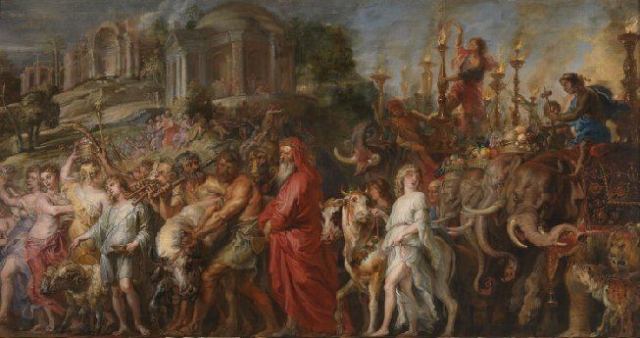
Today, in Mercy, we read about the massive celebration to dedicate Solomon’s Temple. It would have been a ceremony akin to the parades we view in movies like Ben Hur.
This video gives us a good understanding of the magnificence of the building.
Praying with the passage today, core questions repeat themselves to me:
Can God be in a building?
Is there a legitimate spiritual purpose to the cathedrals, large or small, that we build?
For me, the answer is a fluid one. Certainly, beautiful churches inspire our faith and serve as a central symbol for the unity of believers.
But throughout history, these buildings have also symbolized individual and national power, pride and greed.
A recent initiative of Pope Francis converted a 19th century palace behind the Vatican into a homeless shelter. The Pope directed this rather than the site’s upgrade to a luxurious hotel.
The building is described as having “carved wooden ceilings, frescoed walls and tiled floors — evidence of its aristocratic origins.” Sharing a meal with its first residents, Pope Francis said, “Beauty heals”.
Such healing is the real purpose of all such buildings – that their beauty heal hearts, communities, and nations. Where the purpose is lost, excess eviscerates the healing beauty.
At points in the Gospel, Jesus refers to himself as the Temple – instructing his disciples that God’s Presence now dwells in the world through him. Today’s Gospel shows us how this Presence manifests itself – through the power of compassion and justice for the poor:
Whatever villages or towns or countryside he entered, they laid the sick in the marketplaces and begged him that they might touch only the tassel on his cloak; and as many as touched it were healed.
Where God is present there is always healing. May it be so in our churches and in our hearts.
Today, in Mercy, our readings are threaded on a theme of light, justice, and healing.
Isaiah writes to a formerly exiled community trying to restore itself after returning to Jerusalem. Tensions, meanness, and dissatisfactions tear at the community. Focus on religious rituals becomes excessive while communitarian practices are ignored.
It is a sad and fractious time for Israel.
Isaiah tells them they are missing the whole point.The path to healing their national soul is not through empty religious words and practices.
If you remove from your midst oppression, false accusation and malicious speech; if you bestow your bread on the hungry and satisfy the afflicted; then light shall rise for you in the darkness, and the gloom shall become for you like midday.
In our second reading, Paul writes to the Corinthian community similarly disturbed. He reminds the Corinthians that he came to build Christian community among them humbly and open to the Holy Spirit. Like Isaiah in the first reading, Paul now reminds his community not to miss the point:
I came to you in weakness … so that your faith might rest not on human wisdom but on the power of God.
Jesus tells his disciples to let that power of God shine in them by virtue of their good deeds — the very same deeds Isaiah recommends to his listeners:
Share your bread with the hungry, shelter the oppressed and the homeless; clothe the naked when you see them, and do not turn your back on your own.
In sum, our readings caution us that failures in charity and mercy wound us, both as individuals and as a community. Meanness kills – not only its object, but its subject as well.
When we remove all meanness from our actions, the Light shines, healing all our wounds.
Music:Let Your Light Shine – Mike Balhoff and Darryl Ducote
Today, in Mercy, David gets himself in trouble once again.
In the later years of his kingship, David is pretty impressed with himself. The kingdom has grown exponentially. There is peace and prosperity. David wants a census taken so that he can assess his capacity for new expansion.
So why does God get so mad about this census? The Book of Exodus sets out that a person has the right to number only his own belongings. The People belong to God, not to David. David’s pride and self-satisfaction has taken him over.
However, as usual, David repents. This is probably the best lesson we can learn from him. Then, in a greatly allegorized treatment, God gives David a choice of three punishments.
Passages like this can confuse us if we interpret them literally. Does God really interact and punish like this?
It helps to remember the purpose of these writings — not to relay a factual history, but rather to tell a story that helps us grow in relationship with God.
What I believe happened here is that a pestilence did fall upon the country. At the same time, David realized that his heart had grown selfish and graceless. He took the natural event as a sign to turn back to God. And then the writers told the story in a way that the ancient peoples could relate to – with a God that forgives but gets even.
In our Gospel, Jesus preaches another vision of God – a vision of Complete Mercy, especially toward the vulnerable, weak, and sinful. That pretty much includes all of us.
Jesus releases the power of this Divine Mercy by his words and miracles. But his own family and neighbors reject him. They are more comfortable with a God who behaves like they do – meting out more judgement and punishment (preferably toward others!😉) than mercy and inclusive benediction.
In this Gospel, we begin to see Jesus as One who asks not only for repentance but for conversion – for a new way of being with God and neighbor, the way of Love.
How might we have responded had we been in that neighborhood synagogue? How are we responding today?
These are periled times we live in, trouble everywhere
Weary hearts will often give in to this world’s despair
But high and over all, our Father knows our every care
And in His Book, if you will look, you’ll find His promise there
(Chorus)
He who trusts in the Lord
Mercy shall surround him
He who trusts in the Lord
Mercy shall surround him
Be glad in the Lord and rejoice
You upright in heart, lift up your voice
For great is His mercy toward all who trust in the Lord
Soon will be the time when we will see the Holy One
Oh how sweet to know that He’ll complete what He’s begun
And blessed is the man who stands forgiven in God’s son
And blessed are they who in that day will hear Him say, “Well done”
(Chorus)
Gracious is He and slow to anger
His loving kindness has no end
With love to embrace both friend and stranger
Reaching out to one and all, who upon His name will call
(Chorus)
Mercy is His reward
For all who trust, for the pure and just
Who put their trust in the Lord
For all who trust for the pure and just who put their trust in the Lord
Some of us begin this day simply grateful for a holiday. Perhaps some of us forget, or some are too young to remember, how this “holiday” came to be.
But there are some among us who are old enough to remember his actual voice; to have listened — live – on that sweltering August day in 1963 when he inspired us with the words:
I have a dream.
There are some of us who saw him stand on the steps of the Lincoln Memorial on that golden day, the personification of President Lincoln’s vision of justice and equality.
There are some of us who listened and watched every step he took, every prayer he said, every challenge he met with equanimity and courage.
There are some of us who remember the very night he told us:
I have been to the mountaintop and I have seen the Promised Land.
I may not get there with you.
But I want you to know that we,
as a people,
will get to the promised land.
There was a whole world of us who cried when he was martyred the very next day.
Monday is no mere holiday. It is the commemoration of a giant soul who changed the world forever. And he did it not in the way that many have done it throughout history — through wars and conquest.
Martin Luther King changed the world by non-violent protest, by a leadership of love, by a faith that endures beyond the assassin’s gun.
Say his name in reverence on this commemorative day. He has given all of us — no matter our color — the hope of a more human existence. If you have not had the gift of living in his time, ask your elders who remember his face, his sound, his power to tell you the story of the freedom God gave each of us.
In his memory, and to continue to realize his dream, we might consider these 12 steps to non-violence for our own lives.
12 Steps to Non-Violence
Acknowledge your powerlessness — that our lives/culture are co-opted by subversive and pervasive violence
Believe that a Power greater than ourselves can restore us to right relationship.
Decide to turn our will and our lives over to that Power.
Examine fearlessly our own violent inclinations.
Admit to that Power, to ourselves and to another person the exact nature of our own violence.
Be open to have that inclination removed.
Ask to have all violence removed from our hearts and actions.
List all persons to whom we have been violent by word or deed and be willing to make amends to them.
Amend directly to these people wherever possible and prudent.
Self-examine continuously; promptly admit recurring violence in ourselves.
Seek through prayer and meditation to know the nature of Peace and Mercy.
Carry the message of non-violence to others and practice it in all our interactions.
Music: “Abraham, Martin and John” is a 1968 song written by Dick Holler and sung here by Marvin Gaye. It is a tribute to the memory of four assassinated Americans, all icons of social change: Abraham Lincoln, Martin Luther King Jr., John F. Kennedy, and Robert F. Kennedy. It was written in response to the assassination of King and that of Robert Kennedy in April and June 1968, respectively. (Wikipedia)
The song reflects the mix of awe, hope, sorrow and disappointment the nation felt in those tumultuous times.
( Our Gospel today nearly repeats a passage in Luke about which I wrote last year. Being a little lazy tonight, and wanting to watch Jeopardy- GOAT, I am offering that earlier reflection to you again. Besides, I liked it. I hope you do, dear Friends.)
This is the Greek word for “Of course!”
Today, in Mercy, Jesus shows us how to live a merciful life – through loving, generous, joyfully responsive service.
A pitiable leper interrupts Jesus on his journey to ask for help. People like this man were scorned, feared, and isolated. Their leprosy impoverished them, making them annoying beggars. Their cries usually met with indifference at best and banishment at worst.
But when this leper poses his proposal to Jesus – “If you want to, you can heal me.” — Jesus gives the spontaneous answer of a true, merciful heart: “Of course I want to!”
There is no annoyance, no suggestion that other concerns are more important. There is just the confirmation that – Yes- this is the purpose of my life: to heal, love, show mercy toward whatever suffering is in my power to touch. There is just the clear message that “You, too, poor broken leper, are Beloved of God.”
What an example and call Jesus gives us today! We are commissioned to continue this merciful touch of Christ along the path of our own lives. When circumstances offer us the opportunity to be Mercy for another, may we too respond with enthusiasm, “Of course I want to!” May we have the eyes to see through any “leprosy” to find the Beloved of God.
Today, in Mercy, John instructs us in the meaning of true righteousness.
We human beings can get very confused about this term. Some have used it to imply that observable religious practice makes one superior, holier than others. We can all visualize the “righteous” preacher pouring fire and brimstone over the lowly congregation. The beautiful term “righteousness” has been disserved by this image.
In his first letter, John describes the root of true righteousness, that state of graceful balance within a Gospel-powered life:
Beloved: We receive from him whatever we ask, because we keep his commandments and do what pleases him. And his commandment is this: we should believe in the name of his Son, Jesus Christ, and love one another just as he commanded us.
In today’s Gospel, Jesus is in the early stages of his public ministry. He is slowly teaching the people how different his “power” and “righteousness” will be from the worldly power they might have expected.
Jesus’s “Kingdom” stands in stark contrast to the Roman Empire and the principles of domination, aggression and disregard for life which fed it. Jesus’s is a Kingdom built by uniting our differences, especially those of the poor and sick, into the oneness of God’s love.
Jesus went around all of Galilee, teaching in their synagogues,
proclaiming the Gospel of the Kingdom, curing every disease and illness among the people. His fame spread to all of Syria, and they brought to him
all who were sick with various diseases and racked with pain, those who were possessed, lunatics, and paralytics, and he cured them.
Praying with these readings today brings me face to face “the elephant in the room”. In this Lavish Mercy community, we hope together for the growth of the Gospel Kingdom in a global community. But now that yet unrealized community stands at the brink of war because nations have so badly blurred the lines between the righteous Gospel Kingdom and the self-righteous Empire.
Sisters of Mercy of the Americas join with people across the world in condemning the Trump Administration’s drone strike assassination of Qassem Soleimani, leader of Iran’s Quds force, outside of Baghdad. Far from fostering peace in a troubled part of the world, this reckless decision will only escalate violence and increase suffering for millions of people. We call on our government to reject violence and militarism and instead to engage in the hard work of diplomacy. –Sister Patricia McDermott, RSM, president, Sisters of Mercy of the Americas
It is difficult to look at the “elephant” without getting political, but I am trying hard to refrain from political opinion here. What I can say with confidence is that we as faith-impelled people cannot stay silent in the face of the world’s current situation. When our voice is heard – at the ballot box and through direct advocacy – may it reflect the fundamental Gospel imperatives for which Jesus lived and died.
These clippings from Pope Francis’s visit to Hiroshima helped me in my prayer today:
“How can we propose peace if we constantly invoke the threat of catastrophic war as a legitimate recourse for the resolution of conflicts?”
“May the abyss of pain endured here in Hiroshima remind us of boundaries that must never be crossed. A true peace can only be an unarmed peace.”
“In a single plea to God and to all men and women of good will, on behalf of all the victims of atomic bombings and experiments, and of all conflicts, let us together cry out: Never again war, never again the clash of arms, never again so much suffering,”
“Indeed, if we really want to build a more just and secure society, we must let the weapons fall from our hands.”
Pope Francis quoted Gaudium et Spes, which states that “peace is not merely the absence of war … but must be built of ceaselessly.” He added that the lessons of history show that peace is the fruit of justice, development, solidarity, care for our common home, and promotion of the common good.
“I am convinced that peace is no more than an empty word unless it is founded on truth, built up in justice, animated and perfected by charity, and attained in freedom.”
Today, in Mercy, we lay aside our holiday experiences and dress once again in our ordinary dailyness. It is time to begin again, in this new year, the faithful living of our lives.
 copyright: Photo: Wikipedia / Shakko
The Church encourages us with the celebration of two great friends, Basil and Gregory. These men are particularly venerated, with St. John Chrysostom, in the Eastern Churches, whose character they highly impacted. These tremendously influential ministers supported and inspired one another to do great things for God in a time when the faith was sorely tested.
The friendship and legacy of these iconic saints reminds us that we need one another’s support and example to stay strong in our own faith. In our first reading, John tells us the same thing.
We live in a world not unlike that of Basil, Gregory, and Chrysostom. Conflicting, and often deceitful, forces twist the faith to distort its original truth. In our world, these false perceptions are used as excuses for all kinds of evils: war, nationalism, prejudicial exclusion, and racial and economic domination.
But John the Evangelist says this in our first reading:
Let what you heard from the beginning remain in you. If what you heard from the beginning remains in you, then you will remain in the Son and in the Father. And this is the promise that he made us: eternal life.
Today’s Gospel shows us that even John the Baptist had to juggle thorny religious questions in order to stay focused on the core truth of Christ. The Baptist keeps this focus by his singular faith and humility:
… there is one among you whom you do not recognize, the one who is coming after me, whose sandal strap I am not worthy to untie.
So today, inspired by these great saints, let us take up the call to be true humble followers of Jesus, making our faith evident by our choices for mercy, justice and love in a conflicted world.
Music: Hymn of the Cherubim- Liturgy of St. John Chrysostom
Today, in Mercy, we have the exquisite “Comfort” passage from Isaiah. Our Gospel gives us Jesus tenderly seeking the single lost lamb.
The first and last words of these two readings – COMFORT, LOST – capture the whole intent of God’s message: Life is a maze whose walls are heightened by our incivility to one another. Isaiah calls to be a leveler of walls, a straightener of twists, a bridge over deadly valleys; Jesus calls us to seek and carry the lost sheep. They call us to be Mercy.
The US southern border is one of the many places in our world crying out for these acts of mercy. Please listen to our Sister Anne Connolly describe the cry:
Music: Comfort Ye from Handel’s Messiah – sung by Jerry Hadley
As we pray this glorious music today, let us ask for the strength and courage to be Mercy for the world, to find the ways to comfort God’s people, close by and at life’s borders.
Today, in Mercy, our readings take us to the Lord’s banquet. It is a rich image that threads through scripture and helps us understand what characterizes the perfect reign of God.
The readings, coming just on the heels of Thanksgiving, present familiar images to us. You may have been part of the preparation of the feast for your family and friends. Maybe you’re the master carver, or brought sides of old family recipes. Or you might be the table decorator or, most important, the clean-up guru!
Or maybe you were the one who steered the conversation so that all felt welcomed and included in the gathering. Maybe you were the one who took someone aside if they needed an extra portion of care. Maybe you were the one who invited someone with no other place to go.
That Thanksgiving meal, and every meal, can be a symbol of the heavenly banquet.
Isaiah’s banquet is all elegance and fullness. He describes an end-time when, despite a path through suffering, all is brought to perfection in God:
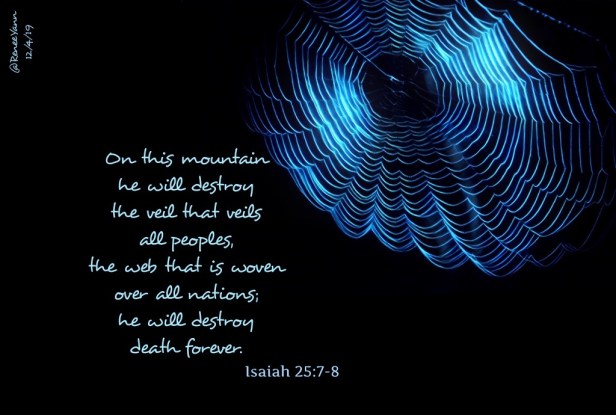
On this mountain the LORD of hosts will provide for all peoples A feast of rich food and choice wines, juicy, rich food and pure, choice wines.
Jesus’s feast in more “now”, and more rustic. He takes the ordinary stuff of present life and transforms it to satisfy the needs of those gathered. With sparse and simple ingredients, Jesus creates the “miracle meal” for the poor and hungry.
He ordered the crowd to sit down on the ground. Then he took the seven loaves and the fish,
gave thanks, broke the loaves,
and gave them to the disciples,
who in turn gave them to the crowds. They all ate and were satisfied.
Christ’s presence with us in the Eucharist is both kinds of meal.
It points us to the perfection of heaven, where the “web” will be lifted from our eyes and we will see ourselves as one in Christ.
It calls us to be Christ for one another in this world – creating miracles of love and mercy so that all are adequately fed, in body and soul, for the journey we share.
Music:Banquet- Graham Kendrick (Lyrics below)
There’s no banquet so rich
As the bread and the wine
No table more holy
No welcome so kind
There’s no mercy so wide
As the arms of the cross
Come and taste, come and see
Come find and be found
There’s no banquet so rich
For what feast could compare
With the body of Jesus
Blessed, broken and shared?
Here is grace to forgive
Here is blood that atoned
Come and taste, come and see
Come know and be known
Take the bread, drink the wine
And remember His sacrifice
There’s no banquet so rich
As the feast we will share
When God gathers the nations
And dines with us here When death’s shadow is gone
Every tear wiped away
Come and eat, come and drink
Come welcome that day
There’s no banquet so rich
For our Saviour we find
Present here in the mystery
Of these humble signs
Cleansed, renewed, reconciled
Let us go out as one
Live in love, and proclaim
His death till he comes
Today, in Mercy, as the first public impeachment hearings begin, our readings seem eerily in synch with current events.
First of all, the hearings begin on the date we celebrate Frances Xavier Cabrini, first naturalized citizen of the United States to be canonized by the Roman Catholic Church.
As I write about her, the US Supreme Court opens the DACA hearings, testing three cases against the Trump administration’s decision in 2017 to end deportation protections for so-called Dreamers. The Court will decide whether the decision to end the program was based on legally sound reasons.
(The Deferred Action for Childhood Arrivals (DACA) program, which grants deferral from deportation and work permits to nearly 700,000 undocumented immigrants who arrived in the country as children.)
Our first reading from the Book of Wisdom is crystal clear about the moral responsibilities of leaders to act with justice tempered by mercy, and always to exhibit special concern for the poor and marginalized.
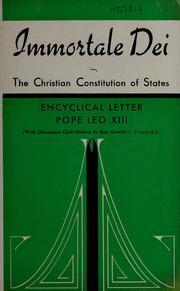
Using these scripture verses, Pope Leo XIII wrote two of his many compelling encyclicals. His writings, and the entire legacy of Catholic Social teaching, guide us as we discern who, how, and why to use our voting power to advance justice for all people.
The following excerpts, though a little long, are well worth our attention to provide a foundation for our prayer during these strained partisan times. Perhaps we might pray them in short doses over the course of these hearings.
from: Encyclical Letter Immortale Dei, Pope Leo XIII
They, therefore, who rule should rule
with evenhanded justice, not as masters,
but rather as parents,
for the rule of God over humanity is most just,
and is tempered always with a parent’s kindness.
Government should, moreover, be administered
for the well-being of the citizens,
because they who govern others possess authority
solely for the welfare of the State.
Furthermore, the civil power must not be subservient to
the advantage of any one individual or of some few persons,
inasmuch as it was established for the common good of all.
But, if those who are in authority rule unjustly,
if they govern overbearingly or arrogantly,
and if their measures prove hurtful to the people,
they must remember that the Almighty
will one day bring them to account,
the more strictly in proportion to the sacredness of their office
and preeminence of their dignity.
from: Encyclical Letter of Pope Leo XIII, Diuturnum
But in order that justice may be retained in government,
it is of the highest importance that those who rule States
should understand that political power
was not created for the advantage of any private individual;
and that the administration of the State
must be carried on to the profit of those
who have been committed to their care,
not to the profit of those to whom it has been committed.
On this account
they are warned in the oracles of the sacred Scriptures,
that they will have themselves some day to render an account
to the King of kings and Lord of lords;
if they shall fail in their duty,
that it will not be possible for them in any way
to escape the severity of God:
“The Most High will examine your work
and search out your thoughts:
because being ministers of his kingdom
you have not judged rightly…
Horribly and speedily will he appear to you,
for a most severe judgment shall be for them that bear rule…
For God will not accept any man’s person,
neither will he stand in awe of any man’s greatness;
for he made the little and the great,
and he hath equally care of all.
But a greater punishment is ready for the more mighty”
Music: O Lord, the Clouds Are Gathering – Graham Kendrick









 Jesus’s feast in more “now”, and more rustic. He takes the ordinary stuff of present life and transforms it to satisfy the needs of those gathered. With sparse and simple ingredients, Jesus creates the “miracle meal” for the poor and hungry.

 Lavish Mercy