Called to Be Prophets

Sunday, July 8, 2018

Readings: http://www.usccb.org/bible/readings/070818.cfm

Today, in Mercy, our readings bring us the great prophets Ezekiel, Paul, and the Ultimate prophet, Jesus.

How did they become prophets? When they were little guys, how did they answer the perennial question, “What do you want to be when you grow up”? Unlikely that they responded, “A prophet, of course!” Probably it was something like a camel rider, a carpenter, or a farmer. So what changed them?

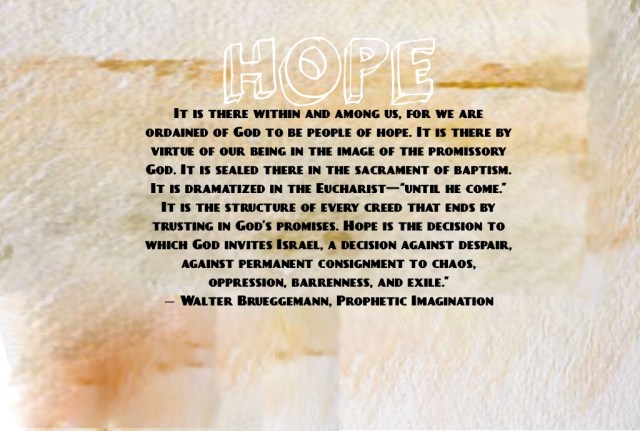
All three, by heritage and practice, were steeped in the traditions of the Hebrew Scriptures. As they grew up into the oppressive, idolatrous worlds of their particular time, the scriptural promises gave each of them hope. They developed, as the theologian Walter Brueggemann describes it, “the capacity to imagine the world seen through the eyes of … God.”

HOPE

This kind of vision is not unknown to our times. A few years ago, it was very popular to ask, “WWJD? – What would Jesus do?” Some people even wore bracelets and medallions of the letters to remind them to look at life through Jesus’ eyes.

Although a bit simplistic, it’s still a good visual reminder. What is less evident is the implied thought that we must KNOW Jesus well enough to UNDERSTAND what He would do. A casual acquaintance won’t do the trick here. Prophets are intimate with God through prayer and the works of mercy. Over years of faithful practice, they have come truly to see the world as God sees it. They beat with God’s heart.

A prophet is profoundly realistic about the world’s ills, heartbroken for those who suffer, but nonetheless convinced that God will make something amazingly beautiful for God’s People. This conviction impels them to live, speak and act  for this Godly vision.

We too are called to live with this kind of prophetic hope. It is not easy in our fractured world. But it is possible. Let today’s three Great Ones inspire and teach us.

Music: A Hymn to Hope from “The Secret Garden”


The Fifth of July

Thursday, July 5, 2018

Readings: http://www.usccb.org/bible/readings/070518.cfm

(May I digress today with a reflection I wrote a few years ago?)

The Fifth of July

Any fireworks in your neighborhood tonight?  Any parades outside your window? Probably not.  After all the speeches, sparklers and spectaculars, the “Next Day” dawns.  I wonder what it was like for Jefferson, Franklin and Adams on Jul7 5, 1776.  Did they wake up thinking, Declaration of Independence – signed.  Now, make it happen?

Angry Cartoon Colonial Man

When you get right down to it, most of our days are 5ths, 6ths, 7ths and 8ths of July.  They are the days after graduation when we need to get a job.  They are the days after the honeymoon when somebody needs to cook dinner and take out the trash.  They are the days after the promotion when the first deadline looms and a bunch of faces are looking to you for the plan.

If the 4th of July is Independence Day, the 5th is Dependability Day, a day to celebrate the people we can always count on.  They are there for the parades but they also stay around for the clean up afterward. They light the spark for the fireworks, but they have a hose nearby just in case. They put their “John Hancock” on the brave new dream, and they show up the next morning to design its daunting execution.

The 5th of July is a day to celebrate our own sense of responsibility or “Dependability” – to realize that most of us really do try to be good spouses, parents, employees, neighbors, sons, daughters and friends; that we do keep making the effort every day to be someone for others and not just for ourselves. It is a day to look around at the people in our lives and be grateful that most of them are trying to do the same thing.

Like Jefferson, Franklin and Adams, we all need to wake up the next day, consider the “dependabilities”in our lives, and put our shoulders to the task of making a better world. Each of our lives is its own small country where the future really depends on how we show up on our 5th of Julys. The fact that you get up every day and engage that challenge is cause for its own celebration.  So if you have a little sparkler left in your back yard, light it for yourself tonight – and for your spouse, your boss, your kids, your colleagues – who all showed up today to do the best they could on the 5th of July.

Music: To wake you up for this July 5th, the inimitable Andre Crouch – You Can Depend on Me, Lord


God Bless America

Wednesday, July 4, 2018

Readings: http://www.usccb.org/bible/readings/070418.cfm

bike wheel

The Fourth of July in 1955 looked like this to me:

• red, white and blue crêpe paper strung through my bicycle wheels
• an open fire hydrant at the height of the hot afternoon
• about six firecrackers, fizzling off a neighbor’s doorstep
• hot dogs, Kool-Aid and catching fireflies after sunset

We gathered our families, hoisted the flag, prayed for loved ones lost in a war too fresh to reflect on. We listened to music by John Philip Souza. We felt safe, strong, comfortable and grateful to be Americans. But my 10-year old America was very small.

It was an America before Civil Rights, Medicare and Medicaid; before the Kennedy and King assassinations, Vietnam, Watergate. It pre-dated Roe v. Wade, drug wars, mass shootings, 9/11, global warming, and marriage equality. It was a world without internet, cable news and Twitter.

It was a simple, circumscribed world that we will never see again. So we should stop trying, because it was not a perfect world.  Its wounds and warts were about to fester. We have spent the intervening half-century doctoring ourselves for its recurring symptoms, never able to acknowledge the systemic cause of our pain.

For what it’s worth, here’s my diagnosis: Americans are afraid of God, and it’s making us sick.

But why are we so afraid?

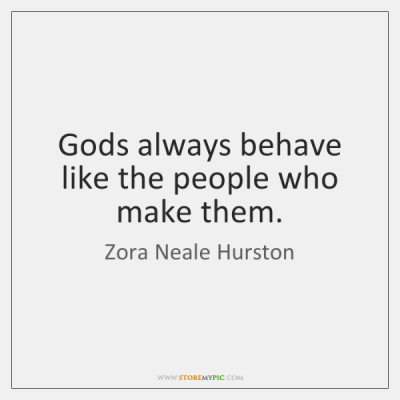
Contrary to the long-held opinions of some, modern evidence suggests that God is not male, not white, not a warrior, not rich, and not even American! And this scares some of us to death! We need that kind of God to justify our greed, domination and global arrogance.

Zora

So we keep creating the God we need. He carries an AK-47 and has a nuclear button under his fingertip. He builds walls to control people who are poor, hungry, and shades of brown. He stratifies people based on wealth, whiteness and worth to the system. He believes America should be first, and the rest of the world last. He reshapes religion into a vehicle for his own heartless caricature.

If we could just gain our independence from this idolatrous God, we might have better reason to celebrate the Fourth of July.

Today’s reading from the Book of Amos tells us what this liberating God wants:

Seek good and not evil, that you may live;
Then truly will the LORD, the God of hosts, be with you as you claim!
Hate evil and love good, and let mercy prevail at the border;
Then it may be that the LORD, the God of hosts, will have pity on you.

I hate, I spurn your feasts, says the LORD; I take no pleasure in your solemnities;
Your false prayers I will not accept. Away with your noisy songs!
But if you would truly honor Me, then let justice surge like water,
and mercy like an unfailing stream.

Music: God Bless America

Where Is Your Treasure?

Friday, June 22, 2018

Readings:  http://www.usccb.org/bible/readings/062218.cfm

Today, in Mercy, Jesus continues to teach us how to live a truly Gospel life. He does it with two small sermons and closes each with a blockbuster statement.

Mt6_19_23

Have you ever sat in church, suffering through a rambling sermon that never got to the point? Then you can understand the beauty and effectiveness of these statements of Jesus:

Where your treasure is, there also will your heart be.

If the light in you is darkness, how great will the darkness be.

The first statement leaves us to ponder what really matters to us. Where do we spend our time, talent and treasure? If we say we love God and God’s vulnerable ones, do our “investments” prove it?

The second statement challenges us to be profoundly honest, to stop naming as “good” only that which is self-serving. We see blatant examples of this in our political life: policies and tactics tied to greedy, prejudiced outcomes – outcomes fed by the suffering and oppression of vulnerable human beings. These tactics challenge us to look at our own heart and test what we proclaim as “light”.

.

Peaceful Defiance

Monday, June 18, 2018

Readings: http://www.usccb.org/bible/readings/061818.cfm

Today, in Mercy, we encounter one of the most difficult passages of the Gospel – the admonitions to turn the other cheek, and go the extra mile. 

Wow, these go against every natural instinct (at least mine! 👿) If someone slaps me, I’m slapping back! If someone grabs my goods, forces my labor, or has the guts to borrow my necessities, I’m gonna’ resist! What about you? Even the Book of Exodus supports “an eye for an eye” kind of justice, right? Well, Jesus says, “No, not right!”. 

In this passage, Jesus shatters our natural inclinations for retribution, retaliation and even self-preservation. 

He says that when we are struck or insulted, we should not respond in kind. Rather we should continue to stand our ground without being diverted into the violence of the attacker.  

He says that when laws are used unjustly against us, we should not respond in kind. Rather, we should stand our ground and expose the unjust law by our willingness to engage it in the public forum.

He says that when unrecompensateded work is demanded of us, we should give it and more, thus doubly exposing the demander’s offense.

He says that to turn our back on a borrower, no matter how inopportune, is a form of violence against the borrower.

What Jesus is asking of us is a non-violent response to the insults and outrages thrown at us. But He is not asking us to be victims or doormats. Each of the admonitions instructs us not to ignore evil, but to respond to it with positive, peaceful strength.

defiant

Jesus himself is the quintessential example of this prophetic, non-violent lifestyle. He condemned evil for what it was, but he did not adopt its methods to do so.

Eileen Campbell

Sister of Mercy Eileen Campbell, arrested at the White House
for peaceful protest of inhumane immigration policies.

Recent history offers us stellar examples of individuals who have understood and practiced this Gospel passage: Mahatma Gandhi, Martin Luther King, Dorothy Day, Oscar Romero, Berta Cáceres, and other modern peace activists – ordinary Christians like you and me.

They have heard and responded to today’s Gospel. Can we?

Radical Benediction

Monday, June 11, 2018

Readings: http://www.usccb.org/bible/readings/061118.cfm

Today, in Mercy, we begin several weeks of readings from Matthew’s Gospel. In today’s passage, Jesus starts out by turning the world upside-down!

Blessed 6_11_18

In the earlier chapters of his Gospel, Matthew has set the tone for the announcement of Jesus’ message – a new reign of grace and glory. The crowds gather in great anticipation. Most are overwhelmed and beleaguered by life under Roman occupation. Many hope for a political Messiah who will deliver them from their current circumstances, returning to them the material control of their lives. 

Instead, Jesus announces that:

“The kingdom of God can only be received by empty hands. Jesus warns against
(a) worldly self-sufficiency: you trust yourself and your own resources and don’t need God
(b) religious self-sufficiency: you trust your religious attitude and moral life and don’t need Jesus.”
~ Michael H. Crosby, Spirituality of the Beatitudes: Matthew’s Vision for the Church in an Unjust World

We are so used to hearing the Beatitudes that they may have become tamed for us — lovely consolations to the downtrodden that things will eventually be OK. On the contrary, the Sermon on the Mount proclaims a shocking message to those gathered with Jesus — AND to us. The radical blessedness of life is to be found within our ordinary joys and sorrows, embraced humbly, faithfully and joyfully.  It is to be found in right-relationship with all Creation, not in any kind of dominance by one over another – political, economic, or personal.

The poor in spirit, the meek, the bereaved, the justice-seekers, the merciful, the pure of heart, the peacemakers, the persecuted: Jesus says these people are blessed – even FORTUNATE – because there are no barriers between them and the fullness of God. Power, prestige and possessions block us, perhaps even cripple us, from our shared immersion in God’s ever-present love and grace.

It is likely that many who gathered on that Galilean Hill didn’t want to hear Jesus’ astonishing message. Their myopic vision of prosperity was turned upside down. They were challenged to an unexpected, comfort-shattering, radical blessedness. Would they accept the challenge? Will we?

Music:  Blessings ~ Laura Story

An Eternal Weight of Glory

Sunday, June 10, 2018

Readings: http://www.usccb.org/bible/readings/061018.cfm

Today, in Mercy,  is a powerful Sunday!

woke 6_10_18

In our readings, we encounter one of the more perplexing Gospel passages. Jesus, in the thick of controversy with the scribes and Pharisees, goes home to seek some respite. But the crowds follow, harassing him with questions and demands for signs. His friends and family are increasingly concerned for him, as the animosity to his challenging message rises. Some even think he is unhinged to jeopardize himself by confronting the evils and blindnesses of his society. His mother and brothers arrive, concerned for him. When Jesus learns this, he delivers what may seem a hard-hearted comment, “Who are my mother and my brothers?” — they are the ones who do the will of God.

With this question, Jesus is not disowning his family and those who love him. He is stating clearly that, rather than deter him from his redemptive work, they need to open their minds to the deeper purpose of his life. To use a contemporary phrase rooted in the socially conscious African-American community – they need to be “woke” people. 

How hard it must have been for them! How hard to love a prophet, to fear for their safety in times when truth and justice are assailed!

Walter Brueggemann, in my all-time favorite book Prophetic Imagination, says this:

“In both his teaching and his very presence, Jesus of Nazareth presented the ultimate criticism of the royal consciousness (or self-serving power of the dominant state). He has, in fact, dismantled the dominant culture and nullified its claims. The way of his ultimate criticism is his decisive solidarity with marginal people and the accompanying vulnerability required by that solidarity. The only solidarity worth affirming is solidarity characterized by the same helplessness they know and experience.” 

In today’s second reading, Paul is experiencing the same kind of vulnerability as Jesus. Paul says that he is not discouraged for:

“ … although our outer self is wasting away,
our inner self is being renewed day by day.
For this momentary light affliction
is producing for us an eternal weight of glory
beyond all comparison,
as we look not to what is seen but to what is unseen;
for what is seen is transitory, but what is unseen is eternal.”

As Christians, we are called to live prophetic lives in imitation of Jesus. We are called to foster that kind of witness in others, to work together for that “eternal weight of glory”.

The prophet Dorothy Day puts it this way:

“As we come to know the seriousness of the situation, the war, the racism, the poverty in our world, we come to realize that things will not be changed simply by words or demonstrations. Rather, it’s a question of living one’s life in a drastically different way.”

On this powerful Sunday, the message is this: we need to be “woke” people!

Music: Wake Up My Heart ~ The Afters

Ransomed

Wednesday, May 30, 2018

Readings: http://www.usccb.org/bible/readings/053018.cfm

1 Pet1_18 ransomed

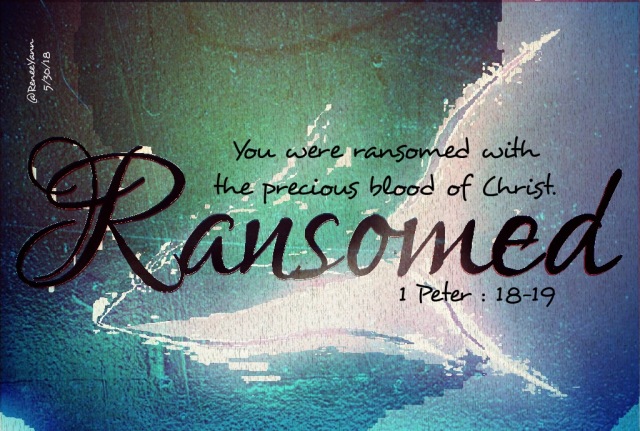
Today, in Mercy, Peter tells us that we have been ransomed at an infinite price – the blood of Jesus. And what have we been ransomed from? The early Christians were quite familiar with slavery, some having been enslaved themselves. Peter shows them that their souls too may be enslaved.

In any form, slavery is a restriction or loss of freedom. It may be physical, psychological, emotional, spiritual or intellectual. It is that place where our Truth is constricted by the negativity of another force.

Peter tells us that we have been freed “so that our faith and hope are in God” and not in anything that can chain our souls. He tells us that we have been born anew so that we can love one another intensely from a pure heart.

Today, let’s pray for those, even ourselves, enslaved in any way – through illness, addiction, stereo-typing, racism, domination, poverty or ignorance; for those who are trafficked, for immigrants cruelly separated from family, for the unjustly or inhumanely imprisoned, for those forced from their homeland by war and violence.

Let us pray for conversion and forgiveness for any role we may have played, however unwittingly, in sustaining these social evils.

Music: Chorus of the Hebrew Slaves from Verdi’s opera Nabucco. Inspired by Psalm 137, this mournful melody recalls the enslavement of Jews during the Babylonian Captivity.

In Memory

Monday, May 28, 2018

Memorial

Memorial Day

Today, in Mercy, we pray for all who have died as a result of war, especially our deceased servicemen and women.

May we, as a human family, realize the awful sinfulness of war. May we do all we can to help all people live in peace.

Music:  Below is a link to Michael Hoppé’s moving album Requiem.  I hope you are moved by listening to some or all of it, as we pray for world peace and justice.