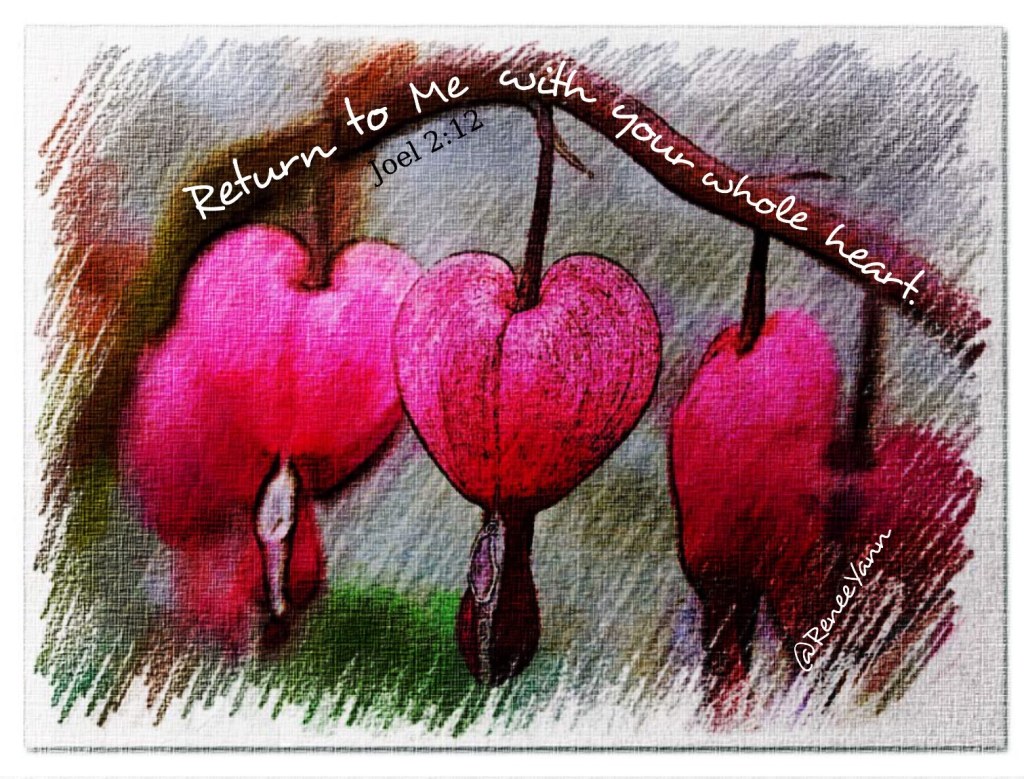
Love Anoints Us

March 29, 2026
Palm Sunday

Purity of heart is to be without guile, hidden agendas.
It is to be honestly intentioned in our actions and words.


During Holy Week, a fundamental question comes before us. How should the precious oil be used – tenderly poured out or reasonably saved? It is a question that challenges us to balance justice with mercy, reality with hope, law with passion, to be pure of heart. How are we being asked to open our alabaster jar?

After Peg’s father died, she rummaged through parts of his house preparing it for sale. When Peg was a child, the bottom drawer of the china closet was always her dad’s exclusive domain. She prepared to open it now like a priest approaching the sacred altar. Inside, Peg found the normal treasures stored against a rainy day: rubber bands, expired coupons, Band-aids, and a Swiss Army knife.


In an old wallet, she discovered a forgotten twenty-dollar bill and a creased, browning paper. Unfolded, the note revealed a 1960’s Christmas shopping list. Beside Peg’s name was scribbled “skates, pajamas and Slinky.” Beside her mother’s name, there was a single phrase: “Chanel N°5.”


Peg’s middle class family avoided extravagance. With four children, they could not afford it. Her father’s one excursion into luxury was to anoint her mother with this prized perfume. The annual act released a balm of silent devotion between them redeeming any of the year’s frayed misunderstandings.


During Holy Week, we see Mary anoint Jesus’s feet with costly aromatic nard. We watch Jesus kneel to pour a sacred blessing over his disciples’ feet. We experience God’s lavish mercy wash over us in blood and water, in sacrament and sacrifice. These acts draw us into God’s infinite, unquenchable love.

Our names have been folded eternally into God’s heart. An extravagant mercy has been given for us. This week, walking with Jesus from the supper table, through the garden and on to Calvary, may we embrace the deep anointing of God’s Passion for us. May it redeem us and open us to full Easter joy!


Music: Agnus Dei – Monks of the Abbey of Notre Dame

Suggested Scripture: Philippians 2:1-11


For Your Reflection:

  • What feelings or reactions do I have after reading this reflection?
  • Do my feelings or reactions remind me of any passage or event in scripture, especially in the life of Christ? 
  • What actions might I take today because of my response to these readings?
I will keep my covenant with you …

Fifth Sunday of Lent
March 22, 2026

I will keep my covenant with you … to be your God and the God of your descendants after you.
Genesis 17:7

Understanding is a Gift of the Holy Spirit which allows us
to grasp, at least in a limited way,
the essence of the truths of our faith.
Through understanding, we gain a trust in God
that moves beyond circumstances,
enabling us to find meaning and peace in our lives.


The fifth week of Lent is filled with high drama. Impossible things happen at the hand of God: Lazarus comes back from the dead; both innocent Suzanna and the adulterous woman are saved; three men pass unharmed through Nebuchadnezzar’s fire; and Jesus proclaims he is the Son of God. It is a week when the truth of God’s power confronts the security of human conventions. From what symbolic graves is God asking me to rise?


(This story is a repeat for those of you who are familiar with the blog. But I choose to include it again because I love it so much. These two individuals were very precious to me and taught me so much. I hope I have been able to share some of that learning with you, my readers.)

The golden morning had broken bright and warm through the hospital windows. With its breaking, the attending physician and chaplain had received a page. Dorothy had taken an unexpected turn. She was struggling both to live and to die. 
As they attended and comforted her, Dorothy managed to whisper,” … wait for Henry.” Henry, her husband of fifty-eight years, had arrived promptly at 7:00 a.m. daily for all the weeks of Dorothy’s hospitalization. Glancing at her watch, the chaplain saw that it was just 6:50 AM. 

When, after ten prolonged minutes, Henry appeared at the door, he carried a small bouquet of yellow roses from their beloved garden. Quickly comprehending the changed situation, he laid the roses aside and hurried to hold Dorothy for the last few minutes of her life. In the loving, covenanted presence Dorothy had waited for, she finally embraced a peaceful death.

It had not been easy for Dorothy to die nor, from then on, had it been easy for Henry to live. Still, through many bereavement visits, the chaplain watched their long, honest love arise to heal Henry. Through prayer and the benediction of memories, Henry understood that their love, like the roses still blooming in their garden, was both fragile and perpetual.
In this week’s readings, God again calls us to such a love.

As God brought Lazarus, Suzanna and Shadrack out of darkness and death, so God promises to bring us. “I will keep my covenant with you,” God says. “Whoever keeps my word will never die.”

Accompanying Jesus, as he nears Jerusalem, let us trust and cherish these promises in our own darknesses and bereavements.


Music: Surrexit Dominus

Latin Lyrics & English Translation:
Latin:
Surrexit Dominus vere,
Alleluia, alleluia.
Victimae paschali laudes,
Immolent Christiani.

Mors et vita duello,
Conflixere mirando:
Dux vitae mortuus,
Regnat vivus.

Surrexit Christus spes mea,
Praecedet vos in Galilaeam.
Credamus cum Maria,
Et gaudeamus cum Ecclesia.

English:
The Lord is truly risen,
Alleluia, alleluia.
To the Paschal Victim, let Christians offer praise.

Death and life contended
In wondrous conflict:
The Prince of Life, once slain,
Now lives and reigns.

Christ, my hope, has risen,
He goes before you into Galilee.
Let us believe with Mary,
And rejoice with the Church.


Suggested Scripture: John 11:1-45

For your reflection:

  • What feelings or reactions do I have after reading this reflection?
  • Do my feelings or reactions remind me of any passage or event in scripture, especially in the life of Christ? 
  • What actions might I take today because of my response to these readings?

The Gentle Face of God

Feast of St. Joseph
March 19, 2026


Filial Piety is the virtue of deep respect and tenderness
for one’s parents, elders, mentors, and ancestors


How Jesus must have loved Joseph – this man so holy that he gave his whole life over to the nurturing of God!

But Joseph’s choice was not easy.


The choice was confusing.

This is how the birth of Jesus the Messiah came about: His mother Mary was pledged to be married to Joseph, but before they came together, she was found to be pregnant through the Holy Spirit. Because Joseph her husband was faithful to the law, and yet did not want to expose her to public disgrace, he had in mind to divorce her quietly.

Matthew 1:18-19

The choice took courage.

When they had gone, an angel of the Lord appeared to Joseph in a dream. “Get up,” he said, “take the child and his mother and escape to Egypt. Stay there until I tell you, for Herod is going to search for the child to kill him.”

Matthew 2:13

The choice took patience.

After the festival was over, while his parents were returning home, the boy Jesus stayed behind in Jerusalem, but they were unaware of it. Thinking he was in their company, they traveled on for a day. Then they began looking for him among their relatives and friends. When they did not find him, they went back to Jerusalem to look for him. After three days, they found him in the temple courts, sitting among the teachers, listening to them and asking them questions. Everyone who heard him was amazed at his understanding and his answers. When his parents saw him, they were astonished. His mother said to him, “Son, why have you treated us like this? Your father and I have been anxiously searching for you.”

Luke 2:43-48

The choice took humility.

After the above incident in the Temple, we do not hear of Joseph again. We can assume that for the remaining decade before Jesus’s public ministry, he worked side by side with Joseph to sustain their little family. In the Divine Plan, it appears that Joseph’s role is humbly and silently concluded by a quiet death in Nazareth before Jesus turns thirty.


Most of all, the choice took immense and sustained faith.

Joseph’s faith sustained his life, protected and companioned Mary, taught and nurtured the Son of God. That was one extraordinary faith! Yet, in many ways, it is a faith we ordinary believers are also all called to:

  • to hear God’s call
  • to step into salvation history with trust and courage
  • to do what needs to be done without braggadocio
  • to end in quiet grace, acknowledging that it all belonged to God

Music: Hymn to St. Joseph

Christum Dei Filium qui putari
dignatus est filius Joseph:
Venite adoremus.
O come, let us adore Christ the Son of God,
Who deigned to be
thought to be the son of Joseph!
Blessed be the eyes that have seen what thou hast seen,
Blessed be the ears that have heard what thou hast heard.
Blessed be the arms that have held thy Creator.
Blessed be the hands that have labored for the Word.
Blessed is thy Heart all aflame with ardent love,
Chosen and Beloved by the Holy Trinity.
Blessed be thy Virgin spouse entrusted unto thee.
Bless all, dear Joseph, who love and honor thee.


For Your Reflection:

  • What feelings or reactions do I have after reading this reflection?
  • Do my feelings or reactions remind me of any passage or event in scripture, especially in the life of Christ? 
  • What actions might I take today because of my response to these readings?
I Am the Truth …

Fourth Sunday of Lent
March 15, 2026

Veracity is the virtue of being truthful in all things.


Recently, I heard our culture referred to as “The Post-Truth Age”. I found that statement to be both accurate and frightening. In a world completely entangled in lies, veracity is a lonely virtue. Jesus knew that. As he nears Jerusalem, it becomes increasingly apparent that those who live by the Lie will seek to exterminate him. But, in Jesus, Truth is eternal. Through his Resurrection, we are welcomed into that infinite Veracity.

Throughout this week, the Word of God is leading us – out of darkness, out of blindness, out of fear, out of all that inhibits the eternal life of grace within us. Time is drawing close to Calvary, when our faith will be tested. Jesus wants us to remember the miracles and words of this week so that our faith will not be shaken by the days to come.

Like Antonia, in the story below, Jesus wants us to find the Truth that supersedes circumstances. It is a Truth that rests in full and honest relationship with him.


“End stage melanoma,” the doctor pronounced, after Antonia requested complete honesty.

It seemed unfair to those who knew her: an ebony spot, unnoticed on her back, soon would bleed its ink across her death certificate. For Antonia, though, the irony lay not in her diagnosis, but in the thought that so few people really knew her or would care.

An unmarried, retired teacher, Antonia was an only child. With only distant cousins, she had made the parish her family. She was a daily communicant, a generous contributor, and a respected neighbor. Antonia knew this. But, for decades, she had still gone home each night to a lonely house and a solitary life.

How surprised she was when, during her final weeks in hospice, visitors came in waves to comfort her. Students spoke of her steady influence; neighbors of her charity. Colleagues remembered her patience. When one visitor lamented Antonia’s situation, she stopped him, mid-sentence. “I have never been happier,” she said. “I had no idea so many people loved me.”

Life’s circumstances can conspire to convince us that we are unimportant, unloved, even useless. Sometimes, these perceptions are self-imposed. At other times, they are pressed on us by hostile forces, as they were on Jesus at the end of his life. But Jesus assures us in this week’s readings: “The one who believes in me will never die.” He touches the blind man with light and the royal official’s son with resurrection. Jesus calls us to trust that we are infinitely loved. Believing it, we have the strength – even the joy- to go with him to Calvary.


Music: Jerusalem, My Destiny – Rory Cooney


Suggested Reading: Ephesians 5:8-14


For Your Reflection:

  • What feelings or reactions do I have after reading this reflection?
  • Do my feelings or reactions remind me of any passage or event in scripture, especially in the life of Christ? 
  • What actions might I take today because of my response to these readings?
Come Home to Faith, Hope, and Love

March 8, 2026
Third Sunday of Lent


The theological virtues are faith, hope, and love (charity).
These are considered supernatural gifts from God
that cannot be earned through human effort alone,
but are received at Baptism
and help guide a person’s moral life
by directing them toward God.


In our readings during this third week of Lent, we travel the distances between despair and hope, hard-heartedness and repentance, law and mercy. We enter the experience of Hosea as he longs for the return of grace, of the courageous woman at the well, of Peter as he matures in faith, of the Pharisee and tax collector at prayer. Again and again, we are offered the threads of repentance, mercy, and hope that knit us into God’s heart and eternal imagination for us.


During Philadelphia’s harsh winter, Joe lived on a steam grate in center city. George had met him there while volunteering with a homeless outreach program. Joe, articulate and engaging, was easy to befriend. Nevertheless, he was afraid to come in to the shelter.

One morning, on his way to a downtown meeting, George stopped to pick up coffee. He decided it would be nice to take a cup to Joe on his way. Sitting down on Joe’s grate, George offered him the steaming coffee. “Oh, thanks anyway, but I only drink tea,” Joe said. George burst out laughing at his noble mistake. “You didn’t think homeless people had choices, did you?” Joe countered. George, a good-hearted, generous man, learned a lesson that day about the human dignity often hidden under accretions of poverty, neglect and disenfranchisement.

Jesus made no such mistake when he met the woman at the well. Instead, he peeled through her accretions by respectful engagement and questioning. The woman, heartened by him, responded wholeheartedly.

This week, God invites us to strip away any pretense or fear keeping us from coming home to Mercy. The readings remind us to hear, observe, and teach the Divine Law. They encourage us to soften our hearts for God’s voice.

God knows our brokenness and hard-heartedness. Yet, God invites us to repent and to believe that we are not far from the kingdom. This week is a good time to seek God’s feedback on our lives by a sincere examination of conscience and a fearless request for healing. It is a perfect time to come home to Love.


Music: Hosea – Gregory Norbet

Suggested Scripture: Romans 5:1-8

Joel’s Invitation

Ash Wednesday
February 18, 2026

Contrition is an act of the will, not just an emotion,
involving grief for past sins and a desire to regain God’s friendship.
There are two types:
perfect contrition, motivated by a love for God, and
imperfect contrition, motivated by a fear of punishment or hatred of sin.


“Even now,” declares the LORD, “return to me with all your heart,
with fasting and weeping and mourning.”
Rend your heart and not your garments.
Return to the LORD your God Who is gracious and compassionate,
slow to anger and abounding in love, Who relents from overwhelming us.

Joel 2:12-13


“Even now…” – two of the most powerful words in scripture. Picture yourself saying them to a long-lost friend, or that friend to you. Even now – after all these years, after all you took for granted, after all your ingratitude, forgetfulness, pretense, indifference. Even now, I love and forgive you.

With the touch of sacred ashes, God reiterates that assurance to us … Even now, God waits and wants to restore us to wholeness, as in this story where you might even find yourself.


She had arranged to visit with an old college friend. They had been separated too long by the distancing choices that life often demands. She wanted to reconnect to that rare experience of shared transparency found just once or twice in a lifetime – the gift of a real friend.

They sat on a porch overlooking a gentle pond. The day was bright, the coffee hot, the chairs comfortable. But the magic was gone. Only half her friend had arrived for the cherished conversation. The other half – joy, adventure and the excess of youthful hope – had been lost. Somewhere in the intervening years, her friend had suffered a wound she did not share. This one afternoon would be too short a time to give that wound a name.

The ministry of healing requires time, whether it is to our own soul or to another’s that we bring the sweet ointment of restoration. It requires the quiet listening of a loving spirit. It requires the honest naming of wounds and the ardent desire to be made new.

As we begin our Lenten experience, God is waiting to receive us. God already knows the wounds we will bring to the conversation, already sees where our heart’s light has dimmed. God holds our half-heartedness next to his own heart and yearns to heal us.

Can we hear God’s unique invitation to us in this Lenten season? Can we confidently expose to the Divine gaze the depth of our need for grace and transformation? Can we journey with Christ, through his passion and death, to the wholeness we are called to?


Music: Parce Domine – 6th-century Latin antiphony sung here by A Capella Catholic Choir

Suggested Reading: Joel 2:12-17


For Your Reflection:

  • What feelings or reactions do I have after reading this reflection?
  • Do my feelings or reactions remind me of any passage or event in scripture, especially in the life of Christ? 
  • What actions might I take today because of my response to these readings?
Ash Wednesday

March 5, 2025

Make Me a Channel of Your Peace

Penance and self-denial are not generally popular concepts. Yet all major religions include them as means of spiritual enrichment. Why do you think that is? Here’s my take on it.

Most of us live within the illusion of many boundaries. We are bound by space, time, circumstances, choices, and perceived abilities or inabilities, to name a few. Sometimes we get terribly caught in our boundaries. We are afraid to try something new; to shed a dangerous but comfortable habit; to break a debilitating, co-dependent relationship; to choose a life-giving but challenging road. Too often, we say “no” to our graced potential.

But God is beyond boundaries. God is limitless, everlasting, infinite possibility and hope. Fasting and self-denial are human attempts to prove to ourselves that we can break through what binds us to live in God’s infinite “YES!”.

Giving up candy, smoking, or mindless TV is a small way of doing that. But attending to our tendencies for gossip, meanness, negativity, and self-centeredness is a great alternative way. Whatever our religious tradition, Ash Wednesday can remind us that God made us for freedom, unconditional love, and unending life. May our choices reflect that.


Music: Take These Ashes – Sarah Hart

For Your Reflection

  • What feelings or reactions do I have after reading this reflection?
  • Do my feelings or reactions remind me of any passage or event in scripture, especially in the life of Christ? 
  • What actions might I take today because of my response to these readings?

Suggested Scripture: Proverbs 6: 16-19

Yours

Thursday of the Fifth Week of Lent
March 21, 2024

Today’s Readings:

https://bible.usccb.org/bible/readings/032124.cfm


I will maintain my covenant with you
and your descendants after you
throughout the ages as an everlasting pact,
to be your God and the God of your descendants after you.

Genesis 17:7

Genesis describes the sacred covenant God shares with us. In our Gospel, Jesus asserts the eternal nature of that covenant, made real in our lives by keeping his Word.

God’s promise of eternal love was made to us as well as to Abraham.
In every moment, God says to us, “I am yours.”
In every moment. we are called to respond, “Yes, Lord, and I am Yours as well.”


Poetry: from The Book of Hours – Rainer Maria Rilkë

Although, as from a prison walled with hate,
each from his own self labors to be free,
the world yet holds a wonder, and how great!
ALL LIFE IS LIVED: now this comes home to me.
But who, then, lives it? Things that patiently
stand there, like some unfingered melody
that sleeps within a harp as day is going?
Is it the winds, across the waters blowing,
is it the branches, beckoning each to each,
is it the flowers, weaving fragrances,
the aging alleys that reach out endlessly?
Is it the warm beasts, moving to and fro,
is it the birds, strange as they sail from view?
This life — who really lives it? God, do you?

Music: My God, I Am Yours – Suscipe of Catherine McAuley

My God, I am yours for time and eternity.
Teach me to cast myself entirely
into the arms of your loving Providence
with a lively, unlimited confidence in your compassionate, tender pity.
Grant, O most merciful Redeemer,
That whatever you ordain or permit may be acceptable to me.
Take from my heart all painful anxiety;
let nothing sadden me but sin,
nothing delight me but the hope of coming to the possession of You
my God and my all, in your everlasting kingdom.

Plot

Saturday of the Fourth Week of Lent
March 16, 2024

Today’s Readings:

https://bible.usccb.org/bible/readings/031624.cfm


Yet I, like a trusting lamb led to slaughter,
had not realized that they were hatching plots against me:
“Let us destroy the tree in its vigor;
let us cut him off from the land of the living,
so that his name will be spoken no more.”

Jeremiah 11:19

“Plot” can be an ugly word – a sinister trap woven in the darkness of fear and ignorance. Such plotters are befuddled by innocence, freedom, honesty, and goodness. Without these virtues themselves, they have no tools to meet challenges with sincerity and trust..

In our readings, we see darkened souls interweaving their fears to trap both Jeremiah and Jesus. It’s a picture of “conspiracy theories” in Biblical times!

In our current culture, we see people design elaborate arguments to justify war, rioting, oppression, weaponry, economic excess, and all the many “isms” that trap others in their vulnerability.

Lent is not just a remembrance of things past. It is a living participation in the Paschal Mystery as Christ experiences it in our times. We must ask ourselves if we ever stand with, or even silently near, the “plotters”.


Poem: The Second Crucifixion – Richard Le Gallienne (1866 – 1947)

LOUD mockers in the roaring street   
  Say Christ is crucified again:   
Twice pierced His gospel-bearing feet,   
  Twice broken His great heart in vain.   
  
I hear, and to myself I smile,          
For Christ talks with me all the while.   
  
No angel now to roll the stone   
  From off His unawaking sleep,   
In vain shall Mary watch alone,   
  In vain the soldiers vigil keep.   
  
Yet while they deem my Lord is dead   
My eyes are on His shining head.   
  
Ah! never more shall Mary hear   
  That voice exceeding sweet and low   
Within the garden calling clear:   
  Her Lord is gone, and she must go.   
  
Yet all the while my Lord I meet   
In every London lane and street.   
  
Poor Lazarus shall wait in vain,   
  And Bartimæus still go blind;   
The healing hem shall ne'er again   
  Be touch'd by suffering humankind.   
  
Yet all the while I see them rest,   
The poor and outcast, on His breast.   
  
No more unto the stubborn heart   
  With gentle knocking shall He plead,   
No more the mystic pity start,   
  For Christ twice dead is dead indeed.   
  
So in the street I hear men say,   
Yet Christ is with me all the day.

Music: Agnus Dei – Michael Hoppé

Recompense

Friday of the Fourth Week of Lent
March 15, 2024

Today’s readings:

https://bible.usccb.org/bible/readings/031524.cfm


The wicked said among themselves…
“Let us condemn him to a shameful death;
for according to his own words, God will take care of him.”
These were their thoughts, but they erred;
for their wickedness blinded them,
and they knew not the hidden counsels of God;
neither did they count on a recompense of holiness
nor discern the innocent souls’ reward.

Wisdom 2: 20-22

In our readings, the Holy One meets the opposition of those who plot against him. They rationalize their persecutions, proclaiming them as acts of justice. They expect their victim to crumble under the pressure of their judgments. What they do not expect is a return of goodness, gentleness, and forgiveness – a recompense of holiness. They do not expect the great contradiction of the Cross, and they are incapable of comprehending it.

Today, in God’s Lavish Mercy:

As Lent deepens, and we come closer to the shadows of Calvary, we are summoned into the sufferings of Jesus to test our own understanding of this Great Contradiction.

What does Christ teach us about payback, unforgiveness, revenge, violence, and war – the popular “recompenses” of our culture to any resistance or injury we encounter?

What might a “recompense of holiness” look like in my life when I meet gracelessness in another person or situation?

How might it transform our belligerent culture if we modeled our behaviors on the holiness of Jesus?


Poetry: Peace-making Is Hard …. – Daniel Berrigan, SJ

hard almost as war. 
the difference being 
one we can stake life upon 
and limb and thought and love.
I stake this poem out 
dead man to a dead stick 
to tempt an Easter chance— 
if faith may be 
truth, our evil chance 
penultimate at last, 
not last. We are not lost. 
When these lines gathered 
of no resource at all 
serenity and strength, 
it dawned on me 
a man stood on his nails, 
an ash like dew, a sweat 
smelling of death and life. 
Our evil Friday fled, 
the blind face gently turned 
another way. Toward Life. 
A man walks in his shroud. 

Music: He Trusted in God – from Handel’s Messiah