That Little White Book

Friday of the Third Week of Lent

March 20, 2020

Click here for readings

Wednesday-20-March-1963-tf79df128030699e87a485b4eb093700302fe62c25f3a5cfc651f117a49786663k-lq

Today, in Mercy, I’m going to tell you a story. But first …

In our first reading, the passionate prophet Hosea offers us this quintessential Lenten advice:

Return, O Israel, to the LORD, your God;
you have collapsed through your guilt.
Take with you words,
and return to the LORD

In our Gospel, Jesus is giving advice too. A sincere scribe seeks out Jesus’ wisdom:

One of the scribes came to Jesus and asked him,
“Which is the greatest of all the commandments?”

Jesus instructs the scribe:

The Lord our God is Lord alone!
You shall love the Lord your God with all your heart,
with all your soul,
with all your mind,
and with all your strength.

Then Jesus goes on to tell him the second greatest commandment:

You shall love your neighbor as yourself.

Assessing the scribe’s sincerity, Jesus promises him:

“You are not far from the Kingdom of God.”


Praying with these passages on this particular date took me back to March 20, 1963, Wednesday of the 3rd week of Lent that year. I was almost 18 years old and, while not wise as a scribe, I too sought answers to guide my faith.

One place I found that  wisdom was at the desk of a wonderful Sister of Mercy, Sister Mary Giovanni. Like many high school girls back then, I hung around Sister’s homeroom after school. Her good humor, gentle interest, and kind encouragement nourished all of us still slightly silly but ever-so-earnest young women.

On that particular afternoon, an unusual white book sat on Sister’s desk. Its gold letters attracted me and I asked what it was. Sister said it was her community’s centenary book and that, if I wanted, I could borrow it to read.

That little book changed my life. Well, I guess what it actually did was to capture many loose threads running through my mind and heart, and to tie them into a conviction.

I had been toying with a religious vocation ever since third grade. I did love God with my whole heart, just like the young scribe in today’s Gospel. And I loved the nuns and I always wanted to be like them. But actually becoming like them was another story. 

That little white book gave me the courage and will to make that commitment. Here’s what it said:

The Sisters of Mercy,
in addition to the vows of poverty, chastity and obedience,
take a fourth vow of service of the poor, sick, and ignorant.

That was it! That short sentence opened my understanding to see that loving God had to be demonstrated in love of neighbor. The two great commandments are always interdependent.

So I decided to “take my words”, as Hosea encourages, and to ask God if He would have me as a Sister of Mercy.
follow

Less than a week after reading that book, I signed up to become a Sister of Mercy. And I have continued to become one every day for almost 60 years. Because just as Jesus said to the scribe, I believe I am “not far from the Kingdom of Heaven”. But I’m not there yet. Everyday is a chance to grow deeper into the glorious gift that was opened to me back in March 1963.

novices'_dining_room

As you pray with these passages today, take a long view of God’s continuing call in your life. You may have been called to marriage and parenthood, priesthood, a generous single life, a profession which allowed you to serve others. 

In each individual call, we are invited to love God with all our hearts and to love others as God loves them. Let’s pray for one another’s continuing deepening in our particular call.

Music: The Call – written by Vaughn Williams from the poetry of George Herbert
(Lyrics below)


the call

Be Careful of Love

Saturday of the First Week of Lent

March 7, 2020

Click here for readings

Moses spoke to the people, saying:
“This day the LORD, your God,
commands you to observe these statutes and decrees.
Be careful, then,
to observe them with all your heart and with all your soul.


Today, in Mercy, Moses tells us this:

Be careful, then …

Be careful of what? Does he mean be careful like,”Don’t fall down the steps!”. Or does he mean be careful like, “Hold tenderly to love in your life.”?

In this passage from Deuteronomy, Moses goes on to say one of my favorite biblical phrases:

… today the LORD is making this agreement with you:
you are to be a people peculiarly his own, as he promised you…

Since the 17th century, the word “peculiar” has taken on the meaning of “odd” or “unusual”.  But the original sense comes from the Latin peculiaris meaning “of private property”

Moses is reminding us that we belong to God and God to us in a covenant similar to, but far exceeding, the mutuality of a marriage.

So we should “be careful”, full of care, in appreciation for this infinite love.


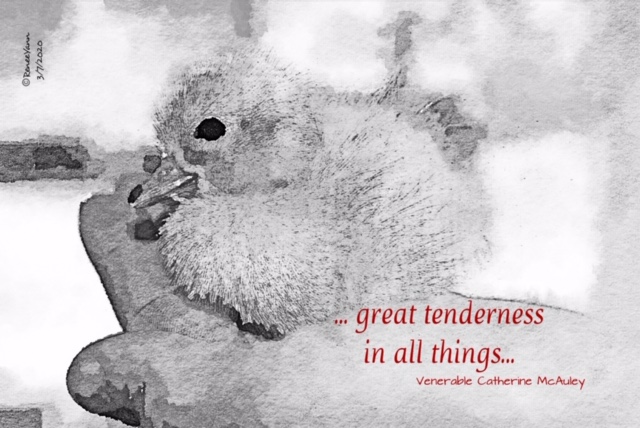
chick

In our Gospel, Jesus tells us how to take this exquisite care of our precious relationship with God:

But I say to you, love your enemies,
and pray for those who persecute you,
that you may be children of your heavenly Father,
for God makes the sun rise on the bad and the good,
and causes rain to fall on the just and the unjust.
… Be compassionate as your Heavenly Father is compassionate.

So, let’s be careful of love today when we find this precious God in our sisters and brothers and in all God’s Creation. Let us be compassionate.

Music:  Compassion Hymn – The Gettys 

Beyond Measure

Friday of the First Week of Lent

March 6, 2020

Click here for readings

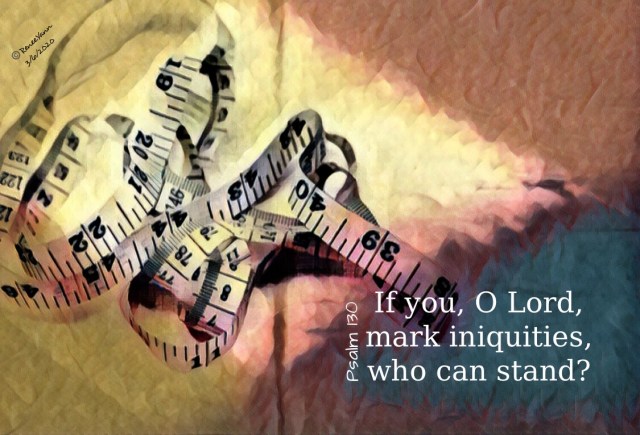
ps130 iniquities

Today, in Mercy, our readings could confuse us with their threads of legalistic logic. We see several examples of “if-then” admonitions that can make us picture God as an accountant measuring every choice we make.

  • If the wicked man turns, … then he shall surely live
  • If the virtuous man turns, … then none of his good deeds shall be remembered.
  • If you, O Lord, Mark iniquities … then who can stand.
  • If you go to the altar unreconciled … then leave and be reconciled.

measure

Sometimes, we can get obsessive about the “if-then” aspects of religion. And IF we do, THEN we probably miss the whole point. Because folded in today’s “if-then” seesaws is the truth of these passages: that the Lord does NOT sit miserly in Heaven to mark our iniquities.

The Lord measures the righteousness of love.


“Thus says the LORD, “Let not a wise man boast of his wisdom, and let not the mighty man boast of his might, let not a rich man boast of his riches; but let him who boasts boast of this, that he understands and knows Me, that I am the LORD who exercises lovingkindness, justice and righteousness on earth; for I delight in these things,” declares the LORD.—Jeremiah 9:23-24


Today’s Responsorial Psalm offers us a beautiful prayer for this morning as we pray in the embrace of God’s Lavish Mercy:

I trust in the LORD;
my soul trusts in his word.
My soul waits for the LORD
more than sentinels wait for the dawn.
Let Israel wait for the LORD.
For with the LORD is kindness
and with him is plenteous redemption;
And he will redeem Israel
from all their iniquities.

Let’s wait for the Lord today to see where God’s Grace invites us to the righteousness of Love.

Music: Everlasting Love – Mark Hendrickson & Family (Lyrics below)

Chorus
With an everlasting love
I love you I love you
With an everlasting love
a love that’ll never end
I love you.

Till the stars lose their way
In the heavens up above
And the oceans all run dry
Till the clouds in the sky
Keep the rain all to themselves
Even longer I’ll love you
This I promise I’ll love you
My word I give it’s true
I love you

Till the morning sun ceases to arise
And the moon forgets to shine
Until heaven’s blue is erased from the sky
Even longer I’ll love you
This I promise I’ll love you
My word I give it’s true
I love you

Even Now…

Ash Wednesday

February 26, 2020

Click here for readings

Today, in Mercy, we resolve to turn our hearts more fully to God. The sacred journey of Lent, one we have traveled so often over the years, invites us each time to go deeper into the Well of Mercy.

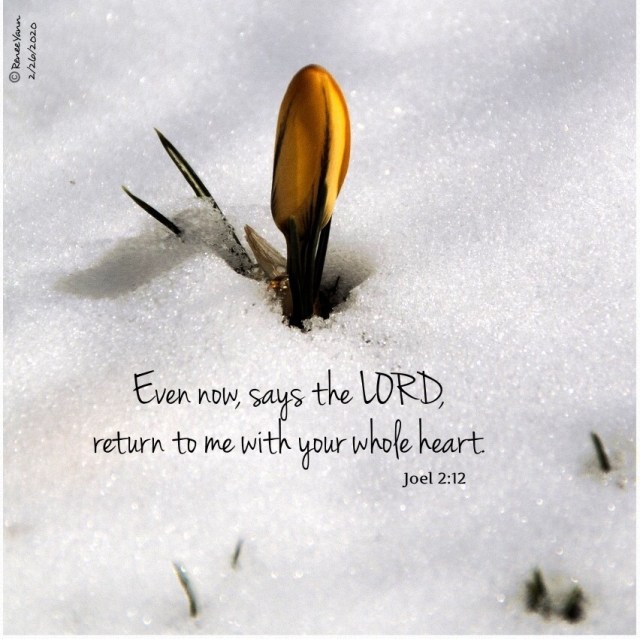
Joel’s pregnant phrase summons us:

Joel2_12 even now

Think of the “even now” moments of your life, those times when, despite darkness and cold, you turned toward light and warmth. Think of a time when, in contradiction to all negativity, your soul proclaimed

  • Even now I hope
  • Even now I believe
  • Even now I love
  • Even now I care
  • Even now I repent
  • Even now I forgive
  • Even now I begin again

buddingThe rise of an “Even Now” moment in our souls is like the hint of spring pushing its head through the winter snow.


It is the reddish-green thread suggesting life at the tip of the brown, cold-cracked branch.

It is the moment we believe that what we desire and love will turn toward us and embrace us.


Can you imagine God having such moments, longing for our attention, love, presence, catching a glimpse of our turning?

Our reading from Joel describes such a God.

Even now, says the LORD,
return to me with your whole heart…

These words suggest God’s longing for us, for our devotion and love.

But our holy intentions weaken and we often drift away from our “first fervors”. Our hearts attach to distractions from God. So God says:

Rend your hearts …
and return to the LORD, your God.
For I am gracious and merciful,
slow to anger, rich in kindness …
Come back to Me, with all your heart.

This is what Lent is all about. Each of us knows where our hearts have wandered. Each of knows what we must turn from — even now — to return to God’s embrace.

If we can hear God’s longing in this haunting reading from Joel perhaps the true turning will begin. A blessed Lent, my friends.


I found this modern song helpful to my prayer. I imagine God singing it to me, to the world, as we begin our Lenten journey. Perhaps it may touch your prayer too. God loves us so much, infinitely more than we can comprehend. But imagining God’s love in human terms, as John of the Cross did, can sometimes deepen our understanding and response to God.

Music: Even Now – Nana Mouskouri

Help My Unbelief!

Monday of the Seventh Week in Ordinary Time

February 24, 2020

Click here for readings

Today, in Mercy, the deep undercurrent of our readings is about the power and difficulties of faith.

James talks about how our faith can be choked by the weeds of “bitter jealousy and selfish ambition”. These chokers make us “boast and be false to the truth”. They fill us with a “pretend wisdom” that is not from the Holy Spirit.

Praying with this passage, I asked myself why we allow these ugly constraints to grasp our souls when the alternative James describes is so beautiful:

… the wisdom from above is first of all pure,
then peaceable, gentle, compliant,
full of mercy and good fruits,
without inconstancy or insincerity.
And the fruit of righteousness is sown in peace
for those who cultivate peace.


The Gospel helped me with an answer.

Unconditional faith is scary. It requires us to give control over to God. It asks us to let go of fear and to trust God’s Spirit within us. It needs us to empty our hearts of pretense and self-protection in order to make room for God’s transforming Mercy and Love.

This kind of faith will change us. It will make us “foolish” and insecure in worldly terms. It will cause us to live from a Wisdom the world misunderstands and mocks.

It’s hard to live that kind of faith. The dad in today’s Gospel admits it. He wants to have a faith that invites Christ’s power into his life. But he’s afraid. What if God wants something different for him and his son? What happens if he gives control over to God?

This yearning father confesses his ambivalence in a plea for Christ’s assistance:

Mk9_24 unbelief

We all find ourselves within that plea sometimes in our lives. It’s a faith of “if”, “maybe”, and “but” – all of which are hardly faith at all. Unconditional faith is “Yes”, no matter what. It is the place where Faith and Love merge.

Our faithful “Yes”, as the e.e.cummings poem might describe it:

love is a place
& through this place of
love move
(with brightness of peace)
all places

yes is a world
& in this world of
yes live
(skillfully curled)
all worlds


Music:
  When we live this “Yes Faith”, God’s love, God’s heart lives in us. This song by Michael Hedges, based on another poem by e.e.cummings, can be a prayer for us. We may be unused to calling God “my dear”, “my darling”. But a loving name for God can be helpful to our prayer. Substitute what works for you. Don’t be hesitant about being in love with God❤️

I Carry Your Heart – Michael Hedges (Lyrics below)

I carry your heart with me
I carry it in my heart
I am never without it
Anywhere i go you go, my dear
And whatever is done by only me
Is your doing, my darling.

I fear no fate
For you are my fate, my sweet
I want no world
For beautiful you are my world, my true
And it’s you are whatever a moon has always meant
And whatever a sun will always sing is you

Here is the deepest secret nobody knows
Here is the root of the root
And the bud of the bud
And the sky of the sky
Of a tree called life;
Which grows higher than the soul can hope
Or mind can hide
And this is the wonder that’s keeping the stars apart
I carry your heart
I carry it in my heart

Deep Law of the Heart

Sixth Sunday in Ordinary Time

February 16, 2020

Click here for readings

Ps119 Law


Today, in Mercy, our readings are all about LAW.

It’s a word we hear a lot about today, isn’t it? 

  • Rule of Law. 
  • Breaking the Law. 
  • Immigration Law.
  • Mother-in-Law.

You name it, LAW is all around us. So we should already know all about what today’s scripture passages describe – right?

Not really. 

230-2303502_law-clipart-law-and-order-clip-art.png


The “law” we are accustomed to discussing is about agreements constructed by human beings – some of those “agreements” better than others. They are interpreted, stretched, amended, honored, ignored, bypassed, and dissolved by human beings as well.

Sometimes, we equate these “laws” with justice which, at their best, we hope they are. But the LAW of today’s readings is above and beyond these humanly defined agreements. 


This LAW emanates from God. It is pure, whole, complete and holy. It is derived from the perfect nature of God which is, at once, both justice and mercy.

Sirach invites us to thrive in the perfection of God’s Law:

If you choose you can keep the commandments,
they will save you;

if you trust in God, you too shall live.

Paul tells the Corinthians that those “mature” in grace are able to receive the mystery of this Divine Law.

We speak a wisdom to those who are mature,
not a wisdom of this age,
nor of the rulers of this age who are passing away.

It is a “mysterious and hidden” Wisdom which the rulers/law makers of Paul’s age did not understand. Because when the Perfect Law became flesh in Jesus Christ, they could not comprehend him.


In our Gospel, Jesus is very clear. He is the fulfillment, not the abolishment of the Law. To live truly within that fulfillment, his disciples must go the extra mile – that is, they must infuse their practice of law/justice with the essence of Love and Mercy.


soup

In the five years since I retired, I’ve gotten pretty good at making soup. When I’m a little lazy, I use a commercial stock for my broth. But when I want to make a soup extra special – truly my own – I make my own bone broth. It makes all the difference.


I think growing in our understanding of God’s Law is a little bit like that. It is the “perfect broth” that requires us to put our whole hearts into it. When we consume it, we are nourished, sustained, changed.

Paul says that we can’t even imagine the “broth” God has prepared for us when we live, delight, and become transformed in God’s Law:

Eye has not seen, and ear has not heard,
and what has not entered the human heart,
what God has prepared for those who love him,

Music:  Eye HAs Not Seen – Marty Haugen

The Muddied Healer

Memorial of Saints Cyril, monk, and Methodius, bishop

February 14, 2020

Click here for readings

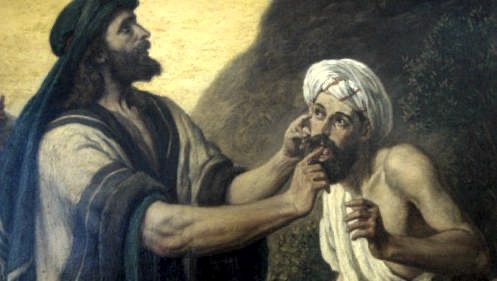
Today, in Mercy, our Gospel gives us one my favorite portrayals of Jesus. It’s what I think of as “down in the dirt with us” Jesus. Let me give you some background on the image.

When I was a kid in North Philly, my buddy’s dog was hit by a car. We were playing baseball in a cinder lot about a half block away. We saw it happen and watched the injuring car speed off.

Petey ran screaming toward his dog, the rest of us streaming behind him. I can still see Petey lie down beside that whimpering mutt who had been tossed into a muddy gully along Philip Street. He cradled the bruised head and whispered to the frightened eyes. Then Petey quietly said, “Get my Dad”, as he stroked Lightening’s heaving back.

In that moment in my memory, Petey became an image of the Divine Healer who – muddied and bloodied — has taken a place beside all of us as we suffer.

In today’s Gospel, there is stunning humanness. The suffering man doesn’t just ask for a miracle. He asks for a hand to be laid on him, for a touch, for a connection he can feel. And Jesus hears his deep human need.

Some miracles are accomplished by a fleshless, electric word shot through the air. But not this one.

tongue
Be Opened – Thomas Davidson (1872)

With this lonely, isolated man, feel Jesus caress your head, finger the ears that have heard so much criticism and frustration. Feel Jesus touch your tongue, so twisted in its attempts to speak your meaning into the world. Receive the surprising gift of Divine spittle that intends to insure, “I am part of you now. You will never be alone again.”

Hear Christ’s groan as he prays for you in sounds that plead, “Get my Dad. ABBA, Father.”

Ephphatha

Hear the definite pronouncement of your liberation from anything that tongue-ties, heart-ties, soul-ties your life:

“Ephphatha!” (that is, “Be opened!”)

Music:  Lord, You Put a Tongue in My Mouth – Divine Hymns

Got Baggage?

Memorial of Saint Paul Miki and Companions, martyrs

February 6, 2020

Click here for readings

Today, in Mercy, “journey” is a central theme. David takes his final journey after commissioning his son Solomon as his successor. In our Gospel, Jesus commissions the disciples for their first missionary journey.

Each of these journeys has its own “baggage requirements”.


David’s situation is easy and can be stated in a phrase we are all familiar with:

“You can’t take it with you.”

The writer of Job expresses the same sentiment:

chick-154490_960_720And Job said,
“Naked I came from my mother’s womb,
and naked shall I return.
The LORD gave,
and the LORD has taken away;
blessed be the name of the LORD.”
Job 1:2


It’s a lesson we seem to have a hard time learning. Whenever I pack for a trip, the challenge resurfaces.

baggage
For anyone wondering, yes this is actually me at the airport, except for the heels! 🙂

Back in my early days of flying, when there were no baggage fees, some passengers took everything but the kitchen sink on their journeys. I have a clear picture of petite women hauling suitcases bigger than themselves over to the check-in counter.

Often in life we carry a lot of baggage we don’t need. Some of it is good stuff we just can’t part with, and some of it is junk we should have tossed long ago. The point is that it’s all weight we don’t need if we want to reach our desired destination easily.


Mk6_8journey
Jesus drives that point home to his disciples in today’s Gospel:

He instructed them to take nothing for the journey but a walking stick
– no food, no sack, no money in their belts.


Now that’s a pretty stringent packing list! So what might it mean for our spiritual journey?

Let’s ask ourselves this:

  • What weighs me down from being a loving, generous, just and merciful person?
  • Are there things I won’t let go of because I am fearful, insecure, or selfish?

When the disciples heeded Jesus’s advice, their ensuing freedom made them capable of miracles. Might such courage do the same thing for us?


Music: Have a little fun this morning with this great old country song. Apologies to all grammarians who will spot the blatant contradiction in the title!
I Wouldn’t Take Nothing for My Journey Now – Goodman Revival

Refrain:
Well, I wouldn’t take nothin’ for my journey now
Gotta make it to Heaven somehow
Though the devil tempt me and he tried to turn me around
He’s offered everything that’s got a name
All the wealth I want and worldly fame
If I could still I wouldn’t take nothin’ for my journey now

Well, I started out travellin’ for the Lord many years ago
I’ve had a lot of heartache and I met a lot of grief and woe
But when I would stumble then I would humble down
And there I’d say, I wouldn’t take nothin’ for my journey now

Oh, there’s nothin’ in this world that’ll ever take the place of God’s love
All the silver and gold wouldn’t buy a touch from above
When the soul needs healin’ and I begin to feelin’ His power
Then I can say, thank the Lord, I wouldn’t take nothing for my journey now

Oh, I wouldn’t take nothin’ for my journey now
Gotta make it to Heaven somehow
Though the devil tempts me and he tried to turn me around
He’s offered everything that’s got a name
All the wealth I want and worldly fame
If I could still I wouldn’t take nothin’ for my journey now.

Mercy Surrounds Us

Memorial of Saint Agatha, virgin and martyr

February 5, 2020

Click here for today’s readings

Today, in Mercy, David gets himself in trouble once again.

In the later years of his kingship, David is pretty impressed with himself. The kingdom has grown exponentially. There is peace and prosperity. David wants a census taken so that he can assess his capacity for new expansion.

So why does God get so mad about this census? The Book of Exodus sets out that a person has the right to number only his own belongings. The People belong to God, not to David. David’s pride and self-satisfaction has taken him over.

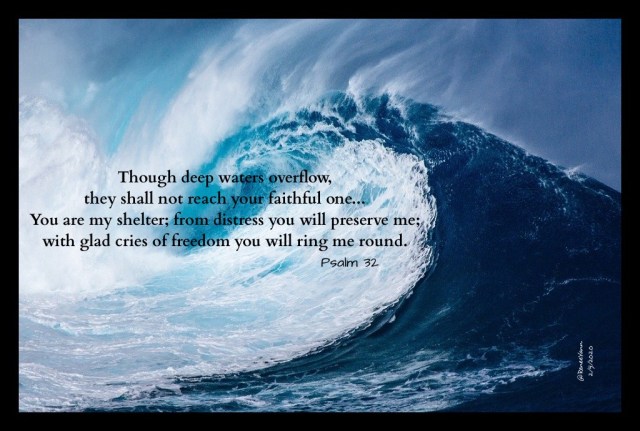
Ps32_deep waters

However, as usual, David repents. This is probably the best lesson we can learn from him. Then, in a greatly allegorized treatment, God gives David a choice of three punishments.


Passages like this can confuse us if we interpret them literally. Does God really interact and punish like this? 

It helps to remember the purpose of these writings — not to relay a factual history, but rather to tell a story that helps us grow in relationship with God.

What I believe happened here is that a pestilence did fall upon the country. At the same time, David realized that his heart had grown selfish and graceless. He took the natural event as a sign to turn back to God. And then the writers told the story in a way that the ancient peoples could relate to – with a God that forgives but gets even.


In our Gospel, Jesus preaches another vision of God – a vision of Complete Mercy, especially toward the vulnerable, weak, and sinful. That pretty much includes all of us.

Jesus releases the power of this Divine Mercy by his words and miracles. But his own family and neighbors reject him. They are more comfortable with a God who behaves like they do – meting out more judgement and punishment (preferably toward others!😉) than mercy and inclusive benediction.

In this Gospel, we begin to see Jesus as One who asks not only for repentance but for conversion – for a new way of being with God and neighbor, the way of Love.

How might we have responded had we been in that neighborhood synagogue? How are we responding today?

Music: Today’s Responsorial Psalm 32 – Marty Goetz ( Lyrics below)

Psalm 32 – Marty Goetz

These are periled times we live in, trouble everywhere
Weary hearts will often give in to this world’s despair
But high and over all, our Father knows our every care
And in His Book, if you will look, you’ll find His promise there

(Chorus)
He who trusts in the Lord
Mercy shall surround him
He who trusts in the Lord
Mercy shall surround him
Be glad in the Lord and rejoice
You upright in heart, lift up your voice
For great is His mercy toward all who trust in the Lord

Soon will be the time when we will see the Holy One
Oh how sweet to know that He’ll complete what He’s begun
And blessed is the man who stands forgiven in God’s son
And blessed are they who in that day will hear Him say, “Well done”

(Chorus)

Gracious is He and slow to anger
His loving kindness has no end
With love to embrace both friend and stranger
Reaching out to one and all, who upon His name will call

(Chorus)

Mercy is His reward
For all who trust, for the pure and just
Who put their trust in the Lord
For all who trust for the pure and just who put their trust in the Lord

God loves …. always!

Saturday of the Third Week in Ordinary Time

February 1, 2020

Click here for readings

Today, in Mercy, David gets his comeuppance after his sinful forays.

david weeps
David Weeps – wikipedia.org – not for commercial use

The passage is hard to deal with. It suggests that God is vengeful, and gets us back for going against him. That’s not the God Who loves me.

Like much of the Old Testament, the writer is interpreting the circumstances of life in order to teach a lesson. The lesson here is not that God is a payback God. The core lesson is that our choices have repercussions, and should always be made in the light of God’s hope for us.

Sometimes in our own lives, we think of God as reacting in a human way to us – getting angry, forgetting us, paying us back, testing us, punishing us. Like the disciples in today’s storm-tossed boat, our faith is weak and maybe misdirected.

God is Love, and Love only. God is NEVER “I’ll getcha’ “. Deep faith directs us to find God’s love – God’s continuing call to intimacy – in every circumstance of our lives. 

God didn’t kill David’s illegitimate son. It just happened, the way so much of life happens. We can blame God if we want to, but we’re missing the point. 

The point is that God is with us in the inevitable joys and sorrows of our lives saying, as he did to his distraught shipmates:

“Why are you terrified?
Do you not yet have faith?”

Ps51

Our Gospel assures us that God is with us, “sleeping” even in our rocky boat. By faith and prayer, we “wake God”, as we actually wake ourselves to the truth of God’s immutable, loving Presence in our lives.

Music:  You Raise Me Up – Selah