Cleansed in Mercy

January 13, 2022
Thursday of the First Week in Ordinary Time

Today, in God’s Lavish Mercy, our readings present a human cycle with which we all are familiar- the experience of falling and being lifted up again.

Failure
then
Mercy
then
Redemption

In our first reading, we hear about Hophni and Phinehas, sons of old Eli. They were not nice guys. They represent everything that happens when politics and power corrupt religion.

Now the sons of Eli were wicked; they had respect neither for the LORD
nor for the priests’ duties toward the people.

1 Samuel 2: 13-14

After a first defeat by the Philistines, the elders of Israel sent for the Ark of the Covenant to fortify them in battle. Hophni and Phineas, being the Ark’s tenders, accompanied it from Shiloh. But the presence of the Ark, representing God, didn’t bring victory. Israel lost a second battle.

The Philistines fought and Israel was defeated;
every man fled to his own tent.
It was a disastrous defeat,
in which Israel lost thirty thousand foot soldiers.
The ark of God was captured,
and Eli’s two sons, Hophni and Phinehas, were among the dead.

1 Samuel 4:11

Wow! You know it’s bad enough when we fail a first time! But after asking God to step in, we still fail??? Uh Oh!

Extraordinary Failure


Our Responsorial Psalm is the prayer of those recognizing themselves as utterly defeated, confused, and begging for redemption – the “Uh Oh People”!

Why do you hide your face,
            forgetting our woe and our oppression?
For our souls are bowed down to the dust,
            our bodies are pressed to the earth.
Redeem us, Lord, because of your mercy.

Psalm 44:24-25

Extraordinary Redemption 


Mark’s Gospel tells the story of one devastated and utterly dependent on God to be restored, — a story of the immediacy of God’s Mercy when we open our hearts to it:

A leper came to him and kneeling down begged him and said,
“If you wish, you can make me clean.”
Moved with pity, he stretched out his hand,
touched the leper, and said to him, 
“I do will it. Be made clean.”

Mark 1:40

Extraordinary Mercy


Listen, I’ve been an “uh oh person” many times in my life. Probably you have too. As we pray with these passages, our own failures and defeats may speak to us. Whether we are in their midst or simply wrapped in their recollection, let’s open our spirits to these extraordinary gifts:

  • honest recognition of our failures
  • a request for healing redemption 
  • gratitude for God’s Lavish Mercy


Poetry: The Leper – by Nathaniel Parker Willis

It’s a rather long poem, and may delight only the literary nerds like me. But it paints a wonderful story if you can take time to read it sometime.

“ROOM for the leper! room!” And, as he came,
The cry passed on—“Room for the leper! Room!”
Sunrise was slanting on the city gates
Rosy and beautiful, and from the hills
The early risen poor were coming in, 5
Duly and cheerfully to their toil, and up
Rose the sharp hammer’s clink and the far hum
Of moving wheels and multitudes astir,
And all that in a city murmur swells—
Unheard but by the watcher’s weary ear, 10
Aching with night’s dull silence, or the sick
Hailing the welcome light and sounds that chase
The death-like images of the dark away.
“Room for the leper!” And aside they stood—
Matron, and child, and pitiless manhood—all 15
Who met him on his way—and let him pass.
And onward through the open gate he came,
A leper, with the ashes on his brow,
Sackcloth about his loins, and on his lip
A covering, stepping painfully and slow, 20
And with a difficult utterance, like one
Whose heart is with an iron nerve put down,
Crying, “Unclean! unclean!”

                ’Twas now the first    

Of the Judean autumn, and the leaves,
Whose shadows lay so still upon his path, 25
Had put their beauty forth beneath the eye
Of Judah’s palmiest noble. He was young,
And eminently beautiful, and life
Mantled in eloquent fulness on his lip,
And sparkled in his glance; and in his mien 30
There was a gracious pride that every eye
Followed with benisons—and this was he!
With the soft airs of summer there had come
A torpor on his frame, which not the speed
Of his best barb, nor music, nor the blast 35
Of the bold huntsman’s horn, nor aught that stirs
The spirit to its bent, might drive away.
The blood beat not as wont within his veins;
Dimness crept o’er his eye: a drowsy sloth
Fettered his limbs like palsy, and his mien, 40
With all its loftiness, seem’d struck with eld.
Even his voice was changed; a languid moan
Taking the place of the clear silver key;
And brain and sense grew faint, as if the light
And very air were steeped in sluggishness. 45
He strove with it awhile, as manhood will,
Ever too proud for weakness, till the rein
Slacken’d within his grasp, and in its poise
The arrowy jeered like an aspen shook.
Day after day, he lay, as if in sleep. 50
His skin grew dry and bloodless, and white scales,
Circled with livid purple, cover’d him.
And then his nails grew black, and fell away
From the dull flesh about them, and the hues
Deepen’d beneath the hard unmoisten’d scales, 55
And from their edges grew the rank white hair,
—And Helon was a leper!

                Day was breaking,    

When at the altar of the temple stood
The holy priest of God. The incense lamp
Burn’d with a struggling light, and a low chant 60
Swell’d through the hollow arches of the roof
Like an articulate wail, and there, alone,
Wasted to ghastly thinness, Helon knelt.
The echoes of the melancholy strain
Died in the distant aisles, and he rose up, 65
Struggling with weakness, and bow’d down his head
Unto the sprinkled ashes, and put off
His costly raiment for the leper’s garb:
And with the sackcloth round him, and his lip
Hid in a loathsome covering, stood still, 70
Waiting to hear his doom:—

Depart! depart, O child
Of Israel, from the temple of thy God!
For He has smote thee with His chastening rod;
And to the desert-wild, 75
From all thou lov’st away, thy feet must flee,
That from thy plague His people may be free.

Depart! and come not near
The busy mart, the crowded city, more;
Nor set thy foot a human threshold o’er; 80
And stay thou not to hear
Voices that call thee in the way; and fly
From all who in the wilderness pass by.

Wet not thy burning lip
In streams that to a human dwelling glide; 85
Nor rest thee where the covert fountains hide;
Nor kneel thee down to dip
The water where the pilgrim bends to drink,
By desert well or river’s grassy brink;

And pass thou not between 90
The weary traveller and the cooling breeze;
And lie not down to sleep beneath the trees
Where human tracks are seen;
Nor milk the goat that browseth on the plain,
Nor pluck the standing corn, or yellow grain. 95

And now, depart! and when
Thy heart is heavy, and thine eyes are dim,
Lift up thy prayer beseechingly to Him
Who, from the tribes of men,
Selected thee to feel His chastening rod, 100
Depart! O Leper, and forget not God!

And he went forth—alone! not one of all
The many whom he loved, nor she whose name
Was woven in the fibres of the heart
Breaking within him now, to come and speak 105
Comfort unto him. Yea—he went his way,
Sick, and heart-broken, and alone—to die!
For God had cursed the leper!

                        It was noon,    

And Helon knelt beside a stagnant pool
In the lone wilderness, and bathed his brow, 110
Hot with the burning leprosy, and touched
The loathsome water to his fever’d lips,
Praying that he might be so blest—to die!
Footsteps approach’d, and with no strength to flee,
He drew the covering closer on his lip, 115
Crying, “Unclean! unclean!” and in the folds
Of the coarse sackcloth shrouding up his face,
He fell upon the earth till they should pass.
Nearer the Stranger came, and bending o’er
The leper’s prostrate form, pronounced his name— 120
“Helon!” The voice was like the master-tone
Of a rich instrument—most strangely sweet;
And the dull pulses of disease awoke,
And for a moment beat beneath the hot
And leprous scales with a restoring thrill. 125
“Helon! arise!” and he forgot his curse,
And rose and stood before Him.

                    Love and awe    

Mingled in the regard of Helon’s eye
As he beheld the Stranger. He was not
In costly raiment clad, nor on His brow 130
The symbol of a princely lineage wore;
No followers at His back, nor in His hand
Buckler, or sword, or spear,—yet in His mien
Command sat throned serene, and if He smiled,
A kingly condescension graced His lips, 135
The lion would have crouch’d to in his lair.
His garb was simple, and His sandals worn;
His stature modell’d with a perfect grace;
His countenance, the impress of a God,
Touch’d with the open innocence of a child; 140
His eye was blue and calm, as is the sky
In the serenest noon; His hair unshorn
Fell to His shoulders; and his curling beard
The fulness of perfected manhood bore.
He looked on Helon earnestly awhile, 145
As if His heart were moved, and stooping down,
He took a little water in His hand,
And laved the sufferer’s brow, and said, “Be clean,”
And lo! the scales fell from him, and his blood
Coursed with delicious coolness through his veins, 150
And his dry palms grew moist, and his lips
The dewy softness of an infant’s stole,
His leprosy was cleansed, and he fell down
Prostrate at Jesus’ feet and worshipped Him.

Music: Healing – Paul Avgerinos

Blossoming Exultation!

January 11, 2022
Tuesday of the First Week in Ordinary Time

Ordinary Time 2022:
The extraordinary reality is that we have been given the gift of life!
Each day we are given a new portion of grace to deepen in God!
Let us focus our reflections on the “hidden extraordinary”
– a word, thought, or challenge in each day’s readings
that we might otherwise have taken for granted.
May God give us the graceful appreciation to unwrap these gifts!


Today, in God’s Lavish Mercy, we awaken to extraordinary gifts revealed in three words from our readings:

Downcast – Amazed – Exultant

In our first reading, Hannah’s story continues to unfold. And we feel for her, don’t we? The woman is desperate to bear life! Not only does she long for her own sweet child; she longs as well for restored standing in her neighborhood and family as one who is fertile not barren. This meant everything in Hannah’s community as fertility defined a woman’s importance.

Have you ever prayed like Hannah prays in this chapter? Has any need in your life ever so demanded God’s mercy? These are times that ask for our complete vulnerability before God’s Omnipotence.

In her bitterness she prayed to the LORD, weeping copiously,
and she made a vow, promising: “O LORD of hosts,
if you look with pity on the misery of your handmaid,
if you remember me and do not forget me,
if you give your handmaid a male child,
I will give him to the LORD for as long as he lives…

1 Samuel 1: 10-11
Vasili Petrovich Vereshchagin (1864)

Eli witnesses Hannah’s vulnerable prayer. He blesses her and hope cracks through her gloom:
She replied, “Think kindly of your maidservant,” and left.
She went to her quarters, ate and drank with her husband,
and no longer appeared downcast.

1 Samuel 1:18

Extraordinary Vulnerability!


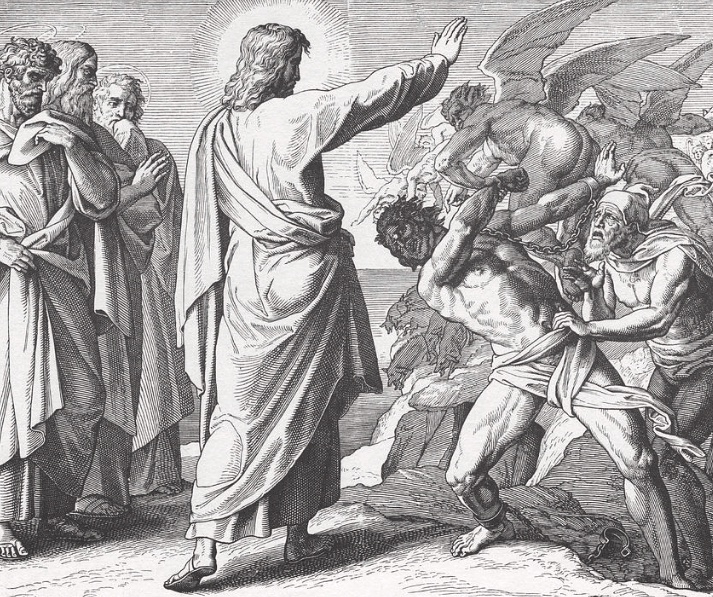
Jesus Casts Out Demons – Julius Schnorr von Carolsfeld

In the Gospel reading, Jesus is still very early in his ministry. He has come to the synagogue to teach and people are “astonished” to hear the depth of his authority. But their astonishment grows even more when Jesus successfully commands the unclean spirit to leave the tortured man.
All were amazed and asked one another,
“What is this?
A new teaching with authority.
He commands even the unclean spirits and they obey him.”

Mark 1:27

Can we let ourselves be constantly amazed at God’s Presence, Power, and Mercy in all Creation?


Extraordinary Holy Amazement!


Once again, our Responsorial Psalm offes a way to pray when our downcast desperation meets God’s amazing, transforming grace. It is the “Magnificat” of Hannah:

And Hannah prayed:

“My heart exults in the LORD,
my horn is exalted by my God.
I have swallowed up my enemies;
I rejoice in your victory.
There is no Holy One like the LORD;
there is no Rock like our God.
1 Samuel 2: 1-2

1 Samual 2: 1-2

Extraordinary Exultation!

Through our scripture-nourished prayer,
may we open the gifts of extraordinary vulnerability, extraordinary hope, and extraordinary exultation
wrapped in our own ordinary lives this day.

Poetry: Bare Tree – Anne Morrow Lindbergh

Already I have shed the leaves of youth,
stripped by the wind of time down to the truth
of winter branches. Linear and alone
I stand, a lens for lives beyond my own,
a frame through which another's fire may glow,
a harp on which another's passion, blow.
The pattern of my boughs, an open chart
spread on the sky, to others may impart
its leafless mysteries that I once prized,
before bare roots and branches equalized,
tendrils that tap the rain or twigs the sun
are all the same, shadow and substance one.
Now that my vulnerable leaves are cast aside,
there's nothing left to shield, nothing to hide.
Blow through me, Life, pared down at last to bone,
so fragile and so fearless have I grown!


Music: Listen to the Trees

The Last Day

November 27, 2021
Saturday of the Thirty-fourth Week in Ordinary Time

Today, in God’s Lavish Mercy, we come – FINALLY – to the last day in Ordinary Time. And, believe me, the readings are as daunting as their predecessors suggested they would be.

They are so daunting that I will leave you to them if you wish, but I choose to close the Liturgical Year with another story I wrote years ago.

May the story inspire you as we stand on beautiful Advent’s doorstep. Within it, may you find love, hope, tenderness, mercy and gratitude to carry with you into the new Church Year.

The Earring

Young Emma, skewered by indecision, had stared into her mother’s jewelry box. She had always loved those bejeweled earrings, a gift to her mother from her grandmother—an heirloom now, a treasure beyond price. She wanted so to wear them on this special date, but they were “hands off” and she knew it. Still, her mother at work and unaware of her desire, Emma had succumbed to temptation.


The dance had been wonderful, a whirlwind of such delight that Emma had not noticed when her left earring had brushed against her partner’s shoulder, tumbling hopelessly under the dancers’ trampling feet. Only at evening’s end, approaching her front door exhausted and dreamy, had she reached up to unclip the precious gems.


Her mother sat waiting for her in the soft lamplight, having already noticed the earrings missing from her dresser. Awaiting retribution, Emma knelt beside her mother and confessed the further sacrilege of loss. But her mother simply cupped Emma’s tearful face in her hands, whispering, “You are my jewel. Of course I forgive you.”  Though accustomed to her mother’s kindness, this act of compassion astonished Emma, filling her with an indescribable, transformative gratitude.


Like Emma, we may be astonished at the graciousness that has been given to us. We may respond by pouring out our thanks to God in a silent act of prayer.

May we also have the courage to become like our merciful God, anticipating the other’s need for our forgiveness and compassion. May we seek the strength not to harbor injury, but too release it to make room for further grace in our hearts.


Advent 2021

I am so excited about Advent – my favorite time of the Church Year! The readings are magnificent — especially lyrical, prophetic Isaiah!

Advent offers us the wonderful call “to relish expectation” – to believe in, to hope for, and to love what we cannot yet see. It is a time of blind but unshakeable trust which teaches us to live within our deep, invisible spirit.

Looking forward to being with all of you tomorrow as we begin the journey through this season of profound hope.


Poetry: I Hear the Oriole’s Always-Grieving Voice – Anna Akhmatova

I chose this poem because it captures a spirit of hope – yet unrealized, but nevertheless convinced.

I hear the oriole’s always-grieving voice,
And the rich summer’s welcome loss I hear
In the sickle’s serpentine hiss
Cutting the corn’s ear tightly pressed to ear.
And the short skirts of the slim reapers
Fly in the wind like holiday pennants,
The clash of joyful cymbals, and creeping
From under dusty lashes, the long glance.

I don’t expect love’s tender flatteries,
In premonition of some dark event,
But come, come and see this paradise
Where together we were blessed and innocent.


Music: Gracias a la Vida – Mercedes Sosa and Joan Baez ( English lyrics below.) Thanks to my friend Beth who shared this lovely song on Facebook today.

Thanks to life, which has given me so much.
It gave me two beams of light, that when opened,
Can perfectly distinguish black from white
And in the sky above, her starry backdrop,
And from within the multitude The one that I love.

Thanks to life, which has given me so much.
It gave me an ear that, in all of its width
Records— night and day—crickets and canaries,
Hammers and turbines and bricks and storms,
And the tender voice of my beloved.

Thanks to life, which has given me so much.
It gave me sound and the alphabet.
With them the words that I think and declare:
“Mother,” “Friend,” “Brother” and the light shining.
The route of the soul from which comes love.

Thanks to life, which has given me so much.
It gave me the ability to walk with my tired feet.
With them I have traversed cities and puddles
Valleys and deserts, mountains and plains.
And your house, your street and your patio.

Thanks to life, which has given me so much.
It gave me a heart, that causes my frame to shudder,
When I see the fruit of the human mind,
When I see good so far from bad,
When I see within the clarity of your eyes…

Thanks to life, which has given me so much.
It gave me laughter and it gave me longing.
With them I distinguish happiness and pain—
The two materials from which my songs are formed,
And your song, as well, which is the same song.
And everyone’s song, which is my very song.
Thanks to life

Thanks to life
Thanks to life
Thanks to life

Wake Up!

November 22, 2021
Memorial of St. Cecilia

Today, in God’s Lavish Mercy, we pray with a passage from Daniel for our Responsorial Psalm:

Blessed are you, O Lord, the God of our forebearers,
    praiseworthy and exalted above all forever;
And blessed is your holy and glorious name,
    praiseworthy and exalted above all for all ages

Daniel 3:52

This week we continue with a series of readings from the Book of Daniel. It is the only time throughout the Liturgical Year that we get a good dose of Daniel. And it is well placed, coming in this final week before Advent.

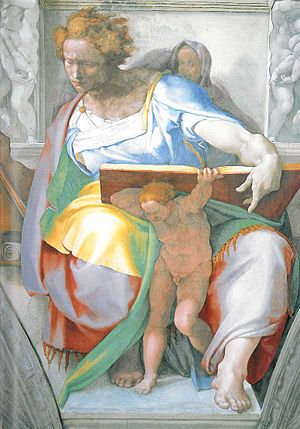
The Prophet Daniel by Michelangelo (Sistine Chapel)

Daniel is apocalyptic literature, a genre which conveys the author’s perception of the end times through dreams, visions and prophecies. Like many of our readings of the past weeks, Daniel focuses us on God’s Final Coming into time by interpreting current circumstances in a spiritual light.


Today’s Gospel does the same thing, but in a little different way. 

Jesus tells the story of the poor widow who gave everything she had for the sake of the poor. This widow, in a sense, already lives in the “end times”, a time when our only “possessions” will be the good we have done in our lives.

Both these readings set us up to reflect on our lives and times as we approach Advent. This sacred season is the annual reenactment of Christ’s First Coming in order to prepare us for:

  • Christ’s daily revelation in our lives
  • Christ’s Final Coming at the end of time

All of Daniel’s complex visions and prophecies can feel a little confusing, but we can focus on this:

  • God is continually revealing Godself in the ordinary circumstances of time.
  • We can open ourselves to this revelation by our humble prayer and good works.
  • Staying awake like this in our hearts and souls will allow us to pass seamlessly into God’s Presence when the end times come.

Poetry: Awake! awake O sleeper of the land of shadows (from Jerusalem) – William Blake

Awake! awake O sleeper of the land of shadows, wake! expand!
I am in you and you in me, mutual in love divine:
Fibres of love from man to man thro Albions pleasant land.
In all the dark Atlantic vale down from the hills of Surrey
A black water accumulates, return Albion! return!
Thy brethren call thee, and thy fathers, and thy sons,
Thy nurses and thy mothers, thy sisters and thy daughters
Weep at thy souls disease, and the Divine Vision is darkend:
Thy Emanation that was wont to play before thy face,
Beaming forth with her daughters into the Divine bosom
Where hast thou hidden thy Emanation lovely Jerusalem
From the vision and fruition of the Holy-one?
I am not a God afar off, I am a brother and friend;
Within your bosoms I reside, and you reside in me:
Lo! we are One; forgiving all Evil; Not seeking recompense!
Ye are my members O ye sleepers of Beulah, land of shades!

Music: Sleepers Awake from the beautiful album by Chris Wyton, “Music for Deep Meditation “

Thoughts of Heaven

November 20, 2021
Saturday of the Thirty-third Week in Ordinary Time

Today, in God’s Lavish Mercy, we pray with Psalm 9 and its beautiful verse which is echoed in several other Psalms:

I will give thanks to you, O LORD, with all my heart;
    I will declare all your wondrous deeds.
I will be glad and exult in you;
    I will sing praise to your name, Most High.

Psalm 9: 2-3

Like so many of our readings lately, today’s point us toward a consideration of the “afterlife” or the “end times”. I know you may have had enough of such considerations, but the Church isn’t giving up quite yet!


Antiochus IV, wikipedia

Maccabees gives us a colorful account of the defeat, dismay and ultimate death of Antiochus IV, persecutor of the Jews. The account, like most of the Books of Maccabees, is primarily historical, not spiritual or theological. But threaded through the books, of course, is the underlying biblical orientation that God-Yahweh is present and active in all life’s circumstances.

Today’s passage has even pagan Antiochus considering how God/Fate has brought him to judgement- to “payback” time:

But I now recall the evils I did in Jerusalem,
when I carried away all the vessels of gold and silver
that were in it, and for no cause
gave orders that the inhabitants of Judah be destroyed.
I know that this is why these evils have overtaken me;
and now I am dying, in bitter grief, in a foreign land.

1 Maccabees 6:11-13

In our Gospel account, some Sadducees question Jesus about marriage laws and the afterlife. Their questioning reminds me of modern songwriter Eric Clapton’s musings in his song:

Tears in Heaven – Eric Clapton

Jesus doesn’t sing to the Sadducees, as far as I know. Rather, he answers them this way:

Those who are deemed worthy to attain to the coming age
and to the resurrection of the dead
neither marry nor are given in marriage.
They can no longer die,
for they are like angels;
and they are the children of God
because they are the ones who will rise.

Luke 20:35-36

So for us today, the questions and concerns of both Antiochus and the Sadducees might lead us to consider how we feel about the “afterlife”.

Do you ever wonder what heaven will be like? Will we see our beloveds once again? Will we see our “unbeloveds” too and what will that be like!! Do you calculate whether or not you’ll even make the cut through the Pearly Gates?

When I think about heaven these two promises of Jesus sustain, comfort and animate me. Maybe you’ll consider their power too as you pray today.

I have come that you may have life,
and have it to the full.

John 10:10

Eternal life is this, that they know you,
the only true God,
and Jesus Christ, whom you have sent.

John 17:3

Poetry: Heaven-Haven (1864) – Gerard Manley Hopkins

A nun takes the veil

I have desired to go
Where springs not fail,
To fields where flies no sharp and sided hail,
And a few lilies blow.

And I have asked to be
Where no storms come,
Where the green swell is in the havens dumb,
And out of the swing of the sea.

Music: Here’s a beautiful piece of music to accompany you in your “considerations”.

Nocturne No.20 in C-Sharp Minor – Frédéric Chopin, played by Joshua Bell

Beyond Measure

Wednesday of the Thirty-third Week in Ordinary Time
Memorial of St. Elizabeth of Hungary
November 17, 2021

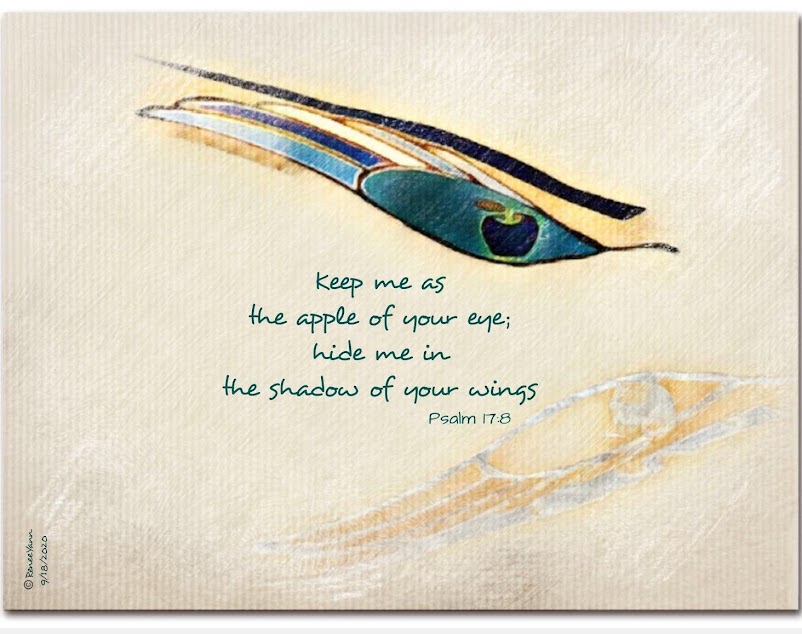
Today, in God’s Lavish Mercy, we pray a lovely verse of Psalm 17:

The psalm is a gentle plea which might serve to soften our two dramatically intense readings.

Who can read the story of the Maccabean Martyrs without a mix of horror, empathy, and astonishment?

And don’t we all feel a pang of pity for the poor, fearful servant who hid his talent in a handkerchief much to the King’s displeasure?

The two stories, (one based in fact, the other a parable), paint a contrasting picture of courageous faith against fearful subservience. The difference between the actors lies in their capacity, or lack there of, to look beyond themselves toward eternal life.

Mother Maccabee bolsters her sons with her faith in a life beyond their current circumstances:

… the Creator of the universe
who shapes each man’s beginning,
as he brings about the origin of everything,
he, in his mercy,
will give you back both breath and life,
because you now disregard yourselves
for the sake of his law.

2 Mc 7:23

The poor soul in Jesus’s parable doesn’t have that faith and vision. His perception of God, represented by the King, is one of only harsh judgement. His fear causes him to bury not only his talent, but also his openness to the possibilities of grace and transformed relationship with God.

Jesus told his parable because indeed the Kingdom was at hand. He and his disciples were near Jerusalem where the Passion, Death and Resurrection events would begin.

He wants his followers to realize the challenging gift they have been given in their call to be his disciples. He wants them to see that it is now on them to magnify his message courageously and generously until he returns to perfect the Kingdom.

Jesus wants us to understand that too.


Poetry: Sonnet 19: When I consider how my light is spent – John Milton
Milton became blind in later life. The poem reflects his concerns about all that he has left undone in his life. Ultimately, Milton expresses the confidence that God has no need of his “talent”, only his steadfast faith.

When I consider how my light is spent, 

   Ere half my days, in this dark world and wide, 

   And that one Talent which is death to hide 

   Lodged with me useless, though my Soul more bent 

To serve therewith my Maker, and present 

   My true account, lest he returning chide; 

   “Doth God exact day-labour, light denied?” 

   I fondly ask. But patience, to prevent 

That murmur, soon replies, “God doth not need 

   Either man’s work or his own gifts; who best 

   Bear his mild yoke, they serve him best. His state 

Is Kingly. Thousands at his bidding speed 

   And post o’er Land and Ocean without rest: 

   They also serve who only stand and wait.”


Music:   Be Not Afraid – written by Bob Dufford, SJ, sung here by Cat Jahnke

Stretching to See God

November 16, 2021
Tuesday of the Thirty-third Week in Ordinary Time

Today, in God’s Lavish Mercy, we pray with Psalm 3 which well might reflect the prayer of noble Eleazar from our first reading:

You, O LORD, are my shield;
    my glory, you lift up my head!
When I call out to the LORD,
    he answers me from his holy mountain.
R.    The Lord upholds me.
When I lie down in sleep,
    I wake again, for the LORD sustains me.
I fear not the myriads of people
    arrayed against me on every side.

Psalm 3: 4-7

Eleazar’s faithful character is so strong that he can look beyond his present circumstance to:

… leave in his death a model of courage
and an unforgettable example of virtue
not only for the young but for the whole nation.

2 Mc 6:31

Both Eleazar’s story and Zaccheus’s are about living in the big picture of God’s vision for us. These stories invite us to stretch beyond ourselves to see God in our circumstances.

Eleazar was a giant in the virtues necessary to “see beyond the trees” of his current circumstances. A more spiritually short-sighted person might have succumbed to the temptation to save himself at the cost of his faith and witness.

But Eleazar’s faith was long, both in years and in depth. He kept the eyes of his heart focused on that faith and was delivered beyond any short-sighted choices.


In our Gospel, we meet Zaccheus who, due to his short stature, was unable to get a glimpse of Jesus walking nearby. He wasn’t getting the whole picture – but he desperately wanted to!


Sometimes we miss Christ in our midst, don’t we? It may be because we’re “short” on time, patience, faith, attention, courage, peace, desire … you name it.

Zaccheus may have been physically short, but he was tall in will and intention to see Jesus. The trees became his tools not his obstacles.


It’s hard sometimes to see the forest beyond the trees – to direct our choices, attitudes and actions by a vision we glimpse only on the tippy toes of faith and prayer.

Perhaps these two God-seekers can inspire us today, by their courage, steadfastness and faith, to always live within God’s long eternal vision for us.


Poetry: Walking on Tiptoe by Ted Kooser

Long ago we quit lifting our heels
like the others—horse, dog, and tiger—
though we thrill to their speed
as they flee. Even the mouse
bearing the great weight of a nugget
of dog food is enviably graceful.
There is little spring to our walk,
we are so burdened with responsibility,
all of the disciplinary actions
that have fallen to us, the punishments,
the killings, and all with our feet
bound stiff in the skins of the conquered.
But sometimes, in the early hours,
we can feel what it must have been like
to be one of them, up on our toes,
stealing past doors where others are sleeping,
and suddenly able to see in the dark.

Turn Your Eyes Upon Jesus – written in 1922 by Helen Lemmel, sung here by Michael W. Smith

O soul are you weary and troubled
No light in the darkness you see
There's light for a look at the Savior
And life more abundant and free

Turn your eyes upon Jesus
Look full in his wonderful face
And the things of earth will grow strangely dim
In the light of his glory and grace

His word shall not fail you he promised
Believe him and all will be well
Then go to a world that is dying
His perfect salvation to tell

Turn your eyes upon Jesus
Look full in his wonderful face
And the things of earth will grow strangely dim
In the light of his glory and grace

O soul are you weary and troubled
No light in the darkness you see
There's light for a look at the Savior
And life more abundant and free

Turn your eyes upon Jesus
Look full in his wonderful face
And the things of earth will grow strangely dim
In the light of his glory and grace

The “Un-pearl-y” Gates?

Thirty-third Sunday in Ordinary Time
November 14, 2021

Today, in God’s Lavish Mercy, our readings offer another taste of “pre-Advent agita”. You know what I mean. Those metaphoric gates described in our readings don’t seem all the “pearly” to me! In fact, the image that comes to mind is the massive wrought iron gates of Moffat Public School when I stood before them on my first day going to kindergarten!

Well, get ready for it! In the next few weeks of readings:

  • the sun will be darkened,
  • and the moon will not give its light,
  • and the stars will be falling from the sky,
  • and the powers in the heavens will be shaken

The phrase, “In those days” becomes prelude to some scary stuff! What’s going on here?


Well, the Church Year – symbolic of the total Christian life – is coming to an end. With its closing, we are constantly reminded that this might be our last chance to get our act together before we are judged.

I always disliked these apocalyptic readings. As a child, I was frightened by them. As an adult, they don’t easily convey the kind of God Who has loved me into my maturity. But they do reveal the God of fidelity who stays with us through it all to the end.

One line from today’s reading that captures the heart? 

When you see these things happening,
know that He is near, at the gates.

There are still a lot of closed gates in my heart – places I have not yet given over fully to God. You? Same?

This reading challenges us to go to the gate, unlock it, and let our whole heart meet God who is waiting there for us, despite any fears we may harbor – even of the end-time.


Poetry: from Paradiso – Dante Allegheri

“O grace abounding and allowing me to dare
to fix my gaze on the Eternal Light,
so deep my vision was consumed in it!
I saw how it contains within its depths
all things bound in a single book by love
of which creation is the scattered leaves:
how substance, accident, and their relation
were fused in such a way that what I now
describe is but a glimmer of that Light.”


Music: Heaven’s Gate – instrumental music to pray with as we unlock our gates. 🙂

Grateful

November 10, 2021
Memorial of Saint Leo the Great, Pope and Doctor of the Church

Today, in God’s Lavish Mercy, we pray with Psalm 82 considered, by at least one Biblical scholar, to be:

“the single most important text in the entire Christian Bible.”

John Domenic Crossan, an Irish-American New Testament scholar,
historian of early Christianity, and former Catholic priest

Council of the Gods by Raphael, (Public domain, via Wikimedia Commons)

Psalm 82 best summarizes for me the character of (the early Biblical) God.
It imagines a scene in which God sits among the gods and goddesses in divine council.
Those pagan gods and goddesses are dethroned not just because they are pagan,
nor because they are other, nor because they are competition.
They are dethroned for injustice, for divine malpractice, for transcendental malfeasance.
They are rejected because they do not demand and effect justice among the peoples of the earth.
And that justice is spelled out as protecting the poor from the rich,
protecting the systemically weak from the systemically powerful.

excerpts from Crossan: The Birth of Christianity

Rise up, O God, bring judgment to the earth.
Defend the lowly and the fatherless;
    render justice to the afflicted and the destitute.
Rescue the lowly and the poor;
    from the hand of the wicked deliver them.
Psalm 82: 3-4


In today’s Gospel, we encounter this just and supreme God in the person of Jesus when we witness the cure of the ten lepers.  

You know, it would be startling enough to run into one leper on your daily walk, right?  But TEN! That must have been an astounding situation. And to see those sad, disfigured people restored to wholeness must have been nearly overwhelming for the entourage accompanying Jesus.

Can you imagine that the recipients of such a miracle wouldn’t have clung in gratitude to Jesus for the rest of their days??? But, wow, only one even bothered to say “Thank you”.

What might have kept the other nine away,
locked in their blind ingratitude?

Perhaps it’s not such a mystery if we allow ourselves to examine our own often ungrateful hearts. We don’t necessarily mean to be boorish in the face of God’s kindness and the generosity of others, but we sometimes suffer from …

  1. Distraction: our lives are filled with frenetic activity which causes our blessings to flit by us into dizzying forgetfulness
  2. Entitlement: we think we deserve or have earned those blessings
  3. Self-absorption: we are so wrapped up in ourselves that we don’t even notice that our whole life is a gift
  4. Laziness: we might say thanks if we get around to it. But we never get around to it.
  5. Unresolved anger: we’re mad that we even needed help
  6. Non-intentionality: we fail to live with intention and reflection, thus missing the opportunities for gratitude 
  7. Pride: we are too proud to acknowledge that we need anything
  8. Fear: we are afraid something will be required of us in return for the gift
  9. Spiritual blindness: we just don’t see the nurturing power of God and others in our life

It’s likely that our nine ungrateful lepers had these human frailties. But don’t be thinking about them, or your acquaintances who share their failings.  

Let’s think about ourselves and how we want to be more grateful. Let’s think about our omnipotent God who is always Justice and Mercy.

The story is a powerful wake-up call to do better than the poor lepers did by living this prayer:

May I live humbly and gratefully today.


Poetry: The Ten Lepers – by Rosanna Eleanor (Mullins) Leprohon who was both a poet and novelist. Born in Montreal in 1829, Rosanna Mullins was educated at the convent of the Congregation of Notre Dame.

’Neath the olives of Samaria, in far-famed Galilee,
Where dark green vines are mirrored in a placid silver sea,
’Mid scenes of tranquil beauty, glowing sun-sets, rosy dawn,
The Master and disciples to the city journeyed on.

And, as they neared a valley where a sheltered hamlet lay,
A strange, portentous wailing made them pause upon their way—
Voices fraught with anguish, telling of aching heart and brow,
Which kept moaning: “Jesus, Master, have mercy on us now!”

Softly raised the gentle Saviour His eyes like midnight star,
And His mournful gaze soon rested on ten lepers, who, afar,
Stood motionless and suppliant, in sackcloth rudely clothed,
Poor Pariahs! by their nearest, their dearest, shunned and loathed.

Not unto Him prayed vainly those sore afflicted ten,
No! He yearned too fondly over the erring sons of men,
Even sharing in their sorrows, though He joined not in their feasts,—
So He kindly told the Lepers: “Show yourselves unto the priests.”

When, miracle of mercy! as they turned them to obey,
And towards the Holy Temple quickly took their hopeful way,
Lo! the hideous scales fell off them, health’s fountains were unsealed,
Their skin grew soft as infant’s—their leprosy was healed.

O man! so oft an ingrate, to thy thankless nature true,
Thyself see in those Lepers, who did as thou dost do;
Nine went their way rejoicing, healed in body—glad in soul—
Nor once thought of returning thanks to Him who made them whole.

One only, a Samaritan, a stranger to God’s word,
Felt his joyous, panting bosom, with gratitude deep stirred,
And without delay he hastened, in the dust, at Jesus’ feet,
To cast himself in worship, in thanksgiving, warm and meet.

Slowly questioned him the Saviour, with majesty divine:—
“Ten were cleansed from their leprosy—where are the other nine?
Is there none but this one stranger—unlearned in Gods ways,
His name and mighty power, to give word of thanks or praise?”

The sunbeams’ quivering glories softly touched that God-like head,
The olives blooming round Him sweet shade and fragrance shed,
While o’er His sacred features a tender sadness stole:
“Rise, go thy way,” He murmured, “thy faith hath made thee whole!”


Music:  Hymn of Grateful Praise – Folliott S. Pierpoint

God Knows My Truth

November 8, 2021
Monday of the Thirty-second Week in Ordinary Time

Today, in God’s Lavish Mercy, we pray with the comforting yet challenging Psalm 139, a prayer of awareness, intimacy, and trust.

O LORD, you have probed me and you know me;
    you know when I sit and when I stand;
    you understand my thoughts from afar.
My journeys and my rest you scrutinize,
    with all my ways you are familiar.

Psalm 139:1-3

The thought that God knows us so intimately might be both assuring and/or scary — depending on how we know and understand ourselves. The psalmist describes an overwhelming wonder at the thought of God’s closeness:

Even before a word is on my tongue,
    behold, O LORD, you know the whole of it.
Behind me and before, you hem me in
    and rest your hand upon me.
Such knowledge is too wonderful for me;
    too lofty for me to attain.

Psalm 139:4-6

As we pray Psalm 139, the awe settles into a deep awareness that God’s penetrating Presence in our spirits is ever beneficent and merciful. We pray to yield to its Love and seek its Wisdom.

Where can I go from your spirit?
    From your presence where can I flee?
If I go up to the heavens, you are there;
    if I sink to the nether world, you are present there.
If I take the wings of the dawn,
    if I settle at the farthest limits of the sea,
Even there your hand shall guide me,
    and your right hand hold me fast.

Psalm 139:7-10

On this 32nd Monday, we begin a week of readings from the Book of Wisdom. Written in the century surrounding the birth of Christ, Wisdom is the work of a poet, theologian, philosopher, and moralist. 

Today’s passage alerts us, as does our Gospel, that holding God’s Presence within us, we must live lives that bear it witness:

For wisdom is a kindly spirit,
yet she acquits not blasphemers of their guilty lips;
Because God is the witness of the inmost self
and the sure observer of the heart
and the listener to the tongue.
For the Spirit of the Lord fills the world,
is all-embracing, and knows what the person truly bespeaks by their lives.

Wisdom 1:6-7

A millstone at someone’s feet …

For as our Gospel tells us today:

Jesus said to his disciples,
“Things that cause sin will inevitably occur,
but woe to the one through whom they occur.  
It would be better to have a millstone hung around the neck
and be thrown into the sea
than to cause one of these little ones to sin.”

Luke 17:1-2

Poetry: Wisdom – Tagore

The small wisdom 
is like water in a glass:
clear, transparent, pure.

The great wisdom 
is like the water in the sea:
dark, mysterious, impenetrable.

Music: The Perfect Wisdom of Our God – The Gettys