The Treasure

Seventeenth Sunday in Ordinary Time
July 30, 2023

Today’s Readings:

https://bible.usccb.org/bible/readings/073023.cfm


Today, in God’s Lavish Mercy, our readings pose an eternal question:

Are we wise enough to cherish
the treasure of God’s Kingdom?


The kind of life we live comes down to what we treasure. I won’t start a list here, but you might want to. For what do you sacrifice your time, attention, and effort? Where do you place the resources of your mind, body, and spirit?


In our first reading, Solomon has a dream in which he gets the amazing genie-like opportunity to actually name his treasure. He does so in an extremely clever prayer that woos God into acquiescence.

In the full version of this passage, Solomon has married the enemy Pharoah’s daughter, and has just finished sacrificing to false gods on the high mountain. He then falls asleep and has this dream in which he reminds God that, despite his marriage and worship practices, he is still like his ancestor David whom God loved completely for his faithfulness.


Solomon further shmoozes God by proclaiming himself an uniformed, youthful innocent who carries immense responsibilities on God’s behalf:

Now, LORD, my God, you have made me, your servant, king to succeed David my father; but I am a mere youth, not knowing at all how to act—

God falls for Solomon’s persuasions and ennobles him even beyond his request:

The LORD was pleased that Solomon made this request.
So God said to him:
“Because you have asked for this—
not for a long life for yourself,
nor for riches,
nor for the life of your enemies,
but for understanding so that you may know what is right—
I do as you requested.
I give you a heart so wise and understanding
that there has never been anyone like you up to now,
and after you there will come no one to equal you.”

1 Kings 3:10-13

In our second reading from Romans, Paul assures us that God already has in place for us the will and design for our good. We don’t have to make a wish in a dream the way Solomon did, nor proclaim ourselves patterned on the heritage of David.

Our salvation is accomplished in the person of Jesus Christ:

We know that all things work for good for those who love God,
who are called according to his purpose.
For those he foreknew he also predestined
to be conformed to the image of his Son,
so that he might be the firstborn
among many brothers and sisters.
Romans 8:28-29

In our Gospel, Jesus reminds us that, although God has predestined a plan for our salvation, we must choose to participate in it. Finding the “treasure” should give us incomparable joy. Finding the “pearl” should impel us to give everything for its possession.

The kingdom of heaven is like a treasure buried in a field,
which a person finds and hides again,
and out of joy goes and sells all that he has and buys that field.
Again, the kingdom of heaven is like a merchant
searching for fine pearls.
When he finds a pearl of great price,
he goes and sells all that he has and buys it.

Matthew 13:44

History tells us that Solomon had his challenges holding on to the treasures granted in his dream. Paul offers his advice in Romans 8 to encourage the early Christians suffering persecution for the sake of their spiritual treasures. Jesus emphasizes that everybody find or hold on to their pearls until the end of time.

We can infer from these three facts that finding the pearl isn’t enough. Preserving its integrity and beauty is the work of a faithful lifetime.


Poetry: The Bright Field – R.S. Thomas

I have seen the sun break through
to illuminate a small field
for a while, and gone my way
and forgotten it. But that was the
pearl of great price, the one field that had
treasure in it. I realise now
that I must give all that I have
to possess it. Life is not hurrying
on to a receding future, nor hankering after
an imagined past. It is the turning
aside like Moses to the miracle
of the lit bush, to a brightness
that seemed as transitory as your youth
once, but is the eternity that awaits you.

Music: Treasure in a Field – Dan Schutte, sung by Josephina Albuquerque, RJM

Clouds and Parables

Thursday of the Sixteenth Week in Ordinary Time
July 27, 2023

Today’s Readings:

https://bible.usccb.org/bible/readings/072723.cfm


Today, in God’s Lavish Mercy, our readings lead us to consider when, why, and how God speaks.

We all know that the big scene from Exodus is the delivery of the Ten Commandments. So as Sinai bubbles and churns in today’s reading, we may be waiting for that theophany.

But today’s passage from Exodus is not about the Commandments themselves. It is about getting oneself ready to hear what God is about to say.


God instructs Moses on how to prepare the people so that they have listening hearts able to respond with understanding and commitment.

While Israel was encamped here in front of the mountain,
the LORD told Moses,
“I am coming to you in a dense cloud,
so that when the people hear me speaking with you,
they may always have faith in you also.”
When Moses, then, had reported to the LORD the response of the people,
the LORD added, “Go to the people
and have them sanctify themselves today and tomorrow.
Make them wash their garments and be ready for the third day;
for on the third day the LORD will come down on Mount Sinai
before the eyes of all the people.”

Exodus 19:9-11

  • They are to expect a “cloud”
  • They are to see Moses as a conduit to God.
  • They are to prepare their hearts by symbolically preparing their garments.
  • They are to wait, in the mode of a vigil, for the Lord to speak.

In the late 1960s I, like the rest of the immediately post-Vatican II Church, was hungry to learn more enlightened theology. Around that time, I had the amazing opportunity of attending a lecture by the controversial priest and theologian Fr. Hans Küng. Some considered him a prophet, and some an iconoclast. But no one disagreed that he was a genius and an eminent voice for reform in the Catholic Church.

I was just beginning my theological education, and I knew — well actually — zip!

So I began to read everything I could find by or about Küng. I did serious prep work before the day came for the lecture. And it helped. I was ready to listen. My brain was spinning when I left the presentation (Küng is not easy!). Still, what little I understood inspired me to the next steps in my learning which has been life-long.


I think that’s what God is doing in today’s passage – readying hearts to listen to God’s life-long invitation to Covenant. That Covenant will be rooted in the community’s hearts by their faithfulness to the spirit of the Ten Commandments. And it will grow like any healthy relationship in love and mutual disclosure.


In our Gospel, Jesus talks about listening too. When asked why he spoke in parables to the crowd, Jesus replies:

Because knowledge of the mysteries of the Kingdom of heaven
has been granted to you, but to them it has not been granted.
To anyone who has, more will be given and he will grow rich;
from anyone who has not, even what he has will be taken away.
This is why I speak to them in parables, because
they look but do not see and hear but do not listen or understand.

Matthew 13:11-13

Parables can be a little bit like those Sinai clouds – their truth may not be immediately evident. But by faithfulness, the horizon clears and the light dawns. Although they might appear to be, parables are not descriptions of sowers and seed, and prodigal children or devoted fathers. Jesus’s parables are revelations about us and God, told in simple stories so that we won’t be quite as dazed by their powerful truth as I was by that long-ago lecture.


When I walked out of the Küng lecture, believe me, I was in a cloud. His presentation was so dense with meaning that I felt like I knew less coming out than going in! Sometimes when we hear the parables, we might have a similar feeling. But that’s why we pray, year after year, with the infinitely revealing scriptures. They meet us where we are in our particular circumstances, and will always take us deeper into God if we are prepared to let them.

And Jesus assures us that our efforts to follow him will be rewarded:

But blessed are your eyes, because they see,
and your ears, because they hear.
Amen, I say to you, many prophets and righteous people
longed to see what you see but did not see it,
and to hear what you hear but did not hear it.”

Matthew 13:16-17

Coming into deeper relationship with God takes time – dedicated time for silence, prayer, reflection, learning, and action born of contemplation. Let’s renew our deep desire for this kind of relationship.


Prose: excerpts from “The Cloud of Unknowing“, which is an anonymous work of Christian mysticism written in Middle English in the latter half of the 14th century. The text is a spiritual guide on contemplative prayer in the Late Middle Ages. The underlying message of this work suggests that the way to know God is to abandon consideration of God’s particular activities and attributes, and be courageous enough to surrender one’s mind and ego to the realm of “unknowing”, at which point one may begin to glimpse the nature of God. (Wikipedia)


  1. When you first begin, you find only darkness, and as it were a cloud of unknowing. You don’t know what this means except that in your will you feel a simple steadfast intention reaching out towards God. Do what you will, and this darkness and this cloud remain between you and God… Reconcile yourself to wait in this darkness as long as is necessary, but still go on longing after him whom you love.
  2. The nature of love is that it shares everything. Love Jesus, and everything he has is yours.…He may, perhaps, send out a shaft of spiritual light, which pierces this cloud of unknowing beteween you, and show you some of his secrets… then will you feel your affection flame with the fire of his love, far more than I can possibly say now…

Music: Transcending from “The Cloud of Unknowing” by Robert Kyr

Caritas patiens est benigna est
omnia suffert omnia credit
omnia sperat omnia sustinet
videmus enim nunc
per speculum in enigmate
tunc autem facie ad faciem
nunc cognosco ex parte
tunc autem cognoscam
sicut et cognitus sum
nunc autem manet
fides spes caritas
tria haec
maior autem his est caritas

Love is patient, Love is kind.
It bears all things, Believes all things,
Hopes all things, Endures all things.
For now we see
In a mirror, dimly,
But then we will see face to face.
Now I know only in part;
Then I will know fully,
Even as I have been fully known.
So now remain Faith, hope, love; These three,
But the greatest of these is love.

Sowers of Goodness

Memorial of Saints Joachim and Anne,
Parents of the Blessed Virgin Mary
Wednesday of the Sixteenth Week in Ordinary Time
July 26, 2023

Today’s Readings:

https://bible.usccb.org/bible/readings/072623.cfm


Mary with Joachim and Anne – Pietro Ayers


Today, in God’s Lavish Mercy, we pray with Anne and Joachim, parents of Mary, Mother of Jesus. Praying with them is challenging because we know little or nothing about this holy couple. Their names appear nowhere in the Bible. There are no canonical readings about them. So how can we imagine what they might have been like in order to imitate their spirituality?

What we have come to venerate as the miraculous story of Anne and Joachim comes to us primarily from the 2nd century apocryphal Gospel of St. James which is part of the New Testament Apocrypha.

The term “Apocrypha” refers to scores of manuscripts written about Christ and early Christianity which, for any number of reasons, have not been included in the scriptural canon – the Bible as we know it.


If you are interested in learning more about these books, their influence, and why they are not part of the cureent canon, this Wikipedia article is a great place to start. I found it fascinating:

https://en.wikipedia.org/wiki/New_Testament_apocrypha


For our prayer today, we might think of Anne and Joachim in the light of our passage from Matthew. We are quite familiar with the image of the “sower” as someone working in a field for the purpose of a successful crop.

But let’s expand that image to be one who “sows” good deeds – righteousness – within the fields of family, neighbohood and world. This was Anne and Joachim’s work which generated the wholesome being who was Mary. This then was the work of Mary who was the mothering cradle for the Incarnation. Their lives, fertile with goodness, were the life-giving fields for the first-fruits of Christ.


The kind of seed we sow, and how we sow it, matters, as our Gospel tells us:

A sower went out to sow.
And as he sowed, some seed fell on the path,
and birds came and ate it up.
Some fell on rocky ground, where it had little soil.
It sprang up at once because the soil was not deep,
and when the sun rose it was scorched,
and it withered for lack of roots.
Some seed fell among thorns, and the thorns grew up and choked it.
But some seed fell on rich soil, and produced fruit,
a hundred or sixty or thirtyfold.
Whoever has ears ought to hear.

Matthew 13:3-9

Most of us went out many years ago to “sow” in our life’s field. Certainly the seed, good or bad, has fallen on a number of both hospitable and inhopitable places. Reflecting today, and committing for the future, we might look to this first Holy Family. Their stories buried deeply in history, still by their fruits we know them. Such fruit yields from grace planted in faithful hearts. Let’s ask them to help us be their imitators.


Prose Prayer: My mother had great devotion to St. Anne and, when our family had a need, often made an offering through the Shrine of St. Anne de Beaupre in Canada. Mom and I would recite this prayer together, especially on Tuesday which an old tradition dedicates to St. Anne. When Mom passed away on a Tuesday, I felt it was a special gift and that surely St. Anne came to accompany her to heaven.


Music: Lamb of God from the Mass of St. Ann composed by Ed Bolduc who is Director of Music at St. Ann’s Parish in Marietta, Georgia. I was familiar with the Gloria but not other parts of the composition. I thought this Lamb of God was appropriate for today’s feast because it sounds like a lullaby good St. Anne might sing to her Grandchild.

No Sign Will Be Given Except…..

Monday of the Sixteenth Week in Ordinary Time
July 24, 2023

Today’s Reading:

https://bible.usccb.org/bible/readings/072423.cfm


Today, in God’s Lavish Mercy, Jesus is pestered by scribes and Pharisees who want him to prove himself by a sign.

Jesus answers their jibing in a kind of spiritual code.

Some of the scribes and Pharisees said to Jesus,
“Teacher, we wish to see a sign from you.”
He said to them in reply,
“An evil and unfaithful generation seeks a sign,
but no sign will be given it
except the sign of Jonah the prophet.
Just as Jonah was in the belly of the whale three days and three nights,
so will the Son of Man be in the heart of the earth
three days and three nights.

Matthew 12:38-40

So what exactly is “The Sign of Jonah”? Sounds like the title of a Dan Brown novel, doesn’t it?

Well, it is the title of a wonderful book, but not one by Dan Brown.


When I was in high school, I was obsessed with the writings of Thomas Merton. The fire was ignited by my freshman homeroom teacher who gave me a copy of his “Seeds of Contemplation” — another book that changed my life. Inspired by that first read, I slowly made my way through Seven Storey Mountain, No Man is an Island, Thoughts in Solitude … finally coming, in a veil of limited understanding, to “The Sign of Jonas”.

I didn’t understand the title. What I did begin to understand, as Merton journaled his daily life in the Abbey of Gethsemane, was that we discover God not by any external revelation or intellectual acquisition, but by our choices for love in the pattern of Jesus.

In today’s Gospel, the scribes and Pharisees seek an external demonstration that Jesus is all powerful. But their seeking is an insincere attempt at self-satisfaction, not a choice for Gospel love.


So what does Jonah have to do with the Pharisees’ insincerity? Jonah, given a mission by God, could not initially align himself with God’s call. At God’s irresistable invitation, Jonah spent three days of solitude in a whale’s belly contemplating his circumstances. By the graces gained in his solitude, Jonah emerged as a prophet for God.


As recounted in his book, the whale’s belly for Merton was his life in Gethsemane Abbey where he found the profound meaning and deep awareness of his vocation.

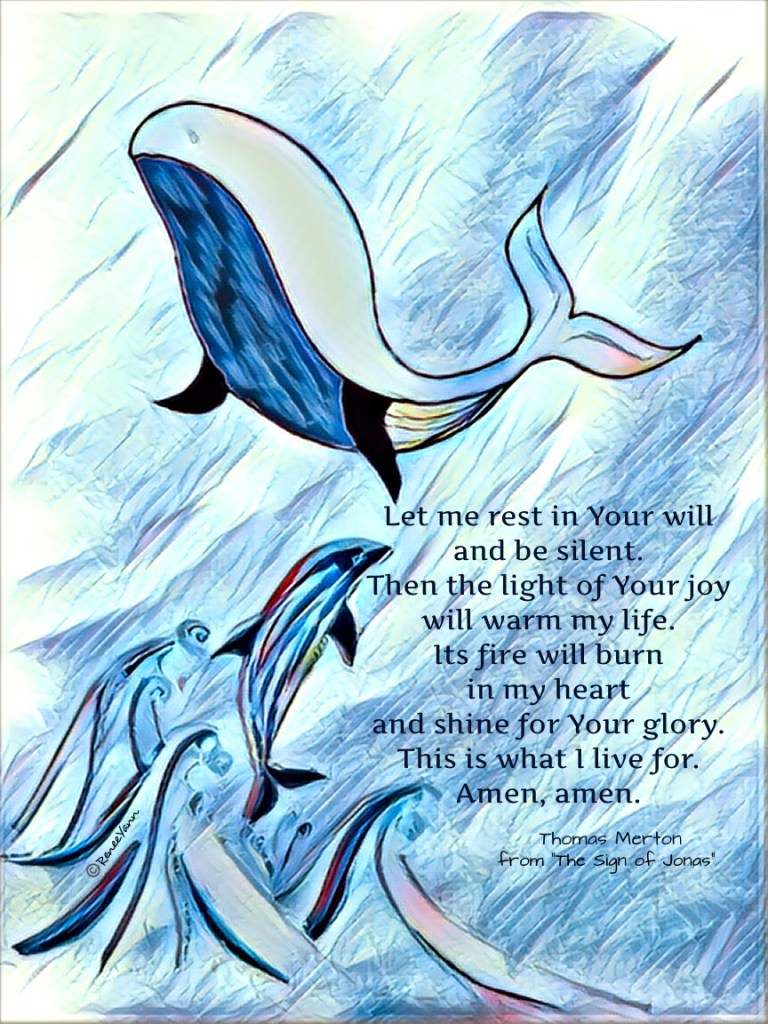
Let me rest in Your will and be silent.
Then the light of Your joy will warm my life.
Its fire will burn in my heart
and shine for Your glory.
This is what I live for. Amen, amen.


It may not sound all that inviting, but every one of us is called to the “whale’s belly”. Our transformation there is accomplished by our congruity with Christ’s sojourn in the tomb. Like Jesus, we must die to self for the sake of others. Like Jonah, we must abandon our fears and conveniences to become signs of God’s love in the world.


The Pharisees didn’t get it. And, God help them, I understand. It’s hard to get it! Life seems so much easier if we run away from this deep call like Jonah did at first. But the call remains: to be God’s Word in the world – to “shine for God’s glory“.


The editorial staff of the National Catholic Reporter wrote this about Merton’s Sign of Jonas:

Thomas Merton wrote in his early journals that the “sign of Jonas” — the mystery of Christ’s death and resurrection — is “burned into the roots of our being.” Sooner or later, everyone faces the universal truth that only through death to self do we find life. Merton embraced this sign and described himself as one like Jonah, because “I find myself traveling toward my destiny in the belly of a paradox.”


We may need to choose a little “whale-belly” time to get our hearts straight with this astounding yet universal call to be “for God” in our paradoxical world.


Poetry: two poems from “You! Jonah!” by Thomas John Carlisle

THE GREAT INTRUDER
It is exasperating
to be called
so persistently
when the last thing
we want to do
is get up and go
but God
elects
to keep on
haunting
like some
holy ghost.

———————–

COMING AROUND
And Jonah stalked
to his shaded seat
and waited for God
to come around
to his way of thinking.
And God is still waiting
for a host of Jonahs
in their comfortable houses
to come around
to His way of loving.

Music: Jonah and the Whale – Louis Armstrong – lyrics below

Jonah was a man who got a word from the Lord
Go and preach the Gospel to the sinful land‿
But he got on a ship and he tried to get away
And he ran into a storm in the middle of the sea

Now the Lord, He made the waves just roll so high
The ship begin to sink and they all begin to cry
So they pulled ole Jonah out of the hole
And they jumped him in the water just to lighten up the load

Now the Lord made a whale, long and wide Lord, Lord waddnat a fish
And he swallowed up Jonah, hair and hide Lord, Lord waddnat a fish,
Mmm, Lord, mmm, Lord

Now Jonah started to pray in the belly of the whale
Lord, Lord waddnat a fish
He repented of his sins like a man in jail
Lord, Lord waddnat a fish
Mmm, Lord, mmm, Lord

Now Jonah must o’ been a bad man, he must o’ been a sinner
Lord, Lord waddnat a fish
Cos when the whale got him down, he didn’t like his dinner
Lord, Lord waddnat a fish
Mmm, Lord, mmm, Lord

Well he swum around the ocean, sick as he could be
Lord, Lord waddnat a fish
And after three days, whoops! he had to set him free
Lord, Lord waddnat a fish, mmm

So the whale spit Jonah out onto dry land
Lord, Lord waddnat a fish
And went on to preaching like a righteous man
Lord, Lord waddnat a fish

Then the people quit their sins when they heard him the town
Lord, Lord waddnat a fish
So when you hear the call, don’t you turn the Gospel down
Lord, Lord waddnat a fish, mmm?

Radical Prayer

Thursday of the Eleventh Week in Ordinary Time
June 22. 2023

Today’s Readings:

https://bible.usccb.org/bible/readings/062223.cfm

Today, in God’s Lavish Mercy, Jesus teaches us how to pray.

Jesus said to his disciples:
“In praying, do not babble like the pagans,
who think that they will be heard because of their many words.
Do not be like them.
Your Father knows what you need before you ask him.

“This is how you are to pray:
‘Our Father…

Matthew 6:7-9

Don’t babble …”. Gosh, haven’t you wanted to say that to a few people when they ramble around the point without ever making it! And here we have Jesus saying it to us, kindly and instructively, but nonetheless directly.


This morning, I was thinking about the quality of my own prayer, realizing that every now and again I do babble a lot of nonsense to God before coming to a point of grateful adoration and listening.

And then I remembered a brief clip of conversation from yesterday.

One of the blessings of living in our large Motherhouse is that I am surrounded by wise and holy women steeped in decades of deepening prayer. One of these beloved elders chatted with me last night about her recent retreat. She said, “It was such a peaceful time to pray. And I really wanted to pray… me and God, God and me.” The joyful sincerity and clarity of her statement blessed me with an equal desire to pray that simply.


In today’s Gospel, Jesus opens the door for us to this kind of radical prayer.

It is a prayer which:
grants us the privilege of calling heaven down to earthOur Father who art in heaven
basks in God’s awesome Presencehallowed be thy name
invokes that Presence to unfold Love’s designthy Kingdom come,
thy will be done,
on earth as it is in heaven.
It is a prayer of:
consistent trustGive us this day our daily bread
willing repentanceand forgive us our trespasses
unmeasured forgiveness as we forgive those who trespass against us
and a quenchless hunger for graceand lead us not into temptation,
but deliver us from evil.

Jesus is teaching us how to pray. His prayer is simple, authentic, and direct. He begins by naming his relationship with God, Abba, Father – an act of humble, intimate mutuality. How do we speak to God in our prayer? How do we name God in the deep silence of our hearts? Father, Mother, Beloved, Sweet Light, Tender Mercy? And by what name does God call me in the quiet rhythm of prayer? Perhaps with words, or with unwordable love.


Poetry: Praying – Mary Oliver

It doesn't have to be
the blue iris, it could be
weeds in a vacant lot, or a few
small stones; just
pay attention, then patch

a few words together and don't try
to make them elaborate, this isn't
a contest but the doorway

into thanks, and a silence in which
another voice may speak.

Music: Prayer – Ernest Bloch

“Nigun” means a traditional synagogue melody, with tones that Jesus might have heard as he prayed.

The Heart to Give My All

Memorial of Saint Aloysius Gonzaga, Religious
Wednesday, June 21, 2023

Today’s Readings:

https://bible.usccb.org/bible/readings/062123.cfm


Today, in God’s Lavish Mercy, Paul and Jesus give us some tips on sound Christian living.

Paul instructs us to live out of our abundance rather than our scarcity.

Brothers and sisters, consider this:
whoever sows sparingly will also reap sparingly,
and whoever sows bountifully will also reap bountifully.
Each must do as already determined, without sadness or compulsion,
for God loves a cheerful giver.
Moreover, God is able to make every grace abundant for you,
so that in all things, always having all you need,
you may have an abundance for every good work.

2 Corinthians 9:6-8

It seems like responding to Paul’s challenge shouldn’t be hard for those of us who actually have an abundance of this world’s goods and benefits. But I think sometimes it is.

It’s pretty easy to assess our generosity when we look at money or physical goods. It’s clear when I give someone in need $5.00 or a warm shirt. What’s not so clear is how generous I am , both locally and globally, with non-material goods like my prayer, respect, time, service, patience, understanding, forgiveness, tolerance, appreciation, encouragement or the many hidden awarenesses that might make someone else’s life more gracefully abundant.


Jesus tells us that if we offer these invisible generosities, we will be divinely enriched:

… your Father who sees what is hidden will repay you.


Jesus also expects us to make that offering. Notice that, when describing good works, Jesus doesn’t say “IF” you do these things. He says “WHEN” you do them:

When you give alms, do not blow a trumpet before you…
when you give alms,
do not let your left hand know what your right is doing,
so that your almsgiving may be secret.
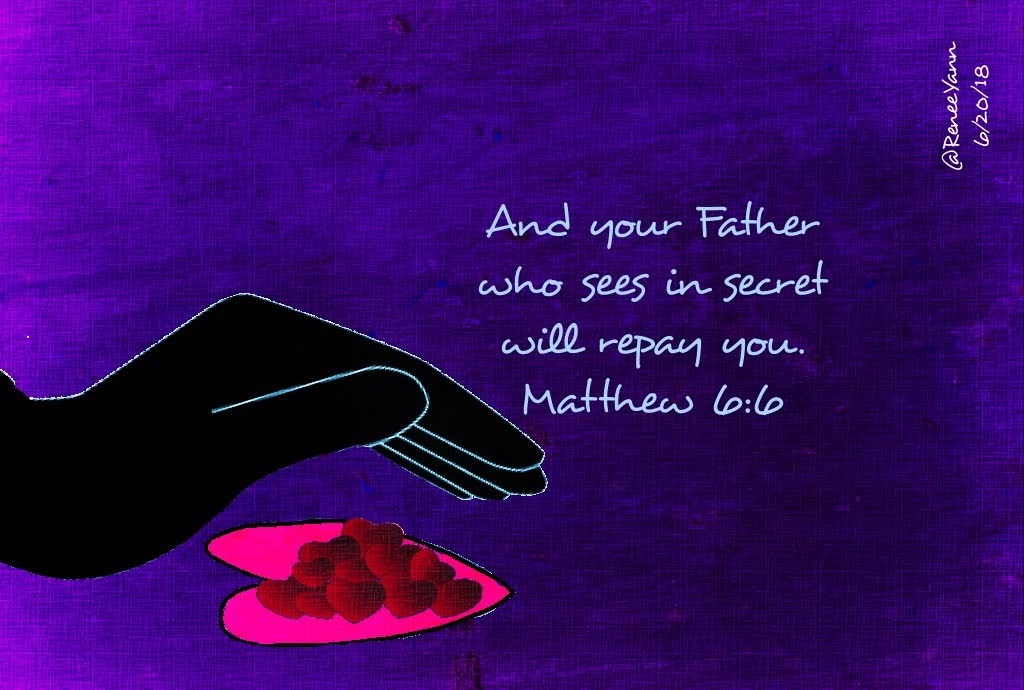
And your Father who sees in secret will repay you.


When you pray, do not be like the hypocrites,
who love to stand and pray on street corners …
when you pray, go to your inner room, close the door,
and pray to your Father in secret.
And your Father who sees in secret will repay you.


When you fast, do not look gloomy like the hypocrites …
when you fast, anoint your head and wash your face,
so that you may not appear to others to be fasting,
except to your Father who is hidden.
And your Father who sees what is hidden will repay you.”


Many of us are embarrassingly blessed in this life. Living gratefully is the first step to easing that embarrassment and turning it into spiritual self-knowledge. That deep gratitude will strengthen us for quiet, joyous generosity and the recognition that all our true abundance belongs to God.


Prose: from Gitanjali 50 – Rabindranath Tagore

I had gone a-begging from door to door in the village path, when thy golden chariot appeared in the distance like a gorgeous dream and I wondered who was this King of all kings!

My hopes rose high and methought my evil days were at an end, and I stood waiting for alms to be given unasked and for wealth scattered on all sides in the dust.

The chariot stopped where I stood. Thy glance fell on me and thou camest down with a smile. I felt that the luck of my life had come at last. Then of a sudden thou didst hold out thy right hand and say “What hast thou to give to me?”

Ah, what a kingly jest was it to open thy palm to a beggar to beg! I was confused and stood undecided, and then from my wallet I slowly took out the least grain of corn and gave it to thee.

But how great my surprise when at the day’s end I emptied my bag on the floor to find a least little grain of gold among the poor heap. I bitterly wept and wished that I had had the heart to give thee to my all.

Music: Soul Food – Dean Evenson

Sacred Decade of Days

Friday of the Sixth Week of Easter
May 19, 2023

Today’s Readings:

https://bible.usccb.org/bible/readings/051923.cfm

Today, in God’s Lavish Mercy, our readings suggest a slight tone of “the after-Ascension” blues.

It’s a bit like how we might feel on the day after Christmas. The big celebration has come and gone. The company has all gone home. Maybe we’re exhausted from the preparations and clean-ups. Maybe we had been so busy that we didn’t take enough time to think about the meaning of the Feast. Maybe we feel like we’ve been spun around in time’s tumbler and can’t believe it’s now the end of the year. It’s a “what do we do next?” time when we come out of a flurry and need to get our bearings.

Click the arrow to get the spun-around feeling!

And for the disciples, it’s a morning they wake up and realize that Jesus has really gone home. In an otherwise chilly room, they might linger in their cozy cots reflecting on his parting words:

Amen, amen, I say to you, you will weep and mourn,
while the world rejoices;
you will grieve, but your grief will become joy.
When a woman is in labor, she is in anguish because her hour has arrived;
but when she has given birth to a child,
she no longer remembers the pain because of her joy
that a child has been born into the world.
So you also are now in anguish.
But I will see you again, and your hearts will rejoice,
and no one will take your joy away from you.


These very special days between the Ascension and Pentecost offer the perfect time to quiet our spirits and get our spiritual bearings. Unlike the video of the deer above, it is a time to stop the spin, to clear the inner space, to ready ourselves for the promised and longed-for Spirit.

It’s a time not to be afraid of the silence or the echoing space deep in our hearts which longs for the presence of God.


Even if we are still in the midst of our busy lives, we can make a choice to be on “inner retreat” – to limit useless noise, directionless activity, and mumifying distractions.

If we have forgotten how to sit quietly enough to hear the wind and the distant meadowlark, let’s try to remember. Let’s try to make an inner chamber for the whisper of God Who hums through these ten days until bursting forth in Pentecost.

This decade of hours is a very special time to pray.


Poetry: excerpt from Sara Teasdale’s poem “Silence” (I love her archaic British term “anhungered“)

We are anhungered after solitude,
Deep stillness pure of any speech or sound,
Soft quiet hovering over pools profound,
The silences that on the desert brood,
Above a windless hush of empty seas,
The broad unfurling banners of the dawn,
A faery forest where there sleeps a Faun;
Our souls are fain of solitudes like these.

and a second brief but powerful verse from Emily Dickinson:

Silence is all we dread.
There’s Ransom in a Voice –
But Silence is Infinity.
Himself have not a face.

Music: Achtsamkeit (German for “Mindfulness”) this is an hour’s worth of beautiful music. You can tap into various parts of the video to hear different pieces.

Pray for the Church

Monday of the Second Week in Ordinary Time
January 16, 2023

Today’s Readings:

https://bible.usccb.org/bible/readings/011623.cfm

Today, in God’s Lavish Mercy, our reading from Hebrews describes Jesus as the perfect high priest.  Through the Father’s call, Jesus took on our imperfect nature and transformed it by his Life, Death and Resurrection. In the Eucharist, Jesus left us a living memorial of this transformation so that we might participate in its saving mystery.

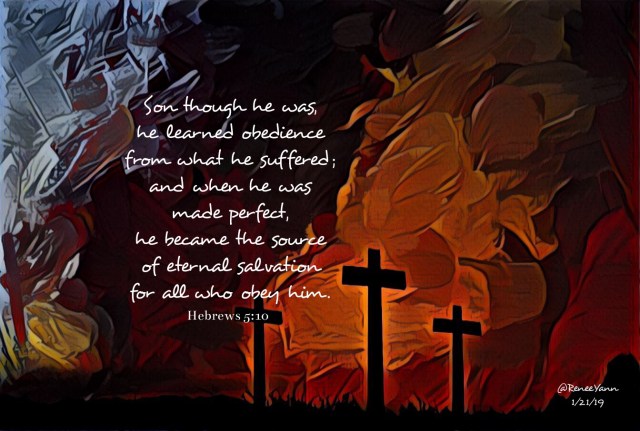
heb5_10 priest

Paul’s “perfected priest” is patient because his own weakness humbles him. He does not take honor upon himself, but receives it humbly from God.

Jesus, the model of this priesthood, 

… in the days when he was in the Flesh,
… offered prayers and supplications with loud cries and tears
to the one who was able to save him from death,
and he was heard because of his reverence.


The perfection of Christ’s priesthood was accomplished through suffering and obedience. This is how Jesus teaches us to live in reverence and humble service.

As I read and pray with this scriptural understanding of priesthood, I pray for our Church. The catastrophic scandals involving our priests and leaders have deeply shaken the faith of many Catholics over the past several years.

Many are frustrated by the continued refusal of some in our Church to open themselves to new models of priestly service which are grounded in mutuality, inclusivity and simplicity.

The accretions of institutionalization, hierarchical camouflage, and sexist rationale have mitigated the Church’s credibility to touch the lives of ordinary people, especially our emerging adults.


In our Gospel, Jesus talks about an old cloak that needs a patch to make it whole again. He talks about new wine that must be captured and preserved in new wine skins. For me, he is talking about our Church which must be continually renewed and grounded in the truth of the Gospel.

Let us pray that the Church may continue to be transformed by humble obedience to God’s call – just as the high priest of our first reading was perfected.

Let us pray today for our good Pope Francs, bishops, theologians and spiritual leaders – and for the whole People of God – that we may hear and respond.


Prayer: In place of a poem today, this beautiful prayer written in 2019 by Rita Thiron, from the Federation of Diocesan Liturgical Commissions

Prayer for the Church

Heavenly Father,
In every age, you have been our refuge. 
Yet again and still, we stand before you 
asking for your protection on your holy Church.

For the victims of abuse and their families, 
pour out your healing and your peace.
For the Bishops of this country, 
inspire their decisions, 
and guide them with your Spirit.

For the thousands of good and faithful priests, 
who have followed your call 
to serve you and your people in holiness,
sustain them by your grace.

For the faithful who are angry, confused, 
and searching for answers, 
embrace them with your love,
restore their trust,
console them with your clear Gospel message, 
and renew them with your sacraments.

We place our Church in your hands, 
for without you we can do nothing.

May Jesus, our High Priest and true compass, 
continue to lead her in every thought and action
 – to be an instrument of justice,
a source of consolation,
a sacrament of unity,
and a manifestation of your faithful covenant.

Grant this through that same Jesus Christ, our Lord, 
who lives and reigns with you
in the unity of the Holy Spirit,
one God, for ever and ever.
Amen.

Music: Even Death on a Cross ~ Jason Silver

Solitude Prayer

Wednesday of the First Week in Ordinary Time
January 11, 2023

Today’s Readings:

https://bible.usccb.org/bible/readings/011123.cfm

Today, in God’s Lavish Mercy, Mark’s Gospel allows us to spend a day with Jesus during his early ministry.

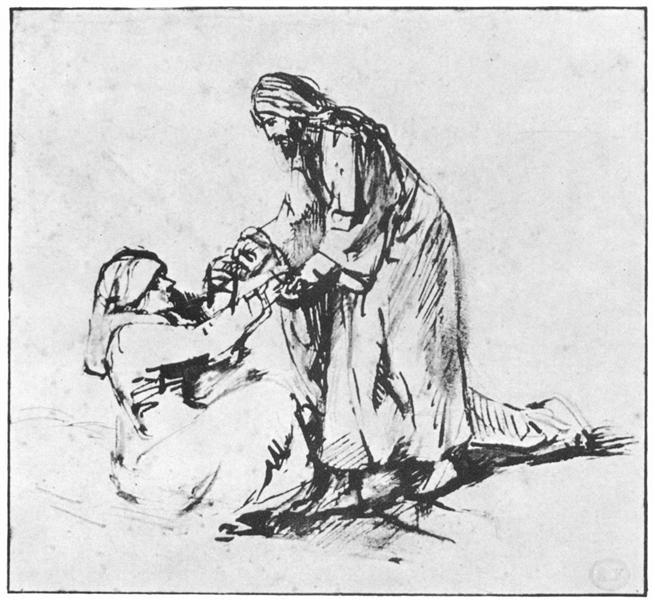
After “church”, so to speak, Jesus and his buddies go to Simon’s house for a meal. Where Simon’s wife was we’re not told, but his mother-in-law seems to have been chief cook and bottle washer. Unfortunately, on that day, she’s not feeling well. However, with but a touch from Jesus, she’s restored and begins waiting on the guys.

The Healing of Peter’s Mother-in-Law by Rembrandt

On leaving the synagogue
Jesus entered the house of Simon and Andrew with James and John.
Simon’s mother-in-law lay sick with a fever.
They immediately told him about her.
He approached, grasped her hand, and helped her up.
Then the fever left her and she waited on them.

Mark 1:29-31

It seems like Jesus and his friends hung out through the heat of the day. As evening cool descends, neighbors begin arriving with their sicknesses and troubled spirits. Jesus cures many of those gathered. Can you just imagine the scene!


The next morning, even before dawn, Jesus goes off to a quiet place to pray. No doubt he wants to discern, with his Father and the Holy Spirit, the things that are happening in his life. Again can you imagine that conversation!

We know that, when asked, Jesus gave us the human words of the “Our Father” to teach us to pray. But how did Jesus himself pray in the solitude of his heart?

Three Persons of the Blessed Trinity
focused in relationship to one another
and yielding a Love
too immense for description!


In our own humble prayer today, may we lean against the heart of Jesus as he immersed himself in the Presence of the Creator and Spirit. May we pray in Christ’s pregnant silence.


Poetry: Solitude – Thomas Merton

When no one listens
To the quiet trees
When no one notices
The sun in the pool.

Where no one feels
The first drop of rain
Or sees the last star

Or hails the first morning
Of a giant world
Where peace begins
And rages end:

One bird sits still
Watching the work of God:
One turning leaf,
Two falling blossoms,
Ten circles upon the pond.

One cloud upon the hillside,
Two shadows in the valley
And the light strikes home.
Now dawn commands the capture
Of the tallest fortune,
The surrender
Of no less marvelous prize!

Closer and clearer
Than any wordy master,
Thou inward Stranger
Whom I have never seen,

Deeper and cleaner
Than the clamorous ocean,
Seize up my silence
Hold me in Thy Hand!

Now act is waste
And suffering undone
Laws become prodigals
Limits are torn down
For envy has no property
And passion is none.

Look, the vast Light stands still
Our cleanest Light is One!

Music: Intermezzo in B minor – Maureen McCarthy Draper