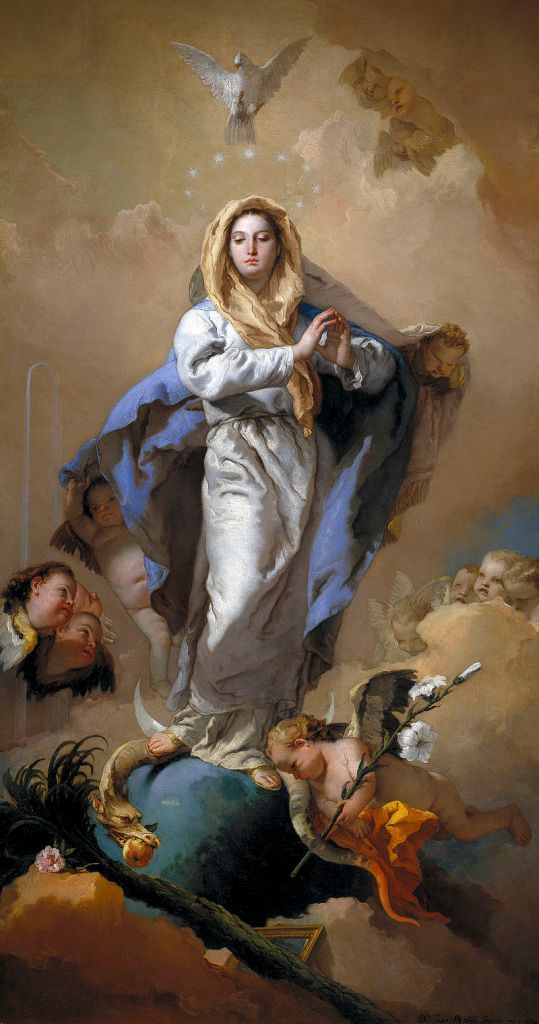
Today, in God’s Lavish Mercy, we celebrate the feast of the Immaculate Conception, the belief that Mary was conceived without the mark of Original Sin.
Beyond the intricate theology underlying the feast, what we treasure is that Mary made a holy place for Christ to dwell as he became incarnate, grew, lived and redeemed the world in loving mercy.
Mary chose to be God’s partner in our salvation!
Our Gospel story today invites us to pray with the most important word Mary ever said, “Yes. Fiat.” Think about it. Mary was not TOLD to become the mother of Jesus. She was asked. She could have said, “No” … for any number of logical reasons.
I’m too young.
I’ve got other plans.
Joseph won’t like this!
I don’t trust angels.
I’m afraid.
I’m sure all of us can think of a few more very rational excuses to tell our “angels” that we’re not ready for transforming grace. I know I have quite a few of them tucked away from over the years. But Mary calls us to something more – she calls us to an “irrational season” of love which responds to the irrational love God has for us!
Mary chose to say “Yes.” She may not have had to work too hard to find the courage for it within her heart. She was already “full of grace”, having lived her short young life with a faithfulness that made her ready to bear Christ to the world.
We pray that, with Mary’s love and guidance, we too may find the courage to make choices that sanctify our hearts, readying them to receive God.
God will come to us today – not on angel’s word – but in the human form of someone poor, sick, desperate, heart-broken, lonely, or just plain tired. May our faith allow us to respond as Mary did, with a grace-fullness that invites God into the situation.
Today, in God’s Lavish Mercy, we pray with Psalm 103 which bursts with music even as we silently read it!
Bless the LORD, O my soul; and all my being, bless God’s holy name. Bless the LORD, O my soul, and forget not all God’s benefits.
Psalm 103:1–2
Our psalm rests today between two Advent readings that pick up its melody of grace and mercy.
In our first reading, Isaiah has just finished praising the Creator in the magnificence of nature. Today’s verses continue that praise and awed wonderment. As we read, we can picture God, robed in glory, marching out the sun, moon, stars …
Lift up your eyes on high and see who has created these things: He leads out their army and numbers them, calling them all by name. By his great might and the strength of his power not one of them is missing!
Isaiah 40:26
When we take the time to appreciate a sunrise or sunset, or to trace the constellations across the dark December sky, we are doing what Isaiah encourages his listeners to do – trusting our all-powerful God. If our Creator can hold the heaven’s together in eternal beauty, we can expect the same to be done for us who are the most cherished of God’s creatures.
Do you not know or have you not heard? The LORD is the eternal God, creator of the ends of the earth. He does not faint nor grow weary, and his knowledge is beyond scrutiny. He gives strength to the fainting; for the weak he makes vigor abound.
Isaiah 40:28-29
In our Gospel, Jesus puts God’s abiding promise into a comforting invitation:
Jesus said to the crowds: “Come to me, all you who labor and are burdened, and I will give you rest. Take my yoke upon you and learn from me, for I am meek and humble of heart; and you will find rest for yourselves. For my yoke is easy, and my burden light.
Matthew 11:28-30
As we continue our Advent journey with Isaiah and Jesus, maybe we might like to catch a sunset or sunrise … or go out and look up at the winter stars. Doing so, let’s give ourselves fully in faith to our Creator’s promise to be with us in every rising and setting of our lives. Let us act as people who fully hope and believe:
They that hope in the LORD will renew their strength, they will soar as with eagles’ wings; They will run and not grow weary, walk and not grow faint.
Isaiah 40:31
Poetry: Come – Christina Rossetti
‘Come,’ Thou dost say to Angels, To blessed Spirits, ‘Come’: ‘Come,’ to the lambs of Thine own flock, Thy little ones, ‘Come home.’
‘Come,’ from the many-mansioned house The gracious word is sent; ‘Come,’ from the ivory palaces Unto the Penitent.
O Lord, restore us deaf and blind, Unclose our lips though dumb: Then say to us, ‘I will come with speed,’ And we will answer, ‘Come.’
Today, in God’s Lavish Mercy, we once again hear that powerful passage from Isaiah, “Comfort Ye, My People”.
In these words from ancient Isaiah, also suggest echos of the Baptist’s voice, yet to be born, but fashioned from the same hope:
A voice cries out: In the desert prepare the way of the LORD! Make straight in the wasteland a highway for our God! Every valley shall be filled in, every mountain and hill shall be made low; The rugged land shall be made a plain, the rough country, a broad valley. Then the glory of the LORD shall be revealed, and all people shall see it together; for the mouth of the LORD has spoken.
Isaiah 40:1-2
Our Gospel gives us the gentle parable of the Good Shepherd who finds and comforts the lost sheep. This Divine Shepherd rejoices in the chance to seek out the hurt sheep and to comfort them, just as God rejoices in comforting and healing us.
And finding the sheep, amen, I say to you, the shepherd rejoices more over it than over the ninety-nine that did not stray. In just the same way, it is not the will of your heavenly Father that one of these little ones be lost.”
As we listen to today’s magnificent music, let us slowly name in our prayer those who most need God’s comfort – the “little ones” – not so much in stature – but in hope, freedom, justice, and the blessings of this world.
We may pray for ourselves, for someone we love, for those we know by name, or for those dear to God though nameless to us – all who suffer throughout the world.
Poetry: Shepherd – William Blake
How sweet is the Shepherd's sweet lot,
From the morn to the evening he strays:
He shall follow his sheep all the day
And his tongue shall be filled with praise.

For he hears the lambs innocent call,
And he hears the ewes tender reply,
He is watchful while they are in peace,
For they know when their Shepherd is nigh
Music: Comfort Ye from Handel’s Messiah, sung by Jerry Hadley
Today, in God’s Lavish Mercy, Isaiah describes a beautiful hike through a desert turned verdant and lush. Usually that’s not the way we picture a desert, but the phenomenon is real.
A desert bloom is a climatic phenomenon that occurs in various deserts around the world. The phenomenon consists of the blossoming of a wide variety of flowers during early-mid spring in years when rainfall is unusually high. The blossoming occurs when the unusual level of rainfall reaches seeds and bulbs that have been in a latent or dormant state, and causes them to germinate and flower in early spring. It is accompanied by the proliferation of insects, birds and small species of lizards. (Wikipedia)
Bloom in Chilean Desert – photo by Javier Rubilar
Isaiah preached during tough times — real “desert” times for Israel. He uses the image of the luxuriant desert bloom to encourage his listeners that, despite their dire circumstances (the Assyrian occupation followed by the Babylonian captivity), there is hope.
But it is hard to hope and believe when you haven’t yet seen the flowers, right? Some of Isaiah’s audience may have seemed a little “weak kneed” about launching out on the journey when the horizon still looked pretty dry and lifeless.
Strengthen the hands that are feeble, make firm the knees that are weak, Say to those whose hearts are frightened: Be strong, fear not! Here is your God, Who comes with vindication; With divine recompense God comes to save you.
Isaiah 35:3-4
I know I’ve felt weak-kneed at times, both literally and figuratively — those times when we are afraid to walk, to step forward or back, to move around or toward what we should. I’ll bet some of you have felt that way too.
At those times, we’re a little bit like the paralyzed man in today’s Gospel. We need courage, the help of good friends, and faith in God in order to stand up and walk on our own. Jesus wants to help us just like he helped this young man.
That you may know that the Son of Man has authority on earth to forgive sins”– Jesus said to the one who was paralyzed, “I say to you, rise, pick up your stretcher, and go home.”
He stood up immediately before them, picked up what he had been lying on, and went home, glorifying God.
Luke 5:24-25
Advent invites us to journey into deep faith and spiritual freedom, to trust the desert for its flowers, to believe that God lovingly wills our vigor and wholeness.
The LORD himself will give his benefits; our land shall yield its increase. Justice shall walk before him, and salvation, along the way of his steps.
Today’s Psalm 85: 13-14
Poetry: I Walked in a Desert – Stephen Crane
I walked in a desert.
And I cried,
“Ah, God, take me from this place!”
A voice said, “It is no desert.”
I cried, “Well, But —
The sand, the heat, the vacant horizon.”
A voice said, “It is no desert.”
Today, in God’s Lavish Mercy, Isaiah paints the vision of Shalom.
“Shalom” is a Hebrew word commonly translated to English as “peace”.
In Hebrew, words are built on “roots”, generally of three consonants. When the root consonants appear with various vowels and additional letters, a variety of words, often with some relation in meaning, can be formed from a single root. Thus from the root sh-l-m come the words shalom (“peace, well-being”), hishtalem (“it was worth it”), shulam (“was paid for”), meshulam (“paid for in advance”), mushlam (“perfect”), and shalem (“whole”).
Our passage from Isaiah indicates an even deeper concept of shalom – one in which there is such right-balance among all creatures that:
When I first get up each morning, I glance through the news on my iPad while my tea is steeping. It’s a bad habit that I have trouble resisting because I want to make sure the world is all in one piece before I really start my day.
And, you know what? It never is. It’s a mess – with people shot, carjacked and bombed; with puppies abandoned, idiots in government, and tornadoes all over the place. There is little or no peace typed across the top of CNN.
The morning news is never going to blast the headline: A shoot has sprung from the Jesse’s root! God’s spirit rests on him!
See, here’s the thing. This “Jesse news” is what we are meant to set our mornings by, to set our lives by – because we are people of faith, and we have been taught the true meaning of “shalom”. Shalom is something that will never be found in our “apparent” world. Shalom is only to be found within each of us who live the promise of Isaiah fulfilled in Jesus.
Advent is about pondering how to live “shalom” in an often corrupt world. It is a time to ask ourselves if we really believe the Promise to which Advent points:
On that day, a shoot shall sprout from the stump of Jesse, and from his roots a bud shall blossom. The spirit of the LORD shall rest upon him: a spirit of wisdom and of understanding, a spirit of counsel and of strength, a spirit of knowledge and of fear of the LORD, and his delight shall be the fear of the LORD. Not by appearance shall he judge, nor by hearsay shall he decide, but he shall judge the poor with justice, and decide aright for the land’s afflicted.
Isaiah 11:1-4
While acknowledging the often leaden toxicity of our culture, our redeemed hearts will not be caught in it. We will live by and in the Promised Light because we understand that Isaiah’s “Day” started this morning when we decided to pray. We will live in the beautiful world that both has felt and yet awaits the touch of an Incarnate God.
Poetry: A World of Light – Elizabeth Jennings
Yes when the dark withdrew I suffered light
And saw the candles heave beneath the wax,
I watched the shadow of my old self dwindle
As softly on my recollection stole
A mood the senses could not touch or damage,
A sense of peace beyond the breathing word.
Day dawdled at my elbow. It was night
Within. I saw my hands, their soft dark backs
Keeping me from the noise outside. The candle
Seemed snuffed into a deep and silent pool:
It drew no shadow round my constant image
For in a dazzling dark my spirit stirred.
But still I questioned it. My inward sight
Still knew the senses and the senses' tracks,
I felt my flesh and clothes, a rubbing sandal,
And distant voices wishing to console.
My mind was keen to understand and rummage
To find assurance in the sounds I heard.
Then senses ceased and thoughts were driven quite
Away(no act of mine). I could relax
And feel a fire no earnest prayer can kindle;
Old parts of peace dissolved into a whole
And like a bright thing proud in its new plumage
My mind was keen as an attentive bird.
Yes fire, light, air, birds, wax, the sun's own height
I draw from now, but every image breaks.
Only a child's simplicity can handle
Such moments when the hottest fire feels cool,
And every breath is like a sudden homage
To peace that penetrates and is not feared.
Today, in God’s Lavish Mercy, we pray with Psalm 147 coming after the consoling passage from Isaiah:
O my people, no more will you weep; I will be gracious to you when you cry out, as soon as I hear you, I will answer.
Isaiah 30:19
Our readings today assure us that God sees and cares about our suffering. Like a mother who sings to a crying child, God wants to comfort us.
God heals the brokenhearted and binds up their wounds. God tells the number of the stars; calling each by name.
Psalm 147:3-4
God’s lullaby is Jesus Christ. In Jesus, our Creator sings over us the melody of Infinite Love and Mercy. All we need do is calm ourselves and listen.
Jesus is the Divine Song. He sings God’s Mercy over all who suffer.
At the sight of the crowds, Jesus’s heart was moved with pity for them because they were troubled and abandoned.
Matthew 9:36
All of us, at some time in our lives, stand amidst the troubled crowd. Our friends and family members too stand there at times.
Today, as we pray Psalm 147, let us place all our troubles, and theirs, — all of the world’s troubles — into the loving embrace of God who sings the lullaby of Jesus over us. Let us beg for all who are hurting to be cradled in infinite grace, resilient hope, holy courage and lavish mercy.
Poetry: from Rumi
Every midwife knows
that not until a mother's womb
softens from the pain of labour
will a way unfold
and the infant find that opening to be born.

Oh friend!
There is treasure in your heart,
it is heavy with child.

Listen.

All the awakened ones,
like trusted midwives are saying,
'welcome this pain.'
It opens the dark passage of Grace.
Today, in God’s Lavish Mercy, Isaiah once again promises light despite the darkness, understanding despite the emptiness, life despite the devastating hold of poverty.
Thus says the Lord GOD: But a very little while, and Lebanon shall be changed into an orchard, and the orchard be regarded as a forest! On that day the deaf shall hear the words of a book; And out of gloom and darkness, the eyes of the blind shall see. The lowly will ever find joy in the LORD, and the poor rejoice in the Holy One of Israel.
Isaiah 29:18-19
Isaiah’s promises shone a beacon of hope to the oppressed people of his time. As I pray with his words today, I am deeply aware of the oppressions of our own time and the people who suffer under them.
Over the course of these days, I am praying with a delegation of people currently in Central America to remember, bless, learn from, and bear witness to the lives of four martyrs.
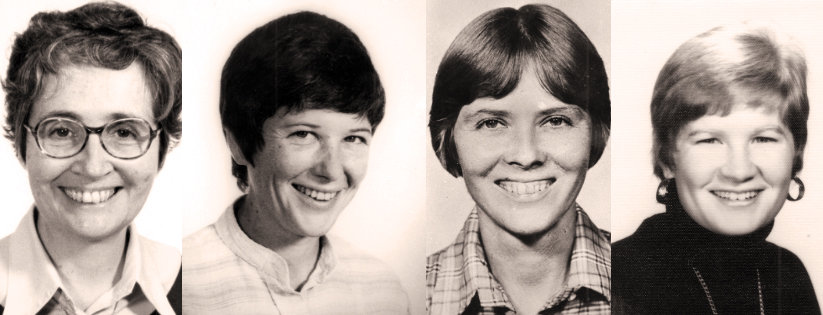
The Roses in December delegation marks the 42nd anniversary of the martyrdom of four U.S. women religious. On December 2, 1980, members of the U.S.-trained-Salvadoran National Guard raped and killed lay worker Jean Donovan, Maryknoll Sisters Ita Ford, MM, and Maura Clarke, MM, and Ursuline Sister Dorothy Kazel, OSU. The women had been accompanying the Salvadoran people displaced by war and poverty. Their witness cost them their lives. Their deaths shook the world and were emblematic of the violence suffered by the Salvadoran people and the power of accompaniment.
These women lived with the kind of hope and faith Isaiah describes. It is an active faith necessary in all times because, sadly, in all times there will be brutal and inhuman oppression of the vulnerable by the powerful. These woman chose to stand for the Gospel instead.
During an earlier anniversary of the Roses in December event, social justice activist Jean Stolkan asked the question, “What do these women call us to today?” Jean served in El Salvador herself and has continued to advocate for human rights and social justice. Jean is currently Social Justice Coordinator for the Sisters of Mercy of the Americas. She offered these insights in answer to her question:
The challenges we face today are different from the challenges we faced when the four church women died. They call for new perspectives and new structures, new vision and new social movements to adequately respond to the need for justice for present and future generations.
Today our hearts go out to the peoples of El Salvador and Honduras, Guatemala and Mexico, as they struggle with basic issues of survival and rebuilding of their lives after so many disasters: hurricanes and earthquakes, but also violence and poverty. We pray for an outpouring of compassion and solidarity, that we may continue to address in systemic ways the underlying human failings – structural poverty, racism, violation of human rights, destruction of the environment – that these and other natural and human disasters unmask with such brutal clarity.
Please join your own prayer today for a new flowering of social justice, respect for human rights, and a mutual reverence for our common home as we remember these valiant Gospel women.
Poetry: El Salvador – Javier Zamora
( Poet Javier Zamora was born in the small El Salvadoran coastal fishing town of La Herradura and immigrated to the United States at the age of nine, joining his parents in California. He earned a BA at the University of California-Berkeley and an MFA at New York University and was a 2016-2018 Wallace Stegner Fellow at Stanford University.)
Salvador, if I return on a summer day, so humid my thumb
will clean your beard of  salt, and if  I touch your volcanic face,

kiss your pumice breath, please don’t let cops say: he’s gangster.
Don’t let gangsters say: he’s wrong barrio. Your barrios

stain you with pollen, red liquid pollen. Every day cops
and gangsters pick at you with their metallic beaks,

and presidents, guilty. Dad swears he’ll never return,
Mom wants to see her mom, and in the news:

every day black bags, more and more of us leave. Parents say:
don’t go; you have tattoos. It’s the law; you don’t know

what law means there. ¿But what do they know? We don’t
have greencards. Grandparents say: nothing happens here.

Cousin says: here, it’s worse. Don’t come, you could be    ...
Stupid Salvador, you see our black bags,

our empty homes, our fear to say: the war has never stopped,
and still you lie and say: I’m fine, I’m fine,

but if  I don’t brush Abuelita’s hair, wash her pots and pans,
I cry. Like tonight, when I wish you made it

easier to love you, Salvador. Make it easier
to never have to risk our lives.
Music: El Salvador – Peter, Paul and Mary
“El Salvador” is a 1982 protest song about United States involvement in the Salvadoran Civil War, written by Noel Paul Stookey and performed by Peter, Paul and Mary. The song originally appeared on the 1986 album No Easy Walk To Freedom.
There’s a sunny little country south of Mexico Where the winds are gentle and the waters flow But breezes aren’t the only things that blow in El Salvador
If you took the little lady for a moonlight drive Odds are still good you’d come back alive But everyone is innocent until they arrive in El Salvador
If the rebels take a bus on the grand highway The government destroys a village miles away The man on the radio says: “now, we’ll play South of the Border”
And in the morning the natives say “We’re happy you have lived another day Last night a thousand more passed away in El Salvador” Ooh, ooh, ooh, ooh Ooh, ooh, ooh, ooh, ooh, ooh, ooh
There’s a television crew here from ABC Filming Rio Lempe and the refugees Calling murdered children: “The Tragedy of El Salvador”
Before the government camera twenty feet away Another man is asking for continued aid Food and medicine and hand grenades for El Salvador
There’s a thump, a rumble, and the buildings sway A soldier fires the acid spray The public address system starts to play: “South of the Border”
You run for cover and hide your eyes You hear the screams from paradise They’ve fallen further than you realize in El Salvador La la la, la la la la La la la, la la la la la Ooh, ooh ooh ooh ooh
Just like Poland is protected by her Russian friends The junta is assisted by Americans And if sixty million dollars seems too much to spend in El Salvador
They say for half a billion they could do it right Bomb all day and burn all night Until there’s not a living thing upright in El Salvador
And they’ll continue training troops in the USA And watch the nuns that got away And teach the military bands to play: “South of the Border”
Killed the people to set them free Who put this price on their liberty Don’t you think it’s time to leave El Salvador? Oh, oh oh oh oh Oh oh oh oh oh, oh oh, oh oh oh oh oh
Today, in God’s Lavish Mercy, Isaiah tells us that – “on that Day“, God’s People will sing a new song:
On that day they will sing this song in the land of Judah: “A strong city have we; God sets up walls and ramparts to protect us. Open up the gates to let in a nation that is just, one that keeps faith.
Isaiah 26:1-2
It is the song of a People who have recognized God’s abiding, protective Presence in their lives. That realization impels them to respond in faith and to open their lives ever more radically to God’s constant graces.
And so it is with us. As we deepen in our trust that God is with us in every circumstance, and as we choose to live out of that trust, our hearts too open to ever deeper relationship with the Holy.
In our Gospel, Jesus says that this kind of faith is more than words. It is action, choice, presence, witness — all of which declare, “I choose to anchor my life in God and to invite God’s Mercy to live through me.”
Jesus said to his disciples: “Not everyone who says to me, ‘Lord, Lord,’ will enter the Kingdom of heaven, but only the one who does the will of my Father in heaven.
“Everyone who listens to these words of mine and acts on them will be like a wise person who built their house on rock. The rain fell, the floods came, and the winds blew and buffeted the house.”
Matthew 7: 21;24-25
Just what are “these words” of Jesus to which we must listen and respond?
Today’s Gospel passage comes from the first of the Five Discourses in Matthew’s Gospel by which Jesus teaches the New Law of Love. This first discourse holds treasures like the Sermon on the Mount and the Golden Rule.
These are the “words” Jesus is talking about in today’s Gospel passage — words we must hear and act on in order that God will recognize us “on that Day“. Maybe, if you have a little time, you might like to read through Matthew, chapters 5-7, to savor this First Discourse.
Poetry: Let’s use today’s Responsorial Psalm as our poem-prayer. In it, God’s People celebrate God’s Mercy which has brought them to the “gate” of a new relationship of gratitude and trust with the Holy One.
Give thanks to the LORD, Who is good, Whose mercy endures forever. It is better to take refuge in the LORD than to trust in human appearances. It is better to take refuge in the LORD than to trust in human power.
Open to me the gates of justice and mercy; I will enter them and give thanks to the LORD. This gate is the LORD’s; the just shall enter it. I will give thanks to you, for you have answered me and have been my savior.
O LORD, grant salvation! O LORD, grant prosperity! Blessed is the one who comes in the name of the LORD; we bless you from the house of the LORD. The LORD is God, and has given us Light.
Psalm 118:1 and 8-9, 19-21, 25-27a
Music: The Breath at Dawn – Gary Schmidt – some lovely music to start your “new day”.
Today, in God’s Lavish Mercy, we celebrate the Feast of St. Andrew, the brother of Peter, also a fisherman, a beloved Apostle and friend of Jesus.
Our Gospel tells the story of Andrew’s call. The spontaneity of Andrew and Peter’s response to Jesus is stunning and deeply inspiring!
As Jesus was walking by the Sea of Galilee, he saw two brothers, Simon who is called Peter, and his brother Andrew, casting a net into the sea; they were fishermen. He said to them, “Come after me, and I will make you fishers of men.” At once they left their nets and followed him.
Matthew 4:18-20
Another favorite passage about Andrew is when he points out to Jesus that, in the famished crowd, there is a young boy with five loaves and two fish.
When Jesus looked up and saw a great crowd coming toward him, he said to Philip, “Where shall we buy bread for these people to eat?” He asked this only to test him, for he already had in mind what he was going to do.
Philip answered him, “It would take more than half a year’s wages to buy enough bread for each one to have a bite!” Another of his disciples, Andrew, Simon Peter’s brother, spoke up, “Here is a boy with five small barley loaves and two small fish, but how far will they go among so many?”
Jesus said, “Have the people sit down.”
John 6: 5-10
How simple and complete was Andrew’s faith! Those seven little items must have seemed so minute among 5000. Can you picture Andrew looking into Jesus’s eyes as if to say, “I know it’s not much but you can do anything!” Maybe it was that one devoted look which prompted Jesus to perform this amazing miracle!
We trust that our deep devotion and faith can move God’s heart too. On this feast of St. Andrew, many people begin a prayer which carries them through to Christmas. Praying it, we ask for particular favors from God.
I love this prayer because it was taught to me by my mother, a woman blessed with simple faith like Andrew’s. As I recite it, I ask to be gifted with the same kind of faith.
( Another reason I love it is this: how often in life do you get a chance to say a word like “vouchsafe“! )
St. Andrew Christmas Novena Hail and blessed be the hour and moment in which the Son of God was born of the most pure Virgin Mary, at midnight, in Bethlehem, in the piercing cold. In that hour vouchsafe, I beseech Thee, O my God, to hear my prayer and grant my desires through the merits of Our Savior Jesus Christ, and of His blessed Mother. Amen.
Like the hungry five thousand. our hurting world needs sustenance and healing. Let’s fold our Advent prayers around its many wounds, asking God for miracles with a simple faith like Andrew’s.
Poetry: St. Andrew’s Day – John Keble
In this thought-provoking poem, the poet uses Andrew’s and Peter’s relationship to reflect on the meaning of being true brothers (and of course SISTERS).
When brothers part for manhood's race,
What gift may most endearing prove
To keep fond memory its her place,
And certify a brother's love?
'Tis true, bright hours together told,
And blissful dreams in secret shared,
Serene or solemn, gay or bold,
Shall last in fancy unimpaired.
E'en round the death-bed of the good
Such dear remembrances will hover,
And haunt us with no vexing mood
When all the cares of earth are over.

But yet our craving spirits feel,
We shall live on, though Fancy die,
And seek a surer pledge-a seal
Of love to last eternally.
Who art thou, that wouldst grave thy name
Thus deeply in a brother's heart?
Look on this saint, and learn to frame
Thy love-charm with true Christian art.
First seek thy Saviour out, and dwell
Beneath this shadow of His roof,
Till thou have scanned His features well,
And known Him for the Christ by proof;
Such proof as they are sure to find
Who spend with Him their happy days,
Clean hands, and a self-ruling mind
Ever in tune for love and praise.
Then, potent with the spell of Heaven,
Go, and thine erring brother gain,
Entice him home to be forgiven,
Till he, too, see his Savior plain..
Or, if before thee in the race,
Urge him with thine advancing tread,
Till, like twin stars, with even pace,
Each lucid course be duly aped.
No fading frail memorial give
To soothe his soul when thou art gone,
But wreaths of hope for aye to live,
And thoughts of good together done.
That so, before the judgment-seat,
Though changed and glorified each face,
Not unremembered ye may meet
For endless ages to embrace.
Music: Hear my prayer, O Lord is an eight-part choral anthem by the English composer Henry Purcell (1659–1695). The anthem is a setting of the first verse of Psalm 102 in the version of the Book of Common Prayer. Purcell composed it c. 1682 at the beginning of his tenure as Organist and Master of the Choristers for Westminster Abbey.
Today, in God’s Lavish Mercy, Isaiah greets us once again with the inspiring phrase, “On that day …”
That day … the one whose dawning we are all awaiting, when all shall be complete and well in God:
There shall be no harm or ruin on all my holy mountain; for the earth shall be filled with knowledge of the LORD, as water covers the sea.
Isaiah 11:9
How will we know when that day has come? Will it be dramatically different from today or yesterday? Will time have paused and the world be turned upside down?
Or will it simply be that in my heart – right here and now – a “new day” has dawned?
Isaiah indicates that the “new day” is potentially present in the day we have, that when we see experience through God’s eyes, the stagnated stump of our lives blossoms in sacred possibility.
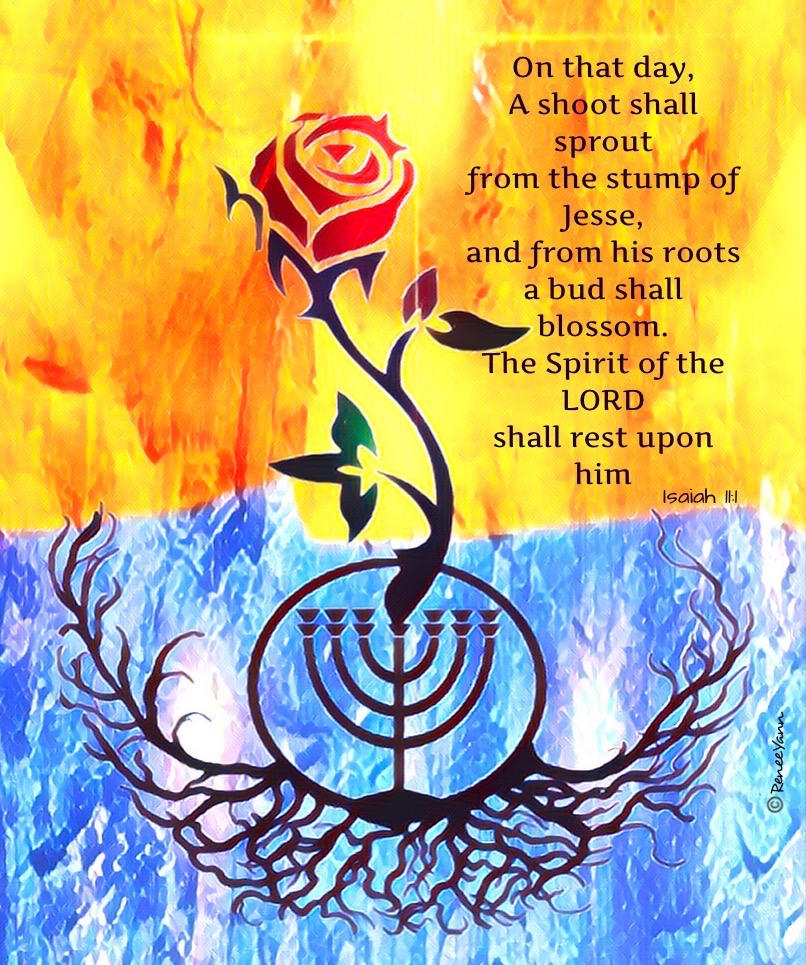
On that day, A shoot shall sprout from the stump of Jesse, and from his roots a bud shall blossom.
Isaiah 11: 1
What a glorious description Isaiah offers us of the world transformed by the longed-for Messiah, that shoot which shall sprout from the stump of Jesse:
The Spirit of the LORD shall rest upon him: a Spirit of wisdom and of understanding, A Spirit of counsel and of strength, a Spirit of knowledge and of fear of the LORD, and his delight shall be the fear of the LORD. Not by appearance shall he judge, nor by hearsay shall he decide, But he shall judge the poor with justice, and decide aright for the land’s afflicted. He shall strike the ruthless with the rod of his mouth, and with the breath of his lips he shall slay the wicked. Justice shall be the band around his waist, and faithfulness a belt upon his hips.
Isaiah 11:2-5
As we pray these magnificent words this morning, we should let them thrill us with the truth that the “new day” has come! Indeed, since Christ has transformed us through his Incarnation, that “new day” dawns through us when we choose to live our lives impelled by its graces.
In our Gospel, Jesus says we can live in that divine possibility simply by trusting God the way a child trusts.
Jesus rejoiced in the Holy Spirit and said, “I give you praise, Father, Lord of heaven and earth, for although you have hidden these things from the wise and the learned you have revealed them to the childlike. Yes, Father, such has been your gracious will. All things have been handed over to me by my Father. No one knows who the Son is except the Father, and who the Father is except the Son and anyone to whom the Son wishes to reveal him.”
Luke 10:21-22
Let’s know and believe that Jesus turns to us as well as we pray today’s Gospel:
Turning to the disciples in private he said, “Blessed are the eyes that see what you see. For I say to you, many prophets and kings desired to see what you see, but did not see it, and to hear what you hear, but did not hear it.”
Luke 10:23-24
Poetry: Advent Good Wishes – David Grieve
I found this poem in a book by one of my favorite poets, Malcolm Guite. It’s a great book for Advent if you are interested.
Give you joy, wolf,
when Messiah makes you meek
and turns your roar into a cry that
justice has been done for the poor.
Give you joy, lamb,
when Messiah saves you from jeopardy
and all fear is overwhelmed
by his converting grace.
Give you joy, wolf and lamb together,
as Messiah brings worldwide peace
and, side by side, you shelter
under Jesse’s spreading shoot.
Music: Memory – Trevor Nunn / Thomas Stearns Eliot / Andrew Lloyd-webber / Otto Eckelmann
In this beautiful song from Cats, the writers tap some of the same feelings Isaiah calls up – acknowledgement of the night, hope for the morning, and trust that “that new day” can begin.









 Lavish Mercy