Psalm 69: The Plea

Wednesday of Holy Week

Wednesday, March 31, 2021

Today, in God’s Lavish Mercy, we pray with Psalm 69. The verses offered for today’s liturgy describe someone who is abused and abandoned by the community he depended on:

Insult has broken my heart, and I am weak,
    I looked for sympathy, but there was none;
    for consolers, not one could I find.
Rather they put gall in my food,
    and in my thirst they gave me vinegar to drink.

Psalm 69: 21-22

The psalmist goes on, into today’s passage and throughout the whole psalm, to proclaim his innocence and call on God for justice – one might say even vengeance.

Heap punishment upon their punishment;
let them gain from you no vindication.
May they be blotted from the book of life;
not registered among the just!

Psalm 69: 28-29

Several Gospel writers include parts of Psalm 69 to describe Jesus’s situation throughout his Passion and Death. However, we find Jesus not invoking divine vengeance but forgiving those who persecute him.

Does Christ’s forgiveness mean that he didn’t feel heart-broken, angry, perhaps even wishing, as the psalmist does, that the tables would be turned onto his harassers? 

We don’t really know what he felt. We can only imagine. What we do know is what Jesus chose. Jesus chose forgiveness.

As we pray with Psalm 69 today, let us remember that we cannot help our feelings. They come unbidden. What we can control are our choices. In the sufferings of our lives, may we have the strength to choose as Jesus did.


Poetry: John Greenleaf Whittier, ‘Forgiveness’

My heart was heavy, for its trust had been
Abused, its kindness answered with foul wrong;
So, turning gloomily from my fellow-men,
One summer Sabbath day I strolled among
The green mounds of the village burial-place;
Where, pondering how all human love and hate
Find one sad level; and how, soon or late,
Wronged and wrongdoer, each with meekened face,
And cold hands folded over a still heart,
Pass the green threshold of our common grave,
Whither all footsteps tend, whence none depart,
Awed for myself, and pitying my race,
Our common sorrow, like a mighty wave,
Swept all my pride away, and trembling I forgave!


Music: Antonio Vivaldi – Domine ad adjuvandum me festina (Psalm 69)

Deus, in adjutorium meum intende.
Domine, ad adjuvandum me festina.
Gloria Patri et Filio et Spiritui Sancto,
sicut erat in principio et nunc et semper
et in saecula saeculorum. Amen. Alleluia

O Lord, make speed to save me:
O Lord, make haste to help me.
Glory be to the Father, and to the Son, and to the Holy Spirit:
As it was in the beginning, is now and ever shall be,
World without end, Amen. Alleluia.
Psalm 71: A Long Trust

Tuesday of Holy Week

March 30, 2021

Today, in God’s Lavish Mercy, we pray with Psalm 71, a prayer of yielding and confident faith.

Often thought to be the prayer of an aging David, Psalm 71 recalls a long and steady relationship with God. Even as his youthful vigor wanes, the psalmist declares that his true strength rests in God’s faithfulness.

For you are my hope, O LORD;
    my trust, O God, from my youth.
On you I depend from birth;
    from my mother’s womb you are my strength.
My mouth shall declare your justice,
    day by day your salvation.
O God, you have taught me from my youth,
    and till the present I proclaim your wondrous deeds.

Psalm 71: 15-17
King David as an Old Man – Rembrandt

David witnesses to a powerful faith, one that we all might cherish in our human diminishments. It is hard to lose things in our life – youth, health, relationships, reputation, enthusiasm, hope, direction, security. But all of us face at least some of these challenges at some time in our lives.


Judas Iscariot (right), retiring from the Last Supper,
painting by Carl Bloch, late 19th century

In our Gospel today, Jesus acknowledges the loss of trust in a close disciple:

“Amen, amen, I say to you, one of you will betray me.”
The disciples looked at one another, at a loss as to whom he meant.

John 13:21-22

That betrayal is a sign to Jesus that the great dream of his earthly ministry is coming to an ignominious close when even those dearest to him slip into betrayal and denial.


What is it that holds Jesus together, heart and soul riveted on the Father’s Will, as he moves through these heart-wrenching days.

Jesus is the living sacrament of complete obedience and union with God. Every choice of his life has brought him to a readiness for this final and supreme act of trusting love. Like the psalmist today, Jesus’s whole life proclaims:

I will always hope in you
and add to all your praise.
My mouth shall proclaim your just deeds,
day after day your acts of deliverance,
though I cannot number them all.i
I will speak of the mighty works of the Lord;
O GOD, I will tell of your singular justice.
God, you have taught me from my youth;
to this day I proclaim your wondrous deeds.

Psalm 71: 14-17

As we accompany Jesus today, let us pray this psalm with him, asking for an ever-deepening faith, hope, and love.


Poetry: Jesus Weeps – Malcolm Guite

Jesus comes near and he beholds the city
And looks on us with tears in his eyes,
And wells of mercy, streams of love and pity
Flow from the fountain whence all things arise.
He loved us into life and longs to gather
And meet with his beloved face to face
How often has he called, a careful mother,
And wept for our refusals of his grace,
Wept for a world that, weary with its weeping,
Benumbed and stumbling, turns the other way,
Fatigued compassion is already sleeping
Whilst her worst nightmares stalk the light of day.
But we might waken yet, and face those fears,
If we could see ourselves through Jesus’ tears.

Music: Long Ago – Michael Hoppé, Tom Wheater, Michael Tillman

Monday of Holy Week

Monday of Holy Week


March 29, 2021

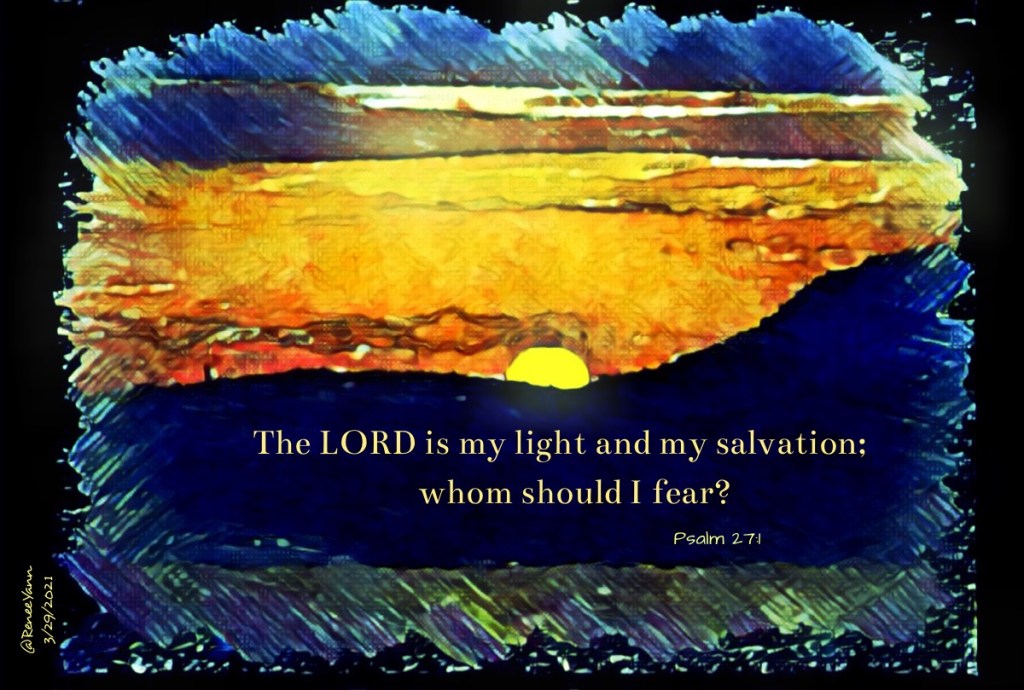
Today, in God’s Lavish Mercy, we pray with Psalm 27 which is a cry for help from one who is confident of God’s care.

The LORD is my light and my salvation;
    whom should I fear?
The LORD is my life’s refuge;
    of whom should I be afraid?

Psalm 27:1

Despite these verses, the psalmist obviously is afraid, otherwise why pray? As we begin Holy Week, we might imagine Jesus voicing such a prayer. Confident of the Father’s participation in his life, Jesus nevertheless must face daunting realities with courage – but not without fear.

We can learn so much from Jesus in this.

It is a very unusual, and perhaps non-existent, person who has no fears. We all fear something… maybe many things. It is human to fear that which we cannot see, control, or withstand. Even the one touting his great fearlessness is likely afraid of being seen as weak.

What Jesus teaches us is not to let our faith, love and hope be dominated by fear; rather, to engage our lives courageously with these three virtues despite our normal human fears. In so doing, we become the person God hopes for us to be, just as Jesus did.


Who would I be,
and what power would be expressed in my life,
if I were not dominated by fear?

Paula D’Arcy

The triumph is in resisting that domination, not in being fearless. Nelson Mandela has written, “I learned that courage was not the absence of fear, but the triumph over it. The brave man is not he who does not feel afraid, but he who conquers that fear.


I think Jesus was afraid during these final days of his life, but he pushed through to the truth of God’s Will for his life. We can ask Jesus to help us in our fears by praying as he might have with Psalm 27:

You are my light and my salvation
   Whom then shall I fear?

You are the strength of my life
  of what shall I be afraid?

Trials, enemies, changes, difficulties—
  they rise up and they resolve

Therefore–
   I will trust you
   I will wait for you
   I will seek you.

transliteration of Psalm 27 by Christine Robinson

Poetry: from T.S. Eliot, Four Quartet, East Coker

I said to my soul, be still, and let the dark come upon you
Which shall be the darkness of God. As, in a theatre,
The lights are extinguished, for the scene to be changed
With a hollow rumble of wings, with a movement of darkness on darkness,
And we know that the hills and the trees, the distant panorama
And the bold imposing facade are all being rolled away--
Or as, when an underground train, in the tube, stops too long between stations
And the conversation rises and slowly fades into silence
And you see behind every face the mental emptiness deepen
Leaving only the growing terror of nothing to think about;
Or when, under ether, the mind is conscious but conscious of nothing--
I said to my soul, be still, and wait without hope
For hope would be hope for the wrong thing; wait without love,
For love would be love of the wrong thing; there is yet faith
But the faith and the love and the hope are all in the waiting.
Wait without thought, for you are not ready for thought:
So the darkness shall be the light, and the stillness the dancing.

Music: Be Still My Soul – Katharina Amalia Dorothea von Schlegel, born 1697

Palm Sunday 2021

Today, in Mercy, we enter the sacred embrace of Holy Week.

Last year, about this time, as Jesus began his Paschal journey, we too began a journey whose end we could not foresee. It was a terrible, frightening, and disorienting time. It was also a time of amazing nobility and courage.

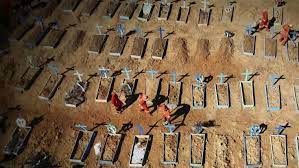
Now, this long year later, each one of us has come to a new place, both blessed and tragic. So many have not made it here with us — so many lives lost across the globe, some at our own table. And a way of life, for better or worse, has been left behind forever.

Many of us continued to make this past year’s journey with Jesus, long after Easter had passed. In some ways, all of 2020 was a extended “Passion” with its very real:

Foot Washings

Eucharists

Gethsemanes

Deaths and Burials

As we come to the beginning of
Holy Week 2021,
let us be honest with ourselves
about both our sadness and gratitude.
Let us begin the journey again
asking to share in the courage of Jesus.

Palm Sunday is a feast with two faces.

Jesus rides in triumph into Jerusalem, but his deep heart realizes that the road ultimately leads to his death. Jesus, who once called himself the Vine, knows that the bright green branches waved in adulation will soon be trampled to the ground.

In these final days of Lent, we are faced with the question, “What turns green hope to crumbled brown in us – and how can it be green again?”

Many years ago, I sat in a marbled, flowered funeral home with a bereaved father.

“There are things worse than death,” he said.  After several absent years, his drug-addicted son had been found dead in an alley, under the cardboard box where he lived.  “At least I know where he is now.  Finally, we can all be at peace.”

Jack’s son had been lost to him.  In the stranglehold of heroin, the great hope of his young life had degenerated into profound suffering.  The vigor of his early dreams had withered, like broken tendrils on the once hopeful vine. It was, in every sense, a human tragedy.

Jesus understood such withering.  He prayed for his disciples that they would not suffer it.  He knew what would face him and them in the week following the lifted palms. He knows what will face us as we try to discern the honest path to joy, peace and fulfillment.

The enticements of evil are deceptive.  Greed comes clothed as entitlement. Lust masquerades as passion, addiction as pleasure. They entwine and choke us in a false embrace that whispers, “This is for you.”  Fed by the fear of never having or being enough, we resort to these very catalysts that will destroy us.  Even the voice of love struggles to reach someone locked in this cycle of self-absorption.  Like every barren branch, they wilt and sever themselves from all that could enliven them.

Jesus acknowledges that the choice for life is not always easy.  He tells the disciples that, indeed, they will be pruned.  No life escapes the incisions of hard experience. Like his followers, we too will face loss, pain, frustration and diminishment.  But if our hearts have been fed by his word, we will hold to grace and we will thrive.

Much of the Palm Sunday crowd shifted gears by Friday, becoming a rabble of accusers.  They could not follow Jesus through Calvary to his Resurrection.

But there is no true life apart from God.  There is no path to perfection and joy but through God’s Will.  The Passion and Death of Jesus have already set our roots in this blessed soil.  May we cling by grace to that treasured Vine.

Music: J.S. Bach – Cantata; Himmelskönig, sei willkommen / King of Heaven, be Thou welcome – BWV 182

A Psalm from Jeremiah

Saturday of the Fifth Week of Lent

March 27, 2021


Today, in God’s Lavish Mercy, we pray a responsorial from the Book of Jeremiah:

The Lord will guard us, as a shepherd guards the flock.

The psalm today, with the first reading, brings assurance that God remains with us through suffering and will heal and make us whole again.

That reassurance is needed as we hear the Gospel’s tone darken. After the raising of Lazarus, the whole nation waits to see what will happen to Jesus as Passover nears.


I think, in some ways, impending doom is almost worse than doom itself. Picture the part in a movie where the attacker waits in the dark while the victim tiptoes into lurking danger.

That frightening music they always play! Sometimes the tension heightens to the point that I have to hit the mute or close my eyes!


Entry of Christ into Jerusalem, a 1617 oil painting by Flemish Baroque painter Anthony van Dyck

This is what all surrounding Jerusalem felt like in today’s Gospel. The dark edge of evil hangs in inevitable threat.

But for Jesus, who walked in the hidden light of the Father, the moment brought more than threatening shadows. It was time to fulfill an ancient promise. It was time to offer the greatest act of Love.

Hear the word of the LORD, O nations,
    proclaim it on distant isles, and say:
He who scattered Israel, now gathers them together,
    he guards them as a shepherd his flock.
The LORD shall ransom Jacob,
    he shall redeem him from the hand of his conqueror.

Jeremiah 31: 10-12

As Jesus went off alone to Ephraim to prepare his heart and soul for this ultimate fulfillment, perhaps a prayer from Jeremiah strengthened him, a remembered promise from Ezekiel focused him.

Let us pray with Jesus today as he asks the Father to “shepherd” him. With Jesus, may we find our own strengths and understandings in these ancient prophets.


Poetry: Redemption by George Herbert (1593-1633)who was a Welsh-born poet, orator, and priest of the Church of England. His poetry is associated with the writings of the metaphysical poets, and he is recognised as “one of the foremost British devotional lyricists.”

Having been tenant long to a rich lord, 
    Not thriving, I resolvèd to be bold, 
    And make a suit unto him, to afford 
A new small-rented lease, and cancel th’ old. 

In heaven at his manor I him sought; 
    They told me there that he was lately gone 
    About some land, which he had dearly bought 
Long since on earth, to take possessiòn. 

I straight returned, and knowing his great birth, 
    Sought him accordingly in great resorts; 
    In cities, theaters, gardens, parks, and courts; 

At length I heard a ragged noise and mirth 
    Of thieves and murderers; there I him espied, 
    Who straight, Your suit is granted, said, and died.

Music: Like a Shepherd – St. Louis Jesuits

Psalm 18: God’s Right Here

Friday of the Fifth Week of Lent

March 26, 2021


Today, in God’s Lavish Mercy, we pray with Psalm 18. It is a royal psalm, full of triumph, praise and rejoicing. But the psalmist, presumably David, never forgets the depths from which he has been delivered. He remembers the “storm” from which he called out to God.


The psalmist imagines God, in the distant temple, hearing his cry and responding. The image brought to my mind the memory of an early morning prayer time when I was a very young nun. 

An hour or so before dawn, I looked out my window to the morning star, imagining God out there in the heavens. Like David, I presumed God was distant and needed to be called into my experience. But, on that morning, I realized that God was not distant – that God was within me, my life, and the very storm I was praying about.

I still love to look out to the stars while I pray. But since that morning, I imagine God sitting beside me, enjoying the same beauty – sorting through my life with me from within my own heart. Verse 29 makes me think that David came to a similar realization:


Poetry: Go Not to the Temple – Ravindranath Tagore

Go not to the temple to put flowers upon the feet of God,
First fill your ownhouse with the Fragrance of love and kindness. 

Go not to the temple to light candles before the altar of God,
First remove the darkness of sin , pride and ego, 
from your heart…

Go not to the temple to bow down your head in prayer,
First learn to bow in humility before your fellowmen.
And apologize to those you have wronged. 

Go not to the temple to pray on bended knees,
First bend down to lift someone who is down-trodden.
And strengthen the young ones. 
Not crush them.

Go not to the temple to ask for forgiveness for your sins,
First forgive from your heart those who have hurt you!


Music: Christ Be Beside Me – St. Patrick’s Breastplate adapted by Michael Foscher

Bach Cantata BWV 1 “Wie Schön Leuchtet Der Morgenstern – Cantata for the Annunciation

On this special feast, I wanted to share an extra post with a lovely piece of music from Bach.

I love this feast so much. In 1963, March 25th was the date when I decided to become a Sister of Mercy. With dear Mary’s help, I have been slowly becoming one ever since.

I pray with Bach’s beautiful music today while thanking God and Mary for the gift of my call to Mercy.

I pray in gratitude for all of you who have given Mercy a human face in my life.

1. How brightly shines the Morning Star!

What ray divine streams from afar!

    God’s glory there is shining.

Bright beam of God, which scatters night,

And guides the wandering soul aright,

    Which after truth is pining!

        Jesus, God’s Word, truth revealing,

        Sorrow healing. Sooth our sighing,

        Dry our tears, and end our dying.

2. My comfort here, my joy above,

Man’s Son, Son of the Father’s love,

    Enthroned in highest heaven.

With my whole heart Thy praise I sing;

To Thee, our Prophet, Priest and King,

    Be endless honors given.

        Saviour, To Thee, trusting, clinging,

        Come I bringing Soul and spirit,

        Thee, my portion, to inherit.

3. Aid me, my God, to sing Thy praise,

Thine ageless love, Thy matchless grace,

    In Christ, our Lord, appearing.

When such a gift God gave for thee,

When such a brother true is He,

    Why still my soul be fearing?

        Choose Him, know Him, greatest, dearest,

        Best and nearest, To befriend thee

        ‘Gainst all foes who may offend thee.

4. To him who conquered death and hell,

To him let joyous anthems swell

    Throughout heaven’s great for ever.

Praise to the Lamb that once was slain,

Glory to him who bore our pain,

    Flow on, an endless riverl

        Earth and heaven—creatures lowly,

        Angels holy—join your voices,

        Till the world with praise rejoices.

5. Rejoice, ye heavens; thou, earth, reply;

With praise, ye sinners, fill the sky,

    For this, his incarnation.

Incarnate God, put forth thy power,

Ride on, ride on, great Conqueror,

    Till all know thy salvation.

        Amen, amen: hallelujah!

        Hallelujah! praise be given

Evermore by earth and heaven!

Psalm 40: The Will to Love

Solemnity of the Annunciation of the Lord

March 25, 2021

Today, in God’s Lavish Mercy, on this feast of the Annunciation, we pray with Psalm 40. We hear Mary proclaiming its refrain which echoes down through the ages:

Psalm 40:8-9

We are all here to do God’s Will. That’s why God made us. But sometimes, we struggle so hard either to learn God’s Will or to avoid it.

Praying with Mary this morning, I thought this about “God’s Will” – It is not a plan we must discover, or that unfolds in surprises throughout our lives. It’s not a set of circumstances meant to test our faith. If we think of it this linearly, we cripple and diffuse its power.

Because God is Love, God’s Will is simply this: 

Love. 
Always love. 
Love always as God would love. 
Choose always what Love would choose.
Love.

That’s what Mary did.


Annunciation – Henry Ossawa Tanner

Poetry:  Aubade: The Annunciation – Thomas Merton
(An aubade is a poem or piece of music appropriate to the dawn or early morning.)


When the dim light, at Lauds, comes strike her window,
Bellsong falls out of Heaven with a sound of glass.
Prayers fly in the mind like larks,
Thoughts hide in the height like hawks:
And while the country churches tell their blessings to the
distance,
Her slow words move
(Like summer winds the wheat) her innocent love:
Desires glitter in her mind
Like morning stars:
Until her name is suddenly spoken
Like a meteor falling.
She can no longer hear shrill day
Sing in the east,
Nor see the lovely woods begin to toss their manes.
The rivers have begun to sing.
The little clouds shine in the sky like girls:
She has no eyes to see their faces.
Speech of an angel shines in the waters of her thought
like diamonds,
Rides like a sunburst on the hillsides of her heart.
And is brought home like harvests,
Hid in her house, and stored
Like the sweet summer's riches in our peaceful barns.
But in the world of March outside her dwelling,
The farmers and the planters
Fear to begin their sowing, and its lengthy labor,
Where, on the brown, bare furrows,
The winter wind still croons as dumb as pain.

Music: Ave Maria – performed by Daniela de Santos

Our Psalm: If…

Wednesday of the Fifth Week of Lent

March 23, 2021


Today, in God’s Lavish Mercy, we pray with the Book of Daniel both for our Responsorial Psalm and for our first reading. 


As I read through today’s scripture passages, I immediately thought of my wonderful college Logic professor, Florence Fay. She was free-spirited, colorful, brilliant and clear. I loved her classes. It was Dr. Fay who implanted a love for syllogisms (if-then statements) in my young mind.

Today, multiple syllogisms popped out to me from our first reading and Gospel.

from Daniel:

If our God, whom we serve,
can save us from the white-hot furnace
and from your hands, O king, then may he save us!


from John:

But even if he will not, (then) know, O king,
that we will not serve your god
or worship the golden statue that you set up.

If you remain in my word, then you will truly be my disciples,
and you will know the truth, and the truth will set you free.

If you were Abraham’s children,
(then) you would be doing the works of Abraham. 
If God were your Father, (then) you would love me,
for I came from God and am here;
I did not come on my own, but he sent me.


I’ve prayed some pretty frantic “if-then” prayers at desperate times in my life. They sound like this:
“Dear God, if You just get me out of this mess I made, then I promise to turn into a Saint!”

But, obviously, with such prayers, I didn’t get the sacred “logic” right.
I think a lot of people don’t get it right, sometimes disastrously, as in:
“If God had answered my prayer, then I would still go to church. But he didn’t, so I don’t.”


Daniel’s “Psalm” serves as a perfect instruction for how we must respond to God, no matter the outcome of our “if-then” moments. If we close ourselves to God’s presence even in our disappointments, we will never grow into God’s ever-new imagination for our lives.

Glory and praise for ever!
Blessed are you, O Lord, the God of our fathers,
    praiseworthy and exalted above all forever;
And blessed is your holy and glorious name,
    praiseworthy and exalted above all for all ages.


Poetry: If— by Rudyard Kipling 1865-1936

If you can keep your head when all about you
   Are losing theirs and blaming it on you;
If you can trust yourself when all men doubt you,
   But make allowance for their doubting too;

If you can wait and not be tired by waiting,
   Or, being lied about, don’t deal in lies,
Or, being hated, don’t give way to hating,
   And yet don’t look too good, nor talk too wise;

If you can dream—and not make dreams your master;
   If you can think—and not make thoughts your aim;
If you can meet with triumph and disaster
   And treat those two impostors just the same;

If you can bear to hear the truth you’ve spoken
   Twisted by knaves to make a trap for fools,
Or watch the things you gave your life to broken,
   And stoop and build ’em up with wornout tools;

If you can make one heap of all your winnings
   And risk it on one turn of pitch-and-toss,
And lose, and start again at your beginnings
   And never breathe a word about your loss;

If you can force your heart and nerve and sinew
   To serve your turn long after they are gone,
And so hold on when there is nothing in you
   Except the Will which says to them: “Hold on”;

If you can talk with crowds and keep your virtue,
   Or walk with kings—nor lose the common touch;
If neither foes nor loving friends can hurt you;
   If all men count with you, but none too much;

If you can fill the unforgiving minute
With sixty seconds’ worth of distance run—
   Yours is the Earth and everything that’s in it,
And—which is more—you’ll be a Man, my son!


Music: Even If – MercyMe

Psalm 102: Joys and Sorrows

Tuesday of the Fifth Week of Lent

Tuesday, March 23, 2021


Today, in God’s Lavish Mercy, we pray with Psalm 102, the prayer of someone in the midst of suffering. The psalm is introduced with stark honesty:

The prayer of one afflicted and wasting away 
whose anguish is poured out before the LORD.

Psalm 102: 1

Psalm 102 speaks to those places in life’s journey where we experience intense, perhaps overwhelming suffering.

In our first reading, the Israelites suffer through what seems like a never-ending journey of homelessness. In our Gospel, Jesus begins his final journey toward his Passion and Death. These both were journeys with suffering as a constant companion

No one avoids suffering in some way. It is part of being human. Even our beloved Catherine McAuley left us this succinct maxim:

This is your life, joys and sorrow mingled,
one succeeding the other.

Letter to Frances Warde (May 28, 1841)

The psalmist, in the midst of his suffering, calls out to God for a return of the promised joy.

O LORD, hear my prayer,
    and let my cry come to you.
Hide not your face from me
    in the day of my distress.
Incline your ear to me;
in the day when I call, answer me speedily.  


This prayer attests to the psalmist’s undaunted faith and to God’s unwavering fidelity.

This mutual faithfulness is where we all must stand in sorrow so that we may come, as Jesus did, to the fullness of Resurrection grace.

As we come closer to the profound mysteries of Holy Week, let us not only reverence our own joys and sorrows. Let us ask to enter more deeply into the experience of Jesus in this final unfolding of his life. May we deepen in the understanding that the suffering of Jesus is one with the suffering of our sisters and brothers.


Poetry: On Another’s Sorrow – William Blake 

Can I see another's woe,
And not be in sorrow too?
Can I see another's grief,
And not seek for kind relief?

Can I see a falling tear,
And not feel my sorrow's share?
Can a father see his child
Weep, nor be with sorrow filled?

Can a mother sit and hear
An infant groan, an infant fear?
No, no!  never can it be!
Never, never can it be!

And can He who smiles on all
Hear the wren with sorrows small,
Hear the small bird's grief and care,
Hear the woes that infants bear --

And not sit beside the next,
Pouring pity in their breast,
And not sit the cradle near,
Weeping tear on infant's tear?

And not sit both night and day,
Wiping all our tears away?
Oh no! never can it be!
Never, never can it be!

He doth give his joy to all:
He becomes an infant small,
He becomes a man of woe,
He doth feel the sorrow too.

Think not thou canst sigh a sigh,
And thy Maker is not by:
Think not thou canst weep a tear,
And thy Maker is not near.

Oh He gives to us his joy,
That our grief He may destroy:
Till our grief is fled an gone
He doth sit by us and moan

Music: You Raise Me Up – Josh Grogan