Today, in God’s Lavish Mercy, Paul gives us one of his most heartfelt and beautiful passages, and Jesus offers us a puzzling parable about the kingdom.
Paul’s exhortation to sincere holiness is a passage that warrants frequent reading. At any given point in our lives, one or another of its encouragements will seem to ring profoundly true with our circumstances.
One of the lines that I particularly cherish goes like this in the old Douay-Rheims version, which is where I first encountered it as a young girl:
Love one another with fraternal charity: with honor preventing one another.
The bolded phrase fascinated me. I didn’t understand what it meant. From what were we to prevent one another?
It was not until I came to the convent that I begin to discern the power of this verse. At the time (during the Dark Ages, of course), the Sisters lived under the 1952 Constitutions of the Sisters of Mercy, an adaptation of the ancient Rule of St. Augustine. As postulants, we each received a 4×6, 128 page copy of the Rule. In direct and intentional language, it set the frame for our whole lives.
I nearly memorized it, especially Chapter 14 on Union and Charity. Right in the middle of the Chapter, I found this precious line:
They (the Sisters) shall sincerely respect one another. The young shall reverence the old and all shall unceasingly try in true humility to promote constant mutual cordiality and deference, “with honor preventing one another”.
Sister Inez, our dear early instructor, explained that this meant to anticipate the needs of our beloved sisters, especially the elderly; to do for them what might be difficult for them before they had to ask. In other words, to prevent their need. She said that this anticipatory charity should mark our service toward everyone, especially the poor, sick and ignorant whom we would vow to serve.
The more all of us can live together with this mutual love and respect, the closer we come to the kingdom of God, to the banquet table described in today’s Gospel. Jesus came to gather us all around this table. Pity on those who resist his invitation because their lives are entangled in self-interested endeavors. Their places are taken by “the poor, the crippled, the blind and the lame” and all those on the margins of society.
As we join our sisters and brothers at the banquet of life, may we love and serve one another sincerely, always with honor preventing one another.
Poetry: Emily Dickinson
If I can stop one heart from breaking,
I shall not live in vain;
If I can ease one life the aching,
Or cool one pain,
Or help one fainting robin
Unto his nest again,
I shall not live in vain.
Music: a little motion mantra this morning. Maybe you might want to get up outta’ that chair and join in🤗
Today, in God’s Lavish Mercy, to understand our first reading from Romans, we have to put ourselves back in time to sit beside Paul as he writes.
Paul was a devout Jew. Remember how, before his conversion, he felt called to persecute Jews who had become Christians? Now here he is writing and preaching the Christian message himself. Still he believes in his deepest heart that God has a particular affection for the Jews and wills their salvation. So Paul tries to explain how this will happen.
The explanation can sort of leave your head spinning. But essentially, Paul believes that salvation will be accomplished when all people, Gentile and Jew, repent from whatever is their unfaithfulness and receive God’s Mercy – that from all eternity, God’s “inscrutable” plan was to redeem us all, not just Israel. Paul still seems a little amazed by this revelation and tries to pound it home to his listeners:
Just as you once disobeyed God but have now received mercy because of their disobedience, so they have now disobeyed in order that, by virtue of the mercy shown to you, they too may now receive mercy. For God delivered all to disobedience, that he might have mercy upon all.
Romans 11:30-32
Paul’s apologia meant more to the listeners of his time than it probably does to us. But it is in the final verses of the passage that Paul captures an eternal truth that rings as true today as it did in early Christian times:
Oh, the depth of the riches and wisdom and knowledge of God! How inscrutable are his judgments and how unsearchable his ways!
For who has known the mind of the Lord or who has been his counselor? Or who has given him anything that he may be repaid?
For from him and through him and for him are all things. To God be glory forever. Amen.
Romans 11: 33-36
These magnificent lines remind all of us – Jew or Gentile, ancient or contemporary believer – that God is accomplishing the work of salvation in a depth of love beyond our understanding. Perhaps we spend moments of our lives wondering “why God lets things happen”, or “why God doesn’t intervene”.
Paul says we cannot answer those questions. God’s ways are infinitely beyond us, but nevertheless faithful and abiding. In our fidelity and hope, we see the unsearchable ways of God slowly unfold, moment by moment, in our lives and in our world.
The young, fiery Paul we first meet in Acts never expected his faith to be fulfilled outside the borders of Judaism. But our expectations and God’s inscrutable plan rarely align. That’s the wonder and mystery of the spiritual life! God will always surprise us, just as God surprised the deeply Judaic Paul into Christianity, even to the role of “Apostle to the Gentiles”!
I bet almost every one of us finds ourselves trying to “become holy” in a way we had not at first imagined. The challenges, opportunities, choices, responsibilities, and obstructions life presents take us down roads we did not envision. When Paul was thrown from his horse on the way to Damascus, his whole life plan was overthrown with him. And from that tailspin, the path to True Life opened up before him.
I’m going to spend some time in prayer thinking about my own life summersaults and how God has used them to lead me according to that “inscrutable plan”. Maybe you’d want to do the same.
Poetry: Light Shining Out of Darkness – William Cowper (1731-1800)
God moves in a mysterious way
His wonders to perform;
He plants His footsteps in the sea
And rides upon the storm.

Deep in unfathomable mines
Of never failing skill
He treasures up His bright designs
And works His sov’reign will.
Ye fearful saints, fresh courage take;
The clouds ye so much dread
Are big with mercy and shall break
In blessings on your head.
Judge not the Lord by feeble sense,
But trust Him for His grace;
Behind a frowning providence
He hides a smiling face.
His purposes will ripen fast, Unfolding every hour; The bud may have a bitter taste, But sweet will be the flow’r.
Blind unbelief is sure to err And scan His work in vain; God is His own interpreter, And He will make it plain.
Music: Who Has Known – John Foley, SJ
Oh, the depth of the riches of God And the breadth of the wisdom and knowledge of God For who has known the mind of God To Him be glory forever
A virgin will carry a child and give birth And His name shall be called Emmanuel For who has known the mind of God To Him be glory forever
The people in darkness have seen a great light For a child has been born, His dominion is wide For who has known the mind of God To Him be glory forever
Today, in God’s Lavish Mercy, our readings perfectly complement one another delivering a clear message: all leadership, including spiritual leadership, requires the disciplines of humility, honesty, justice, mercy, and love.
These disciplines are so easy to lose in the euphoria of power and the delusions of superiority. Malachi, prophet of the 5th century before Christ, vehemently points this out. Speaking for God, the prophet states:
O priests, … I will send a curse upon you and of your blessing I will make a curse. You have turned aside from the way, and have caused many to falter by your instruction; you have made void the covenant of Levi, says the LORD of hosts. I, therefore, have made you contemptible and base before all the people, since you do not keep my ways, but show partiality in your decisions.
Malachi 2:2
Five hundred years later, Jesus echoes the rebuke to his own generation:
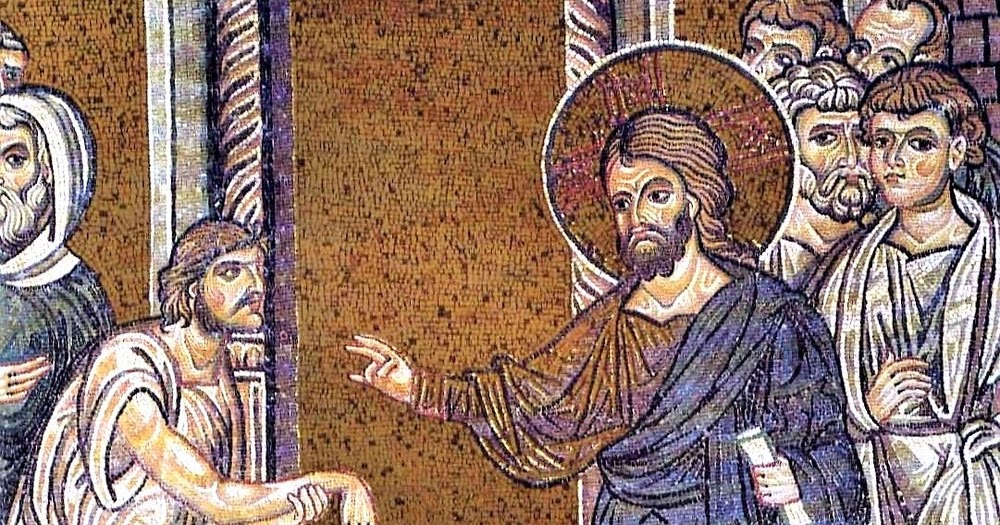
Do not follow the example of the scribes and Pharisees. For they preach but they do not practice. They tie up heavy burdens hard to carry and lay them on people’s shoulders, but they will not lift a finger to move them. All their works are performed to be seen. They widen their phylacteries and lengthen their tassels. They love places of honor at banquets, seats of honor in synagogues, greetings in marketplaces, and the salutation ‘Rabbi.’
Matthew 23: 3-7
What are phylacteries anyway, and what is Jesus talking about when he describes them as widened?
The wearing of phylacteries in Jewish practice is similar to Christians wearing crosses or being signed with ashes on Ash Wednesday, All of these devotional acts are intended to demonstrate one’s faith and invite others to faithful practice. But when exaggerated, such practices draw attention to oneself rather than to the faith. It is often an attempt to proclaim the superiority of one’s faith perhaps because, in our hearts, we are unsure of it.
Jesus says that such exaggerated devotion is unnecessary when our lives speak for themselves, demonstrating faith through our works of mercy.
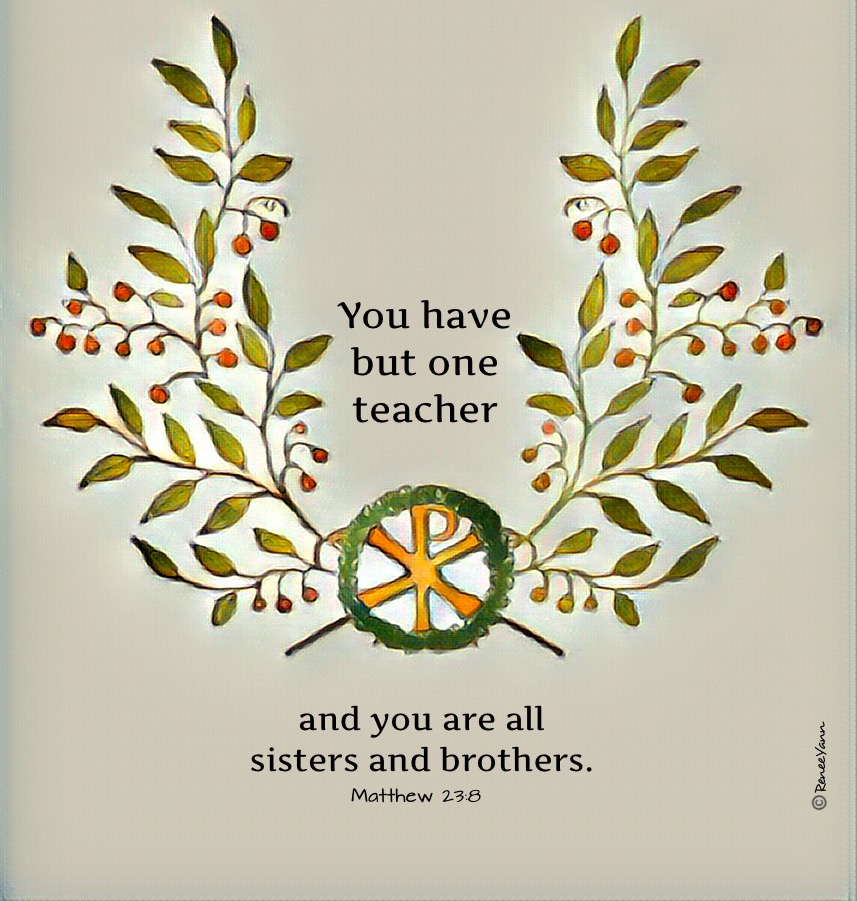
You have but one teacher, and you are all brothers. Call no one on earth your father; you have but one Father in heaven. Do not be called ‘Master’; you have but one master, the Christ. The greatest among you must be your servant. Whoever exalts himself will be humbled; but whoever humbles himself will be exalted.
Matthew 23: 8-12
We are all leaders at some level in our lives — parents, teachers, supervisors, politicians, clinicians, and everyone who has influence over another’s life. In each of these roles, our soul’s lens can be turned toward ourselves, or it can be turned in merciful care toward the other. The way we effectively turn the lens is to continually deepen ourselves in the greatest commandment: Love God above all things and your neighbor as yourself.
Poetry: Some keep the Sabbath going to Church – Emily Dickinson
Some keep the Sabbath going to Church –
I keep it, staying at Home –
With a Bobolink for a Chorister –
And an Orchard, for a Dome –
Some keep the Sabbath in Surplice –
I, just wear my Wings –
And instead of tolling the Bell, for Church,
Our little Sexton – sings.
God preaches, a noted Clergyman –
And the sermon is never long,
So instead of getting to Heaven, at last –
I’m going, all along.
Music: Where I Find God – Larry Fleet
The night I hit rock bottom, sittin’ on an old barstool He paid my tab and put me in a cab, but he didn’t have to But he could see I was hurtin’, oh, I wish I’d got his name ‘Cause I didn’t feel worth savin’, but he saved me just the same
That day out on the water, when the fish just wouldn’t bite I put my pole down, I floated around, was just so quiet And I could hear my old man sayin’ “Son, just be still ‘Cause you can’t find peace like this in a bottle or a pill”
From a bar stool to that Evinrude Sunday mornin’ in a church pew In a deer stand or a hay field An interstate back to Nashville A Chevrolet with the windows down Me and him just ridin’ around Sometimes, whether I’m lookin’ for Him or not That’s where I find God
Sometimes late at night, I lie there and listen To the sound of her heart beatin’ And the song the crickets are singin’ And I don’t know what they’re sayin’ But it sounds like a hymn to me Naw, I ain’t too good at prayin’ But thanks for everything
From a bar stool, to that Evinrude Sunday mornin’ in a church pew In a deer stand or a hay field An interstate back to Nashville A Chevrolet with the windows down Me and him just ridin’ around Sometimes, whether I’m lookin’ for Him or not That’s where I find God
From a bar stool, to that Evinrude Sunday mornin’ in a church pew In a deer stand or a hay field An interstate back to Nashville A Chevrolet with the windows down Me and him just ridin’ around Talkin’, well I do that a lot Well, I do that a lot That’s where I find God
Today, in God’s Lavish Mercy, the message of the readings seems to be that we can miss out on grace if we don’t humbly pay attention to its call.
It’s tough to miss out on something when you really want it. I’ve told the story here before of the elderly gentleman at the supermarket ice cream freezer. He was having trouble locating his favorite pineapple ice cream among the oceans of mint chocolate chip and moosetracks. Reaching into the freezer to help him, I found the last pineapple carton. He was delighted but instead of taking it, he said, “Won’t you please try it, I think you will love it. It would make me happy if you did.” In a sense, he missed out on something he really wanted, but he gained something immensely more important.
Paul wants his fellow Israelites to do something similar. He tells them that because they hesitated to embrace Christ’s message, they missed out for a while. In their place, the Gentiles have received the Gospel. But now Paul is asking his fellow Israelites to complete the Gospel community by joining and welcoming the larger Church.
But through their transgression salvation has come to the Gentiles, so as to make them jealous. Now if their transgression is enrichment for the world, and if their diminished number is enrichment for the Gentiles, how much more their full number.
Romans 11: 11-12
Our Gospel offers a slightly different approach. Yes, it’s tough to miss out on something you really want. But it’s even worse to miss out because you’re too dense, dumb, or distracted to know what’s good for you.
The invitees to the wedding banquet are so self-absorbed that they don’t even consider the comfort of their fellow guests. Their pride merits them the lowest seat at the table while the humble guests are brought up closer to the host.
“When you are invited by someone to a wedding banquet, do not recline at table in the place of honor. A more distinguished guest than you may have been invited by him, and the host who invited both of you may approach you and say, ‘Give your place to this man,’ and then you would proceed with embarrassment to take the lowest place. Rather, when you are invited, go and take the lowest place so that when the host comes to you he may say, ‘My friend, move up to a higher position.’ Then you will enjoy the esteem of your companions at the table. For everyone who exalts himself will be humbled, but the one who humbles himself will be exalted.”
Luke 14: 8-11
The proud guests in the Gospel really wanted the prestigious seats. But these were seats that only the host (God) could give. Grappling to land the best chair, they got in their own way and missed the sacred invitation which only the humble can hear.
Song Poem: I Don’t Want to be a Pharisee – for your fine listening pleasure and sophisticated spiritual enrichment: 😉
I don’t want to be a pharisee Or anyone like that. It’s stupid swallowing camels Whilst straining out a gnat. To keep the letter of the law, They forgot the people it was for. So I don’t want to be a Pharisee, I don’t want to be a Pharisee, I don’t want to be a Pharisee Or anyone like that.
Today, in God’s Lavish Mercy, as we read our scriptures for the day, we sense that both Jesus and Paul suffer heartbreak for those who resist the Gospel.
Brothers and sisters: I speak the truth in Christ, I do not lie; my conscience joins with the Holy Spirit in bearing me witness that I have great sorrow and constant anguish in my heart. For I could wish that I myself were accursed and cut off from Christ for the sake of my own people, my kindred according to the flesh.
Romans 9:1-3
Paul expresses his deep regret that his own people, the Israelites, resist the Messiah who is God’s final gift to them in a long line of unique blessings:
They are children of Israel; theirs the adoption, the glory, the covenants, the giving of the law, the worship, and the promises; theirs the patriarchs, and from them, according to the flesh, is the Christ, who is over all, God blessed forever. Amen.
Romans 9:4-5
In our Gospel, Jesus encounters a man with a withered hand. From the get-go, Jesus plans to heal the suffering man, but he decides to use the occasion to teach the Pharisees a lesson.
Jesus invites the scholars and Pharisees to move beyond the written Law and into the true practice of its spirit:
Jesus spoke to the scholars of the law and Pharisees in reply, asking, “Is it lawful to cure on the sabbath or not?” But they kept silent; so he took the man and, after he had healed him, dismissed him. Then he said to them “Who among you, if your son or ox falls into a cistern, would not immediately pull him out on the sabbath day?” But they were unable to answer his question.
Luke 14: 5-6
What Jesus asked was apparently too much for them. They were so encrusted in the worldly benefits the Law had brought them that they couldn’t challenge themselves to hear Jesus’s message. So they were silent – they gave no response to the divine invitation to life-giving change.
And to be fair to the Pharisees, Jesus’s invitation was a huge challenge. Their lives had become entirely dependent on a system that had lost its true meaning. The Law no longer led them to God but to themselves. They had lost the way through the woods, as you will see in Kipling’s poem below.
There are many levels on which we can pray with this passage. We are surely aware of the same kind of resistant silences in ourselves and in our world.
We may be caught in a sort of personal woods where we can’t make our way through to a life-giving choice or, like the Pharisees, to an inclusive, merciful understanding.
Or we may see this kind of entrapment happening in a beloved’s life.
Or we may see the atrophic effects of dead, unreviewed laws in our country, world, and Church. Failing to adapt laws that have lost their true spirit allows us to normalize outrageous behaviors based on manufactured”legality”. The image of a 16-year-old carrying an AK-47 down a neighborhood street, “legally” shooting unarmed protesters, comes to my mind!
All of these situations arise when we are entwined in a system that no longer gives life. The spirit and energy of the Gospel is the key to our un-entwining. Let’s pray for it in ourselves and in our very knotted world.
Poetry: The Way Through the Woods – Rudyard Kipling
They shut the road through the woods Seventy years ago. Weather and rain have undone it again, And now you would never know There was once a road through the woods Before they planted the trees. It is underneath the coppice and heath, And the thin anemones. Only the keeper sees That, where the ring-dove broods, And the badgers roll at ease, There was once a road through the woods.
Yet, if you enter the woods
Of a summer evening late,
When the night-air cools on the trout-ringed pools
Where the otter whistles his mate,
(They fear not men in the woods,
Because they see so few.)
You will hear the beat of a horse’s feet,
And the swish of a skirt in the dew,
Steadily cantering through
The misty solitudes,
As though they perfectly knew
The old lost road through the woods.
But there is no road through the woods.
Today, in God’s Lavish Mercy, the whole Church joins in praying for the wholeness of the Communion of Saints. We all desire to be together again, with everyone we have loved, in eternal life.
This morning, as I prepare the reflection for All Souls Day, I consider how much religious practice can change in one’s lifetime. The Church and we are always growing in understanding and truth if we have open hearts. This graced understanding is exactly what the Church seeks in the current Synod on Synodality. Yet, as with all growth, we may tend to resist.
Today, I am taken (waaay) back to how All Souls Day was commemorated in my youth. My teachers impressed me with the idea that this special day was a time when repentant souls could be released from Purgatory if I prayed hard enough. I thought the process was similar to Amazon Prime Day where costs/penalties dropped and the early and persistent pray-er could snag a lot of souls for heaven.
(not us, but close enough)
We always had off from school on All Souls Day, so Janie McFadden and I would meet up about 5:45 AM to begin our marathon of Masses. We had four parish priests so at three Masses a piece, Janie and I were set for the next few hours of liberating prayer. About 7:00 AM, Harry diNicolo finally showed up but he certainly didn’t get full credit like me and Janie!
The scene was somber. The priests wore black vestments then, spoke mostly in Latin, and turned their backs to the participating congregation. There were a lot of candles and not very much real light that early in the morning. You guessed it – Janie and I took turns falling asleep. About every 10 minutes, one would punch the other in an effort to rev up purgatorial releases. Still not sure if any of that worked. Harry, by the way, went back home about 7:15 because he was hungry for breakfast.
One year, after the third Nicene Creed or so, Janie fainted. Sister Eucharistica told her not to do the All Souls Marathon again without drinking “a wee bit of milk before you come to Church”. Given our understanding of Divine Law at the time, requiring total fasting, we fourth graders were pretty sure Sr. Eucharistica would be the next soul we were praying out of Purgatory!
But as I think of her now, she was exactly the kind of person we need today for a “synodal Church”. She was a woman full of wisdom, courage, and common sense. She knew how to prioritize human needs long before the institutional Church figured it out. She knew Jesus desired communion with someone who wasn’t in a dead faint!
I think she probably knew too that we hadn’t come to Mass on that cold 1955 morning just to help “release” folks from purgatory. We had come to remember people we loved who had gone ahead of us, to reflect on their lives, to miss them, love them, and to learn from both their lights and their shadows.
We were young kids who, in our own small way, wanted to honor and face the meaning of death in human life. We wanted to know that God cared about our sadness over losing Grandmom or Uncle Joe. We wanted to know that God cared about us even though we too would face the same mysterious completion of our earthly lives.
Unfortunately, the Tridentine Mass didn’t provide much of that spiritual enrichment. But Sr. Eucharistica did. God bless her!
Today, in a language still very heavy with 16th-century concepts, the Catholic Encyclopedia defines purgatory as a place or condition of temporal punishment for those who, departing this life in God’s grace, are, not entirely free from venial faults, or have not fully paid the satisfaction due to their transgressions.
That language doesn’t do much for me either. I choose to think that most of us do the best we can with our lifetimes, but maybe there are a few who don’t. They don’t quite create the space in themselves to receive and eternally embrace God. “Purgatory” is their second chance, a “time out” God gives them to get their heads together and realize how much they have been missing. Then, violà, they like all the saints are flooded with glory.
My dear friend Janie has long ago gone to the heavenly understanding. I’m not sure what happened to Harry, even though we dated off and on well into high school. I think he finally found somebody who liked to eat more than she liked to go to Mass. Meanwhile, my likes were going in a different direction.
Prose: from Pope Francis’s homily on November 2, 2022
Brother and sisters, let us feed our expectation for Heaven, let us exercise the desire for paradise. Today it does us good to ask ourselves if our desires have anything to do with Heaven. Because we risk continuously aspiring to passing things, of confusing desires with needs, of putting expectations of the world before expectation of God. But losing sight of what matters to follow the wind would be the greatest mistake in life.
Remembering Our Merion Mercy Family – lyrics below
We lovingly remember these dear Sisters and Associates who shared Mercy life with us and who have gone home to God in 2023.
One day in the love of Christ we’ll meet once again We’ll laugh as we celebrate a life with no end Where death has been overcome by our Risen Lord
And there are no more goodbyes, no more tears, no more loneliness, and no more fear
Our pain turns to joy darkness to light in God’s heaven there are no more goodbyes
No words tell the gratitude we have for the gift your life was to each of us We’ll never forget
May angels now lead you home to our Risen Lord
And there are no more goodbyes, no more tears, no more loneliness, and no more fear
Our pain turns to joy darkness to light, in God’s heaven there are no more goodbyes
Though now with our heavy hearts we go separate ways we trust in the certain hope there will come a day we’ll join you in paradise with our risen Lord
There will be no more goodbyes, no more tears, no more loneliness, and no more fear Our pain turns to joy darkness to light God’s heaven there are no more goodbyes
Today, in God’s Lavish Mercy, we pray with Psalm 24, an exultant song of praise and celebration whose opening lines leave no doubt of God’s overarching Supremacy
The earth is the Lord’s and all that is in it, the world and all who dwell therein. For it is God who founded it upon the seas and made it firm upon the rivers of the deep.
Psalm 24: 1-2
The psalmist then asks and answers the burning question of all spiritual seekers: who may come into the presence of this Omnipotent Being? Who may live in Eternal Love?
Who can ascend the mountain of the Lord, and who can stand in the holy place of God? Those who have clean hands and a pure heart, who have not pledged themselves to falsehood, nor sworn by what is a fraud. They shall receive a blessing from the Lord and a just reward from the God of their salvation.
Psalm 24: 3-5
It is these successful seekers whom we celebrate today, the ones already embraced in everlasting glory.
As we consider their lives, we might ask the further question: how did they do it; how did they achieve holiness?
John, in our second reading, says the key to holiness is to honor the gift already given to each of us at our creation and confirmed in our Baptism:
Beloved: See what love God has bestowed on us that we may be called the children of God. Yet so we are. The reason the world does not know us is that it did not know God. Beloved, we are God’s children now; what we shall be has not yet been revealed. We do know that when it is revealed we shall be like God for we shall see God as God truly is. Everyone who shares this hope seeks a heart purified in God.
We honor all the Saints today, especially the multitudes whose names are unknown to us. They are the ones who lived lives of Beatitude among us, as our Gospel teaches. May they help us to learn the lessons of:
a liberated spirit
an unpretentious persistance
a hopeful endurance
a thirst for righteousness
a merciful and pure heart
a gentle but relentless peace-making
and a courageous pursuit of justice
These are the keys that will lift up the gates of Heaven for us, allowing the Holy One to make us holy:
Lift up your heads, O gates; lift them high, O everlasting doors; and the One who reigns in glory shall come in.
Psalm 24: 7
Poetry: In Whom We Live and Move and Have Our Being – Denise Levertov
Birds afloat in air’s current, sacred breath? No, not breath of God, it seems, but God the air enveloping the whole globe of being. It’s we who breathe, in, out, in, the sacred, leaves astir, our wings rising, ruffled—but only saints take flight. We cower in cliff-crevice or edge out gingerly on branches close to the nest. The wind marks the passage of holy ones riding that ocean of air. Slowly their wake reaches us, rocks us. But storm or still, numb or poised in attention, we inhale, exhale, inhale, encompassed, encompassed.
Music: two songs for the big feast🤗
Psalm 24: Lift up your heads, ye gates – Georg Friedrich Handel Sung by the Gramophone Chorus – Ghana
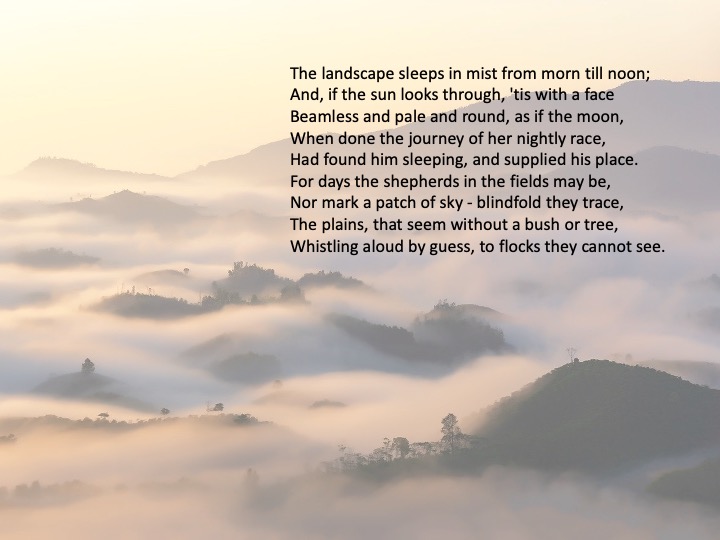
I love this beautiful poem, The Shepherd’s Calendar by John Clare. Placing myself in its lovely artistic images, I have a grateful and deep appreciation of Earth and of her changing seasons. I like to pray with the poem in the spirit of Laudato Si, praising God for the beauty of Creation.
It’s a bit long, so you might just want to come back to it several times throughout the month, taking just one small stanza that seems to fit you day or mood.
Click the little white arrow in the bar below for accompanying music as you pray. You can re-click any number of times you wish. To see each of the ten slides at your own pace, click the very small arrowhead > to the right of the slide.
Today, in God’s Lavish Mercy, we pray with Psalm 126, a song of hope fulfilled:
When the LORD brought back the captives of Zion, we were like men dreaming. Then our mouth was filled with laughter, and our tongue with rejoicing.
Then they said among the nations, “The LORD has done great things for them.” The LORD has done great things for us; we are glad indeed.
Psalm 126: 1-3
In our readings, we are called to be people of hope – to live in gratitude for hopes fulfilled, and to live in confidence of future blessing.
Paul blesses us with some of his most powerful words:
I consider that the sufferings of this present time are as nothing compared with the glory to be revealed for us.
Romans 8:18
How often, over the ensuing centuries, have these words uplifted and bravened a struggling heart! Paul reminds us of what he so passionately believed – that we are not here for this world alone; that we, with all Creation, are being transformed for eternal life in God.
Jesus too reminds us that our life in faith is so much bigger than we perceive. We see a tiny mustard seed, but God sees the whole tree of eternal life blossoming in us. We see a fingertip of yeast, but God sees the whole Bread of Life rising in us.
Paul tells us to be People of Hope who do not yet expect to see the object of their hope but who, nonetheless, believe and love with all their hearts.
May we pray this today for ourselves, and for anyone burdened by suffering or hopelessness at this time in their lives.
Poetry: Hope – Czeslaw Milosz – poet, prose writer, translator, and diplomat. He primarily wrote his poetry in Polish. Regarded as one of the great poets of the 20th century, he won the 1980 Nobel Prize in Literature. In its citation, the Swedish Academy called Miłosz a writer who “voices our exposed condition in a world of severe conflicts”.
Hope is with you when you believe
The earth is not a dream but living flesh,
that sight, touch, and hearing do not lie,
That all thing you have ever seen here
Are like a garden looked at from a gate.
You cannot enter. But you're sure it's there.
Could we but look more clearly and wisely
We might discover somewhere in the garden
A strange new flower and an unnamed star.
Some people say that we should not trust our eyes,
That there is nothing, just a seeming,
There are the ones who have no hope.
They think the moment we turn away,
The world, behind our backs, ceases to exist,
As if snatched up by the hand of thieves.
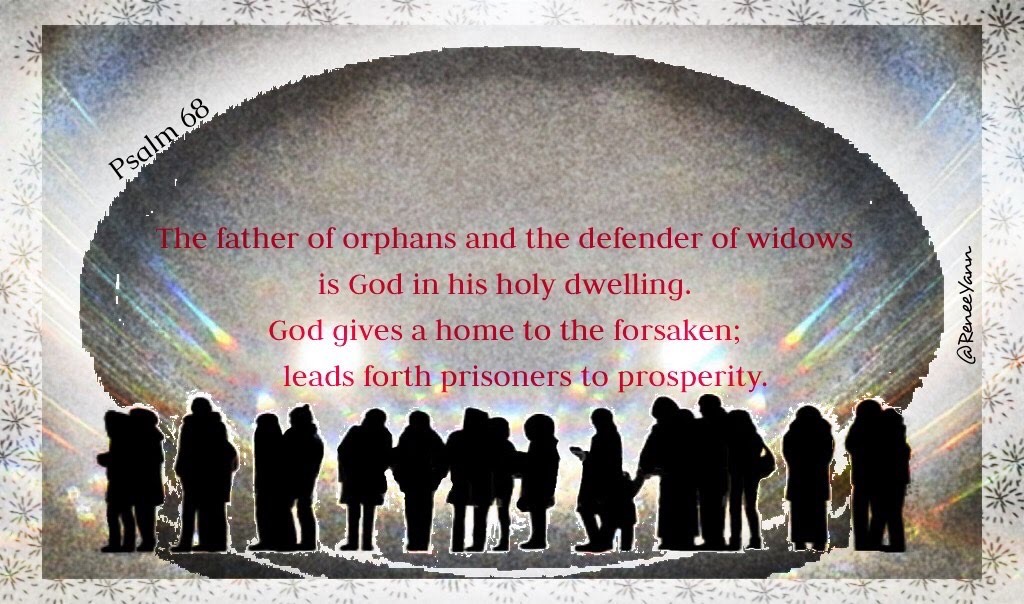
Today, in God’s Lavish Mercy, we pray with Psalm 68 which pictures a triumphant God, rising like the sun over the darkness of evil.
Arise, O God, and let your enemies be scattered; let those who hate you flee. Let them vanish like smoke when the wind drives it away; as the wax melts at the fire, so let the wicked perish at your presence.
Psalm 68:1-3
This psalm comforts us with a tender picture of God:
Protector of orphans, defender of widows, the One who dwells in holiness, who gives the solitary a home and brings forth prisoners into freedom; but the rebels shall live in dry places.
Psalm 68: 5-6
It is the same tenderness Paul presents in our first reading:
For those who are led by the Spirit of God are children of God. For you did not receive a spirit of slavery to fall back into fear, but you received a spirit of adoption, through which we cry, “Abba, Father!” The Spirit bears witness with our spirit that we are children of God, and if children, then heirs, heirs of God and joint heirs with Christ… if only we suffer with him so that we may also be glorified with him.
Romans 8:8-9
And there we have the key line: we are to live a life aligned with the Passion, Death, and Resurrection of Christ.
And what will that kind of life look like? It will look like our merciful Jesus of today’s Gospel – who stepped out to see, comfort, and heal the suffering around him.
Jesus recognized the crippled woman as “an heir of God, and joint heir with him” to the fullness of life in God. We are called to recognize ourselves and all of our sisters and brothers in the same way.
Poetry: WOMAN UN-BENT (LUKE 13:10–17) – by Irene Zimmerman, OSF
That Sabbath day as always
she went to the synagogue
and took the place assigned her
right behind the grill where,
the elders had concurred,
she would block no one’s view,
she could lean her heavy head,
and (though this was not said)
she’d give a good example to
the ones who stood behind her.

That day, intent as always
on the Word (for eighteen years
she’d listened thus), she heard
Authority when Jesus spoke.

Though long stripped
of forwardness, she came forward, nonetheless,
when Jesus summoned her.
“Woman, you are free of your infirmity,” he said.

The leader of the synagogue
worked himself into a sweat
as he tried to bend the Sabbath
and the woman back in place.

But she stood up straight and let
God’s glory touch her face.
Video: Jesus Heals the Bent-over Woman
If you’d still like a little music, this one seems to fit: Spirit Touch by Joseph Akins



















 Lavish Mercy