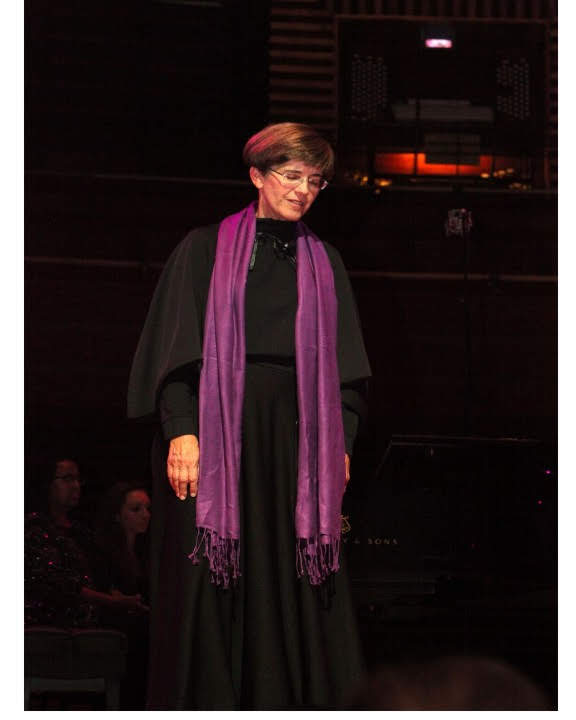
Margaret O’Reilly – Sister Mary Veronica Played by Eileen Sizer, RSM
Holding on to hope … how weak and fragile is our grasp. Let me tell you my story. It is one you may not have expected to hear tonight.
My name is Margaret O’Reilly. Couldn’t be more Irish, could I? I too was born in Cork but, with my family, Came to America when Ireland languished.
I entered the Sisters of Mercy in Manchester, New Hampshire, And was known as Sister Mary Veronica… “Veronica” … the one who bore the true image of the suffering Christ.
I traveled with the pioneer band to Philadelphia in 1861. I was filled with enthusiasm and energy to do the works of mercy. I wanted to change the world, But instead… the world changed me.
My spirit broke under the burden of our early hardships. We were so often hungry, so cold, so poor. Fear took my heart…. It tried to crush my dream. I spent many years before I died incapacitated by my broken spirit.
‘Tis a heavy tale, is it not? Indeed it would be had I not – all the time – Been held in God’s own heart Which heals and glorifies all our broken dreams And allows them to live in the generations we cannot yet see.
From the wounds of my suffering, God wove the royal purple robe of my salvation and my joy. I have blessed you and embraced you in its folds.
In the silent years, God and I have dreamed a dream of joy for you… A joy expressed in tenderness for those who have been broken, For those deemed “damaged” by a world that doesn’t understand.
So dear ones, it is not my work, But instead my suffering that is my legacy to you. Like Veronica, may you bring mercy to the broken body of Christ.
Through the years, I have seen you embrace the misunderstood and the vulnerable.
I know that in the mysterious way of God You have found great joy in that embrace.
For Your Reflection:
What feelings or reactions do I have after reading this reflection?
Do my feelings or reactions remind me of any passage or event in scripture, especially in the life of Christ?
What actions might I take today because of my response to these readings?
Mary Ann Coveney – Sister Mary Ann Played by Diane Guerin, RSM
Still, here at home were those Who were strangers in their own land.
Pushed to the fringes of society, They languished in prisons, poorhouses. They sought refuge when they had no shelter. They were imprisoned in the hopeless land of violence, Ignorance, addiction and all the disguises injustice takes to keep its true name hidden.
My heart cried for these struggling sons and daughters of God.
My name is Mary Ann Coveney … known to you simply as Sister Mary Ann. I too was born in Cork in 1838. The sisters said I was a charming, vivacious girl. I was! My heart was full of life. When I was about 20 years old, I recognized my gift as “Hope”, And I came to Mercy with a dream to share that gift with the hopeless ones.
Philadelphia, in the 19th century, harbored stagnant pockets of despair. Moyamensing Prison was one such place.
When there is no one to care, The powerless are crushed beyond recognition. They become nameless, numbered.
My sisters and I went often to these abandoned souls. We brought them hope.
For hope is just to know that someone speaks your name in mercy, And will return to speak it once again.
Dear sisters, I lived among you for just four brief years. But through all the years since then, my dream has lived in you.
I have accompanied you to the prisons, on your civil rights marches, as you protest at the School of the Americas.
I have stood with you against war, Against economic oppression, against the immigration raids,
Against the shunning of anyone whom hatred names “a stranger”.
Hope was the ground of my being. In the rich soil of my care, those who were abandoned planted the seed of their new life,
I bless you with that song of hope. Do God’s work, my friends.
For Your Reflection
What feelings or reactions do I have after reading this reflection?
Do my feelings or reactions remind me of any passage or event in scripture, especially in the life of Christ?
What actions might I take today because of my response to these readings?
Anne Geraghty – Sister Mary Francis de Sales Played by our dear late Mary Klock, RSM
Ah! My Philadelphia Mercy friends! How good to see you! My name is Anne Geraghty, known to you as Sister Mary Francis de Sales. I too came to America in 1860 with Patricia Waldron on the good ship Parana.
Do you remember the day we sailed out of Galway, Patricia, never to live on our beautiful island again! Were there not at least some soft tears that day! Little could I have realized then that our journey was but a first step for me on a life of missionary adventures.
After twelve dynamic years in Philadelphia, I became our first sister sent on mission. I went to Omaha and then for a few years to the wild Dakota territory. I lived a long and glorious life in the service of our God, Who has many faces and speaks many languages and lives in every corner of the earth.
And I have watched you through the years, my Philadelphia community. You have ventured into many states and many lands. You have immersed yourselves in many cultures. You have shaped the word of Mercy so that it can be heard by the rainbow of God’s People. And it has returned to you, twice blessed by their humble, loving welcome.
It thrills my heart to see your lively, open spirits in our country’s West and South, and distant North, in the heart of India, Peru, Guyana, Bolivia, Africa.
I have seen you accompany God’s people in the campo and the reservation, In the ghetto and the bayou, In the cities, villages and pueblos.
My spirit was a golden clarion that called hearts to courage. From my own pioneer’s heart and will, I have sent you the blessing of courage and adventure as you have spoken the word of mercy in the steadfast witness of your lives.
I have sent you the blessing of humility and love, So that your hearts could be transformed By the sacred touch of the poor whom you serve.
For Your Reflection:
What feelings or reactions do I have after reading this reflection?
Do my feelings or reactions remind me of any passage or event in scripture, especially in the life of Christ?
What actions might I take today because of my response to these readings?
Elizabeth Davies – Sister Mary Rose Played by our dear late Marie Carolyn Levand, RSM
Hello, dear sisters and friends. My name is Lizzie Davis. I had great love and natural talent for music, Especially the organ and piano, Although I loved to sing as well.
Mother Mc Auley’s dream of mercy was but three years old When I was born in Carlow, Ireland. The works of mercy she had begun were the talk of my family and friends as I grew up: visitation of the sick, comforting of those in prison, care of those in the wretched poorhouses that were the curse of Ireland’s Penal Laws. She and her sisters were such amazing women!
Mercy’s great-hearted stories filled my spirit. So it was quite natural that when I was 22, I chose to join Catherine’s brave yet gentle sisters.
I was a bit surprised to be asked instead to journey to America and there to join Frances Warde and the pioneer sisters who had carried mercy to a new frontier.
Later, when we came to Philadelphia, we of course began our works of teaching and care of the sick. But we were so aware, because of all that we had seen in Ireland, that the poorest and most wretched souls are often hidden in the fringes of society: in the poorhouses, and in the broken hovels of their homes. But most of all, they are imprisoned by their own isolation.
When we finished our daily work, it was our joy to go out to these places to find the waiting face of Christ among the poor.
Perhaps it would seem strange to some that I, a master of piano and organ, employed my gifted hands to tend hurts of those so poor.
But their thanks became my hymn of joy And I would hum a melody of blessing over them as I cared for them in mercy.
My spirit spoke peace to them, like a sweet rose blossoming in the chaos. I have cast its petals over you in blessing. I have watched you, dear sisters, tend God’s loneliest children. I have prayed for you, that the song of mercy deep within your hearts, would sustain you in the work of God.
For Your Reflection:
What feelings or reactions do I have after reading this reflection?
Do my feelings or reactions remind me of any passage or event in scripture, especially in the life of Christ?
What actions might I take today because of my response to these readings?
Elizabeth Hughes – Sister Mary Philomena Played by Mary Hentz, RSM
Teaching the dear children was just one part of our daily rounds.
My name is Elizabeth Hughes. You know me as Sister Mary Philomena. My dream of mercy was born in Wales, Great Britain and nurtured later, like Patricia’s, In Ballinrobe, Ireland.
When I was but a child, The Great Famine fell upon beloved Ireland. I suppose it was then that my innate compassion for suffering people began to shape my dream of mercy.
Although I lived for only a decade after our journey to Philadelphia, Mother Patricia knew me well. We had sailed together to Boston in 1860 on the good ship “Parana”, You, and I, and Francis de Sales.
You believed that my natural talent and innate sympathy prepared me well to be appointed our first real practical nurse.
The care of the sick was a ministry I loved in the brief time I spent on earth. I dispensed it with every tenderness I could, Knowing that I tended the wounds of Christ.
Before I died, I heard the priest whisper in the stillness, “There is no cloud on that sister’s soul.”
Indeed, by God’s good grace, Compassion flowed from me Like dew upon the fresh green grass.
From my cloudless soul, I have sent you the blessing of compassion and gentleness down these long years.
I have watched our healthcare ministries pour out like a sweet ointment over the wounds of this city and its people.
In 1915, most of us had gone to God but you, Mother Patricia, When you journeyed in your final days to the groundbreaking for Mercy Hospital in Philadelphia. Oh, from that clear October afternoon, What a wellspring of healing has come.
For Your Reflection:
What feelings or reactions do I have after reading this reflection?
Do my feelings or reactions remind me of any passage or event in scripture, especially in the life of Christ?
What actions might I take today because of my response to these readings?
Marie Mathey-Doret – Sister Marie Madeleine Played by Suzanne Neisser, RSM
It was on the waves of deep emotion, that we came to Philadelphia under the name of Mercy.
My name is Marie Matthey-Doret. Yes – are you surprised? Not all of the original ten were Irish! I was born in Limoges, France, of a Swiss father and French mother.
Many languages could be heard in my family home. Fine arts and the love of music filled my early days with beauty. Perhaps it was there that the love of teaching began to grow in me and my dream of mercy was born.
Even though I was also the first Mistress of Novices, all of us who began in 1861 were teachers in one way or another. This was the first gift of mercy that we sought to offer this dear city.
We didn’t know the way for certain. We heard God’s voice and held God’s hand and we stepped out in faith to do the work of love. This is the way the dream unfolds.
I know the sisters have retold a thousand times the story of our very first schools… But some here may not know that story. After all, it was a tiny house where we first lived. Ten of us had to create sleeping quarters in all available spaces!
But in the morning, rooms that had been bedrooms and chapel were quickly remodeled into classrooms for the children and women who would come to learn that day.
We joked that these rearrangements were our “morning exercises”! Each day, we would laugh as the children arrived And think “Oh, if they only knew!!!” Would your students at the Academy not be surprised to think of that today?
I have watched your “morning exercises” through the intervening years. They’ve changed somewhat – Quite a bit of electricity involved today! – but still … such devotion to the lives of children. Just to think of all those schools and all those students touched by the unfolding of the mercy dream.
The beauty of music and language Wrapped my spirit like a deep blue sea. From that beauty, I have sent you waves of blessing from heaven And smiled to hear the laughter and The songs of Mercy children Across these hundred fifty years.
For Your Reflection:
What feelings or reactions do I have after reading this reflection?
Do my feelings or reactions remind me of any passage or event in scripture, especially in the life of Christ?
What actions might I take today because of my response to these readings?
Suggested Scripture:Psalm 127 improvised by Rev. Christine Robinson
Unless the house is built solid, and for the right reasons, the work is in vain. When the right thing is done at the right time, it endures like a house built on a good foundation. When a nation is governed justly and wisely, it is safe from all manner of danger. When you do what you can each day with due diligence, you sleep deeply at night, trusting God for the rest. Attend well to the next generation. The children are God’s gift to us, and their good upbringing our gift to God.
Many of my readers will remember the Sesquicentennial Celebration of the founding of the Sisters of Mercy in Philadelphia.
In October 2010, many of you joined us in the magnificent Kimmel Center for our beautiful program of reflection and music. You will remember Patricia Waldron inviting us to hear the dream of our founding Sisters – to serve God in the poor, sick, and uneducated people of Philadelphia.
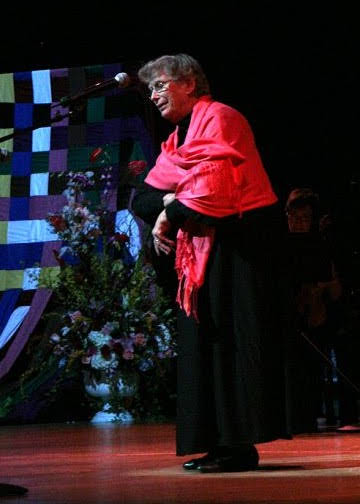
Sr. Patricia Waldron played by our dear late Mimi Connor, RSM
Have you ever noticed how our dreams unfold? They never happen in the way we first imagined. Instead, they weave – your dreams and mine — Among each other in a latticework of grace. By the way, my name is Anne Waldron. known in my life as Mother Patricia – “Reverend Mother” really. A rather weighty title, don’t you think? But my own dream of mercy was not weighty.
I was born in Tuam (pronounced “Choom”), County Galway, Ireland. ‘Tis a precious place, a mere 20 miles from the glorious bay to the south, Where the soft air carries a hint of the sea And the sweet land holds both a deep promise and a deep scar of famine.
I must seem a long way from you now, after these 150 years – almost like a shadow on your memories. And you must think me a particularly courageous part of your history. After all, you have named buildings after me, I see! But tonight, I want you to know me in a new way.
I was only 27 when I came here to this strange city. I walked these same streets as you, fraught as they are with their dangers and beauties. Do you know that a century and a half ago we sisters lived just two miles north of this very spot! Ah, but the Philadelphia of the 1860s was a far different sight from what I saw outside tonight. I see that a million and a half souls live here now! Oh my! Just a third that number in the city then. We thought it an amazing number having come mostly from our small villages.
I was young then – like all of you are or were once – Young and full of dreams. We all were – I and these my dear companions.
We were not different because of our courage, our spirit of adventure, our dedication or our generosity— Although these marked our lives as we grew deeper into God.
No – what made us who we were was this: We clearly knew and trusted that the dream in us Was God’s dream for a wounded world. In our deepest hearts, We were Sisters of Mercy!
As you listen to our stories tonight, Hold this question in your own hearts: What dream lived in you when you were young? What dream lives in you now?
Over the next nine days, we will revisit the stories of each of these founding Sisters. As you meet them in your prayer, open your hearts to their inspiration.
For Your Reflection:
What feelings or reactions do I have after reading this reflection?
Do my feelings or reactions remind me of any passage or event in scripture, especially in the life of Christ?
What actions might I take today because of my response to these readings?
Suggested Scripture: Psalm 100 – improvised by Rev. Christine Robinson
Be Joyful Gladly serve the good Rejoice in the gift of life.
Highest above, deepest within Around us in nature, present in each. We are yours, You are ours We enter your presence with Thanksgiving With chants and songs With grateful hearts and open hands And know a flash of eternity.
On August 22, 2025, the Sisters of Mercy celebrate the 164th Anniversary of our arrival in Philadelphia.
August 21, 2025
How Mercy has flourished in the intervening years! — countless numbers of students taught, patients cared for, people given shelter, prisoners offered justice, hungers fed, struggling hearts tendered hope and direction.
We rejoice in the thousands who share the name of Mercy with us — people like each one of you who are the face and voice of Mercy in an inhospitable world.
We remember ten young women, none even thirty years old – women an ocean away from their homes and families; women who waited days for donated food to sustain them; women who believed that God wants those who are poor and sick to be cared for with love; — and so they built a harbor of Mercy from little but faith and hope.
Sesquicentennial Cross Designed by Robert McGovern and Jude Smith, RSM
There is a lesson for each of us in these first Mercy stories. Pray with them and hear how they speak to you.
They teach that, though we cannot see faith, hope, and love, we see their powerful effects. It is a power rooted in relationship with the One Who is Mercy, with the One Who chooses to live in and through us.
In the Name of God’s Mercy, we begin to feel, in our heart’s depths, the profound suffering in the world. We are moved to give all that we can to its healing.
Listen for the next ten days to those early voices, still living in us: “Thank you for sustaining the dream to which we gave our lives. Eternal Mercy, Who called us, now calls you. Know that we are with you as you answer.
(The first voice will be sent today, and another in each of the next nine successive days – a “novena of Mercy”.
Many of us grew up in households where we were surrounded by a strong devotional faith. I am happy to be one of those people. These simple, sacramental practices awakened and engaged my young faith and offered me a visible means to respond to its stirrings. These practices also gave my parents and grandparents the tools to teach me to love and trust God, Mary, the Saints, and my Guardian Angel.
I remember with gratitude the many parameters of that deep devotion which accompanied our fundamental practice of a sacramental and liturgical life. • Our home had a crucifix in every room to remind us of God’s Presence • Over the main door was the statue of the Infant of Prague and the first Christmas card we had received depicting the Three Kings to bless us on our journeys. • All year, Dad’s fedora sported a tiny piece of straw tucked into its plaid band. He had plucked it from the parish Christmas crèche, near to St. Joseph who was his trusted friend. At Easter, he added a little piece of palm. • During a really violent thunderstorm, we might get a sprinkling from Mom’s holy water flask kept for especially taxing situations.
And, maybe because we live not too far from the East Coast, we had one special summer practice. We went into the ocean on the Feast of the Assumption, believing that, through the water, Mary offered us special healing and graces on that day.
I can still picture young boys helping their elderly grandparents into the shallow surf. I remember mothers and fathers marking their children’s brows with a briny Sign of the Cross. There was a humble, human reverence and trust in these actions that blesses me still.
While that August 15th ritual, like similar devotions, might seem superstitious and even hokey to some today, the memory of it remains with me as a testament to the simple faith and deep love of God’s people for our Blessed Mother.
It was just such devotion and faith, expressed over centuries by the faithful, that moved Pius XII to declare the dogma of the Assumption: “We pronounce, declare, and define it to be a divinely revealed dogma: that the Immaculate Mother of God, the ever Virgin Mary, having completed the course of her earthly life, was assumed body and soul into heavenly glory.” (MUNIFICENTISSIMUS DEUS 44)
On November 1, 1950, Pope Pius XII defined the dogma of the Assumption in the Apostolic Constitution Munificentissimus Deus (The Most Bountiful God). The world at that time was still healing from the horrors of World War II. The Pope himself, no doubt, was wounded beyond description by what he had witnessed. One can hear his deep pain as he begins his letter by saying:
“Now, just like the present age, our pontificate is weighed down by ever so many cares, anxieties, and troubles, by reason of very severe calamities that have taken place and by reason of the fact that many have strayed away from truth and virtue. Nevertheless, we are greatly consoled to see that, while the Catholic faith is being professed publicly and vigorously, piety toward the Virgin Mother of God is flourishing and daily growing more fervent, and that almost everywhere on earth it is showing indications of a better and holier life.”
This belief is complementary to the dogma of the Immaculate Conception defined by Pope Pius IX in 1854. These two articles of faith embrace the totality of Mary’s life which was uniquely blessed among all humans. Mary gives us, in our humanity, both a model of and a supportive invitation to holiness.
Marie T. Farrell, RSM has written a scholarly and insightful essay on the Assumption. Her work offers a rich understanding of the theological layers within this teaching. Sister Marie closes her essay with these words:
Mary assumed into heaven and spiritualized in her whole personhood is a prophetic symbol of hope for us all. In his Resurrection-Ascension, Jesus has shown the way to eternal life. In the mystery of Assumption, the Church sees Mary as the first disciple of many to be graced with a future already opened by Christ, one that defies comprehension for ‘…no eye has seen, nor ear heard, nor the human heart conceived, what God has prepared for those who love him… (1 Cor 2: 9)
Music: Assumpta Est Maria – Pierluigi de Palestrina
For Your Reflection:
What feelings or reactions do I have after reading this reflection?
Do my feelings or reactions remind me of any passage or event in scripture, especially in the life of Christ?
What actions might I take today because of my response to these readings?
Suggested Scripture: Luke 2:13-20
There is no reference to the Assumption in the Bible. But I think this passage captures the deep beauty and wisdom of Mary’s spirituality.
Today is the 80th anniversary of the bombings of Hiroshima and Nagasaki
Dona Nobis Pacem – Yo-Yo Ma and Illia Bondarenko
On a hot August 6th over 40 years ago, I sat quietly in the Nevada desert just outside Las Vegas. Most maps call the place the Nevada Test Site. Established as the Atomic Energy Commission’s on-continent proving ground, the Nevada Test Site has seen multiple decades of nuclear weapons testing.
But to the native peoples, the land is known as Newe Sogobia (Earth Mother), or the Western Shoshone homelands.
I had come to the place with over 200 other peace activists to pray for the end of nuclear wars, bombings and weapons proliferation. As part of our prayer, each one of us found a private spot in that massive desert where we could sit alone to meditate. I rested by a low bush to capture its small shady triangle in the dry, threatening heat even of that early morning.
At first, to the unappreciative eye, the desert seems a monochromatic place. The earth, the few stones, the sparse vegetation all appear to wear a beige garment of anonymity – almost as if they are saying, “Don’t see me. Don’t change me by noticing me.” But after many minutes of peeling away the multiple blindfolds we all carry, I became aware of muted majesty breaking from that desert like tender life from an egg.
A tiny hummingbird, the color of slate and sand, hovered inches from my hand. It drew my eyes to another small white object hidden under the lowest branches of the bush. It was a perfectly executed origami crane, no bigger than my thumb. I learned later of the Japanese activists who had preceded us into the desert, and whose custom it was to leave behind these beautiful “peace cranes” as mute reminders of the horrors of Hiroshima and of the hope for universal peace.
Later that evening, thinking about the cranes, I found myself straddling a confusing range of emotions. In the late 40’s and 50’s, I had grown up in a household that despised Japan. On my mother’s birthday in 1945, her 19 year old brother had been killed at Iwo Jima. It was a scar my mother bore the rest of her life.
But as with many scars we have earned or inherited in life, the years had taught me that there is an inner grace to every pain. Holding one of the delicate cranes, I thought about the innumerable Japanese lives – mostly innocent civilians – that had been lost or disfigured on August 6, 1945. I thought about the fact that life is never served by war – whether that war is global, local or personal. War serves only death.
The quest for peace is a complicated and endless pursuit. I ask myself – and each of you – to renew that quest today by harboring peace in our own lives. Refuse to solve conflicts by aggression. Look beyond the battle to the person. Be an agent of mutuality not of domination. Resist the normalization and glorification of violence and war, and defend their victims.
Eighty years after Hiroshima, we still see abominable inhumanity exploding in Gaza, Ukraine, Haiti, Sudan, and the immigrant communities of the Americas. We cannot be silent in the face of what we see. We are called to witness for peace and justice by our words, our attitudes, our votes, and our advocacy.
God knows our world – our streets – need this from us. If we unfold the wings of our own hearts, perhaps the crane of peace can be freed to change the world.
Music: Peace Train – Cat Stevens
For Your Reflection
What feelings or reactions do I have after reading this reflection?
Do my feelings or reactions remind me of any passage or event in scripture, especially in the life of Christ?
What actions might I take today because of my response to these readings?












 Lavish Mercy