Mary, Singer of Joy

Feast of the Nativity of the Blessed Virgin Mary
September 8, 2022

Today’s Readings:

https://bible.usccb.org/bible/readings/090822.cfm

Today, in God’s Lavish Mercy, on our Blessed Mother’s birthday, we pray with the beautiful final verses of Psalm 13.
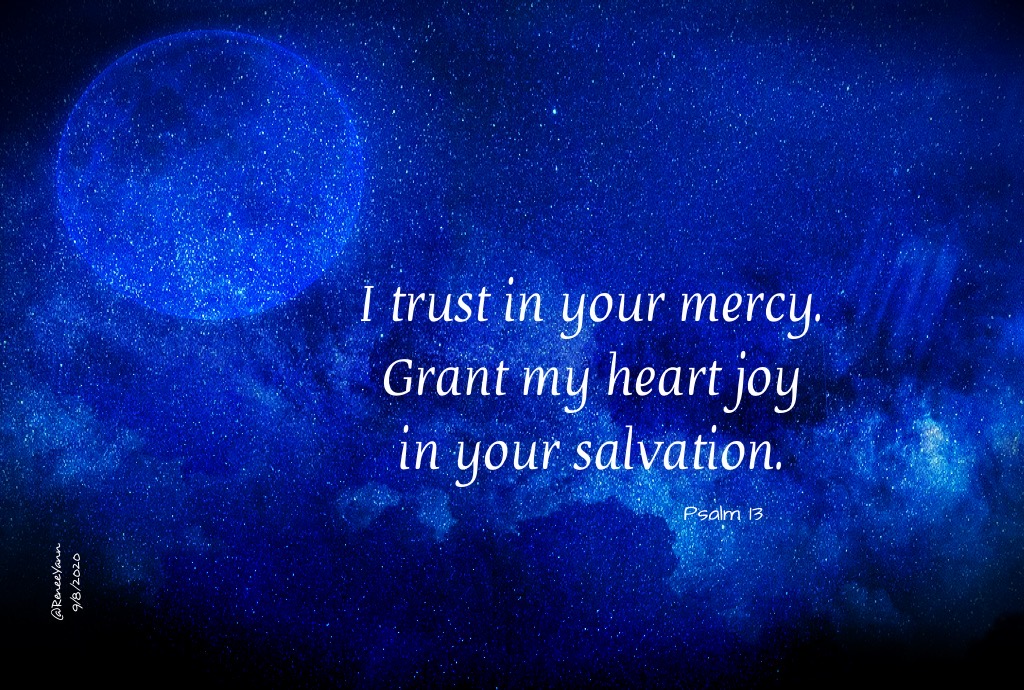
These verses embody an immense shift in form from the psalm’s early lines. Early on, the psalmist cries out four times, “How long, O Lord?”.

How long: 

  • Will you forget me?
  • Will you hide your face from me?
  • Must I carry sorrow in my soul?
  • Will my enemy triumph over me?

Referring to these early verses reminds us that Mary’s life was full of sorrow as well as joy. On a feast like today, we think of Mary in her heavenly glory. But in her lifetime, Mary suffered many sorrows. She was an unwed mother, a refugee, and a widow. She was the mother of an executed “criminal” and a leader of his persecuted band.

The Julian of Norwich, “Her Showing of Love”

What was it that allowed Mary to transcend sorrow and claim joy? Our psalm verses today help us to understand. They show the psalmist turning to heartfelt prayer., trusting God’s abiding protection.

Look upon me, answer me, LORD, my God!
Give light to my eyes lest I sleep in death,
Lest my enemy say, “I have prevailed,”
lest my foes rejoice at my downfall.


That deep trust ultimately yields
not only peace, but joy. 
Mary, singer of the Magnificat, 
is the quintessence of that holy joy.


But I trust in your mercy.
Grant my heart joy in your salvation,
I will sing to the LORD,
Who has dealt bountifully with me!

Today, in our prayer, we ask Mary to love and guide us through the challenges of our lives.


Poetry: Three Days – Madeleine L’Engle

Friday:
When you agree to be the mother of God
you make no conditions, no stipulations.
You flinch before neither cruel thorn nor rod.
You accept the tears; you endure the tribulations.
But, my God, I didn't know it would be like this.
I didn't ask for a child so different from others.
I wanted only the ordinary bliss,
to be the most mundane of mothers.

Saturday:
When I first saw the mystery of the Word
made flesh I never thought that in his side
I'd see the callous wound of Roman sword
piercing my heart on the hill where he died.
How can the Word be silenced? Where has it gone?
Where are the angel voices that sang at his birth?
My frail heart falters. I need the light of the Son.
What is this darkness over the face of the earth?
Sunday:
Dear God, He has come, the Word has come again.
There is no terror left in silence, in clouds, in gloom.
He has conquered the hate; he has overcome the pain.
Where, days ago, was death lies only an empty tomb.
The secret should have come to me with his birth,
when glory shone through darkness, peace through strife.
For every birth follows a kind of death, and only after pain comes life.

Music Video: Magnificat –

Life Guidance

Wednesday of the Twenty-Third Week in Ordinary Time
September 7, 2022

Today’s Readings:

https://bible.usccb.org/bible/readings/090722.cfm

Today, in God’s Lavish Mercy, Paul gives a little “life guidance” to the neophyte Christian community in Corinth. One might get the picture of him sitting, grandfather-like, in a lounge chair by the Korinthos Bay, thinking his instructions out loud.

You know, if you’re a virgin, that’s good.
– on the other hand -if you’re not, well that can work too.
And if you’re not married, great.
But – on the other had – if you are married,
hmm, you’re gonna suffer,
but you can still find a way.

Renee’s Translation of the passage below 🙂

In regard to virgins, I have no commandment from the Lord,
but I give my opinion as one who by the Lord’s mercy is trustworthy.
So this is what I think best because of the present distress:
that it is a good thing for a person to remain as he is.
Are you bound to a wife?  Do not seek a separation.
Are you free of a wife?  Then do not look for a wife.
If you marry, however, you do not sin,
nor does an unmarried woman sin if she marries;
but such people will experience affliction in their earthly life,
and I would like to spare you that.

1 Corinthians :25-28

I can picture myself sitting in that crowd, turning to a companion to say, “WHAT the heck is he talking about!?”. And hopefully that companion would be tuned in enough to say, “He’s talking about life and how hard it is to truly appreciate what life is all about before it’s too late.”

I think that is the key and precious tidbit in this reading:

Life in Christ is the inverse of worldly definitions.
It is a heartbeat humming under appearances,
between the layers of our experience,
which renders them infinitely more grace-filled
than we might perceive.

I tell you the time is running out.
From now on, let those having wives act as not having them,
those weeping as not weeping, 
those rejoicing as not rejoicing,
those buying as not owning,
those using the world as not using it fully.
For the world in its present form is passing away.

1 Corinthians 7: 29-21

We need deeper vision, a blessed listening to perceive this Sacred Heartbeat.

We need a peaceful courage and holy insight to enter it, to sing with it. Paul, in this reading and Jesus, in our Gospel, invite us to step into the spiritual counterpoint of God’s song.

Counterpoint is a compositional technique in which two or more melodic lines complement one another but act independently. The term comes from the Latin punctus contra punctum, which means “point against point.” Composers use counterpoint to create beautiful, complementary polyphonic music.

Paul’s lesson isn’t about being a virgin or not, being married or not. It’s about finding that sweet spot in your life, between the layers, where you can best hear God breathing within you and open your life, in counterpoint, to that Eternal Song.

Jesus says we will have found that sweet spot when we understand and live the “inverse richness” – the “counterpoint” of the Beatitudes which are offered in a perhaps less familiar form today by Luke:

Blessed are you who are poor,
for the Kingdom of God is yours.
Blessed are you who are now hungry,
for you will be satisfied.
Blessed are you who are now weeping,
for you will laugh.
Blessed are you when people hate you,
and when they exclude and insult you,
and denounce your name as evil
on account of the Son of Man.
Rejoice and leap for joy on that day!
Behold, your reward will be great in heaven.  

Poetry: The Layers – Stanley Kunitz

I have walked through many lives, some of them my own,
and I am not who I was,
though some principle of being
abides, from which I struggle
not to stray.
When I look behind,
as I am compelled to look
before I can gather strength
to proceed on my journey,
I see the milestones dwindling
toward the horizon
and the slow fires trailing
from the abandoned camp-sites,
over which scavenger angels
wheel on heavy wings.
Oh, I have made myself a tribe
out of my true affections,
and my tribe is scattered!
How shall the heart be reconciled
to its feast of losses?
In a rising wind
the manic dust of my friends,
those who fell along the way,
bitterly stings my face.
Yet I turn, I turn,
exulting somewhat,
with my will intact to go
wherever I need to go,
and every stone on the road
precious to me.
In my darkest night,
when the moon was covered
and I roamed through wreckage,
a nimbus-clouded voice
directed me:
“Live in the layers,
not on the litter.”
Though I lack the art
to decipher it,
no doubt the next chapter
in my book of transformations
is already written.
I am not done with my changes.

Music: Inside This River – Gary Schmidt ( more great counterpoint)

A Gallery of Sinners!

Tuesday of the Twenty-third Week in Ordinary Time
September 6, 2022

Today’s Readings:

https://bible.usccb.org/bible/readings/090622.cfm

Today, in God’s Lavish Mercy, Corinthians might leave us thinking, “Wow, maybe I’m a sinner but I’m sure not as bad as those guys!”

Their Names Have Been Changed to Protect the Innocent 🙂

Paul generates quite a list of reprobates, doesn’t he!

Do not be deceived;
neither fornicators nor idolaters nor adulterers
nor boy prostitutes nor sodomites nor thieves
nor the greedy nor drunkards nor slanderers nor robbers
will inherit the Kingdom of God.

The list is so compelling that we might be blinded by it and miss the message that the reading has for us. And I think the message is this – what do Paul’s miscreants have in common?

They have violated and scorned
the sanctity of
RELATIONSHIP
which demands commitment, trust,
reverence and integrity.


When, in our prayer, we examine our conscience and honestly place before God the best we have done with our day, how does it look in terms of right-relationship?

How committed, honest, respectful and caring
have we been toward those God has given us
in the circle of our lives?

Paul’s catalogue of sinners use others for their own selfish purposes. There is no mutuality, responsibility or investment in one another’s good. And while our wrongdoings may not make Paul’s Most Wanted List, they will be characterized by the same failings.


The question Paul offers us is this: how reverent, honest, respectful, merciful and loving am I in each of my relationships – with God, myself, Creation, my immediate and larger world?
Or whom might I instead “write off” as fodder for my contempt, gossip, judgements, disregard, indifference or exclusion?

NAMASTE

Maybe we don’t mean to do these things, but I think we might be surprised if we really took a good look at ourselves — myself included.

In calling the  Corinthians to get it together, Paul is also calling me.


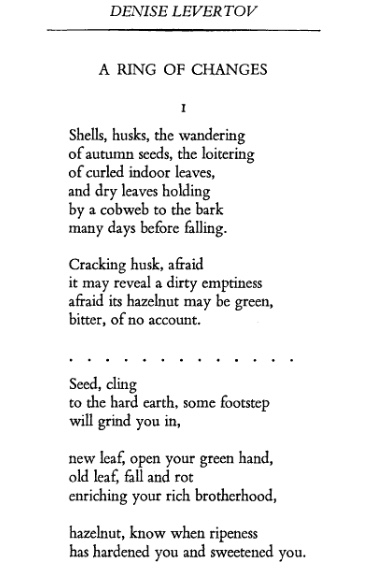
Poetry: When I Am Among the Trees – Mary Oliver

When I am among the trees,
especially the willows and the honey locust,
equally the beech, the oaks and the pines,
they give off such hints of gladness.
I would almost say that they save me, and daily.
I am so distant from the hope of myself,
in which I have goodness, and discernment,
and never hurry through the world
but walk slowly, and bow often.
Around me the trees stir in their leaves
and call out, “Stay awhile.”
The light flows from their branches.
And they call again, “It's simple,” they say,
“and you too have come
into the world to do this, to go easy, to be filled
with light, and to shine.”

Music: We Are All One – 

Between a Rock and …

Monday of the Twenty-third Week in Ordinary Time
September 5, 2022

Today’s Readings:

https://bible.usccb.org/bible/readings/090522.cfm

Today, in God’s Lavish Mercy, our Gospel finds the Pharisees once again confronting Jesus with a dilemma.  It is the Sabbath, a day when any kind of “work” is prohibited. Yet, a man with a withered hand approaches Jesus needing to be cured. Should Jesus do this work?

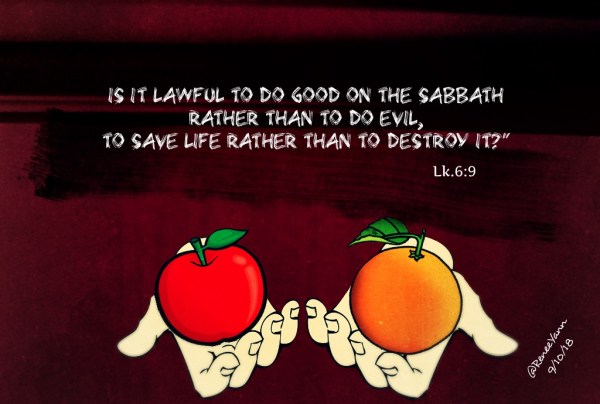
Lk6_9 law or mercy

It is the classic, Pharisaical confrontation: appearing to weigh two equal responses which in reality are incomparable – like apples and oranges. They are similar only on the surface. Their essences are quite distinct.

Jesus’ continuing debate with the Pharisees always swirls around the balance between law and spirit. The Pharisees have idolized the Law, allowing it to swallow the Spirit. Under their intransigent interpretation, the poor crippled man in today’s Gospel would have lost the chance for healing.


We call quandaries like this being “between a rock and a hard place”. The ancient Greeks called  it “between Scylla and Charybdis” – an adjacent huge rock and whirlpool which threatened to swallow their ships passing through. The image powerfully captures the angst accompanying  these dilemmas.

We navigate such hazards throughout our lives, facing choices which are often unclear and confusing. Our alternatives sail the wide range between “law” and “spirit”, between what seems advantageous and what seems right, between what is comfortable and what is spiritually challenging, between what is “legal” and what is just and merciful.


How do we choose according to the pattern of Christ? How do we choose forgiveness, mercy, inclusive love, peace and charity in a world that screams “Choose selfishly. You deserve it!”

Through prayer, scriptural reflection, and merciful service, our spirits absorb that Sacred Pattern of Christ. It is in the shape of the Cross. It will guide us between our Scylla and Charybdis.


Poetry: Scylla and Charybdis – from The Aeneid by Virgil

                    BUT when near the coasts
Of Sicily, Pelorus’ narrow straits
Open to view, then take the land to the left,
And the left sea, with a wide circuit round,
And shun the shore and sea upon the right.         5

Those lands, ’t is said, by vast convulsions once
Were torn asunder (such the changes wrought
By time), when both united stood as one.
Between them rushed the sea, and with its waves
Cut off the Italian side from Sicily,         10

And now between their fields and cities flows
With narrow tide. There Scylla guards the right,
Charybdis the implacable the left;
And thrice its whirlpool sucks the vast waves down
Into the lowest depths of its abyss,         15

And spouts them forth into the air again,
Lashing the stars with waves. But Scylla lurks
Within the blind recesses of a cave,
Stretching her open jaws, and dragging down
The ships upon the rocks. Foremost, a face,         20

Human, with comely virgin’s breast, she seems,
E’en to the middle; but her lower parts
A hideous monster of the sea, the tails
Of dolphins mingling with the womb of wolves.
Better to voyage, though delaying long,         25

Around Pachyna’s cape, with circuit wide,
Than once the shapeless Scylla to behold
Under her caverns vast, and hear those rocks
Resounding with her dark blue ocean hounds.

Today’s song is simple, almost childlike – but that simplicity is often just what we need in the face of a dilemma.
Music: I Choose You – Libby Allen Songs

Wisdom, please ….

Twenty-third Sunday in Ordinary Time
September 4, 2022

Today, in God’s Lavish Mercy, we continue to move into the final segments of Luke’s Gospel which we have been reading on Sundays throughout this liturgical year.

Today, the Church links three readings which, at first glance, might seem unrelated.

  • Our first reading from Wisdom reminds us of God’s infinite wisdom, incomprehensible to our human minds.
  • Paul, in his letter to Philemon, begs for the loving inclusion of Onesimus, an enslaved person, into the Colossian community.
  • In our Gospel, Jesus makes this harsh pronouncement:

If anyone comes to me without hating his father and mother,
wife and children, brothers and sisters,
and even his own life,
he cannot be my disciple.


How might we interpret these disparate passages to find a message of wholeness for our prayer?

Wis9_13 gods mind

Let’s start with Jesus. In no uncertain terms, he challenges his disciples to move out of their small worlds into God’s big world. That Godly world is not defined by family, nor by any condition other than our common Creaturehood in God … not by:

word gram

Jesus says the sacred community is defined only by shared and irrevocable commitment to the Gospel of love and mercy.


Paul knows and loves Onesimus, the slave, as a brother in this community. In his letter, Paul encourages Philemon to do the same.


Sometimes as human beings, filled with all kinds of insecurities, we tend to build enclaves that make us feel safe. We like to be with “our kind”. We invent borders to filter out those whose differences we don’t understand. We allow fear to grow with that lack of understanding. Within the enclosure of our self-protectionism, we eventually forget that we are all one, equal, precious, beautiful and beloved by God.

Such toxic attitudes are the soil for slavery, war, ethnic cleansing, racial supremacy, human trafficking, destructive nationalism, and all the other sacrileges committed by humans against the human family.

Wisdom reminds us that only God can open
the tight circle of our fears, judgments and isolations
– only God whose infinite love encompasses all.
Jesus tells us that we find that love
only by lifting up the cross and following him.

Wisdom tells us to put it in God’s hands, and to respond to God’s challenge in the preaching of Jesus Christ.

Who can know your way of thinking, O God
… except you give us wisdom

 and send your Holy Spirit from on high
 thus stretching the hearts of those on earth

Today I pray, may God do this for me,
and for all our tight, convoluted
and troubled world.


Poetic Prayer of Hildegard of Bingen

Hildegard of Bingen (c. 1098 – 17 September 1179), was a German Benedictine abbess and polymath active as a writer, composer, philosopher, mystic, visionary, and as a medical writer and practitioner during the High Middle Ages. She is one of the best-known composers of sacred monophony, as well as the most recorded in modern history. She has been considered by scholars to be the founder of scientific natural history in Germany.

I am Wisdom. 
Mine is the blast of the resounding Word 
through which all creation came to be, 
and I quickened all things with my breath 
so that not one of them is mortal in its kind; 
for I am Life.

Indeed I am Life, whole and undivided 
-- not hewn from any stone, 
or budded from branches, 
or rooted in virile strength; 
but all that lives has its root in Me.
 
For Wisdom is the root 
whose blossom is the resounding Word....
I flame above the beauty of the fields 
to signify the earth 
-- the matter from which humanity was made.

I shine in the waters to indicate the soul, 
for, as water suffuses the whole earth, 
the soul pervades the whole body. 

I burn in the sun and the moon to denote Wisdom, 
and the stars are the innumerable words of Wisdom.

Music: Who Has Known (an Advent hymn, but perfect I think for today’s readings)

Alleluia: Poppin’ Good Faith

Memorial of Saint Gregory the Great,
Pope and Doctor of the Church
Saturday, September 2, 2022

Today’s Readings:

https://bible.usccb.org/bible/readings/090322.cfm

Alleluia, alleluia.
I am the way and the truth and the life, says the Lord;
no one comes to the Father except through me.

Today, in God’s Lavish Mercy, our readings encourage us to live a Spirit-inspired faith rather than one of appearances.

At first, I found our first reading uninspiring. So I did a little research which helped me to appreciate that 1 Corinthians shows us a “toddler Church” trying to discover itself. 

Paul is her teacher, but Paul is not always with her. Other influences, theories and even conspiracies can influence her emerging self-awareness. Some of these influences might include those who think they are in charge, and begin to set rules and roles for the early Church’s life without Paul’s direction.

In today’s passage from Corinthians, Paul uses a lot of sarcasm to warn the community not to get ahead of themselves in shaping their faith community. He wants them not to rely on structures and functions but on the uncontainable power of the Holy Spirit to inspire and create a path for God’s love and mercy in the world.

Paul reminds the Corinthians that everything they have they received. They are not to feel entitled by their gifts but humble, grateful and open to his apostolic teaching and example.

Brothers and sisters:
Learn from myself and Apollos not to go beyond what is written,
so that none of you will be inflated with pride
in favor of one person over against another.
Who confers distinction upon you?
What do you possess that you have not received?
But if you have received it,
why are you boasting as if you did not receive it?

Jesus is saying the same thing to the Pharisees in our Gospel today. They boast that they are the arbiters and interpreters of the faith.

But faith is not about refraining from corn-picking on the Sabbath! We make rules like this because we are afraid of the power of the Holy Spirit to transform us. So instead, we push God’s Spirit into the confines of a corn husk where we are safe from God’s transformative call that might upset our comfort.

Jesus tells the Pharisees to be like David. Although not faultless, David got it! He lived a life of passionate love for and relationship with God which refused to be confined by imposed definitions.

David and the Temple Bread

Jesus said to them in reply,
“Have you not read what David did
when he and those who were with him were hungry?
How he went into the house of God, took the bread of offering,
which only the priests could lawfully eat,
ate of it, and shared it with his companions?”
Then he said to them, “The Son of Man is lord of the sabbath.”


Surely there are lessons here for our own Church as we are invited to transformation by the Gospel and by the inspired teaching of Pope Francis. Like Jesus, he is a breaker of corn husks and some are frightened by the charismatic challenges he places before us.

Our Verse assures us that by opening our hearts to the Gospel’s call, we will find true life.

Alleluia, alleluia.
I am the way and the truth and the life, says the Lord;
no one comes to the fullness of God except through me.


Poetry: TO LIVE WITH THE SPIRIT – Jessica Powers

To live with the Spirit of God is to be a listener.
It is to keep the vigil of mystery,
earthless and still.
One leans to catch the stirring of the Spirit,
strange as the wind’s will.
The soul that walks where the wind of the Spirit blows
turns like a wandering weather-vane toward love.
It may lament like Job or Jeremiah,
echo the wounded hart, the mateless dove.
It may rejoice in spaciousness of meadow
that emulates the freedom of the sky.
Always it walks in waylessness, unknowing;
it has cast down forever from its hand
the compass of the whither and the why.
To live with the Spirit of God is to be a lover.
It is becoming love, and like to Him
toward Whom we strain with metaphors of creatures:
fire-sweep and water-rush and the wind’s whim.
The soul is all activity, all silence;
and though it surges Godward to its goal,
it holds, as moving earth holds sleeping noonday,
the peace that is the listening of the soul.

In Place of Music: John Michael Talbot speaking on today’s Gospel

And a beautiful song for your quiet:

Alleluia: New Wine, Holy Changes

Friday of the Twenty-second Week in Ordinary Time
September 2, 2022

Today’s Readings:

https://bible.usccb.org/bible/readings/090222.cfm

Alleluia, alleluia.
I am the light of the world, says the Lord;
whoever follows me will have the light of life.

Today, in God’s Lavish Mercy, Jesus changes the narrative for living a good and holy life. He offers the Pharisees “new wine”, the freedom of his law of love over their accustomed law of requirements.

Lk5_38 Wine

Have you ever found yourself in circumstances where you’re saying or hearing things like this:

  • It’s the law
  • That’s the way we’ve always done it
  • Sorry. They’re the rules.
  • Doesn’t matter. No exceptions.

In such situations, we are experiencing a code of limitations where we are defined either by what we must do or must not do. 

The Pharisaical law had become such a code, its spirit and freedom worn away by ages of control, authoritarianism, and brittle institutionalization.

Jesus preaches the new law of love, which can sound a little squishy and self-indulgent at first, because our navel-gazing culture has so eviscerated the meaning of love.

But real Christian love is the hardest “code” we will ever practice. Patterned on Jesus’ life, it is a discipline of mercy, self-sacrifice, radical inclusivity, non-violence, and forgiveness. Such a love will die for the sake of the beloved’s life in God.

Drinking this “new wine” brings us a profound freedom in God Who loves us like this — but infinitely.


Poetry:

Music: New Wine – Hillsong

Alleluia: Call to Discipleship

Thursday of the Twenty-second Week in Ordinary Time
September 1, 2022

Today, in God’s Lavish Mercy, our readings lead us to consider our call.

Lk5_11 leftJPG

The call to discipleship comes to us within the other calls of our life: the call to be a good parent, spouse, sibling, child. It comes in the call to be a moral, values-driven employer; an honest, hard-working employee; a supportive, engaged co-worker. Christ asks us to mirror him as neighbor, friend, colleague, and citizen.

In whatever skill or profession we practice, Christ asks us to exercise it as he would – to choose, judge and behave as he would.


In our Gospel, the first disciples are astonished at the miracle of the fishes. Like a lightening bolt, that astonishment transforms their world view. They now see Christ as the Center of their lives. They drop their nets on the seashore. They leave everything to follow him.


What is it that we must leave to make Christ the center of our lives? What nets are we caught in that keep us from freeing the call within us?

We are challenged by a world filled with the entanglements of greed, destructive power, aggression, bigotry, lies, and political & social pretense. How much have these infected the purity of our desire to follow Jesus?


Poetry: On St. Peter Casting Away His Nets at Our Saviour’s Call – Richard Crashaw

Thou hast the art on't Peter; and canst tell 
To cast thy Nets on all occasions well. 
When Christ calls, and thy Nets would have thee stay: 
To cast them well's to cast them quite away.

Music: Lord, You Have Come to the Seashore- Caesareo Gabarain

Lord, You have come to the seashore
Neither searching for…the rich nor the wise,…
desiring only…that I should follow
Refrain:
O Lord, with your eyes set upon me,
gently smiling, you have spoken my name;
all I longed for I have found by the water.
At your side, I will seek other shores.

Lord, see my goods, my possessions;
in my boat you find…no power, no wealth…
Will you accept then…my nets and labor?

Lord,…take my hands and direct them
Help me spend myself in seeking the lost,…
returning love for…the love you gave me.

Lord,…as I drift on the waters…
be the resting place…of my restless heart,…
my life’s companion,…my friend and refuge.

Alleluia: True Ministry

Wednesday of the Twenty-second Week in Ordinary Time
August 31, 2022

Today, in God’s Lavish Mercy, both Paul and Luke talk about ministry – our loving and merciful service to one another through prayer, word, and action.

LK4_18 good news

Paul says this ministry must be humble and mutual. This is because all the good that any of us does comes from God, not from us.

What is Apollos, after all, and what is Paul?
Ministers through whom you became believers,
just as the Lord assigned each one.
I planted, Apollos watered, but God caused the growth.
Therefore, neither the one who plants nor the one who waters is anything,
but only God, who causes the growth.


Jesus shows us that our ministry must be immediate and practical, responding to the present needs of our sisters and brothers. You wouldn’t think Jesus had time to pay attention to Peter’s mother-in-law, but he did. Her need drew his ministry out of him.

After Jesus left the synagogue, he entered the house of Simon.
Simon’s mother-in-law was afflicted with a severe fever,
and they interceded with him about her.
He stood over her, rebuked the fever, and it left her.
She got up immediately and waited on them.

At sunset, all who had people sick with various diseases
brought them to him.
He laid his hands on each of them and cured them.


You will meet your own “Peter’s mother-in-law” today – someone whose apparent need touches your goodness. They may need a smile, an encouragement, an invitation or a gentle correction from you. They may come to you from a distance, in a request for service or funding. They may come in news story crying out for your prayers or civic action.

People can be poor in many ways.  Even the apparently free can be held captive by hidden burdens. Sometimes these burdens hide under a false bravado, impudence, indifference, or pride that make it difficult to pity their bearers. 

We will meet these people in our families, workplaces, schools and neighborhoods. 

Our response should reflect the humble and spontaneous Mercy and Love of Jesus who was always honest, respectful and kind. This is the ministry of every Christian because…

Music: Christ Has No Body Now But Yours ~ David Ogden

Poetry: The Woman – I wrote this poem about 30 years ago but I thought of it this morning when I reflected on Peter’s mother-in-law and her need for Jesus’s touch.

One bitter day in February
I sat inside a sunlit room,
offered you warm prayer and promises,
and she passed outside my window
dressed uncarefully against the wind,
steadied on a cane, though she was young.
She seemed searching for
a comfort, unavailable and undefined.

The wound of that impossibility
fell over her the way it falls
on every tender thing that cries
but is not gathered to a caring breast.
Suddenly she was a single
anguished seed of You,
fallen into all created things.

Re-entering prayer,
I wear the thought of her  
like old earth wears fresh rain.
I’ve misconstrued You,
Holy One, to whom I offer my heart
as if I were a yearning field,
Holy One, already ripe within
her barest, leanest yearning.

Alleluia: Breathe

Tuesday of the Twenty-second Week in Ordinary Time
August 30, 2022

Today’s Readings:

https://bible.usccb.org/bible/readings/083022.cfm

Today, in God’s Lavish Mercy, we have an awesome first reading from Corinthians in which Paul assures us:

We have not received the spirit of the world
but the Spirit who is from God,
so that we may understand the things freely given us by God.

What joy to realize that God’s own Spirit dwells within us making us one with God, breath within Breath. We have that intimate comfort of knowing God as our dearest Friend, Confidant, and Lover.

Nothing in our lives falls outside God’s embrace and compassion. God’s kindness, graciousness and lavish mercy sustain and inspire us always to believe, to hope, and to love.

In thanksgiving, we pray today’s most fitting Psalm 145. remembering that in all things – yes, all things – Lavish mercy is waiting to embrace us.


Psalm 145 – Opening Heart – Rev. Christine Robinson

I exalt you, Holy One, and open my heart to you
by remembering your great love.
Your expansiveness made this beautiful world
in a universe too marvelous to understand.
Your desire created life, and you nurtured
that life with your spirit.
You cherish us all—and your prayer
in us is for our own flourishing.
You are gracious to us
slow to anger and full of kindness
You touch us with your love—speak to us
with your still, small voice, hold us when we fall.
You lift up those who are oppressed
by systems and circumstances.
You open your hand
and satisfy us.
You ask us to call on you—
and even when you seem far away, our
longings call us back to you.
Hear my cry, O God, for some days, it is all I have.


Music: Jeanne Cotter – With the Lord, There is Mercy