Feast of Saints Philip and James, Apostles

May 3, 2021


Today, in God’s Lavish Mercy, we pray with Psalm 19 in which the psalmist draws on nature’s beauty to praise God.

The heavens declare the glory of God;
    and the firmament proclaims his handiwork.
Day pours out the word to day;
    and night to night imparts knowledge.

Psalm 19: 2-3

Psalm 19 is used today to highlight the apostolic work of Philip and James who chose to declare the Gospel by their lives.

We note that these men are no longer called simply “disciples” or learners of the Word. They are now “apostles”, charged with spreading the Word for the benefit of all.

In our Christian vocations, we each are called to live both these aspects of our call. We are continual learners of the faith through our prayer, reading, and listening.  At the same time, we have an apostolic charge to spread the Gospel by the way we live.
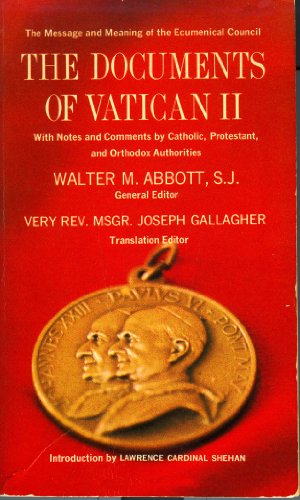

This double call was clearly proclaimed through Vatican II in the magnificent document Lumen Gentium, the Dogmatic Constitution on the Church.

I remember with great joy how this document, with its companions, released a surge of enthusiastic faith in the People of God when published in the 1960s. Many of us read and re-read our paperback copies of the Documents until they have long since fallen apart.

There is a Kindle edition available, but now when I want to be refreshed by their power, I access them for free on my iPad at the Vatican site:


Here is a favorite passage I used today to inform my prayer on this feast of two apostles

Lumen Gentium
(The Dogmatic Constitution on the Church)
promulgated by Pope Paul VI

The laity are gathered together in the People of God and make up the Body of Christ under one head. Whoever they are they are called upon, as living members, to expend all their energy for the growth of the Church and its continuous sanctification, since this very energy is a gift of the Creator and a blessing of the Redeemer.

The lay apostolate, however, is a participation in the salvific mission of the Church itself. Through their baptism and confirmation all are commissioned to that apostolate by the Lord. Moreover, by the sacraments, especially Holy Eucharist, that charity toward God and our brothers and sisters which is the soul of the apostolate is communicated and nourished. Now the laity are called in a special way to make the Church present and operative in those places and circumstances where only through them can it become the salt of the earth. Thus every lay person, in virtue of the very gifts bestowed upon them, is at the same time a witness and a living instrument of the mission of the Church itself “according to the measure of Christ’s bestowal”.

Besides this apostolate which certainly pertains to all Christians, the laity can also be called in various ways to a more direct form of cooperation in the apostolate of the Hierarchy. This was the way certain men and women assisted Paul the Apostle in the Gospel, laboring much in the Lord. Further, they have the capacity to assume from the Hierarchy certain ecclesiastical functions, which are to be performed for a spiritual purpose.

Upon all the laity, therefore, rests the noble duty of working to extend the divine plan of salvation to all persons of each epoch and in every land. Consequently, may every opportunity be given them so that, according to their abilities and the needs of the times, they may zealously participate in the saving work of the Church.


This morning’s question:
how am I hearing
and responding
to my apostolic call?

Poetry: An Apostle’s Prayer – Edward Henry Bickersteth, Bishop of Exeter (1825-1906)

My God, my Father, let me rest
In the calm sun-glow of Thy face,
Until Thy love in me express’d
Draws others to Thy throne of grace.

O Jesu, Master, let me hold
Such secret fellowship with Thee,
That others, careless once and cold,
Won to my Lord and theirs may be.

Eternal Spirit, heavenly Dove,
The light of life to me impart,
Till fire descending from above
Burns on and on from heart to heart.

O Father, Son, and Holy Ghost,
Still, still may love to love respond;
And teach me, when I love Thee most,
Depths all unfathom’d lie beyond.

Music: The Call – from Five Mystical Songs – Vaughan Williams

Come, my Way, my Truth, my Life:
such a way as gives us breath;
such a truth as ends all strife;
such a life as killeth death.

Come, my Light, my Feast, my Strength:
such a light as shows a feast;
such a feast as mends in length;
such a strength as makes a guest.

Come, my Joy, my Love, my Heart:
such a joy as none can move:
such a love as none can part;
such a heart as joys in love.

Psalm 122: The Journey

Saturday of the Twenty-ninth Week in Ordinary Time

October 24, 2020


Today, in God’s Lavish Mercy, we pray with Psalm 122, one of my favorites.

I rejoiced when they said to me
“Let us go to the house of the LORD
And now our feet are standing
within your gates, O Jerusalem.


The year 1963 was a dynamic time in the Church. The landmark Second Vatican Council was reaching full steam.

Several changes resulted from the Council, including the renewal of consecrated life with a revised charism, ecumenical efforts towards dialogue with other religions, and the universal call to holiness which, according to Pope Paul VI, was “the most characteristic and ultimate purpose of the teachings of the Council”.

Wikipedia


Simultaneously, a love and engagement with sacred scripture was blossoming throughout the Church.  International scholars were completing their response to Pius XII’s 1943 call, in the encyclical Divino Afflante Spiritu, to translate scriptures from the ancient Hebrew and Greek texts. The incomparable Jerusalem Bible was the fruit of these endeavors. It had already been published in French, and was nearing its 1966 English publication.

One of these gifted Bible scholars was a French Jesuit priest, Joseph Gelineau. Gelineau was himself part of the working group for the French Jerusalem Bible, and he developed a revised version of that psalter which respected the rhythms of the Hebrew original.

In my senior year in high school, 1962-63, we were introduced to the Gelineau Psalms. That introduction came at a perfect time for me, as I discerned a call to religious life. In that discernment, Gelineau Psalm 122 became a central part of my prayer.

Jerusalem, built as a city
with compact unity.
To it the tribes go up,
the tribes of the LORD.


I felt rising in me a passionate desire to find and engage my “Jerusalem”, that journey which would pattern my life on the life of Jesus.

The outlines of the journey, the distant vision of “Jerusalem”, were so surreal and indefinite. And yet they were compelling. I came to believe and trust that I would find my path to holiness, my Jerusalem, as a Sister of Mercy. 

Like Jesus, I was given the grace and courage to “steadfastly set my face toward Jerusalem” ( Luke 9:51) And it has been an indescribably amazing journey ever since!


As Vatican II so beautifully stated in the document Lumen Gentium, chapter 5, we all share in the universal call to holiness. We all have our own path to that one, glorious Jerusalem. 

I know these Documents of Vatican II are over a half century old. But they are priceless classics that I never tire of studying. Here are some passages that might enrich our prayer today as we each consider our own call and response to God.

Therefore in the Church, everyone whether belonging to the hierarchy, or being cared for by it, is called to holiness, according to the saying of the Apostle: “For this is the will of God, your sanctification” (I Thes. 4:3; df. Eph. 1:4).

The classes and duties of life are many, but holiness is one-that sanctity which is cultivated by all who are moved by the Spirit of God, and who obey the voice of the Father and worship God the Father in spirit and in truth. These people follow the poor Christ, the humble and cross-bearing Christ in order to be worthy of being sharers in His glory. Every person must walk unhesitatingly according to his or her own personal gifts and duties in the path of living faith, which arouses hope and works through charity.

Finally all Christ’s faithful, whatever be the conditions, duties and circumstances of their lives-and indeed through all these, will daily increase in holiness, if they receive all things with faith from the hand of their heavenly Father and if they cooperate with the divine will. In this temporal service, they will manifest to all humanity the love with which God loved the world.


Poem: The Neophyte – Alice Meynell

Who knows what days I answer for to-day:
  Giving the bud I give the flower.  I bow
  This yet unfaded and a faded brow;
Bending these knees and feeble knees, I pray.

Thoughts yet unripe in me I bend one way,
  Give one repose to pain I know not now,
  One leaven to joy that comes, I guess not how.
I dedicate my fields when Spring is grey.

Oh, rash! (I smile) to pledge my hidden wheat.
  I fold to-day at altars far apart
Hands trembling with what toils?  In their retreat
  I seal my love to-be, my folded art.
I light the tapers at my head and feet,
  And lay the crucifix on this silent heart.

Music: Jerusalem, My Destiny – Rory Cooney (All lyrics below)

Refrain: I have fixed my eyes on your hills, Jerusalem, my Destiny. 
Though I cannot see the end for me I cannot turn away. 
We have set our hearts for the way; this journey is our destiny. 
Let no one walk alone. The journey makes us one.
1. Other spirits, lesser gods, have courted me with lies. 
Here among you I have found a truth that bids me rise. Refrain
2. See, I leave the past behind; a new land calls to me. 
Here among you now I find a glimpse of what might be. Refrain
3. In my thirst, you let me drink the waters of your life, 
Here among you I have met, the Savior, Jesus Christ. Refrain
4. All the worlds I have not seen you open to my view. 
Here among you I have found a vision bright and new. Refrain
5. To the tombs I went to mourn the hope I thought was gone, 
Here among you I awoke to unexpected dawn. Refrain