Little Things Mean a Lot

Memorial of Saint Ignatius of Loyola, Priest
Monday of the Seventeenth Week in Ordinary Time
July 31, 2023

Today’s Readings:

https://bible.usccb.org/bible/readings/073123.cfm
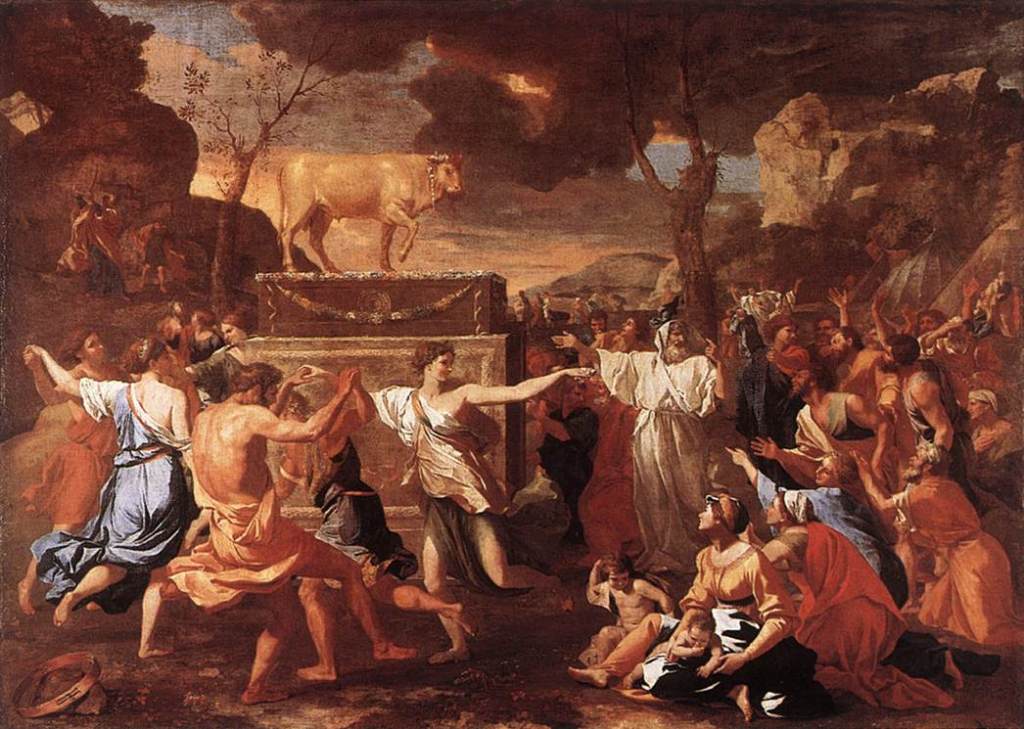

The Adoration of the Golden Calf – Nicholas Poussin

Today, in God’s Lavish Mercy, Aaron, brother of Moses, gets an “F” as a substitute teacher. While Moses is on the mountain negotiating with God for Israel’s future, Aaron caves to the people’s demands and assists them in creating an idol – the infamous “golden calf”.

As Walter Brueggemann says, “All it takes is a little gold to make a god”:

All you need in order to make a god is a measure of the substance that is most valuable in the community, in this case gold…and a mold that can shape the gold. The mold readily available to Aaron is a calf, well, better a “bull” – a symbol and embodiment of virility and fertility, the strength, power, and capacity to generate new life! All you need to make a god is a little gold and a pattern of vitality and fertility that bespeaks self-sufficiency,

Walter Brueggemann – from a Sunday sermon delivered in 2020

Moses was on the mountain for forty days. In his absence, and with God’s silence, the people became frightened. They felt powerless. In that powerlessness, they had a choice: to believe that God would be true to God’s word, or to construct an alternate god of their own design, one that made them feel powerful again. They made the wrong choice.


Praying with this passage today, we might ask ourselves what we do when circumstances render us powerless. What do we do when God seems silent and the supports we have trusted disappear or fail? What do we do when there seems to be no answer to our prayers?

And what is the substance, as Bruegemann notes, most valued in my various communities – the substance most likely to be turned to an idol: reputation, status, resources, influence, political power, physical strength or appearance?

Do we make the mistake of thinking things like this: My power rests in my money, or my looks, or my family name, or my business success, or my intelligence, or my intimidating reputation?

When it comes to the fundamental needs of our lives, none of these things can empower us. Every one of them can fail or disappear. Our only true power lies in God’s unfailing love for us and will for our good. That power is always with us but can be accessed only through faith.


Our Gospel tells us that all one needs is a little faith to ground oneself in the power of God’s love and fidelity..

Jesus proposed a parable to the crowds.
“The Kingdom of heaven is like a mustard seed
that a person took and sowed in a field.
It is the smallest of all the seeds,
yet when full-grown it is the largest of plants.
It becomes a large bush,
and the birds of the sky come and dwell in its branches.”

Matthew 13:31-32

I saw a great graphic on Facebook the other day. It pictured an open hand reaching out with a small speck on the index finger. The caption read:

I have a mustard seed,
and I’m not afraid to use it.


In the absence of a malleable, obeisant god, Israel mistakes their wealth for their god. They mold it into a figure that appears to restore their control over their lives. But they end up with only a clump of unresponsive metal.

God is not a divine butler waiting at the doorway for our next command. The ever-presnt Holy One is sometimes thickly veiled within the circumstances of our lives. It takes faith to stay in relationship with our often silent, but nonetheless abiding God.

Our Gospel tells us that if we have even the smallest seed of that faith, it will root in us and sustain us. And even the smallest measure of “holy yeast” will ferment to the point that others will find in us the inspiration to believe.


Poetry: The Golden Calf by John Newton, (1725 – 1807) who was an English evangelical Anglican cleric and slavery abolitionist. He had previously been a captain of slave ships and an investor in the slave trade. He served as a sailor in the Royal Navy (after forced recruitment) and was himself enslaved for a time in West Africa. He is noted for being author of the hymns Amazing Grace and Glorious Things of Thee Are Spoken.

When Israel heard the fiery law,
From Sinai's top proclaimed;
Their hearts seemed full of holy awe,
Their stubborn spirits tamed.
Yet, as forgetting all they knew,
Ere forty days were past;
With blazing Sinai still in view,
A molten calf they cast.
Yea, Aaron, God's anointed priest,
Who on the mount had been
He durst prepare the idol-beast,
And lead them on to sin.
Lord, what is man! and what are we,
To recompense thee thus!
In their offence our own we see,
Their story points at us.
From Sinai we have heard thee speak,
And from mount Calv'ry too;
And yet to idols oft we seek,
While thou art in our view.
Some golden calf, or golden dream,
Some fancied creature-good,
Presumes to share the heart with him,
Who bought the whole with blood.
Lord, save us from our golden calves,
Our sin with grief we own;
We would no more be thine by halves,
But live to thee alone.

Music: Amazing Grace


David Falls Down

January 28, 2022
Memorial of Saint Thomas Aquinas, Priest and Doctor of the Church

Today, in God’s Lavish Mercy, we clearly are being taught. The first lesson comes from a gripping iconic story in Samuel – the treacherous murder of Uriah; the second from the Markan Parables – the miraculous mustard seed.

In our first reading, the noble, kingly David takes a mighty fall. He has tripped over his own power and descended into a chasm of indifference, lust, manipulation, deceit, and murder. Walter Brueggemann captures the immensity of the story here:

II Samuel 11:1–27 
We are now at the pivotal turning point in the narrative plot of the books of Samuel. We are also invited into the presence of delicate, subtle art. We are at the threshold of deep, aching psychology, and at the same time we are about to witness a most ruthless political performance. In this narrative we are in the presence of greatness. For David and for Israel, we are at a moment of no return. Innocence is never to be retrieved. From now on the life of David is marked, and all Israel must live with that mark.

David handing over a letter to Uriah, 1619 – Pieter Lastman

Unfortunately, David’s moral depravity is reshaped and retold in thousands of other biographies throughout history as “strongmen” (and women) grasp power. Too bad David, and those like him, could not have benefitted from some later-age wisdom such as these two quotables:

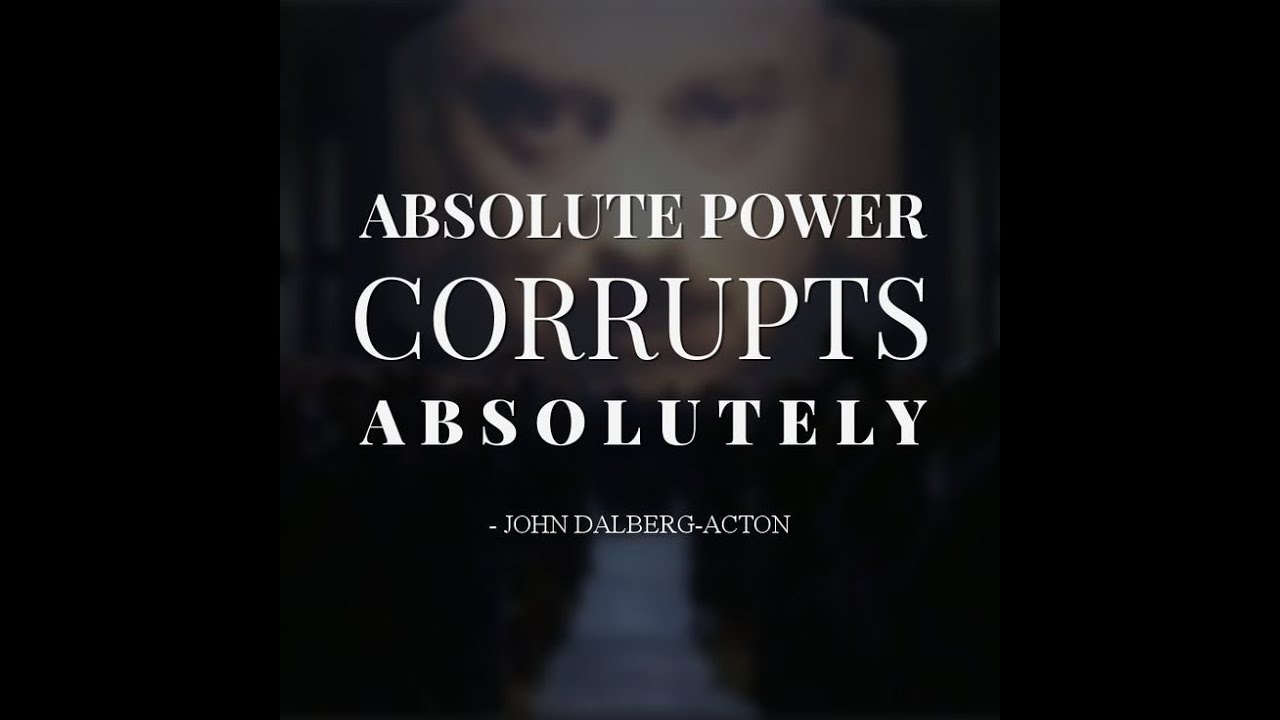
Power tends to corrupt, and absolute power corrupts absolutely.
~ John Dalberg-Acton, letter to Bishop Mandela Creighton, (April 1887)


One uncontrolled character flaw can ruin your greatest accomplishment.
~ Wayde Goodall, Why Great Men Fall: 15 Winning Strategies to Rise Above It All (2005)


While David’s sinfulness had corrupted the concept of “kingdom”, in Mark, Jesus teaches us a divinely refreshed understanding of the term.

When asked what the kingdom of heaven is like, Jesus describes generous, inclusive reality sprung from humble, hopeful investment:

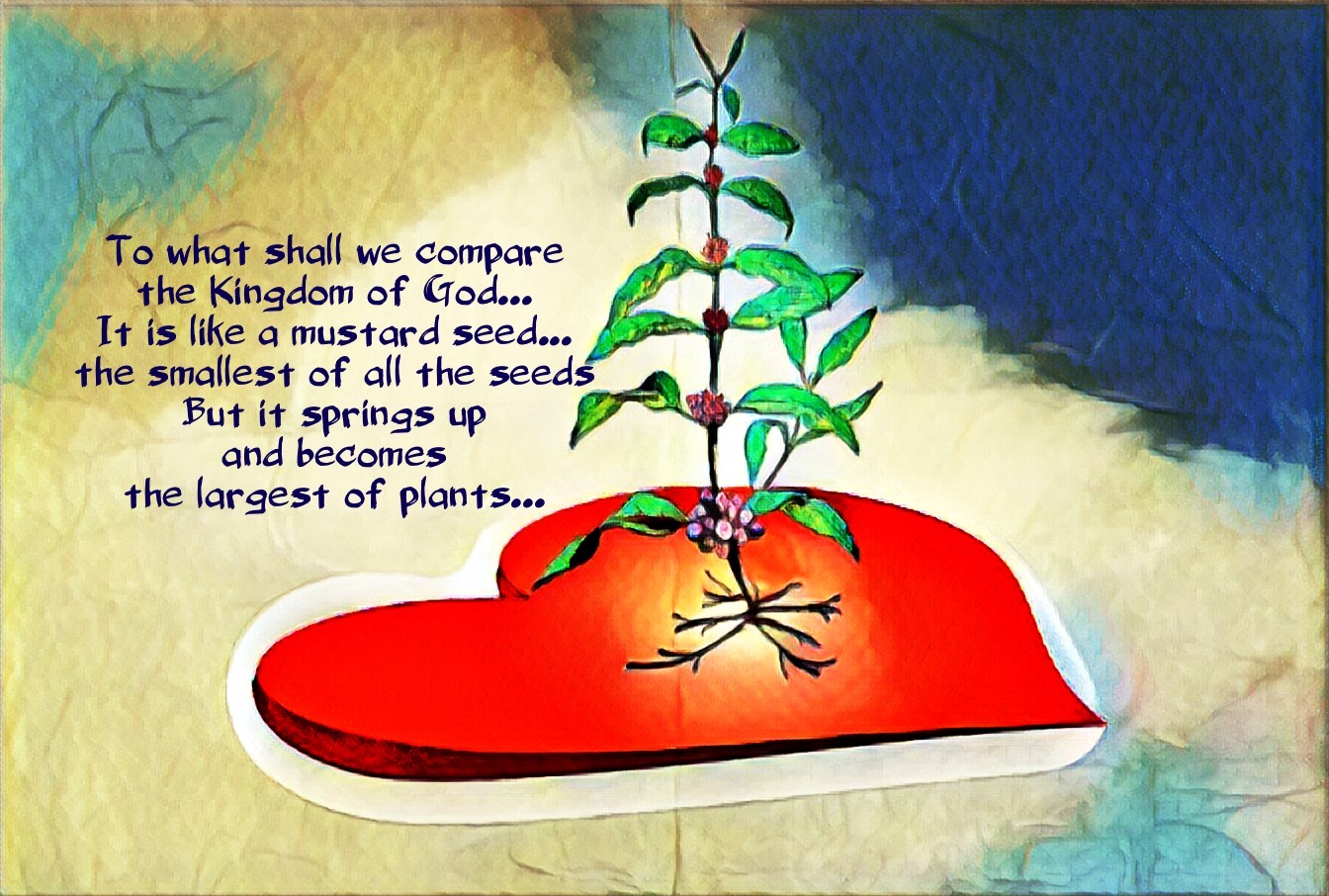
To what shall we compare the Kingdom of God,
or what parable can we use for it?
It is like a mustard seed that, when it is sown in the ground,
is the smallest of all the seeds on the earth.
But once it is sown, it springs up and becomes the largest of plants
and puts forth large branches,
so that the birds of the sky can dwell in its shade.

Mark 4: 30-32

Perhaps our prayer today is best reflected in the Alleluia Verse – a plea to retain, in our choices, the deep innocence of faith:

Blessed are you, Creator, Lord of heaven and earth;
you have revealed to little ones the mysteries of the Kingdom.

Matthew 11:25

Praying with that this morning, I offer you the innocent drawing of my 6 year-old grand-nephew Robert, an interpretation of what it means to fall down.

Something Falling Down, as titled by the Artist

Poetry: When the Great Trees Fall – Maya Angelou

When great trees fall,
rocks on distant hills shudder,
lions hunker down
in tall grasses,
and even elephants
lumber after safety.
When great trees fall
in forests,
small things recoil into silence,
their senses
eroded beyond fear.
When great souls die,
the air around us becomes
light, rare, sterile.
We breathe, briefly.
Our eyes, briefly,
see with
a hurtful clarity.
Our memory, suddenly sharpened,
examines,
gnaws on kind words
unsaid,
promised walks
never taken.
Great souls die and
our reality, bound to
them, takes leave of us.
Our souls,
dependent upon their
nurture,
now shrink, wizened.
Our minds, formed
and informed by their
radiance,
fall away.
We are not so much maddened
as reduced to the unutterable ignorance
of dark, cold
caves.
And when great souls die,
after a period peace blooms,
slowly and always
irregularly. Spaces fill
with a kind of
soothing electric vibration.
Our senses, restored, never
to be the same, whisper to us.
They existed. They existed.
We can be. Be and be
better. For they existed.

Music: All the King’s Horses – Aretha Franklin
Although the song is not biblical, the lyrics carry similar emotions to the ones we find in the reading from Samuel.

That Little Seed

Tuesday of the Thirtieth Week in Ordinary Time
October 26, 2021

Today, in God’s Lavish Mercy, we pray once again with Psalm 126, a song of hope fulfilled:

When the LORD brought back the captives of Zion,
    we were like men dreaming.
Then our mouth was filled with laughter,
    and our tongue with rejoicing.

Then they said among the nations,
    “The LORD has done great things for them.”
The LORD has done great things for us;
    we are glad indeed.

Psalm 126: 1-3

In our readings, we are called to be people of hope – to live in gratitude for hopes fulfilled, and to live in confidence of future blessing.


Paul blesses us with some of his most powerful words:

I consider that the sufferings of this present time are as nothing
compared with the glory to be revealed for us.

Romans 8:18

How often, over the ensuing centuries, have these words uplifted and embravened a struggling heart! Paul reminds us of what he so passionately believed – that we are not here for this world alone; that we, with all Creation, are being transformed for eternal life in God.


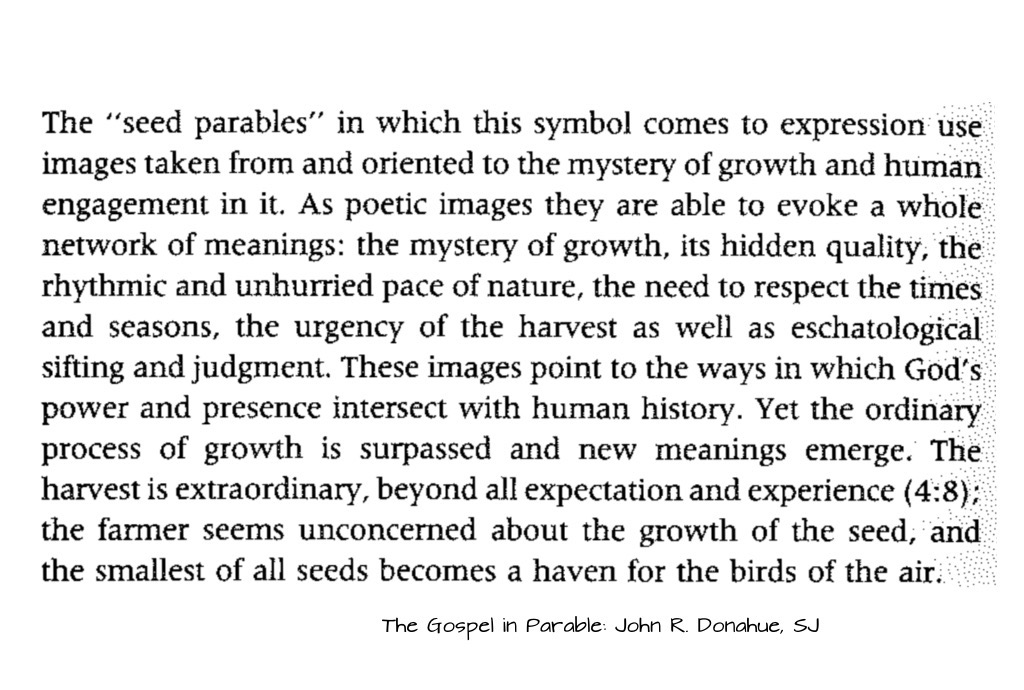
Jesus too reminds us that our life in faith is so much bigger than we perceive. We see a tiny mustard seed, but God sees the whole tree of eternal life blossoming in us.  We see a fingertip of yeast, but God sees the whole Bread of Life rising in us.

Paul tells us to be People of Hope who do not yet expect to see the object of their hope but who, nonetheless, believe and love with all their hearts.

May we pray this today for ourselves, and for anyone burdened by suffering or hopelessness at this time in their lives.


Poetry: Hope – Czeslaw Milosz

Hope is with you when you believe
The earth is not a dream but living flesh,
that sight, touch, and hearing do not lie,
That all thing you have ever seen here
Are like a garden looked at from a gate.
You cannot enter. But you're sure it's there.
Could we but look more clearly and wisely
We might discover somewhere in the garden
A strange new flower and an unnamed star.
Some people say that we should not trust our eyes,
That there is nothing, just a seeming,
There are the ones who have no hope.
They think the moment we turn away,
The world, behind our backs, ceases to exist,
As if snatched up by the hand of thieves.

Music:  Living Hope – Phil Wickham

Choices

Friday of the Third Week of Ordinary Time

January 31, 2020

Click here for readings

Today, in Mercy, if this first reading doesn’t smack you right between the eyes, check your political pulse, dear Friends!

David has become King, called to lead his people with a largeness of heart for their good…. but…

power


Power tends to corrupt, and the corruption is hard to resist even for the likes of David. With no checks and balances on him, David commandeers anything he desires – nations, goods, women, human lives! He is convinced that he can do anything he wants to do. His choices lurch him into a spinning culture of death, evil, and selfishness.

This passage from 2 Samuel is threaded with the very same lines woven into this morning’s newspapers: plotting, manipulation, lying, obstruction, projection, irresponsibility, crudeness, disrespect….

Aren’t we just so sick and tired of it all!?

Over the coming days, we will see how David’s corruption affects him – and it’s quite a drama! But for our prayer today, what can we learn?


Perhaps the Gospel offers us a key.

Mk4_30

Jesus talks about “the Kingdom of Heaven”. He uses the symbols of a healthy harvest and a tiny mustard seed. He teaches his listeners that when the things of God are planted deep in us, we too yield a life-giving harvest. We become large-hearted, God-hearted.

Through the gift of free will, God gives us power. We can choose between good and evil, self and others, life and death. In today’s passage, David makes some huge, selfish mistakes in his choices.

Throughout history and even today, people make the same good and bad choices. When leaders make such choices, the whole world feels the impact.

Today, I might want to check how I’m doing, not only in my personal choices, but in my advocacy for a moral and just world for all people.

Music:  A Pure Heart – Rusty Nelson

https://www.youtube.com/watch?v=h0mX8FEkDY8&feature=youtu.be

Hope

Tuesday of the Thirtieth Week in Ordinary Time

October 29, 2019

Readings:  http://www.usccb.org/bible/readings/102919.cfm

Today, in Mercy, Paul blesses us with some of his most powerful words:

I consider that the sufferings of this present time are as nothing
compared with the glory to be revealed for us.

How often, over the ensuing centuries, have these words uplifted and embravened a struggling heart! Paul reminds us of what he so passionately believed – that we are not here for this world alone; that we, with all Creation, are being transformed for eternal life in God.

Jesus too reminds us that our life in faith is so much bigger than we perceive. We see a tiny mustard seed, but God sees the whole tree of eternal life blossoming in us.  We see a fingertip of yeast, but God sees the whole Bread of Life rising in us.

Rm8_24 Hope

Paul tells us to be People of Hope who do not yet expect to see the object of their hope but who, nonetheless, believe and love with all their hearts.

May we pray this today for ourselves, and for anyone burdened by suffering or hopelessness at this time in their lives.

Music:  Living Hope – Phil Wickham

The Tiny Seed of Faith

Monday, July 30, 2018

Readings: http://www.usccb.org/bible/readings/073018.cfm

Today, in Mercy, Jesus teaches us about faith with the simple parable of the mustard seed. Many of us have never seen a mustard seed — just mustard! 😀 So the short video below is helpful.

The Mustard Tree

Sometimes we feel that our faith is that small, don’t we? 

  • We have so many questions about why evil exists in the world. 
  • We wonder the classic question: Why do bad things happen to good people?
  • The religious foundation of our faith might be shaken by scandals within the Church, and the selfish hard-hearted ness of some who proclaim to be Christian.
  • Sometimes we just feel empty and disconnected from God.

Jesus tells us today to think of the tiniest seed, easily overlooked in the big garden. He says our faith is like that seed. By one small prayer, one small turning toward God, that seed will take root again in us and grow.

Music:  Faith of a Mustard Seed ~ byTwo Or More. (if you need a little “ Wake Up”!)