Sister Renee Yann, RSM, D.Min, is a writer and speaker on topics of spirituality, mission, and ethical business practice. After twenty years in teaching and social justice ministry, she served for over thirty years in various mission-related roles in Mercy Health System of Southeastern Pennsylvania.
Today, in Mercy, Genesis tells the story of the first murder. Driven by jealousy and resentment, Cain takes the life of his own brother, Abel. Cain then denies any responsibility for the crime with the now oft-repeated line:
Am I my brother’s keeper?
God’s outrage is the answer to Cain’s question. God bans Cain from the soil which had been his livelihood, because that same soil now cries out with Abel’s blood.
The account is appalling and traumatic. We have gotten so used to hearing it that we may be immune to the abomination. Brother turned against brother. God’s gift of life and hope taken irrevocably in a moment of selfish anger. All of First Creation must have fallen on its knees in sadness and shock at this primal crime.
Friends, as you pray today, pick up the newspaper. See Cain’s crime repeated over and over again as humanity becomes more and more desensitized to its horror. We have even devolved to the point that some murders are “legal” under the pseudonyms of war, abortion, genocide, and capital punishment. Our culture is rife with the abuse of life in so many forms that we have become hardened to its reality just to protect our souls.
When Jesus meets such hardness of heart in our Gospel, he refuses to give them a sign of his power. He just walks away.
Let us pray that God will not walk away from our desensitized generation – that he will give us a sign of grace to open our eyes.
Music: Kyrie Eleison Lord, have mercy) ~ Michael Hoppè
(Visuals appear to be filmed at Normandy, soil filled with the blood of those who died on D-Day)
P.S. I am sending a second reflection later today that has been heavily on my mind. I hope some of you find a spiritual benefit in it.
Today, in Mercy, hidden in our readings, are three challenges.
Where do we put our
and
How do we
?
In our Jeremiah reading, an unfortunate person has placed faith in an untrustworthy “friend”, and the results – typical of Jeremiah – are dire. But the prophet goes on to say that the one who puts trust and faith in the Lord will flourish like a tree near running water.
In the reading from Corinthians, Paul has some strong words about hope:
If for this life only we have hoped in Christ,
we are the most pitiable people of all.
That sentence is powerful! It can be a life-long meditation.
In other words, where is our hope focused? Do we hope for comfort, success, healing, peace only for this earthly life? If so, we are missing the point, Paul says. Our one true hope is to be united with God in eternal life and our choices should lead to that fulfillment.
In our Gospel, Jesus shows us how to love by placing before us the “least ones” whom he loves best. We too are to love and comfort those who are poor, hungry, bereaved and despised by the heartless.
Today’s readings invite us to look at our life. Is it blossoming with joy, grace and spiritual vitality? Or are we struggling with all the doubts, worries, dramas and depression that come from a self-absorbed life?
Maybe, like me, you sometimes look at a person carrying great difficulty in their lives and wonder at their joy. How can they maintain that trust and joy in the midst of their challenges? These readings offer an answer. They have put their faith and hope in the right place. They have learned to love like God.
Music: Faith, Hope and Love ~ David Ogden ( Lyrics below.)
Faith, hope, and love: let these remain among you.
Faith, hope, and love: the greatest of these is love.
The love of Christ has gathered us together; let us rejoice and be glad in him.
Let us fear and love the living God, and love each other from the depths of the heart.
When we are together, we should not be divided in mind;
Let there be an end to bitterness and quarrels, and in our midst be Christ our God.
In company with the blessed, may we see your face in glory,
pure and unbounded joy for ever and ever.
I give you a new commandment, love one another as I have loved you.
Faith, hope, and love, let these remain among you.
Faith, hope and love; the greatest of these is love.
Today, in Mercy, Adam and Eve get to “pay the piper”. Now, they have to answer to God for the delicious, forbidden bite!
And God is tough on them! No hint of that “lavish mercy”! Of course, the writer(s) of Genesis had to fold a lot of explanations into this story such as:
why we feel body shame
why we are estranged from nature
why women suffer labor
why men work hard to no avail
why we die
We know that these explanations were written originally to meet the questions of an ancient culture. They were told and retold in the form of a story with all that structure’s inherent possibilities and handicaps.
Some of us are inclined to accept “story” only as history, demanding that the events recount specific concrete people and interactions. In other words, we demand that Adam and Eve were real people with a historical identity.
Some of us accept the “story” only as myth, not necessarily integral to the foundation of our modern faith.
The great biblical scholar Walter Bruggemann says neither stance is accurate. He says that these sacred stories are “mystery” which continue to unfold through the ages in the faith-life and sharing of the living community.
As we pray with these passages, we may deepen our faith by looking for the revelations within them:
God created us in God’s own image
God formed a covenant of love with us
We are called to be responsive to that loving covenant
We sometimes fail and reap the fruits of that failure
But God did not dissolve Creation nor the Covenant
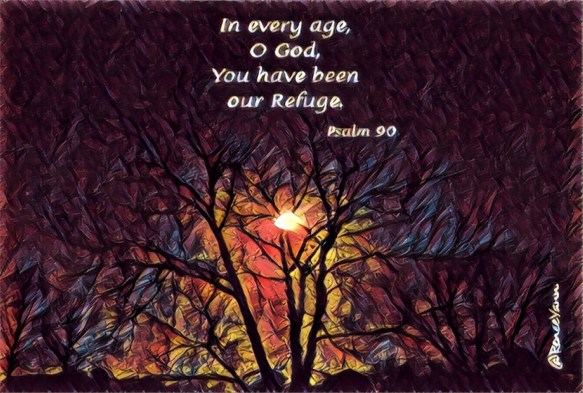
And so, in every age, we place our hope in Jesus Christ, the New Creation and New Covenant
Today, in Mercy, our readings are about being opened by the grace and power of God.
In the Genesis passage, Eve and Adam eat fruit from the tree of knowledge. Their eyes are opened to good and evil.
In our reading from Mark, Jesus opens the ears of a deaf man, allowing him both to hear and to speak clearly.
In the first passage, Adam and Eve’s new “openness” brings a burden. Their innocence now fractured, they must forever exercise their free will to choose good over evil.
In the second passage, the deaf man’s burdens are lifted. He now has no obstacle to hearing and proclaiming God’s mercy.
Like Adam and Eve, we bear the burden of knowledge in a disturbing and sinful world. Every choice challenges us to be and do good in a culture of human degradation.
But like the man who was cured, we have been transformed by Christ’s touch. We see, not just with the discernment of good and evil, but with God’s eyes – with the power to see past death to life.
This power is expressed in our lives by:
our faith in a world filled with uncertainty
our hope in a world trapped in despair
our love in a world blinded by selfishness and greed
Every morning, God wakes us and says, “Ephphatha – be a sign of my gracious openness in your world because I am that Openness for you.”
Today, in our prayer, let us find what is closed in us. We may have judged and shut out someone. We may have given up on a good and necessary practice. We may have withdrawn from a generous responsibility. We may have capitulated to a life-sapping addiction. Inside us somewhere, we may have curled up into“No”!
God calls us to be a “Yes” to the abundance of life and grace God offers us. We are called to open, to be “uncurled”. This poem by e.e.cummings has helped me on occasion with such uncurling.
love is a place
& through this place of
love move
(with brightness of peace)
all places
yes is a world
& in this world of
yes live
(skillfully curled)
all worlds
You have been present to me, God
like light to flame,
like heat to flame
like fluid movement
and energy of shape to flame.
The wax of my life
is consumed in such Presence.
Shall I simply be content
that it burn,
or shall I seek the Transparency
to which it disappears?
Kairos
All the ages that have loved You
sometimes rush into me
like the white falls of a river,
and Your engagement of the earth
from all antiquity
is caught in a great gasp
by the walls of my soul.
In every creature that has ever been
or ever will be, You and I
have been loving each other.
All that treasure swells
in me for a moment
before it thins again into the Chronos
where I seek You in its shadows.
For a second, split in light
I may have held your still
eternal soul within my own.
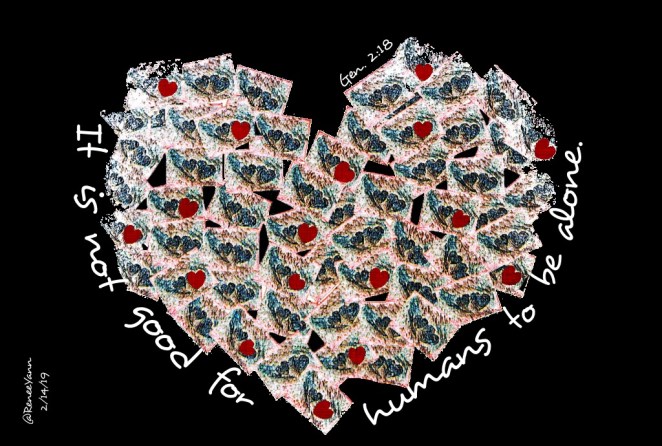
Today, in Mercy, our reading from Genesis tells of the creation of Eve to be Adam’s companion.Theological volumes are written to interpret this passage. But for today’s prayer, let’s draw out one small phrase:
The LORD God said:
“It is not good for this human being to be alone.
God, Who lives in the community of the Trinity, exists within relationship. God knows that is the only way that any life can exist. This leads us to realize that:
We were created from Love for Love
We were meant to learn love in one another’s company.
Our learning with one another is modeled on the perfect triune love of God.
On Valentine’s Day, our culture romanticizes the notion of love (and makes a lot of money doing so!) But it might also be a good day for us to consider what and whom we have fallen in love with all throughout our lives.
The late Father Pedro Arrupé, now being considered for sainthood, was once the superior general of the Jesuit community. Understanding what it meant to be in love with God and God’s Creation, Arrupé wrote this:
Nothing is more practical than finding God, that is, than falling in love in a quite absolute, final way. What you are in love with, what seizes your imagination, will affect everything. It will decide what will get you out of bed in the morning, what you will do with your evenings, how you will spend your weekends, what you read, who you know, what breaks your heart, and what amazes you with joy and gratitude. Fall in love, stay in love and it will decide everything.
(I’ll be sending two of my love poems to God in a later email.I hope you find them helpful to your prayer.)
Music: Love Changes Everything ~ Andrew Lloyd Webber, Charles Hart, Don Black
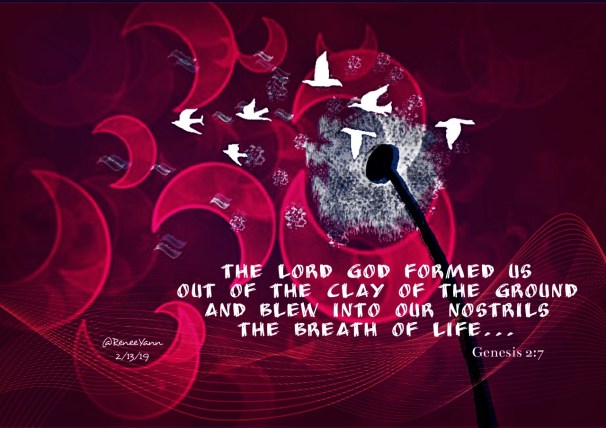
Today, in Mercy, Genesis gives us a picture of our “Original Innocence“. It is a beautiful story, the earth freshly sprung from nothingness, our Ancient Ancestor cradled to life in the palm of God’s hand.
See God gazing at this work of his fingers, bending over it in love. See God draw up his own eternal breath and gently whisper it into this yet lifeless image of God’s own Divinity.
Adam bursts forth, the dazzling image of God Who, liking what He has made, draws a second, even more lovely creature from its side.
All was given to these two glorious creatures – all but the right to consume the knowledge of good and evil. It almost seems that God feared their innocence could not sustain such knowledge. And it ensues that God is right (of course!)
The elegantly profound poet Ranier Maria Rilke captures the drama with this poem:
I read it here in your very Word…
I read it here in your very Word,
From the story of the gestures
With which your hands cupped themselves
Around our becoming, warm and wise.
You said, live loudly and die softly,
And over and over again you said: be.
But before the first death came Murder.
At this, a rift tore
through your ripened spheres,
And a crying-out,
And tore away the voices
That had just begun to gather
To speak you
To carry you,
Over the chasm of everything–
And what they’ve since then stammered
Are fragments
Of your ancient name.
I’ll leave you with this poem, and with your own prayerful thoughts on the divine image of your soul, its original innocence, and the reclamation of that innocence in the gift of Jesus Christ.
Music: For the Music of Creation ~ Shirley Elena Murray & Daniel Nelson
(Lyrics below)
For the music of creation,
for the song your Spirit sings,
for your sound’s divine expression,
burst of joy in living things:
God, our God, the world’s composer,
hear us, echoes of your voice —
music is your art, your glory,
let the human heart rejoice!
Psalms and symphonies exalt you,
drum and trumpet, string and reed,
simple melodies acclaim you,
tunes that rise from deepest need,
hymns of longing and belonging,
carols from a cheerful throat,
lilt of lullaby and lovesong
catching heaven in a note.
All the voices of the ages
in transcendent chorus meet,
worship lifting up the senses,
hands that praise, and dancing feet;
over discord and division
music speaks your joy and peace,
harmony of earth and heaven,
song of God that cannot cease.
Today, in Mercy, we launch into about two weeks of readings from Genesis and from Mark.
The story of Genesis is one of the first Bible stories we learn as children. Because of this, some of us, myself included, tend to read Genesis on a simplistic level, picturing the now unattainable Garden, the first animals, and the humans ultimately dressed in their grassy outfits.
These two weeks offer us a great opportunity to take our understanding of this beautiful book up a notch.
Imagine what the Genesis story meant to the first community to hear it! Their faith had been invested in an array of gods, both friendly and inimical, who seemed to control their daily experiences. Many times, these gods were in competition among themselves with disastrous results for humans!
By contrast, the God of Genesis is One God, All-Powerful and All-Knowing – the Author of all Creation. Human beings are created in the image of this One God with Whom they are in unique and special covenant.
Roger Nam, Associate Professor of Biblical Studies at George Fox Evangelical Seminary in Portland, Oregon, summarizes this special character of Genesis. I found his description helpful to my prayer:
As you consider the wondrous nature of creation, it is important to recognize the radical, remarkable, and revolutionary nature of the Genesis creation in its original context. This presentation of God comes as a wonderful relief and assurance to the family of ancient Israel.
The God of Genesis 1-2:4a provides assurance to those who work to raise crops against their numerous natural challenges. The God of Genesis 1-2:4 brings peace to the nation struggling for survival against the numerous encroaching enemies from all sides. God is one. God is powerful. And God created us in his image. This opening passage of our Bible constitutes the essence of good news.
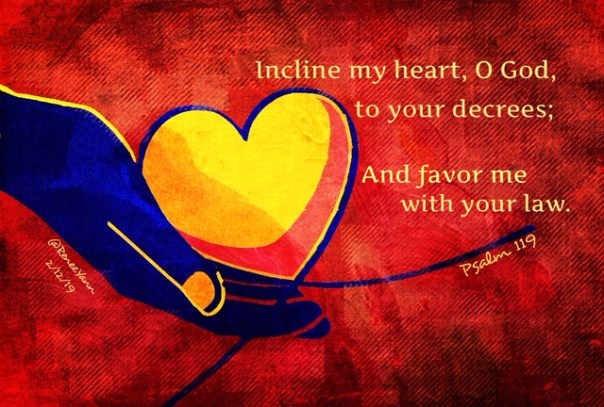
As we pray today, we might ask God to conform our hearts to the perfect order of Creation, the Law and Covenant of Mutual Love. We pray with today’s responsorial psalm:
Instead of music today, a reflective reading from Genesis:
Today, in Mercy, we celebrate the lovely feast of Our Lady of Lourdes, commemorating Mary’s appearance to St. Bernadette Soubirous in Lourdes, France, and her subsequent presence in the life of the faithful through devotion and miracles.
Therefore, today’s feast raises before us two important elements of our faith: our devotion to Mary, and our understanding of miracles.
MIRACLES Scripture and tradition are replete with miracles, occurrences when some extraordinary reality points us clearly to God. Michael O’Neill in his book, Exploring the Miracles, writes this:
“No matter how strong we think our faith is or want it to be, we always want to know that God is there for us, and miracles are that sort of element that bridges the gap between our faith and our connection with God.”
The Catholic Encyclopedia offers an extensive and erudite definition of miracles for those interested. But, leaving a theological discussion of miracles aside, I would offer this quote for our consideration:
“There are only two ways to live your life: as though nothing is a miracle, or as though everything is a miracle.” ~ Albert Einstein
MARY As we pray with Mary today, specifically in her role as loving intercessor for us, we reflect on Mary’s total openness to grace. Free from the “original sin” that limits all humanity, Mary possessed a faith without shadow of doubt, a hope without burden of uncertainty, a love without taint of self-interest. She was the means through which Divine Breath was restored to us in Jesus Christ.
Some of you may be familiar with the book “The Reed of God” described on Amazon this way: Caryll Houselander’s beautiful and profound mediation, The Reed of God, depicts the intimately human side of Mary, Mother of God, as an empty reed waiting for God’s music to be played through her. Houselander shares her insightful and beautiful vision of Mary on earth, Mary among us, Mary as a confused but trusting teenager whose holiness flowered with her eternal “Yes”.
Houselander says this about Mary, and it seems to capture perfectly Mary’s appearance to the world at Lourdes:
In the world as it is, torn with agonies and dissensions, we need some direction for our souls which is never away from us; which, without enslaving us or narrowing our vision, enters into every detail of our life. Everyone longs for some such inward rule, a universal rule as big as the immeasurable law of love, yet as little as the narrowness of our daily routine. It must be so truly part of us all that it makes us all one, and yet to each one the secret of his own life with God.
To this need, the imitation of Our Lady is the answer; in contemplating her we find intimacy with God, the law which is the lovely yoke of the one irresistible love.”
Music: Tota Pulchra Es is an ancient Catholic prayer, written in the fourth century. The title means “You are completely beautiful” (referring to the Virgin Mary). It speaks of her immaculate conception. It takes some text from the book of Judith and other text from Song of Songs. (Latin and English lyrics below.)
Tota pulchra Es Tota pulchra es, Maria. Et macula originalis non est in Te. Tu gloria Ierusalem. Tu laetitia Israel. Tu honorificentia populi nostri. Tu advocata peccatorum. O Maria, O Maria. Virgo prudentissima. Mater clementissima. Ora pro nobis. Intercede pro nobis. Ad Dominum Iesum Christum.
You are all beautiful, Mary,
and the original stain of sin is not in you.
You are the glory of Jerusalem,
you are the joy of Israel,
you give honour to our people.
You are an advocate of sinners.
O Mary,
Virgin most prudent,
Mother most merciful.
Pray for us,
Plead for us,
To the Lord Jesus Christ.
I bet I know the first word that popped into your mind when you read today’s headline:PROSECUTION!
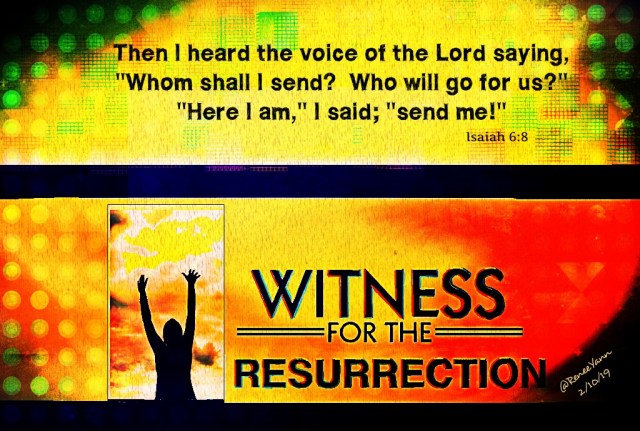
Today, in Mercy, our readings invite us to consider WITNESS — not for the prosecution, but for the RESURRECTION!
In our first reading, we see Isaiah dramatically commissioned to WITNESS to the vision of faith in his heart. He responds wholeheartedly:
Then I heard the voice of the Lord saying, “Whom shall I send? Who will go for us?” “Here I am,” I said; “send me!”
Our second reading, Paul describes how Christ appeared to him and commissioned him, “the least of the Apostles” to be his WITNESS. Paul, too, responds wholeheartedly:
He appeared to me. Therefore, … so we preach and so you believed.
In our Gospel, Simon Peter, James and John are awed by the miraculous power of Jesus as their nets pull hundreds of fish from the otherwise unproductive sea. Jesus tells them that, by their WITNESS, they will attract hundreds of souls to his message. They also respond wholeheartedly:
When they brought their boats to the shore, they left everything and followed him.
For the Word of God to live,
WITNESS is everything.
Macrina Wiederkehr, OSB, in her beautiful book, “Seven Sacred Pauses”, describes the level of WITNESS in the first disciples:
They were impelled to continue proclaiming the Gospel in the face of opposition. They were zealous in preaching because they felt passionate about being entrusted with the sacred message.
Think of this often-heard philosophical conundrum:
If a tree falls in the forest, and no one is there to hear it, does it make a sound?
Logic tells us that it does. But what does it matter if no one hears it?
If the Resurrection happened, and no one bears witness to it, what does it matter? That is the importance of our call to WITNESS – just like Isaiah, Paul, Peter, James, John, and two millennia of believers who carry on the sound of that tomb bursting open to eternal life.
How will we witness to our faith today – not by preachy words or empty opinions, but by our active passion for justice and mercy in the world, and in our own choices?








 Lavish Mercy