Wednesday of the Sixth Week of Easter

May 25, 2022

Today, in God’s Lavish Mercy, Paul gives a magnificent oration at the Areopagus in Athens. It was a big deal billing!

V&A_-_Raphael,_St_Paul_Preaching_in_Athens_(1515)
St. Paul at the Areopagus by Raphael (c.1515)

Areopagus, earliest aristocratic council of ancient Athens. The name was taken from the Areopagus (“Ares’ Hill”), a low hill northwest of the Acropolis, which was its meeting place.

In pre-classical times (before the 5th century BC), the Areopagus was the council of elders of the city, similar to the Roman Senate. Like the Senate, its membership was restricted to those who had held high public office.

The Areopagus, like most city-state institutions, continued to function in Roman times, and it was from this location, drawing from the potential significance of the Athenian altar to the Unknown God that Paul is said to have delivered the famous speech, “Now what you worship as something unknown I am going to proclaim to you. The God who made the world and everything in it is the Lord of heaven and earth and does not live in temples built by hands.” (Wikipedia)


diamonds


The sermon has so many beautiful lines, like glorious diamonds that can be turned over and over in prayer. Here are a few that glistened for me:


God … does not dwell in sanctuaries made by human hands
(Instead, God dwells within us)


God is not served by human hands because God needs nothing.
(Instead, our everything comes from God)


God made from one the whole human race to dwell on the entire surface of the earth.
(We are all connected in the One Creation)


God fixed the ordered seasons and the boundaries of their regions,
so that people might seek God,
even perhaps grope for him and find him,
though indeed he is not far from any one of us.
(We do grope, sometimes in darkness.)


God has overlooked the times of ignorance,
but now God demands that all people everywhere repent…
(Without Christ, we were in shadows of unknowing. With Christ, we are in Light.)


And my favorite:

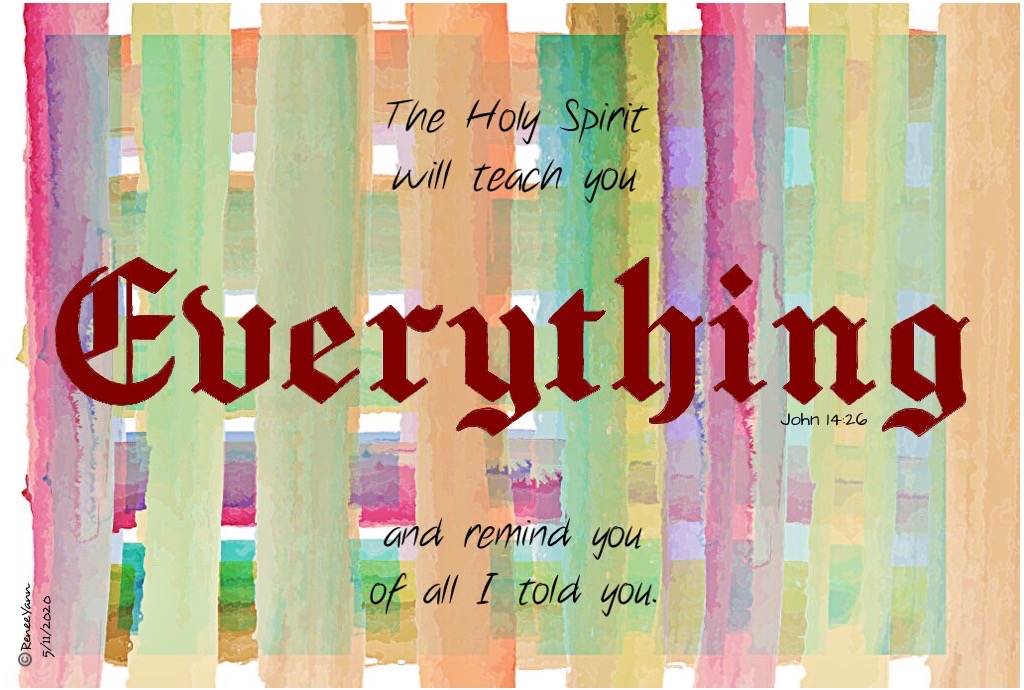
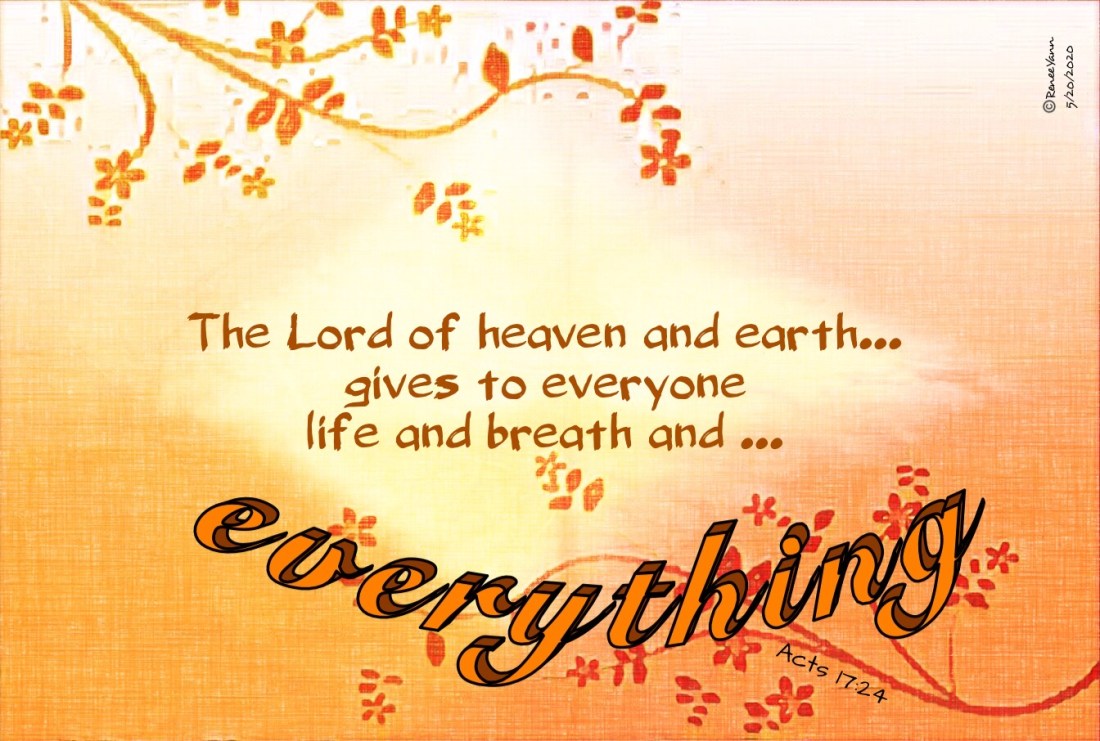
Acts17_24 everything

What is the “everything” that God is giving you today? What is the abundance of grace, or hope, or longing in your heart as you pray today? Let God’s fullness embrace any emptiness as you offer God your silence and waiting.


Poetry: Everything – Rumi

Love is
when God says to you
"I have created everything for you",
and you say
"I have left everything for You."

Music: Everything – Lauren Daigle

Thursday of the Fifth Week of Easter

May 19, 2022

Today, in God’s Lavish Mercy, Acts allows us to sit in on an early Church “convention”. The dynamics are fascinating, as well as amazingly familiar.

The community is a-bustle with concerns. Paul and Barnabas have been out gathering Gentile converts to the faith. The Jewish Christian community back in Jerusalem feels that these new converts should be required to submit to circumcision as a sign of their conversion. Peter offers an intense, lucid, yet gentle argument to convince the Jerusalem community that this is not necessary.

God, who knows the heart,
bore witness by granting them the Holy Spirit
just as he did us.
He made no distinction between us and them,
for by faith he purified their hearts.
Why, then, are you now putting God to the test
by placing on the shoulders of the disciples
a yoke that neither our ancestors nor we have been able to bear?

Acts 15:8-10

James, who appears to have influence in the Jerusalem Church, backs Peter up by referring to the prophet Amos who promised the rebuilding of the faith community:

After this I shall return
                        and rebuild the fallen hut of David;
            from its ruins I shall rebuild it
                        and raise it up again,
            so that the rest of humanity may seek out the Lord,
                        even all the Gentiles on whom my name is invoked.
            Thus says the Lord who accomplishes these things,
                        known from of old.

What a perfect reference to help convince the Jewish community that to be a Christian one did not have to also be a Jew nor follow the Old Law.

This passage helps us to be aware of our openness to new inspiration from the Holy Spirit not only in the Church but in our personal lives. God is the great “heart-reader” and knows when we are ready for growth and deepening. “Protecting” our faith with rituals and exercises that have lost meaning can be a way to avoid opening ourselves to conversion and spiritual transformation. The Holy Spirit invites us beyond such false securities:

And God, who knows the heart,
bore witness by granting them the Holy Spirit
just as he did us.

Acts 15:8

In our Gospel, Jesus reminds us of all that we need to make our faith — and our joy — complete:

Jesus said to his disciples:
“As the Father loves me, so I also love you.
Remain in my love.
If you keep my commandments, you will remain in my love,
just as I have kept my Father’s commandments
and remain in his love.

“I have told you this so that
my joy might be in you and
your joy might be complete.”

Poetry: Quench Your Heart’s Thirst – Hafiz

I know the way you can get
When you have not had a drink of Love:

Your face hardens,
Your sweet muscles cramp.
Children become concerned
About a strange look that appears in your eyes
Which even begins to worry your own mirror
And nose.

Squirrels and birds sense your sadness
And call an important conference in a tall tree.
They decide which secret code to chant
To help your mind and soul.

Even angels fear that brand of madness
That arrays itself against the world
And throws sharp stones and spears into
The innocent
And into one’s self.

O I know the way you can get
If you have not been drinking Love:

You might rip apart
Every sentence your friends and teachers say,
Looking for hidden clauses.

You might weigh every word on a scale
Like a dead fish.

You might pull out a ruler to measure
From every angle in your darkness
The beautiful dimensions of a heart you once
Trusted.

I know the way you can get
If you have not had a drink from Love’s
Hands.

That is why all the Great Ones speak of
The vital need
To keep remembering God,
So you will come to know and see Him
As being so Playful
And Wanting,
Just Wanting to help.

That is why Hafiz says:
Bring your cup near me.
For all I care about
Is quenching your thirst for freedom!

All a Sane man can ever care about
Is giving Love!”


Music: CHANGE MY HEART, O GOD

Wednesday of the Fifth Week of Easter

May 18, 2022

Today, in God’s Lavish Mercy, Acts reveals the tensions in the Church between Jewish and Gentile believers. For the Jews, the ritual of circumcision was a key expression of covenantal faith. Some felt it was necessary for Gentile converts to undergo the ritual in order to become Christians.

Which way is the right way?

Like all start-ups, the Church had many friction points which required decisions about what was essential and what was only customary. Those customs being thousands of years old, the decisions become even harder. Readings later this week describe more conflict points.

Nevertheless, under the guidance of the Holy Spirit, and despite the venerability of custom, the nascent Church was able embrace a new reality rooted in Christ’s inclusive love.

These kinds of philosophical and theological tugs-of-war have accompanied the Church down through history. Some of them have helped reveal deeper insights into our faith. But, as in all human communities, some of the tugs have been motivated by fear, greed, power, and other selfish interests.

Watching how the early Church handles their particular situation may give us hints about how we should handle them today.


In our Gospel, Jesus makes clear what is essential and inviolable to the faith:

I am the vine, you are the branches.
Whoever remains in me and I in him will bear much fruit,
because without me you can do nothing.

John 15:1-2
John15_4 Remain

I think “Remain” is a beautiful word. In the dictionary, it will be defined as ‘stay’. But it connotes much more to me.  Re–main asks us not just to choose to stay with Jesus, but to choose it over and over – like reenlist, renew, recommit.

Remain means to endure with the Beloved Vine through every season – winter’s cold and summer’s heat, and all that’s in between.

Remain means “Love Me, stay beside me, even when others fall away.”

May we remain.


Poetry: The Vine – Malcolm Guite

John 15:5 I am the vine, ye are the branches: He that abideth in me, and I in him, the same bringeth forth much fruit: for without me ye can do nothing.

How might it feel to be part of the vine?
Not just to see the vineyard from afar
Or even pluck the clusters, press the wine,
But to be grafted in, to feel the stir
Of inward sap that rises from our root,
Himself deep planted in the ground of Love,
To feel a leaf unfold a tender shoot,
As tendrils curled unfurl, as branches give
A little to the swelling of the grape,
In gradual perfection, round and full,
To bear within oneself the joy and hope
Of God’s good vintage, till it’s ripe and whole.
What might it mean to bide and to abide
In such rich love as makes the poor heart glad?


Music: I Am the Vine – John Michael Talbot

Friday of the Fourth Week of Easter

May 13, 2022

Today, in God’s Lavish Mercy, Paul nearly completes his sermon in Pisidian Antioch.  In this section, he is very clear about the failure of “those in Jerusalem” to recognize the Messiah when He finally came.

280px-V&A_-_Raphael,_St_Paul_Preaching_in_Athens_(1515)
Paul Preaches by Raphael

Paul points out, however, that this very failure was the fulfillment of the Old Testament prophecies.

…by condemning him
they fulfilled the oracles of the prophets

that are read sabbath after sabbath.

Acts 13:27

These resistant religious leaders had spent their entire lives sifting through the Law and the Prophets looking for their savior. But when he finally stood in their midst, they were blind to him. Where had they gone wrong?


Thomas
Thomas has his doubts answered (16th C. icon)

In our Gospel, we have Thomas who is a little blinded himself. We know from other passages that Thomas is someone who likes to see for himself. Faith comes a bit hard for him. In today’s Gospel, Thomas tells Jesus he needs a map in order to follow him.

Can’t you just see Jesus looking at him, a little dumbfounded. Thomas has been with Jesus through it all – the sermons, the loaves and fishes, the walking on water, the raising of Lazarus. But he still doesn’t see with that comfortable trust which frees the heart to give itself completely to God.


Hey, I get it, don’t you! Jesus is prepping his disciples for the coming days of his Passion and Death. This is going to be the hardest time of all their lives. Fear, uncertainty, and impending danger hang in the air like a steel fog. Thomas is scared and confused.

We’ve all been there. Maybe we’re there right now.

John14_6 Way

Jesus is saying the same thing to us as he said to Thomas:

Jesus said to him, “I am the way and the truth and the life.
No one comes to the Father except through me.”

John 14:6

Jesus is the Way. Let us find him in our daily prayer, scripture reading, and acts of mercy. Let us give him any fear, confusion or doubt blocking us from moving forward in faith.


Poetry: The Way Under the Way – Mark Nepo

For all that has been written,
for all that has been read, we
are led to this instant where one
of us will speak and one of us will
listen, as if no one has ever placed
an oar into that water.

It doesn’t matter how we come
to this. We may jump to it or be
worn to it. Because of great pain.
Or a sudden raw feeling that this
is all very real. It may happen in a
parking lot when we break the eggs
in the rain. Or watching each other
in our grief.

But here we will come. With very
little left in the way.

When we meet like this, I may not
have the words, so let me say it now:
Nothing compares to the sensation
of being alive in the company of
another. It is God breathing on
the embers of our soul.

Stripped of causes and plans
and things to strive for,
I have discovered everything
I could need or ask for
is right here—
in flawed abundance.

We cannot eliminate hunger,
but we can feed each other.
We cannot eliminate loneliness,
but we can hold each other.
We cannot eliminate pain,
but we can live a life
of compassion.

Ultimately,
we are small living things
awakened in the stream,
not gods who carve out rivers.

Like human fish,
we are asked to experience
meaning in the life that moves
through the gill of our heart.

There is nothing to do
and nowhere to go.
Accepting this,
we can do everything
and go anywhere.


Music: Jesus Is the Way – written by Walter Hawkins, sung here by the Morgan State Choir (lyrics below). 

(The Morgan State University Choir is one of the nation’s most prestigious university choral ensembles and was led for more than three decades by the late Dr. Nathan Carter, celebrated conductor, composer, and arranger. While classical, gospel, and contemporary popular music comprise the majority of the choir’s repertoire, the choir is noted for its emphasis on preserving the heritage of the spiritual, especially in the historic practices of performance.)

Jesus Christ Is The Way

When I think about the hour
Then I know what I must do
When I think about, what God, has done for me
Then I will open up my heart
To everyone I see, and say
Jesus Christ is the way!

No one knows the day nor the hour
Maybe morn, night or noon
But just rest assured
Time will be no more
He is coming (I know he’s coming) soon
Coming soon

And I will open up my heart
To everyone I see
And say
Jesus Christ is the way
Then I will open up my heart
To everyone I see
And say
Jesus Christ is the way
And say
Jesus Christ is the way

Monday of the Fourth Week of Easter

May 9, 2022

Click here for readings

800px-Domenico_Fetti_-_Peter's_vision_of_a_sheet_with_animals_-_Kunsthistorisches_Museum_Wien
Peter’s Vision of the Sheet – By Domenico Fetti – Kunsthistorisches Museum Wien, Bilddatenbank., Public Domain

Today, in God’s Lavish Mercy, we have the long story and explanation by Peter about who can be welcomed into the Community.

The earliest Christians were all Jews. Their beginning Christian rituals had deep roots in Jewish tradition. Their entire expectation of a Messiah was wrapped in the garment of the Old Testament. So it was hard for them to comprehend that Gentiles might also be saved by the Blood of Christ.

We might be tempted to consider these Jewish Christians very provincial, parochial, or even prejudiced in their closed attitudes. But maybe we should just look in the mirror!

It seems to be an enduring human inclination that, rather than – like Peter – seek a road to inclusion, we claim privilege for ourselves and exclude others on all kinds of bases:

  • She’s a woman, so she can’t…. whatever…
  • He’s gay, so he can’t …
  • She’s divorced, so she can’t…
  • He’s pro-life, or pro-choice, so he can’t…
  • She’s a Muslim, an atheist, and (irony of ironies) a Jew, so she can’t…
  • He’s too young – She’s too old – so they can’t …

Maybe in your own life, you have felt the pain of some of these suggested or blatant exclusions.


Jn10_4 Mine

Jesus, in our Gospel, has a whole different approach to whom he loves. All creatures belong to him and will be brought to the Father in love.

I am the good shepherd,
and I know mine and mine know me,
just as the Father knows me and I know the Father;
and I will lay down my life for the sheep.
I have other sheep that do not belong to this fold.
These also I must lead, and they will hear my voice,
and there will be one flock, one shepherd.


Let us pray today to know and love our God ever more intensely. Let us ask to experience God’s infinite love and knowledge of us so that our unquenchable joy, humble gratitude, and limitless charity grow more evident.

Let us pray these gifts for all our sisters and brothers, no matter by what gate they come to the sheep fold.


Quote: I couldn’t find the original source, but it is a quote common in Eastern Spirituality:

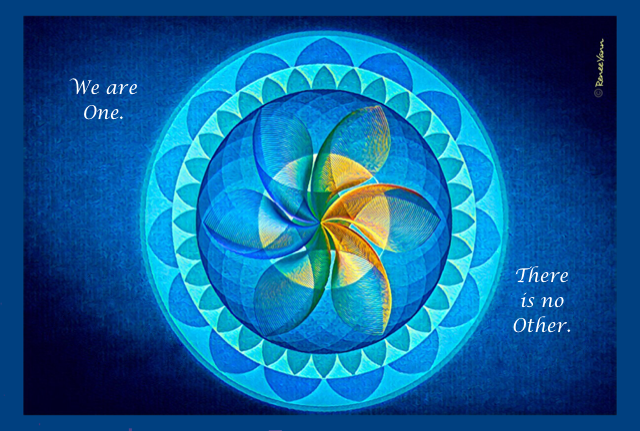
We are all One.
There is no Other.


Music: They’ll Know We Are Christians By Our Love

This is an interesting rendering of an old hymn. Kind of touched my heart.

Saturday of the Third Week of Easter

May 7, 2022

Today, in God’s Lavish Mercy, Peter is a headliner in both our readings.

Peter

I really love Peter. Can’t we relate to him on so many levels as he stumbles and shines through his growing relationship with Jesus? 

Some of my best prayers with Peter have been:

  • when he tries to walk on water to meet Jesus in the sea

And Peter answered him, “Lord, if it is you, command me to come to you on the water.” He said, “Come.” So Peter got out of the boat and walked on the water and came to Jesus. But when he saw the wind, he was afraid, and beginning to sink he cried out, “Lord, save me.” Mk.14:28


  • when he gets slammed for trying to stop Jesus from talking about his death

Peter took Him aside and began to rebuke Him. “Far be it from You, Lord!” he said. “This shall never happen to You!” But Jesus turned and said to Peter, “Get behind me, Satan! You are a stumbling block to me!” Mt. 13:41


  • when his name is changed to Rock and he’s foretold his future

And I tell you that you are Peter, and on this rock I will build my church, and the gates of Hades will not overcome it. Mt. 16:18


  • when he cowers in denial outside Jesus’s trial

Immediately the rooster crowed the second time. Then Peter remembered the word Jesus had spoken to him: “Before the rooster crows twice you will disown me three times.” And he broke down and wept. Mk. 14:72


  • when he recognizes the Resurrected Jesus on the shore and swims to him

Then the disciple whom Jesus loved said to Peter, “It is the Lord!” As soon as Simon Peter heard him say, “It is the Lord,” he wrapped his outer garment around him (for he had taken it off) and jumped into the water. Jn.21:7


In today’s first reading, we see Peter in his full authority as the Vicar of Christ.

Jn6_68 shall we go

In our Gospel, we see Peter’s unequivocal confession of faith, voiced for the Church, voiced for all of us:

Jesus then said to the Twelve, “Do you also want to leave?”
Simon Peter answered him, “Master, to whom shall we go?
You have the words of eternal life.
We have come to believe
and are convinced that you are the Holy One of God.”


Let’s take whatever piece of Peter is in us today
and lay it at the feet of Jesus
in our own confession of faith and hope.

Poetry: Simon Peter – John Poch


There are three things which are too wonderful for me,
Yes, four which I do not understand.
The way of an eagle in the air,
The way of a serpent on a rock,
The way of a ship in the heart of the sea,
And the way of a man with a maid

–Prov. 30:18, 19

                              I
Contagious as a yawn, denial poured
over me like a soft fall fog, a girl
on a carnation strewn parade float, waving
at everyone and no one, boring and bored
There actually was a robed commotion parading.
I turned and turned away and turned. A swirl

of wind pulled back my hood, a fire of coal
brightened my face, and those around me whispered:
You’re one of them, aren’t you? You smell like fish.
And wine, someone else joked. That’s brutal. That’s cold,
I said, and then they knew me by my speech.
They let me stay and we told jokes like fisher-
men and houseboys. We gossiped till the cock crowed,
his head a small volcano raised to mock stone.

                              II
Who could believe a woman’s word, perfumed
in death? I did. I ran and was outrun
before I reached the empty tomb. I stepped
inside an empty shining shell of a room,
sans pearl. I walked back home alone and wept
again. At dinner. His face shone like the sun.

I went out into the night. I was a sailor
and my father’s nets were calling. It was high tide,
I brought the others. Nothing, the emptiness
of business, the hypnotic waves of failure.
But a voice from shore, a familiar fire, and the nets
were full. I wouldn’t be outswum, denied
this time. The coal-fire before me, the netted fish
behind. I’m carried where I will not wish.


Music:  Lord, to Whom Shall We Go? – Carolyn Arends

Thursday of the Third Week of Easter

May 5, 2022

philip
unless

Today, in God’s Lavish Mercy, in our reading from Acts, we meet the Ethiopian eunuch who served the country’s Queen. The man was sitting in a chariot reading the prophet Isaiah. Philip asks him, “Do you understand what you are reading?”  He replied, “How can I, unless someone instructs me?” Philip’s instruction results in this faith-filled man’s Baptism.

It’s a bible story I’ve loved since I was a novice and read the excellent book by Alexander Jones, “Unless Some Man Show Me”.  That long-ago era in my life was a time when Vatican II opened up to the faithful the power and beauty of scriptural study and prayer.

The 1960s were a wonderful time to be committing myself to a life-long spiritual journey. Over the next few years, I devoured the published documents of Vatican II which included the one on sacred scripture, the “Dogmatic Constitution on Divine Revelation” (“Dei Verbum”).

Here’s a great description of the document.


Before Vatican II, like many Catholics, I had had limited experience with scripture. Mainly, we had it read to us at Mass. We had a Bible in my childhood home, but we used it mainly to record familial births and deaths inside the front cover.

Part of the reason for this scriptural vacuum was the long-held belief that most Christians were not theologically astute enough to interpret scripture on their own. Vatican II initiated a blessed change in that perception.


JB

In 1966, the same Alexander Jones, in the company of 27 colleagues, edited the magnificent Jerusalem Bible. My parents gave me this revered book as a gift for my Religious Profession and it has accompanied my prayer for more than a half-century. 

Reading the phrase in Acts today, “unless someone show me”, brought the whole sacred journey back to me. 

I offer this brief reminiscence to confirm how precious and important it is to build our prayer life on scripture. It is also important to educate ourselves continually by reading good commentary and spirituality. Such thinkers are like Philip in today’s passage. They are the ones who will “show” us, opening to us new understandings for our prayer.


  1. Walter Brueggemann 
  2. Elizabeth Johnson
  3. Thelma Hall
  4. Macrina Wiederkehr 
  5. Raymond Brown
  6. Brother David Steindl-Rast 
  7. Sandra Schneiders
  8. Margaret Farley
  9. Matthew Fox
  10. Pierre Teilhard de Chardin

I would love for some of you
(even though you are a shy audience)  
to list some of your biblical and spiritual guides
in the comment section, if you feel so inclined.


Poetry: Give Me a Name – Emily Ruth Hazel, a New York City-based poet and writer whose work has appeared in numerous publications, including Magnolia: A Journal of Women’s Socially Engaged Literature, Kinfolks: A Journal of Black Expression, and Ruminate Magazine. In 2014, she was awarded a National Endowment for the Arts Fellowship to develop a full-length poetry book manuscript during a residency at The Hambidge Center for the Creative Arts & Sciences.


The way home is a desolate road
through the desert. Only my driver and I
roll through the noonday heat. Ahead of us,
the air shimmers. Then out of a cloud
of dust, a man runs up behind us.
He calls out, Who are you reading?
A poet’s vision unfurls in my lap.
I’m thirsty for company, someone to walk
between these lines with me,
clear a path through my own wilderness.
The stranger says he’s well acquainted
with this writer. If he knows who I am,
he doesn’t let on. He climbs in
and we plunge beneath the words.
Whose story is this, anyway?
The one who takes a vow of silence,
an outcast whose most loyal friend is
heartache—is this a portrait of the poet
or of another? I hold the words like water
in my palms, my face reflected in them.
Back in Jerusalem, I was an unexpected guest
in God’s house. There I was dark enough
that I’d never pass as a native.
In a land of divided rooms,
neither side claims me.
Smooth chinned, voice unchanged,
even among my own, I am always other.
My educated tongue surprises.
I read the way my people envy
and despise me in the same blink.
The jewel of Ethiopia, our warrior queen,
trusts me with the nation’s treasure.
But power of the purse came with a price.
Still a boy when I was taught my body
could not be trusted, I was like a lamb
that hears the metal scraping
hot against the stone. When they came for me,
my gut churned. A boulder sealed
my throat. Only mangled moans escaped.
They carved me into a loyal servant
ashamed of my own voice.
Deep in my chest liquid rage
threatened to erupt. I tried to swallow
the unspeakable. Learned to amputate
everything I felt. Any part of me that trembled
was a danger best denied.
All the boys I knew marched into manhood
believing courage hung between their legs.
But I’m my mother’s child.
Long after the men who tore me from my home
washed my blood off their blade,
I remembered my mother
had shown me how to be brave.
Wherever I go, I’m described by my difference,
defined by what I cannot do or be, haunted by
echoes of violence known but unnamed.
Never to look into a young face and recognize
my likeness, I’m tired of being seen
as an absence, a shadow that merely calls
attention to what is touched by light.
Here in this barren place, riding with
a stranger, I feel like I belong.
The wheels of my world slow to a stop.
I step out of the story I’ve been told
must be mine. The man I’ve just met
stands beside me as we wade into a river.
He holds my shoulders. Dips me
into the muddy water. Not as I was held down
years ago. This time, I’ve chosen
to be held. I feel the muscles in my back
relax against his arm. Memory stirs,
half-awake: my mother’s gentle hands
bathe me as a baby.
Raised up again, my body breaks
the surface. Bright sky overwhelms.
Boulder rolled away, my tongue
unguarded now. Laughing and coughing,
mouth full of water and silt and suddenly a song
in a language I’ve never heard.
God of the unsung, God of the present
and the missing, God who translates
phantom pain, who holds the map of all
my scars, may this body be your temple.
Some say my branches died before they bloomed,
water too precious to be wasted on me.
Don’t let me wither under the blistering sun,
cursed for bearing no fruit.
If I can offer shelter to someone called
to walk a lonely road, maybe that’s enough.
God of the forgotten, God of the never begotten,
will my story, at least, outlive me?
Give me a name worth remembering,
a name that will never be cut off.

Music:  Thy Word – Amy Grant

Thursday of the Second Week of Easter

April 28, 2022

Today, in God’s Lavish Mercy, our readings demonstrate how hard it is for some people to believe – because deepening belief usually requires a soul-change.

disputebeforesanhedrin1700
Fra Angelico, Dispute before Sanhedrin, Cappella Niccolina, Palazzi Pontifici, Vatican

In our first reading, the high priest and Sanhedrin just don’t get it. No matter how severe the oppression, Peter and the Apostles are not going to stop sharing the Good News. Even miracles and inexplicable prison escapes do not convince them that maybe the Apostles have some special blessing to offer them.

Why won’t the Sanhedrin listen? Why are they in such denial about what they are witnessing?

The Sanhedrin were members of a privileged class. They had things set up nicely to their material benefit. Jesus was a bombshell turning their comfortable world upside down. So they resorted to any tool possible to eradicate him: denial, oppression, persecution, even murder.

But the Good News of Jesus Christ is ineradicable.

Jn3_believe

In our Gospel, John minces no words about the fate of unbelievers:

The Father loves the Son
and has given everything over to him.

Whoever believes in the Son has eternal life,
but whoever disobeys the Son will not see life,
but the wrath of God remains upon him.

John 3:35-36

When I look at our world, I see a lot of that “wrath”, don’t you? I see situations of war, pain, injustice, greed, and irreverence for Creation that could not exist in a truly believing world.

Seeing these things, I examine my own life for the places where faith has not converted me, for the kinds of resistant behaviors that prevented the Sanhedrin from receiving the greatest gift possible – a fully faithful and compassionate heart in the image of Jesus Christ.


Poetry: What We Need is Here – Wendell Berry

Horseback on Sunday morning,
harvest over, we taste persimmon
and wild grape, sharp sweet
of summer’s end. In time’s maze
over fall fields, we name names
that rest on graves. We open
a persimmon seed to find the tree
that stands in promise,
pale, in the seed’s marrow.
Geese appear high over us,
pass, and the sky closes. Abandon,
as in love or sleep, holds
them to their way, clear
in the ancient faith: what we need
is here. And we pray, not
for new earth or heaven, but to be
quiet in heart, and in eye,
clear. What we need is here.


Music: A Faithful Heart – Libera
(I imagine that this lovely song is usually interpreted as a marriage canticle, but I think it perfectly describes the sacred covenant between God and the faithful believer.)

Wednesday of the Second Week of Easter: The Light

April 27, 2022

Today, in God’s Lavish Mercy, we read about miracles and Light. These are good things, right? It would seem that we shouldn’t be slow to acknowledge the miracles around us, nor to open our eyes to the Light.

Well, let’s see….


In our reading from Acts, we read about a miracle:

The high priest rose up and all his companions,
that is, the party of the Sadducees,
and, filled with jealousy,
laid hands upon the Apostles and put them in the public jail.
But during the night, the angel of the Lord opened the doors of the prison,
led them out, and said,
“Go and take your place in the temple area,
and tell the people everything about this life.”

Acts 5: 17-20

Still when the Temple guards and the High Priest discover God’s miraculous action, they re-arrest the disciples and try again to stop the spread of the Light!

When I read this I say, “Come on, guys! Take a hint! Maybe there is something to this preaching!”

But the truth is that it can be really hard to take that hint — to wake up, to acknowledge the miracles around us, and to choose Light over darkness. Why? Because miracles and Light get in the way of our agendas, our lazy choices, our indifference to others’ needs and our own excesses.

Most of us don’t want to live completely bereft of blessings and inspiration. We’d like a miracle now and again, but not enough to demand our deep conversion. We’d prefer a little shade and shadow, a little spiritual oblivion in our lives.

In our Gospel, John will have none of it! The Light demands our conversion to the fullness of the Gospel.

Listen to John’s astonishment that people choose darkness over Light.

And this is the verdict,
that the Light came into the world,
but people preferred darkness to light,
because their works were evil.

John 3:19

And yet, we see it all the time, don’t we? Even, unfortunately, sometimes in ourselves?

Let’s pray today for the strength to always choose God’s stunning yet healing Light. Let’s pray that strength for our terribly shadowed world – that we may open our prisoned hearts to the miracle of Light God has planted in each one of us.

Poetry: The Uses of Sorrow | Mary Oliver

(In my sleep I dreamed this poem)
Someone I loved once gave me
a box full of darkness.

It took me years to understand
that this, too, was a gift.


Music: Coulin – James Last

Tuesday of the Second Week of Easter: 2022

April 26, 2022

Nicodemus

Today, in God’s Lavish Mercy, we meet two towering figures of the early Christian story, Barnabas and Nicodemus.

In our first reading, Barnabas is cited as a devout member of the community of believers which …

… was of one heart and mind,
and no one claimed that any of his possessions was his own,
but they had everything in common.

Acts 4:32

Our Gospel brings us Nicodemus who “came to Jesus under cover of the night”.  Nicodemus, obviously Ph.D. material, has a long exchange with Jesus in the attempt to come to intellectual comfort with Jesus’s message.

Nicodemus wants his faith to make logical sense before committing to it, to the point that Jesus sounds a little astounded at the effort:

You are the teacher of Israel 
and you do not understand 
what I am saying to you?

John 3:10

I think a little bit of both Barnabas and Nicodemus lives within each of us.

barnabas seesaw

Like Nicodemus, we do believe, but we would like to understand more. We grapple with concepts of “God’s plan”, with the problem of evil, with what seems the random mercilessness of nature, and myriad other inexplicable realities.

Still, like Barnabas, we trust and are willing to lay our lives at the feet of Christ to be his agents in the world.

That balancing of trust with anxiety is the story of faith for most of us. And it’s OK.  Both Nickie and Barnie turned out to be giants for Christ.  And so will we with God’s help.


Poetry: The Night – BY HENRY VAUGHAN
John 3.2

Through that pure virgin shrine,
That sacred veil drawn o’er Thy glorious noon,
That men might look and live, as glowworms shine,
And face the moon,
Wise Nicodemus saw such light
As made him know his God by night.

Most blest believer he!
Who in that land of darkness and blind eyes
Thy long-expected healing wings could see,
When Thou didst rise!
And, what can never more be done,
Did at midnight speak with the Sun!

O who will tell me where
He found Thee at that dead and silent hour?
What hallowed solitary ground did bear
So rare a flower,
Within whose sacred leaves did lie
The fulness of the Deity?

No mercy-seat of gold,
No dead and dusty cherub, nor carved stone,
But His own living works did my Lord hold
And lodge alone;
Where trees and herbs did watch and peep
And wonder, while the Jews did sleep.

Dear night! this world’s defeat
The stop to busy fools; care’s check and curb;
The day of spirits; my soul’s calm retreat
Which none disturb!
Christ’s progress, and His prayer time;
The hours to which high heaven doth chime;

God’s silent, searching flight;
When my Lord’s head is filled with dew, and all
His locks are wet with the clear drops of night;
His still, soft call;
His knocking time; the soul’s dumb watch,
When spirits their fair kindred catch.

Were all my loud, evil days
Calm and unhaunted as is thy dark tent,
Whose peace but by some angel’s wing or voice
Is seldom rent,
Then I in heaven all the long year
Would keep, and never wander here.

But living where the sun
Doth all things wake, and where all mix and tire
Themselves and others, I consent and run
To every mire,
And by this world’s ill-guiding light,
Err more than I can do by night.

There is in God, som say,
A deep but dazzling darkness, as men here
Say it is late and dusky, because they
See not all clear.
O for that night! where I in Him
Might live invisible and dim!


Music: Ye Must Be Born Again – sung by The Sensational Nightingales, a beloved Black Gospel Quartet that, with several membership changes, has been popular for over seven decades.  (Lyrics below)

Ye Must Be Born Again
written by William T. Sleeper in 1877

A ruler once came to Jesus by night,
To ask Him the way of salvation and light;
The Master made answer in words true and plain,
“Ye must be born again!”
“I verily, verily say unto thee,
Ye must be born again!”

Ye children of men, attend to the word
So solemnly uttered by Jesus, the Lord,
And let not this message to you be in vain,
“Ye must be born again.”

Oh, ye who would enter that glorious rest,
And sing with the ransomed the song of the blest;
The life everlasting if ye would obtain,
“Ye must be born again.”