No More Tears

December 4, 2021
Saturday of the First Week of Advent

Today, in Mercy, Isaiah – in glorious prophecy – promises God’s People better times.

Thus says the Lord GOD,
    the Holy One of Israel:
O people of Zion, who dwell in Jerusalem,
    no more will you weep;
GOD will be gracious to you when you cry out,
    answering as soon as you are heard.
The Lord will give you the bread you need
    and the water for which you thirst.
No longer will your Teacher be hidden,
    but with your own eyes you shall see your Teacher,
While from behind, a voice shall sound in your ears:
    “This is the way; walk in it,”
    when you would turn to the right or to the left.

Isaiah 30: 19-21

Oh my, don’t we all long for the fulfillment of that promise! So much in both our larger and smaller worlds longs for healing!


Perhaps we can use our prayer within these readings today to call on God for the promised healing.

It is a healing that requires our cooperation. Isaiah says that we must name our pain to God – for ourselves and for all who suffer in our world:

The Lord will be gracious to you when you cry out,
answering as soon as you are heard.


The prophet says that this crying out will change us. We will see the Lord with us in our suffering. God will lead us through that suffering by our acts of faith, hope, love, justice and mercy:

No longer will your Teacher be hidden,
but with your own eyes you shall see your Teacher,
While from behind, a voice shall sound in your ears:
“This is the way; walk in it,”
when you would turn to the right or to the left.


Our Gospel tells us that we are called to be Christ’s disciples, and that disciples are healers. By letting our lives become sources of healing in the world, Isaiah’s prophecy is fulfilled for our time.

Jesus sent out these twelve after instructing them thus,
“Go to the lost sheep of the house of Israel.
As you go, make this proclamation: ‘The Kingdom of heaven is at hand.’
Heal the sick, raise the dead, cleanse lepers, drive out demons.

Without cost you have received; without cost you are to give.”

Matthew 10:5-8

How we do these wondrous deeds in the world is an ongoing revelation. When I was very young, I took the proclamation quite literally. But I soon lost the expectation that I would ever help “cure” anyone of anything!

Life has blessed me with the realization that there is a difference between “curing” and “healing” – and that there are many degrees of healing.

  • There are many ways in which living people are caught in deadly lives.
  • There are all kinds of “lepers” in our society, rendered so by the prejudices of others.
  • Certainly, many of us carry all sorts of crippling demons.

All these situations, and others like them, invite us to offer the gift of sacred healing implanted in us at our Baptism.

Acknowledging the pain in ourselves and others,
and trusting that God wants us to be healed and whole,
is the work of true discipleship.

Let’s draw strength from Isaiah’s promise in order to find a generous, merciful courage for our call to be “healed healers”.


Poetry: The Cure of Souls – Denise Levertov

The pastor
of grief and dreams

guides his flock towards
the next field

with all his care.
He has heard

the bell tolling
but the sheep

are hungry and need
the grass, today and

every day. Beautiful
his patience, his long

shadow, the rippling
sound of the flocks moving

along the valley.


Music: Your Healing Touch – Joe Bongiorno

In a very little while …

December 3, 2021
Friday of the First Week of Advent
Memorial of St. Francis Xavier

Today, in God’s Lavish Mercy, we stand with Isaiah on the rim of hope. We wait, trusting that “in a very little while”, the Lord will make Creation whole.

It’s a precipitous place, this cliff called “Hope”. It requires that we risk ourselves solely on the promises of a God we cannot see. It invites us to leap into a mist we cannot control.

Or can we?


In today’s Gospel, Jesus invites the blind men to the cliff’s edge by asking them:

Do you believe that I can do this?

Well, that’s everything, isn’t it? If our answer is “No”, “Maybe”, or “Kinda’”, we might as well just lie down on this side of the Promise.

But if our answer is brave, like the Gospel blind ones, we too may have our vision cleared to see that there is no leap required. We already stand beside God.

When his children see
the work of my hands in his midst,
They shall keep my name holy;
they shall reverence the Holy One of Jacob,
and be in awe of the God of Israel.
Isaiah 29:23


Poetry:Hope – Lisel Mueller

It hovers in dark corners
before the lights are turned on,
it shakes sleep from its eyes
and drops from mushroom gills,
it explodes in the starry heads
of dandelions turned sages,
it sticks to the wings of green angels
that sail from the tops of maples.

It sprouts in each occluded eye
of the many-eyed potato,
it lives in each earthworm segment
surviving cruelty,
it is the motion that runs
from the eyes to the tail of a dog,
it is the mouth that inflates the lungs
of the child that has just been born.

It is the singular gift
we cannot destroy in ourselves,
the argument that refutes death,
the genius that invents the future,
all we know of God.

It is the serum which makes us swear
not to betray one another;
it is in this poem, trying to speak.


Music: Amazing Grace sung by Il Divo

Beyond Measure

Wednesday of the Thirty-third Week in Ordinary Time
Memorial of St. Elizabeth of Hungary
November 17, 2021

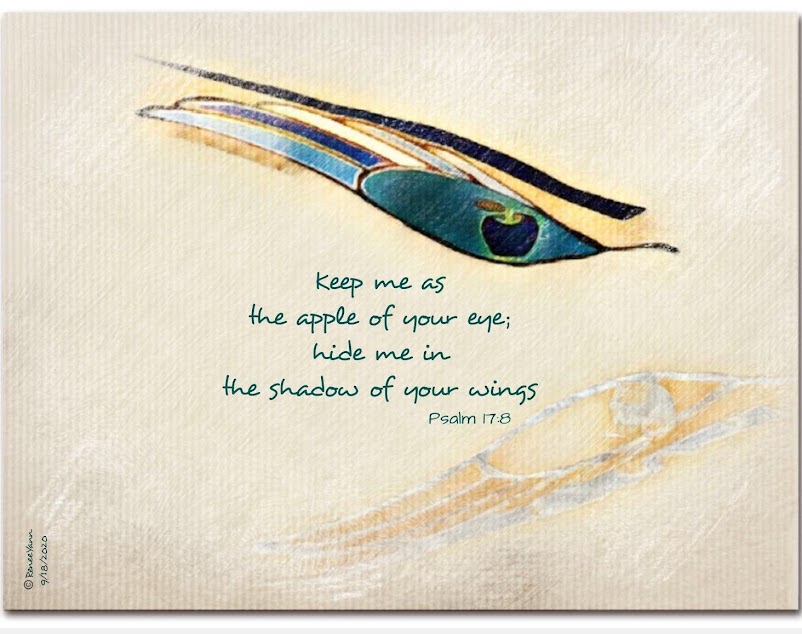
Today, in God’s Lavish Mercy, we pray a lovely verse of Psalm 17:

The psalm is a gentle plea which might serve to soften our two dramatically intense readings.

Who can read the story of the Maccabean Martyrs without a mix of horror, empathy, and astonishment?

And don’t we all feel a pang of pity for the poor, fearful servant who hid his talent in a handkerchief much to the King’s displeasure?

The two stories, (one based in fact, the other a parable), paint a contrasting picture of courageous faith against fearful subservience. The difference between the actors lies in their capacity, or lack there of, to look beyond themselves toward eternal life.

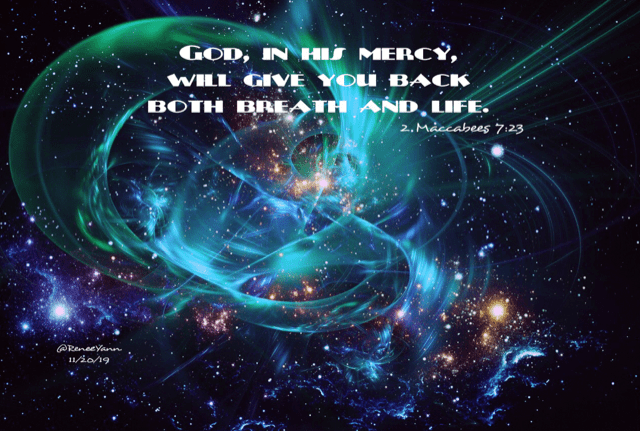
Mother Maccabee bolsters her sons with her faith in a life beyond their current circumstances:

… the Creator of the universe
who shapes each man’s beginning,
as he brings about the origin of everything,
he, in his mercy,
will give you back both breath and life,
because you now disregard yourselves
for the sake of his law.

2 Mc 7:23

The poor soul in Jesus’s parable doesn’t have that faith and vision. His perception of God, represented by the King, is one of only harsh judgement. His fear causes him to bury not only his talent, but also his openness to the possibilities of grace and transformed relationship with God.

Jesus told his parable because indeed the Kingdom was at hand. He and his disciples were near Jerusalem where the Passion, Death and Resurrection events would begin.

He wants his followers to realize the challenging gift they have been given in their call to be his disciples. He wants them to see that it is now on them to magnify his message courageously and generously until he returns to perfect the Kingdom.

Jesus wants us to understand that too.


Poetry: Sonnet 19: When I consider how my light is spent – John Milton
Milton became blind in later life. The poem reflects his concerns about all that he has left undone in his life. Ultimately, Milton expresses the confidence that God has no need of his “talent”, only his steadfast faith.

When I consider how my light is spent, 

   Ere half my days, in this dark world and wide, 

   And that one Talent which is death to hide 

   Lodged with me useless, though my Soul more bent 

To serve therewith my Maker, and present 

   My true account, lest he returning chide; 

   “Doth God exact day-labour, light denied?” 

   I fondly ask. But patience, to prevent 

That murmur, soon replies, “God doth not need 

   Either man’s work or his own gifts; who best 

   Bear his mild yoke, they serve him best. His state 

Is Kingly. Thousands at his bidding speed 

   And post o’er Land and Ocean without rest: 

   They also serve who only stand and wait.”


Music:   Be Not Afraid – written by Bob Dufford, SJ, sung here by Cat Jahnke

Stretching to See God

November 16, 2021
Tuesday of the Thirty-third Week in Ordinary Time

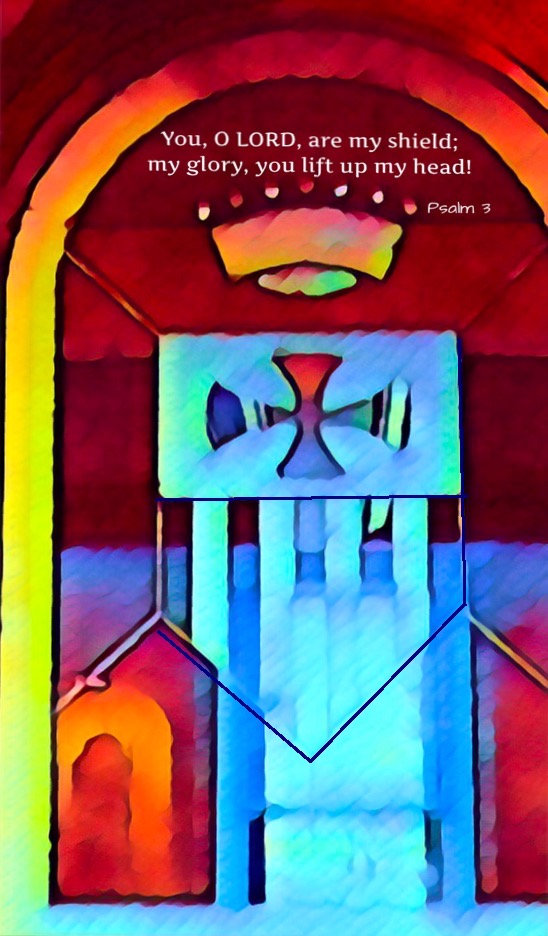
Today, in God’s Lavish Mercy, we pray with Psalm 3 which well might reflect the prayer of noble Eleazar from our first reading:

You, O LORD, are my shield;
    my glory, you lift up my head!
When I call out to the LORD,
    he answers me from his holy mountain.
R.    The Lord upholds me.
When I lie down in sleep,
    I wake again, for the LORD sustains me.
I fear not the myriads of people
    arrayed against me on every side.

Psalm 3: 4-7

Eleazar’s faithful character is so strong that he can look beyond his present circumstance to:

… leave in his death a model of courage
and an unforgettable example of virtue
not only for the young but for the whole nation.

2 Mc 6:31

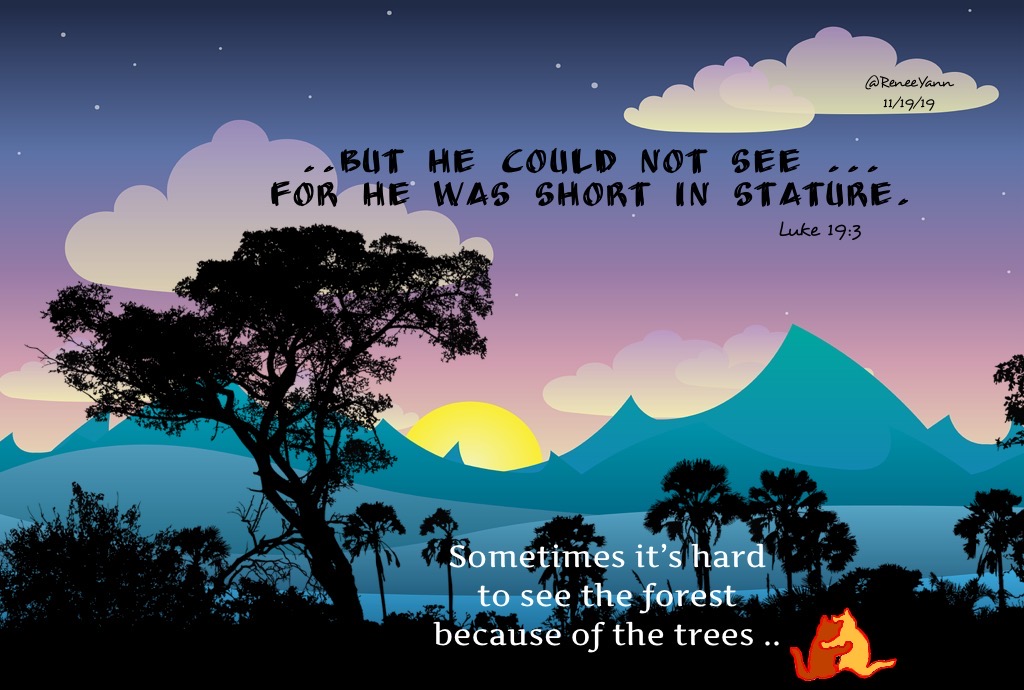
Both Eleazar’s story and Zaccheus’s are about living in the big picture of God’s vision for us. These stories invite us to stretch beyond ourselves to see God in our circumstances.

Eleazar was a giant in the virtues necessary to “see beyond the trees” of his current circumstances. A more spiritually short-sighted person might have succumbed to the temptation to save himself at the cost of his faith and witness.

But Eleazar’s faith was long, both in years and in depth. He kept the eyes of his heart focused on that faith and was delivered beyond any short-sighted choices.


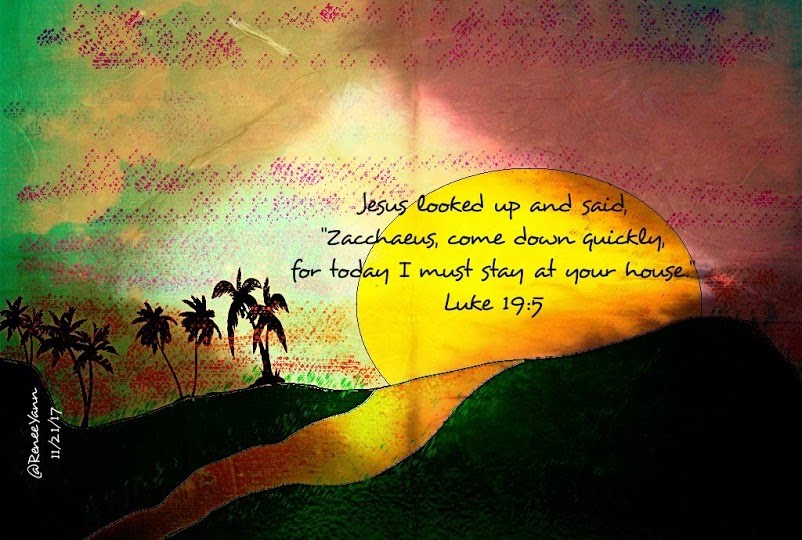
In our Gospel, we meet Zaccheus who, due to his short stature, was unable to get a glimpse of Jesus walking nearby. He wasn’t getting the whole picture – but he desperately wanted to!


Sometimes we miss Christ in our midst, don’t we? It may be because we’re “short” on time, patience, faith, attention, courage, peace, desire … you name it.

Zaccheus may have been physically short, but he was tall in will and intention to see Jesus. The trees became his tools not his obstacles.


It’s hard sometimes to see the forest beyond the trees – to direct our choices, attitudes and actions by a vision we glimpse only on the tippy toes of faith and prayer.

Perhaps these two God-seekers can inspire us today, by their courage, steadfastness and faith, to always live within God’s long eternal vision for us.


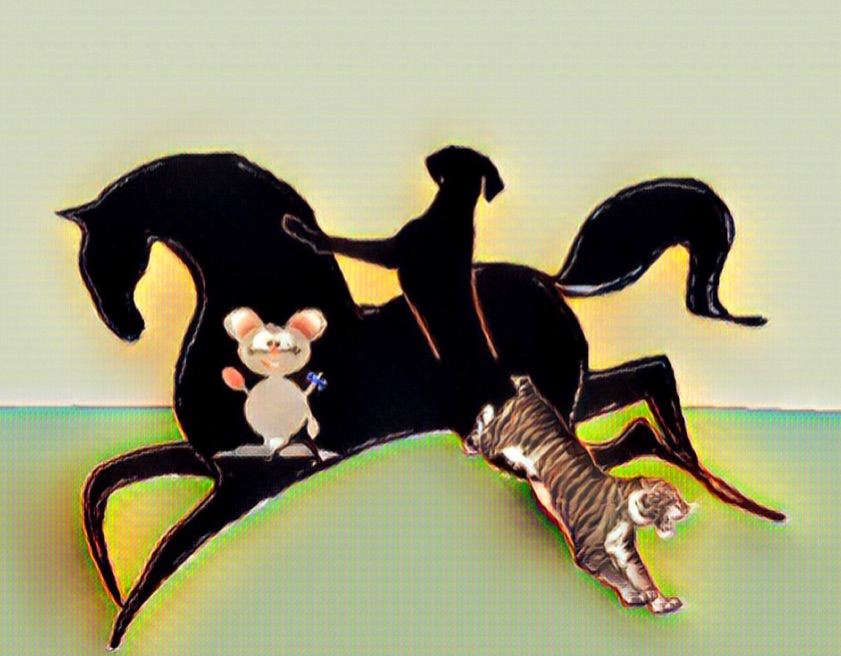
Poetry: Walking on Tiptoe by Ted Kooser

Long ago we quit lifting our heels
like the others—horse, dog, and tiger—
though we thrill to their speed
as they flee. Even the mouse
bearing the great weight of a nugget
of dog food is enviably graceful.
There is little spring to our walk,
we are so burdened with responsibility,
all of the disciplinary actions
that have fallen to us, the punishments,
the killings, and all with our feet
bound stiff in the skins of the conquered.
But sometimes, in the early hours,
we can feel what it must have been like
to be one of them, up on our toes,
stealing past doors where others are sleeping,
and suddenly able to see in the dark.

Turn Your Eyes Upon Jesus – written in 1922 by Helen Lemmel, sung here by Michael W. Smith

O soul are you weary and troubled
No light in the darkness you see
There's light for a look at the Savior
And life more abundant and free

Turn your eyes upon Jesus
Look full in his wonderful face
And the things of earth will grow strangely dim
In the light of his glory and grace

His word shall not fail you he promised
Believe him and all will be well
Then go to a world that is dying
His perfect salvation to tell

Turn your eyes upon Jesus
Look full in his wonderful face
And the things of earth will grow strangely dim
In the light of his glory and grace

O soul are you weary and troubled
No light in the darkness you see
There's light for a look at the Savior
And life more abundant and free

Turn your eyes upon Jesus
Look full in his wonderful face
And the things of earth will grow strangely dim
In the light of his glory and grace

Fear Not

Today, in God’s Lavish Mercy, we pray with Psalm 146 which tells us just how very much God loves those whom no-one else appears to love.

Hallelujah!
Praise the Lord, O my soul!
I will praise the Lord as long as I live;
I will sing praise to my God while I have my being.
Put not your trust in rulers, nor in any child of earth,
for there is no help in them.
When they breathe their last, they return to earth,
and in that day their thoughts perish.
Happy are they who have the God of Jacob for their help!
For their hope is in the Lord their God,
who made heaven and earth, the seas,
and all that is in them;
who keeps promises for ever;
who gives justice to those who are oppressed,
food to those who hunger
and sets the prisoners free.
The Lord opens the eyes of the blind!
The Lord lifts up those who are bowed down
and loves the righteous.
The Lord cares for the stranger
and sustains the orphan and widow,
but frustrates the way of the wicked.
The Lord shall reign for ever,
your God, O Zion, throughout all generations.
Hallelujah!


In our readings this Sunday, we learn lessons from widows – those whose place in biblical times was uncertain and frightening. Without a husband, a woman experienced diminished standing in the legal, financial and political life of the community. 

She was often dependent on charity, and was deemed fortunate to capture a bit of good will from those in better circumstances. 

There are several examples of widows being blessed by miracles, because they were among those most in need of them.

In today’s first reading and in the Gospel, we meet two widows displaying amazing charity and character strength.  The widow of Zarephath steadfastly prepares for death because she has nothing left to live on. When Elijah asks to share in her last few cornmeal cakes, she does not hesitate to feed him.

In our Gospel, it is significant that, just across the road from the well-stocked treasury, a nearly penniless widow gives her last coins to the poor.


Elijah and the Widow’s Boy

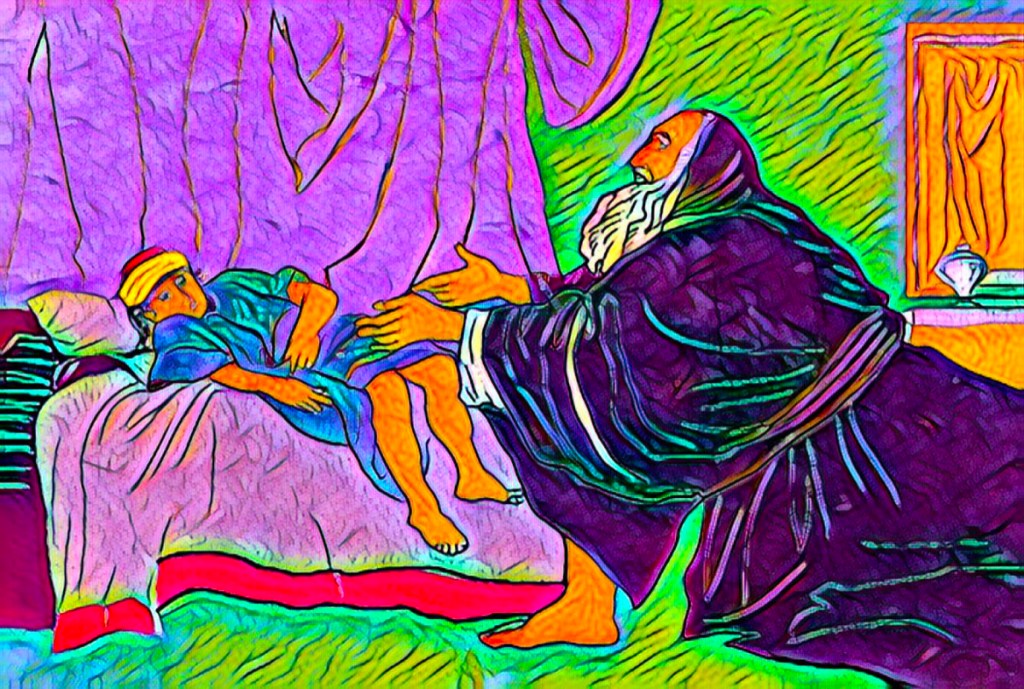
In Elijah’s account, we learn the outcome of the widow’s generosity.  She reaps an abundant reward in perpetual flour and oil to sustain her and her son.

We never learn what happens to Jesus’s widow. We are left to imagine that, in some way, her selflessness is rewarded.


It is so hard to give it all to God, especially if we feel we have little left for ourselves.  It is hard to give our love when we feel empty-hearted.  It is hard to give care when we feel unappreciated.  It is hard to assist others when we ourselves are exhausted. It is hard to do good if no one, not even God, seems to notice.

But God does notice.  Like Jesus on that long-ago afternoon, God is watching as we empty our coffers in service and care for the poor, sick, troubled and lost.

What we have to give may be small — a single corn cake or two little coins. It is the act of giving it that is large — and will make our hearts large by the choice.


Poetry: The Widow of Zarephath by Sister Lou Ella Hickman, I.W.B.S, a member of the Sisters of the Incarnate Word and Blessed Sacrament of Corpus Christi, Texas. Her most recent collection of poetry is titled “she: robed and wordless“, available through press53

https://www.press53.com/lou-ella-hickman

i was like a small bird
            pecking near a gate
            when i went in search of twigs—
            a bit of wood for a fire

so after one last meal
my son and i could die…
then a man asked for water—

                        a bit of bread
                        now i, a small bird,
                        found more than twigs
                       because i too, like ravens, fed him


Music with Visuals: The Widow of Zarephath

Love or Hate, hmm?

November 3, 2021
Wednesday of the Thirty-first Week in Ordinary Time

Today, in God’s Lavish Mercy, we pray with Psalm 112, a hymn to the human generosity which mirrors God’s own:

Happy are they who fear the Lord
and have great delight in the divine commandments! 

Light shines in the darkness for the upright;
the righteous are merciful and full of compassion. 

For they will never be shaken;
their righteousness will be kept in everlasting remembrance.

Psalm 112: 1-6

Paul and Jesus seem to give us contradictory messages about how to achieve this “righteousness”. Paul talks about love, and Jesus tells us what we must “hate” – a bit of a challenge to untangle the core message.

Here’s one way.

We probably don’t like Jesus telling us to hate anything, as in:

If anyone comes to me without hating his father and mother,
wife and children, brothers and sisters,

and even his own life,
he cannot be my disciple.

Come on, Jesus! You don’t mean that do you – my sweet mom, my precious kids???


No, the scholars say, Jesus doesn’t mean “hate” the way we interpret it in modern English. He is using the common, hyperbolic language of the ancient East which, in this circumstance, would mean “love less”.

So what is Jesus really saying? 

This, I think.

We love many people and things in our lives. But we must love God, and God’s dream for all people, above and within all things. 


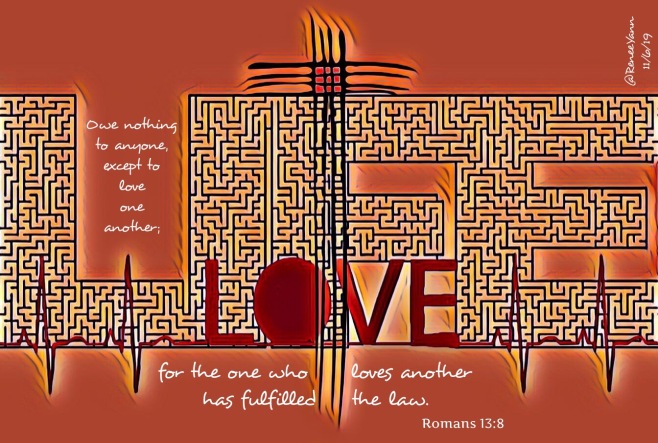
And that’s not easy! Life is a maze of relationships and situations that can get us very confused about what is most important. That’s why Jesus uses such strong language to remind us that there is only one way through the maze: to love as God loves. This is the heartbeat of our life in God!


Paul says this too, indicating how to negotiate the maze by keeping Love’s commandments.

Brothers and sisters:
Owe nothing to anyone, except to love one another;
for the one who loves another has fulfilled the law.

Romans 13:8

If we love with God’s love, of course we will love those we cherish. But we will love them selflessly, with an infinite generosity that always chooses their eternal good. And we will try always to love all Creatures in the same way. This is the kind of love Jesus taught us on the Cross. May God give us the courage to learn.


Poetry: Prayer of Mother Teresa and Brother Roger of Taize 

Oh God, the Creator of all,
you ask every one of us to spread
Love where the poor are humiliated,
Joy where the Church is brought low,
And reconciliation where people are divided. . . 
Father against son, mother against daughter,
Husband against wife,
Believers against those who cannot believe,
Christians against their unloved fellow Christians.

Music: Ubi Caritas performed by Stockholm University Choir (texts below)

Latin Text

Ubi caritas et amor, Deus ibi est.
Congregavit nos in unum Christi amor.
Exsultemus, et in ipso jucundemur.
Timeamus, et amemus Deum vivum.
Et ex corde diligamus nos sincero.
Ubi caritas et amor, Deus ibi est.
Simul ergo cum in unum congregamur:
Ne nos mente dividamur, caveamus.
Cessent iurgia maligna, cessent lites.
Et in medio nostri sit Christus Deus.
Ubi caritas et amor, Deus ibi est.
Simul quoque cum beatis videamus,
Glorianter vultum tuum, Christe Deus:
Gaudium quod est immensum, atque probum,
Saecula per infinita saeculorum. Amen.

English Translation
Where charity and love are, God is there.
Love of Christ has gathered us into one.
Let us rejoice in Him and be glad.
Let us fear, and let us love the living God.
And from a sincere heart let us love one.
Where charity and love are, God is there.
At the same time, therefore, are gathered into one:
Lest we be divided in mind, let us beware.
Let evil impulses stop, let controversy cease.
And in the midst of us be Christ our God.
Where charity and love are, God is there.
At the same time we see that with the saints also,
Thy face in glory, O Christ our God:
The joy that is immense and good,
Unto the World without end. Amen.

Slippin’ and Slidin’

October 30, 2021
Saturday of the Thirtieth Week in Ordinary Time

Today, in God’s Lavish Mercy, we pray with Psalm 94 which assures us of God’s patient and enduring love.

Happy are they whom you instruct, O Lord!
whom you teach out of your law;
to give them rest in evil days…
For you will not abandon your beloved,
nor will you forsake your own.

Psalm 94: 12-14

How does God instruct us in this perfect Law? Our Alleluia Verse offers this insight:

Take my yoke upon you and learn from me,
For I am meek and humble of heart.

Matthew 11:29

By imitating the humble love of Jesus, we learn to become more like God in whose image we are created.


Deepening in that imitative love is a lifelong journey. Sometimes, maybe often, our footing is unsure. Sometimes we even fall flat on our face!

The psalmist tells us we are not alone in the struggle, a verse we might repeat when we are a bit off spiritual balance:

Were not the LORD my help,
my soul would soon dwell in the silent grave.
When I say, “My foot is slipping,”
your mercy, O LORD, sustains me.

Psalm 94: 17-18

Poetry: Prayer of the Tightrope Dancer – Sister Eleanor Fitzgibbons, IHM

Oh God of tenderness
and watchful love,
You are my balance beam,
I shall not falter.
With you, my surety,
I will not fail.


Music: Two songs today

  1. Blessed Assurance – written in 1883 by Fanny Crosby an amazing creative talent and activist. She was blind from infancy.

  1. For my fellow tightrope walkers out there:
    Walk-in’ the Tightrope: Some of you might like this rockin’ song from Stevie Ray Vaughn to kick up your Saturday 😉

That Little Seed

Tuesday of the Thirtieth Week in Ordinary Time
October 26, 2021

Today, in God’s Lavish Mercy, we pray once again with Psalm 126, a song of hope fulfilled:

When the LORD brought back the captives of Zion,
    we were like men dreaming.
Then our mouth was filled with laughter,
    and our tongue with rejoicing.

Then they said among the nations,
    “The LORD has done great things for them.”
The LORD has done great things for us;
    we are glad indeed.

Psalm 126: 1-3

In our readings, we are called to be people of hope – to live in gratitude for hopes fulfilled, and to live in confidence of future blessing.


Paul blesses us with some of his most powerful words:

I consider that the sufferings of this present time are as nothing
compared with the glory to be revealed for us.

Romans 8:18

How often, over the ensuing centuries, have these words uplifted and embravened a struggling heart! Paul reminds us of what he so passionately believed – that we are not here for this world alone; that we, with all Creation, are being transformed for eternal life in God.


Jesus too reminds us that our life in faith is so much bigger than we perceive. We see a tiny mustard seed, but God sees the whole tree of eternal life blossoming in us.  We see a fingertip of yeast, but God sees the whole Bread of Life rising in us.

Paul tells us to be People of Hope who do not yet expect to see the object of their hope but who, nonetheless, believe and love with all their hearts.

May we pray this today for ourselves, and for anyone burdened by suffering or hopelessness at this time in their lives.


Poetry: Hope – Czeslaw Milosz

Hope is with you when you believe
The earth is not a dream but living flesh,
that sight, touch, and hearing do not lie,
That all thing you have ever seen here
Are like a garden looked at from a gate.
You cannot enter. But you're sure it's there.
Could we but look more clearly and wisely
We might discover somewhere in the garden
A strange new flower and an unnamed star.
Some people say that we should not trust our eyes,
That there is nothing, just a seeming,
There are the ones who have no hope.
They think the moment we turn away,
The world, behind our backs, ceases to exist,
As if snatched up by the hand of thieves.

Music:  Living Hope – Phil Wickham

Winds of Change

Friday of the Twenty-ninth Week in Ordinary Time

October 22, 2021

Today, in God’s Lavish Mercy, we pray with Psalm 119, the longest and very familiar psalm which pleads for God to mercifully teach us:

  • Wisdom
  • Knowledge
  • Goodness 
  • Generosity
  • Kindness
  • Compassion

In our readings, Paul asserts that without God’s Grace we can never attain these gifts. Jesus calls us to use these gifts and to practice a holy life by recognizing and responding justly to the challenges of our times.


Paul sounds a lot like someone approaching the microphone at “Sinners Anonymous”:

I know that good does not dwell in me, that is, in my flesh.
The willing is ready at hand, but doing the good is not.
For I do not do the good I want,
but I do the evil I do not want.

Romans 7:18-20

Paul basically attests to the fact that for human beings, even him, will and actions often don’t synch up. Sure, we want to be good people, but as Nike says, do we …

Paul’s says no. The only way we do the good we will to do is by the grace of Jesus Christ.


In our Gospel, Jesus affirms the slowness of the human spirit to act on the realities around us. In some translations, Jesus uses a phrase which caught on with the architects of Vatican II: the signs of the times.

Jesus tells his listeners and us that we need to be alert to the circumstances of our world. It both weeps and rejoices. Where it weeps, we must be a source of mercy and healing. Where it rejoices, we must foster and celebrate the Presence of the Spirit.


In the Vatican II document Gaudium et Spes (The Church in the Modern World), we read:

In every age, the church carries the responsibility
of reading the signs of the times
and of interpreting them in the light of the Gospel, if it is to carry out its task.
In language intelligible to every generation, it should be able to answer
the ever recurring questions which people ask
about the meaning of this present life and of the life to come,
and how one is related to the other.
We must be aware of and understand the aspirations, the yearnings,
and the often dramatic features of the world in which we live.

Although written in the 1960s, these powerful words hold true today. We are the Church of which the document speaks. We are the ones whom Jesus calls to respond with authentic justice and mercy to the signs of the times. 

Read the newspaper in that light today. Watch the news in that light. Meet your brothers and sisters in that light today.


Poetry: Ode to the West Wind by Percy Bysshe Shelley

Perhaps more than anything else, Shelley wanted his message of reform and revolution spread, and the wind becomes the symbol for spreading the word of change through the poet-prophet figure. Some also believe that the poem was written in response to the loss of his son William in 1819 (born to Mary Shelley – author of “Frankenstein”). The ensuing pain influenced Shelley. The poem allegorizes the role of the poet as the voice of change and revolution. (Wikipedia)

O wild West Wind, thou breath of Autumn’s being, 
Thou, from whose unseen presence the leaves dead 
Are driven, like ghosts from an enchanter fleeing, 
Yellow, and black, and pale, and hectic red, 
Pestilence-stricken multitudes: O thou, 
Who chariotest to their dark wintry bed 
The winged seeds, where they lie cold and low, 
Each like a corpse within its grave, until 
Thine azure sister of the Spring shall blow 
Her clarion o’er the dreaming earth, and fill 
(Driving sweet buds like flocks to feed in air) 
With living hues and odours plain and hill: 
Wild Spirit, which art moving everywhere; 
Destroyer and preserver; hear, oh hear! 

II 

Thou on whose stream, mid the steep sky’s commotion, 
Loose clouds like earth’s decaying leaves are shed, 
Shook from the tangled boughs of Heaven and Ocean, 
Angels of rain and lightning: there are spread 
On the blue surface of thine aëry surge, 
Like the bright hair uplifted from the head 
Of some fierce Maenad, even from the dim verge 
Of the horizon to the zenith’s height, 
The locks of the approaching storm. Thou dirge 
Of the dying year, to which this closing night 
Will be the dome of a vast sepulchre, 
Vaulted with all thy congregated might 
Of vapours, from whose solid atmosphere 
Black rain, and fire, and hail will burst: oh hear! 

III 

Thou who didst waken from his summer dreams 
The blue Mediterranean, where he lay, 
Lull’d by the coil of his crystalline streams, 
Beside a pumice isle in Baiae’s bay, 
And saw in sleep old palaces and towers 
Quivering within the wave’s intenser day, 
All overgrown with azure moss and flowers 
So sweet, the sense faints picturing them! Thou 
For whose path the Atlantic’s level powers 
Cleave themselves into chasms, while far below 
The sea-blooms and the oozy woods which wear 
The sapless foliage of the ocean, know 
Thy voice, and suddenly grow gray with fear, 
And tremble and despoil themselves: oh hear! 

IV 

If I were a dead leaf thou mightest bear; 
If I were a swift cloud to fly with thee; 
A wave to pant beneath thy power, and share 
The impulse of thy strength, only less free 
Than thou, O uncontrollable! If even 
I were as in my boyhood, and could be 
The comrade of thy wanderings over Heaven, 
As then, when to outstrip thy skiey speed 
Scarce seem’d a vision; I would ne’er have striven 
As thus with thee in prayer in my sore need. 
Oh, lift me as a wave, a leaf, a cloud! 
I fall upon the thorns of life! I bleed! 
A heavy weight of hours has chain’d and bow’d 
One too like thee: tameless, and swift, and proud. 

Make me thy lyre, even as the forest is: 
What if my leaves are falling like its own! 
The tumult of thy mighty harmonies 
Will take from both a deep, autumnal tone, 
Sweet though in sadness. Be thou, Spirit fierce, 
My spirit! Be thou me, impetuous one! 
Drive my dead thoughts over the universe 
Like wither’d leaves to quicken a new birth! 
And, by the incantation of this verse, 
Scatter, as from an unextinguish’d hearth 
Ashes and sparks, my words among mankind! 
Be through my lips to unawaken’d earth 
The trumpet of a prophecy! O Wind, 
If Winter comes, can Spring be far behind?


Music: The Times They Are A’changin’ – Bob Dylan 

Dylan’s songs in the 50s and 60s became anthems for the Civil Rights and anti-war movements. His lyrics during this period incorporated a wide range of political, social, philosophical, and literary influences, defied popular music conventions and appealed to the burgeoning counterculture. (Wikipedia) 
Ah, it was a good time to be young! (me)

The Swedish Academy awarded Dylan the 2016 Nobel Prize in Literature “for having created new poetic expressions within the great American song tradition.”

A Fire for Good

October 21, 2021
Thursday of the Twenty-ninth Week in Ordinary Time

Today, in God’s Lavish Mercy,  we pray with Psalm 1 which promises that, if we walk in faith, we will prevail against any evil.

Blessed the one who follows not
    the counsel of the wicked
Nor walks in the way of sinners,
    nor sits in the company of the insolent,
But delights in the law of the LORD
    and meditates on the law day and night.

Psalm 1: 1-3

The passage from Romans and our Gospel preach, in no uncertain terms, that we must choose good over evil.

In our Gospel, Jesus says he has come to set fire on the earth! He says that, because of him, there will not be peace but division, setting households against one another. 

It’s not a comforting Gospel.

And guess what, we don’t live in a comforting world do we? We see human beings set against each other in war, political corruption, economic despoiling, human trafficking, ecological crime and other deeply ingrained systemic abuses.


Pope John Paul II in his encyclical EVANGELIUM VITAE refers to these realities as a “culture of death”.

Some threats come from nature itself, but they are made worse by the culpable indifference and negligence of those who could in some cases remedy them. Others are the result of situations of violence, hatred and conflicting interests, which lead people to attack others through murder, war, slaughter and genocide.

And how can we fail to consider the violence against life done to millions of human beings, especially children, who are forced into poverty, malnutrition and hunger because of an unjust distribution of resources between peoples and between social classes? And what of the violence inherent not only in wars as such but in the scandalous arms trade, which spawns the many armed conflicts which stain our world with blood? What of the spreading of death caused by reckless tampering with the world’s ecological balance, by the criminal spread of drugs, or by the promotion of certain kinds of sexual activity which, besides being morally unacceptable, also involve grave risks to life? It is impossible to catalogue completely the vast array of threats to human life, so many are the forms, whether explicit or hidden, in which they appear today! 


Paul says that, through our Baptism, we are called and strengthened to bear witness against such a culture:

But now that you have been freed from sin and have become slaves of God,
the benefit that you have leads to sanctification,
and its end is eternal life.
For the wages of sin is death,
but the gift of God is eternal life in Christ Jesus our Lord.


Every day, each one of us has the opportunity to stand up for mercy and justice by the choices we make, by the attitudes we affirm, by the values we stand for. But sometimes it’s hard, because it can set us against some of the people around and close to us. That’s when the rubber meets the road!


Poetry: The Onset by Robert Frost

In his poem, Frost is realistic about the onset of winter, at first comparing it to a death of someone who has failed to prevail against evil. But then he places winter in the whole cycle of the seasons and finds hope in the promise of spring.

Always the same, when on a fated night
At last the gathered snow lets down as white
As may be in dark woods, and with a song
It shall not make again all winter long
Of hissing on the yet uncovered ground,
I almost stumble looking up and round,
As one who overtaken by the end
Gives up his errand, and lets death descend
Upon him where he is, with nothing done
To evil, no important triumph won,
More than if life had never been begun.

Yet all the precedent is on my side:
I know that winter death has never tried
The earth but it has failed: the snow may heap
In long storms an undrifted four feet deep
As measured again maple, birch, and oak,
It cannot check the peeper’s silver croak;
And I shall see the snow all go down hill
In water of a slender April rill
That flashes tail through last year’s withered brake
And dead weeds, like a disappearing snake.
Nothing will be left white but here a birch,
And there a clump of houses with a church.


Music: Golden Autumn – Fariborz Lachini